9 minutes
Key Takeaways
- Reliable mobile data in Morocco is essential for navigation, communication, and booking activities on the go—especially in busy cities and remote areas with limited Wi-Fi.
- Physical SIM cards from Maroc Telecom, Orange, and Inwi offer excellent coverage and local phone numbers but require airport or shop visits with passport registration.
- eSIMs like Airalo provide hassle-free pre-trip activation, competitive pricing (from $4.50 for 1GB), and 24/7 English support—ideal for short stays and digital nomads.
- Data needs range from 1-3GB for light users on week-long trips to 10GB+ for heavy users uploading photos and streaming in destinations like the Sahara or Atlas Mountains.
- For most travelers in 2025, the best SIM card for Morocco is an eSIM option like Airalo, combining convenience, value at $3.50 per GB, and strong 4G/5G coverage across major cities and tourist routes.
Table of Contents
- Understanding Your Mobile Data Needs in Morocco
- Physical SIM Cards in Morocco: Where and How to Get Started
- eSIMs for Morocco: A Modern and Convenient Alternative
- Airalo Morocco: In-Depth Review and Why It’s a Top Choice
- Comparing Your Options: Physical SIM vs. eSIM
- Tips for Using Mobile Data in Morocco Effectively
- Conclusion
Best SIM Card for Morocco: Top Options for Reliable Mobile Data in 2025
Finding the best SIM card for Morocco is crucial for travelers seeking seamless connectivity during their adventures in this vibrant North African destination. Imagine wandering through the busy souks of Marrakech with Google Maps guiding you, or chatting on WhatsApp with your family back home while sipping mint tea. Mobile data in Morocco helps with so many things—like using apps to translate Arabic or Berber signs, or booking a cozy riad or exciting tour at the last minute. But spotty Wi-Fi in crowded spots can cause big frustrations, leaving you lost or out of touch.
When picking the best SIM card for Morocco, challenges like language barriers at local shops make it tricky, especially if you’re new to the area. Options include traditional physical SIM cards you can buy on the spot, or modern eSIM alternatives that let you set up data before you even leave home. This guide dives deep into comparing physical SIMs from big names like Maroc Telecom (also called IAM), Orange, and Inwi, plus the best eSIM for Morocco choices. We’ll cover everything from coverage maps to plan details, with practical picks like Airalo for easy setup without the hassle. Whether you opt for a local Morocco SIM card or the best eSIM for Morocco, this guide will help you choose based on your trip length, data needs, and convenience preferences.
Understanding Your Mobile Data Needs in Morocco
Mobile data in Morocco is a must for tourists to stay connected and safe. For a short 7-10 day trip, light users might need just 1-3 GB. That’s enough for maps and messaging. Heavy users could use 5-10 GB or more, like uploading photos to social media, making video calls, or streaming tunes while camping in the Sahara Desert.
Think about daily needs. In Casablanca’s winding medina, you might use 500 MB a day for navigation to find hidden gems. Or, on Essaouira’s sunny beaches, 2 GB could cover sharing Instagram stories of colorful kitesurfing spots. These amounts keep you online without running out fast.

Key things to think about when choosing a plan include your trip length. A quick city break in Rabat needs less data than a long road trip over the Atlas Mountains. Data needs vary too—digital nomads want unlimited plans for work, while budget travelers prefer capped ones. Check if your device works with eSIMs, like iPhone 11 or newer, or Android phones with eSIM slots. Budgets start low, from $8 for 1 GB up to $36 for 10 GB of mobile data in Morocco, helping you manage your overall travel budget effectively.
Wi-Fi in Morocco is okay in hotels and cafes in big cities like Fez or Rabat. But in rural areas, like the High Atlas trails or desert camps, it’s hard to find. Public Wi-Fi can be unsafe too—hackers lurk in busy tourist spots, so use a VPN app for protection. Outages happen a lot during busy seasons, like summer festivals. That’s why reliable mobile data in Morocco keeps you productive and safe, no matter where you roam.
Traveler reviews show that in major spots like Fes, Casablanca, and Marrakech, you need steady data for urban walks and semi-rural drives. For remote workers, pick plans with fast 4G or 5G speeds. Operators cover about 95% of populated areas, but signals fade in far-off deserts. When planning ahead, the best eSIM for Morocco shines for its easy pre-trip setup, matching your exact data wants without surprises.
Physical SIM Cards in Morocco: Where and How to Get Started
A physical Morocco SIM card is a small, removable chip you slide into your phone’s tray. It gives you access to local networks, plus a Moroccan phone number for calls and data. It’s a classic way to get connected right away.
You can buy a physical Morocco SIM card at big airports, like Mohammed V in Casablanca. Kiosks from Maroc Telecom, Orange, and Inwi are right there when you land. In cities, head to stores—Maroc Telecom shops near Marrakech’s Jemaa el-Fnaa square, or Orange spots in Agadir. You’ll need your passport to register, as Morocco’s rules require it for security.
Major operators each have strengths. Maroc Telecom (IAM) offers the best coverage across the country, even in rural deserts, reaching up to 98% of people with solid 4G. Orange shines in coastal cities like Essaouira, with quick urban speeds. Inwi keeps prices low in central areas, great for value hunters. For overall reliability, Maroc Telecom is often the best SIM card for Morocco.
Pros of a physical Morocco SIM card include a local number for cheap calls to taxis or hotels. It also works well in remote spots. But cons are real: Swapping the SIM means you might lose your home number’s signal. Shop staff might not speak much English, causing mix-ups. Activation can take 30 minutes with ID checks.
From research, prepaid physical Morocco SIM cards cost MAD 20-50, about $2-5 USD, plus top-ups. Maroc Telecom plans include 5 GB for MAD 50 (7 days) or 20 GB for MAD 100 (30 days). Orange has 3 GB for MAD 40 (7 days). Inwi offers 10 GB for MAD 80 (15 days). TripAdvisor notes say Maroc Telecom’s hybrid eSIM options cost just a tenth of tourist prices, with top connectivity in places like Essaouira.
All physical Morocco SIM cards are prepaid—no contracts needed. Top up at kiosks, apps, or with cards. 4G covers most places, and 5G is starting in cities. Watch out for airport prices—they’re 20-30% higher for tourists. Still, for long trips with local calls, a physical SIM is handy.
eSIMs for Morocco: A Modern and Convenient Alternative
An eSIM for Morocco is like a digital version of a SIM card. It’s built right into your phone—no plastic piece to insert. Newer devices, like iPhones from 2018 on, Google Pixels, or Samsung Galaxys, support it. You download the provider’s info via a QR code, either before your flight or when you arrive.
The benefits make the best eSIM for Morocco a smart pick. No swapping means your home number stays active for texts and calls. Set it up from home, before heading to Marrakech’s markets. It lets you switch profiles easily, like using home data in Europe and travel data in Africa. Plus, support teams speak English around the clock.
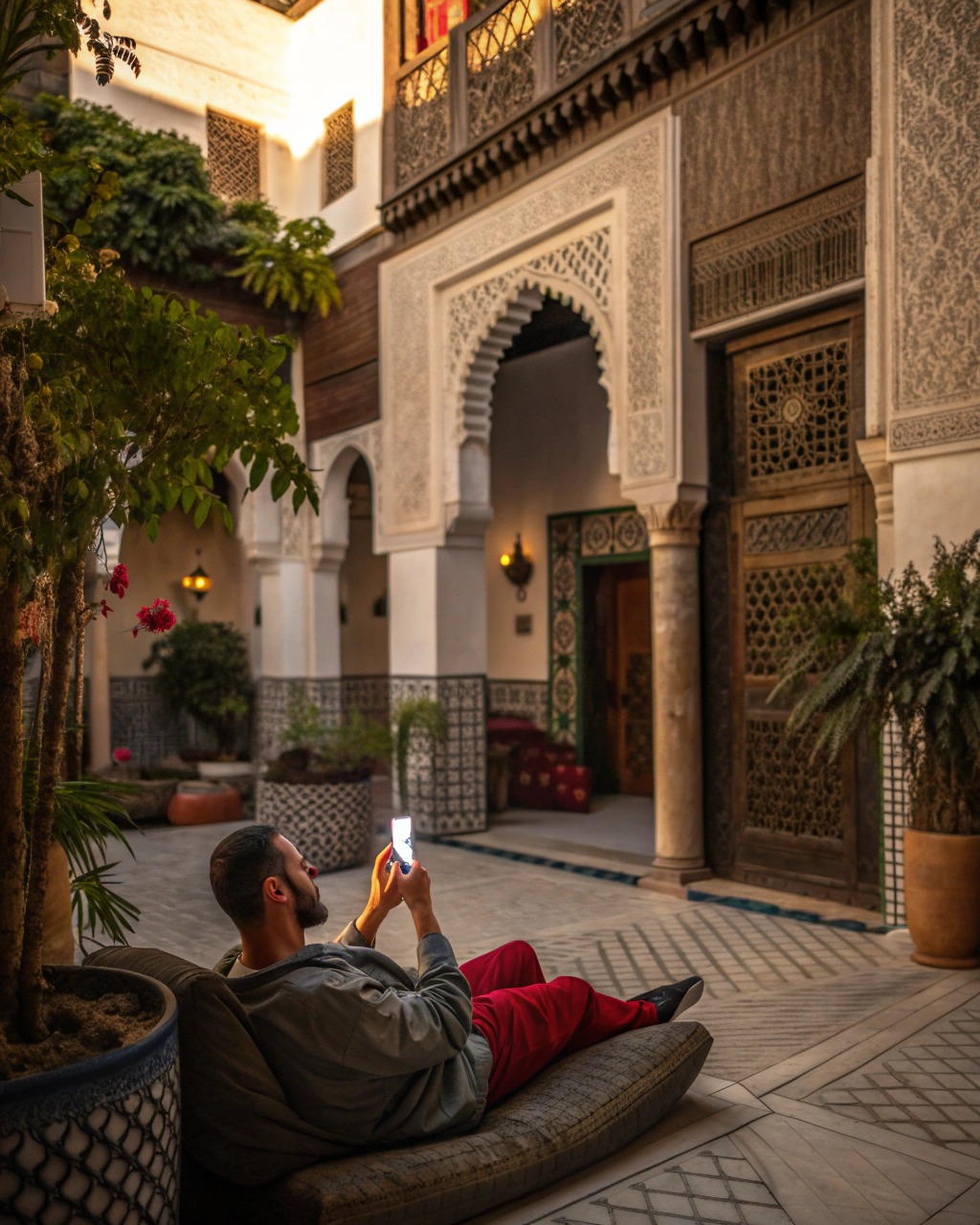
Top eSIM providers for Morocco partner with local networks like Maroc Telecom or Orange for strong signals. They focus on easy apps, wide coverage, and fair prices. In 2025, more travelers ditch physical cards for eSIMs, especially in cash-loving spots like Morocco’s bazaars. From Cybernews reviews of 11 options, ease and coverage top the list. Travelastronaut calls Airalo the best overall, Saily cheap for basics. GoMoWorld likes Holafly’s $34 unlimited for 7 days, with 500 MB sharing and a 4.3/5 score. Nomadwise picks Ubigi and eSIM4Travel for digital nomads’ fast plans. MyBestSim compares values, while eSIMDB lists unlimited from Firsty, Truely, Roamify, Yesim, and Yoho Mobile. TechRadar praises Ubigi’s $8 for 1 GB (7 days), $16 for 3 GB (15 days), $36 for 10 GB (30 days). Yohomobile says eSIMs beat locals for reliable data in big cities.
These partnerships ensure mobile data in Morocco flows smoothly at 4G/5G speeds. As a top choice, Airalo links with local networks to match physical SIM performance, without the wait.
Airalo Morocco: In-Depth Review and Why It’s a Top Choice
For the best eSIM for Morocco experience, Airalo Morocco stands out as a reliable provider tailored for travelers needing instant mobile data in Morocco. It’s praised in reviews for simple setup and solid value.
Key features include an app for buying and checking data, 24/7 English chat support, and data-only plans. No local number, but apps like WhatsApp handle calls and texts over data. Use their tool to check if your phone works, and top up anytime after starting.
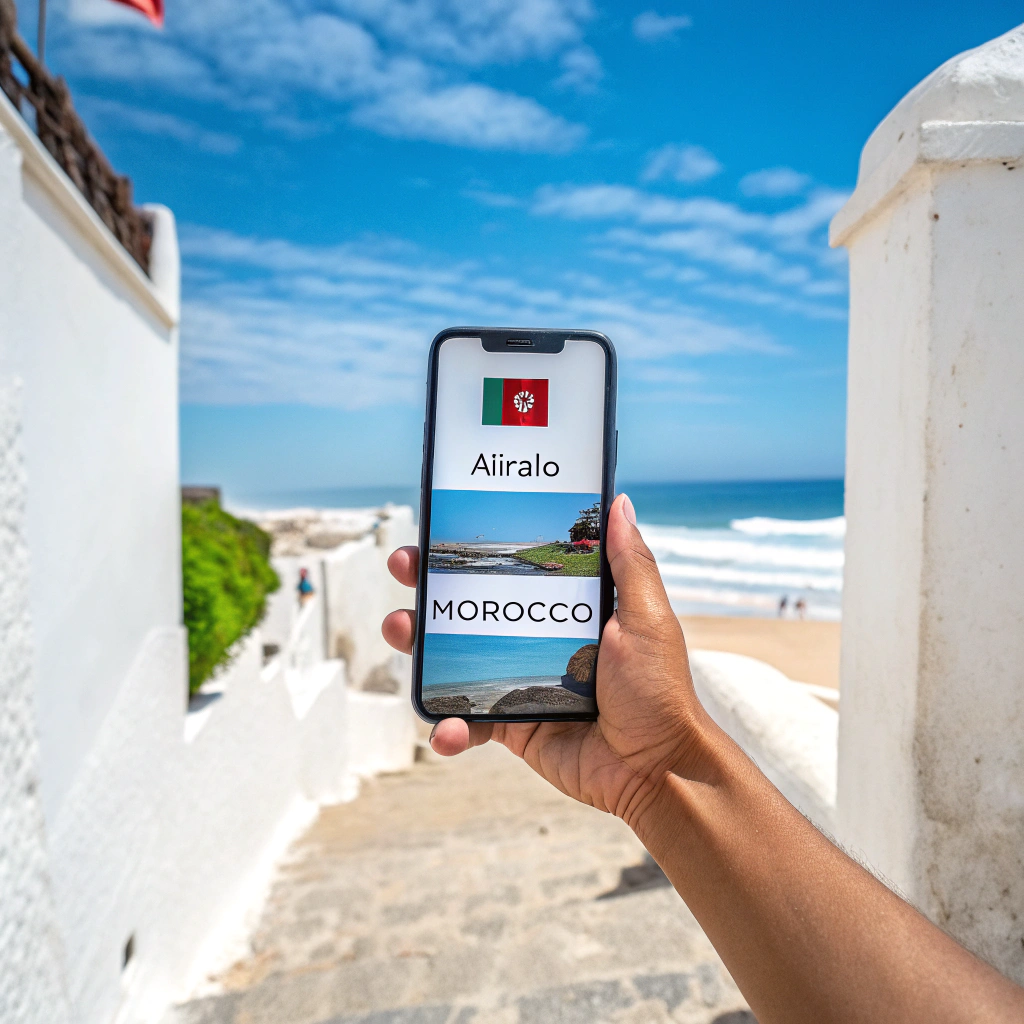
Plans are flexible. Get 1 GB for $4.50 (7 days), 3 GB for $10 (30 days), 5 GB for $16 (30 days), or 10 GB for $35—that’s $3.5 per GB, the best rate per Traveltomtom. Go bigger with 20 GB for $49. They also have Africa regional plans for trips to places like Tunisia. No unlimited, but these fit most tourists’ needs.
To buy and activate: Grab the Airalo app or go to their site before your trip. Pick a Morocco plan, pay with card or PayPal, and get a QR code by email. On your phone, go to Settings > Cellular > Add eSIM, scan the code, and turn on data roaming. It starts when you land and connect—no extra Wi-Fi after that.
Airalo beats local SIMs by letting you skip airport lines. Yohomobile says it’s great for city spots like Fes and Casablanca. It’s cheaper than marked-up tourist cards, perfect for short stays. Downsides: No voice or SMS, so rely on data apps. Per-GB might cost more than big local bundles.
Research backs it up—Travelastronaut and Traveltomtom name Airalo best overall for ease and price. It edges Ubigi (TechRadar’s cost pick) and Holafly (GoMoWorld’s unlimited but expensive). As a convenient swap for physical ones, Airalo is often the best SIM card for Morocco in 2025.
Comparing Your Options: Physical SIM vs. eSIM (Focusing on Airalo)
To pick the best SIM card for Morocco, let’s compare physical options like Maroc Telecom, Orange, or Inwi against eSIMs, spotlighting Airalo. We’ll look at price, data, ease, coverage, support, and more.
| Factor | Physical SIM (Maroc Telecom/Orange/Inwi) | eSIM (Airalo as Example) |
|---|---|---|
| Price | Startup $2-5 USD + $5-10 for 5-10 GB (e.g., Inwi 10 GB for ~$8). Airport markups add cost. | $4.50-35 for 1-10 GB (Airalo 10 GB $35). Cheaper for short trips. |
| Data Allowance | Easy top-ups to 50 GB or more. Capped plans like 20 GB/30 days from Maroc Telecom. | Fixed 1-20 GB (Airalo); unlimited from Holafly or Truely. Good for set needs. |
| Convenience | Buy on-site, but queues and ID checks take time. Swapping SIMs is a chore. | Pre-download via app—Airalo scores top for quick setup. No physical swap. |
| Coverage | 95% 4G in cities/highways; Maroc Telecom best in remote deserts/Atlas. Mobile data strong overall. | Same networks for 4G/5G reliability in urban spots. Airalo uses multiple for backups; solid in Marrakech/Casablanca. |
| Customer Support | Local stores, but English limited; help in Arabic/French. | 24/7 global chat—Airalo excels for English queries from anywhere. |
| Other Features | Local number for calls/SMS to Morocco services. Prepaid only. | Keep home number; data sharing (Holafly 500 MB/day). No voice, but app-friendly. |
For most folks, the best eSIM for Morocco like Airalo wins in 2025. Nomadwise loves it for digital nomads, and TripAdvisor raves about eSIM connectivity. Physical Morocco SIM cards fit long stays needing calls, but eSIMs rule for hassle-free mobile data in Morocco.
Tips for Using Mobile Data in Morocco Effectively
Save your mobile data in Morocco by planning smart. Download offline maps like Google Maps or Maps.me before you fly. Turn off auto-updates for apps to avoid surprise drains. Use low-data modes on Instagram or Facebook, and squash photos smaller with apps like ImageOptim before posting desert shots.

Coverage is great—4G flies in cities like Marrakech and Casablanca, plus on highways to the coast. But in rural areas like the Atlas Mountains or Sahara, it drops to 3G or 2G. Check provider maps ahead; Airalo taps several networks for better reach. For Essaouira’s beaches and other coastal destinations, TripAdvisor picks Maroc Telecom or Airalo for steady signals.
Stay safe with a reliable VPN service on public Wi-Fi in cafes—thieves online target tourists. Turn on data saver in your phone settings to cut usage. Track it with carrier apps to dodge extra charges. TechRadar says 5G will grow in 2025, so test your setup right after landing by loading a simple webpage.
These steps make the best SIM card for Morocco work even better, keeping your trip smooth and connected, whether you’re booking Sahara Desert tours or navigating city streets using convenient transportation options.
Conclusion
Reliable mobile data in Morocco transforms your trip, from navigating twisty riads to sharing sunset views from the Erg Chebbi dunes. You won’t miss a beat with the right setup.
In short, physical Morocco SIM cards work for long stays where you need a local number and remote coverage. But the best SIM card for Morocco is often an eSIM for its ease—Airalo Morocco tops the list with $3.5 per GB value and simple activation.
For most users, grab the best eSIM for Morocco from Airalo to skip lines and stay online. Reviews from Travelastronaut and Cybernews confirm it’s a winner. Think about your data needs today, and set up an Airalo plan for a worry-free adventure in Morocco’s magic.
Frequently Asked Questions
What is the best SIM card for Morocco in 2025?
For most travelers in 2025, the best SIM card for Morocco is an eSIM option like Airalo, which offers excellent value at $3.50 per GB, easy pre-trip activation, 24/7 English support, and reliable 4G/5G coverage in major cities and tourist routes. Physical SIM cards from Maroc Telecom are best for longer stays requiring local phone numbers and remote area coverage.
How much mobile data do I need for a week in Morocco?
For a 7-10 day trip to Morocco, light users typically need 1-3 GB for basic navigation and messaging. Heavy users who upload photos, make video calls, or stream music should plan for 5-10 GB. Consider your daily activities—urban exploration might use 500 MB/day, while sharing social media content from beaches or deserts could require 1-2 GB/day.
Can I buy a SIM card at Morocco airports?
Yes, you can purchase physical SIM cards from Maroc Telecom, Orange, and Inwi kiosks at major airports like Mohammed V in Casablanca. You’ll need your passport for registration. However, airport prices are typically 20-30% higher than city stores, and activation can take 30 minutes. Consider getting an eSIM like Airalo before your trip to save time and money.
Does my phone support eSIM for Morocco?
Most newer smartphones support eSIM technology, including iPhone XS/XR and later (2018+), Google Pixel 3 and newer, Samsung Galaxy S20 and later models, and many recent Android devices. Check your phone’s settings under “Cellular” or “Mobile Data” for an “Add eSIM” option, or use Airalo’s compatibility checker tool on their website before purchasing.
What’s the mobile network coverage like in rural Morocco?
Mobile network coverage in Morocco is excellent in cities and along major highways, with about 95% coverage in populated areas. In rural locations like the Atlas Mountains trails and remote Sahara Desert camps, coverage drops to 3G or 2G, and some areas have no signal. Maroc Telecom generally offers the best coverage in remote regions, reaching up to 98% of the population with 4G service.
Should I use a VPN with mobile data in Morocco?
Yes, using a VPN is highly recommended when accessing public Wi-Fi in Morocco, as hackers often target tourists in busy spots like cafes and hotels. A VPN encrypts your internet connection, protecting your personal data and passwords. Even with mobile data, a VPN adds an extra layer of security for sensitive transactions like online banking or booking accommodations.
Can I keep my home phone number active with an eSIM?
Yes, one of the major advantages of using an eSIM for Morocco is that your home phone number remains active for calls and texts. Your phone will use your home SIM for voice/SMS and the eSIM for mobile data in Morocco. You can easily switch between profiles in your phone’s settings, making it perfect for staying connected with both home contacts and local services.
Ready to Stay Connected in Morocco?
Don’t let connectivity issues slow down your Moroccan adventure. Whether you choose a physical SIM card or the convenience of an eSIM, having reliable mobile data ensures you can navigate souks, book last-minute tours, share your experiences, and stay safe throughout your journey.
Get started today: Download the Airalo app and activate your Morocco eSIM before departure, or plan to pick up a physical SIM from Maroc Telecom upon arrival. Your connected Moroccan experience awaits!
Safe travels, and stay connected across Morocco’s vibrant cities, stunning beaches, majestic mountains, and magical desert landscapes!