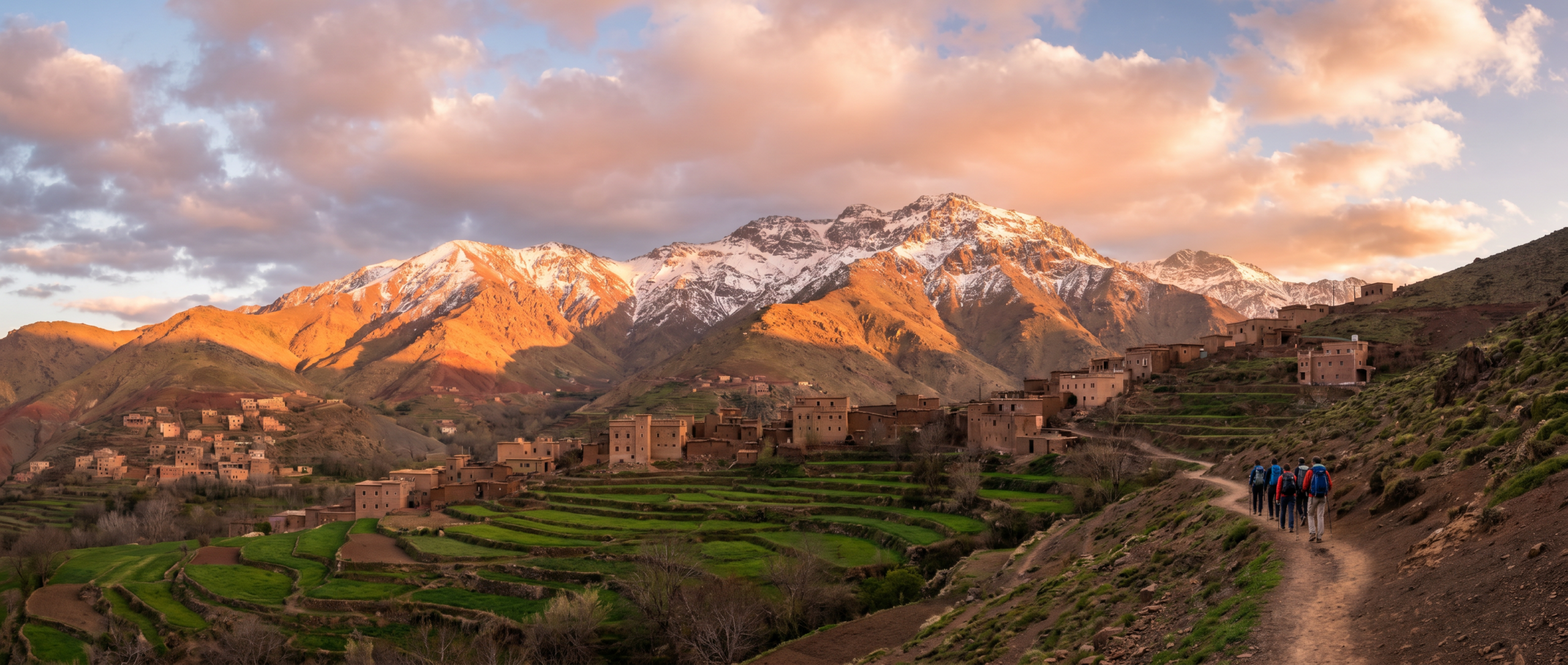
Atlas Mountains Trekking Morocco 2026: Complete Hiking Guide
Your ultimate guide to Atlas Mountains trekking in 2026. Discover the best Morocco trekking routes, top Atlas Mountains hikes, expert tips, and cultural insights for an unforgettable mountain adventure.
Have you ever dreamt of standing on North Africa’s highest peak, the crisp mountain air filling your lungs as the sun rises over a sea of rugged peaks stretching to the Sahara’s edge? The High Atlas Mountains aren’t just a destination — they’re a journey into the heart of Berber culture, a test of endurance, and a reward that stays with you forever. From gentle valley walks between ancient mud-brick villages to the demanding summit of Mount Toubkal, Atlas Mountains trekking offers something rare: an adventure that challenges your body while deeply nourishing your soul.
✦ Key Takeaways
Atlas Mountains trekking offers routes for all fitness levels, from gentle valley walks to challenging summit climbs.
The best trekking seasons are spring (March-May) and autumn (September-November), offering ideal weather and stunning scenery.
Top Atlas Mountains hikes include the Mount Toubkal ascent, the remote M’Goun Massif, and the culturally rich Ait Bougmez Valley.
Multi-day Morocco trekking routes provide deep cultural immersion with traditional Berber communities and breathtaking landscapes.
Practicing responsible trekking is crucial to support local Berber communities and preserve the fragile mountain environments.
Introduction to Atlas Mountains Trekking
The Atlas Mountains stand as North Africa’s most impressive mountain range. This massive chain stretches across Morocco, Algeria, and Tunisia, with Morocco claiming the highest and most spectacular peaks. These mountains form a natural climate barrier between the Mediterranean coast and the Sahara Desert, creating a unique ecosystem that has nurtured Berber communities for millennia.
For centuries, the Atlas Mountains have been home to indigenous peoples who have shaped the landscape with their terraced farms and traditional villages carved into the mountainsides. Today, these same mountains serve as Morocco’s premier destination for outdoor adventure, drawing trekkers from around the globe seeking both physical challenge and cultural immersion.
Atlas Mountains trekking has grown into one of Morocco’s most popular activities for international visitors. Each year, thousands of hikers arrive to explore the diverse Morocco trekking routes that crisscross these ancient peaks. The mountains offer everything from gentle valley walks through walnut groves to challenging summit attempts requiring genuine mountaineering skills, making trekking in Morocco an accessible adventure for many different skill levels.
This guide covers the best Atlas Mountains hikes available in 2026. You’ll discover top Morocco trekking routes for every fitness level, from one-day valley walks to week-long traverses. We’ll share practical tips for planning your trek, explain what to expect when trekking in Morocco, and help you choose the right adventure. Whether you’re a beginner lacing up boots for the first time or an experienced mountaineer, the Atlas Mountains have an adventure waiting for you.
💡 Local insight from Imlil — Most trekkers underestimate the altitude gain on summit day for Toubkal. Even if you’re fit, plan an extra acclimatization day at the refuge (3,207m) before your 4,167m summit push. Your legs and lungs will thank you.
Why Trek the Atlas Mountains?
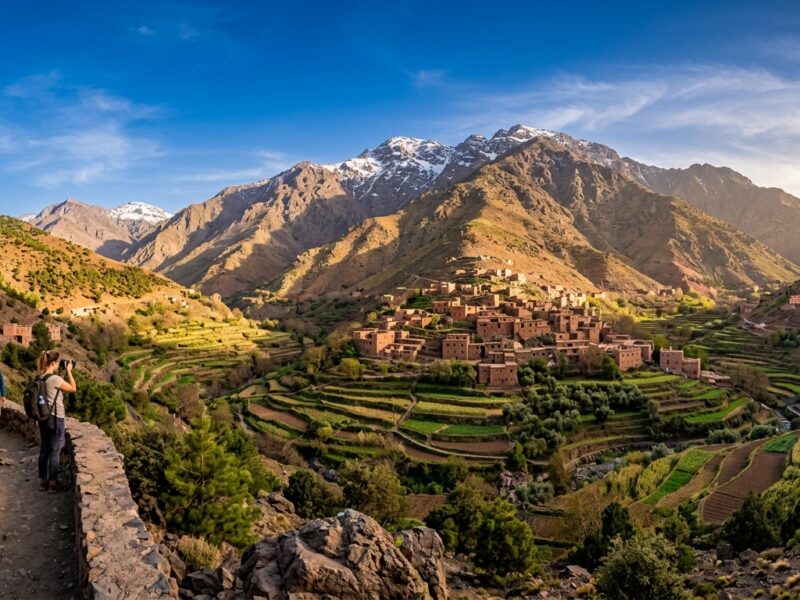
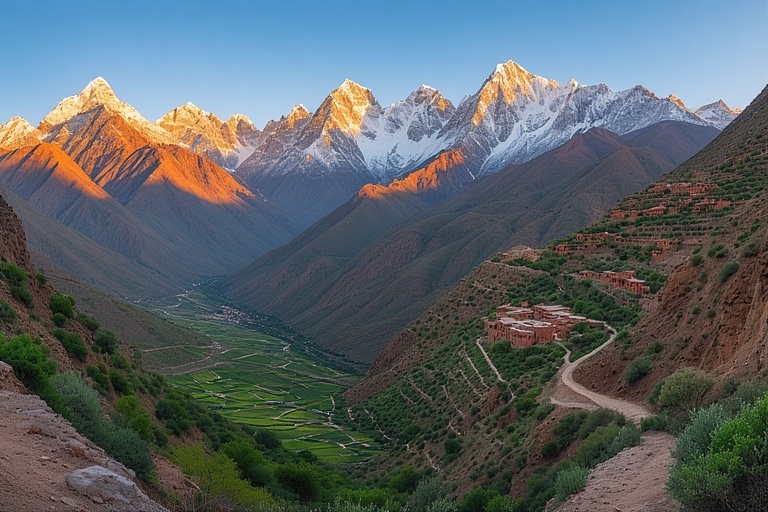
The Atlas Mountains offer landscapes unlike anywhere else on Earth. Snow-capped peaks tower above lush valleys filled with walnut and apple trees. Dramatic gorges cut through red rock formations. Remote plateaus, some of the true secret spots in Morocco, stretch for miles under endless blue skies where the only sound is wind and birdsong.
Atlas Mountains trekking brings you face-to-face with authentic Berber culture in a way no city tour ever could. Villages built from mud and stone cling improbably to mountainsides, their terraced fields stepping down valleys like ancient staircases. Local families welcome trekkers with mint tea and warm Moroccan hospitality that has no equal. Traditional markets burst with colorful textiles and handmade crafts. You’ll hear the melodic call to prayer echo across valleys at dusk and watch farmers tend their ancestors’ fields using techniques unchanged for centuries.
The diversity of trekking in Morocco suits every type of adventurer. Beginners can enjoy easy day hikes through flowering valleys in spring, gentle walks between welcoming villages where each stop offers mint tea and conversation, and short climbs to scenic viewpoints that reward minimal effort with maximum beauty. These introductory Atlas Mountains hikes are a perfect way to experience the region’s beauty without committing to multi-day expeditions.
Experienced trekkers can tackle multi-day expeditions across high passes above 3,500 meters, technical ascents of rocky peaks requiring steady nerves and good fitness, and remote Morocco trekking routes through untouched wilderness where you might not see another tourist for days. The M’Goun Massif, in particular, offers a wilder experience than the popular Toubkal region.
Powered by GetYourGuide
Mount Toubkal rises 4,167 meters above sea level as North Africa’s highest peak. Conquering this giant brings an incredible sense of accomplishment — you’re standing on the roof of an entire region. The rugged terrain tests your limits while rewarding you with unforgettable views across the entire Atlas range on clear days, solidifying its status as a premier challenge in Atlas Mountains trekking. The standard route from Imlil is non-technical but demands strong fitness and proper acclimatization.
Most Atlas Mountains hikes start just 90 minutes from Marrakech, making the mountains easily accessible for travelers with limited time. This easy access makes the mountains perfect for short trips or extended adventures. The region plays a vital role in Moroccan tourism, bringing essential economic benefits to remote mountain communities that would otherwise struggle to maintain their traditional way of life.
Hire guides directly from villages like Imlil or Ait Bougmez rather than booking through international agencies. You’ll pay less (typically 150-250 MAD/day), and your money stays entirely in the community. Ask at your accommodation for family recommendations — the best guides rarely advertise online.
Best Time for Atlas Mountains Trekking
The Atlas Mountains experience different climates at various elevations. Lower valleys enjoy a Mediterranean climate with hot summers and mild winters, making year-round trekking possible on valley routes. Higher altitudes bring alpine conditions with snow lasting into late spring on north-facing slopes and high passes above 3,000 meters.
March through November offers the best conditions for Atlas Mountains trekking across all elevations. Most Morocco trekking routes become fully accessible as snow melts from the high passes by mid-May. The Anti-Atlas region in the south stays hikeable year-round thanks to its lower elevation and warmer climate, offering a winter trekking alternative when the High Atlas is snowbound.
Spring (March-May) brings magical conditions to the mountains for any trekker:
- Almond and cherry trees bloom in pink and white across lower valleys
- Wildflowers carpet the meadows in a riot of color
- Temperatures stay comfortable for hiking (15-22°C at mid-elevations)
- Rivers run full from snowmelt — spectacular waterfalls but prepare for wet crossings
Summer (June-August) provides escape from Morocco’s intense city heat:
- High altitudes offer cool relief (20-25°C during the day, cool at night)
- Long daylight hours allow extended hikes until 8 PM
- All high passes become accessible for more advanced Atlas Mountains hikes
- Berber families move livestock to summer pastures — encounter nomadic life firsthand
Autumn (September-November) delivers perfect trekking weather across all routes:
- Clear skies dominate most days with excellent visibility
- Harvest season fills villages with activity — join in picking apples and walnuts
- Temperatures drop to comfortable levels for trekking in Morocco (18-25°C)
- Autumn colors paint the valleys in gold and amber
Winter (December-February) limits access but offers unique experiences for prepared trekkers:
- Snow covers peaks above 3,000 meters — crampons and ice axes required for summit attempts
- Lower valley hikes remain possible in the Ourika and Ait Bougmez valleys
- Fewer tourists mean peaceful trails and easier accommodation bookings
- Dramatic snowy landscapes for photographers, with crystal-clear winter light
📌 Planning note: For Mount Toubkal ascents, target late May through early October for the best balance of accessibility and weather. The M’Goun Massif opens slightly later (mid-June to mid-September) due to its remote location and higher elevation. Valley treks like Ait Bougmez stay accessible most of the year, though winter nights can be cold.
Plan your trekking in Morocco timing based on your chosen route and fitness level. Spring offers the most vibrant landscapes but prepare for possible rain and snow on high passes. Summer provides reliable weather but warmer days. Autumn combines stable conditions with harvest-season cultural experiences.
Popular Atlas Mountains Hikes
The Atlas Mountains offer incredible variety for hikers. Each trek brings unique experiences, from summit victories to cultural immersion in remote valleys. Here are the most popular Atlas Mountains hikes that showcase the best of trekking in Morocco in 2026.
Mount Toubkal Ascent (2-3 days)
North Africa’s highest peak attracts thousands of trekkers annually, and for good reason. The standard route from Imlil is one of the most famous Morocco trekking routes, taking 2-3 days from the trailhead village at 1,800 meters. Day one involves a steady climb of about 5-6 hours to the Toubkal Refuge at 3,207 meters, passing through juniper forests and rocky terrain. The summit push starts before dawn on day two, typically around 4 AM, to reach the top before clouds roll in and to descend safely. For those ready for the challenge, a guided Toubkal Summit Trek is highly recommended for first-timers.
Powered by GetYourGuide
The trek rates as moderate to challenging. Good fitness helps enormously, but no technical climbing skills are needed for the standard summer route. The final ascent involves scrambling over loose scree (called “scree” — small, loose rocks that slide underfoot) that can be tiring. Summit views stretch across the entire Atlas range on clear days, with the Sahara Desert visible as a hazy line to the south on exceptionally clear days.
This hike suits fit beginners and experienced trekkers alike. The well-marked trail and mountain refuge make it accessible without complex navigation. Local guides enhance safety and share knowledge about the mountain’s geology, history, and cultural significance. Consider booking a 2-day trek in High Atlas virgin villages for a similar experience with fewer crowds.
M’Goun Massif (4-5 days)
Morocco’s second-highest peak at 4,071 meters offers a wilder, more solitary experience than Toubkal. The standard trek takes 4-5 days starting from the Ait Bougmez valley, known as the “Happy Valley.” This remote massif sees far fewer crowds than its famous neighbor — you might share the trail with just a handful of other trekkers rather than dozens — making it an excellent choice for serious Atlas Mountains trekking enthusiasts seeking solitude.
The route crosses high plateaus above 3,000 meters with stunning views and river valleys lined with walnut trees. Nomadic shepherds graze their flocks on summer pastures, and you’ll likely be invited for tea if you stop to talk. The summit day involves a long but non-technical climb from a high camp, with the final section on loose rock requiring careful footing but no ropes.
M’Goun suits trekkers seeking solitude and authentic encounters with semi-nomadic Berber culture. The multi-day nature requires good fitness and camping equipment, as there are no mountain refuges on this route. Spring snowfields may require basic crampon use until late June.
On the M’Goun traverse, water sources are reliable until late August but dry up by September. Carry a 2-liter capacity minimum and a filter. The only resupply points are at the start and end — there are no villages en route. Pack all food from Ait Bougmez.
Ait Bougmez Valley (2-5 days, flexible)
Known as the “Happy Valley” for its welcoming inhabitants and beautiful scenery, this destination offers gentle Atlas Mountains trekking suitable for families and beginners. Easy walks connect traditional villages along the valley floor, with paths that are mostly flat and well-maintained. Day hikes lead to waterfalls and scenic viewpoints with minimal elevation gain.
The valley provides perfect family-friendly hiking. Children enjoy meeting local kids, watching donkeys carry goods, and seeing traditional rural life up close. Guesthouses in each village eliminate the need for camping gear — you can trek with just a daypack and stay in comfortable Berber homes. Walking distances stay manageable for all ages, typically 3-5 hours between villages.
Cultural experiences define this trek. You’ll visit weekly markets (different villages host on different days), watch women weaving carpets on traditional looms, and share meals of tagine and fresh bread with Berber families. The relaxed pace allows deep cultural immersion that’s impossible on more strenuous routes. Consider a Berber village tour with cooking class for a similar cultural experience.
Azzadene Valley (2-3 days)
This lush valley connects with Toubkal routes for varied trekking options and serves as an excellent warm-up for higher peaks. The standard trek takes 2-3 days through terraced fields and walnut groves, with paths climbing through forests of juniper and oak. Traditional villages offer overnight stays in family guesthouses with spectacular valley views.
The route suits those wanting mountain scenery without extreme altitude. Highest passes reach around 3,000 meters, manageable for most fit trekkers. Well-maintained paths make navigation straightforward, though a guide adds cultural context. Local children often accompany trekkers between villages, practicing English and pointing out the best paths.
This valley works perfectly as a Toubkal warm-up or a standalone trek for those with less time. The moderate difficulty allows most fitness levels to enjoy this scenic Atlas Mountains hike. Spring and autumn bring the best conditions, but summer is pleasant at these elevations.
Setti Fatma Waterfalls (Day hike)
This popular day hike starts in the Ourika Valley, just 90 minutes from Marrakech by grand taxi. Seven waterfalls cascade down the mountainside through a steep, narrow gorge. The trail to the higher falls involves some scrambling over rocks and through shallow water — waterproof shoes recommended. For a similar adventure, see our Ouzoud Waterfalls guide.
The first waterfall takes just 45 minutes of easy walking to reach. Continuing higher requires better fitness and sure footing on sometimes slippery rocks. Local guides (available at the trailhead for about 100 MAD) help navigate tricky sections and point out safe swimming spots. Restaurants at the trailhead serve fresh trout from the river’s fish farms.
Powered by GetYourGuide
This hike attracts many Moroccan families on weekends, especially in summer when the cool water provides relief from the heat. Arriving early (before 10 AM) avoids crowds and afternoon heat. The accessibility makes it perfect for travelers with limited time in Morocco. Even reaching just the lower falls provides a taste of Atlas beauty and is a great introduction to Atlas Mountains hikes for first-timers.
Top Morocco Trekking Routes in the Atlas Mountains
Beyond single peaks and valleys, the Atlas Mountains offer incredible multi-day Morocco trekking routes that connect different regions into epic journeys. These longer treks combine spectacular scenery with deep cultural encounters in areas rarely visited by tourists. Each route provides a complete Atlas Mountains trekking experience that will stay with you for years.
Imlil to Tacheddirt via Tizi n’Tamatert pass (2,279m)
This classic loop explores the entire Toubkal Massif over 5-7 days, crossing multiple high passes above 3,500 meters. The circuit starts in Imlil (1,800m), heading counterclockwise for better acclimatization. Day one climbs steadily to the Tizi n’Tamatert pass (2,279m) before descending to the remote village of Tacheddirt (2,300m), one of the highest permanently inhabited villages in the Atlas. The descent offers spectacular views over the Mizane Valley.
Stay overnight in a family gîte in Tacheddirt, where the hospitality is as memorable as the setting. The village has no cars and only limited electricity — a true escape from modern life.
Tacheddirt to Azib Likemt (2,400m)
Day two follows the valley eastward through juniper forests and traditional terraced fields. The walking is moderate with gentle elevation gain, allowing your body to adjust to altitude. Azib Likemt is a summer farming settlement where you’ll find basic accommodation in a shepherd’s hut. This is the quietest night of the circuit — just you, your guide, and the stars.
Fill water bottles at the stream before Azib Likemt, as the settlement’s water source can be unreliable late in the season.
Cross Tizi n’Ougane pass (3,550m) to Amsouzert
The hardest day of the circuit. Start early (6 AM) for the steep climb to Tizi n’Ougane pass at 3,550 meters. The views from the top are extraordinary — you can see both the Toubkal massif to the west and the M’Goun range to the east. The descent to Amsouzert (1,700m) is long but gentle, passing through a valley famous for its fossil beds. You’ll find ammonites and other marine fossils embedded in the rocks — a reminder that the Atlas was once under an ocean.
Amsouzert has several comfortable gîtes and even a small shop selling cold drinks. The village is known for its apple orchards; in autumn, you can pick your own.
Trek to Toubkal Refuge via Lac d’Ifni (3,200m)
Day four climbs to the beautiful Lac d’Ifni (2,300m), a turquoise lake nestled in a dramatic glacial cirque. The trail is well-marked but steep in sections. Above the lake, you continue to the Toubkal Refuge (3,207m) for the night. The refuge is basic but provides bunk beds, meals, and protection from the elements. This is the main hub for Toubkal ascents, so expect other trekkers here.
Acclimatize properly by spending the afternoon walking gently around the refuge area. Mild headaches at this altitude are normal; severe symptoms require immediate descent.
Summit Toubkal (4,167m) and descend to Imlil
The final challenge. Start at 4 AM for the 3-4 hour climb to the summit of Mount Toubkal (4,167m). The route is non-technical but steep, with loose scree near the top. Reaching the summit at sunrise is magical — watch the shadows shorten across the High Atlas as the sun rises. Descend back to the refuge for breakfast, then continue down to Imlil (about 4-5 hours) for a well-earned celebration.
Book a room at a comfortable Imlil guesthouse for the final night — hot showers and a proper mattress feel like luxury after five days on the trail.
Powered by GetYourGuide
Other magnificent routes include the M’Goun Traverse (5-6 days across the entire massif, starting in Ait Bougmez and ending in the Dades Valley), the moderate Imlil to Azzadene Valley route (3-4 days showcasing terraced agriculture and Berber hospitality), and the accessible Ourika Valley to Setti Fatma route (1-2 days perfect for time-limited visitors). Choose your Morocco trekking routes based on available time, fitness, and interests. Valley routes suit cultural enthusiasts and families. High mountain traverses challenge experienced trekkers. Mixed routes provide the best of both worlds.
What to Expect When Trekking in Morocco
Atlas Mountains trekking presents unique conditions and experiences that differ significantly from trekking in Europe or North America. Understanding what lies ahead helps you prepare properly and avoid surprises. The mountains offer adventure, culture, and natural beauty in equal measure — but they also present real challenges.
Terrain and Trail Conditions
Morocco trekking routes cross varied terrain that changes dramatically with elevation. Rocky paths dominate most trails above the treeline, with loose stones that can turn ankles. Loose scree covers higher slopes near summits, requiring careful, deliberate steps. River crossings require careful foot placement, especially during spring snowmelt when streams become torrents.
Trekking poles are not optional — they’re essential on Moroccan trails. The rocky, uneven terrain will punish knees without them, especially on descents. Buy poles with cork grips (sweat-resistant) and collapsible design for easy packing.
Valley trails follow ancient mule paths that have been used for centuries to connect villages. These well-worn routes see daily local traffic, so they’re generally well-maintained. Higher altitudes bring rougher conditions on the more challenging Atlas Mountains hikes. Steep switchbacks gain elevation quickly on pass approaches, and some sections require using hands for balance on exposed ridges.
Trail marking varies dramatically by route. Popular paths like Toubkal have clear markers (red and white stripes painted on rocks) and are hard to lose. Remote areas rely on cairns (piles of stones) and local knowledge — a GPS device is strongly recommended for self-guided trekkers on routes like M’Goun.
Altitude Considerations
Many Atlas Mountains hikes reach significant altitudes that affect even fit trekkers. Altitude effects typically start above 2,500 meters, which many trails cross. Common symptoms include:
- Mild headaches that feel like a hangover
- Shortness of breath with minimal exertion
- Disrupted sleep and strange dreams
- Reduced appetite and mild nausea
Proper acclimatization prevents serious problems like HAPE (High Altitude Pulmonary Edema) or HACE (High Altitude Cerebral Edema). Climb slowly and stay hydrated — aim for 3-4 liters daily. Plan rest days on longer treks, especially before crossing passes above 3,500 meters. Descend immediately if symptoms worsen or don’t improve with rest.
Most trekkers adjust within 2-3 days at moderate altitude. Physical fitness doesn’t prevent altitude effects — even elite athletes can suffer. Listen to your body and communicate with guides about any concerns when trekking in Morocco. There’s no shame in turning back; the mountains will still be there next year.
💡 Acclimatization strategy — The “climb high, sleep low” principle works well in the Atlas. On acclimatization days, hike up to a higher elevation (e.g., 3,500m) then descend to sleep lower (e.g., 3,000m). This stimulates red blood cell production without the risks of sleeping at extreme altitude.
Accommodation Options
Gîtes (Guesthouses) provide the most authentic experience and are found in most valley villages. Berber families run these simple lodgings in their homes. Expect shared rooms with foam mattresses on the floor or simple beds, communal bathrooms with squat toilets and cold water only (bring hand sanitizer), home-cooked meals served family-style (vegetarian options available with advance notice), and warm hospitality despite language barriers — you’ll be treated like family.
Mountain Huts/Refuges serve popular routes like Toubkal. These basic shelters offer dormitory-style sleeping with bunk beds (bring a sleeping bag liner for hygiene), simple meals available (tagine, pasta, bread), protected space from weather, and a meeting point for international trekkers. Book ahead in peak season (June-September) as space is limited.
Camping suits remote routes and budget travelers who don’t mind carrying gear. Organized treks include tents and sleeping equipment carried by mules, cook staff preparing meals fresh on portable stoves, muleteers transporting gear (you carry only a daypack), and flexibility in daily distances — you’re not tied to village locations.
Local Culture and Hospitality
Berber communities welcome trekkers with extraordinary warmth. Mint tea appears at every stop — refusing it politely is fine, but accepting shows respect for local customs. Traditional meals feature tagines slow-cooked over charcoal for hours, fresh bread from communal ovens each morning (ask to watch the baking), and seasonal vegetables from terraced gardens.
Village markets operate on specific days each week — Friday is common in many valleys. These colorful gatherings sell produce, livestock, and household goods, offering authentic photo opportunities. Watching daily life unfolds naturally during village stays in a way no museum can replicate.
Language barriers rarely cause serious problems, but understanding Moroccan etiquette is helpful for smooth interactions. Basic French helps in many areas, especially among older generations. Hand gestures and smiles communicate universally. Young people often speak some English, learned in school or from tourists.
Guided vs Self-Guided Options
Local guides enhance any Atlas Mountains trekking experience in ways you might not expect. Benefits include route finding in remote areas where trails disappear, cultural interpretation and translation that opens doors to family invitations, safety support and local knowledge about weather and water sources, and direct economic support for communities that rely on tourism.
Self-guided trekking works on well-marked routes, especially valley hikes and popular day trips. The Toubkal ascent is possible without a guide, though a guide adds significant value. Carry good maps (the Trekking Morocco map by Olizane is excellent) and inform others of your plans. Download offline GPS tracks before leaving Marrakech.
Most trekkers choose guided options for high routes and remote traverses, and the small extra cost (typically 200-300 MAD/day) brings enormous peace of mind. Reputable agencies employ trained local guides certified by the Moroccan government. These experts know every trail, every weather pattern, and every family along the route.
Essential Tips for Trekking in the Atlas Mountains
Proper preparation ensures safe and enjoyable Atlas Mountains trekking. These practical tips help you tackle Morocco trekking routes with confidence and avoid common beginner mistakes.
Packing Essentials
Clothing for Variable Weather (Mountain weather changes fast):
- Base layers for temperature regulation (merino wool is ideal — it doesn’t smell)
- Insulating mid-layers for cold mornings (fleece or lightweight down)
- Waterproof jacket and pants — non-negotiable, even in summer
- Sun hat and warm beanie — you’ll use both on the same day often
- Quick-dry trekking pants and shorts (convertible pants save weight)
Footwear and Equipment:
- Sturdy hiking boots with ankle support — broken in before you go
- Trekking poles with rubber tips (metal tips can damage rocks on popular routes)
- Sleeping bag rated for expected temperatures (0°C/32°F for summer, -5°C/23°F for spring/autumn)
- Headlamp with extra batteries — essential for summit starts
- Sunglasses and high-SPF sunscreen (altitude intensifies UV exposure significantly)
Carry a reusable water bottle (2L minimum) and purification method. The Katadyn BeFree filter works well for Atlas streams. Avoid buying bottled water in remote areas — plastic waste creates major problems, and carrying out empty bottles adds weight.
Personal Items:
- Water purification tablets or filter (backup tablets weigh nothing)
- Energy snacks and electrolyte powder to add to water
- Basic first aid kit including blister care (Compeed is excellent)
- Toiletries and biodegradable soap for washing away from water sources
- Cash for remote areas (see our Morocco travel cost guide) — ATMs don’t exist in mountains
- Airalo eSIM for reliable data in valleys (some have weak but present signal)
Safety and Health Considerations
Stay hydrated throughout your trek, even when you don’t feel thirsty. Drink regularly — set an alarm on your watch if needed. Add electrolyte supplements to replace minerals lost through sweat, especially on hot days or at altitude.
Sun protection remains critical at altitude, where the atmosphere is thinner. Apply sunscreen every few hours, even on cloudy days. Cover exposed skin during peak hours (11 AM to 3 PM) with lightweight long sleeves. Altitude intensifies UV radiation significantly — sunburn happens faster here than at sea level.
📌 Emergency planning: Know emergency procedures before starting. Guides carry first aid supplies and often have satellite phones or radios. Helicopter evacuation exists for serious situations but costs thousands of euros. Ensure your travel insurance covers mountain rescue (most standard policies don’t). Review our Morocco Safety Travel Guide for more tips.
Route Planning Tips
Match routes to your fitness honestly — better to choose an easier trek and enjoy it than struggle on a harder route. Build in rest days for longer treks; a zero day in a beautiful valley is rarely wasted. Allow flexibility for weather changes; have a backup plan or extra days in your itinerary.
Research water sources and resupply points before you go. Download offline maps (OsmAnd or Maps.me work well) before leaving cities. Mark key waypoints and escape routes in case you need to descend quickly. Share plans with someone reliable, whether a friend at home or your accommodation host.
Consider seasonal variations carefully. Spring snow may block high passes until June — check recent conditions. Summer heat affects lower valleys; start early (6 AM) to hike before temperatures peak. Autumn brings stable conditions but shorter daylight — finish by 5 PM. Winter requires special equipment and experience for any route above 2,500 meters.
Hiring Guides and Porters
Choose established local agencies with good reputations — ask at your riad or guesthouse for recommendations. Verify guide certifications (the Moroccan government issues official mountain guide cards) and ask about their experience on your specific route. Discuss expectations clearly before starting, including pace, rest stops, and daily distances.
Guide rates: 200-300 MAD/day (includes their food). Porter rates: 150-200 MAD/day (carries 15-20kg). Tip at the end: 10-15% of total. Always agree on price and included services before departing — get it in writing if possible.
Fair payment supports mountain communities. Tips reward good service (10-15% is standard). Treat support staff respectfully — their hard work enables your adventure, often carrying heavy loads up terrain you find challenging with just a daypack. For budgeting, check out our tips on how to save money while traveling in Morocco.
Communicate dietary needs in advance — most guides accommodate vegetarian diets (tagines without meat are common), but vegan is difficult in remote areas. Bring personal snacks you enjoy, especially if you have specific dietary requirements. Share treats with your support team; energy bars and dried fruit are appreciated.
Practical Considerations
Carry sufficient cash for remote areas — ATMs exist only in major towns like Imlil (one ATM, often broken). Small bills help in villages for buying snacks or tipping. Budget for tips and unexpected expenses (an extra night, a cold drink at a remote shop).
Learn basic Arabic or Berber greetings — locals appreciate the effort enormously:
- “Salam” (Hello — universal greeting)
- “Shukran” (Thank you — pronounce “shoo-krahn”)
- “La bas?” (How are you? — pronounced “la bass”)
- “Afak” (Please — pronounced “ah-fak”)
Respect local customs throughout your trek. Dress modestly in villages — shorts above the knee draw stares. Ask permission before photographing people; a small tip (5-10 MAD) is sometimes requested and acceptable. Remove shoes when entering homes. Familiarize yourself with our guide to Moroccan dress for more details.
Sustainable and Responsible Trekking
Atlas Mountains trekking impacts both environment and communities for better or worse, depending on how you travel. Responsible practices ensure these Morocco trekking routes remain pristine for future generations and that local communities benefit fairly from tourism. Your choices during your Atlas Mountains hikes make a real difference.
Environmental Protection
Follow “leave no trace” principles throughout your trek. Pack out all waste, including organic materials (apple cores take years to decompose at altitude). Use established toilet facilities or dig catholes 200 feet from water sources, packing out toilet paper in a sealed bag. Avoid creating new trails or shortcuts that cause erosion.
Water conservation matters in this semi-arid environment where villages depend on the same streams you cross. Use biodegradable soap sparingly (even “biodegradable” harms aquatic life if used in water). Wash dishes and yourself away from streams in a basin, then scatter the water. Purify drinking water rather than buying plastic bottles — bring a filter or tablets.
💡 Plastic bottle problem — Morocco uses over 10 billion plastic bags annually, and bottles are a major issue in the mountains. Bring a reusable bottle (Stainless steel or Nalgene) and filter tap/stream water. If you must buy bottled water, carry the empty out — don’t leave it for mules to crush or wind to scatter.
Respect wildlife and vegetation. Observe animals from a distance — Barbary macaques (monkeys) are common in some valleys but can be aggressive if fed. Avoid picking flowers or disturbing plants, some of which are endemic to the Atlas range. Stay on marked trails to prevent erosion. Your footsteps impact fragile mountain ecosystems far more than you might think.
Supporting Local Communities
Choose locally-owned guesthouses and guide services, not international agencies based in Marrakech or abroad. Your money directly supports Berber families when you book direct. Buy handicrafts from village cooperatives rather than imported souvenirs in local Moroccan markets — fair prices help preserve traditional skills for younger generations.
Hire guides and porters from nearby villages rather than bringing your own from the city. These jobs provide crucial income in remote areas where alternatives (farming, herding) offer subsistence at best. Ensure fair wages and working conditions — ask what percentage goes to the guide (not just the agency) before booking. Tip generously for good service, in cash, directly to the guide.
Purchase supplies in mountain villages when possible. Small shops rely on trekker business to supplement farming income. Buying locally reduces transport needs and associated emissions. Fresh bread and produce taste better anyway — village bread baked in a communal oven is a highlight of any trek.
Cultural Respect
Dress appropriately, especially in villages that see fewer tourists. Women should cover shoulders and knees, and wearing a scarf (not as a head covering, but over shoulders) shows respect. Men should avoid going shirtless near settlements or on trails (you’re not on a beach). Modest clothing shows respect for local values and opens doors to warmer welcomes.
Photography requires sensitivity. Always ask before photographing people, using a gesture (pointing to camera, then to them) if language is a barrier. Some may request small payment (10-20 MAD) — this is acceptable and expected in some villages. Respect those who decline, which may be for religious or personal reasons. Children often enjoy seeing photos on camera screens; showing the digital image afterward creates a lovely moment of connection.
Participate respectfully in local customs. Accept tea when offered — even if you don’t drink it, holding the glass is polite. Remove shoes in homes and mosques (look for shoes at the door as a cue). Learn basic greetings in Berber or Arabic; even a poorly pronounced “Salam” brings smiles. Small efforts create positive connections that last beyond your visit.
Choosing Responsible Operators
Research trekking companies’ sustainability practices before booking. Look for those employing local guides exclusively (no “imported” guides from Marrakech). Check their waste management policies — do they pack out all rubbish? Support businesses giving back to communities through schools, health clinics, or environmental projects.
Look for agencies certified by the Moroccan Mountaineering Association. Ask potential operators: Do you pay fair wages? Do you provide porters with proper gear? Do you have an environmental policy? Honest operators answer clearly and confidently.
Ask about porter welfare standards — responsible operators limit loads to 15-20kg per porter and provide proper equipment (boots, warm clothing, sleeping bags). They ensure fair wages and insurance coverage. Your choice influences industry standards; refusing to support companies that exploit porters forces the industry to improve.
Several Atlas Mountains trekking companies lead in sustainability. They fund village projects and environmental protection, train local youth as future guides, and work to preserve traditional knowledge. Supporting these businesses amplifies positive impacts across the region.
Water and Waste Management
Minimize water usage during your trek. Quick “bird baths” suffice in the mountains — you’ll be dusty again in an hour anyway. Reuse water when possible (cooking water can cool and be used for washing). Respect local water sources that villages depend on for drinking, washing, and irrigation.
Carry a reusable water bottle and purification method. Avoid buying bottled water in remote areas where plastic waste creates major problems. Plastic bottles thrown into valleys may sit for decades or wash into streams, entering the water system. Your choices reduce this burden.
Pack out everything you bring in. This includes toilet paper and hygiene products (carry a ziplock bag for disposal). Burn nothing except in designated fire areas — and not even then if the area is dry and fire risk high. Even organic waste decomposes slowly at altitude; apple cores can last for years in cold, dry conditions.
Long-term Thinking
Consider your trek’s broader impacts on climate change and community resilience. Climate change affects mountain communities severely — reduced snowfall threatens water supplies for villages and irrigation. Changing weather patterns disrupt traditional agriculture and the growing seasons that have sustained these communities for centuries.
Support organizations working on sustainability in the High Atlas region. Several NGOs focus on Atlas Mountains conservation — tree planting to prevent erosion, protecting water sources from contamination, and educating youth about environmental stewardship. Small donations create lasting change; even sharing information helps build awareness.
Share responsible trekking practices with others. Your example influences fellow trekkers who might not have considered these issues. Post about sustainability on social media, especially if you have an engaged travel audience. Recommend ethical operators to friends planning Morocco trips. Collective action protects these incredible mountains for your children and theirs.
Conclusion
Atlas Mountains trekking offers adventures that stay with you forever — not because you conquered a mountain, but because the mountains changed you. From the snowy summit of Mount Toubkal to the green valleys of Ait Bougmez, these peaks deliver experiences beyond imagination. The diverse landscapes challenge your body while the Berber culture, with its deep-rooted hospitality and ancient traditions, enriches your soul.
The variety of Atlas Mountains hikes ensures everyone finds their perfect adventure. Beginners can explore gentle valleys and welcoming villages where tea flows freely. Experienced trekkers can push limits on high passes and remote traverses that test endurance and resilience. Morocco trekking routes connect you with ancient cultures and pristine nature in ways no guidebook can fully capture.
Powered by GetYourGuide
Planning your trekking in Morocco adventure starts with choosing the right route for your fitness and interests. Consider the season carefully to find ideal conditions — don’t attempt Toubkal in December without winter gear. Pack appropriately for mountain weather, which means preparing for all four seasons in a single day. Most importantly, approach your trek with respect for local communities and environments; your attitude matters more than your equipment.
The rewards of responsible travel extend beyond personal satisfaction. Your visit supports remote villages where tourism provides essential income. You help preserve traditional ways of life that might otherwise fade away. By following sustainable practices, you ensure these incredible mountains remain accessible for future adventurers — your children, perhaps, or their children.
📌 Final planning reminder: The Atlas Mountains are magnificent but demanding. Start training 8-12 weeks before your trek with stair climbs (find a tall building) and weekend hikes carrying a loaded pack. The fitter you arrive, the more you’ll enjoy every step.
Take the first step toward your Atlas Mountains adventure today. Research routes that match your dreams. Contact reputable local operators. Start training for the challenges ahead. The mountains are calling, and unforgettable experiences await those who answer.
Whether you seek physical challenge, cultural immersion, or natural beauty, Atlas Mountains trekking delivers it all. These ancient peaks have watched over Morocco for millennia, witnessing empires rise and fall. Now they’re ready to share their secrets with you. Your adventure in one of the world’s great mountain ranges begins the moment you decide to go — not when you arrive, but when you say “yes” to the journey.
Reserve Your Spot
Book Your Atlas Mountains Trek
From summit treks to cultural village walks — choose the experience that matches your adventure style. Instant confirmation, free cancellation on most tours.
Frequently Asked Questions
Everything you need to know before you go — from permits to packing
✦ Your Morocco Journey Starts Here
Ready to Walk the High Atlas?
The mountains are calling. Whether you dream of summitting North Africa’s highest peak or sipping mint tea in a Berber village, your perfect trek awaits. Book with a responsible operator and transform your Morocco trip into an unforgettable journey.
“`