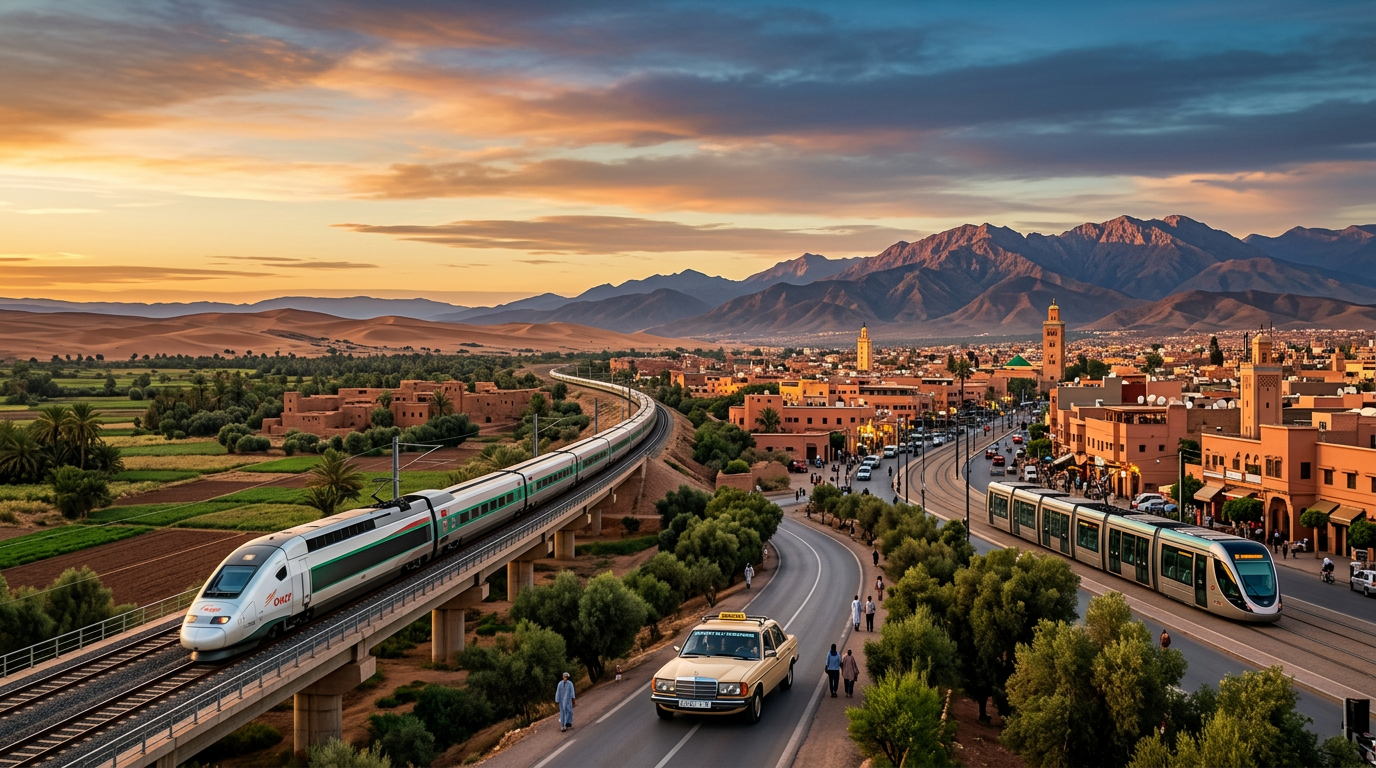
Morocco Transportation 2025: The Ultimate Guide to Getting Around
Master getting around Morocco with our ultimate 2025 guide. Discover the best Morocco transportation options—from high-speed trains and intercity buses to petit taxis and desert 4x4s—for a safe, affordable, and unforgettable trip.
Picture this: you step off a gleaming high-speed train in Tangier, hop a grand taxi through the Rif Mountains to the blue-painted streets of Chefchaouen, then board an air-conditioned bus south toward the Sahara—all in a single week, all for less than you’d spend on a weekend car rental back home. That’s the reality of Morocco transportation in 2025. The country’s network of trains, buses, taxis, flights, and rental cars has never been more connected or more traveler-friendly. Whether you’re a solo backpacker navigating medinas on foot or a family planning a cross-country road trip, this guide breaks down every mode of travel so you can move through Morocco with confidence and ease.
✦ Key Takeaways
Morocco’s transport network is modern and affordable, featuring high-speed trains, reliable intercity buses, city trams, and ubiquitous taxis.
Match your transport to the distance: trains for major cities, buses for wider coverage, taxis for short hops, and flights for cross-country leaps.
Book popular trains and buses in advance, carry small bills for taxis, and keep valuables secure in crowded stations for a smooth journey.
For ultimate flexibility, consider car rentals or a private driver—ideal for exploring mountains, the desert, and remote villages.
Use offline maps and an eSIM for seamless navigation; a few basic Arabic or French phrases will greatly enhance your travel experience.
Overview of Morocco Transportation
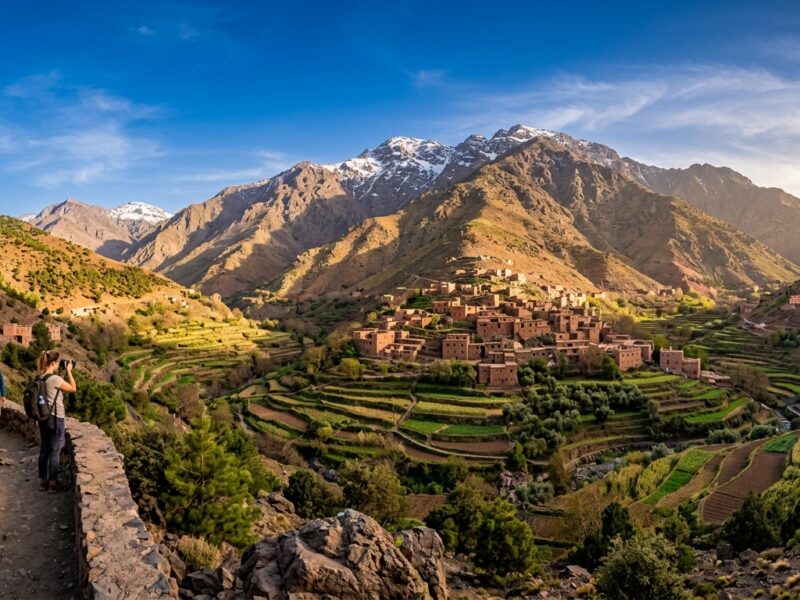
From snow-tipped Atlas Mountain peaks to Atlantic surf towns and Saharan dunes, Morocco packs extraordinary diversity into manageable distances. The country continues to expand highways, modernize train stations, and roll out urban trams—making it easier than ever to move between imperial cities, coastal escapes, and stunning mountain valleys. Mastering how to travel in Morocco means choosing the right transport for each leg of your journey.
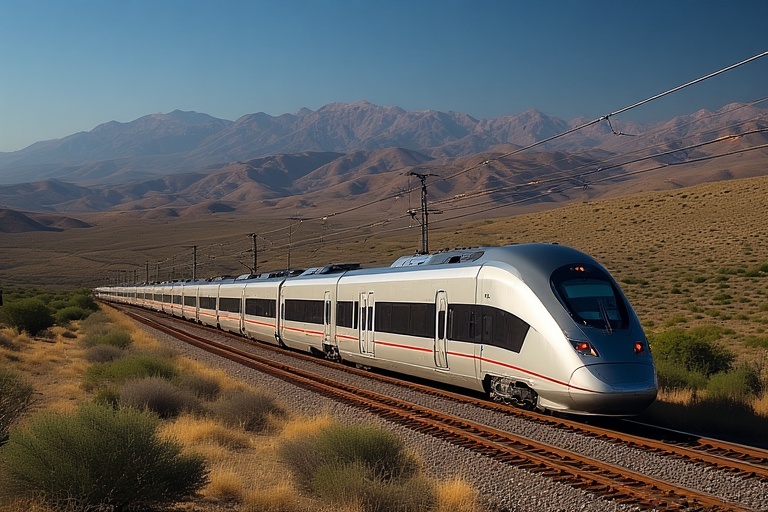
The good news? Morocco’s infrastructure has seen massive investment in recent years. The Al Boraq high-speed rail line—Africa’s first—connects Tangier to Casablanca in just over two hours. New autoroutes link major cities with smooth, well-signed highways. And in cities like Casablanca and Rabat, modern tram systems make getting around feel effortless. Whether you’re travelling through Morocco on a tight budget or seeking premium comfort, there’s a transport option that fits.
💡 Plan by excitement, then by logistics. Sketch your route around the places that excite you most, then match the best transport mode for each leg. For planning inspiration, browse our Morocco Destinations guide.
Understanding the full spectrum of Morocco transportation options before you arrive saves time, money, and stress. Below, we break down every mode—from the national rail network to motorbike rentals—so you can build a travel plan that works for your style, budget, and timeline.
Powered by GetYourGuide
Public Transport in Morocco
Morocco public transport is efficient along major corridors and cost-effective nationwide. Expect clean rolling stock on key train lines, air-conditioned buses on popular routes, and frequent taxis in every city. This makes getting around Morocco accessible for every type of traveler—from budget backpackers to families with children.
General Travel Tips for Public Transport
- Keep essentials in a zippered cross-body bag and stay alert in busy stations.
- Reserve ahead for weekends, holidays, and popular daytime trains.
- Use simple greetings—Salam (hello), Shukran (thank you)—and dress modestly outside major tourist hubs.
- Typical costs: intercity trains run approximately $10–15 between big cities; city buses cost under $1 per ride.
- Download offline maps before you leave your hotel; carry small bills (10–20 MAD notes) for taxis and bus fares.
Trains (ONCF Network)
Morocco’s national rail operator, ONCF, connects Casablanca, Rabat, Fes, Marrakech, and Tangier on a reliable and comfortable network. The crown jewel is the Al Boraq high-speed line, which zips between Tangier and Casablanca in just over two hours at speeds up to 320 km/h—making it one of the fastest trains in Africa.
First class buys wider seats, more legroom, and quieter cars; second class is excellent value and perfectly comfortable for journeys under four hours. Here are the key routes and approximate travel times:
- Casablanca ⇄ Marrakech: ~3 hours
- Rabat ⇄ Fes: ~3.5 hours
- Tangier ⇄ Casablanca (Al Boraq HSR): ~2 hours 10 minutes
- Casablanca ⇄ Oujda: ~10 hours
For route breakdowns, seat classes, and step-by-step booking instructions, see our dedicated Morocco Trains Travel Guide. During peak season (July–August, Ramadan, and national holidays), first-class seats sell out days in advance—book online via the ONCF app or website.
Intercity Buses (CTM & Supratours)
Where trains don’t reach, buses fill the gap beautifully. CTM and Supratours are the two main operators and they cover the entire map—including destinations without rail service such as Essaouira, Agadir, Chefchaouen, and towns throughout the Atlas Mountains and Saharan fringe.
CTM typically offers reserved seating, air conditioning, and luggage holds. Supratours is operated by ONCF and often syncs departure times with train schedules, making bus-train connections seamless. Both operators have online booking, though smaller local bus companies (which are cheaper but less comfortable) usually require buying tickets at the station.
A CTM bus from Marrakech to Essaouira costs around 80–100 MAD ($8–10) and takes approximately three hours. From Fes to Chefchaouen, expect around 75–100 MAD and about four hours.
Trams
Casablanca and Rabat both operate modern tram systems that are clean, frequent, and ideal for cross-town trips. Casablanca’s two-line tram network connects major landmarks, business districts, and residential areas, while Rabat’s tram links the city center to Salé across the river.
Buy tickets at platform machines before boarding and validate them at the turnstile or onboard validators—inspections are routine and fines for riding without a valid ticket are steep. Single rides cost 6–8 MAD ($0.60–0.80), making trams one of the cheapest and most convenient ways to navigate these cities.
City Buses
City buses extend beyond tram lines into neighborhoods and suburbs with fares typically 4–6 MAD ($0.40–0.60). They can be crowded at rush hour, so secure your bag, hold on during bends, and be prepared for a lively local experience. Routes aren’t always posted in English, so having your destination written in Arabic on your phone helps enormously.
Powered by GetYourGuide
Shared Taxis (Grand & Petit)
Grand taxis (usually beige Mercedes sedans or newer Dacia Logans) link towns and depart when all seats are full—typically six passengers in a sedan. They’re the backbone of intercity travel for routes too short or too rural for buses. Negotiate the fare per seat before departure; buying extra seats is common if you want more space or a faster departure.
Petit taxis operate within city limits and are usually metered, though colors vary by city: red in Marrakech, blue in Rabat, beige in Casablanca. They seat up to three passengers. Always insist the driver starts the meter; if there’s no meter or the driver refuses, agree on a price before getting in.
For detailed etiquette, fare expectations, and negotiation strategies, read our Taxi Services Morocco Complete Guide.
In major cities, ride-hailing apps like InDrive are gaining traction and can save you the hassle of haggling. They also provide a digital receipt and upfront pricing—particularly useful for airport rides.
Other Ways of Getting Around Morocco
Domestic Flights
When time is tight, flying between far-flung cities can save an entire day of overland travel. Royal Air Maroc and Air Arabia Maroc operate domestic routes connecting Casablanca, Marrakech, Tangier, Fes, Agadir, Ouarzazate, Laayoune, and Dakhla. A one-way flight from Marrakech to Tangier takes about 90 minutes versus 8+ hours by bus.
Fares range from 500–1,500 MAD ($50–150) depending on how far in advance you book and the route. For complete route maps, airline comparisons, and booking strategies, see our Domestic Flights Morocco Guide 2025.
✈️ Flight delay or cancellation? If your domestic or international flight is disrupted, services like Compensair can help you claim up to €600 in compensation from the airline—no upfront cost, and they handle all the paperwork.
Car Rentals
Self-driving grants maximum freedom and is perfect for exploring the Anti-Atlas, remote oases, winding mountain passes, and secluded beaches that public transport simply can’t reach. Morocco’s autoroute network between major cities is modern and well-maintained, though rural roads require more caution—especially in the mountains and during rainy season.
Study insurance options, deposit requirements, and road rules in our Renting a Car in Morocco Guide. To compare prices across international and local agencies and find the best deal, check QEEQ for broad comparisons or Localrent for local Moroccan agencies that often offer lower deposits and more flexible terms.
Private Drivers and Tours
Hiring a private driver or joining a guided tour removes all logistical stress—ideal for families, small groups, and travelers who want to cover a lot of ground without worrying about navigation or schedules. Drivers typically double as informal guides and can customize routes on the fly. Consider these highly rated experiences you can pre-book for peace of mind:
- Marrakech airport transfer — start your trip stress-free with a pre-arranged pickup
- Marrakech City Tour: Souks, Palaces & Hidden Gems — an expert-led deep dive into the red city
- Essaouira full-day trip from Marrakech — coastal escape with return transport included
- Ait Benhaddou & Ouarzazate day trip — UNESCO kasbahs via the dramatic Tizi n’Tichka pass
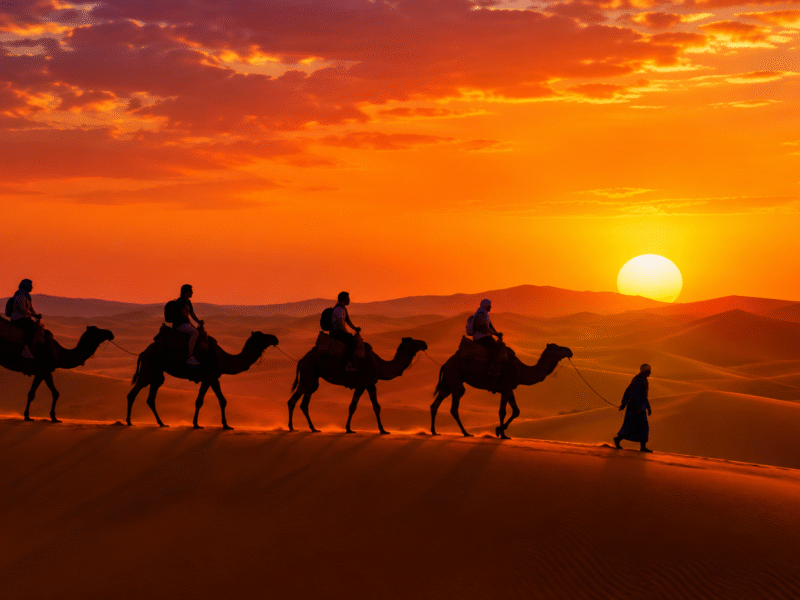
- Merzouga 3-Day Desert Safari from Marrakech — the classic Sahara experience with camel trek and camp
- Ouzoud Waterfalls guided hike & boat trip — Morocco’s most spectacular waterfalls
Powered by GetYourGuide
Motorbikes and Scooters
Renting a motorbike or scooter is a great option for coastal towns like Essaouira and Agadir, as well as short mountain loops where public transport is infrequent. Daily rentals start around 200–400 MAD ($20–40). Always wear a helmet (it’s the law), avoid night riding on unlit rural roads, and carry extra water during summer months when temperatures soar.
Bicycles
Cycling is increasingly popular in Marrakech’s Palmeraie district and mellow coastal cities like Essaouira. Many riads and guesthouses offer bike rentals for 50–100 MAD per day. Choose early mornings to beat both heat and traffic, stick to designated paths where available, and always lock up securely when exploring on foot.
How to Travel in Morocco: Practical Tips
Selecting Your Transport Mode
Choosing the right transport for each leg of your trip is the single most important decision for a smooth Morocco itinerary. Here’s a quick decision framework:
- Trains: Fastest between major hubs (Casablanca, Rabat, Fes, Marrakech, Tangier). Book seats for runs over three hours.
- Buses (CTM/Supratours): Widest geographic coverage—essential for mountain and coastal towns without rail service.
- Shared grand taxis: Practical for short intercity links (30–90 minutes) and last-mile connections from bus/train stations.
- Domestic flights: Best for long north–south stretches (Marrakech–Tangier, Casablanca–Dakhla) when you need to save a full travel day.
- Car rental: Ideal for self-paced exploration of the Anti-Atlas, Draa Valley, and off-the-beaten-path villages.
- Private driver/tour: Best for families, groups, and anyone who wants zero logistics stress.
Safety and Cultural Considerations
Morocco is generally very safe for travelers, but sensible precautions go a long way. For comprehensive, up-to-date safety advice, consult our Morocco Safety Travel Guide 2025.
- Wear daypacks in front in crowded areas like bus stations and souks; keep phones out of open pockets.
- Dress modestly on public transport, especially in rural regions—cover shoulders and knees as a sign of respect.
- Solo travelers, especially women: ride in well-lit train cars, sit near other passengers, and avoid empty bus sections late at night.
- Use official taxi ranks rather than accepting rides from unlicensed vehicles.
Consider purchasing travel insurance that covers medical emergencies, trip cancellation, and baggage loss before your trip. Services like EKTA offer affordable policies you can purchase online in minutes, with 24/7 multilingual support.
Booking Strategies
- Peak season/weekends: Reserve trains and CTM/Supratours buses early—up to a week ahead for holiday periods. Choose first class for comfort on legs over four hours.
- Off-peak/local trips: Buy at the station same-day or hop in grand taxis as they fill. Flexibility is your friend.
- Accommodation near transport hubs: Staying near train or bus stations minimizes petit taxi costs and early-morning stress. Compare hotel prices on Hotellook or browse curated options on our Morocco Hotels page.
Language Navigation
Arabic and Amazigh (Berber) are Morocco’s official languages. French is widely used for tickets, timetables, and signage. English is common in major tourist centers like Marrakech, Fes, and Essaouira, but becomes rarer in rural areas. Writing your destination name in Arabic on your phone often speeds up communication with taxi drivers and station staff. Understanding Moroccan hospitality norms—like accepting offered tea and greeting people warmly—can transform routine interactions into memorable moments.
Digital Tools and Resources
- Offline maps: Download Google Maps or Maps.me offline maps for Morocco before heading out—essential when you lose signal in the mountains or desert.
- Stay connected: Get affordable mobile data with an Airalo eSIM—activate before you land and avoid hunting for local SIM cards at the airport.
- Luggage storage: Arriving early or have a late flight? Radical Storage offers luggage lockers near major stations and medinas so you can explore hands-free.
- Budgeting: Plan your spending with our Morocco Travel Cost Guide, plus money-saving strategies in Save Money Morocco Travel Tips and Morocco on a Budget.
Sample Itineraries: Getting Around Morocco
Theory is useful, but seeing how transport modes chain together in real itineraries is where planning clicks into place. Below are three proven routes that show how to combine trains, buses, taxis, and tours for maximum impact with minimum hassle.
Two trains, one seamless day of travel
From Marrakech station (a short petit-taxi ride from the medina, around 15–20 MAD), board the morning train to Casablanca Voyageurs (~2.5 hours). The route passes through the flat Haouz plain and Chaouia farmland—settle into your seat with Moroccan snacks from the station kiosk.
At Casablanca, connect to the Fes train (~3.5 hours), which heads northeast through Rabat, Meknes, and the rolling green hills of the Middle Atlas foothills. Arrive at Fes station in the early evening—perfect timing for a first wander through the ancient medina and dinner at a rooftop restaurant.
Pro tip: Arrive 25–30 minutes early for platforms, especially during peak travel. Buy both tickets at once if using the ONCF website, and choose a midday connection at Casa for a buffer in case of delays. For detailed seat selection and timing advice, consult our Morocco Trains Travel Guide.
Bus north, then a scenic taxi into the blue city
Take an early CTM or Supratours bus from Casablanca to Tetouan (approximately 5–6 hours, ~150 MAD). From Tetouan’s bus station, grand taxis to Chefchaouen depart frequently and cost around 35–50 MAD per seat (approximately one hour through the scenic Rif Mountains).
Taxi tip: Keep coins and small bills ready for taxi shares. Confirm the fare per seat before departure—not the total for the car. If you want the taxi to yourself (a common move for couples or small groups), simply buy all the seats. For more taxi know-how, read our Taxi Services Morocco Complete Guide.
Marrakech → Atlas → Desert → Coast in 7 days
Days 1–2 (Marrakech): Get oriented using trams, city buses, and petit taxis. Consider booking an expert-led city tour to cover the souks, Bahia Palace, and Koutoubia Mosque efficiently. Arrange an airport transfer for a smooth arrival.
Day 3 (Atlas day trip): Join a guided excursion from Marrakech. Popular options include the Ait Benhaddou & Ouarzazate day trip via the High Atlas, or the stunning Ouzoud Waterfalls hike. Serious trekkers can plan deeper adventures with our Atlas Mountains Trekking Guide.
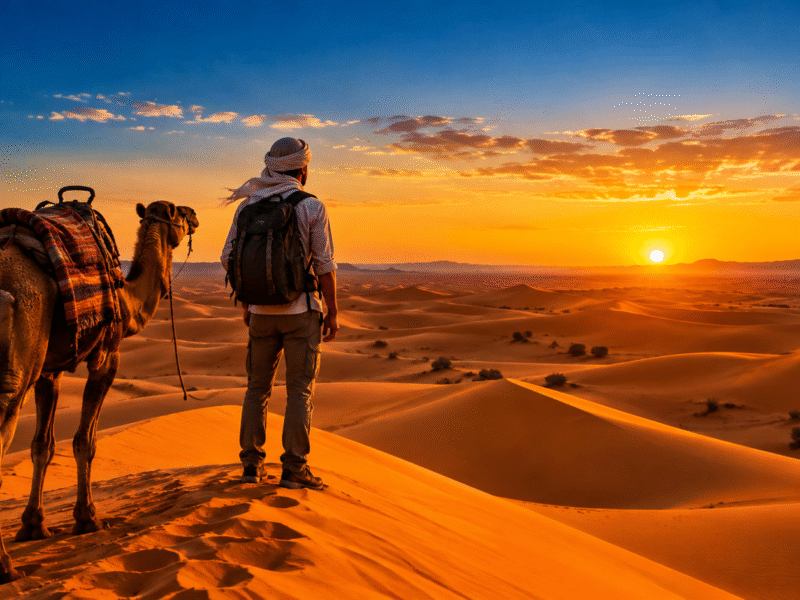
Days 4–5 (Desert): Travel by minibus and 4×4 on a Merzouga 3-day desert safari. You’ll cross the High Atlas, traverse the Draa Valley, and arrive at the Erg Chebbi dunes for camel trekking and a night under the stars. Alternatively, plan your own route using our Sahara Desert Tours Guide.
Days 6–7 (Coast): Take a bus to Essaouira (~3 hours from Marrakech) or combine a train to Casablanca and a bus south to Agadir. Surfers should browse our Best Beaches in Morocco for the top wave spots.
Powered by GetYourGuide
Your Morocco Travel Transport Plan
Morocco’s expanding network makes it genuinely simple to weave together cities, mountains, desert, and sea—all in a single trip. An effective Morocco travel transport plan uses trains for the heavy lifting between major hubs; buses and grand taxis cover the gaps; domestic flights and car rentals unlock ambitious multi-region itineraries. With a little advance planning, you can keep travel days smooth, costs predictable, and unexpected detours delightful rather than stressful.
Before you go, review costs in our Morocco Travel Cost Guide, pick your dream destinations from our Destinations guide, and choose the perfect accommodation via Morocco Hotels. Then embrace the journey—transport in Morocco isn’t just a means to get somewhere. It’s part of the adventure itself.
📌 Planning note: The best months for comfortable overland travel are March–May and September–November, when temperatures are moderate and roads are clear. Summer is ideal for coastal routes, while winter brings snow to the Atlas passes—check road conditions if self-driving.
Powered by GetYourGuide
Reserve Your Spot
Book Your Morocco Transport & Tours
From airport transfers to multi-day desert safaris, secure your Morocco experiences in advance. Instant confirmation and free cancellation on most bookings.
Frequently Asked Questions
Everything you need to know about Morocco transportation
✦ Your Morocco Journey Starts Here
Navigate Morocco Like You Belong
With your transport figured out, the real adventure begins. From the blue streets of Chefchaouen to the golden dunes of Merzouga, every mode of travel in Morocco delivers its own unforgettable story. Book your first experience, step onto that train, and let the journey unfold.