Marrakech Food Guide: Traditional Moroccan Dishes & Cooking Classes
Indulge in Marrakech food: a guide to traditional Moroccan dishes in Marrakech. Discover must-try street food and how a cooking class can deepen your experience.
The moment you step into Marrakech’s bustling medina, your senses ignite. The air fills with aromatic spices—cinnamon, cumin, and saffron dancing together in invisible clouds. Sizzling tagines bubble beneath clay lids while vendors call out to passersby in rhythmic Arabic and French. Colorful pyramids of olives, preserved lemons, and dates catch your eye at every turn, while smoke from charcoal grills mingles with the sweet perfume of mint tea.
Marrakech stands as Morocco’s culinary capital, a paradise where ancient cooking traditions meet vibrant street food culture. Each dish tells a story of the country’s rich heritage, blending Berber, Arab, Andalusi, and African influences into something uniquely Moroccan—a fusion refined over centuries that you won’t taste anywhere else on earth.
✦ Key Takeaways
Marrakech food is a rich fusion of Berber, Arab, Andalusi, and African culinary traditions, characterized by complex spice blends like Ras el Hanout
Essential must-try dishes include slow-cooked Tagine, the Friday tradition of Couscous, and the unique Marrakech specialty, Tanjia
The heart of Marrakech’s street food scene is Djemaa el-Fna square, offering delicacies like Mechoui, grilled meats, and snail soup
Taking a Marrakech cooking class provides an immersive cultural experience, teaching traditional techniques for preparing iconic dishes
Mint tea is not just a drink but a cornerstone of Moroccan hospitality, representing welcome, friendship, and social connection
The Cultural Tapestry of Marrakech Food
Marrakech food represents a beautiful fusion of various culinary traditions forged over millennia. Unlike many North African cuisines, Moroccan food has maintained its distinctive character with minimal European influences. Instead, it blends Berber, Arab, Andalusi, Mediterranean, and African cooking styles into something uniquely Moroccan—a reflection of the kingdom’s position as a crossroads of trade routes and civilizations.
Geography plays a crucial role in shaping Marrakech food traditions. The city’s location near the Atlas Mountains, close to the desert, and not far from the Atlantic coast means access to extraordinarily diverse ingredients. The fertile Haouz plains provide fresh vegetables and fruits year-round, while the nearby Atlas Mountains contribute aromatic herbs, honey, and unique cooking techniques passed down through Berber communities for generations.

At the heart of Marrakech food are its incredible spices and spice blends. The famous Ras El Hanout (meaning “top of the shop”) combines over 20 different spices into one magical blend—each spice merchant guards their unique recipe jealously. Precious saffron from the Taliouine region adds its distinctive golden hue and earthy aroma, while ginger, cumin, cinnamon, and turmeric create layers of flavor that transform even the simplest ingredients into something extraordinary.
💡 Spice Market Insider Tip: Visit the spice souks early in the morning when vendors are arranging their fresh stock. This is the best time to learn about spices directly from merchants and get fair prices—they’re more relaxed before the tourist crowds arrive.
Communal eating defines the Moroccan dining experience in ways that might surprise first-time visitors. Most traditional Moroccan dishes in Marrakech are served in large central platters where family and friends gather around, eating with bread instead of utensils. This practice reflects the deep value Moroccans place on hospitality and togetherness—sharing food from one dish symbolizes trust, community, and the breaking down of social barriers.
Traditional cooking methods give Marrakech food its distinct character. Clay pots called tagines with their iconic conical lids trap steam to create impossibly moist, flavor-packed stews. Couscoussiers—special double-chambered steamers—transform tiny grains of semolina into fluffy clouds of couscous. Slow roasting techniques for meats like mechoui have been perfected over centuries, while traditional earthenware ovens called ferrans still bake the bread that accompanies every meal.
Fresh, seasonal ingredients remain central to authentic Marrakech cooking. Rather than relying on imported goods, traditional Moroccan dishes celebrate what’s available locally and in season—from spring artichokes and fava beans to fall pumpkins and year-round staples like olives and preserved lemons. This seasonality isn’t a trend but a centuries-old practice born of necessity and perfected into an art.
Essential Traditional Moroccan Dishes in Marrakech
Tagine: The Cornerstone of Marrakech Cuisine
The tagine is both a cooking vessel and the dish it creates—a beautiful example of form perfectly following function. The distinctive conical clay pot isn’t just decorative; its genius design allows steam to rise, condense on the cool cone surface, and drip back down, continuously basting the food below. This creates an almost magical self-basting effect that requires no attention from the cook.
This slow-cooking method makes traditional Moroccan dishes in Marrakech incredibly tender and flavorful. Ingredients simmer gently for hours, allowing spices to bloom fully and meats to become so tender they fall apart at the touch of a fork. The low, even heat also melds flavors in ways that faster cooking methods simply can’t replicate—each ingredient maintains its identity while contributing to a harmonious whole.
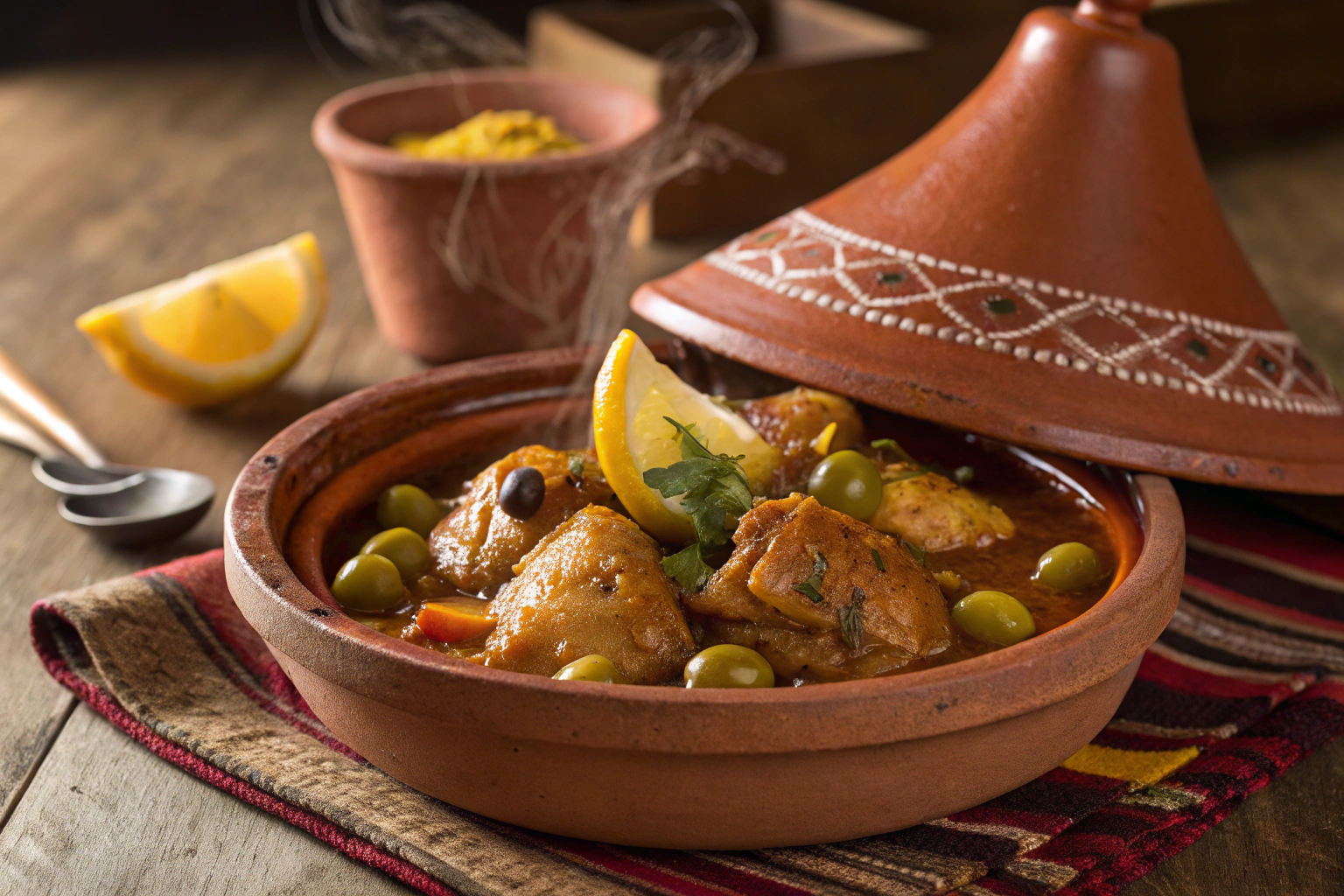
Popular tagine varieties you’ll encounter throughout Marrakech include:
- Chicken Tagine with Preserved Lemon and Olives — The signature dish of Marrakech. Tangy preserved lemons and briny olives balance perfectly with tender chicken, creating a flavor profile that’s simultaneously rich and bright, savory and citrusy.
- Lamb Tagine with Prunes and Almonds — This sweet-savory combination showcases Moroccan cuisine’s Andalusian influences. Sweet prunes soften during cooking, their sugars caramelizing slightly, while crunchy toasted almonds provide textural contrast to the fall-apart tender lamb.
- Kefta Tagine with Eggs — Spiced meatballs swim in a rich tomato sauce fragrant with cumin and paprika, topped with eggs that cook gently in the residual heat. The runny yolks create an additional sauce layer that’s irresistible when soaked up with fresh bread.
- Vegetable Tagine — Seasonal vegetables like zucchini, carrots, potatoes, bell peppers, and artichokes bathed in aromatic spices prove that Moroccan cuisine celebrates vegetables as intensely as it does meat. Often finished with preserved lemon and olives for that signature Marrakech flavor.
Tagines are traditionally eaten communally with chunks of fresh khobz bread used to scoop up the flavorful sauce—no fork needed! The bread serves as both utensil and flavor vehicle, soaking up every drop of the precious sauce that represents hours of slow simmering.
Couscous: The Friday Tradition
Considered Morocco’s national dish, couscous holds special significance in Marrakech food culture that transcends mere sustenance. Traditionally served on Fridays after mosque prayers, this dish brings families together for the most important meal of the week—a sacred ritual that has survived modernization and continues to anchor Moroccan family life.
Couscous consists of tiny steamed balls made from crushed durum wheat semolina. The traditional preparation is extraordinarily labor-intensive—the grain is steamed multiple times in a couscoussier (a special double-chambered pot), with each steaming followed by hand-fluffing with olive oil to prevent clumping and achieve that impossibly light, fluffy texture. Watching an expert Moroccan cook prepare couscous is like watching a meditation in motion.
In Marrakech, couscous typically arrives as a mountain of fluffy grain topped with a colorful array of seasonal vegetables and meat—often lamb or chicken. The stew below flavors the couscous as it steams, creating a complete one-pot meal where every element enhances the others. Seven vegetables is traditional, representing abundance and good fortune. Everyone eats from the central dish, taking from the section directly in front of them in a beautiful display of structured sharing.
📌 Friday Tradition: If you’re in Marrakech on a Friday, seek out a local family restaurant or accept an invitation to a Moroccan home if you’re fortunate enough to receive one. Friday couscous is when Moroccan home cooking shines brightest—it’s often the best meal of the week.
Tanjia: Marrakech’s Signature Dish
If you want to try something uniquely Marrakech—something you won’t find prepared the same way anywhere else in Morocco—seek out tanjia. This local specialty differs dramatically from dishes you’ll encounter in Fez or Casablanca, making it a true marker of Marrakech culinary identity and a source of considerable local pride.
Tanjia consists of meat (usually lamb shoulder or veal) with remarkably simple seasonings: garlic, cumin, preserved lemon, and precious saffron placed in a special earthenware jar with a narrow neck. What makes it special is the cooking method—the sealed pot is buried in the hot ashes of public bath (hammam) furnaces for 8-12 hours, slow-cooking at steady, gentle heat. Experiencing a traditional Moroccan Hammam yourself provides fascinating context for this ancient cooking technique that connects two Moroccan traditions.
Historically, tanjia was considered a bachelor’s dish—a clever solution for working men. They would prepare it in the morning with just a few ingredients, drop it at the neighborhood hammam for cooking while they worked, and collect it after their shift. The result is meat so tender it dissolves on your tongue, with deeply developed flavors that seem impossibly complex given the minimal ingredient list. The long, slow cooking in the sealed jar creates an almost sauce-like consistency from the meat’s own juices.
Look for tanjia at local workers’ restaurants rather than tourist-oriented establishments. Ask your riad host for recommendations—they’ll know which neighborhood spot makes the best version. It’s typically served only for lunch, as the hammams fire up their furnaces in the early morning.
Pastilla (Bastilla): Sweet and Savory Pie
Pastilla showcases the sophisticated complexity of Marrakech food traditions at their most refined. This elaborate pie combines sweet and savory elements in perfect harmony—a balancing act that seems impossible until you taste it and realize the combination is absolutely perfect, each element elevating the others.
Traditional pastilla uses pigeon meat, though chicken is more common in restaurants today and equally delicious. The meat filling is spiced with cinnamon, ginger, and saffron, often mixed with scrambled eggs for richness, then layered with crushed almonds sweetened with sugar and scented with orange blossom water. Everything is wrapped in impossibly thin warqa pastry (similar to phyllo but even more delicate) and baked until golden and crispy.
What makes pastilla truly unique is its finishing touch—a generous dusting of powdered sugar and cinnamon creating an intriguing sweet-savory contrast that shouldn’t work but absolutely does. The first bite might surprise you; by the third bite, you’ll understand why this dish is reserved for celebrations. In Marrakech food culture, pastilla is considered a special occasion dish, prominently featured at weddings, religious festivals, and important family gatherings.
Harira: The Comforting Soup
Harira holds special significance during Ramadan as the traditional dish to break the daily fast at sunset, but this hearty soup is enjoyed year-round in Marrakech as a warming breakfast or light dinner. The sound of harira simmering on stoves throughout the medina is one of Ramadan’s sensory markers.
This tomato-based soup combines lentils, chickpeas, fresh herbs (especially cilantro and parsley), and often small pieces of lamb or beef for richness. Flavored with warming spices—ginger, black pepper, cinnamon, and turmeric—harira offers complex, comforting flavors despite its humble ingredients. A final squeeze of lemon juice brightens the entire dish, cutting through the richness and adding brightness that makes you want another spoonful.
In Marrakech, harira is typically served with dates and chebakia (honey-coated sesame cookies)—the traditional combination for breaking fast during Ramadan. The contrasting textures and flavors—savory soup, sweet dates, sticky-sweet cookies—perfectly represent Moroccan cuisine’s love of variety and contrast. Even outside Ramadan, many locals still enjoy this combination as their preferred way to eat harira.
B’ssara: Fava Bean Soup
B’ssara might be simple—just dried fava beans, garlic, olive oil, cumin, and paprika—but this humble soup has been a breakfast staple in Marrakech for generations, fueling workers, students, and locals through morning activities. Its simplicity is its strength; when made well, each ingredient sings clearly.
Dried fava beans are soaked overnight, then simmered until completely soft and creamy—almost pudding-like in consistency. The beans are typically blended smooth, though some vendors leave a bit of texture. Seasoned generously with garlic, olive oil, cumin, and paprika, b’ssara offers surprisingly rich, earthy flavor from minimal ingredients. A drizzle of your best olive oil and a sprinkle of cumin on top adds the essential finishing touch.
For many Marrakech locals, b’ssara with fresh bread makes an affordable, satisfying, protein-rich breakfast. You’ll find it served from early morning in small shops throughout the medina—look for the steaming pots and the line of locals. It’s incredibly cheap (often just a few dirhams), filling, and utterly authentic. This is the breakfast of real Marrakech, unchanged for generations.
Street Food Delights in Marrakech
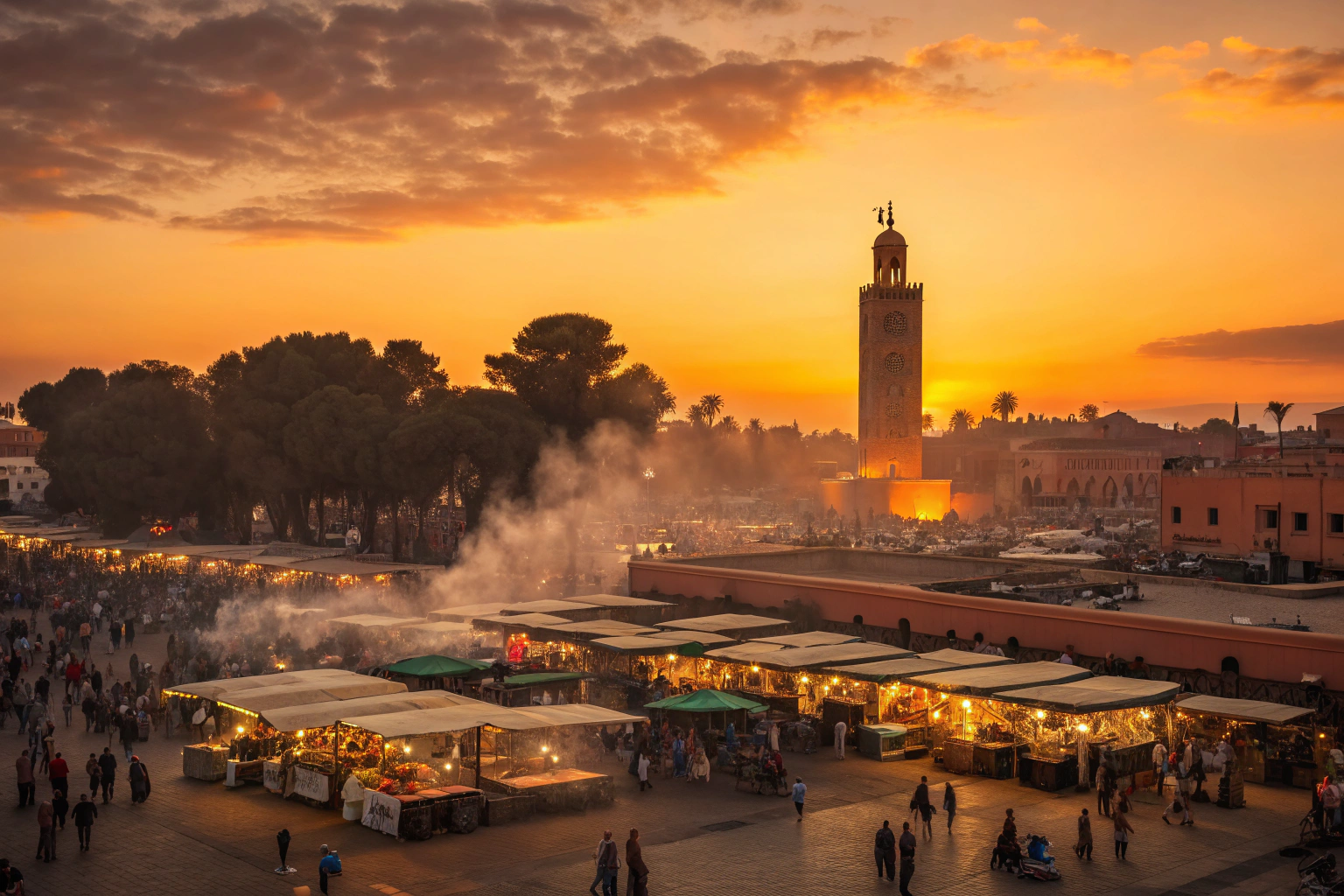
The heart of the Marrakech street food scene beats loudest in Djemaa el-Fna square. As evening falls, this UNESCO-recognized cultural space transforms into a massive open-air restaurant with dozens of food stalls, acrobats, storytellers, and snake charmers creating a sensory overload that somehow feels absolutely perfect. The energy is electric, the smells intoxicating, the theatre unforgettable.

Must-try street foods that define the Marrakech experience include:
- Mechoui — Whole lamb slow-roasted in underground ovens until the meat becomes meltingly tender and the skin achieves perfect crispness. Vendors carve off portions to order, usually served simply with salt, cumin, and bread. The meat needs nothing else—the slow roasting creates flavors that speak for themselves.
- Grilled Meats — Kefta (spiced ground meat skewers) and merguez (spiced lamb sausage) sizzle over charcoal grills, the smoke adding another layer of flavor. Watch them cook—the vendors’ practiced hands know exactly when each skewer reaches perfection.
- Snail Soup — This might sound unusual, but snail soup (or “babouche”) is a beloved local specialty believed to aid digestion and provide health benefits. The snails simmer in a fragrant broth flavored with over a dozen herbs and spices. You sip the broth and use a toothpick to extract the snails—it’s an adventure for the brave that often becomes a favorite.
- Fresh-Squeezed Orange Juice — Marrakech is famous for its sweet, juicy oranges. Vendors line the square with impossibly perfect pyramids of fruit, squeezing glasses to order. It’s refreshing, delicious, and incredibly cheap—the perfect counterpoint to spicy foods.
- Msemen — Square-shaped, flaky flatbreads cooked on griddles right before your eyes. Served plain, with honey, or stuffed with vegetables or kefta. Watching the vendor fold and stretch the dough is part of the experience.
- Sfenj — Moroccan doughnuts, fried fresh and served plain or rolled in sugar. Best eaten warm when they’re still slightly crispy outside and pillowy soft inside.
💡 Street Food Safety Tips: Choose stalls with lots of local customers—that’s your best indicator of quality and freshness. Look for visible cleanliness and high turnover ensuring fresh food. The busiest stalls are usually the best, even if you wait a few minutes. Don’t be shy about pointing to what others are eating if you’re unsure what to order.
When navigating this delicious chaos, especially on your first visit, consider joining a guided Marrakech food tour. Expert guides know which stalls serve the best versions of each dish, can negotiate fair prices, explain what you’re eating, and ensure you try a variety of specialties you might otherwise miss. It’s an investment that pays dividends in both quality and cultural understanding.
Moroccan Bread Varieties
Bread accompanies virtually every meal in Marrakech food culture—it’s not an exaggeration to say that no Moroccan meal is complete without it. Its importance extends far beyond nutrition; bread is considered sacred in Moroccan culture. Dropping bread is followed by picking it up, kissing it, and touching it to your forehead before placing it safely aside—a gesture of respect that reflects bread’s almost spiritual significance.
Common bread varieties you’ll encounter throughout Marrakech include:
- Khobz — Round, slightly flattened loaves with a coarse texture and slightly dense crumb, perfect for scooping up tagine sauce or tearing to share. This is the daily bread of Morocco, baked fresh multiple times a day in neighborhood ferrans (communal ovens).
- Batbout — Stovetop bread cooked on griddles rather than baked, creating a pocket like pita. The inside can be filled with almost anything—from leftover tagine to honey and butter for breakfast.
- Msemen — Square folded pancake-like bread with many flaky layers created through folding butter or oil into the dough repeatedly. Delicious with honey and butter, or stuffed with savory fillings.
- Harcha — Semolina-based bread with a texture somewhere between bread and cake—slightly crumbly, slightly sweet, with a cornbread-like quality. Often served with tea as an afternoon snack.
In Moroccan culture, bread is never thrown away. Leftover bread is given to animals, set aside for those in need, or dried and later ground into breadcrumbs for cooking. This respect for bread reflects broader values of gratitude, avoiding waste, and caring for community that permeate Moroccan culture.
Moroccan Sweets and Desserts
Sweet treats hold a special place in Marrakech food traditions, especially when served alongside the ubiquitous mint tea. Rather than being reserved strictly for after meals like in Western dining, sweets might appear throughout the day as gestures of hospitality, celebration markers, or simply because the moment feels right for something sweet.
Popular Moroccan sweets you’ll discover in Marrakech include:
- Chebakia — Sesame cookies soaked in honey and folded into intricate flower shapes, especially popular during Ramadan. Making these is an art form—the dough is shaped into roses, fried until crispy, then bathed in warm honey. They’re sticky, sweet, nutty, and absolutely addictive.
- Ghriba — Crumbly, delicate cookies made with almonds or coconut. They literally melt in your mouth, leaving behind traces of almond flavor and sugar. Every grandmother has her own ghriba recipe, often a closely guarded secret.
- Sfenj — We mentioned these as street food, but they’re worth repeating. Moroccan doughnuts enjoyed at breakfast or as snacks, best eaten fresh and warm when the contrast between crispy exterior and soft interior is most pronounced.
- Kaab el Ghazal — Crescent-shaped cookies filled with almond paste and topped with sugar, known poetically as “gazelle horns.” The filling is flavored with orange blossom water and cinnamon, wrapped in thin pastry, then baked until just set—they should be tender, not crunchy.
- Fresh and Dried Fruits — Dates, figs, and apricots often complete a meal in Moroccan homes, providing a naturally sweet ending that aids digestion. Moroccan dates are some of the world’s best—impossibly sweet and tender.
Many Moroccan sweets are labor-intensive and closely associated with religious holidays and celebrations, reflecting their special status in the culture. Making these sweets is often a communal activity—women of the family gathering to prepare large batches together, turning work into social time and passing recipes and techniques to the next generation.
Mint Tea: Morocco’s Liquid Hospitality
No exploration of Marrakech food would be complete without discussing mint tea—playfully called “Moroccan whiskey” in a nod to the country’s limited alcohol consumption and tea’s central role in social life. Understanding Moroccan tea culture is essential to understanding Morocco itself.
The traditional preparation involves Chinese gunpowder green tea, fresh spearmint leaves (nana mint), and lots of sugar—sometimes shocking amounts by Western standards. The tea is steeped in a decorative teapot, often silver-plated or enameled, then poured from a height into small glasses. This pouring technique isn’t showmanship (though it is impressive)—it creates a frothy top that indicates proper preparation and slightly aerates the tea, improving the flavor.
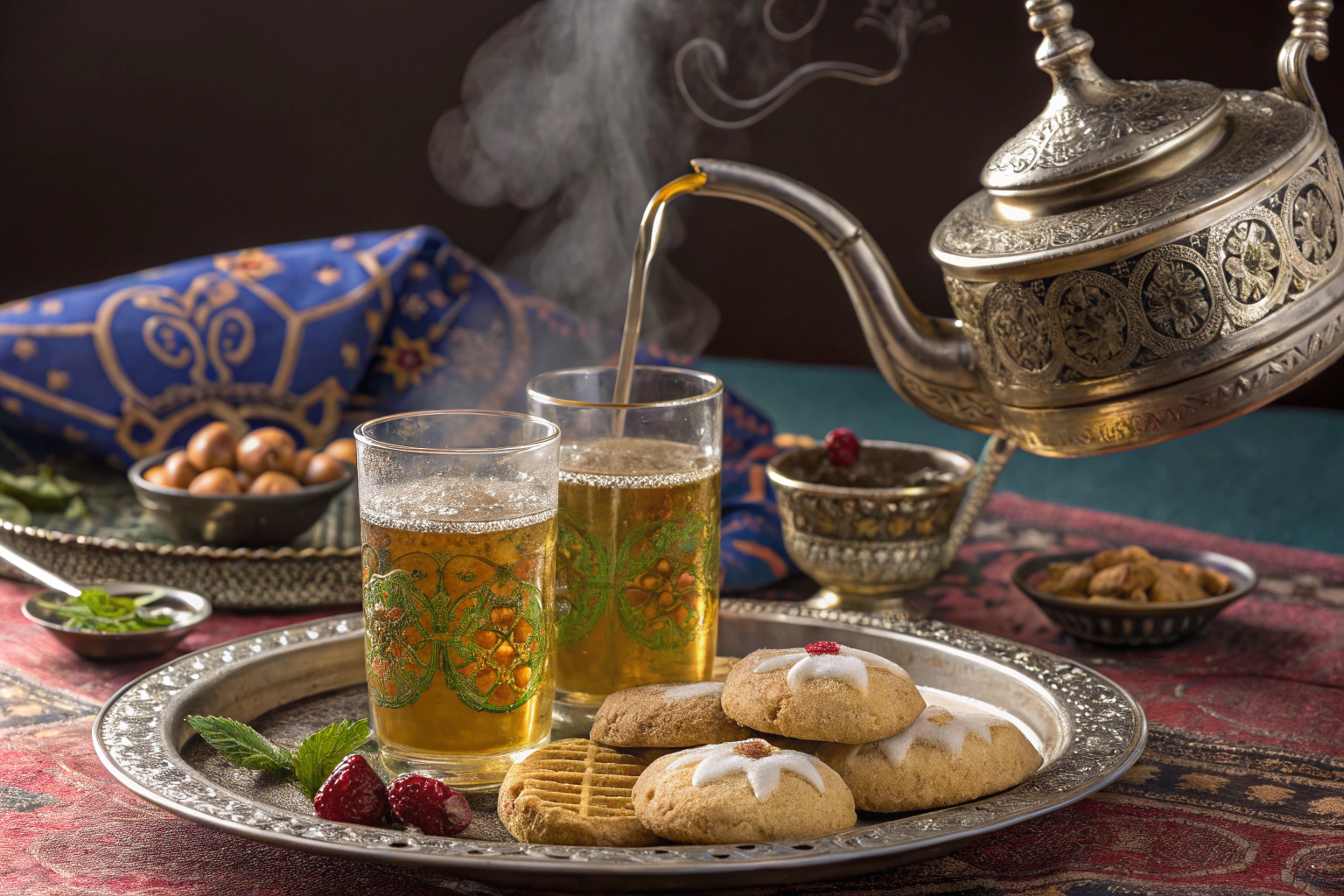
Tea ceremonies represent Moroccan hospitality at its finest. Refusing tea when offered can be considered impolite, though it’s typically served very sweet, especially in Marrakech—far sweeter than most Western palates expect. You can politely request less sugar (“shwiya sukkar” means “a little sugar”), though your host might look slightly disappointed. The Moroccan saying that “the first glass is bitter like life, the second sweet like love, and the third gentle like death” refers to the varying strengths as multiple rounds are served from the same pot—each steeping extracts different flavors from the leaves.
Mint tea accompanies every social interaction—business negotiations, family gatherings, chance encounters with neighbors. It’s Morocco’s social lubricant, conversation starter, and hospitality symbol all in one small glass. Learning to prepare and serve it properly during a Marrakech cooking class provides insight into Moroccan culture that extends far beyond the kitchen.
Immersive Food Experiences: Marrakech Cooking Classes
Why Take a Marrakech Cooking Class
A Marrakech cooking class offers much more than new recipes to try at home—it provides a window into local culture, traditions, and daily life that no amount of restaurant dining can replicate. Through food preparation, you’ll learn about Moroccan values, family structures, gender roles, celebration traditions, and the deep connection between food and identity that defines Moroccan culture.
Most Marrakech cooking classes follow a similar rewarding structure. They begin with a guided market visit where you’ll select fresh ingredients while learning about local produce, seasonal availability, bargaining etiquette, and how Moroccans shop for daily meals. Your instructor will explain ingredients you’ve never seen, introduce you to vendors they’ve known for years, and share the kind of local knowledge that only comes from a lifetime of cooking Moroccan food.
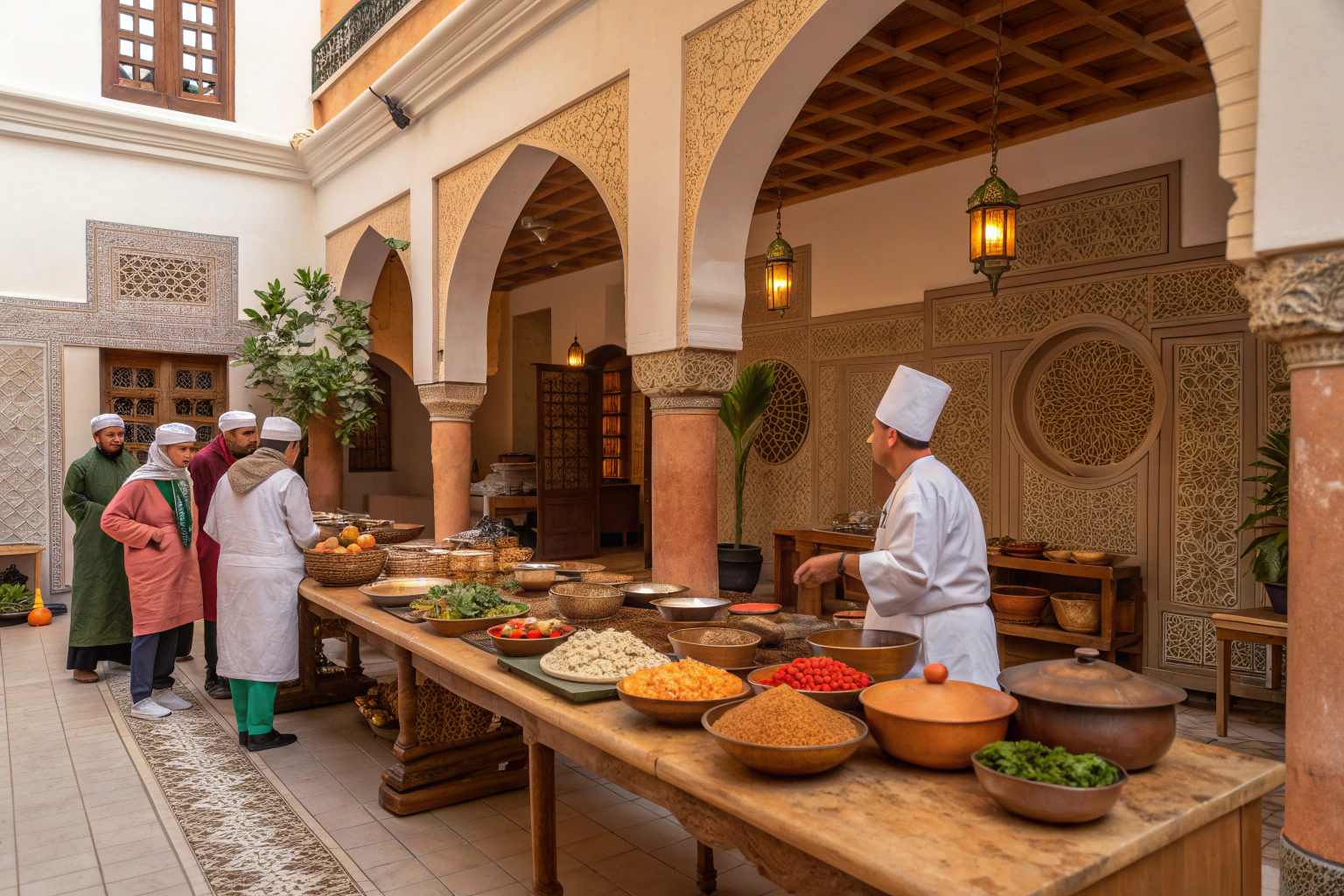
Next comes the hands-on cooking portion in a traditional setting—often a riad kitchen or rooftop. Instructors guide you through preparing traditional Moroccan dishes, explaining not just the how but the why behind each technique. You’ll understand why preserved lemons are prepared months in advance, why the tagine’s shape matters, why bread is torn not cut, and countless other details that transform cooking from following instructions to understanding a culinary philosophy.
These classes shine particularly bright when explaining spices and spice blends. You’ll learn not just how spices flavor food but also their traditional medicinal uses, cultural significance, and symbolic meanings. The famous Ras el Hanout blend alone can contain over 20 different spices—learning to balance these creates an almost intuitive understanding of Moroccan flavor profiles that will improve all your future cooking, Moroccan or otherwise.
Classes typically focus on preparing iconic dishes like tagine, couscous, and Moroccan breads—the foundation of Marrakech food culture. Vegetarian options are widely available, making these experiences accessible to various dietary needs and preferences. The class concludes with everyone sitting down to enjoy the meal you’ve created together—a communal dining experience that mirrors how Moroccans actually eat at home.
Whether you’re a kitchen novice or experienced cook, a Marrakech cooking class adapts to your skill level while delivering authentic techniques and recipes you can truly recreate at home. An experience like a cooking class in a Berber village can be especially memorable, offering insight into rural cooking traditions and ingredient sourcing that differ from urban Marrakech but are equally authentic and fascinating.
What to Expect in a Marrakech Cooking Class
Cooking classes in Marrakech take place in various settings, each offering a different atmosphere but similar quality content. Traditional riads (Moroccan houses with interior courtyards) provide the most authentic ambiance—you’ll cook in the same type of kitchen where these recipes have been prepared for generations. Dedicated cooking schools offer more modern equipment while maintaining traditional techniques. Family homes provide the most intimate experience, though they’re harder to find and usually require personal connections or specialized booking services.
A typical high-quality class follows this format:
- Morning market tour (60-90 minutes) — Select fresh ingredients, meet local vendors, learn about Moroccan produce and shopping culture. Your instructor will show you how to identify quality ingredients and negotiate fair prices.
- Introduction to spices and techniques (30 minutes) — Learn about key spices used in Marrakech food, how to blend them, and fundamental Moroccan cooking techniques. This is when you’ll learn the “why” behind the methods.
- Hands-on preparation (2-3 hours) — Prepare 2-3 traditional Moroccan dishes under expert guidance. Everyone participates—this isn’t a demonstration, it’s active cooking where you do the work with support and instruction.
- Communal meal (60-90 minutes) — Sit down to enjoy your creations in typical Moroccan style, often with mint tea and sweets to finish. This unhurried meal is when conversation flows, questions get answered, and cultural exchange happens naturally.
Most quality classes provide recipes to take home, allowing you to recreate your Marrakech food experiences later. Classes are available in multiple languages—English, French, and Spanish are most common. Small group sizes (6-8 people maximum) ensure personalized attention and hands-on participation rather than just watching demonstrations.
A typical Marrakech cooking class lasts 4-6 hours total and costs between $50-100 USD per person, depending on the setting, inclusions, and group size. Private classes cost more but offer completely customized experiences. Advance booking is strongly recommended, especially during high tourist seasons (March-May and September-November) when the best classes fill up weeks ahead.
Skills You’ll Learn
A quality Marrakech cooking class teaches specific techniques that you might not encounter elsewhere, skills that have been refined over generations and represent the essence of Moroccan culinary tradition:
- Proper spice blending and blooming — Creating balanced spice mixtures and learning how to heat spices properly to release their full aromatic potential. This skill alone transforms everyday cooking.
- Traditional bread making — Hand-forming techniques for different bread varieties and understanding how to achieve the right texture through kneading and resting. You’ll learn why Moroccan bread tastes different—it’s not just the recipe, it’s the technique.
- Tagine assembly and temperature control — Proper layering of ingredients for even cooking and moisture distribution, understanding how to regulate heat for the long, slow cooking that tagines require.
- Proper couscous preparation — The multi-steaming technique that creates fluffy, individual grains rather than a gummy mass. This is one of the trickiest techniques but incredibly satisfying when you master it.
- Tea preparation ceremony — The art of brewing and serving mint tea the Moroccan way, including the proper pouring technique that creates that signature foam. It’s harder than it looks!
These skills can absolutely be adapted for home kitchens outside Morocco. Instructors often suggest alternatives for specialized equipment (a heavy pot with lid works well if you don’t have a tagine) and hard-to-find ingredients (regular lemons can substitute for preserved in a pinch, though the flavor differs). The techniques transfer beautifully to other cuisines as well—learning to build layers of flavor, balance spices, and master slow-cooking improves all your cooking.
Where to Experience the Best Marrakech Food
Traditional Restaurants
For authentic traditional Moroccan dishes in Marrakech served in comfortable, tourist-friendly settings with reliable quality, consider these acclaimed restaurants that consistently deliver excellent food and atmosphere:
- Al Fassia — Renowned for traditional dishes prepared exclusively by women following recipes passed down through generations. The tagines here are considered among the best in the city, and the welcoming atmosphere makes solo diners feel comfortable. Mid to high price range, reservations recommended for dinner.
- Dar Yacout — An elaborate dining experience in a beautifully restored riad with set menus of traditional specialties served with theatrical flair. The rooftop terrace offers stunning medina views. High-end pricing but includes an atmospheric setting that justifies the cost for a special occasion.
- Le Jardin — Beautiful garden setting in the heart of the medina with authentic Marrakech food served in a relaxed atmosphere. Moderate pricing with both traditional dishes and lighter contemporary options. The courtyard garden provides welcome respite from medina chaos.
- Naranj — Upscale traditional Moroccan cuisine with refined presentations of classic dishes that maintain authentic flavors while adding modern elegance. Higher price point but excellent quality and service. The Lebanese-Moroccan fusion adds interesting variety.
Most traditional restaurants offer multi-course set menus rather than à la carte options, allowing you to sample multiple dishes in one sitting. This is actually the preferred way to experience Moroccan cuisine—the variety and progression of flavors tells a more complete story than any single dish could.
📌 Reservation Tips: Book dinner reservations at least a day ahead, especially for weekend evenings when both tourists and locals fill these popular spots. Lunch is usually easier to get into without reservations. Dress nicely for upscale restaurants—Moroccans appreciate when visitors show respect through appearance.
Hidden Gems and Local Favorites
For more authentic and budget-friendly Marrakech food experiences where you’re more likely to eat alongside locals than tourists, seek out these neighborhood favorites and hole-in-the-wall gems:
- Chez Lamine — Famous for mechoui (whole roasted lamb), this tiny spot in the medina near Bab Debbagh has been serving essentially the same specialty for three generations. There’s barely room for six people, no menu, and it’s only open until the day’s lamb sells out (usually by 2 PM). Incredibly affordable and absolutely authentic.
- Haj Mustapha — A working-class restaurant serving daily specials for local tradesmen and workers. No English, minimal decor, plastic chairs, and some of the most authentic Marrakech food you’ll find. Point to what looks good or just say “daba” (now) and they’ll bring you whatever’s freshest. Dirt cheap.
- Street vendors in residential neighborhoods away from Djemaa el-Fna and main tourist routes often offer more authentic and reasonably priced options. The Bab Doukkala neighborhood has excellent informal eateries where you’ll be the only foreigner.
- Workers’ restaurants (no fixed names) serving daily specials—look for places with no menus, filled with locals in work clothes, usually near markets or workshops. These serve whatever’s good that day at prices that allow workers to eat well on modest budgets.
These places might lack the polished atmosphere and multilingual menus of tourist restaurants, but they compensate with authenticity, incredibly low prices, and the satisfaction of eating the real Marrakech food that sustains the city’s working population. Expect to communicate through pointing and smiles—it’s part of the adventure and nearly always works out deliciously.
Food Markets and Souks
To understand Marrakech food culture at its source, you must explore the vibrant markets where ingredients are bought, sold, and celebrated. These aren’t tourist attractions—they’re working markets that have functioned the same way for centuries:
- Mellah Spice Market — Located in the old Jewish quarter, this market offers the widest variety of spices, herbs, dried flowers, and traditional medicinal plants in Marrakech. Vendors here are knowledgeable and used to explaining uses to curious foreigners. This is where local cooks buy their spices, not the tourist-oriented stalls near Djemaa el-Fna.
- Rue Bab Doukkala Market — A purely local produce market where Marrakech residents shop daily for fresh ingredients. You’ll see seasonal produce you’ve never encountered, watch transactions happen in Arabic and Berber, and get a sense of how real Moroccan food shopping works. Go early (7-9 AM) for the best selection.
- The Olive Souk — Features dozens of varieties of olives and preserved lemons essential to Moroccan cooking. Vendors encourage tasting—sample different varieties to understand the range of flavors available and how they’re used in different dishes.
Visit markets early morning for the freshest selection and coolest temperatures—the medina gets hot by midday. While some good-natured bargaining is expected for spices and specialty items, produce prices are generally more fixed than souvenir prices. Bring small bills (20 and 50 dirham notes) and a reusable bag for purchases. Don’t be afraid to ask questions—market vendors appreciate genuine interest and often become friendly guides to their products.
Ask before photographing people or their stalls—most vendors don’t mind but appreciate being asked. If someone helps you or gives detailed explanations, buying something small shows appreciation even if you don’t need a kilo of cumin. Learning basic Arabic greetings (“salam alaikum” for hello, “shukran” for thank you) goes a long way in markets.
Tips for an Authentic Marrakech Food Experience
Cultural Etiquette
Understanding basic dining customs enriches your Marrakech food adventures and shows respect for local culture. These aren’t rigid rules but guidelines that help you navigate social situations with grace:
- Use your right hand for eating — The left hand is traditionally considered unclean (used for bathroom hygiene), so always eat, pass food, and accept items with your right hand. If you’re left-handed, make an effort anyway—it’s one of those deeply ingrained cultural practices.
- Take food from your section when eating communally — When sharing from a central tagine or platter, take food from the section directly in front of you, not from across the dish or someone else’s area. This prevents reaching over others and creates invisible but understood boundaries.
- Participate in handwashing ceremonies — Before and after meals, someone will often pour water over your hands from a pitcher into a basin. Hold your hands over the basin and let them pour—it’s not just hygiene, it’s ritual and hospitality.
- The polite refusal dance — Initially declining offers of food or drink once or twice before accepting shows you’re not greedy or presumptuous. Your host will insist; accept on the second or third offer. It’s a social dance everyone understands.
- Finish what you take but don’t force it — Leaving food can suggest it wasn’t good, but hosts also don’t want you uncomfortable. Take small portions and accept seconds rather than loading your plate then struggling to finish.
📌 Ramadan Considerations: If visiting during Ramadan (dates change yearly—check before your trip), respect that most locals fast from sunrise to sunset. Avoid eating, drinking, or smoking in public during daylight hours. Many restaurants are closed during the day but the evening iftar (fast-breaking) meals are spectacular. This can actually be a wonderful time to experience Moroccan food culture at its most communal and celebratory.
Food Safety
Enjoy Marrakech food safely with these practical, field-tested tips that balance caution with the adventurous spirit necessary to truly experience the cuisine:
- Drink bottled water exclusively — Avoid tap water, ice in drinks (unless you’re certain it’s made from bottled water), and beverages that might be diluted with tap water. Bottled water is cheap and available everywhere.
- Choose busy establishments — High turnover means fresh food. A packed restaurant or food stall is almost always safe because ingredients don’t sit around. Empty places during meal times are red flags.
- Prefer cooked foods served hot — When eating from street vendors, choose foods cooked fresh in front of you and served hot. Heat kills most problematic bacteria.
- Be cautious with raw salads initially — Your stomach needs time to adjust to new water and bacteria. Start with cooked vegetables and slowly introduce raw salads after a few days once your system acclimates.
- Peel-it-yourself fruit rule — Only eat fruits you can peel yourself (oranges, bananas, etc.). Pre-cut fruit might have been washed in tap water.
- Carry hand sanitizer — Handwashing facilities aren’t always available or sanitary. Sanitizer before eating is good insurance, especially when eating street food.
With these simple, practical precautions, the vast majority of travelers enjoy traditional Moroccan dishes in Marrakech without any stomach problems. The food is generally safe—your body just needs time to adjust to new bacteria and different cooking styles. Start conservatively and get more adventurous as your system acclimates.
Vegetarian and Special Dietary Considerations
Good news for vegetarians: many traditional Moroccan dishes in Marrakech are naturally plant-based or easily adapted. Moroccan cuisine celebrates vegetables with the same intensity it applies to meat, creating dishes where vegetables are the star, not an afterthought.
Excellent vegetarian options include vegetable tagines (often featuring seven vegetables for good luck), lentil or chickpea dishes, vegetable couscous, zaalouk (eggplant and tomato salad), taktouka (roasted pepper and tomato salad), and countless bean and legume preparations. Many Moroccan salads are also naturally vegan. Bread is always vegetarian though it may contain milk or butter occasionally.
Learning key phrases helps communicate dietary restrictions effectively: “Ana nabati” (I am vegetarian), “Bedoun lahm min fadlak” (Without meat please), “Hassasiya” (Allergy—use this for serious restrictions). Writing restrictions in Arabic on a card you can show in restaurants prevents misunderstandings. Many riads and restaurants are accustomed to dietary requests and handle them professionally.
For other dietary considerations: Kosher food is available in the Mellah (Jewish quarter), though options are limited compared to the past when Marrakech had a larger Jewish population. Pork is extremely rare due to Islamic dietary laws—you won’t encounter it accidentally. Alcohol is available in tourist-oriented restaurants, larger hotels, and some bars, but many traditional restaurants don’t serve it. Vegan travelers face more challenges than vegetarians (honey, butter, and eggs appear frequently) but can navigate successfully with planning and clear communication.
Bringing Marrakech Flavors Home
Essential Spices and Ingredients
Extend your Marrakech food experience beyond your trip by bringing home these key ingredients that allow you to recreate authentic flavors in your own kitchen:
- Ras el Hanout — The signature spice blend varies by maker but always creates that distinctive Moroccan flavor. Buy from established spice shops, not random souk vendors—quality varies dramatically. Smell before buying; it should be intensely fragrant.
- Saffron — Morocco produces excellent saffron from Taliouine, and it’s much cheaper here than in most Western countries. Real saffron is expensive even in Morocco—if the price seems too good to be true, it’s probably fake or adulterated. Look for deep red threads with slight orange tips.
- Preserved Lemons — Essential for authentic chicken tagine and many other dishes. You can make these at home, but buying ready-made means you can cook authentic Marrakech food immediately upon returning. Choose firm, intact lemons in good quality brine.
- Argan Oil — Both culinary and cosmetic versions are available. For cooking, you want the darker, toasted oil with a nutty flavor. For skin and hair, the lighter cosmetic version. Buy from cooperatives or established shops to ensure authenticity—fake argan oil is common.
- Rose Water and Orange Blossom Water — Used in many Moroccan sweets and some savory dishes. A little goes a long way—these are potent flavorings that add distinctive Moroccan character to dishes.
For quality products at fair prices, shop at established spice shops with fixed prices rather than negotiable-price tourist markets. The Mellah spice market and shops in the Mouassine neighborhood are good starting points. Compare prices at several shops before committing to large purchases. If you’ve taken a cooking class, ask your instructor for shopping recommendations—they know which shops sell quality ingredients at reasonable prices.
💡 Packing Tip: Spices and dry goods pack best in your checked luggage in sealed containers or bags to prevent mixing smells. Liquids like argan oil and rose water need to be in checked luggage or comply with carry-on liquid restrictions. Preserved lemons in brine are best in checked luggage wrapped in plastic bags in case of leaks.
Simple Recipes to Try at Home
Even without formal training in a Marrakech cooking class, you can recreate basic versions of traditional dishes at home using the ingredients you’ve brought back and fresh items from local markets. These simplified recipes capture the essential flavors while being realistic for home cooks:
Simple Chicken Tagine with Preserved Lemon and Olives
1. Brown 4 chicken pieces (thighs work best) in olive oil in a heavy pot
2. Remove chicken and sauté sliced onions, minced garlic, and grated ginger until soft
3. Add 2 tsp cumin, 1 tsp turmeric, 1 tsp paprika, ½ tsp cinnamon, generous pinch saffron
4. Return chicken to pot, add chicken stock to barely cover
5. Add quartered preserved lemon (remove flesh, keep just the peel) and a handful of olives
6. Simmer covered 45-60 minutes until chicken is fall-apart tender
7. Garnish with fresh cilantro and serve with bread for scooping
Basic Moroccan Couscous
1. Measure couscous into a wide bowl (about 1½ cups for 4 people)
2. Drizzle with olive oil and toss with fingers to coat each grain
3. Pour boiling water or stock over couscous (1:1 ratio), add salt
4. Cover tightly with plastic wrap and let sit 5 minutes
5. Fluff with a fork, breaking up any clumps
6. Mix in butter, additional olive oil, and fresh herbs if desired
7. Serve topped with vegetable or meat stew
Authentic Moroccan Mint Tea
1. Boil fresh water and warm your teapot with hot water, then discard
2. Add 2 teaspoons Chinese gunpowder green tea to the warmed pot
3. Pour a small amount of boiling water over tea, swirl briefly, and discard (this rinses the tea)
4. Add a large bunch of fresh mint leaves (crush slightly to release oils) and sugar to taste (traditionally quite sweet—start with 3-4 tablespoons)
5. Fill pot with boiling water and steep 3-5 minutes
6. Pour from a height into small glasses to create the traditional foam on top
7. Taste the first glass—adjust sugar in the pot if needed, then serve
While simplified from traditional methods, these recipes capture the essential flavors of Marrakech food and can be perfected after taking a proper cooking class where you learn the nuances. They’re excellent starting points that will transport you back to Marrakech with every bite and sip.
Reserve Your Culinary Adventure
Book Your Marrakech Food Experience
From hands-on cooking classes in traditional riads to guided food tours through hidden medina gems, these experiences will transform your understanding of Moroccan cuisine. Instant confirmation, free cancellation on most experiences.
Frequently Asked Questions
Everything you need to know before your Marrakech food adventure
✦ Your Marrakech Culinary Journey Awaits
Taste the Soul of Morocco
Food in Marrakech isn’t just sustenance—it’s storytelling through flavor, community built around shared plates, and tradition passed down through generations. From your first sip of mint tea to the moment you master folding msemen in a cooking class, these experiences will transform how you understand Morocco. The recipes you’ll learn, the spices you’ll bring home, and the memories you’ll create around Moroccan tables will stay with you long after you’ve left the Red City’s ancient walls.