Street Food Morocco: 10 Must-Try Dishes & the Ultimate Guide to Eating Like a Local
Explore the vibrant world of street food in Morocco with our ultimate guide. Discover 10 must-try dishes, find the best markets, and learn essential tips for a safe culinary adventure.
The streets of Morocco burst with intoxicating aromas that stop you mid-step — sizzling lamb fat dripping onto charcoal, freshly baked khobz pulled from clay ovens, and clouds of cumin and saffron drifting from bubbling tagine pots. This is street food Morocco at its most electrifying: a sensory feast that has been drawing travelers into narrow medina alleyways for centuries. But Moroccan street food isn’t just about eating. It’s about standing shoulder-to-shoulder with locals at a crowded stall, tearing bread with your hands, and understanding a country through its flavors.
From the legendary night market of Jemaa el-Fnaa in Marrakech to hidden breakfast stalls in the blue alleys of Chefchaouen, this Moroccan street food guide covers every dish, every market, and every insider tip you need to eat your way through the kingdom — safely, affordably, and unforgettably. Whether you’re a first-time visitor seeking authentic Moroccan cultural experiences or a returning food lover chasing regional specialties, the street food scene offers an unparalleled window into daily life.
✦ Key Takeaways
Moroccan street food is a rich fusion of Berber, Arab, Mediterranean, and French culinary traditions spanning centuries.
Jemaa el-Fnaa in Marrakech is the most famous street food destination, but every city has its own specialties.
Essential dishes to try include Tagine, Mechoui, Brochettes, Harira, B’ssara, and Sfenj.
Always choose busy stalls frequented by locals for the freshest, safest, and most affordable food.
A daily budget of 100–150 MAD ($10–15) is sufficient for a full day of incredible street food.
The Culture Behind Moroccan Street Food
A Melting Pot of Flavors
Understanding Moroccan cuisine means tracing thousands of years of cultural exchange. Over the centuries, Berber, Arab, Jewish, Mediterranean, Andalusian, Ottoman, and French influences have each contributed ingredients, techniques, and traditions that shape today’s street food Morocco scene. The result is one of the world’s most layered and complex food cultures — one where a single dish can carry echoes of three continents.
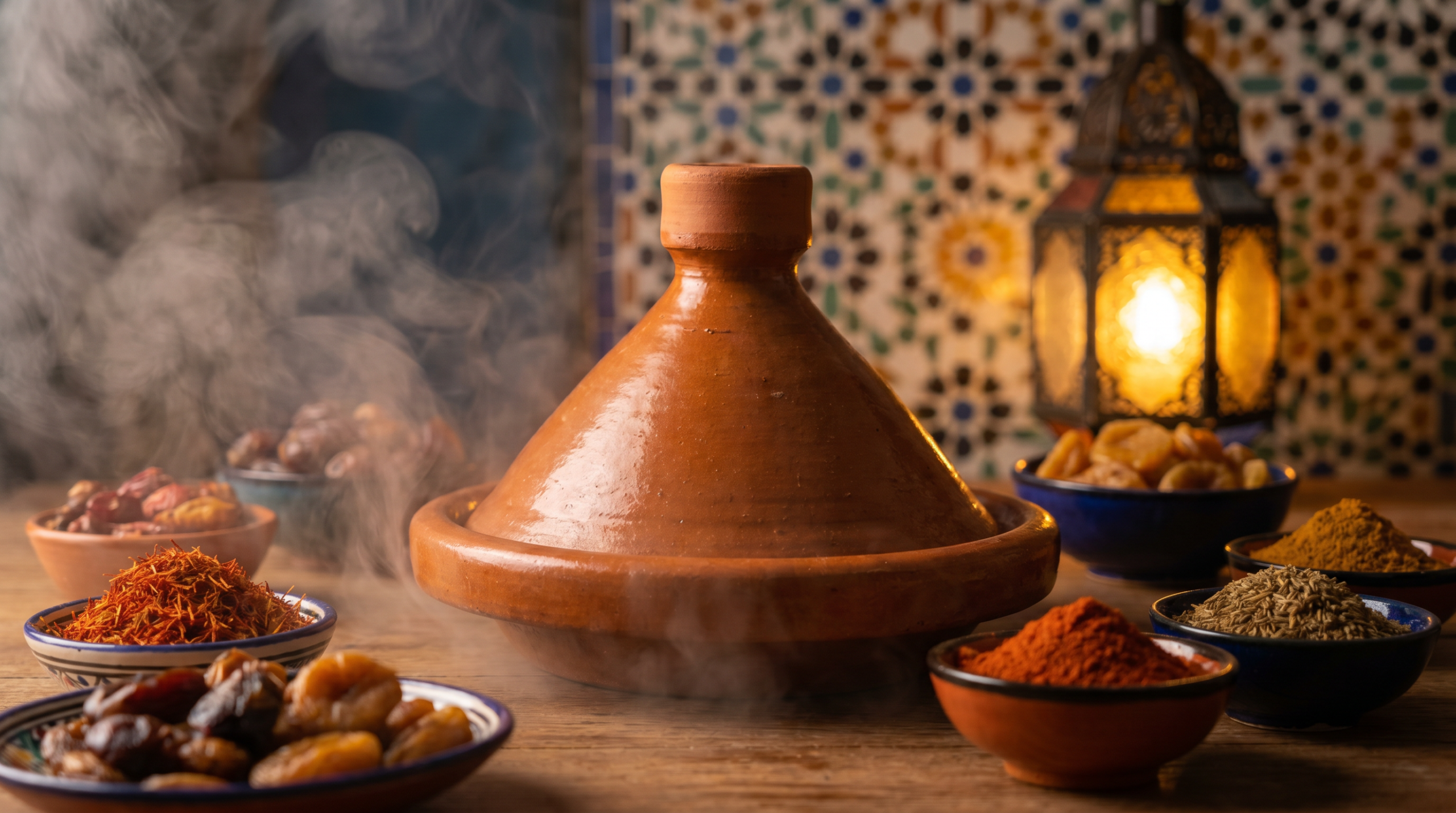
These different traditions forged the signature spice palette that makes Moroccan street food instantly recognizable. Cumin, coriander, saffron, cinnamon, and ras el hanout bring extraordinary depth to simple ingredients. Preserved lemons, Moroccan olives, and sweet Medjool dates add flavors you won’t encounter anywhere else on earth. According to Wikipedia’s comprehensive overview of Moroccan cuisine, this fusion creates one of the world’s most diverse culinary traditions — a living testament to Morocco’s position at the crossroads of Africa, Europe, and the Middle East.
💡 Morocco’s culinary heritage runs deep. The country’s food traditions are recognized as part of its intangible cultural heritage, with recipes and techniques passed down through generations of families, each adding their own regional twist.
Food That Brings People Together
Street food Morocco reveals the country’s remarkable cultural diversity. Each region develops its own specialties based on local traditions, climate, and what the land produces. Coastal cities like Essaouira serve fresh-caught sardines grilled at the harbor’s edge. Mountain communities in the High Atlas offer hearty stews with wild herbs and root vegetables. The desert south brings dates, almonds, and slow-cooked meats perfected over generations. When exploring rural Morocco, you’ll discover how deeply food traditions are woven into every community.
Moroccan street food is fundamentally social. Food stalls function as neighborhood gathering points where strangers become friends over shared bowls of harira, where office workers and craftsmen stand side by side eating brochettes. Sharing food is central to Moroccan life and reflects the deeply rooted tradition of Moroccan hospitality — where generosity and warmth are expressed through every offered plate and poured glass of tea.
Street food also sustains local economies in profound ways. Small family businesses pass down secret spice blends and recipes through generations, keeping traditional cooking methods alive in an era of rapid change. When you buy from a street vendor, you’re not just feeding yourself — you’re helping preserve centuries-old food traditions and supporting the livelihoods of artisan cooks who are the true guardians of Morocco’s heritage.
Must-Try Dishes: The Best Street Food Morocco Has to Offer
Famous Main Dishes
Let’s dive into the best Moroccan dishes you’ll find sizzling and simmering at stalls across the country. These are the iconic flavors that define street food Morocco and keep locals coming back day after day.
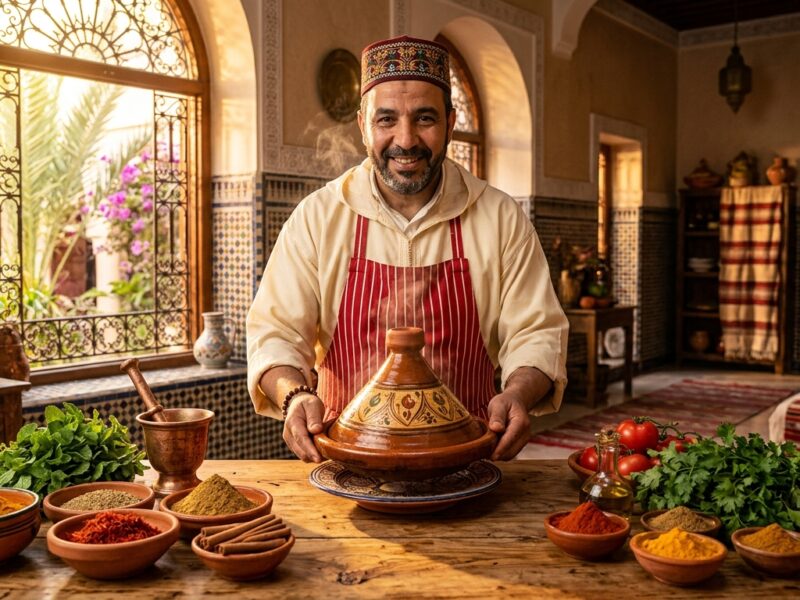
Tagine is Morocco’s most celebrated dish — and arguably its most misunderstood. Far more than a generic stew, a true tagine is slow-cooked in a cone-shaped clay pot that traps steam and circulates it back down, making meat and vegetables impossibly tender. The conical lid acts as a natural pressure cooker, concentrating flavors of saffron, cumin, preserved lemon, and olives into something deeply complex. Street vendors prepare tagines over small charcoal braziers, and the best ones have been simmering since early morning. You can even learn the art yourself through authentic cooking classes in Berber villages.
The best street tagines are found at stalls where the clay pots have been simmering since dawn. Look for vendors who cook on charcoal rather than gas — the slow heat and faint smokiness create a completely different flavor. Chicken with preserved lemon and olives is the classic starter choice.
Mechoui delivers one of Morocco’s most unforgettable eating experiences. Whole lamb is slow-roasted in underground clay pits — sometimes for eight hours or more — until the meat practically falls apart at the touch. Street vendors serve it by the weight, pulling tender shreds directly from the carcass. Alongside it come small dishes of ground cumin and coarse salt for dipping. The meat carries a subtle smokiness and a richness that comes only from patient, low-heat cooking.
Couscous transcends food in Morocco — it’s a weekly ritual and a cultural institution. These tiny semolina grains are hand-rolled and steamed multiple times until impossibly fluffy, then mounded high and topped with a fragrant broth of vegetables, chickpeas, and tender meat. Traditionally served on Fridays after midday prayers as a communal family meal, couscous represents togetherness and gratitude. Many street vendors prepare special Friday couscous in enormous portions, and the lines that form are a reliable indicator of quality.
Street Food Favorites
Brochettes (kebabs) are the quintessential grab-and-go street food. Skewers of marinated lamb, beef, chicken, or kefta (spiced minced meat) cook over blazing charcoal grills, sending aromatic smoke billowing through the medina. Served tucked into fresh khobz bread with a smear of fiery harissa sauce and a squeeze of lemon, they make the perfect walking-around meal. At 15–25 dirhams per serving, they’re one of the best deals in Moroccan street food.
Harira is Morocco’s soul-warming soup — a hearty, tomato-based bowl brimming with lentils, chickpeas, tender lamb or beef, fresh herbs, and warm spices like cinnamon and ginger. Traditionally the first food eaten to break the Ramadan fast each evening, harira holds deep cultural significance. But it’s served year-round at street stalls, especially during cooler months, alongside dates and chebakia cookies. A bowl costs as little as 5–10 dirhams — making it one of the most affordable and satisfying meals in the country.
B’ssara is the unsung hero of Moroccan breakfast. This thick, velvety fava bean soup is ladled into bowls, then drizzled with peppery olive oil, dusted with cumin, and served with crusty bread for dipping. It’s humble, deeply nourishing, and costs just a few dirhams. Morning market stalls serving b’ssara are easy to spot — look for the crowd of construction workers, taxi drivers, and students fueling up before their day begins.
Khobz, the traditional round Moroccan bread baked in communal wood-fired ovens, is the essential utensil of street food Morocco. Every stew is scooped, every dip is mopped, every tagine is soaked up with khobz. In many neighborhoods, families still bring their own dough to the local ferran (public oven) each morning — a daily ritual that creates one of the most evocative sights and smells in any Moroccan city.
Regional Specialties
The best street food Morocco offers varies dramatically by region, and discovering these differences is one of the great joys of traveling the country. Coastal cities like Essaouira and Agadir serve incredible grilled sardines — the freshest you’ll ever taste, cooked within hours of being pulled from the Atlantic. Northern cities like Tangier and Tetouan use more heavily spiced dishes showing clear Spanish and Andalusian influence. Mountain regions in the High Atlas offer distinctive Berber specialties with wild thyme, rosemary, and hearty root vegetables.
When visiting unique villages across Morocco, you’ll discover hyperlocal dishes that rarely appear on tourist menus — hand-pulled pasta cooked in mountain springs, wild herb tagines that change with the seasons, and bread baked on hot stones in the desert. These regional treasures are what make exploring Moroccan street food an endless adventure.
Moroccan Snacks: Sweet and Savory Options
Sweet Moroccan Treats
Moroccan snacks — both sweet and savory — are an essential thread in the fabric of daily street food culture. They’re the perfect companion to a glass of mint tea, the reward after a long walk through the medina, and the fuel that keeps you exploring through the afternoon heat.
Chebakia are Morocco’s most visually stunning pastry. Strips of dough are hand-folded into intricate flower shapes, deep-fried until crisp, then soaked in warm honey syrup infused with orange blossom water and rolled in toasted sesame seeds. The result is a sticky, fragrant, impossibly delicate cookie that’s become synonymous with Ramadan — though you’ll find them at street stalls year-round. Their complex preparation makes them a true artisan product.
Sfenj — Morocco’s answer to the doughnut — brings simple, addictive joy. These airy rings of yeasted dough are fried until golden in enormous vats of oil, then served piping hot, either plain or dusted with sugar. Early morning is the magic hour for sfenj: street vendors set up their stations before dawn, and the first batch — still glistening and crackling with heat — is an experience unto itself. At 1–2 dirhams each, they’re one of Morocco’s most affordable pleasures.
Sellou (also called sfouf) is a dense, energy-packed mixture of toasted flour, ground almonds, sesame seeds, butter, and honey. Served in small mounds, it’s traditionally associated with celebrations and religious festivals, but many vendors sell it daily. It provides quick, sustained energy — perfect for long days of exploring.
Savory Snack Options
Briouats deliver satisfying crunch in every bite. These triangular pastries are made from paper-thin warqa dough wrapped around fillings of spiced minced meat, herbed goat cheese, or seasoned vegetables, then deep-fried until golden and shatteringly crisp. Sweet versions filled with almond paste and drizzled with honey are equally popular. They’re the perfect portable snack — easy to eat while navigating busy market lanes.
Msemen is Morocco’s beloved square-shaped, multilayered flatbread — somewhere between a pancake and a flaky pastry. Watching vendors prepare msemen is mesmerizing: they stretch the dough tissue-thin, fold it into precise layers, then cook it on a flat griddle until each side is golden and slightly crispy. Eaten plain with honey and butter for breakfast, or stuffed with a savory mixture of onions, tomatoes, and herbs, msemen is comfort food at its finest.
Zaalouk is a smoky, silky eggplant dip seasoned with garlic, paprika, cumin, and fresh tomatoes. Served at room temperature with plenty of bread for scooping, it appears at nearly every street food stall as a side dish. Its charred, earthy flavor profile makes it addictive — and completely vegetarian, making it a reliable option for plant-based travelers.
💡 Vegetarian travelers take note: Morocco’s street food scene is surprisingly vegetarian-friendly. Beyond zaalouk, look for vegetable tagines, cheese-filled briouats, loubia (white bean stew), bessara, and the wide variety of bread-based snacks that require no meat at all.
Traditional Beverages
No Moroccan street food experience is complete without the drinks. Mint tea — atay — is the national drink and a social ritual. Sweet green tea infused with generous bunches of fresh spearmint is poured from a height to create a frothy top, then served in small, ornate glasses. It accompanies every meal, every conversation, and every transaction. To explore the deeper significance of this tradition, see our guide to Moroccan tea culture and recipe.
Fresh orange juice stands are an iconic sight across Moroccan cities. Vendors stack pyramids of locally grown oranges and squeeze them to order — each glass costs about 5–10 dirhams and tastes nothing like packaged juice. In Marrakech’s Jemaa el-Fnaa alone, dozens of juice stands compete for customers with theatrical displays and friendly banter.
Avocado shakes — blended with milk, sugar, and sometimes a drizzle of honey — offer creamy refreshment on hot days. And almond milk scented with orange blossom water provides a delicate, fragrant alternative that pairs beautifully with sweet pastries.
Where to Find the Best Street Food in Morocco
Major Cities for Food Adventures
Finding the best street food Morocco offers means knowing where locals eat, which neighborhoods specialize in particular dishes, and what time of day to show up. Each of Morocco’s major cities has developed its own distinct food personality.
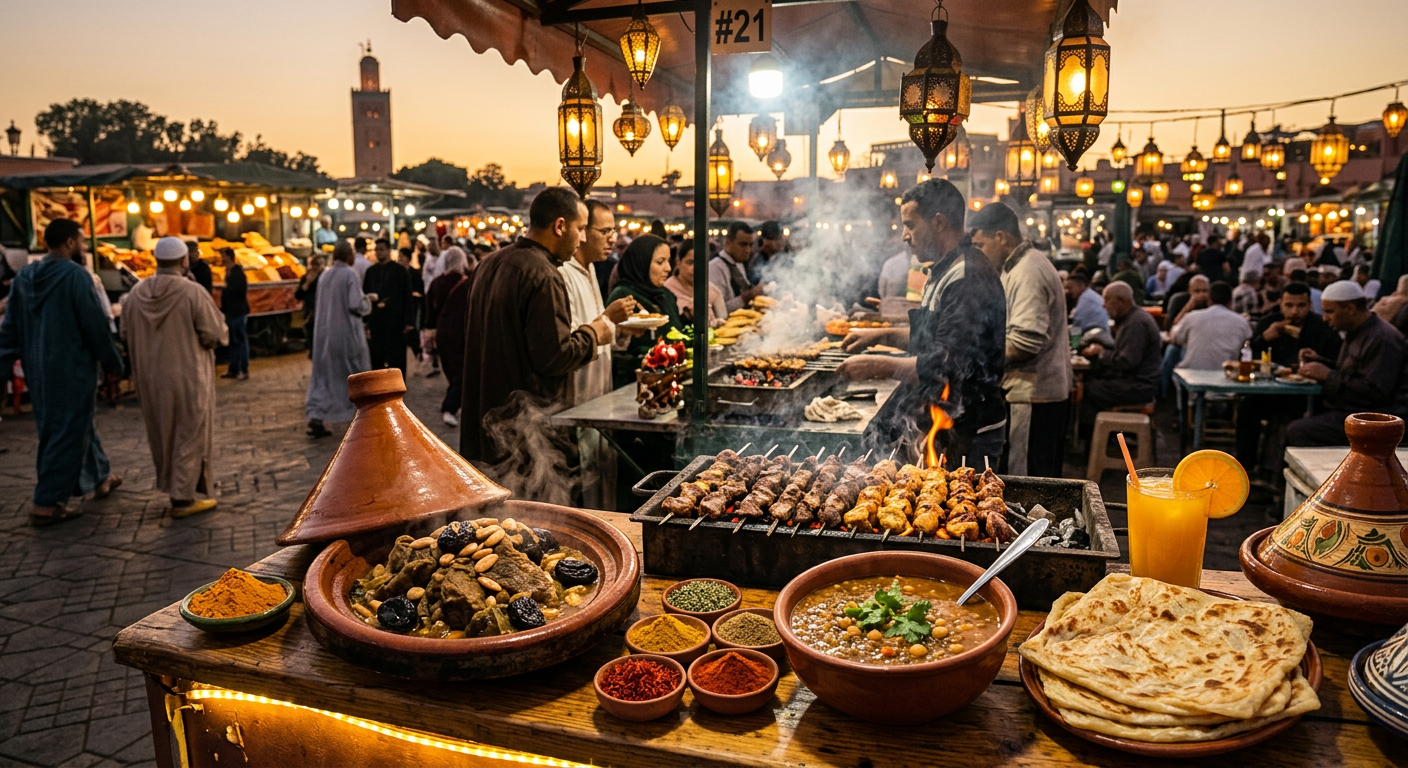
Marrakech reigns as the undisputed capital of Moroccan street food. Every evening, Jemaa el-Fnaa square undergoes a spectacular transformation: by sunset, over a hundred food stalls materialize in organized rows, each billowing smoke and shouting their specialties. Snail soup vendors, lamb head stalls, grilled meat stations, and fresh juice sellers compete for your attention in a scene that feels both chaotic and perfectly choreographed. This is Morocco’s most famous food market — and it’s been feeding people this way for nearly a thousand years. To navigate it with confidence, consider joining a guided city tour that includes the souks and hidden food gems or explore our guide to food tours in Marrakech.
In Jemaa el-Fnaa, the stalls numbered in the 30s and 40s tend to serve locals rather than tourists. Skip the aggressive touts at the edges and walk deeper into the square. Also, stall #1 is famous for its harira, and has been run by the same family for decades.
Fez delivers a completely different but equally extraordinary food experience. The ancient medina — the world’s largest car-free urban area — hides food treasures in narrow, winding alleyways. The areas around R’cif Square and Bab Boujloud (the iconic Blue Gate) are epicenters of street food activity. Fez is particularly famous for its pastilla (pigeon or chicken pie), mechoui, and unique regional soups that reflect the city’s status as Morocco’s spiritual and culinary capital.
Casablanca brings a more cosmopolitan energy to street food. The Central Market (Marché Central) and the seaside corniche offer distinctive seafood-focused street food reflecting the city’s Atlantic coastline. Freshly fried fish sandwiches, grilled calamari, and seafood pastilla are local specialties. The port area near the Hassan II Mosque is particularly rewarding for seafood lovers.
Chefchaouen, Morocco’s famous blue city, offers a quieter but equally distinctive food scene. The Rif Mountain setting means goat cheese specialties, wild herb infusions, and fresh mountain produce dominate. The medina’s small restaurants and street stalls serve food with a gentler, more herbal flavor profile than the bold spicing of Marrakech or Fez.
Essaouira is a paradise for seafood street food. The port area features a row of grill stalls where the day’s catch — sardines, prawns, sea bream, lobster — is cooked to order over charcoal. You choose your fish from the display, negotiate a price, and eat it minutes later at communal tables with nothing but bread, salt, and lemon. It doesn’t get fresher than this.
Hidden Gems for Authentic Experiences
The most memorable street food discoveries happen off the tourist trail. Small side streets where locals queue patiently often lead to the most extraordinary meals. The rule is simple: if you see Moroccans waiting in line, join them. They know where quality lives. For those adventurous enough to explore beyond the major cities, our guide to secret spots in Morocco reveals places where authentic food experiences remain untouched by tourism.
Morning markets (berrada) are ephemeral treasures. Appearing at dawn and vanishing by midday, they offer fresh-baked breads, steaming b’ssara, and seasonal produce at the lowest prices. Early risers are rewarded with food at its absolute freshest.
Port areas in coastal cities guarantee the freshest seafood you’ll ever taste. Fishermen bring their catch directly to simple grills mere meters from the boats — the journey from sea to plate can be measured in minutes, not hours.
Night markets that materialize only after sunset in residential neighborhoods serve extraordinary evening meals. These pop-up markets cater to locals heading home from work and often feature specialty dishes — roasted corn, stuffed msemen, freshly fried briouats — that never appear in tourist areas.
📌 Timing your food adventures: Mornings bring fresh breads and breakfast soups. Midday offers savory pastries and snacks. Late afternoon is prime time for sweet treats and tea. Evenings feature grilled meats and tagines. During Ramadan, the hour after sunset brings the most spectacular food scene of all.
Tips for Enjoying Street Food in Morocco
Food Safety Tips
Enjoying street food Morocco safely is straightforward with a few practical precautions. Millions of travelers eat at Moroccan street stalls every year without issue — the key is being selective, not fearful. These tips from our Morocco safety guide will keep your stomach happy throughout your trip.
Choose busy stalls with high customer turnover. Popular vendors sell fresh food fast, which means nothing sits out for long. A stall surrounded by locals at lunchtime is almost always a safe bet — if the food were dodgy, they wouldn’t be there.
Watch for clean preparation areas and notice how vendors handle food. Good street food cooks take pride in their workspace. Look for fresh ingredients, clean utensils, and vendors who handle money separately from food.
Opt for freshly cooked, piping-hot foods over pre-prepared items sitting at room temperature. Foods cooked directly in front of you — grilled meats, fried pastries, freshly ladled soups — present minimal risk. This is where the theater of street food also becomes a food safety advantage.
Be cautious with raw vegetables and unpeeled fruits if you have a sensitive stomach. Cooked vegetables and fruits you can peel yourself (oranges, bananas) are the safest choices. Salads at reputable sit-down stalls are generally fine, but use judgment.
Drink bottled water and skip ice in drinks. This single precaution prevents the vast majority of traveler stomach issues. Sealed bottles are available everywhere for just a few dirhams. For convenient connectivity while navigating food markets and finding vendor recommendations on the go, consider getting an eSIM for Morocco.
Cultural Etiquette
Moroccan street food comes with its own customs and social codes. Following these enhances your experience and earns respect from vendors and fellow diners. For a deeper dive into cultural norms, see our Moroccan etiquette guide.
Eat with your right hand only. In Moroccan culture, the left hand is considered unclean. Most street foods are designed to be eaten with your hands — particularly bread-based dishes — and using your right hand is a sign of respect that vendors will notice and appreciate.
Wait your turn patiently at popular stalls. Pushing rarely works, and patience earns you respect from both vendors and the locals standing beside you. Many stalls operate on an informal queue system that becomes clear after watching for a moment.
Sharing food is deeply embedded in Moroccan culture. Don’t be surprised if a stranger at the next spot offers you a bite of their meal — it’s a genuine gesture of friendliness, not a sales pitch. Accepting graciously and offering something in return builds instant connection.
Learn three words and you’ll transform every street food interaction: “Bismillah” (said before eating), “Shukran” (thank you), and “Bsaha” (bon appétit / to your health). Vendors’ faces light up when visitors make even the smallest effort with Darija (Moroccan Arabic).
Dress modestly when visiting markets as a sign of respect for local customs, particularly in more traditional cities like Fez and the medina areas. Covered shoulders and knees are appropriate in most situations. Learn more in our guide to Moroccan dress.
Budget Expectations
Street food Morocco offers extraordinary value. Here’s what to expect for typical prices in 2026:
- Snacks (sfenj, briouats, msemen): 2–15 MAD ($0.20–$1.50)
- Fresh orange juice: 5–10 MAD ($0.50–$1)
- Soups (harira, b’ssara): 5–15 MAD ($0.50–$1.50)
- Main dishes (tagine, brochettes, couscous): 25–60 MAD ($2.50–$6)
- Mint tea: 5–15 MAD ($0.50–$1.50)
Travelers relying on street food can eat exceptionally well for about 100–150 MAD ($10–15) per day. Food prices are generally fixed — unlike souvenirs where bargaining is expected — though asking the price before ordering is wise in heavily touristed areas like Jemaa el-Fnaa. For comprehensive budget planning, explore our Morocco travel cost guide and our tips for saving money while traveling in Morocco.
Best Times for Different Foods
Different times of day unlock completely different street food experiences across Morocco. Knowing the rhythm of the food day helps you plan your eating adventures strategically:
Breakfast specialties and fresh baked goods
This is the golden hour for b’ssara (fava bean soup), sfenj (doughnuts), msemen (flaky flatbread), and freshly baked khobz straight from communal ovens. Morning market stalls are busiest between 7:00 and 8:30 AM — arrive early for the freshest selection.
Savory pastries, sandwiches, and light meals
Lunchtime brings briouats, brochettes, bocadillos (Moroccan sandwiches), and savory stuffed msemen. Friday afternoons are special — vendors serve couscous, honoring the traditional communal meal.
Sweet treats and tea time
Teatime is sacred in Morocco. Sweet chebakia, ghoriba cookies, sellou, and endless pots of mint tea take center stage. Fresh orange juice vendors are also at their busiest during these hours.
Grilled meats, tagines, and night market magic
Evening is when Moroccan street food reaches its crescendo. Night markets come alive with grilled meats, tagines, harira, snail soup, and complete dinner spreads. During Ramadan, the hour after sunset (iftar) is the most spectacular food experience of the year — entire streets transform into open-air dining rooms.
Reserve Your Spot
Book Your Moroccan Food Experience
From guided street food tours in Marrakech to hands-on cooking classes in Berber villages — secure your culinary adventure today. Instant confirmation, free cancellation on most experiences.
Frequently Asked Questions
Everything you need to know before your Moroccan food adventure
✦ Your Morocco Journey Starts Here
Taste Morocco — One Stall at a Time
The sizzle of meat on charcoal. The fragrance of saffron drifting through ancient alleys. The warmth of a stranger sharing their meal. Street food Morocco isn’t just about eating — it’s about connecting with a country through its most honest and generous tradition. Your culinary adventure awaits. Explore our complete Moroccan food guide to plan the rest of your journey, or discover hidden gems throughout Morocco for experiences beyond the beaten path.