10 Best Moroccan Cooking Classes to Master Authentic Cuisine in 2026
Discover the 10 best Moroccan cooking classes in our 2026 guide. Learn to cook authentic tagines, couscous, and more from expert local chefs in Morocco.
Have you ever tasted a slow-simmered tagine so rich with saffron and preserved lemons that it transported you to the sunlit terraces of Marrakech? Moroccan cooking classes are now the most sought-after culinary experience in the world — and with Morocco’s cuisine recently crowned the planet’s best through a global Instagram vote endorsed by Gordon Ramsay himself, there has never been a better time to learn these ancient techniques firsthand. Whether you dream of shopping for spices in a bustling souk or mastering the art of Ras El Hanout from your own kitchen, this guide reveals exactly how to find the perfect Moroccan cuisine class for your skill level, budget, and travel style.
✦ Key Takeaways
Moroccan cuisine was voted the world’s best in 2026, sparking global demand for authentic cooking classes.
Classes range from immersive market-to-table experiences in Morocco to convenient online sessions you can take from home.
Master essential dishes like tagines, couscous, and pastilla plus critical techniques like spice blending and bread making.
Prices vary from $30 for group classes to over $150 for premium private experiences with market tours included.
These classes offer deep cultural immersion, connecting you to Moroccan hospitality and centuries of culinary tradition.
Why Take Moroccan Cooking Classes?
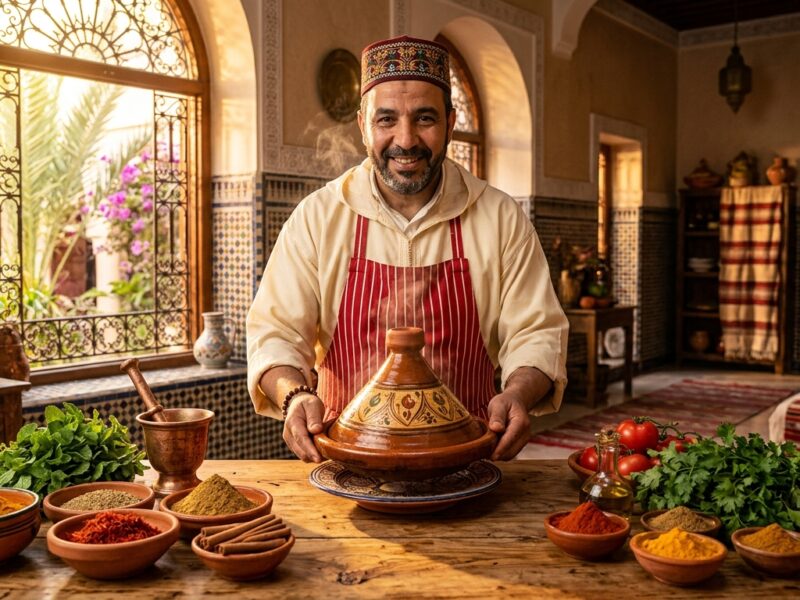
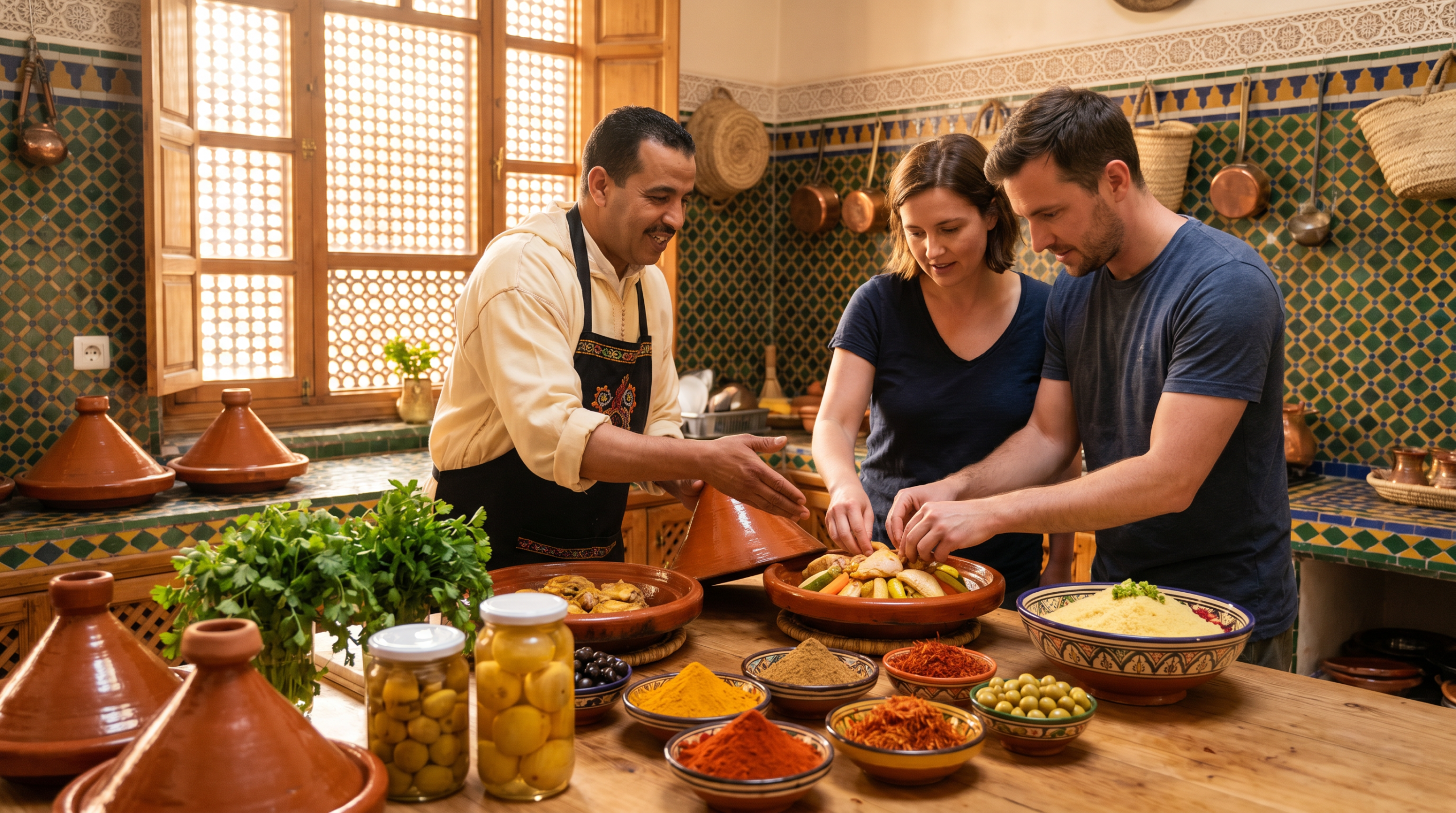
Moroccan cooking classes are hands-on culinary adventures that go far beyond typical cooking demonstrations. Led by local chefs in their kitchens or professional cooking schools, these classes often begin with trips to colorful souks where you’ll learn to select the freshest produce and understand the stories behind each spice. This immersive approach helps you truly learn to cook Moroccan food the way locals do — and it’s an experience no restaurant meal can replicate.
The unique flavors and techniques of Moroccan cuisine make these cooking class experiences especially valuable. You’ll discover the art of blending spices like cumin, coriander, ginger, and cinnamon into the famous Ras El Hanout mixture. You’ll learn why preserved lemons add that special tang to tagines and how saffron transforms simple dishes into golden masterpieces. The slow-cooking methods used for tagines teach patience and the importance of letting flavors develop over time — skills that elevate every dish you’ll ever cook.
💡 Morocco’s cuisine was voted the world’s best in a global poll — mastering these dishes gives you bragging rights at dinner parties and the ability to transport guests to the streets of Marrakech with every bite.
Cultural immersion sets Moroccan cooking classes apart from other culinary experiences. As you chop vegetables and stir simmering pots, your chef shares stories about Moroccan hospitality, family traditions, and the significance of communal meals. You’ll understand why Moroccans consider sharing food a sacred act and how recipes connect generations of families. This cultural depth transforms a simple cooking lesson into a meaningful encounter with one of the world’s richest culinary traditions.
Modern Moroccan cuisine classes blend tradition with contemporary techniques, appealing to cooks at every skill level. Whether you’re a beginner learning basic spice combinations or an experienced chef exploring fusion possibilities, these classes adapt to your needs while maintaining the authentic flavors that have made Moroccan dishes beloved worldwide.
Types of Moroccan Cooking Classes
Moroccan cooking classes come in many formats to suit different preferences, budgets, and travel situations. Understanding your options helps you choose the perfect cooking class Morocco offers for your needs — whether you’re visiting in person or learning from halfway around the world.
In-Person Classes in Morocco
Nothing compares to taking Moroccan cuisine classes directly in Morocco for genuine cultural experiences. Cities like Marrakech, Fes, and Casablanca host numerous cooking schools and local chefs eager to share their knowledge. These classes typically include vibrant market visits, hands-on cooking of three to five dishes, and meals enjoyed on beautiful terraces overlooking the medina. For an especially authentic experience, consider a cooking class in a Berber village with hike and home-cooked lunch that combines culinary learning with mountain adventures.
The best in-person classes are often run by home cooks rather than restaurant chefs. Look for family-run experiences in the medina — they share recipes that have been passed down through generations and rarely appear in cookbooks.
Online Moroccan Cooking Classes
Online Moroccan cooking classes have grown popular for global learners who can’t travel to Morocco. These virtual sessions connect you with Moroccan chefs who guide you through recipes from your own kitchen. While you miss the market experience, you gain the convenience of learning at home with ingredients from local stores. Many online instructors ship spice kits in advance so your pantry is ready for class day.
Group vs. Private Classes
Group classes create social, interactive environments where you cook alongside other food enthusiasts. These sessions often feel like dinner parties where everyone helps prepare the meal, making them especially enjoyable for solo travelers seeking new friendships. Private classes offer personalized attention from professional chefs who tailor the experience to your interests and dietary needs — perfect for couples on a romantic Morocco trip or families wanting a customized pace.
Family-Friendly & Specialty Classes
Family-friendly classes welcome cooks of all ages, making them perfect for multi-generational groups. Children learn to roll couscous while adults master spice blending, creating memorable experiences for everyone. If you’re planning a family trip, discover unique villages in Morocco where cooking traditions pass from generation to generation. Specialty classes focus on specific skills like bread making in communal ovens, creating delicate pastries, or preparing completely vegetarian Moroccan feasts.
A typical class structure begins with ingredient introduction, followed by market shopping (for in-person classes), hands-on cooking of multiple dishes, and ends with a communal meal where you enjoy your creations while sharing stories with fellow participants.
What You’ll Learn in Moroccan Cuisine Classes
Moroccan cuisine classes teach you to prepare an impressive array of traditional dishes that showcase the country’s rich culinary heritage. Each dish tells a story and requires specific techniques that you’ll master through hands-on practice under the guidance of expert local chefs.
Signature Dishes
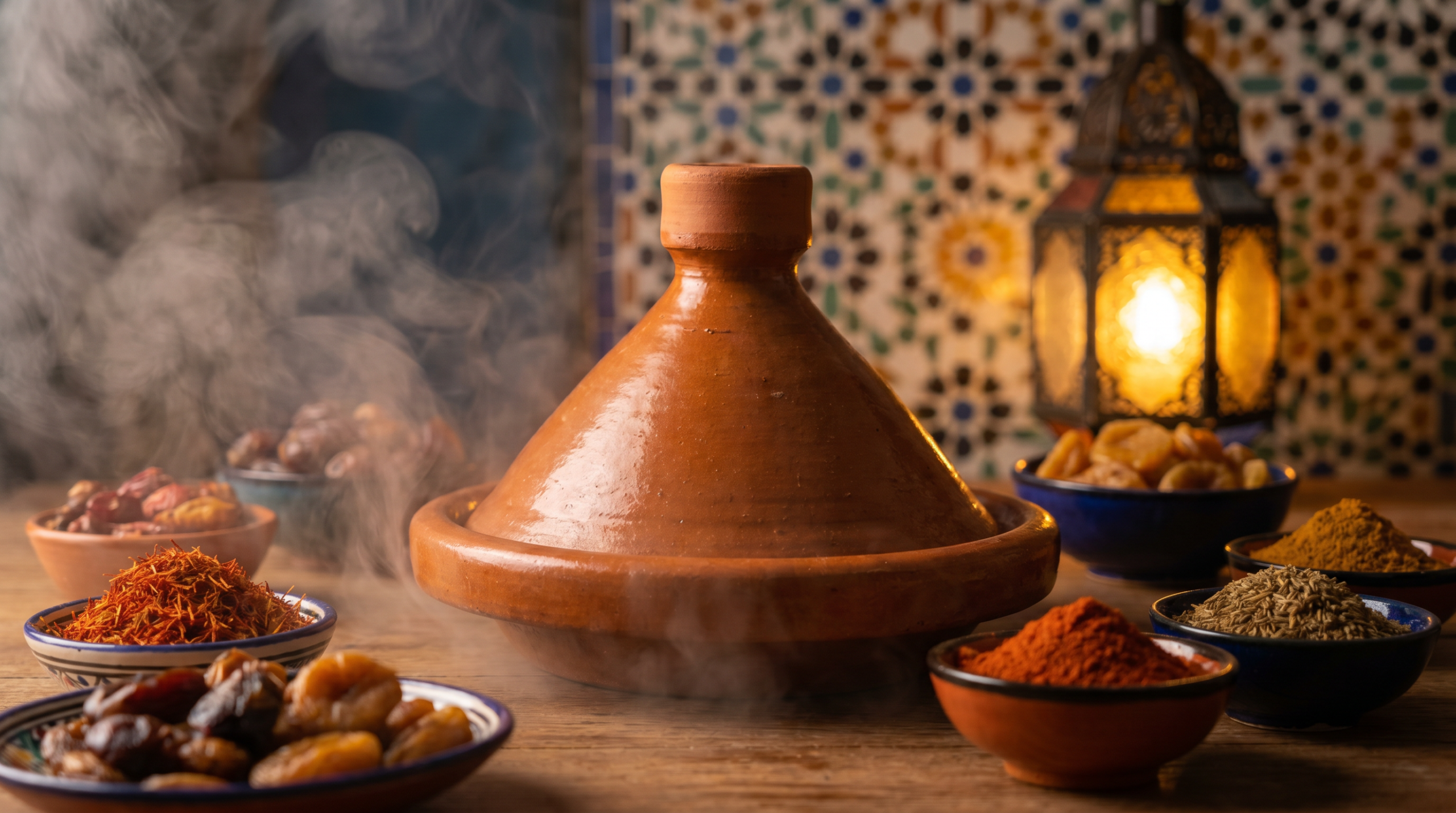
Tagine takes center stage in most classes. You’ll learn to layer ingredients in the cone-shaped clay pot, understanding how steam circulation creates incredibly tender meat and vegetables. Whether preparing lamb with prunes, chicken with preserved lemons and olives, or vegetarian versions with seasonal vegetables, you’ll discover the secrets of perfect tagine cooking — including why the clay must be seasoned before first use and how temperature control makes or breaks the dish.
Couscous preparation goes beyond simply adding hot water. You’ll learn the traditional method of steaming couscous multiple times in a couscoussier, fluffing it between steamings with olive oil and butter, and creating the light, fluffy texture that makes Moroccan couscous special. Classes teach you to pair it with seven-vegetable stews or tender meats — the traditional Friday lunch dish that brings Moroccan families together every week.
Pastilla, the sweet and savory pie, challenges your skills with paper-thin warqa pastry layers filled with spiced meat or seafood, eggs, and almonds, all dusted with cinnamon and sugar. This dish perfectly represents Moroccan cuisine’s unique flavor combinations — the interplay of sweet and savory that surprises first-time tasters and creates lifelong fans.
Essential Salads & Soups
Moroccan salads like zaalouk (smoky eggplant) and taktouka (roasted peppers and tomatoes) teach you how vegetables transform through slow cooking and bold spicing. You’ll also master harira soup, the hearty tomato-based soup with lentils and chickpeas traditionally served during Ramadan — a dish so beloved that it has become a year-round staple across Morocco.
Core Techniques & Skills
Beyond individual dishes, Moroccan cooking classes focus on essential skills and techniques. Spice blending becomes second nature as you learn to create Ras El Hanout — a complex mixture that can contain up to 30 different spices — understanding how each component contributes to the overall flavor profile. Bread making introduces you to Moroccan khobz, teaching you to knead dough properly and understand fermentation timing. In some classes, you’ll bake your loaves in centuries-old communal ovens that still operate in medina neighborhoods.
The art of balancing sweet and savory flavors appears throughout Moroccan cuisine. You’ll learn when to add honey, how dried fruits complement meats, and why a pinch of sugar enhances tomato-based dishes. Traditional cooking methods using clay pots, couscoussiers, and communal ovens show how equipment affects flavor development. For a comprehensive culinary experience, book an Agadir traditional Moroccan cooking class that covers all these essential dishes.
💡 Pro tip: Bring a small notebook to class. While most schools provide written recipes, the best insights — how to tell when oil is ready by its shimmer, how to judge spice freshness by color — come from offhand comments your chef makes during cooking.
How to Choose the Right Cooking Class Morocco Offers
Selecting the perfect Moroccan cooking classes requires considering several factors that affect your experience quality and enjoyment. Making informed choices ensures you get the most value from your culinary adventure — whether you’re a first-time visitor or a returning Morocco enthusiast.
Location & Setting
Location plays a crucial role in your decision. City classes in Marrakech or Fes offer convenience and variety, while rural settings provide intimate family-style experiences in authentic Berber villages. Online classes work well if you can’t travel but still want authentic instruction from Moroccan chefs. When planning your trip, check our Morocco transportation guide to easily reach cooking schools in different cities.
Class Size & Chef Credentials
Class size impacts your learning experience significantly. Intimate groups of 4–6 people allow more hands-on time and personal attention from instructors, while larger groups of 8–12 create livelier atmospheres but may limit individual instruction time. Consider your learning style when choosing between options.
Chef credentials matter when seeking authentic Moroccan cuisine classes. Look for instructors with professional training or extensive home cooking experience. Local family cooks often share the most authentic recipes, while restaurant chefs may teach more refined techniques. Read recent reviews looking for mentions of market visits, local chef involvement, and cultural storytelling.
Don’t judge a class by price alone. A $40 group class with a passionate home cook who takes you through her family’s spice pantry can be more valuable than a $180 hotel-based session. Check what’s included: market visits, all ingredients, recipes to take home, and the final meal. For budget-conscious travelers, explore our Morocco on a budget guide for more tips.
Language & Dietary Needs
Language options ensure clear communication during classes. Many tourist-oriented classes offer instruction in English, French, and Arabic. Confirm language availability when booking to avoid confusion during cooking.
Dietary accommodations have become standard in quality cooking schools. Vegetarian, vegan, and gluten-free options should be available with advance notice. Morocco’s cuisine naturally features an abundance of plant-based dishes, so vegetarian versions often feel just as authentic as meat-based ones. Ask about ingredient substitutions if you have allergies or dietary restrictions.
Formal Schools vs. Home Kitchens
Formal cooking schools like La Maison Arabe in Marrakech offer structured learning with professional facilities and systematic instruction. These suit travelers wanting comprehensive education with certificates. Family-run classes in hidden corners of Morocco provide more intimate experiences with home-style cooking and personal stories that make the food come alive. Current food trends influence class offerings, with many schools now featuring plant-based menus or fusion options that blend traditional Moroccan cooking with modern dietary preferences.
What to Expect During Your Moroccan Cooking Class
Your Moroccan cooking classes experience typically unfolds as a carefully orchestrated journey through flavors, aromas, and cultural traditions. Understanding the flow helps you prepare and participate fully from the moment you arrive.
Welcome & Introduction
Classes usually begin with warm welcomes and traditional mint tea as your chef introduces Moroccan ingredients. You’ll smell whole spices, touch preserved lemons, and taste harissa paste while learning about each component’s role in Moroccan cuisine. This sensory introduction sets the stage for deeper learning and helps you understand why ingredient quality matters so much in this culinary tradition.
The Market Visit
Market visits transform cooking class Morocco experiences into cultural adventures. Your chef guides you through narrow souk alleys, teaching you to select the ripest tomatoes, freshest herbs, and highest quality spices. You’ll practice bargaining skills and learn Arabic names for ingredients while soaking in the market’s vibrant atmosphere — the calls of vendors, the pyramids of colorful spices, the heady scent of fresh mint mixing with cinnamon.
📌 Preparation tip: Wear comfortable clothes that can get splashed, bring a camera for market photos, and arrive hungry. The hands-on nature means everyone participates regardless of skill level, from chopping vegetables to plating final dishes.
Hands-On Cooking
Back in the kitchen, hands-on cooking begins with everyone participating in preparation tasks. You might pound spices in a mortar and pestle, chop vegetables for vibrant salads, or roll couscous by hand the traditional way. Chefs demonstrate each technique before letting you practice, ensuring everyone masters the skill before moving on. Cultural storytelling weaves throughout the cooking process — as tagines simmer, your chef shares family recipes’ origins, explains holiday food traditions, or describes how Moroccan customs vary between regions.
The Communal Meal
The communal meal celebrates your hard work as everyone gathers to enjoy the prepared dishes together. This isn’t rushed eating but a leisurely experience with multiple courses, conversation, and often surprise desserts the chef prepared earlier. Recipe sharing ensures you can recreate dishes at home — most Moroccan cuisine classes provide written recipes adjusted for home kitchens, with tips for ingredient substitutions and equipment alternatives.
Special experiences vary by class but might include baking bread in 600-year-old communal ovens, participating in elaborate tea ceremonies with precise pouring techniques, or learning to make paper-thin warqa pastry from scratch. Consider booking a Berber village tour with cooking class and lunch from Agadir for an authentic rural experience that connects kitchen skills with mountain landscape.
Benefits of Learning to Cook Moroccan Food
Learning to cook Moroccan food through Moroccan cooking classes delivers benefits extending far beyond your kitchen. These skills enrich your life in unexpected ways — from your health and social life to your understanding of one of the world’s great culinary traditions.
Health & Nutrition Benefits
Moroccan cuisine naturally emphasizes plant-based dishes packed with vegetables, legumes, and whole grains. Healing spices including turmeric, ginger, and cinnamon reduce inflammation and boost overall health. The traditional Moroccan approach to dining — sharing dishes family-style from a central platter — encourages mindful eating habits that naturally help manage portions while ensuring everyone enjoys a variety of nutritious foods. According to Wikipedia’s article on Moroccan cuisine, the country’s culinary traditions reflect centuries of cultural exchange that prioritized both flavor and nourishment.
Culinary Skill Development
Once you understand spice layering from Moroccan cuisine classes, you’ll apply these principles to every other cuisine you cook. The confidence gained from creating complex dishes like pastilla translates to tackling any challenging recipe. Your palate develops to appreciate subtle flavor combinations — the way a hint of orange blossom water lifts a simple dessert, or how smen (aged butter) adds depth that fresh butter never could.
Host a Moroccan-themed dinner party within two weeks of your class while techniques are still fresh. Set up a communal platter, serve mint tea, and eat with bread instead of utensils. Your guests will talk about it for months — and you’ll cement skills that last a lifetime.
Cultural Understanding & Long-Term Value
Each dish connects you to Moroccan traditions of hospitality, family bonds, and celebration. You’ll appreciate why Moroccans spend hours preparing meals and understand food’s role in bringing people together — knowledge that enriches travel experiences and helps you connect with Moroccan communities worldwide. For deeper immersion into the culture behind the cuisine, explore our guide to Moroccan etiquette for travelers.
Unlike typical tourist activities, cooking skills last a lifetime. You’ll recreate vacation memories through food, impressing guests for years to come. These cherished culinary traditions transform into heirloom knowledge that you’ll share with children and grandchildren — a living connection to Morocco that no souvenir can match. Your respect for Moroccan culinary heritage grows with each dish you master, making you an ambassador for this extraordinary cuisine.
Reserve Your Spot
Book Your Moroccan Cooking Experience
Choose from the best cooking classes across Morocco — from Marrakech riad kitchens to Berber mountain villages. Instant confirmation, free cancellation on most experiences.
Frequently Asked Questions
Everything you need to know before booking your Moroccan cooking class
✦ Your Morocco Journey Starts Here
Cook Like a Local, Remember It Forever
A Moroccan cooking class isn’t just a vacation activity — it’s a skill, a story, and a connection to centuries of culinary tradition that you carry home. Browse our Morocco destinations guide to find the perfect city for your class, or book your stay in one of our recommended Morocco hotels. Your tagine is waiting.