Marrakech Attractions: Your Ultimate Guide to Jemaa el-Fna and Top Points of Interest
Discover the top Marrakech attractions including Jemaa el-Fna, palaces, gardens & souks. Plan your unforgettable Moroccan adventure with our expert guide.
Close your eyes and imagine: the hypnotic beat of drums, the scent of sizzling meat skewers and mint tea, colorful spice pyramids, and the calls of vendors echoing through narrow alleyways. Welcome to Marrakech, where every sense comes alive in an instant.
Marrakech, a former imperial city in Morocco, overwhelms visitors with its vibrant energy and deep historical roots. The “Red City”—named for its distinctive rose-colored buildings—offers a perfect blend of ancient traditions and modern experiences that captivate travelers from around the world. This guide takes you through the essential Marrakech attractions, from the iconic Jemaa el-Fna square to hidden gardens, magnificent palaces, and the legendary souks of the Marrakech Medina.
✦ Key Takeaways
Jemaa el-Fna transforms from a daytime market to a vibrant nighttime food and entertainment hub—visit at sunset for the full experience.
Historical gems like Bahia Palace and the Saadian Tombs showcase Morocco’s architectural brilliance and royal heritage.
Tranquil gardens such as Jardin Majorelle offer peaceful escapes from the bustling medina with stunning botanical displays.
The souks are a labyrinth of artisan crafts—bargain respectfully and seek authentic leather, lanterns, spices, and argan oil.
Enhance your visit with guided tours, cooking classes, and cultural activities like hammams for deeper immersion.
Jemaa el-Fna: The Pulsating Heart of Marrakech
No attraction captures the essence of Marrakesh quite like Jemaa el-Fna. This famous square—known locally as Djemaa El Fna—undergoes a fascinating transformation throughout the day, making it worth multiple visits during your stay.
By day, the square is a spacious open space where you’ll find colorful fruit juice stalls offering fresh-squeezed orange juice for just a few dirhams. Traditional water sellers in bright costumes with wide-brimmed hats and brass cups offer drinks—more as a photo opportunity than practical refreshment. You might spot snake charmers with their cobras or men with Barbary apes posing for tourists.
💡 UNESCO Recognition — Jemaa el-Fna earned UNESCO World Heritage status as a “Masterpiece of Oral and Intangible Heritage of Humanity” in 2001, recognizing its centuries-old role as a trading hub and cultural gathering place.
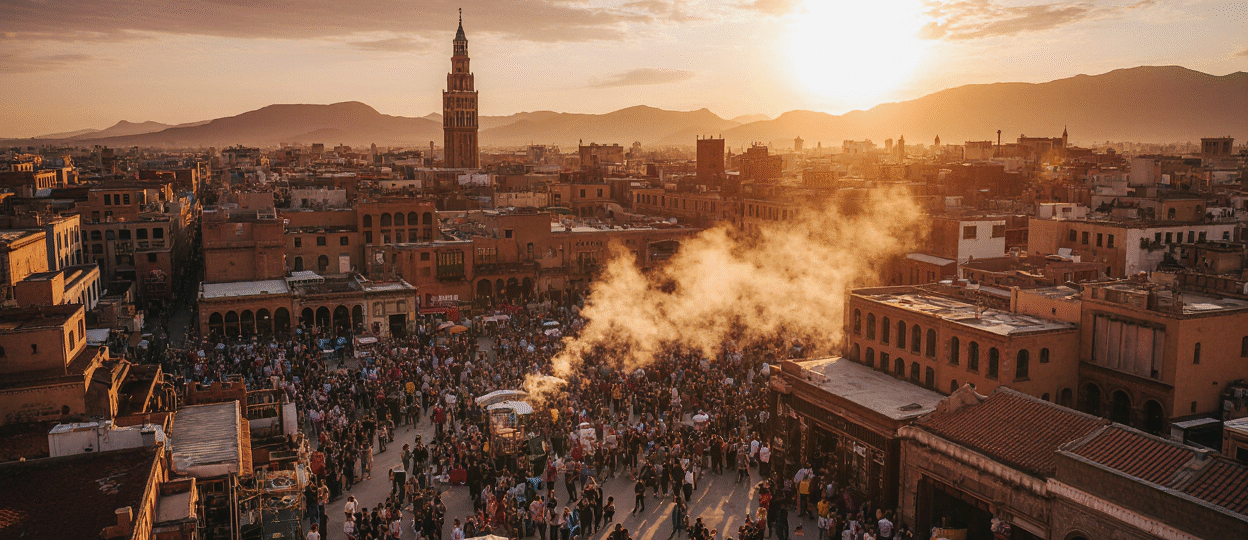
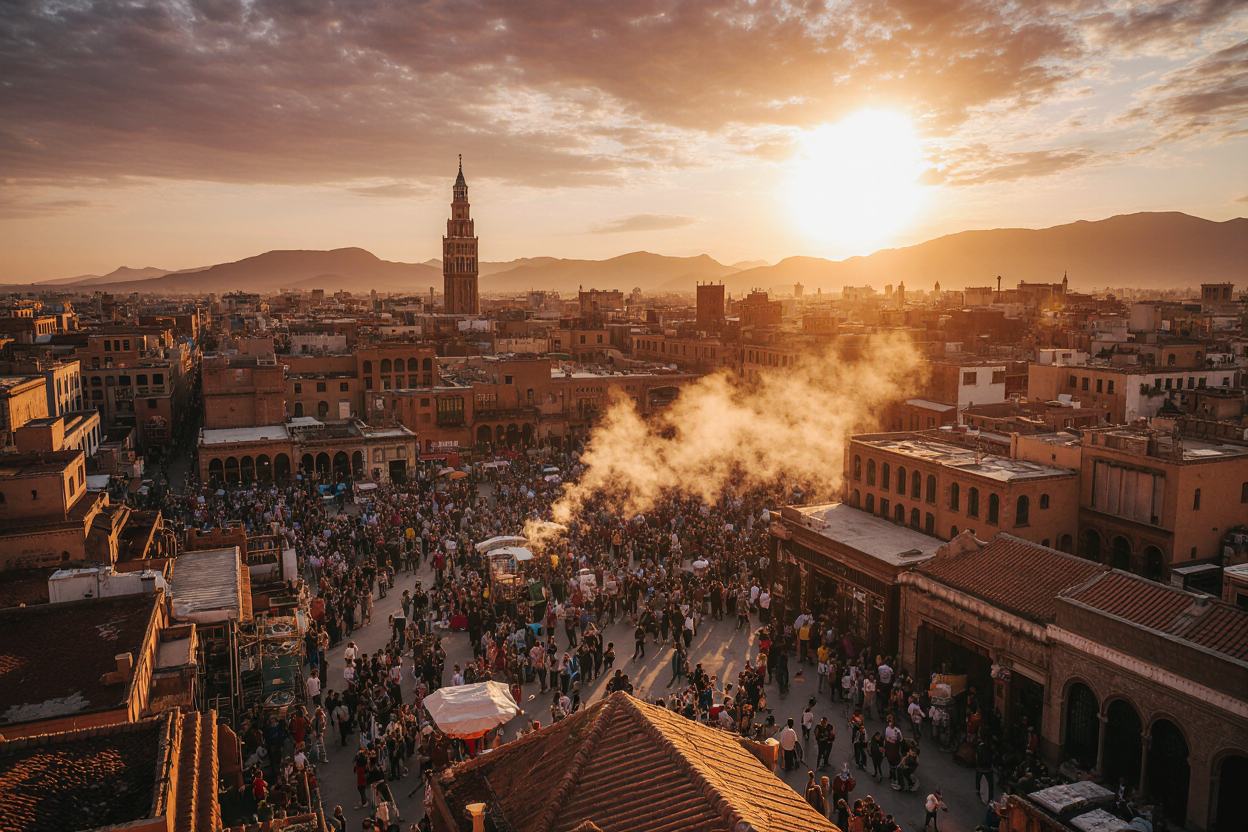
As the sun begins to set, however, Jemaa Marrakech transforms completely. Dozens of food stalls appear as if by magic, their smoke rising into the evening air as cooks grill kebabs, fry fish, and prepare steaming pots of snail soup and harira. Surrounding this makeshift food court, circles form around storytellers sharing ancient tales in Arabic, musicians playing traditional instruments, and performers displaying everything from acrobatics to fortune telling.
Visit around 4 PM to witness the square’s transformation. Be vigilant about personal belongings as crowds attract pickpockets. Negotiate prices before taking photos with performers—10-20 dirhams is typical. Consider joining a guided city tour that begins here to explore the surrounding Marrakech souks with expert commentary.
Powered by GetYourGuide
Top Historical & Architectural Marrakech Attractions
Marrakech’s rich history as an imperial city has blessed it with architectural treasures that rank among the most impressive points of interest in Morocco. These monuments showcase centuries of Moroccan architectural brilliance, from Almohad-era mosques to lavish 19th-century palaces.
Koutoubia Mosque
The Koutoubia Mosque dominates Marrakech’s skyline with its magnificent 77-meter minaret. Built in the 12th century during the Almohad dynasty, this architectural masterpiece serves as a landmark visible from miles away and a helpful reference point when navigating the city.
While non-Muslims cannot enter the mosque itself, the surrounding gardens offer beautiful photo opportunities and a peaceful place to rest. The minaret’s design—with its decorative arches, carved stone, and distinctive spire topped with copper balls of decreasing size—influenced religious architecture throughout Morocco, including the famous Hassan Tower in Rabat. For more on Morocco’s sacred architectural heritage, explore our guide to mosques in Morocco.
Bahia Palace
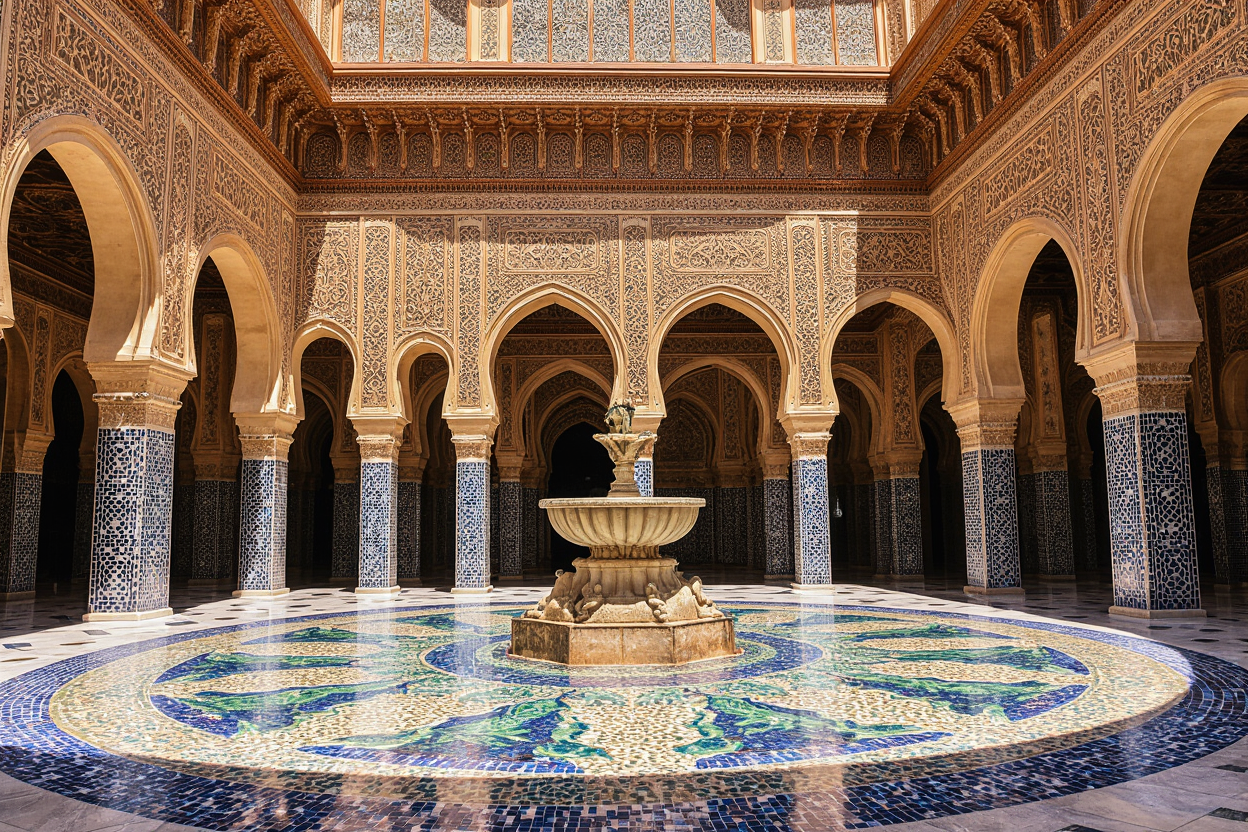
The name “Bahia” means “brilliance,” and this stunning 19th-century Bahia Palace lives up to its name. Built for Grand Vizier Ahmed ben Moussa, the palace was designed to be the greatest of its time, with 150 rooms showcasing the height of Moroccan craftsmanship.
What makes this Marrakech attraction special:
- Intricate cedarwood ceilings with hand-painted details
- Colorful zellij (mosaic) tilework in geometric patterns
- A vast marble-paved courtyard surrounded by rooms for Ba Ahmed’s four wives and 24 concubines
- Peaceful gardens with fountains and orange trees
Saadian Tombs
Hidden for centuries and only rediscovered in 1917, the Saadian Tombs contain the remains of members of the Saadian dynasty that ruled Morocco from 1549 to 1659. The most spectacular feature is the Hall of Twelve Columns, containing the tomb of Sultan Ahmad al-Mansur.
This chamber displays extraordinary craftsmanship with Italian Carrara marble columns, gold-leaf honeycomb muqarnas (stalactite-like plasterwork), cedar ceilings, and intricate tile mosaics. The contrast between the ornate tombs of the elite and the simpler graves in the garden highlights the social hierarchy of the time, making this a fascinating point of interest for anyone exploring Morocco’s history.
Arrive at the Saadian Tombs early (before 10 AM) to avoid long queues. The narrow entrance passageway can create bottlenecks during peak hours, and the intimate chambers are best appreciated without crowds.
El Badi Palace
“The Incomparable Palace” now stands mostly in ruins, but its scale still impresses. Built in the late 16th century by Sultan Ahmad al-Mansur to celebrate a victory over Portuguese forces, it once featured over 350 rooms decorated with gold, marble, and semi-precious stones.
Today, visitors can explore the vast courtyard with its sunken gardens and reflecting pools, climb the ramparts for sweeping city views, and imagine the palace’s former glory. The site often hosts part of the annual Marrakech International Film Festival, blending ancient grandeur with contemporary culture.
Powered by GetYourGuide
Cultural Havens: Museums as Key Points of Interest
Marrakech’s museums offer deep insights into Moroccan culture, from traditional crafts to contemporary art, and rank among the city’s most enriching points of interest.
Mohammed VI Museum of the Water Civilization
This unique museum highlights Morocco’s ingenious traditional hydraulic heritage. It showcases the khettaras—underground irrigation channels that have been vital to desert agriculture for centuries. Interactive exhibits demonstrate how water management shaped Moroccan society and architecture, from public fountains to hammams and ornate garden irrigation systems.
Musée Yves Saint Laurent Marrakech
This striking contemporary museum celebrates the enduring love affair between legendary fashion designer Yves Saint Laurent and Marrakech. The city profoundly inspired his work after his first visit in 1966. The museum houses a rotating collection of his haute couture designs alongside temporary exhibitions, while the building itself—designed by Studio KO with a façade resembling woven fabric—is a modern architectural marvel.
Ben Youssef Madrasa
Founded in the 14th century and rebuilt in the 16th century, this former Islamic college was once the largest theological school in North Africa, housing up to 900 students. The madrasa’s stunning central courtyard showcases the pinnacle of Moroccan craftsmanship: hand-carved cedar wood screens, stucco walls with impossibly detailed geometric and floral patterns, and vibrant zellij tilework in blues and greens. Now functioning as a museum, the tiny student cells offer a glimpse into the austere life of religious scholars centuries ago.
💡 Museum of Marrakech — Located in the Dar Menebhi Palace, this museum displays Muslim, Jewish, and Berber artifacts telling the story of Morocco’s diverse cultural heritage. Don’t miss the central courtyard’s massive wrought iron chandelier hanging from a cedar dome—it’s one of the most photographed interiors in the city.
Tranquil Oases: Marrakech’s Gardens & Green Spaces
After the sensory intensity of the medina, Marrakech’s gardens offer peaceful retreats and rank among the city’s most beloved attractions.
Jardin Majorelle
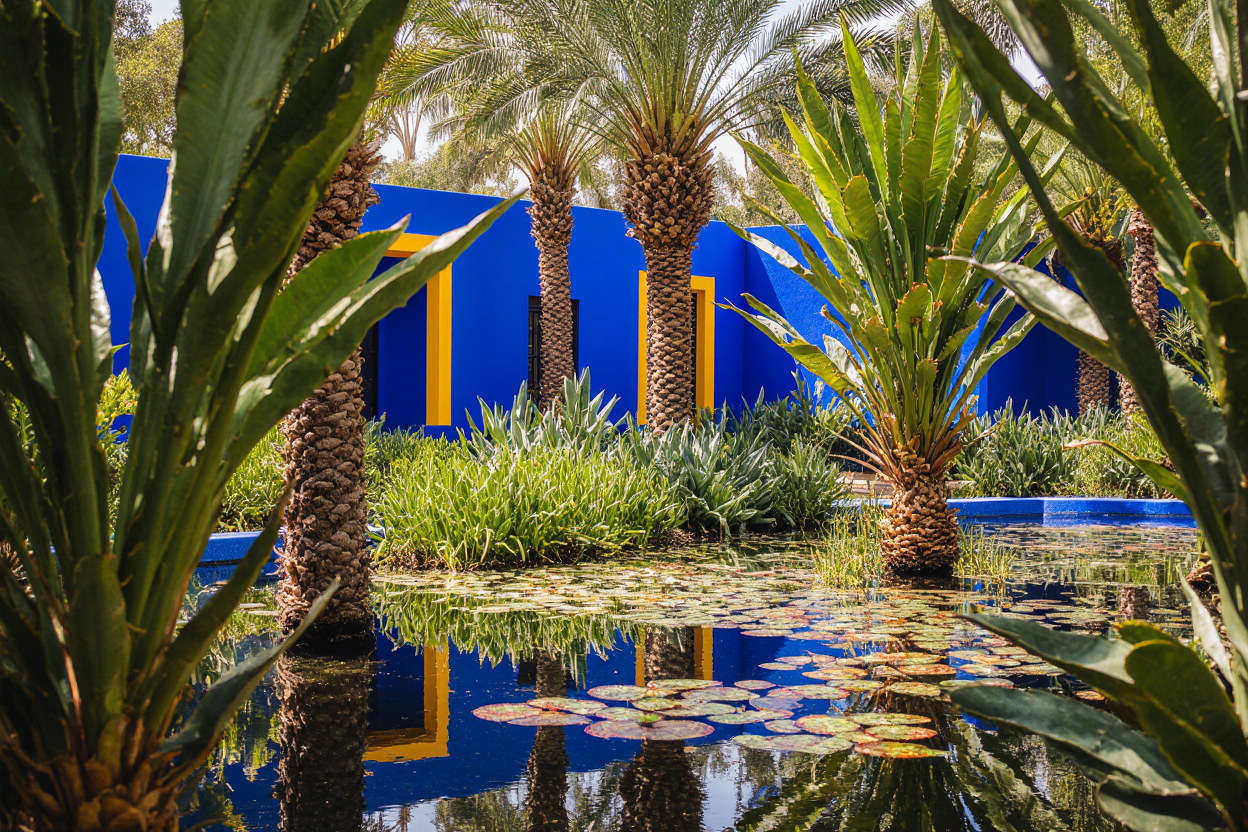
Created by French painter Jacques Majorelle over forty years and later restored by fashion designer Yves Saint Laurent, Jardin Majorelle is a masterpiece of color and design. The intense cobalt blue—now known worldwide as “Majorelle Blue”—used on buildings and garden features creates a striking contrast against an impressive collection of cacti and exotic plants from five continents. For a deeper look at this iconic space, visit our complete Jardin Majorelle guide.
Within the garden complex, you’ll find the Pierre Bergé Museum of Berber Arts, housing traditional artifacts including jewelry, textiles, leatherwork, and weapons that showcase the rich heritage of Morocco’s indigenous Amazigh (Berber) people.
Le Jardin Secret
This recently restored traditional garden and palace in the heart of the medina provides a perfect escape from the bustling souks. Le Jardin Secret features an exotic garden with plants from around the world, an Islamic garden divided into quadrants by water channels symbolizing the four rivers of paradise, and a traditional tower offering one of the best panoramic views over the old city.
Menara Gardens
Dating back to the 12th century, these expansive gardens center around a large reflecting pool and pavilion with the Atlas Mountains as a spectacular backdrop. The olive groves provide welcome shade, and the large basin—which served as both a reservoir for irrigating the surrounding orchards and a swimming pool for the sultan’s family—creates a serene atmosphere. Visit in early morning to see the mountains reflected in the pool before the gardens get busy.
Visit Jardin Majorelle first thing in the morning (it opens at 8 AM) to beat the crowds, then walk to the nearby Musée Yves Saint Laurent. Save Le Jardin Secret for the afternoon when you’ll appreciate its cool shade after exploring the medina.
Powered by GetYourGuide
The Souks: A Labyrinth of Shopping & Culture
North of Jemaa el-Fna lies a maze of covered markets that form one of Marrakech’s most fascinating points of interest. The Marrakech souks are organized by craft, each section specializing in particular goods:
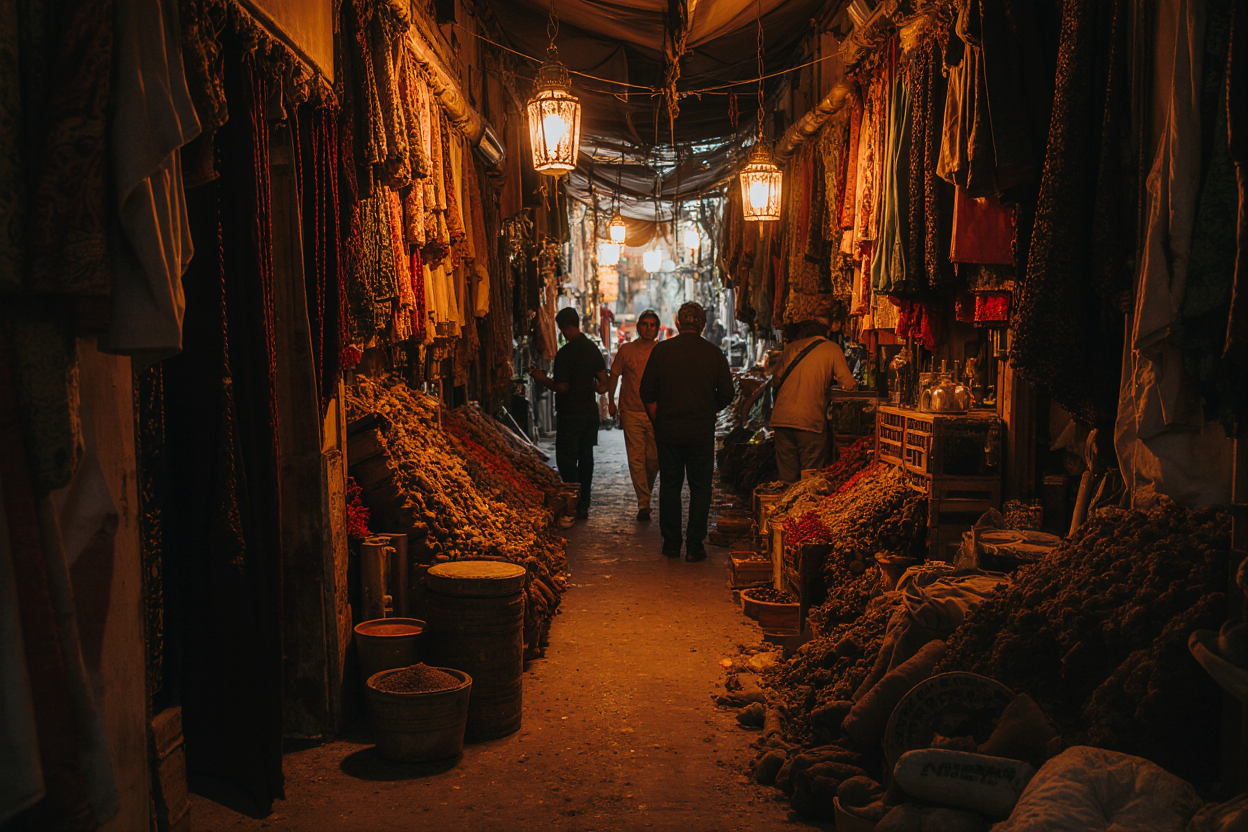
- Souk Semmarine: The largest, specializing in leather goods and babouches (traditional slippers)
- Souk Chouari: Where skilled carpenters create furniture and wooden items
- Souk el Kebir: Known for textiles, including carpets and traditional Moroccan clothing
- Souk des Teinturiers: The dyers’ souk, where fabrics are dyed in rainbow colors
- Souk Haddadine: The blacksmiths’ quarter, filled with the sound of hammers on metal
🛍️ Bargaining Essentials — Start at about half the asking price, negotiate with a smile and good humor, and be prepared to walk away—often the vendor will call you back with a better offer. For a comprehensive breakdown, read our bargaining tips for Moroccan souks.
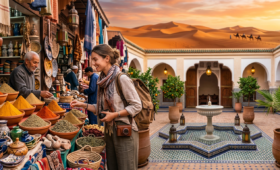
Items worth seeking in the souks include hand-tooled leather goods, brass or silver lanterns with intricate cutout designs, colorful spices (especially saffron, which is much cheaper here than in Europe or America), argan oil products for cooking and cosmetics, and hand-woven rugs. For a curated overview of what’s worth bringing home, see our guide to the best souvenirs from Morocco.
Powered by GetYourGuide
Experiencing Marrakech: Tours and Activities
To fully appreciate Marrakech attractions, consider these immersive experiences that go beyond sightseeing into genuine cultural connection.
Guided Tours
A knowledgeable guide can transform your understanding of Marrakech’s historical sites and hidden corners. Options include half-day historical tours covering major monuments, photography tours focused on the most picturesque spots, specialized architecture or art tours, and evening tours to experience Jemaa el-Fna at its most vibrant. For a broader perspective, our complete guide to things to do in Marrakech covers every type of activity.
Food Experiences
Moroccan cuisine is a highlight of any visit. Join a Marrakech food tour to sample authentic street food safely with expert guidance. Take a cooking class to learn how to make tagine, couscous, and Moroccan pastries firsthand. Or visit a local family home for an authentic meal experience—one of the most memorable cultural moments Marrakech offers.
Cultural Activities
Immerse yourself in local traditions by visiting a traditional hammam for a scrub and massage, taking a calèche (horse-drawn carriage) ride around the city walls at sunset, learning the art of Moroccan tea preparation, or attending a demonstration of traditional music or dance.
For those interested in exploring beyond Marrakech, consider a day trip to the Ouzoud Waterfalls, venture into the desert on a multi-day tour, or discover the hidden gems of rural Morocco.
Powered by GetYourGuide
Planning Your Visit: Practical Tips for Marrakech Attractions
Best Time to Visit
The ideal seasons to explore Marrakech attractions are:
- Spring (March–May): Comfortable temperatures (65–80°F / 18–27°C) and blooming gardens
- Fall (September–November): Mild weather after the summer heat subsides
Summer (June–August) brings temperatures that often exceed 100°F / 38°C, making sightseeing challenging during midday. Winter (December–February) can be surprisingly cool, especially at night, though daytime conditions remain pleasant.
Getting Around
- On foot: The medina (old city) is pedestrianized and best explored by walking
- Petit Taxis: Small red cabs operating within city limits—insist on using the meter
- Grand Taxis: Larger shared taxis for traveling to nearby towns
- Horse-drawn carriages: Touristy but enjoyable for a leisurely tour of the city walls
- App-based ride services: Available in Marrakech for convenient transportation
For airport transfers, consider pre-booking with Welcome Pickups for a stress-free arrival. If you’re planning to explore beyond the city, renting a car in Morocco gives you the flexibility to reach the Atlas Mountains and beyond at your own pace.
Accommodation
For the full Marrakech experience, stay in a traditional riad within the medina. These historic houses built around central courtyards feature peaceful inner gardens with fountains, rooftop terraces with medina views, traditional Moroccan decor, and personalized service. For budget options, explore our guide to affordable riads in Marrakech, or browse our comprehensive Morocco riads travel guide for recommendations at every price point.
Morocco is a Muslim country with conservative dress customs. Both men and women should cover shoulders and knees. Women should carry a light scarf for visiting religious sites. Loose, lightweight clothing is both respectful and practical. Learn a few phrases—”Salam alaikum” (Hello) goes a long way. For the full rundown, see our Moroccan etiquette guide.
📌 Planning note: Book guided tours and cooking classes at least 2–3 days in advance during peak season (March–May and September–November). Popular experiences like hammam sessions and food tours fill up quickly, especially for small-group formats.
Powered by GetYourGuide
Reserve Your Spot
Book Your Marrakech Experience
From guided medina walks to cooking classes and desert excursions — choose from the best Marrakech tours and activities. Instant confirmation, free cancellation on most bookings.
Frequently Asked Questions
Everything you need to know before visiting Marrakech
✦ Your Morocco Journey Starts Here
Let Marrakech Awaken Every Sense
Marrakech is a city of wonderful contrasts—the chaotic energy of Jemaa el-Fna coexists with the serene beauty of hidden gardens. Ancient traditions thrive alongside contemporary art. Labyrinthine medieval streets lead to sophisticated modern restaurants. Allow yourself to be swept up in the magic of this remarkable city. The Red City doesn’t just offer sights to see—it offers experiences that stay with you long after you’ve returned home.