
Morocco on a Budget in 2026: 21+ Essential Tips for Cheap Travel
Explore Morocco on a budget in 2026 with our ultimate guide. Discover 21+ essential tips for cheap travel, affordable accommodation, and free attractions across this extraordinary North African destination.
What if you could wander through thousand-year-old medinas, sleep in a courtyard riad, feast on slow-cooked tagine, and watch the sun melt into the Sahara dunes — all for less than $50 a day? That’s not a travel fantasy. That’s Morocco on a budget in 2026. While European capitals drain wallets faster than you can say “café crème,” Morocco delivers a sensory overload of color, flavor, and history at a fraction of the cost. Whether you’re a solo backpacker, a couple chasing affordable romance, or a family stretching every dirham, this guide breaks down exactly how to make it happen — from the cheapest trains and tastiest $3 meals to the free experiences that money genuinely can’t buy.
✦ Key Takeaways
Morocco is exceptionally affordable — budget travelers can explore comfortably on just $30–$50 per day.
Travel during spring (March–May) or fall (September–November) for the best weather and the lowest prices.
Stay in hostels, guesthouses, or budget riads from $10–$30 per night — breakfast is often included.
Use trains, CTM buses, and shared grand taxis to travel between cities for as little as $5–$20.
Eat authentic Moroccan tagine, harira, and street food for under $5 at local stalls and snack shops.
Why Choose Morocco for Budget Travel?
Morocco stands out as one of North Africa’s most affordable destinations, consistently ranking among the best-value countries bordering the Mediterranean. The combination of rock-bottom costs and impossibly rich experiences makes Morocco on a budget an unbeatable choice for travelers who refuse to sacrifice adventure for the sake of their bank account. From the imperial splendor of ancient medinas to the windswept Atlantic coastline, every corner of this country delivers far more than its price tag suggests.
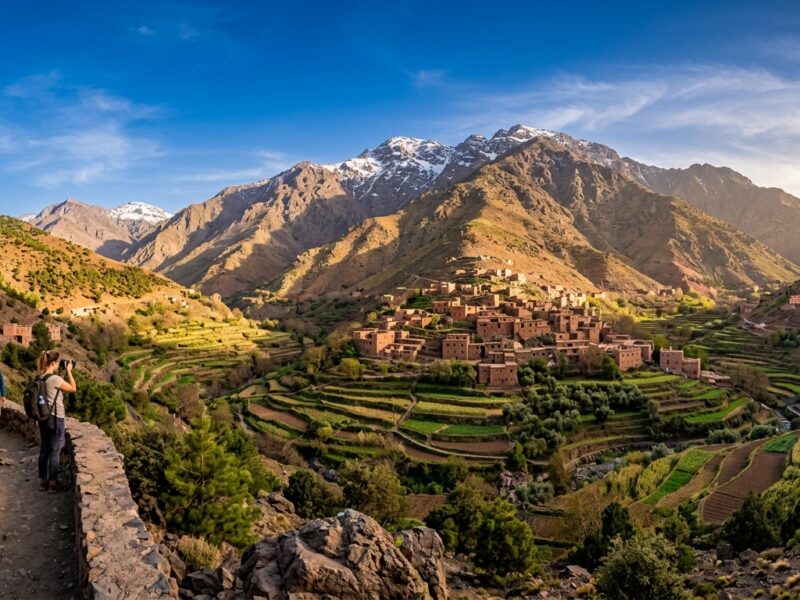
The diversity packed into Morocco’s geography is staggering. You can hike through the Atlas Mountains past Berber villages, venture into the Sahara Desert for a night beneath stars, and surf Atlantic waves — all in a single trip. Local souks burst with color, scent, and sound that cost absolutely nothing to experience. Museums charge minimal entry fees, often under $5, while many of Morocco’s most breathtaking architectural wonders welcome visitors completely free of charge.
💡 Morocco vs. Europe price comparison: A charming riad room in Marrakech costs $25 versus $80+ for a basic hotel in Spain. A filling tagine meal runs $3–5 at a local stall versus $20+ in France. Your budget stretches three to four times further in Morocco than in most European destinations.
Moroccan hospitality adds immeasurable value to every budget trip. Locals frequently go out of their way to help visitors — sharing directions, restaurant tips, and sometimes even invitations for mint tea in their homes. This generosity of spirit extends to solo travelers, couples, and families alike, creating a warmth that enriches every interaction and costs absolutely nothing.
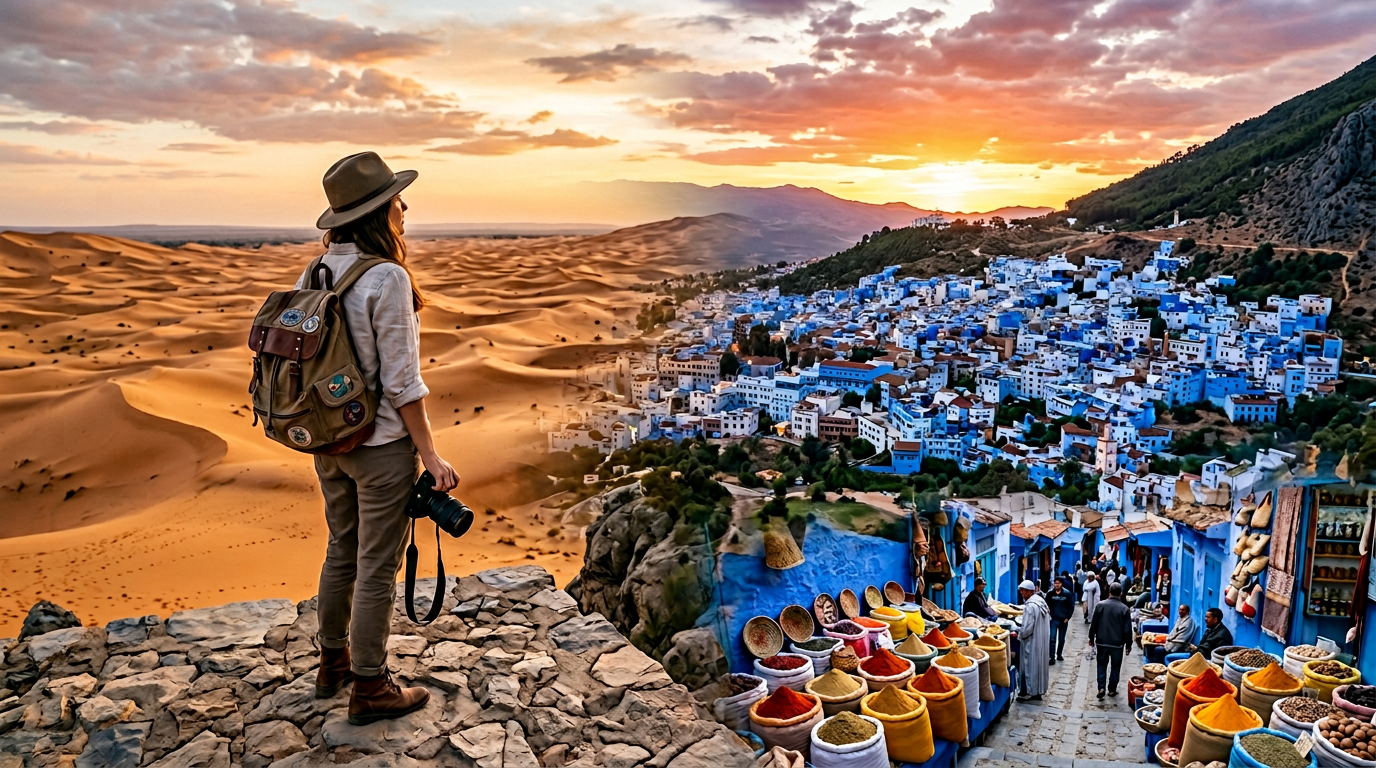
Major cities like Marrakech, Fes, Chefchaouen, and Casablanca maintain extensive networks of budget accommodations, cheap eateries, and free attractions that keep costs low without sacrificing authenticity. Within a single trip you can explore the best beaches in Morocco, wander UNESCO-listed medinas, and ride camels through golden dunes — each experience multiplying your adventure without multiplying your costs.
Planning Your Trip: Essential Budget Travel Tips for Morocco
Smart planning transforms affordable Morocco travel from a vague intention into a fully realized adventure. The decisions you make before you board your flight — when to go, how to book, and what to prioritize — are what separate travelers who blow their budget in week one from those who stretch every dirham across an entire month.
Best Times to Visit for Budget Travelers
Shoulder seasons consistently deliver the perfect balance of pleasant weather and lower prices. Spring (March–May) and fall (September–November) see flight prices drop by 30–50% compared to peak summer, while accommodation rates follow suit and tourist crowds thin out significantly. Winter (December–February) offers excellent city deals — Marrakech and Fes are mild and beautiful in January — though the Atlas Mountains get genuinely cold. Avoid the Christmas–New Year window and Easter week when European holiday demand temporarily pushes prices back up.
Ramadan can be a surprisingly rewarding time to visit Morocco on a budget. While some restaurants close during daylight hours, the evening iftar meals served at sunset are generous, communal, and often remarkably affordable. Many riads and guesthouses also offer special Ramadan accommodation rates that undercut their standard pricing significantly.
Finding Affordable Flights
Use flight comparison tools like Skyscanner and set up flexible date searches to identify the cheapest windows. Book 2–3 months ahead for the best rates on international routes. Flying into Casablanca Mohammed V or Marrakech Menara typically offers the most competitive fares, while budget carriers like Ryanair and EasyJet serve multiple Moroccan airports from European hubs. Midweek departures — Tuesday and Wednesday — are consistently cheaper than weekend flights.
Visas, Insurance & Staying Connected
Many nationalities enjoy visa-free entry to Morocco for up to 90 days — always verify the current requirements on the official visa policy page before you book. Basic travel insurance starts around $30–50 for a week; check whether your credit card already includes coverage before purchasing separately. For mobile data without expensive roaming fees, grab an eSIM via Airalo before departure — it activates instantly upon landing and costs a fraction of airport SIM prices. For detailed cost planning across every category, our Morocco travel cost guide breaks down exactly what to budget for accommodation, food, transport, and activities.
Accommodation: How to Find Cheap Stays in Morocco
Finding affordable places to sleep forms the backbone of any successful budget trip. Morocco’s accommodation landscape is genuinely diverse — from buzzing social hostels and family-run guesthouses to atmospheric budget riads that deliver authenticity at backpacker prices. Here’s what to expect at each level.
Hostels: From $10/Night
Morocco’s hostel scene has expanded rapidly, with modern, well-reviewed dorm beds now available from $10/night in cities like Marrakech, Fes, Chefchaouen, and Essaouira. Most include free Wi-Fi, lockers, and communal kitchens; many serve included breakfasts. The best hostels double as social hubs where you’ll naturally meet other travelers to share grand taxi costs and day trip expenses — compounding your savings even further. Browse options on Hostelworld or read our comprehensive guide to hostels in Morocco for city-by-city recommendations.
Guesthouses & Budget Riads: $15–$40/Night
Family-run guesthouses (maisons d’hôtes) are one of Morocco’s great budget travel secrets. At $15–25/night they offer private rooms, home-cooked breakfasts, and insider local knowledge that no guidebook can replicate. Budget riads — traditional courtyard houses converted into intimate guesthouses — start around $30/night for private rooms dripping with hand-painted tiles, carved cedar, and zellige mosaic work. For travelers focusing on Marrakech, our dedicated guide to affordable riads in Marrakech highlights the best-value stays across the medina and Gueliz district.
💡 Booking strategy that saves 10–20%: Find your ideal property on Booking.com, then contact the riad or guesthouse directly by email to ask for their direct rate. Most properties are happy to offer a discount when they save on commission — especially for stays of three or more nights.
Best Budget Neighborhoods by City
- Marrakech: The Medina for budget riads within walking distance of Jemaa el-Fna; Gueliz for modern hostels near the train station.
- Fes: Fes el Bali for authentic family guesthouses inside the world’s largest car-free urban area.
- Chefchaouen: The blue-washed medina for charming, walkable budget stays from $15/night.
- Essaouira: The fortified old town (medina) for coastal character on a genuine backpacker budget.
- Agadir: City center for modern budget hotels a short walk from the beach and central bus station.
Always read recent reviews for cleanliness and neighborhood safety. Female travelers should filter specifically for reviews written by other women — an extra layer of reassurance that costs nothing and is worth its weight in peace of mind.
Getting Around: Affordable Morocco Travel Options
Morocco’s public transport network makes cheap travel Morocco both practical and surprisingly comfortable in 2026. You genuinely do not need a rental car to see the country’s highlights — though that option exists too for those wanting total freedom.
Trains (ONCF): The Budget Traveler’s Best Friend
Morocco’s national rail network links major cities efficiently and affordably. Second-class seats cost roughly $10 for Casablanca to Marrakech and $20 for Marrakech to Fes. The Al Boraq high-speed train connects Tangier to Casablanca in just over two hours — a game-changer for northern itineraries. Book tickets online at ONCF Voyages to guarantee seats during busy periods and avoid station queues. For full route maps, schedules, and booking tips, see our Morocco trains travel guide.
Intercity Buses: CTM & Supratours
Modern, air-conditioned buses operated by CTM and Supratours cover destinations that trains don’t reach — including Chefchaouen, Essaouira, Merzouga, and the desert towns of the south. Fares range from $5–15 per route. Crucially, overnight buses on longer journeys effectively eliminate a night’s accommodation cost, making them a double budget win for travelers comfortable sleeping on the move.
Taxis: Grand & Petit
Grand taxis are shared, fixed-route vehicles — typically aging Mercedes sedans — that connect smaller cities and towns for $5–10 per seat. They depart when all six seats are filled, so be prepared to wait or pay for empty seats if you’re in a hurry. Petit taxis handle urban journeys within cities for $1–3; always insist on the meter being switched on, or agree a price clearly before you get in. Our complete taxi services guide covers negotiation tactics, typical fares, and how to avoid the most common overcharging situations.
Book train tickets online 24–48 hours ahead for guaranteed seats and to avoid peak-day surcharges. Share grand taxi costs with other travelers from your hostel — it takes five minutes to ask in the common room and can halve your transport spending. Download Maps.me or Google Maps offline before leaving Wi-Fi, so you can navigate confidently without burning mobile data. On long routes, overnight CTM buses save both the ticket cost and a night’s accommodation in one move.
Car & Scooter Rentals
For maximum flexibility in the Atlas Mountains, along the southern coast, or between smaller towns, rental cars start from $25/day through platforms like Localrent. Scooters are available for $15–25/day in tourist cities. Always photograph every existing scratch and dent before driving away, and confirm what the insurance actually covers. Our guide to renting a car in Morocco covers insurance pitfalls, road conditions, and the driving rules that catch first-timers off guard.
Eating on a Budget: Savoring Morocco’s Flavors for Less
Food is arguably the single greatest pleasure of cheap travel Morocco. The country’s culinary traditions deliver bold, complex, deeply satisfying flavors at prices that feel almost impossible by European standards — and the cheapest meals are consistently the most authentic.
Street Food: $1–$3 for Full Meals
Morocco’s street food scene is legendary for good reason. A steaming bowl of harira soup costs $0.50 and is filling enough to replace a meal. Grilled brochettes (kebabs) with bread and salad run $1–2. Msemen flatbread fresh off the griddle is $0.25. The famous Jemaa el-Fna square in Marrakech transforms every evening into the world’s greatest open-air restaurant — dozens of smoke-wreathed grills serve everything from sheep’s head to fresh-squeezed orange juice at $0.50 a glass. The golden rule: eat at stalls packed with locals. High turnover means fresh, safe, delicious food.
Snack Shops & Local Restaurants: $2–$7
Every Moroccan town has small “snack” restaurants serving generous meals — sandwiches stuffed with kefta, tagines of slow-cooked lamb, and mixed salad plates — for $2–5. Budget restaurants clustered around markets, bus stations, and working-class neighborhoods offer set menus (entrée, main, mint tea) for $3–7. The rule of thumb is simple: if the menu is handwritten in Arabic or French with no laminated photos, you’ve almost certainly found the real thing.
🍽️ Must-try budget dishes in 2026: Tagine ($3–5), couscous on Fridays ($2–4), harira soup with dates ($0.50–1), msemen flatbread ($0.25), and Moroccan mint tea — often poured free with meals. A full day of street-food eating can cost as little as $8–12 total.
To stretch your food budget even further: take full advantage of breakfasts included with your guesthouse or riad, buy fresh seasonal fruit from market stalls for snacks at $0.50–1 per kilo, and carry a reusable water bottle. Tap water is generally safe in major cities but may upset sensitive stomachs — a reusable bottle with a filter saves money and reduces plastic waste over a longer trip. During Ramadan, the communal iftar meal at sunset offers extraordinary value and a genuine cultural experience that money cannot manufacture.
Top Budget-Friendly Activities and Attractions in Morocco
Morocco on a budget does not mean compromising on experiences. The country overflows with free and low-cost activities that create the kinds of memories that make people return year after year. Here are the best experiences organized by cost.
Completely Free Experiences
- Explore medinas on foot: Wander the labyrinthine streets of Fes el Bali — the world’s largest car-free urban area — Marrakech’s buzzing medina, and Chefchaouen’s iconic blue-washed alleyways. All free, all breathtaking.
- Soak up the souks: Watch copper smiths hammering lanterns, weavers threading silk, and leather tanners at work in Morocco’s historic markets. The sensory experience costs nothing to absorb.
- Beach life: Essaouira, Agadir, Taghazout, and Mirleft offer stunning Atlantic coastline with zero entrance fees.
- Public gardens: Menara Gardens in Marrakech and the Andalusian Gardens in Rabat are free or cost under $1.
- Mosque architecture: Admire the soaring Koutoubia Mosque minaret in Marrakech and the exterior of the Hassan II Mosque in Casablanca — the world’s third-largest mosque and one of the few open to non-Muslim visitors, with guided tours at $12.
- Hidden gems off the trail: Towns like Moulay Idriss, Azrou, and Tiznit offer rock-bottom prices and zero tourist crowds. Read our guide to hidden gems of Morocco for inspiration.
Budget Activities: Under $25
- Museums: Most Moroccan museums charge $3–5 entry, with student discounts widely available. The Dar Si Said Museum in Marrakech and the Batha Museum in Fes are standouts.
- Walking tours: Tips-based free walking tours operate in Marrakech, Fes, Casablanca, and Rabat daily. Expert-led guided walking tours of Marrakech start from $10–20 and are worth every cent for navigating the medina.
- Traditional hammam: A public hammam costs $2–5 for entry and a kessa scrub — a quintessential Moroccan experience that costs less than a coffee in any European capital.
- Atlas Mountains hiking: Independent hikes to local villages cost nothing beyond transport to the trailhead. Guided two-day treks with local Berber guides start from around $25.
- Food tours: Budget street food tours in Marrakech run $25–35 and typically include enough tastings to replace a full meal.
Best-Value Day Trips from Major Cities
Shared group day trips are among the smartest ways to spend your Morocco budget. Transport, a local guide, and sometimes lunch are bundled into a single affordable price — far cheaper than organizing the same trip independently.
- Ouzoud Waterfalls from Marrakech: Guided hike and boat trip day tours from $25, visiting North Africa’s most spectacular waterfall. Our Ouzoud Waterfalls guide covers independent visit options too.
- Atlas Mountains & Berber villages: Half-day tours from Marrakech start at $25, covering valley drives, waterfall hikes, and mint tea with Berber families.
- Essaouira from Marrakech: Full-day coastal excursions to this windswept Atlantic port city run $20–30 by group tour.
- Ait Benhaddou: The UNESCO-listed kasbah made famous by Gladiator and Game of Thrones — day trips from Marrakech from $30 including transport and guide.
Budget Sahara Desert Experiences
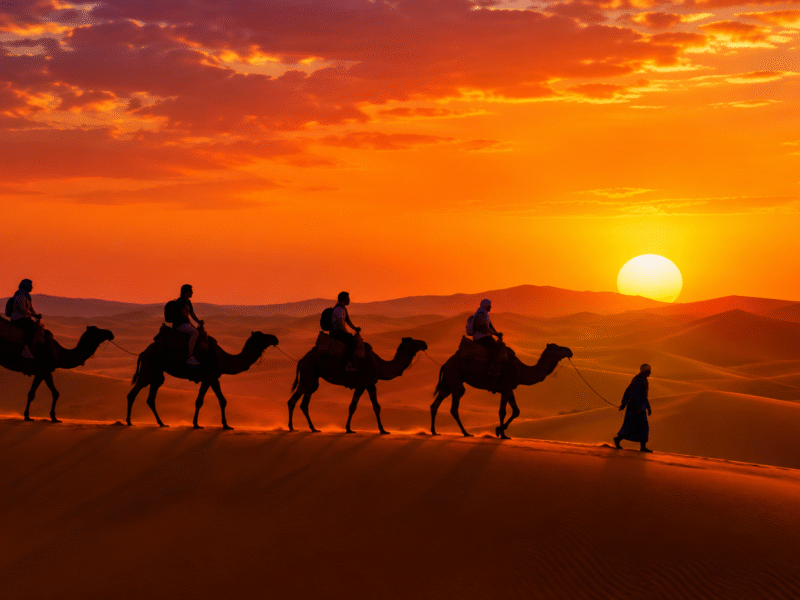
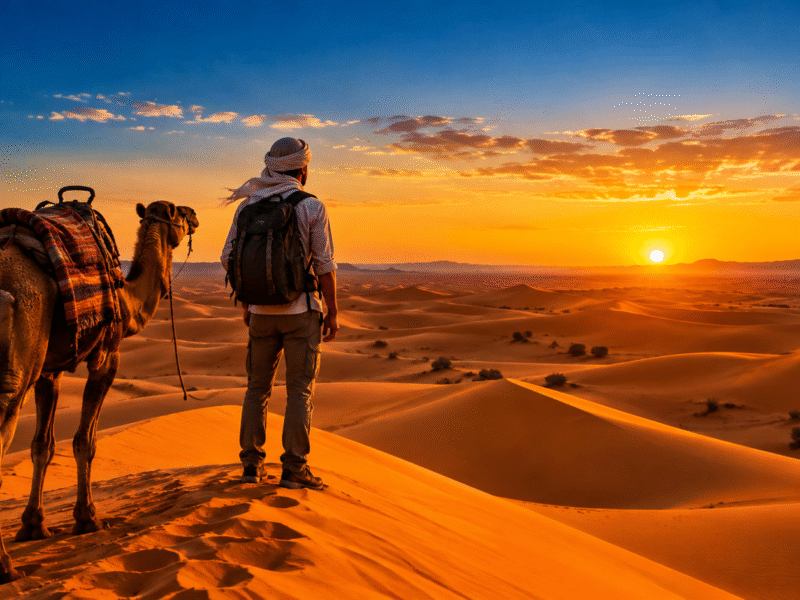
A Sahara trip is the one splurge that every Morocco budget traveler should prioritize — and even this can be done remarkably affordably. Shared 3-day desert tours from Marrakech to Merzouga start at $70–90 per person all-inclusive: transport in both directions, accommodation each night, meals, a sunset camel trek, and a night sleeping under the stars in the golden Erg Chebbi dunes. That works out to roughly $25/day for an experience that most travelers rank as their single most memorable Morocco moment. For a shorter desert fix closer to Marrakech, the Agafay Desert just 45 minutes from the city offers sunset camel rides and dinner shows from $35.
Skip booking through your riad — they add a commission on top of the tour price. Book directly through GetYourGuide or negotiate face-to-face with tour agencies along Jemaa el-Fna in Marrakech. Competition between agencies is fierce, and you can often negotiate 10–20% off the listed price, especially if you’re booking for a group or traveling in shoulder season.
Sample Daily Budget Breakdown
Here is what a realistic day of budget travel in Morocco actually looks like in 2026, broken down across three spending levels. Use this as a framework and adjust based on your own priorities — most travelers find they spend less than expected once they embrace local eating and public transport.
Hostel dorms, street food, walking everywhere
Accommodation: Hostel dorm bed $8–12/night, breakfast often included.
Food: Street food breakfast $1, market lunch $2, snack-shop dinner $3 = approximately $6–7/day total on food.
Transport: Petit taxi rides $1–2, walking the medina = approximately $2–3/day.
Activities: Free medina walks, beaches, public gardens, mosque exteriors. Budget $2–4/day for the occasional museum or public hammam visit.
Private guesthouse room, mix of local and sit-down meals
Accommodation: Private room in a guesthouse or budget riad $20–30/night with breakfast included.
Food: Included breakfast, local restaurant lunch $4–5, sit-down dinner with mint tea $6–8 = approximately $12–15/day.
Transport: Mix of ONCF trains, CTM buses, and petit taxis = approximately $5/day averaged across the trip.
Activities: One paid experience per day — a guided souk tour, museum visit, day trip, or cooking class = $8–15/day.
Atmospheric riads, restaurant dining, guided experiences
Accommodation: Mid-range riad or boutique hotel $35–50/night with breakfast included.
Food: Included breakfast, proper restaurant lunch $6–8, atmospheric dinner $10–15 = approximately $18–25/day.
Transport: First-class train tickets, the occasional private transfer for comfort = approximately $8/day averaged across the trip.
Activities: One premium experience daily — a food tour, desert excursion, Atlas Mountains hike with guide, or hammam and massage = $15–25/day.
📌 Cash is king in Morocco: Moroccan Dirham (MAD) is essential for markets, street food, petit taxis, and most local restaurants. ATMs are widely available in cities — withdraw larger amounts to minimize per-transaction fees and always carry small bills (20 and 50 MAD notes) for daily purchases. For every angle on stretching your dirhams further, see our dedicated save money Morocco travel tips guide.
21+ Essential Money-Saving Tips at a Glance
- Bargain in the souks: Haggling is expected and culturally celebrated — start at 30–40% of the asking price and enjoy the exchange.
- Book accommodation direct: Find properties on booking platforms, then email them directly for a commission-free discount.
- Travel midweek: Tuesday and Wednesday flights and trains are consistently cheaper than weekend departures.
- Join free walking tours: Tip-based tours in Marrakech, Fes, Rabat, and Casablanca offer expert local knowledge at your own price.
- Picnic from the souk: Olives, bread, cheese, and seasonal fruit from market stalls make a $2 lunch that beats most restaurants.
- Use overnight buses: Long-haul CTM night buses eliminate both a transport and accommodation cost in one move.
- Explore off-the-beaten-path destinations: Towns like Moulay Idriss, Sefrou, and Taroudant offer authentic experiences at a fraction of Marrakech prices.
- Eat the set menu: Handwritten “menu du jour” boards in local restaurants consistently offer the best value — three courses for $4–7.
- Visit unique villages: Morocco’s lesser-known villages charge nothing to explore and offer encounters with daily Moroccan life that no paid tour can replicate.
- Split grand taxi costs: Ask at your hostel — finding fellow travelers to share a grand taxi takes minutes and halves the cost immediately.
Reserve Your Spot
Book Budget-Friendly Morocco Experiences
From medina walking tours and food tastings to Sahara desert adventures and Atlas Mountain hikes — find the best-value experiences across Morocco with instant confirmation and free cancellation on most bookings.
Frequently Asked Questions
Everything you need to know before your 2026 budget Morocco trip
✦ Your Morocco Journey Starts Here
Adventure Awaits — At a Price You’ll Love
Morocco proves that the richest travel experiences don’t require the biggest budgets. From the labyrinthine medinas of Fes and the blue streets of Chefchaouen to the golden dunes of Merzouga, every dirham you spend here buys more wonder, more flavor, and more genuine human connection than almost anywhere else on the planet. Your 2026 Moroccan adventure is ready — all you have to do is take the first step.