Exploring the Historic Marrakech Medina: Souks, Palaces, and Hidden Gems
Discover the magic of the Marrakech Medina—explore vibrant souks, the stunning Bahia Palace, and hidden cultural gems in this UNESCO World Heritage site that has captivated travelers for nearly a millennium.
What does it feel like to step through a thousand-year-old gateway and find yourself surrounded by the scent of cumin, the flash of handwoven silks, and the rhythmic hammering of coppersmiths? The Marrakech Medina is one of those rare places where the answer lives in every narrow alleyway. Founded in the 11th century by the Almoravid dynasty, this UNESCO World Heritage site remains Morocco’s most iconic destination—a walled labyrinth where artisans, merchants, and storytellers carry on traditions largely unchanged for centuries. As you wander through the colorful Marrakech souks, marvel at the exquisite Bahia Palace Marrakech, and stumble upon hidden riads tucked behind unmarked doors, you’ll discover a world where history, culture, and commerce blend seamlessly together.
This guide walks you through everything you need to experience the Medina like a seasoned traveler—from bargaining strategies in the souks and architectural highlights of Bahia Palace to secret spots that most tourists never find. Whether you’re planning your first visit or returning for another dose of Marrakesh magic, consider this your insider companion.
✦ Key Takeaways
The Marrakech Medina is a UNESCO World Heritage site dating back to 1070, with distinct neighborhoods like the Mellah and Kasbah to explore.
Navigate the Marrakech souks organized by trade—bargain for spices, rugs, lanterns, and leather goods using local phrases and smart timing.
The Bahia Palace Marrakech showcases exquisite zellij tilework, painted cedar ceilings, and serene courtyards across a 2-acre complex.
Hidden gems like Le Jardin Secret, Maison de la Photographie, and authentic food experiences await beyond the main tourist trail.
Jemaa el-Fna Square transforms daily—from morning juice stalls to evening food markets—and is recognized by UNESCO for its intangible heritage.
What is the Marrakech Medina?
The Marrakech Medina is the historic walled city center founded between 1070 and 1072 by the Almoravids, a Berber dynasty whose empire once stretched from Spain to Senegal. The word “medina” simply means “city” in Arabic, though today it refers specifically to the old, traditional core of North African cities. Spanning approximately 6.4 square miles, the Marrakech Medina is one of North Africa’s largest traditional urban centers and marketplaces.
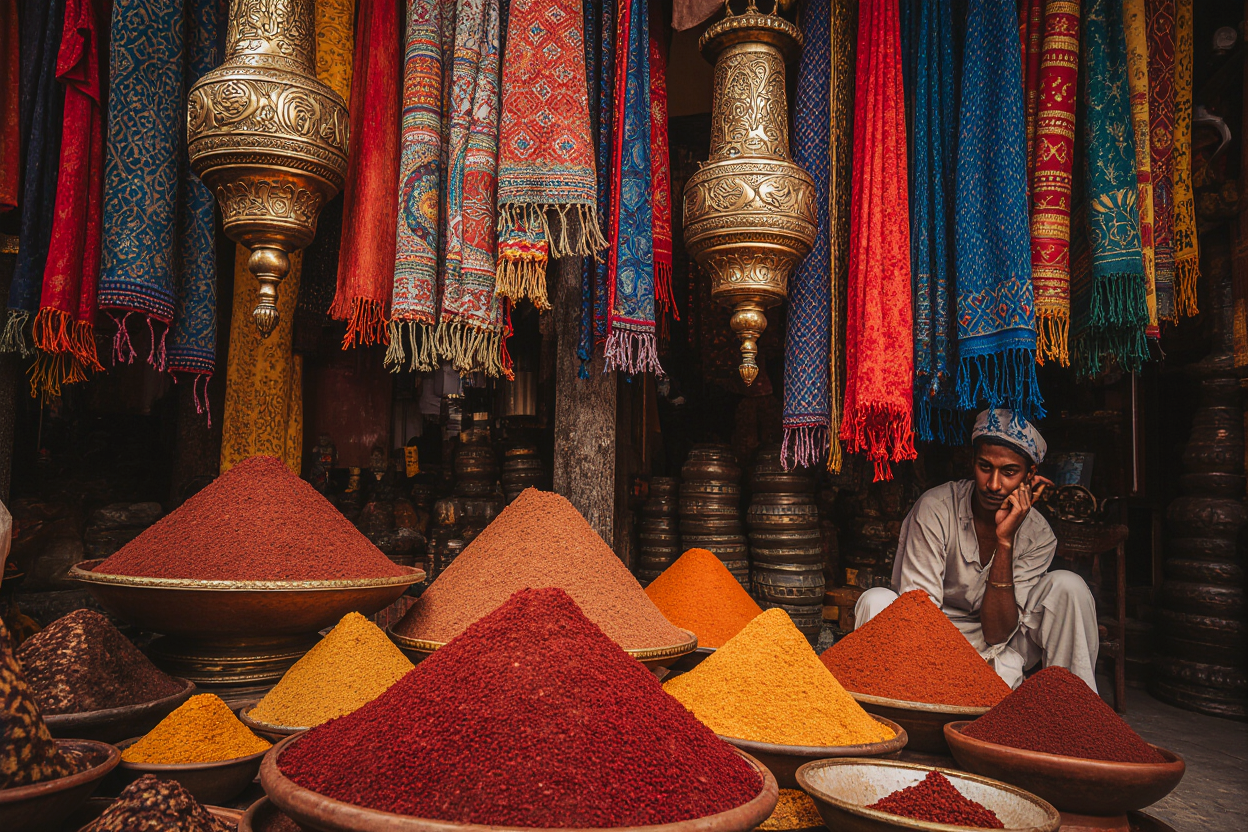
Within this maze of narrow, winding streets—which seem to follow no logical pattern—you’ll find bustling souks, grand palaces, sacred mosques, ornate fountains, and traditional riads (houses built around central courtyards). The entire Medina is surrounded by 19 kilometers of distinctive salmon-pink walls with 20 gates, known as “babs,” that once served as the city’s primary defense. In 1985, UNESCO designated the Medina of Marrakesh a World Heritage site, helping preserve the authentic character of this remarkable urban landscape.
💡 The Medina’s distinct neighborhoods each have their own personality. — The Kasbah was once a royal fortress, the Mellah is the historic Jewish quarter with distinctive balcony architecture, Mouassine is known for luxurious riads and shopping, and Riad Laarous serves as a busy commercial hub packed with food options.
Today, around 240,000 locals call the Medina home, carrying on traditional crafts and trades that have defined Marrakesh for centuries. The Medina’s Moroccan architecture showcases a stunning blend of Moorish, Andalusian, and Berber influences—from intricate zellij tilework on public fountains to carved cedar wood ceilings inside historic palaces. Stepping inside these walls is like stepping back in time while simultaneously experiencing a living, breathing community that continues to evolve.
Powered by GetYourGuide
Exploring the Vibrant Marrakech Souks
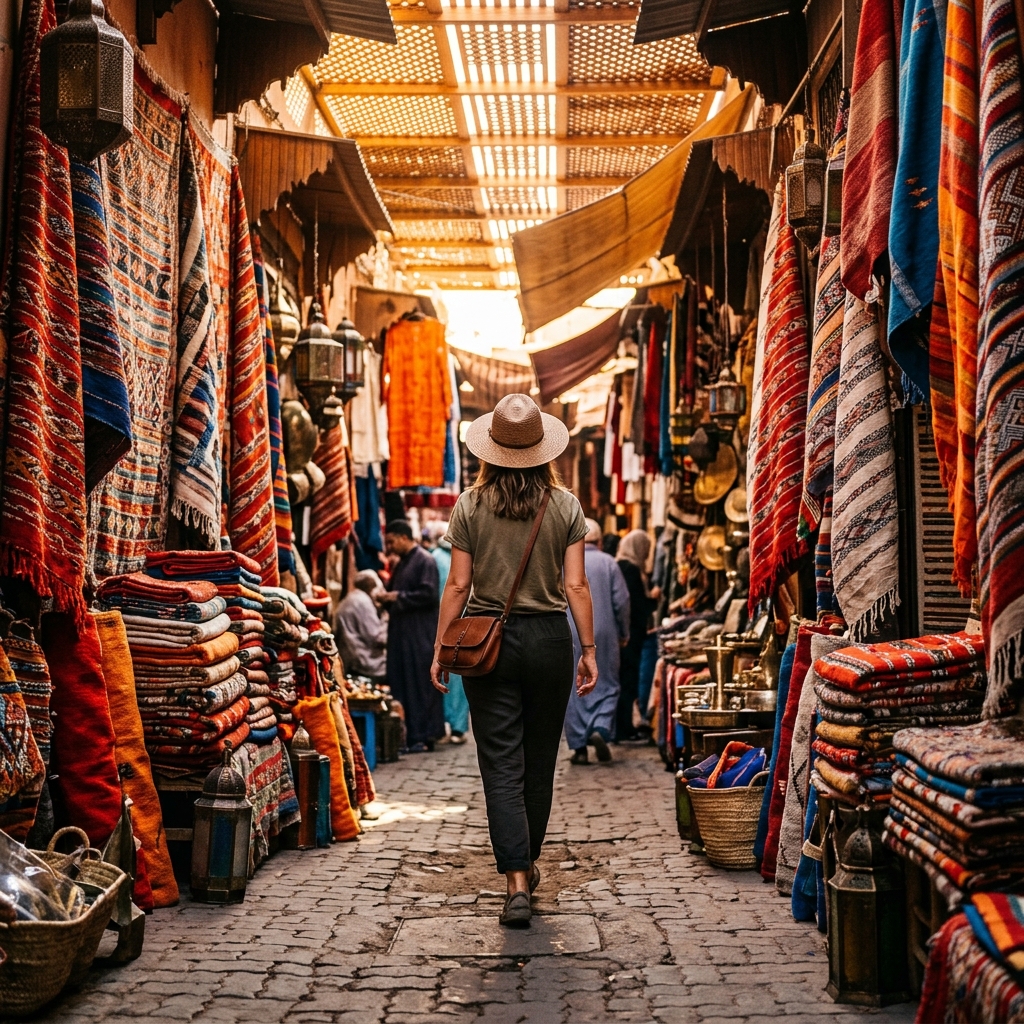
The Marrakech souks form the commercial heart of the Medina and represent one of the most famous traditional markets in the world. The word “souk” means marketplace, and the Marrakech souks comprise a complex network of covered marketplaces, each specializing in different goods and crafts. Entering is a sensory overload in the best possible way—vibrant textiles hanging from stalls, gleaming brass lamps casting intricate light patterns, rainbow displays of spices piled high in conical mounds, the sounds of craftsmen hammering metal, and the unforgettable aroma of fresh mint mixed with exotic spices.
Organization of the Marrakech Souks
What makes the Marrakech souks so fascinating is their traditional organization by trade. Each section specializes in specific products, a layout that has remained largely unchanged for centuries:
- Souk Semmarine — The largest souk, specializing in clothing, textiles, and popular tourist items
- Souk Ableuh — Famous for olives, preserved lemons, and a wide variety of Moroccan spices
- Souk Kchacha — Filled with vendors selling dried fruits, nuts, and preserved foods
- Souk Smata — The place to find traditional babouche slippers in every imaginable color
- Souk Haddadine — The blacksmiths’ quarter where metalworkers craft items using traditional methods
- Souk Zrabia — Dedicated to carpets and rugs of every size, color, and regional style
- Souk Fekharine — Where potters sell ceramics, from tagine cooking pots to decorative plates
Visit early morning before 11am for fewer crowds and more attentive merchants. The light filtering through the souk’s slatted roofs is also most atmospheric at this hour—perfect for photography.
Practical Shopping Tips for the Marrakech Souks
Bargaining is expected and is part of the cultural experience. Start by offering about 40% of the initial asking price and expect to settle at 50–70% after friendly negotiation. A few key Arabic phrases will go a long way in establishing goodwill: “Salam alaikum” (Hello), “Shukran” (Thank you), “La, shukran” (No, thank you), and “B’chal?” (How much?). For more strategies, see our complete bargaining tips for Morocco souks guide.
What to Buy in the Marrakech Souks
The souks offer countless authentic Moroccan goods worth purchasing. Look for handwoven Berber rugs with distinctive tribal patterns, pure argan oil products for skin and hair, freshly ground spices like ras el hanout and saffron, leather goods including bags and poufs, hand-crafted lanterns, and colorful ceramic tagine pots. To avoid scams and find authentic craftsmanship, seek out workshops where you can watch artisans actually creating items—watch leather being dyed in ancient tanneries, brass being hammered into intricate lanterns, or wood being carved into beautiful furniture. For a curated overview of the best items to bring home, explore our best souvenirs from Morocco guide.
Powered by GetYourGuide
Bahia Palace Marrakech: A Masterpiece of Moroccan Architecture
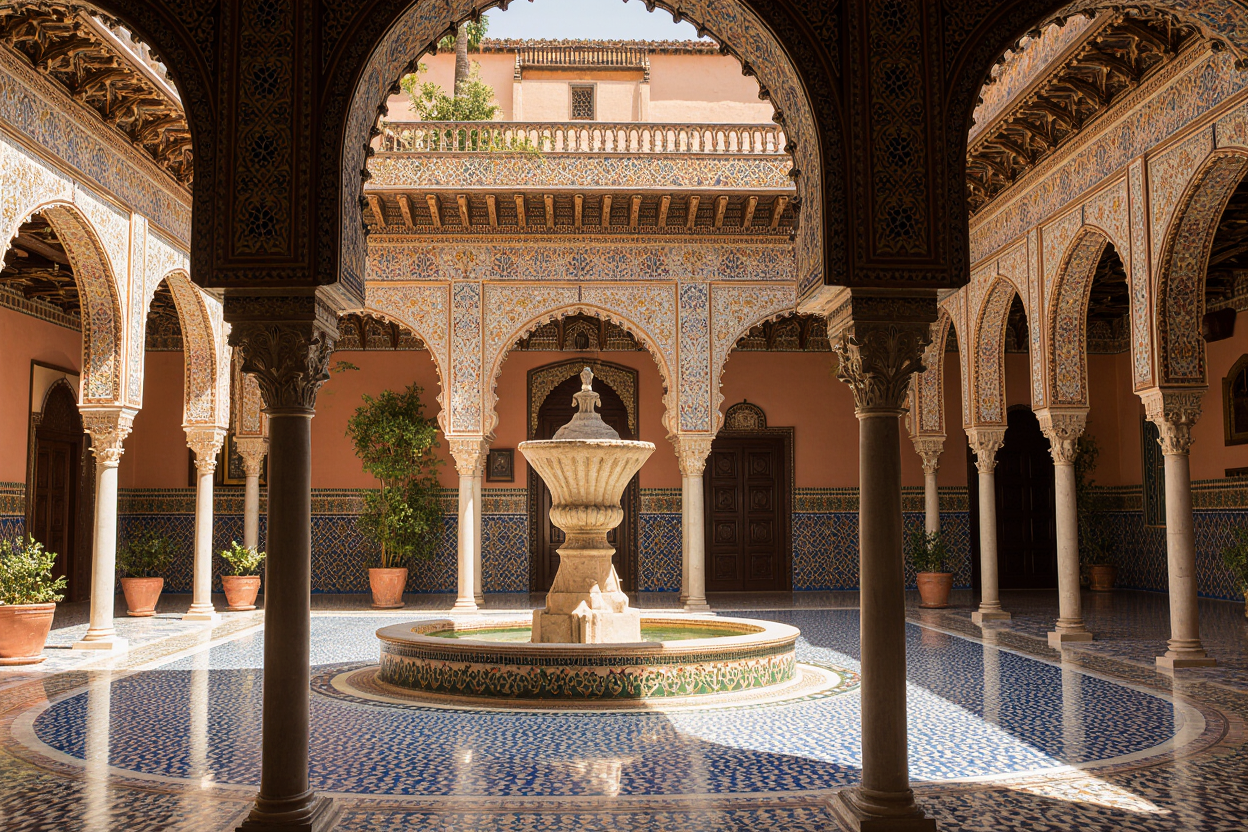
The Bahia Palace Marrakech stands as one of the Medina’s most impressive historical monuments—a stunning example of Moroccan architectural prowess and artistic achievement. Its name means “brilliance” or “beautiful” in Arabic, a perfectly fitting description for this architectural jewel that continues to astonish visitors more than a century after its completion.
History of the Bahia Palace
Construction began between 1866 and 1867 under Si Moussa, grand vizier of Sultan Hassan I. Later, his son Si Ba Ahmed—who rose to become the most powerful man in Morocco as grand vizier to two sultans—significantly expanded the palace between 1894 and 1900. Architect Muhammad al-Mekki oversaw the creation of an astounding complex spanning two acres with 150 rooms, including special harem quarters designed to house Si Ba Ahmed’s four wives and 24 concubines. After the grand vizier’s death in 1900, the palace was looted of its valuables. During the French Protectorate period, General Lyautey later commandeered it as his residence.
Architectural Splendors
What makes the Bahia Palace Marrakech truly special is its exquisite craftsmanship. The palace showcases both Moorish and Andalusian influences, with distinct echoes of the Alhambra in Granada, Spain. Every surface features intricate decoration: colorful zellij tilework, painted wooden ceilings, and carved stucco that seems to float like lace. The complex spreads across 8 hectares, including multiple gardens and courtyards planted with orange trees, cypress, jasmine, and banana leaf plants. The Grand Courtyard measures an impressive 50 by 30 meters, while the Grand Riad boasts some of the most intricate marquetry ceilings in Morocco.
Visitor Information for the Bahia Palace
- Location: Rue Riad Zitoun el Jdid, southern Marrakech Medina
- Opening hours: 9am to 5pm daily (closes during Friday prayer times)
- Entrance fee: 70 MAD (approximately €7)
- Best time to visit: Early morning for peaceful exploration and best photography light
- Visit duration: Allow 1–2 hours to properly explore the palace and gardens
The Bahia Palace Marrakech is part of a broader constellation of Moroccan UNESCO World Heritage sites that reflect centuries of artistic and cultural achievement. Its harmonious blend of architecture and nature creates a serene atmosphere that contrasts beautifully with the bustling energy of the surrounding Medina.
Powered by GetYourGuide
Beyond the Main Attractions: Hidden Gems in the Marrakech Medina
While the main sites draw crowds for good reason, exploring beyond them reveals the true character of the Marrakech Medina. These lesser-known treasures offer authentic experiences away from the tourist trail and reward the curious traveler willing to venture a few alleys deeper.
Secret Spots Worth Discovering
- Le Jardin Secret — This recently restored 19th-century riad features stunning Islamic gardens divided into exotic and Islamic sections, with water features designed according to ancient principles. The pavilion offers panoramic views over the Medina.
- The Mellah — The historic Jewish Quarter features distinctive architecture with balconies and windows facing the street (unlike traditional Muslim homes). Visit the restored Slat Al Azama Synagogue and the Jewish Cemetery for insights into Marrakech’s multicultural Moroccan heritage.
- Maison de la Photographie — Housed in a beautiful riad, this museum displays vintage photographs of Morocco from 1870–1950. The rooftop café provides some of the best views in the entire Medina.
- Medersa Ben Youssef — This reopened 14th-century Islamic college showcases stunning cedar wood carvings, zellij tilework, and a peaceful central courtyard. As Morocco’s largest historic Quranic school, it once housed 900 students.
- Shrine of Sidi Bel Abbes — The patron saint of Marrakech’s shrine complex includes a mosque, mausoleum, and zaouia (religious school). While non-Muslims cannot enter the shrine itself, the surrounding area offers glimpses into local spiritual practices.
- The Tanners’ Quarter — Less touristy than the famous tanneries in Fez but equally authentic, this working district shows the traditional leather tanning process unchanged for centuries.
Seek out local eateries serving tangia, a Marrakech specialty meat stew slow-cooked in clay pots in the hot ashes of hammam furnaces. For a deeper dive into Moroccan cuisine, join a Marrakech food tour that winds through hidden food stalls most tourists never find.
Authentic Food Experiences in the Medina
The Marrakech Medina offers countless culinary adventures. Traditional cafés like Café des Épices provide rooftop views of the souks while serving mint tea and simple Moroccan dishes. Street food stalls around Djemaa el-Fna offer everything from snail soup to grilled meats and fresh-squeezed orange juice for just 5 MAD per glass. For a deeper understanding of the country’s legendary cuisine, check out our guide to the best Moroccan dishes you must try.
Peaceful Retreats
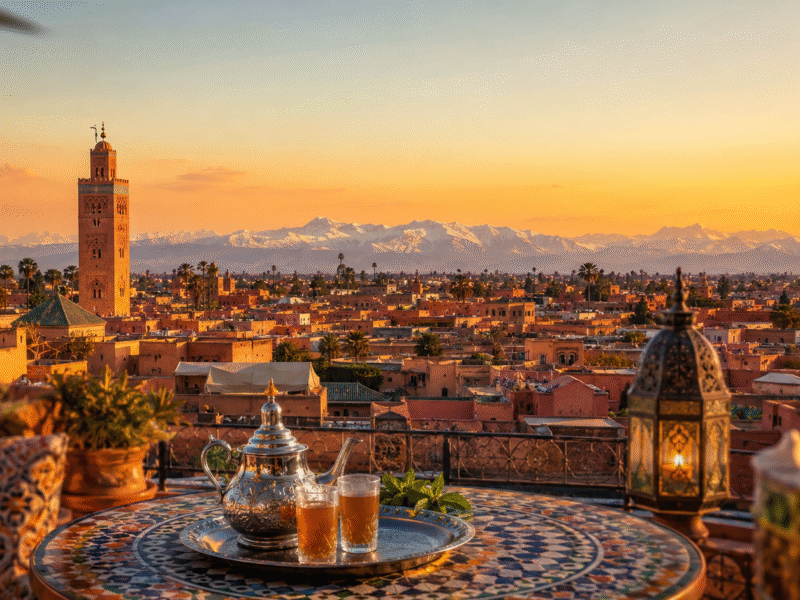
When the energy of the Marrakech souks becomes overwhelming, seek refuge in hidden riads with peaceful interior gardens, the Bahia Palace gardens during less busy hours, traditional hammam experiences where you can experience ritual cleansing that has been part of Moroccan culture for centuries, or rooftop terraces offering panoramic views—especially magical at sunset when the call to prayer echoes across the city.
Powered by GetYourGuide
The Heart of the Medina: Jemaa el-Fna Square
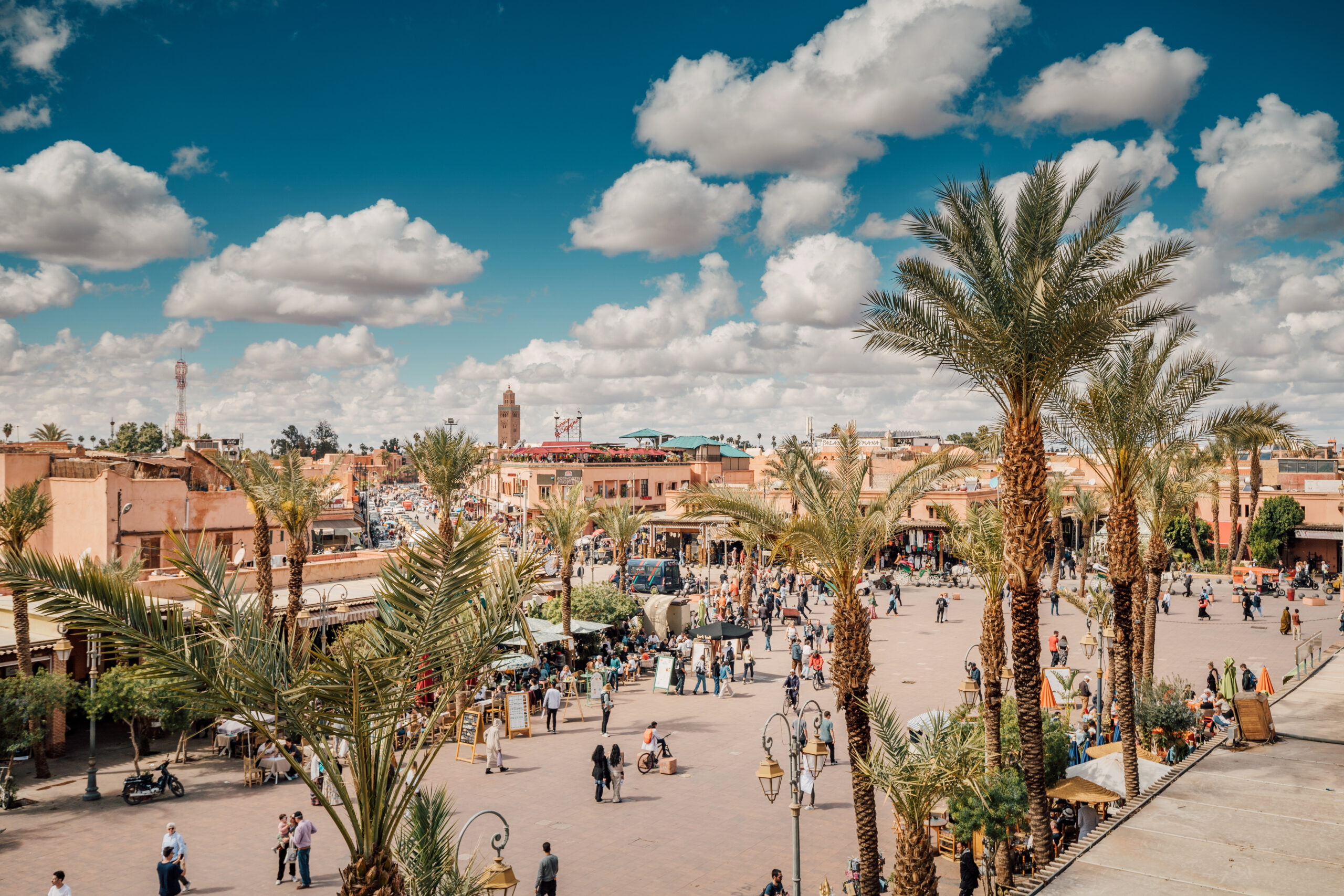
No visit to the Marrakech Medina is complete without experiencing Jemaa el-Fna, the bustling central square and cultural heart of the old city. So culturally significant is this space that UNESCO designated it a Masterpiece of the Oral and Intangible Heritage of Humanity in 2001—one of the first places in the world to receive this honor.
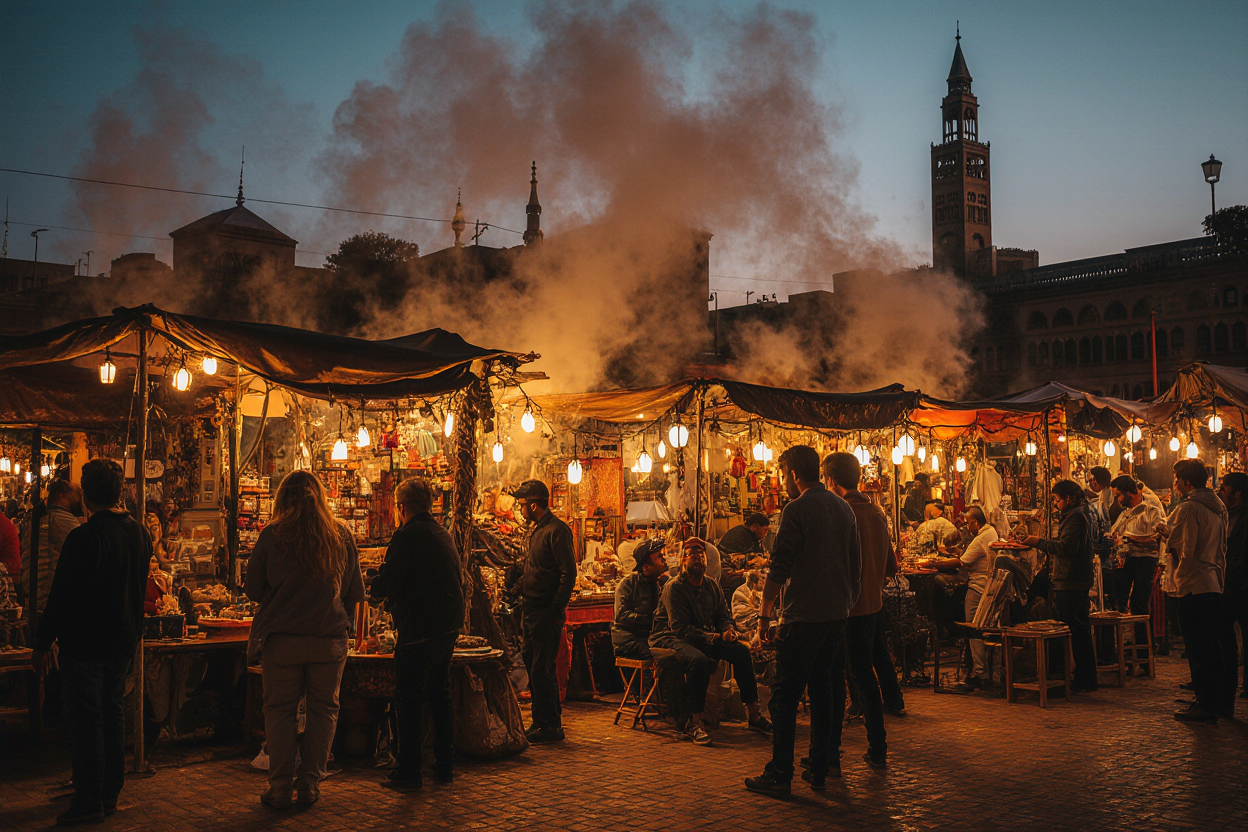
What makes Djemaa el-Fna truly special is its remarkable transformation throughout the day. The square serves as a living theater where Moroccan cultural traditions play out in real time:
Fresh juice, water sellers & a gentle start
The square wakes up with orange juice vendors setting up colorful stalls, each squeezing fresh fruit before your eyes. Water sellers in traditional costumes—complete with brass cups and red-tasseled hats—pose for photos, a tradition stretching back centuries. It’s the most peaceful time to soak in the architecture.
Snake charmers, henna artists & storytellers
The entertainment begins as snake charmers coax cobras from baskets, henna artists create intricate temporary tattoos, and traditional storytellers (a dying art) gather crowds of mesmerized locals. Acrobats and Gnawa musicians add hypnotic rhythms to the carnival atmosphere.
Open-air dining under lantern light
As darkness falls, food stalls roll in to create a massive open-air restaurant. Numbered stalls serve traditional Moroccan street food under billowing smoke as lanterns light up the night. Rows of benches fill with diners enjoying harira soup, grilled meats, and fresh seafood. The energy is intoxicating.
📌 Photography etiquette: Always ask permission before photographing performers, and expect to tip a few dirhams (5–10 MAD is appropriate). The cafés surrounding the square offer terrace views where you can observe the action while sipping mint tea—Café de France and Le Grand Balcon du Café Glacier are popular choices.
Jemaa el-Fna connects directly to the main entrance of the Marrakech souks, making it the perfect starting point for exploration of the Medina’s commercial heart. For more about the incredible street food scene in Morocco, see our dedicated guide.
Powered by GetYourGuide
Practical Tips for Visiting the Marrakech Medina
Best Times to Visit
The ideal months to visit are March–May and September–November when temperatures are pleasant. Summer (June–August) can be extremely hot with temperatures regularly exceeding 38°C (100°F), while winter evenings (December–February) can be surprisingly chilly. Early mornings offer peaceful exploration, and evenings bring a magical atmosphere as lights come on and temperatures cool.
Navigating the Marrakech Medina
Getting lost in the Marrakech Medina is practically a rite of passage, but these tips can help. Download offline maps on apps like Google Maps or Maps.me before your visit. Learn to navigate by landmarks rather than street names. Consider hiring a local guide for your first day—arrange through your accommodation or book a guided Marrakech city tour for a comprehensive introduction. When in doubt, asking shopkeepers for directions to “Jemaa el-Fna” will usually point you in the right direction. Remember that locals offering to “help” you find your way will expect payment.
Both men and women should cover shoulders and knees, especially near religious sites. Be quiet and respectful during prayer times. If visiting during Ramadan, refrain from eating, drinking, or smoking in public during daylight hours. Read our complete Moroccan etiquette guide for detailed guidance.
Safety Tips
- Avoid common scams: Be wary of “guides” who approach you uninvited, restaurants that don’t list prices, or anyone claiming attractions are “closed” and offering to take you elsewhere.
- Keep valuables secure: Use a cross-body bag, leave expensive jewelry at home, and be discreet with cameras and phones in crowded areas.
- Dealing with persistent vendors: A firm but polite “La, shukran” (No, thank you) usually suffices. Avoid showing interest unless you’re seriously considering purchasing.
- Safe areas: The main paths of the Medina are generally safe even at night, but stick to well-lit, populated areas after dark.
For a comprehensive overview of safety considerations, consult our up-to-date Morocco safety travel guide 2026.
Transportation Options
From the airport, pre-arranged transfers are easiest. Consider booking with Welcome Pickups for a reliable, fixed-price service, or use official taxis with meters (expect to pay around 70–100 MAD to reach the Medina edge). Most sites within the Medina, including Bahia Palace, are accessible on foot. For destinations outside the walls, petit taxis (small red cars) are affordable and convenient. Stay connected throughout your trip with an Airalo eSIM for seamless mobile data.
Accommodation Recommendations
For an authentic experience, stay in a traditional riad within the Marrakech Medina. These historic homes converted to guesthouses offer peaceful courtyards and personalized service. Location matters—riads near Jemaa el-Fna put you in the heart of the action but can be noisy, while those in northern neighborhoods like Mouassine offer more tranquility. For detailed recommendations and booking tips, explore our guide to where to stay in Marrakech.
📌 Planning note: Book riads at least 2–3 weeks in advance during peak season (October–November and March–April). Many riads have only 5–8 rooms, so they fill up fast. Budget travelers should check our affordable riads in Marrakech guide for excellent value options.
Powered by GetYourGuide
The Timeless Appeal of the Marrakech Medina
The Marrakech Medina offers a rare experience in our modern world—a place where centuries-old traditions remain vibrantly alive amidst the rush of contemporary life. As you wander through the labyrinthine streets, shop in the bustling Marrakech souks, and marvel at architectural treasures like the Bahia Palace Marrakech, you become part of the continuing story of this ancient walled city.
What makes the Medina truly special is the fascinating contrast between traditional life and modern tourism. Donkey carts laden with goods pass tour groups taking selfies. Artisans practice crafts unchanged for centuries while accepting payment by mobile phone. This blend of old and new creates a dynamic energy unlike anywhere else in the world.
The true joy of the Marrakech Medina comes not from checking sites off a list but from embracing the experience of getting pleasantly lost. Allow yourself to wander without purpose, following interesting pathways and discovering your own favorite corners of this magical place. Long after you return home, the sensory memories will stay with you—the scent of mint tea and spices, the sound of the call to prayer echoing across rooftops, the feeling of cool shade as you step into a covered souk, and the visual feast of colors from vivid textiles to intricate tilework. This timeless city offers not just a journey through space, but through centuries of Moroccan cultural heritage.
Reserve Your Spot
Book Your Marrakech Medina Experience
Explore the souks with a local guide, taste your way through hidden food stalls, or unwind in a traditional hammam. Instant confirmation and free cancellation on most experiences.
Frequently Asked Questions
Everything you need to know before you go
✦ Your Morocco Journey Starts Here
Step Through the Gate and Into History
The Marrakech Medina isn’t something you just visit—it’s something you experience with every sense. From the first whiff of cumin in the souks to the golden light falling across Bahia Palace’s tilework, this ancient city has a way of staying with you forever. Your adventure is one click away.