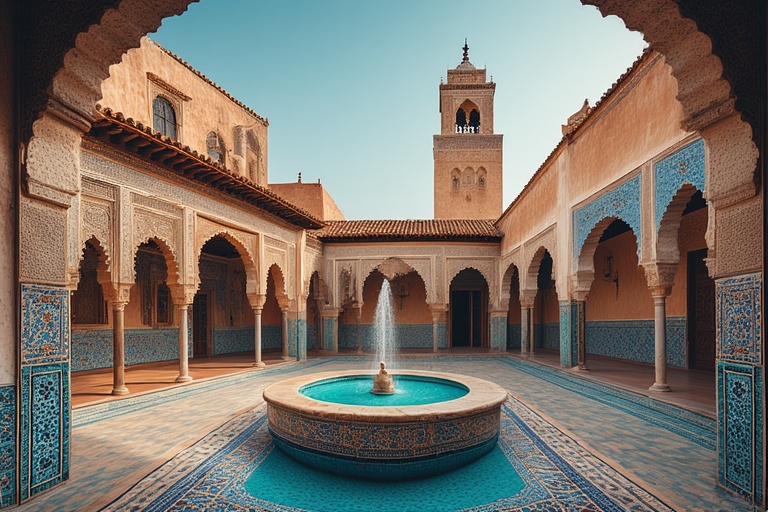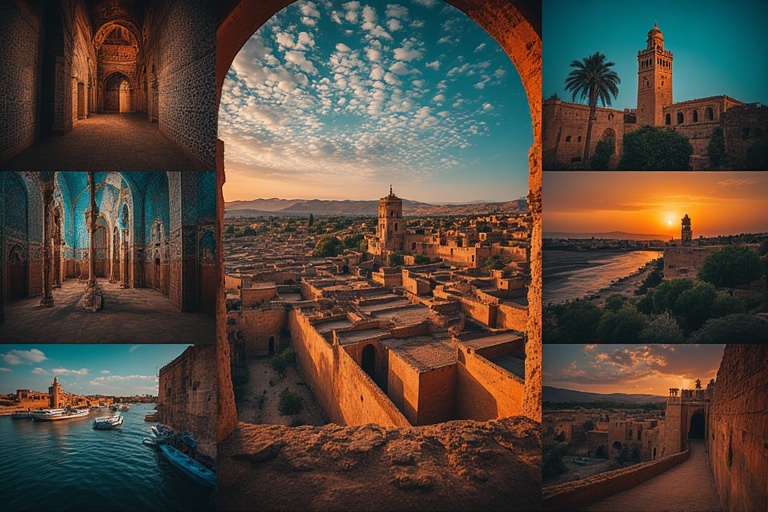
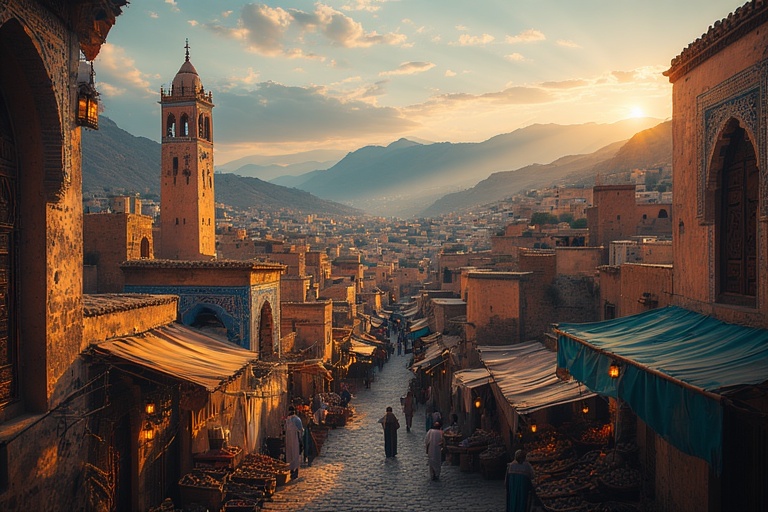
Ancient Cities of Morocco: Discovering Historical Treasures From Fes to Marrakech
Discover Morocco’s breathtaking ancient cities — from the labyrinthine medina of Fes to the red-walled splendor of Marrakech. Explore these living Morocco historical cities with our comprehensive guide to North Africa’s most fascinating old cities.
What does it feel like to walk through a city that has been continuously inhabited for over a thousand years? In Morocco, you don’t need to imagine — you can live it. These ancient cities Morocco sit at the crossroads where Africa, Europe, and the Middle East converge, creating a cultural tapestry woven from Berber, Arab, Andalusian, and European traditions that remains vibrant to this day. With nine UNESCO World Heritage Sites and medinas that still pulse with daily life, Morocco’s historical cities aren’t museums frozen in amber — they’re living, breathing testaments to human resilience and creativity.
✦ Key Takeaways
Morocco has seven UNESCO-recognized ancient urban areas, many still inhabited and thriving after centuries.
The history spans thousands of years — from Phoenician trading posts and Roman settlements to Islamic medinas and imperial palaces.
Each city has a distinct identity: Fes is the intellectual heart, Marrakech the vibrant Red City, Chefchaouen the blue jewel, and Volubilis the Roman legacy.
Traditional architecture — riads, madrasas, hammams, and souks — reflects deep cultural and religious design principles.
These living cities face ongoing challenges balancing heritage preservation with modern development and growing tourism.
Historical Context of Moroccan Urban Development
The story of Morocco historical cities spans thousands of years, shaped by successive waves of settlers, conquerors, and traders who left indelible marks on the landscape. Understanding this layered history is essential for appreciating what makes these old cities so extraordinary — and why they still captivate visitors from around the world.
Archaeological findings confirm that human settlement in Morocco stretches back to prehistoric times. But the urban story truly begins with the Phoenicians, who established coastal trading posts like Lixus in the 7th century BCE. These seafaring merchants recognized what every subsequent civilization would confirm: Morocco’s position between the Atlantic, the Mediterranean, and the Sahara made it a natural crossroads of commerce and culture.
💡 The Roman chapter is one of the most remarkable — from around 40 CE to the 5th century, Romans built impressive cities across northern Morocco. Volubilis remains the best-preserved example, with mosaics and monuments that rival those found anywhere in the former Roman Empire.
The Islamic conquest of the late 7th and 8th centuries transformed Morocco’s urban landscape forever. Muslims introduced the medina concept — walled cities organized around a central mosque, with maze-like streets radiating outward from public to private spaces. This urban planning philosophy, shaped by religious and social values, defines almost every ancient city in Morocco that visitors explore today.
Several powerful dynasties shaped these Morocco ancient towns over the following centuries, each leaving their architectural and cultural fingerprints:
- Idrisid Dynasty (788–974) — Founded Fes, establishing one of the most important intellectual centers in the Islamic world
- Almoravid Dynasty (1062–1147) — Founded Marrakech as their imperial capital
- Almohad Dynasty (1147–1269) — Expanded Rabat and built the iconic Hassan Tower
- Marinid Dynasty (1269–1465) — Constructed exquisite madrasas throughout Fes
- Saadian Dynasty (1549–1659) — Enhanced Marrakech with palaces and the famous Saadian Tombs
- Alaouite Dynasty (1666–present) — Built the imperial city of Meknes under Sultan Moulay Ismail
Trans-Saharan and Mediterranean trade routes fueled the growth of these cities, bringing wealth, diverse populations, and cultural exchange. Gold, salt, spices, and slaves moved through these urban centers, making them hubs of religion, commerce, craftsmanship, and governance. To understand Morocco’s full history from ancient kingdoms to modern heritage, these dynastic periods are essential reading.
Fes: Morocco’s Intellectual and Spiritual Heart
Fes Morocco — founded in 789 CE by Idris I — is the intellectual and spiritual heart of Morocco. What began as two separate settlements on opposite banks of the Fes River gradually merged into one of the most important cities in Islamic civilization, and it remains among the most captivating ancient cities Morocco has to offer.
At the core of Fes’s significance stands Al-Qarawiyyin University, founded in 859 CE by Fatima al-Fihri. UNESCO and the Guinness Book of World Records recognize it as the oldest continuously operating degree-granting university in the world — predating both Bologna and Oxford by centuries.
💡 The medina of Fes (Fes el-Bali) is the largest car-free urban area in the world — over 9,000 narrow streets and alleys where approximately 150,000 people still live and work, continuing traditions that date back over a millennium.
Key monuments that define this extraordinary fez city Morocco include:
- Al-Qarawiyyin Mosque and University — A spiritual and educational center for over 1,100 years, recently restored with its magnificent library reopened to scholars
- Bou Inania Madrasa — Built in the 1350s, featuring stunning zellij tilework, carved cedar ceilings, and intricate stucco plasterwork
- Chouara Tannery — One of the oldest leather-making workshops still in operation, using techniques virtually unchanged since medieval times
- Dar al-Magana — A remarkable water clock built in 1357, showcasing medieval engineering
- Nejjarine Fountain and Museum — A beautifully restored foundouk displaying traditional woodworking artistry
Fes served as Morocco’s capital for over 400 years and continues to function as the country’s spiritual and cultural center. UNESCO inscribed it as a World Heritage Site in 1981, and ongoing preservation efforts — led by agencies like ADER-Fès — work to maintain its extraordinary heritage. Beyond the medina walls, you can experience the authentic rural Morocco that surrounds this imperial city.
Visit the Chouara Tannery early in the morning (before 10 AM) when workers are actively processing leather. The light is better for photos, and leather shops overlooking the tannery will offer you fresh mint to hold under your nose — the smell is intense but the view is unforgettable.
Marrakech: The Red Pearl of Morocco
Marrakesh — the Red City — was founded in 1062 by the Almoravid dynasty as an imperial capital, and it has remained Morocco’s most magnetically alluring city ever since. Its distinctive red clay walls and buildings, glowing like embers in the North African sun, give it a visual identity that is instantly recognizable among all ancient cities Morocco.
Through successive dynasties — particularly the Almohad and Saadian periods — Marrakech accumulated layers of architectural splendor. The city served as a critical trading hub connecting Sub-Saharan Africa with North Africa and Europe, and that cosmopolitan energy still radiates from every corner of its Marrakech Medina.
The essential historical sites that make this city an unmissable destination include:
- Koutoubia Mosque — Completed in 1199, its 77-meter minaret dominates the skyline and inspired both the Giralda in Seville and the Hassan Tower in Rabat
- Bahia Palace — A 19th-century masterpiece of Moroccan architecture, with acres of intricate zellij, carved stucco, and painted cedar ceilings
- Saadian Tombs — Hidden behind walls for centuries until their rediscovery in 1917, containing some of the finest decorative art in Morocco
- Djemaa El Fna — The legendary market square, recognized by UNESCO as Intangible Cultural Heritage, where storytellers, musicians, snake charmers, and food stalls create nightly theater
- El Badi Palace — Built in 1578 by Sultan Ahmad al-Mansur, once considered one of the wonders of the Muslim world
UNESCO inscribed the Marrakech Medina as a World Heritage Site in 1985. The city faces ongoing challenges balancing preservation with modernization, but its cultural traditions in crafts, food, and performance arts continue to thrive. To immerse yourself in local culinary heritage while here, consider taking a traditional Moroccan cooking class with a local chef.
For travelers planning to explore Marrakech in depth, our guide to top Marrakech attractions provides a comprehensive overview of must-see sites and activities beyond the historical landmarks.
Meknes: The Imperial City of Ismail
Meknes began as an 11th-century military settlement, but it was transformed into one of Morocco’s most impressive Morocco historical cities by one man’s extraordinary vision. Sultan Moulay Ismail (1672–1727) — who dreamed of creating a city to rival Versailles — deployed 55,000 workers and prisoners to build a capital of staggering ambition.
The result is a city defined by massive 40-kilometer defensive walls and monumental gates. The most celebrated entrance, Bab Mansour, is widely considered one of the most beautiful gates in all of North Africa — a symphony of marble columns, zellij tilework, and carved inscriptions.
Important historical structures that distinguish Meknes among Morocco’s imperial cities include:
- Dar El Makhzen Palace — A vast complex encompassing 80 pavilions and 20 gates, reflecting Moulay Ismail’s grand ambitions
- Heri es-Souani — Ingeniously designed grain storage buildings and stables built to house 12,000 horses, with an advanced ventilation system
- Mausoleum of Moulay Ismail — One of the few religious sites in Morocco open to non-Muslims, lavishly decorated with traditional craftsmanship
- El Hedim Square — The social heart of the old city, modeled after a Moroccan version of the Place Vendôme in Paris
As one of Morocco’s four imperial cities, Meknes earned its UNESCO World Heritage inscription in 1996. A major restoration project launched in 2018 continues to preserve its remarkable heritage. Meknes also serves as the perfect base for visiting nearby Volubilis, making it a natural stop on any imperial cities tour itinerary.
Meknes receives far fewer tourists than Fes or Marrakech, which means more authentic interactions and significantly lower prices in the souks. The olive market here is one of the best in Morocco — locals come from surrounding cities just to buy their yearly supply.
Chefchaouen: The Blue Jewel of the Rif
Chefchaouen — Morocco’s famous blue city Morocco — was founded in 1471 as a fortress town to repel Portuguese invasions. It later became a sanctuary for Muslims and Jews fleeing Spain after the Reconquista, creating a unique cultural blend that still defines this enchanting mountain town among old cities Morocco.
The most striking feature of this Morocco ancient town is, of course, its blue-washed buildings. Several theories explain the tradition:
- Jewish influence — Blue representing the sky and heaven, introduced by Jewish refugees in the 1930s
- Practical purposes — The blue pigment is believed to repel mosquitoes
- Climate control — Blue paint may help keep buildings cooler in summer heat
- Tourism appeal — A more contemporary motivation that has accelerated the tradition
The architecture of Chefchaouen Morocco beautifully blends Moroccan and Andalusian styles. Must-visit sites include the Kasbah Museum in the town center, the Great Mosque with its unique eight-sided minaret (rare in Morocco), Outa el-Hammam square with its 15th-century character, and the Ras El Ma waterfall with its historical water mills where locals still wash wool.
💡 For centuries, Chefchaouen was remarkably isolated — foreigners were forbidden from entering until Spanish occupation in 1920. This isolation preserved its unique character and traditions, making it one of the most authentically preserved old cities in the region.
Chefchaouen is one of several unique villages in Morocco that offer a distinctly different cultural experience from the larger imperial cities. Its growing popularity brings both economic opportunity and the challenge of managing tourism sustainably.
Tetouan: Morocco’s Andalusian Gem
Tetouan — founded in the 13th century and substantially rebuilt in the late 15th century by refugees from Andalusia — is the most Spanish-influenced ancient city in Morocco. From 1912 to 1956, it served as the capital of the Spanish Protectorate, adding yet another cultural layer to its already rich identity.
The Tetouan medina stands out for its distinctly Andalusian urban planning — wider streets, whitewashed facades, and a layout that echoes the cities of southern Spain from which its founders fled. Key historical sites include:
- The medina — One of the smallest but most authentic in Morocco, with well-preserved Andalusian architecture and active artisan workshops
- Royal Palace (Dar al-Makhzen) — An impressive example of Moroccan palatial architecture
- Archaeological Museum — Housing significant Phoenician and Roman artifacts from the region
- Mellah (Jewish quarter) — With unique architectural features reflecting centuries of Jewish-Muslim coexistence
- Ensanche (Spanish quarter) — Featuring Art Deco and Spanish colonial buildings, a striking contrast to the medina
UNESCO inscribed Tetouan’s medina as a World Heritage Site in 1997, specifically recognizing its authenticity and the unique cultural blend visible in its crafts, cuisine, and musical traditions. The city’s artisans — particularly its tile-makers, leather workers, and textile weavers — continue practices that bridge Moroccan and Andalusian heritage.
Essaouira: Fortress by the Sea
Essaouira’s story begins with the Phoenicians, who established a trading post called Mogador here in the 7th century BCE — making it one of the oldest continuously settled sites among all ancient cities Morocco. But the city as we know it today was redesigned in 1760 by Sultan Mohammed III, who commissioned French architect Théodore Cornut to create a fortified port town.
The result is unique among Morocco’s historic cities: a medina with a rational grid street plan (unusual for Moroccan towns, which typically feature organic, maze-like layouts), surrounded by impressive European-style military fortifications.
Essential historical features of this atmospheric coastal city include:
- Skala de la Ville — The dramatic sea-facing ramparts lined with Spanish and Portuguese bronze cannons, famously used as a filming location for Game of Thrones
- Mellah — The historic Jewish quarter, where Star of David motifs are carved into door lintels alongside Islamic geometric patterns
- Historic port and fishing harbor — Still bustling with activity, where you can eat grilled sardines straight from the boats
- The medina — A harmonious blend of Berber, Arab, Jewish, and European architectural influences
UNESCO inscribed Essaouira as a World Heritage Site in 2001, recognizing its exceptional example of a late-18th-century fortified town. If you’re looking to combine historical exploration with coastal relaxation, Essaouira is also one of the best beaches in Morocco for surfing, windsurfing, and simply soaking in the Atlantic breeze.
Essaouira’s famous wind — the alizé — blows strongest from April to September. While surfers and kite-surfers love it, it can make beach lounging challenging. For the calmest conditions, visit in October or March when the light is golden and the crowds have thinned.
Rabat: From Medieval Fortress to Modern Capital
Rabat began as a ribat — an Islamic fortified monastery — built by the Almohad dynasty in the 12th century as a staging ground for military campaigns in Iberia. Over the centuries, it evolved from military outpost to imperial city to Morocco’s modern capital, embodying the full arc of Morocco historical cities development.
Key historical sites that make Rabat a compelling destination include:
- Kasbah of the Udayas — A 12th-century fortress perched above the Bou Regreg river, containing beautiful Andalusian gardens and a charming residential quarter
- Hassan Tower — An incomplete 44-meter minaret begun in 1195, originally intended to be the tallest in the world, surrounded by 200 columns of an unfinished mosque
- Chellah Necropolis — A uniquely layered site containing both Roman ruins (ancient Sala Colonia) and a medieval Islamic sanctuary, now dramatically overgrown and home to nesting storks
- The Medina — Smaller and more navigable than Fes or Marrakech, but genuinely atmospheric and free of aggressive touts
- Royal Palace — The official residence of King Mohammed VI (viewable from the exterior)
What makes Rabat uniquely valuable among Morocco ancient towns is how it seamlessly blends ancient heritage with thoughtful modern urban planning. UNESCO recognized this dual identity in 2012 when it inscribed Rabat as a World Heritage Site under the title “Modern Capital and Historic City.” When planning to explore Rabat and connect to other cities, it’s helpful to understand Morocco’s train system, as Rabat is well-connected by high-speed rail to Casablanca, Tangier, and other major destinations.
Volubilis: Morocco’s Roman Legacy
Volubilis Morocco represents the oldest and most archaeologically significant layer of Morocco’s urban heritage. Beginning as a Carthaginian settlement in the 3rd century BCE, it became a major Roman city in 40 CE — the administrative capital of the province of Mauretania Tingitana and one of the most important Roman outposts in North Africa.
Key archaeological features that draw history enthusiasts from around the world include:
- Triumphal Arch of Caracalla — Built in 217 CE, impressively preserved and marking the city’s main thoroughfare (the Decumanus Maximus)
- Capitoline Temple — Dedicated to Jupiter, Juno, and Minerva, standing at the forum’s edge with views across the surrounding olive groves
- House of Orpheus — Containing magnificent floor mosaics depicting Orpheus charming animals with his lyre
- Basilica and forum — The civic center of the Roman city, where laws were made and disputes settled
- Thermal baths and olive presses — Revealing details of daily Roman life in Africa, including the industrial-scale olive oil production that drove the local economy
💡 Romans abandoned Volubilis in the 3rd century CE, but unlike many Roman ruins elsewhere, it was never completely deserted. Islamic-period communities reused and adapted parts of the city, creating an unusual archaeological palimpsest that spans cultures and centuries.
UNESCO inscribed Volubilis as a World Heritage Site in 1997. Recent conservation efforts include a 2022 US-funded mosaic restoration project that has dramatically improved the visibility and preservation of key floor mosaics. For a deeper exploration of Morocco’s UNESCO-recognized heritage, see our complete guide to Moroccan UNESCO World Heritage Sites.
Architectural and Cultural Elements of Ancient Cities Morocco
At the heart of every ancient city Morocco is the medina — a walled city that functions as a self-contained urban ecosystem. Understanding how medinas work transforms a visit from bewildering to genuinely enlightening.
The Medina: Islamic Urban Planning in Action
Medinas share fundamental characteristics that reflect Islamic principles of community, privacy, and social organization:
- Physical structure — Defensive walls punctuated by monumental gates (bab), with narrow winding streets that naturally regulate temperature and create shade
- Spatial hierarchy — Public spaces (mosque, market) at the center, transitioning through semi-public streets to private residential dead-ends (derb)
- Social function — Each neighborhood (hay) operates almost as a village within the city, with its own mosque, fountain, hammam, and bakery
Distinctive Architectural Elements
Several building types appear throughout Morocco historical cities, each serving specific cultural functions:
- Riads — Traditional courtyard houses, often featuring gardens divided into four sections symbolizing the four rivers of paradise. Many have been converted into stunning guesthouses where visitors can experience this architecture firsthand
- Foundouks — Historic merchant inns built around courtyards, where traders stored goods on the ground floor and slept in upper galleries
- Madrasas — Islamic schools with elaborately decorated courtyards — the Bou Inania in Fes and Ben Youssef in Marrakech are masterpieces
- Hammams — Traditional steam bathhouses that served as essential social spaces, especially for women
- Souks — Markets organized by trade guild — metalworkers in one alley, leather workers in the next, spice merchants in another
- Mellahs — Jewish quarters with distinctive architectural features, including exterior-facing balconies (unusual in Islamic cities, where architecture typically faces inward)
To experience these traditional elements firsthand, visitors can enjoy an authentic hammam experience with a massage in cities like Marrakech — one of the most immersive ways to connect with centuries-old Moroccan customs.
Building Materials and Craft Traditions
Traditional building materials used across old cities Morocco include pisé (rammed earth) construction that gives Marrakech its famous red color, zellij tilework composed of thousands of hand-cut geometric mosaic pieces, intricate stucco plasterwork (gebs) with floral and geometric motifs, and masterful cedar woodcarving using Atlas Mountain timber.
These ancient cities in Morocco also preserve vital craft traditions that have been passed down through generations: leather tanning (especially in Fes, using methods virtually unchanged since medieval times), pottery making (each city has its own distinct style), carpet weaving, metalwork in brass, silver, and copper, and intricate woodworking. For a deeper exploration of Moroccan architecture and its blend of tradition with innovation, our dedicated guide covers the subject comprehensively.
The rich architectural heritage of these cities is accompanied by a vibrant musical tradition. Traditional Moroccan music — from Andalusian classical to Gnaoua spiritual rhythms — can be heard throughout the medinas, adding an essential sensory dimension to the experience of walking through these ancient urban centers.
Preservation and UNESCO Recognition
Morocco’s commitment to preserving its ancient cities is reflected in the impressive number of UNESCO World Heritage inscriptions the country has received:
- Medina of Fes (1981)
- Medina of Marrakech (1985)
- Historic City of Meknes (1996)
- Archaeological Site of Volubilis (1997)
- Medina of Tétouan (1997)
- Medina of Essaouira (2001)
- Rabat, Modern Capital and Historic City (2012)
But UNESCO recognition brings attention without solving the complex challenges these living cities face:
📌 Key preservation challenges include: Balancing modernization (plumbing, electricity, internet) with historic integrity; managing the impact of mass tourism on fragile structures; preventing depopulation as younger residents move to modern neighborhoods; protecting ancient buildings against climate change, flooding, and earthquake risk; and ensuring that tourism revenue actually reaches the communities who maintain these heritage sites.
Morocco has developed a national approach to heritage protection that includes dedicated preservation laws, specialized agencies like ADER-Fès, public-private partnerships, and international collaboration. Notable success stories include the restoration of Najjarine Square and Foundouk in Fes, the Al-Qarawiyyin Library restoration (completed by award-winning architect Aziza Chaouni), Bahia Palace conservation in Marrakech, and the Meknes medina restoration project launched in 2018.
Visitor Experience in Morocco’s Ancient Urban Centers
Exploring Morocco ancient towns is one of the most rewarding travel experiences in the world — but some practical knowledge dramatically enhances the journey.
Navigating the Medinas
The maze-like street layouts of these ancient cities Morocco are intentionally disorienting to outsiders (historically, this served a defensive purpose). Practical tips for navigation:
- Download offline maps (Maps.me works well in medinas where Google Maps sometimes fails)
- Learn to identify major landmarks — mosques, fountains, and gates serve as reliable reference points
- When lost, walk downhill — in most medinas, this leads toward main arteries and gates
- Hiring a local guide for your first exploration is highly recommended, especially in Fes and Marrakech
Cultural Etiquette
Respecting local customs deepens your experience and builds goodwill in Morocco historical cities:
- Dress modestly — Cover shoulders and knees, especially near religious sites
- Ask before photographing people — Many Moroccans prefer not to be photographed, particularly in residential areas
- Learn basic bargaining customs — Negotiation is expected in souks; start at roughly one-third of the asking price
- Respect prayer times — The call to prayer happens five times daily; be mindful of noise and disruption near mosques
For a comprehensive guide to cultural norms, our Moroccan etiquette guide for travelers covers everything you need to know.
Essential Experiences in Each City
- Fes — Watch traditional craftspeople at work in the souks, visit Al-Qarawiyyin, get lost intentionally in the medina
- Marrakech — Experience Djemaa el-Fna at sunset, explore the palaces, take a food tour through the medina
- Meknes — Tour the massive Heri es-Souani granaries, photograph Bab Mansour at golden hour
- Chefchaouen — Photograph the blue streets in early morning light, hike to the Spanish Mosque for panoramic views
- Tetouan — Explore the Andalusian medina, visit active artisan workshops
- Essaouira — Walk the Skala ramparts, eat fresh seafood at the port, watch woodworkers crafting thuya wood
- Rabat — Visit Hassan Tower at sunset, explore the Kasbah of the Udayas, wander through Chellah’s atmospheric ruins
- Volubilis — Visit in the early morning to avoid heat, photograph the mosaics when the sun angle makes colors pop
Suggested Multi-City Itineraries
Rabat → Meknes → Volubilis → Fes → Chefchaouen → Tetouan
This 7-day circuit covers Morocco’s northern ancient cities, starting in the capital Rabat (2 nights), then moving to Meknes with a day trip to Volubilis (1 night), spending 2 nights in Fes to fully explore the medina, then heading north to Chefchaouen (1 night) and finishing in Tetouan (1 night). This route covers the widest range of historical periods — from Roman ruins to Andalusian influences.
Rabat → Meknes → Fes → Marrakech
The classic 5-day imperial cities itinerary connects Morocco’s four royal capitals. Begin in Rabat (1 night), continue to Meknes (1 night), spend 2 nights in Fes, then travel south to Marrakech (1 night, but ideally extend). This route is best done by train between Rabat–Meknes–Fes, with a domestic flight to Marrakech.
All major ancient cities + rural Morocco
The definitive 14-day journey covers every major ancient city plus time for deeper exploration: Rabat (2 nights), Meknes & Volubilis (2 nights), Fes (3 nights), Chefchaouen (1 night), Tetouan (1 night), return to Rabat and fly/train to Marrakech (3 nights), day trip to Essaouira (2 nights). This pace allows genuine immersion in each city’s culture.
For travelers concerned about budgeting for their exploration of these ancient cities, our Morocco travel cost guide provides detailed information on expenses across all categories — from accommodation and food to transport and entrance fees.
Contemporary Life in Historical Settings
What makes Morocco’s ancient cities truly exceptional — and different from archaeological sites elsewhere — is that people still live in them. These are not open-air museums but dynamic communities where the 21st century meets the 12th century every single day.
Living in a Medina Today
Modern Moroccans navigate the intersection of tradition and modernity in fascinating ways within these ancient cities Morocco: converting historic riads into functional modern homes with contemporary plumbing and WiFi; maintaining multi-generational family residences that have been in the same family for centuries; running modern businesses — from coding studios to fashion workshops — inside medieval buildings; and integrating satellite dishes, smartphones, and internet routers into settings that predate the printing press.
Tourism’s Double-Edged Sword
Tourism is critically important to the economies of Morocco historical cities — providing more than 550,000 jobs in and around historic urban centers. Traditional crafts that might otherwise disappear are experiencing revival because of tourist demand. But the relationship is complex:
- Rising property prices in medinas push local families toward modern suburbs
- Converting family homes into tourist accommodations changes neighborhood demographics
- The pressure to perform “authenticity” for tourists can paradoxically make culture feel less authentic
- Infrastructure strain from millions of visitors tests ancient water and sewage systems
Innovative Approaches to Sustainable Development
Morocco is pioneering approaches that other countries with historic cities are watching closely: integrating solar panels into historic buildings without altering rooflines, reviving traditional water conservation systems (khettaras — underground channels) as sustainable alternatives to modern pumping, adaptive reuse of historic buildings for contemporary functions, and training programs that keep traditional building crafts alive by connecting master artisans with young apprentices.
To experience the vibrant cultural life that thrives within these old walls, consider planning your trip around one of the many Moroccan festivals in 2026, which showcase traditional music, art, and customs within these historic settings.
For comfortable accommodations during your exploration of these historic treasures, check out our comprehensive Morocco hotels guide or browse recommended hotels in Morocco that offer convenient access to these historical cities while providing modern amenities.
Reserve Your Spot
Explore Morocco’s Ancient Cities
From guided medina walks in Fes to palace tours in Marrakech and Roman ruins at Volubilis — find and book the best historical experiences across Morocco’s ancient urban centers. Instant confirmation, free cancellation on most tours.
Frequently Asked Questions
Everything you need to know about visiting Morocco’s ancient cities
✦ Your Morocco Journey Starts Here
Walk Through Centuries of Living History
Morocco’s ancient cities aren’t places you visit — they’re places that visit you, leaving impressions that reshape how you see the world. From the intellectual spirit of Fes to the vibrant energy of Marrakech, from Roman mosaics at Volubilis to blue-washed alleys in Chefchaouen, an unforgettable journey through time awaits.