
Morocco Trains & Buses: The Complete 2025 Guide to Public Transport
Discover how to navigate Morocco’s trains and buses with ease. This 2025 guide covers routes, booking tips, prices, safety, and smart advice for affordable travel across the country.
Picture this: you’re gliding past golden wheat fields on the Al Boraq high-speed train, the Atlantic coast shimmering in the distance, and just hours earlier you were sipping mint tea in a Tangier café. Travelling through Morocco by public transport isn’t just practical—it’s one of the most immersive ways to experience the country’s extraordinary diversity. From modern rail corridors linking imperial cities to rattling buses that wind through the Rif Mountains toward the blue-washed streets of Chefchaouen, every journey becomes part of the story. And the best part? It’s remarkably affordable.
Whether you’re a first-time visitor planning a complete Morocco transportation strategy or a returning traveller looking to reach the Sahara on a shoestring, this guide breaks down everything you need to know about Morocco’s trains and buses in 2025—routes, tickets, comfort levels, and the insider tricks that turn a good trip into an unforgettable one.
✦ Key Takeaways
Use Morocco’s ONCF train network for fast, comfortable travel between Tangier, Rabat, Casablanca, Fes, and Marrakech.
CTM and Supratours buses reliably reach destinations trains can’t—Chefchaouen, Essaouira, and the Sahara gateways.
Book popular routes in advance, especially for holidays, weekends, or first-class Al Boraq seats.
Comfort and cost vary hugely—from high-speed rail to basic local buses—so choose what fits your budget and itinerary.
Mix transport modes for the ultimate trip: trains for long distances, buses for regional travel, petit taxis for cities.
Overview of Public Transport Options in Morocco
Public transport in Morocco is a multi-layered system that serves nearly every corner of the country. It spans modern trains, intercity and local buses, city trams in Casablanca and Rabat, and two types of taxis: petit taxis for intra-city trips and grand taxis for inter-city routes. Together, these modes form an accessible network that lets you travel from the Mediterranean coast to the edge of the Sahara desert without ever needing to rent a car.
Trains anchor the busiest corridors along the Atlantic coast and inland to Fes and Marrakech, forming the backbone of long-distance travel to Morocco. Buses fill in every gap, covering the last mile to remote towns, coastal gems like Essaouira, and mountain valleys in the Atlas. For comprehensive taxi know-how—including fares, negotiation tactics, and safety—see our Taxi Services Morocco guide.
💡 Rule of thumb: Take the train for speed and comfort between major cities. Switch to buses (or organised day trips) for mountains, coasts, and desert areas beyond the rail network.
If you prefer occasional tours to simplify logistics—especially for destinations with infrequent bus connections—consider top-rated experiences that depart from major transport hubs. A Marrakech city tour lets you explore the medina right from the station, while a quick Rabat city tour is perfect for a layover between trains.
Powered by GetYourGuide
Morocco Trains: Types, Routes & Booking
Train travel in Morocco, managed by the state-owned ONCF, is efficient, comfortable, and offers a fantastic way to watch the country’s landscape transform from coastal plains to rolling farmland to arid plateaus. The network is especially modern on the main lines, and the introduction of Africa’s first high-speed train has made north-south travel faster than ever.
Types of Trains
Morocco offers several classes of train service tailored to different distances and budgets:
- Al Boraq (High-Speed): Africa’s first high-speed train, connecting Tangier and Casablanca in just 2 hours and 10 minutes. Modern carriages, smooth service, and the pinnacle of comfort on Moroccan rails.
- Al Atlas (Intercity Express): The workhorse trains connecting Marrakech, Casablanca, Fes, and Rabat. Air-conditioned, comfortable, and making limited stops for efficient city-to-city travel.
- TNR (Train Navette Rapide): Regional commuter trains running frequently between nearby cities—Casablanca to Rabat, Kenitra to Rabat—practical for short hops along the corridor.
Most Al Atlas and Al Boraq trains offer two classes. First class provides wider, reclining seats, more legroom, assigned seating, and a quieter environment. Second class is more economical, clean, and perfectly adequate for most journeys, though seating is unassigned on Al Atlas trains—board early to get a good spot. For in-depth route maps, class comparisons, and seat selection tips, use our expert Morocco Trains Travel Guide.
On Al Atlas second-class trains, experienced travellers board 15–20 minutes early to claim window seats on the left side heading south from Casablanca—the views of the Moroccan countryside are spectacular, especially between Settat and Marrakech.
Major Routes and Destinations
The rail network is centred on Morocco’s key population corridor:
- Tangier ↔ Casablanca (via Kenitra & Rabat): The flagship Al Boraq high-speed corridor. A game-changer for north-south travel to Morocco’s largest cities.
- Casablanca ↔ Marrakech: A scenic 2.5-hour journey, frequent and efficient, connecting the economic capital with the tourist capital.
- Casablanca ↔ Fes (via Rabat & Meknes): Approximately 4 hours, linking the coast with Morocco’s spiritual heart and the imperial city of Fes.
- Marrakech ↔ Fes: A longer but popular route taking approximately 6–7 hours, offering a direct link between two of Morocco’s most famous imperial cities.
- Casablanca Airport Connection: An hourly TNR train connects Mohammed V International Airport (CMN) with Casa-Voyageurs station—a crucial link for international arrivals.
For tours that pair beautifully with rail stops, consider an Ait Benhaddou & Ouarzazate day trip from Marrakech or a classic Ouzoud Waterfalls excursion—both easy add-ons once you’ve arrived by train.
Powered by GetYourGuide
Ticketing, Pricing & Booking
Typical fares range from budget-friendly regional tickets (around 20–40 MAD for short TNR hops) to pricier first-class seats on long-haul Al Atlas routes (150–250 MAD for Casablanca to Fes). Al Boraq tickets start around 149 MAD for second class and 229 MAD for first class on the Tangier–Casablanca corridor.
You can buy tickets at the station—at ticket windows or self-service kiosks—or online via the official ONCF website. Booking online is convenient but sometimes poses challenges with international credit cards. It’s best to book a few days in advance, especially for weekends and holidays, as popular routes can sell out. Our rail guide explains all booking methods in detail.
Arriving by air? Smooth your first transfer with a pre-booked airport transfer in Marrakech to connect to the rail line without stress. Alternatively, Welcome Pickups offers reliable meet-and-greet transfers from Casablanca and Marrakech airports.
Pros and Cons of Train Travel
Why choose trains:
- Speed & Efficiency: Fastest city-to-city connections on core routes, avoiding road traffic entirely.
- Comfort & Scenery: Relaxing rides with spacious seats (especially first class) and large windows to watch Morocco’s diverse landscape roll by.
- Safety & Reliability: A strong safety record and generally punctual timetables make for predictable, stress-free travel.
Limitations to know:
- Limited Network: The network doesn’t cover the far south (beyond Marrakech), the Atlantic coast south of Casablanca, or the Rif and Atlas Mountains.
- Can Be Crowded: Second-class carriages on popular departures can fill up quickly—reserve early or opt for first class during peak periods.
Morocco Buses: Reaching Every Corner of the Country
Buses are the unsung heroes of Moroccan public transport, connecting virtually every town and village and offering an authentic travel experience that trains simply can’t match. If you want to reach Chefchaouen’s blue-washed streets, Essaouira’s windswept ramparts, or the Sahara desert gateways, a bus is your best—and often only—public transport option.
Types of Buses & Major Companies
For travellers, it’s best to stick with the premier companies for comfort and reliability:
- CTM: The gold standard. CTM buses are modern, air-conditioned, safe, and reliable. They have their own stations, which are cleaner and more organised than public bus terminals (gares routières).
- Supratours: Operated by the ONCF railway company, Supratours provides seamless train-plus-bus combination tickets to destinations beyond the rail network. Their quality is on par with CTM, and departure points are typically right next to the train station.
- Local Buses: Numerous smaller companies operate from public bus stations. While cheaper, their comfort, safety standards, and reliability can vary significantly. Best used for short, local trips when you’re feeling adventurous.
At chaotic public bus stations, touts may try to grab your bag and lead you to the “wrong” bus. Head directly to the official CTM or Supratours ticket window, buy your ticket there, and ignore anyone who approaches you in the parking area.
Key Bus Routes & Destinations
- Marrakech ↔ Essaouira: A 3-hour bus ride, perfect for coastal escapes and surf days. Alternatively, simplify logistics with an organised Essaouira day trip from Marrakech.
- Fes ↔ Chefchaouen: The classic 4-hour bus journey into the Rif Mountains for the famous blue city of Morocco. A guided Chefchaouen tour from Fes is also an option if buses are full.
- Marrakech ↔ Merzouga/Zagora: Long-haul overnight buses (9–12 hours) are the budget way to reach the Sahara desert’s edge—or save time with a 3-day Merzouga desert safari.
- Agadir ↔ Taghazout: Easy coastal shuttles link the city to the famous surf village. Combine the journey with a Taghazout surf lesson or commit to a full 5-day surf camp.
- Tangier ↔ Chefchaouen: Around 3–4 hours by CTM, this route is popular with travellers arriving from Spain by ferry.
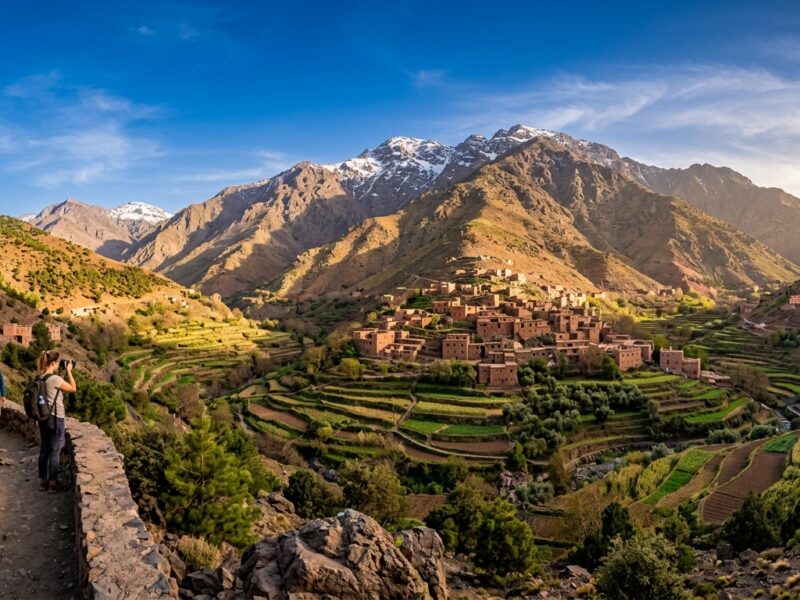
Heading inland from a bus stop? Save a day for waterfalls or mountain villages with an Atlas Mountains & Berber villages tour. For trail-ready advice, see our Atlas Mountains trekking guide or the detailed Ouzoud Waterfalls guide.
Powered by GetYourGuide
Pros and Cons of Bus Travel
Why choose buses:
- Unmatched Coverage: Buses go everywhere—connecting you to remote villages, trailheads, beach towns, and desert gateways that trains can’t reach.
- Affordability: Generally cheaper than trains on comparable routes, making them ideal for budget travel in Morocco.
- Direct Connections: Often provide more direct routes to off-rail destinations, saving transfer time and hassle.
Trade-offs to consider:
- Slower Journeys: Bus travel depends on road conditions and traffic, making it slower than rail for comparable distances.
- Variable Comfort: While CTM and Supratours coaches are comfortable, local buses can be basic and crowded—especially in summer.
Comparing Trains and Buses in Morocco
When to Choose Each Option
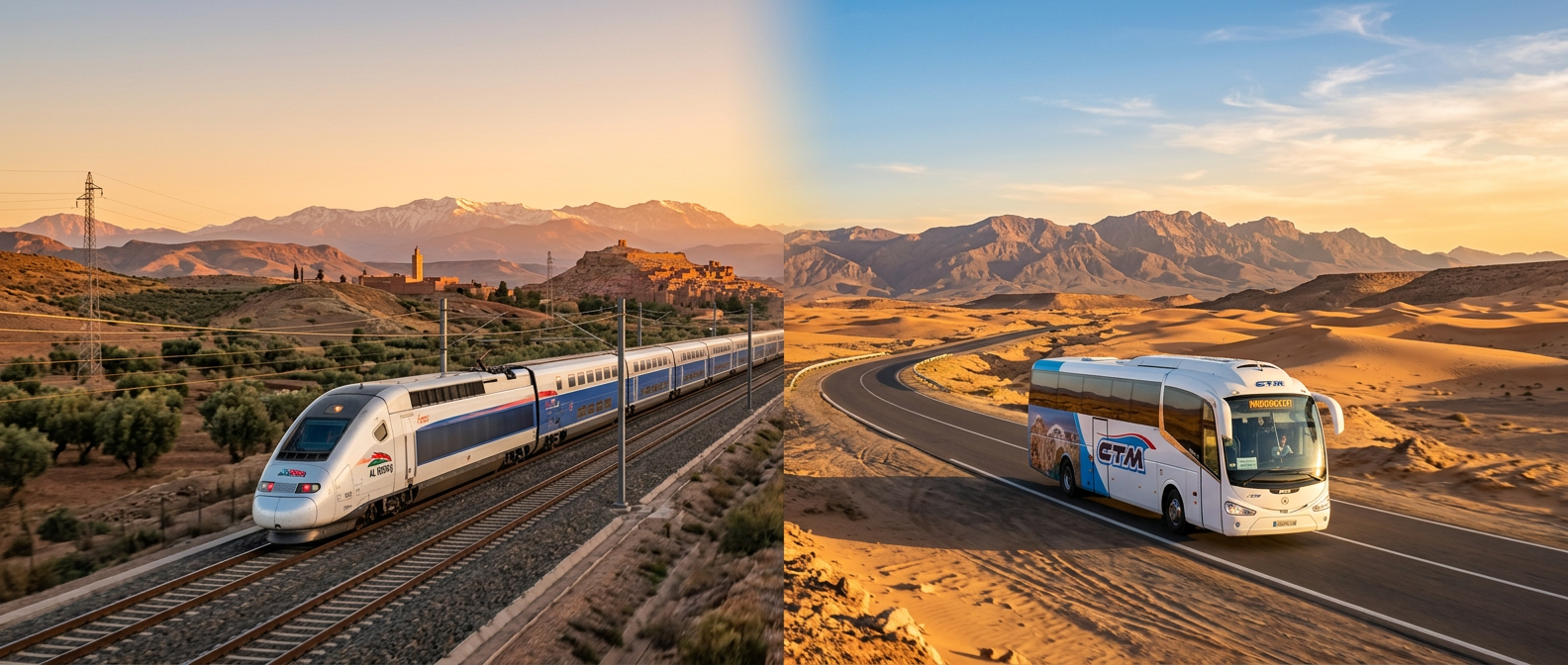
Your choice depends on your destination, budget, and travel style. Choose trains for fast, comfortable, and reliable journeys between major cities like Marrakech, Fes, Casablanca, Rabat, and Tangier. They’re ideal for travellers who value comfort and predictable schedules. Choose buses for reaching anywhere else—Chefchaouen, Essaouira, the Atlas Mountains, or the Sahara Desert. Many savvy travellers mix both: a train from Tangier to Fes, then a bus from Fes to Chefchaouen, for example.
Feature Comparison
| Feature | Trains (ONCF) | Buses (CTM / Supratours) |
|---|---|---|
| Speed | Fastest on core corridors | Slower; road-dependent |
| Comfort | Excellent — roomy seats, smooth ride | Good on modern coaches; local buses basic |
| Price | Moderate to higher | Generally lower |
| Coverage | Major cities only | Nationwide — towns & villages |
| Booking | Online or station; reserve for peaks | Online or station; local is pay-on-board |
| Luggage | Overhead racks & carriage-end areas | Under-bus storage (5–10 MAD fee) |
| Best For | Tangier–Casa–Rabat–Fes–Marrakech | Chefchaouen, Essaouira, Sahara, Atlas |
📌 Planning note: For the most efficient Morocco itinerary, use trains as your “spine” between major cities, then branch out by bus to coastal, mountain, and desert destinations. Supratours makes this seamless with combined train-bus tickets booked on a single reservation.
Navigating Stations and Terminals
Train stations in major cities—Rabat-Agdal, Casa-Voyageurs, Marrakech, and the sleek Tanger-Ville—are modern, clean, and easy to navigate. Expect clear departure boards in Arabic and French, ticket offices, cafés, and restrooms. Most stations also have ATMs and small shops where you can grab water and snacks for the journey.
Public bus stations (gares routières) are a different experience entirely. They can be chaotic, with many different companies vying for your business from narrow ticket windows lining a dusty parking area. Head directly to the official ticket window for your chosen company—CTM if they operate from there—and ignore touts who may try to redirect you. CTM and Supratours often have their own separate, calmer terminals nearby, which is another reason to favour these operators.
If you have a long layover between connections, Radical Storage offers luggage storage near major stations so you can explore the city hands-free instead of dragging bags through the medina.
Tips for Using Public Transport in Morocco
Practical Advice for a Smooth Journey
Book popular departures in advance—online or at the station a day or two before. Arrive 20–30 minutes early at major train stations and 30–45 minutes early at bus terminals. Keep 5–20 MAD coins handy for local buses, taxis from the station, and luggage fees on intercity coaches (usually 5–10 MAD per bag stored under the bus).
If your Morocco travel itinerary stretches south or off the rail map, blend trains with buses for maximum coverage—or consider a short rental via Localrent or QEEQ after reading our Renting a Car in Morocco guide. Staying near stations saves time—compare deals on our Morocco hotels page or hunt for bargains with Hotellook.
Language and Cultural Etiquette
Arabic and French dominate signage and announcements at stations. English is common in tourist hubs like Marrakech and Fes but not guaranteed at ticket counters in smaller cities. A friendly “shukran” (thank you) goes a long way, and offering your seat to elders is deeply appreciated. Knowing a few French phrases—like “un billet pour Marrakech, s’il vous plaît” (one ticket to Marrakech, please)—can be very helpful at the window. For more cultural insights, review our guide to Moroccan etiquette for travellers.
Safety & Connectivity on the Move
Keep valuables close, use official luggage compartments, and avoid leaving bags unattended. Download tickets and maps offline before you travel—Wi-Fi on trains isn’t always reliable, even on the Al Boraq. For consistent mobile data to check schedules, use translation apps, or navigate unfamiliar stations, get an eSIM from Airalo before you arrive. It activates instantly and saves you the hassle of hunting for a SIM card shop.
For comprehensive safety information—especially for women travelling in Morocco—read our Morocco Safety Travel Guide 2025.
Powered by GetYourGuide
Sample Itineraries & Add-Ons
The most rewarding way to travel Morocco is by combining trains, buses, and the occasional guided tour into a seamless itinerary. Here are four tested routes that maximise what public transport can offer.
Tangier → Rabat → Fes → Marrakech
Fly into Tangier. Take the Al Boraq high-speed train to Rabat (1.5 hours). Spend a day exploring the Kasbah of the Udayas and Hassan Tower—consider a quick Rabat city tour from the station.
Next, take an Al Atlas train to Fes (2.5 hours). Spend two full days in the world’s largest car-free urban zone—the Fes medina. Then board the scenic 7-hour train to Marrakech, arriving in time for sunset on the Djemaa el-Fna. Finish with a Marrakech city tour covering the souks, palaces, and hidden gems.
Casablanca → Marrakech → Essaouira
Train from Casablanca to Marrakech (2.5 hours). Explore the city for a day, then hop on a 3-hour Supratours bus to Essaouira. Spend two days enjoying the coast—the ramparts, the fishing port, and the beach. Try an Essaouira surf lesson or simply wander the relaxed medina. Consult our Best Beaches guide for more coastal inspiration.
Marrakech base → Atlas Mountains → Ouzoud Falls
Train to Marrakech, your base for two exciting day trips. On day one, take a tour to the Atlas villages—hike through Berber hamlets and lunch with a local family. On day two, visit the stunning 110-metre cascades on an Ouzoud Waterfalls day trip. For more serious trekking—including Mount Toubkal—use our Atlas trekking guide.
Marrakech → Ait Benhaddou → Merzouga → Return
From Marrakech, public buses to the Sahara take 9–12 gruelling hours. The best option for most travellers is a multi-day organised tour like a Merzouga 3-day desert safari—crossing the High Atlas, stopping at Ait Benhaddou, then camping under the stars on the Erg Chebbi dunes. Read our Sahara tours guide to choose the right trip for your budget and comfort level.
Powered by GetYourGuide
Prefer quiet corners and rural life? Explore hidden gems, rural experiences, and unique villages—many best reached by a blend of bus and short grand-taxi hops from the nearest town.
On a tight budget? Stack savings with our Travel Cost guide, money-saving tips, and the comprehensive Morocco on a Budget guide.
✈️ Flight disruption? If your inbound flight is delayed or cancelled, services like Compensair or AirHelp can help you claim up to €600 in compensation—money that could fund your entire ground transport budget in Morocco.
Reserve Your Spot
Book Your Morocco Experience
From train-side city tours to Sahara desert safaris—find and book the best experiences across Morocco. Instant confirmation, free cancellation on most tours.
Frequently Asked Questions
Everything you need to know before travelling Morocco by train and bus
✦ Your Morocco Journey Starts Here
Ride the Rails. Catch the Bus. See Everything.
Morocco’s public transport network puts imperial cities, blue mountain towns, surf coasts, and Sahara dunes within reach—all for the price of a few café lunches. Grab your ticket, pick a window seat, and let the landscape do the rest. Keep planning with our Morocco Trains Travel Guide and the country-wide Transportation 2025 Guide.