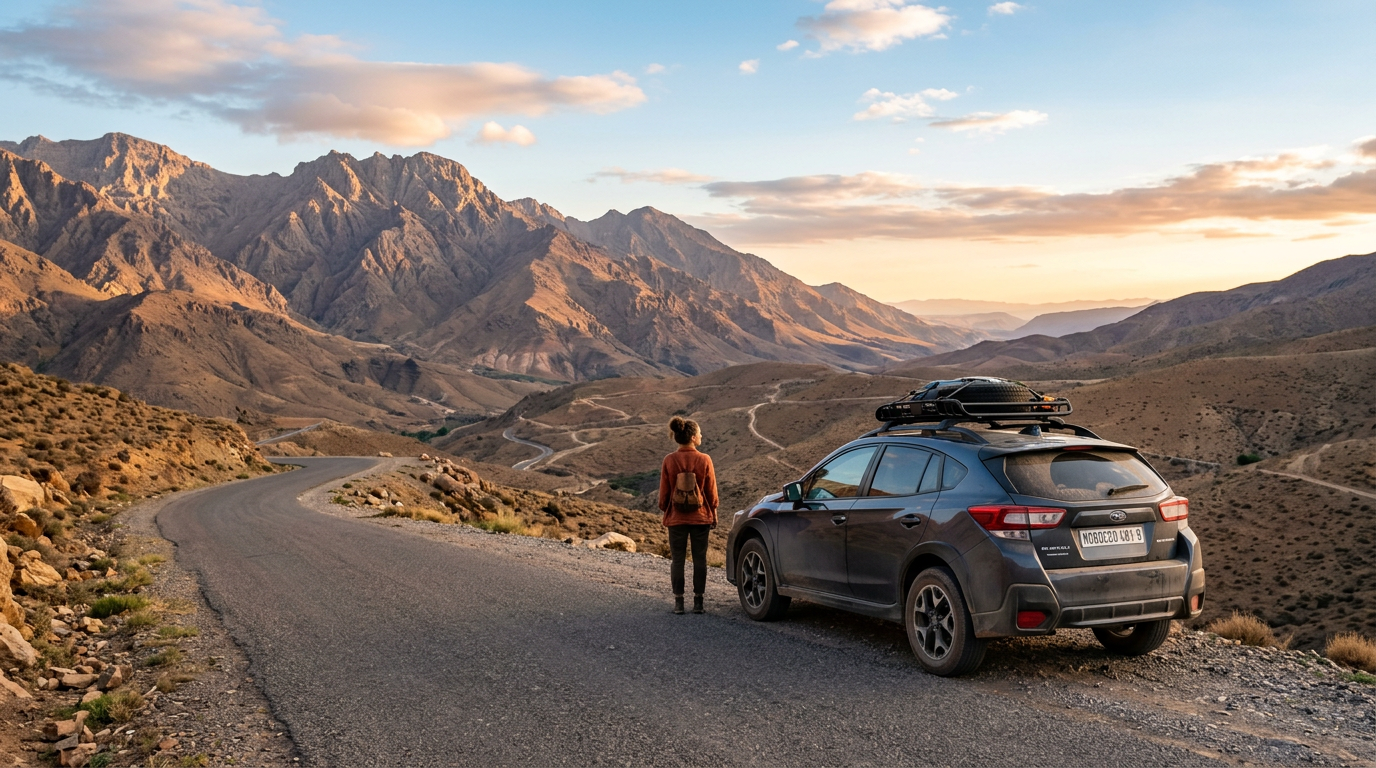
Renting a Car in Morocco: 10 Essential Tips for a Safe 2025 Road Trip
Planning a road trip? Our ultimate guide to renting a car in Morocco covers 10 essential tips for 2025, from choosing an agency to driving rules and insurance. Get the best advice for car hire in Morocco for a safe and memorable journey.
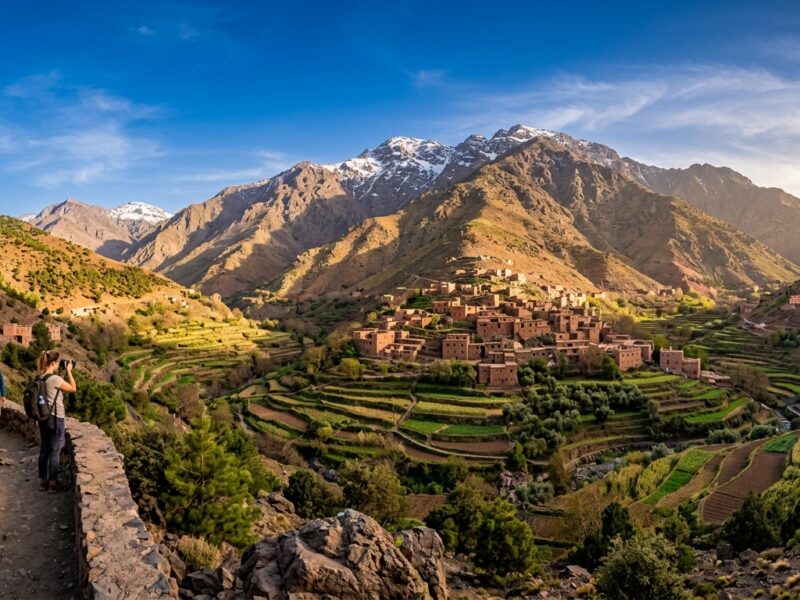
Picture this: you’re winding through the High Atlas on a ribbon of tarmac, saffron-coloured villages clinging to the slopes below, the Sahara shimmering on the far horizon. No tour bus schedule, no haggling with taxi drivers—just you, the open road, and complete freedom. That’s the magic of a self-drive adventure through Morocco. But between unfamiliar traffic customs, Arabic-script road signs, and rental contracts thick with fine print, the logistics can feel daunting. This guide strips away the uncertainty with ten field-tested tips—covering everything from choosing the right agency and navigating police checkpoints to insurance traps that catch first-timers off guard—so you can focus on the scenery, not the stress.
✦ Key Takeaways
Book with reputable agencies, compare prices online, and read the fine print before paying any deposit for your car hire in Morocco.
Bring a valid driver’s license; if yours isn’t in Latin script, you must carry an International Driving Permit (IDP).
Opt for comprehensive insurance (CDW + theft) and thoroughly photograph the car from all angles at pickup and return.
Expect excellent highways, variable rural roads, routine police checkpoints, and tolls on major routes when driving in Morocco.
City traffic can be hectic; drive defensively and watch for scooters, pedestrians, and animals in rural areas.
Why Rent a Car in Morocco?
Renting a car unlocks Morocco’s most spectacular corners at your own pace—remote Amazigh villages tucked into mountain folds, silent Sahara dunes accessible only by desert tracks, and windswept Atlantic coves where you won’t see another tourist for hours. For families and small groups, splitting rental and fuel costs is often cheaper than multiple train tickets or grand taxis—plus you get door-to-door convenience and space for luggage, souvenirs, and the inevitable surplus of Moroccan snacks.
Morocco’s highway network has expanded dramatically in recent years, connecting Casablanca, Marrakech, Fes, and Tangier with smooth, tolled autoroutes. But the real reward of a self-drive trip lies off the main arteries: winding over the Tizi n’Tichka pass, threading through the Dadès Gorges, or chasing the coastline south from Essaouira to Agadir. These are the roads where bus schedules can’t help you and where your own wheels become the ultimate travel tool.
💡 Route inspiration: If you’re crafting an offbeat itinerary, explore hidden gems of Morocco for lesser-known stops, plan scenic detours with our Morocco’s natural wonders guide, or add village stays from unique villages in Morocco.
Many travellers combine self-driving with guided day tours to get the best of both worlds. Park the car at your hotel and let a local expert handle the logistics for a day—especially for destinations like the coastal town of Essaouira:
Powered by GetYourGuide
How to Rent a Car in Morocco: Step-by-Step
Step 1: Choose a Reputable Agency
Go with a known international brand or a trusted local platform when arranging car hire in Morocco. The difference between a smooth trip and a nightmare often comes down to the company you choose. Compare rates, insurance bundles, and cancellation policies before committing any deposit.
- Compare across multiple suppliers: Use QEEQ to spot hidden fees, compare excess amounts, and filter by insurance inclusion—it’s the fastest way to see the full cost picture.
- Prefer vetted local companies? Try Localrent for transparent contracts, strong local support, and vehicles that are well-maintained for Moroccan roads.
Step 2: Required Documents
Bring your passport, a valid driver’s license, and a credit card for the security deposit. If your license isn’t in Latin script—common for travellers from the Middle East, Asia, or Russia—you must carry an International Driving Permit (IDP) alongside your original license. Most agencies won’t hand over the keys without one, and police at checkpoints may ask to see it too.
Step 3: Age Restrictions
Most agencies rent to drivers aged 21 and over, though some set the minimum at 23. If you’re under 25, expect a young-driver surcharge of roughly 30–50 MAD per day. Premium vehicles, SUVs, and luxury cars often carry higher age thresholds—sometimes 28 or 30—so check before you book.
Step 4: Insurance Essentials
Basic third-party liability insurance is mandatory and typically included in every rental contract. But for genuine peace of mind on Morocco’s varied roads, you’ll want to add a Collision Damage Waiver (CDW) and theft protection. Before signing, confirm the exact deductible amount, whether glass and tires are covered, whether roadside assistance is included, and whether any roads are excluded from coverage—some policies void claims on unpaved or off-piste tracks.
Some credit cards offer supplementary car rental insurance. Check with your card issuer before your trip—you may already have secondary CDW coverage that can reduce or eliminate the deductible. A comprehensive Morocco travel safety guide can also help you prepare for what’s ahead.
Step 5: Booking Smart
Book early for better rates and wider vehicle availability—this is especially important if you need an automatic transmission, which is less common in Morocco’s rental fleet. Airport pickups are convenient for day-one arrivals, but city-centre branches can be noticeably cheaper. If you’re arriving late and won’t drive on your first day, pre-book a smooth airport transfer in Marrakech and collect your car the next morning when you’re rested and alert.
Step 6: Inspection & Deposit
This is the single most important step in the entire rental process. Walk around the car slowly and record a short video—narrate every scratch, dent, wheel scuff, windshield chip, and interior mark as you go. Check that all lights work, the AC blows cold, and the spare tire, jack, and warning triangle are present. Confirm the fuel level matches what’s written on the contract before you sign anything.
Step 7: Return & Refund
Refill the tank to full (keep the receipt), arrive a bit early for the return inspection, and insist on written confirmation of “no new damage” before you leave. Security deposits typically release within 3–10 business days, but if there’s a dispute, your pickup video and return documentation become your strongest evidence.
Powered by GetYourGuide
Essential Morocco Car Rental Tips
- Choose the right car: A compact hatchback handles city driving and coastal roads perfectly. For Atlas Mountain tracks or desert gateway routes, step up to an SUV or 4×4 with higher clearance.
- Read the contract thoroughly: Look for mileage caps, cross-border bans (driving to Mauritania or Algeria is usually prohibited), off-road exclusions, and late-return penalty fees.
- Fuel policy: Most contracts are full-to-full. Return it full or face an inflated refuelling charge plus an admin fee.
- Navigation & data: Download offline Google Maps or Maps.me before you leave Wi-Fi. For reliable data on highways and in cities, consider an eSIM like Airalo—it activates instantly on your phone with no physical SIM swap needed.
- Mix driving with guided day tours: Park the car and enjoy a stress-free guided excursion to hotspots like the Ouzoud Waterfalls or Aït Benhaddou & Ouarzazate.
Planning mountain time? Explore routes and trekking advice in our Atlas Mountains trekking guide. Aiming for the dunes? Compare self-drive vs. guided options in the Sahara Desert tours guide.
Powered by GetYourGuide
Driving in Morocco: What to Know
Road Conditions and Infrastructure
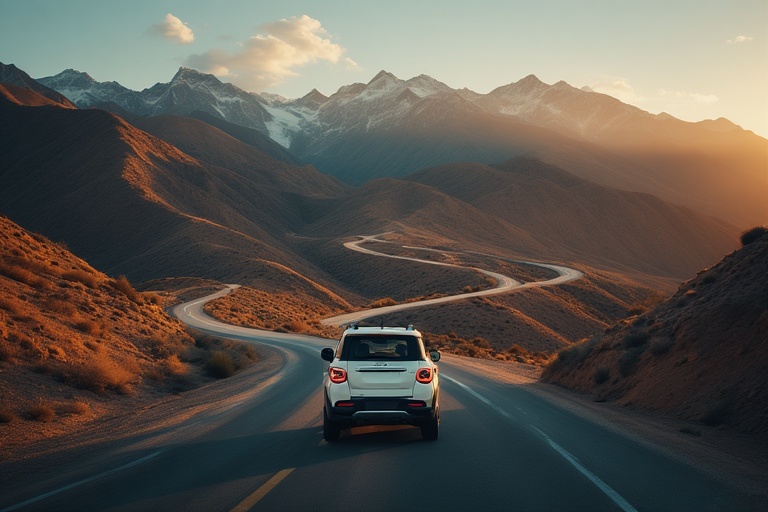
Morocco’s autoroute network is modern, well-signed, and tolled—the A7 between Casablanca and Marrakech, for example, is as smooth as most European highways. Secondary “nationale” and “régionale” roads range from perfectly good tarmac to potholed stretches that demand patience and lower speeds. Mountain roads—particularly through the High Atlas and the Rif—can be narrow and winding but incredibly rewarding, with jaw-dropping views around every bend.
Local Laws and Checkpoints
Drive on the right. Seatbelts are mandatory for all passengers. Typical speed limits are 60 km/h in urban areas, approximately 100 km/h on secondary roads, and 120 km/h on autoroutes. Police checkpoints are routine across Morocco—especially at city entrances, near toll plazas, and in the south. Have your passport, driver’s license, and rental agreement within easy reach. Officers are generally courteous if your documents are in order. For a deeper dive into local customs and how to interact respectfully, see our guide on Moroccan etiquette for travellers.
When approaching a checkpoint, slow down well in advance, lower your window, and greet the officer with “Salam.” Most stops are brief—a glance at your license and a wave through. If asked to pull over for a document check, stay calm and cooperative. Avoid offering money; Moroccan police take bribery seriously.
City vs. Rural Driving
City driving in Morocco can feel chaotic at first. Scooters weave between lanes, taxis stop without warning, and roundabouts follow a “whoever is most assertive goes first” philosophy. Stay calm, drive predictably, and use your mirrors constantly. In rural areas, the pace drops but new hazards appear: pedestrians walking along road edges, livestock crossing without warning, and unmarked speed bumps at village entrances. Slow down through every village—children play near the road, and a sudden donkey crossing is more common than you’d expect.
Safety and Navigation Tips
- Keep speeds moderate and scan for scooters and pedestrians at all times—they are the most common hazard on Moroccan roads.
- Carry cash for tolls and fuel in remote areas; petrol stations can be far apart on southern and mountain routes—refuel before long stretches.
- Avoid driving in remote mountainous areas after dark; roads are poorly lit and animals on the road are nearly invisible at night.
- Download offline maps and keep a backup pin of your hotel or riad. For accommodation along your route, browse our Morocco hotels page.
Powered by GetYourGuide
Parking, Toll Roads & Fuel
In every Moroccan city you’ll find official parking lots and the ubiquitous “gardiens”—parking attendants wearing reflective vests who watch your car in exchange for a small tip. Five to ten dirhams is standard for a few hours; overnight in a guarded lot may cost 20–30 MAD. Never leave valuables visible inside the car, even in a guarded space.
Toll highways (autoroutes) are efficient and reasonably priced. The Casablanca–Marrakech stretch costs roughly 80 MAD one way. Keep small bills and coins handy—automated machines accept cards at some toll plazas, but not all. Diesel (gasoil) is widely available and slightly cheaper than petrol; premium unleaded is common in cities but can be scarce in remote southern or mountain areas.
📌 Planning note: On days you’d rather skip the stress of medina driving, use taxis instead. Learn how fares work in our taxi services Morocco guide, or explore all your options with the Morocco transportation 2025 guide and trains travel guide.
Common Challenges & How to Handle Them
Language Barriers
English is widely spoken in major tourist hubs like Marrakech, Fes, and Essaouira. Elsewhere—particularly in rural Morocco and smaller towns—French and Darija (Moroccan Arabic) dominate. Download Google Translate for offline use and request rental contracts in a language you understand before signing. A few words of French go a long way at petrol stations and checkpoints.
Traffic Culture
Horns in Morocco are typically “I’m here” signals, not expressions of aggression. Maintain safe following distances, expect last-second lane merges, and approach roundabouts cautiously—vehicles already inside the roundabout don’t always have priority in practice, regardless of what the rules say. Flash your headlights to signal that you’re letting someone pass; a single flash from an oncoming car often means “police checkpoint ahead.”
Breakdowns or Accidents
If your car breaks down, move to safety off the road, switch on hazard lights, and call your rental company’s 24-hour roadside assistance number (saved in your phone before departure). For accidents, contact the police immediately and notify your rental agency. Don’t sign any document you don’t fully understand. Photograph everything—vehicle damage, road conditions, licence plates, and witness details. These records are critical for insurance claims.
Deposits, Fines, and Disputes
Understand your deposit hold amount and the timeline for its release before you drive away. If you receive a traffic fine, pay it promptly at the nearest post office or police station to avoid admin surcharges. Keep all contracts, inspection photos and videos, fuel receipts, and toll tickets until your deposit clears—typically 3–10 business days. If a dispute arises over damage charges, escalate through the rental agency’s head office first, then contact your credit card’s chargeback department as a last resort.
Always pay the deposit with a credit card, not a debit card. Credit cards offer chargeback rights that give you leverage in disputes. Debit card holds can tie up your cash for weeks if the agency is slow to release the deposit.
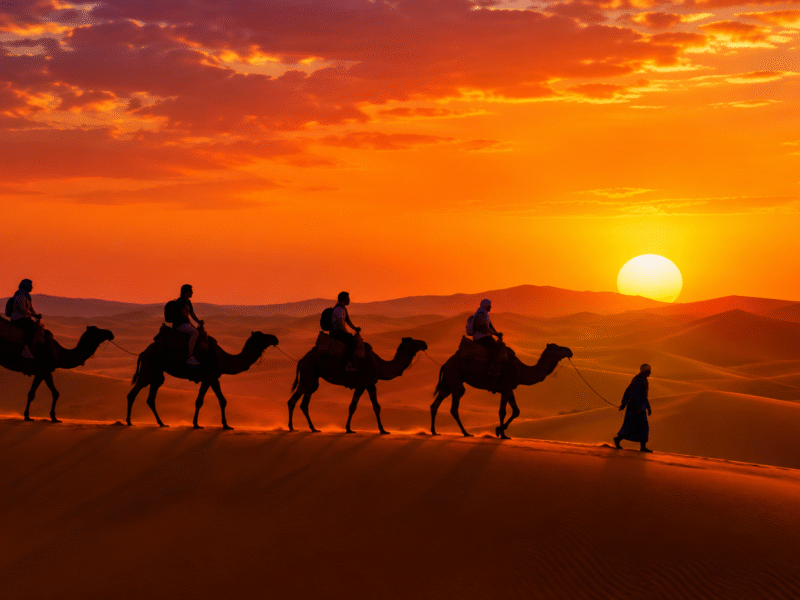
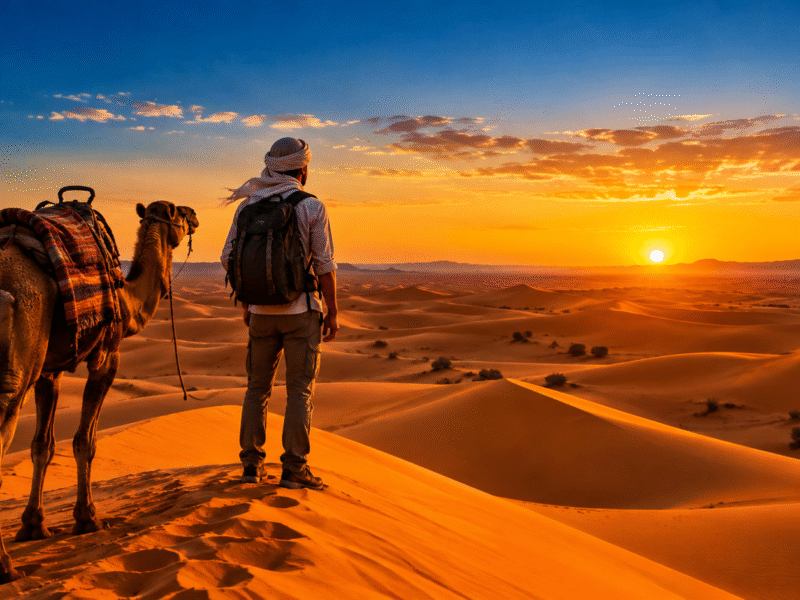
When the road leads you to the edge of the Sahara, park your rental car in Merzouga and let an expert take the wheel for the off-road part. A guided desert tour includes 4×4 transfers, camel treks, and a night under the stars—without voiding your insurance:
Powered by GetYourGuide
Reserve Your Spot
Book Your Morocco Road Trip Experiences
From guided day tours to desert adventures, find the perfect experiences to complement your self-drive itinerary. Instant confirmation and free cancellation on most activities.
Frequently Asked Questions
Everything you need to know before hitting the road
✦ Your Morocco Journey Starts Here
Hit the Road with Confidence 🚗
With the right vehicle, solid insurance, and these ten tips in your back pocket, Morocco’s open roads become your greatest adventure. Build your perfect itinerary across our destination guides, find the perfect stay on our hotels page, and discover unforgettable tours and activities to fill every stop along the way.