
Religion in Morocco: Essential Guide to Mosques, Festivals & Islamic Heritage 2026
Discover Morocco’s fascinating religious traditions, magnificent mosques, and vibrant festivals. This complete guide helps travelers respectfully experience Morocco’s rich Islamic heritage and understand the spiritual heartbeat of this captivating North African kingdom.
Have you ever stood in a centuries-old medina as the call to prayer ripples across rooftops at sunset, filling the air with a melody that has echoed through these streets for over a thousand years? Religion in Morocco isn’t something you read about in a museum placard — it’s something you feel in the warm greeting of a shopkeeper, taste in the shared breaking of a Ramadan fast, and see in the breathtaking geometry of tilework that adorns every sacred space. For the 99% of Moroccans who practice Islam, faith isn’t separate from life — it is life, woven into hospitality, architecture, law, and celebration in ways that astonish and welcome visitors from every background.
✦ Key Takeaways
Islam is Morocco’s official religion, practiced by 99% of the population following the Maliki school of Sunni Islam.
The King holds the unique title “Commander of the Faithful,” unifying political and spiritual leadership.
Morocco constitutionally protects minority Christian and Jewish communities, modeling interfaith tolerance.
The Hassan II Mosque in Casablanca is one of the world’s largest and one of the few open to non-Muslim visitors.
Understanding religious customs — from Ramadan etiquette to mosque dress codes — transforms your travel experience.
Overview of Morocco’s Religious Landscape
The religious composition of Morocco presents a fascinating study in both unity and diversity that sets it apart from much of North Africa and the broader Islamic world. Religion in Morocco is predominantly Islamic, with approximately 99% of the population following the faith. This overwhelming majority practices Sunni Islam, specifically adhering to the Maliki school of Islamic jurisprudence, which has deep historical roots stretching back over a millennium in the Maghreb region. For travelers, understanding this dominant spiritual framework is the single most important key to unlocking Morocco’s cultural depth.
What makes Morocco’s approach to religion particularly noteworthy is its constitutional framework. The nation’s constitution establishes Islam as the official state religion while simultaneously guaranteeing freedom of worship for other faiths. This delicate balance creates a unique environment where Islamic identity remains strong while minority communities maintain their traditions peacefully — a model that has earned Morocco international recognition for interfaith harmony.
💡 Morocco is one of the few Muslim-majority nations where the constitution explicitly guarantees freedom of worship for all faiths. The King actively promotes interfaith dialogue and has restored historic synagogues across the country.
Among Morocco’s religions, Christianity represents less than 1% of the population, comprising both foreign residents and a small number of Moroccan converts. The Christian community includes Catholics, Protestants, and Orthodox believers who worship freely in designated churches throughout major cities like Casablanca, Rabat, and Tangier. Similarly, Morocco’s Jewish community — though significantly smaller than in previous centuries when it numbered in the hundreds of thousands — continues to maintain historic synagogues and cultural centers, particularly in Casablanca, Fez, and Marrakech. The Jewish heritage of Morocco is preserved in dedicated museums, restored mellahs (Jewish quarters), and annual cultural events.
The government’s approach to religious minorities demonstrates a deep commitment to tolerance and coexistence. Legal protections ensure that non-Muslim communities can build and maintain places of worship, practice their faith openly, and participate fully in Moroccan society. King Mohammed VI has repeatedly emphasized Morocco’s identity as a land of coexistence, funding the restoration of Jewish cemeteries and establishing the Fondation pour la Mémoire to preserve the country’s multi-faith heritage. This policy of religious tolerance has made Morocco a welcoming environment for visitors of all backgrounds.
Islam in Morocco: The Foundation of Society
The role of Islam in Morocco extends far beyond personal belief, serving as the cornerstone of national identity and social structure. Islam arrived in Morocco in the late 7th century CE with the Arab-Muslim conquest, and over the following centuries it fused with indigenous Amazigh (Berber) traditions to create a uniquely Moroccan expression of the faith. Our comprehensive guide to Islam in Morocco explores how deeply this fusion influences governance, education, and daily interactions throughout the kingdom.
The Commander of the Faithful
At the apex of Morocco’s religious hierarchy stands the King, who holds the distinguished title of Amir al-Mumineen — “Commander of the Faithful.” This unique position combines political authority with spiritual leadership, making the monarch both head of state and protector of the faith. The royal lineage traces back to the Prophet Muhammad through the Alaouite dynasty, lending profound religious legitimacy to the throne. This dual role ensures that Islamic principles guide national policies while the King serves as a unifying spiritual symbol for all Moroccans.
Every Friday, the King leads or attends the Jumu’ah (congregational prayer) — a visible reminder of the inseparable link between Morocco’s political leadership and its Islamic heritage. This tradition reinforces the King’s role as the nation’s spiritual anchor.
Islamic Law and Education
The influence of Morocco’s predominant religion permeates legal frameworks, particularly in matters of family law, inheritance, and personal status. The Mudawwana (Family Code), reformed in 2004, reflects a modern interpretation of Islamic principles, balancing religious values with contemporary needs — including expanded rights for women in marriage, divorce, and child custody. Educational institutions integrate Islamic studies into curricula from primary school onwards, ensuring young Moroccans understand their religious heritage alongside modern subjects like science and technology.
Morocco is also home to the University of al-Qarawiyyin in Fez, founded in 859 CE and recognized by UNESCO and the Guinness Book of World Records as the oldest continuously operating university in the world. This institution underscores the deep historical connection between Islamic scholarship and Moroccan intellectual life — a legacy that travelers can explore when visiting Morocco’s ancient cities.
The Five Pillars in Daily Life
Daily life follows the rhythm of Islamic practice throughout Morocco. Five times each day, the adhan (call to prayer) resonates from minarets across cities and villages, inviting the faithful to pause their activities and turn toward Mecca. During Ramadan, the holy month of fasting, the entire nation transforms as Muslims abstain from food and drink from dawn to sunset, creating a shared spiritual experience that strengthens community bonds and reshapes daily schedules for an entire month.
Sufi Traditions and Mysticism
Morocco’s interpretation of Islam also embraces Sufi traditions, adding mystical dimensions to religious practice. Sufi orders, known as tariqas, preserve spiritual teachings through music, poetry, and ritual ceremonies. The Gnawa musical tradition — rooted in sub-Saharan African spiritual practices and blended with Sufi Islam — has been recognized by UNESCO as an Intangible Cultural Heritage. The mesmerizing trance-like performances and devotional songs offer paths to divine connection that complement orthodox religious observance, creating a spiritual richness that fascinates visitors and scholars alike.
Religious Culture and Daily Life
Morocco’s religious culture represents a beautiful synthesis of Islamic teachings, Amazigh traditions, and Arab customs, creating a unique spiritual identity that permeates every aspect of society. This rich cultural blend influences family structures, social interactions, and community celebrations in ways that create lasting impressions on every visitor. The seamless integration of faith with everyday activities offers travelers some of the most authentic glimpses into local life you’ll find anywhere in the world.
Family, Generosity, and Community
Family life centers around religious values that emphasize respect, generosity, and mutual support. Children learn from an early age the importance of honoring parents — a principle deeply rooted in Islamic teaching that extends beyond the family unit to encompass caring for neighbors, helping those in need, and maintaining strong community ties. These values create the warm, welcoming atmosphere that travelers consistently describe as one of Morocco’s greatest treasures.
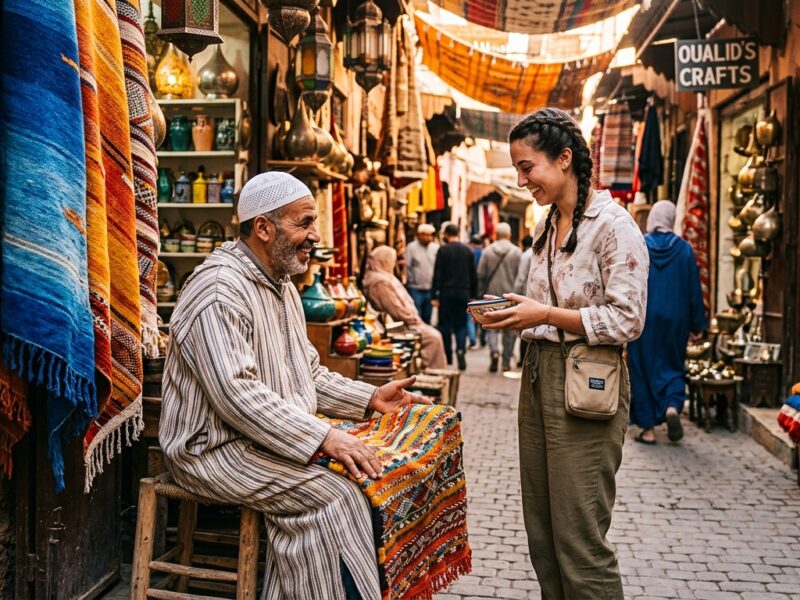
Perhaps no aspect of Morocco’s religious culture is more evident to visitors than the legendary Moroccan hospitality. The tradition of welcoming guests with mint tea and pastries stems directly from Quranic teachings about generosity and kindness to strangers. The Prophet Muhammad’s instruction that “whoever believes in God and the Last Day should honor his guest” is taken literally across Morocco. This practice transforms simple encounters into meaningful exchanges, whether in bustling souks or remote Atlas Mountain villages.
If a Moroccan family invites you for tea, accept graciously — refusing can be seen as impolite. Three glasses is traditional (the first is “gentle as life,” the second “strong as love,” the third “bitter as death”). Learn more in our guide to Moroccan tea culture.
Dress, Art, and Expression
Religious observance also influences Moroccan dress and personal presentation. While styles vary widely from conservative to modern — particularly between rural and urban settings — many Moroccans choose clothing that reflects both religious modesty and personal expression. Women may wear colorful djellabas or elegant caftans, while men often don traditional robes for Friday prayers or special occasions. For travelers, understanding these sartorial traditions helps navigate social situations with greater sensitivity.
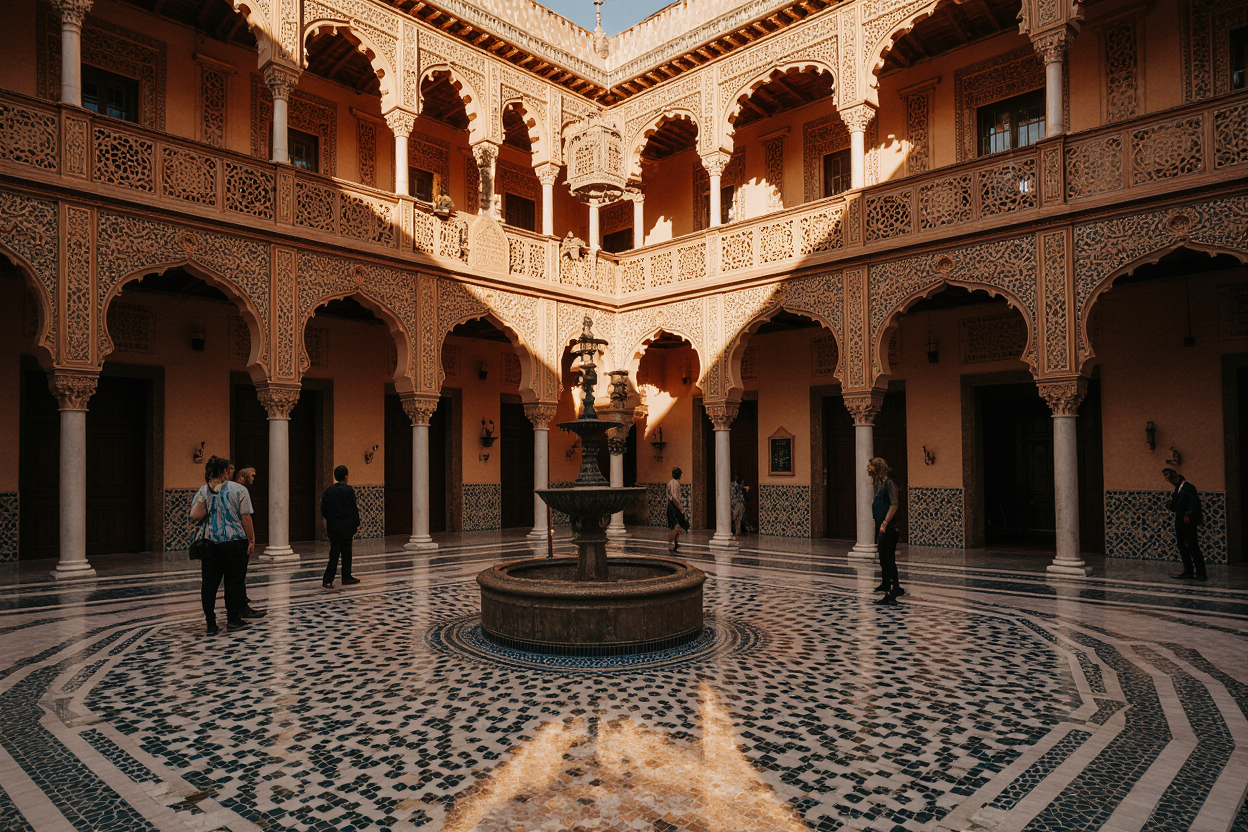
The integration of faith with artistic expression appears throughout every corner of Moroccan culture. Islamic geometric patterns — based on mathematical principles that symbolize the infinite nature of God — adorn everything from architectural masterpieces to everyday objects. The prohibition against depicting living beings in religious art led Moroccan craftsmen to develop some of the world’s most sophisticated abstract design traditions: intricate zellij tilework, carved stucco, painted cedar ceilings, and calligraphy that transforms Quranic verses into breathtaking visual art.
Navigating Religious Customs as a Visitor
Understanding Moroccan etiquette helps travelers navigate social situations respectfully. Simple gestures like using the right hand for greetings and eating, dressing modestly when visiting religious areas, and showing respect during prayer times demonstrate cultural awareness that Moroccans deeply appreciate. These customs create meaningful connections between visitors and locals — and often open doors to experiences that casual tourists never encounter.
📌 Planning note: During Ramadan, be considerate about eating, drinking, or smoking in public during daylight hours. While non-Muslims aren’t required to fast, showing respect for those who are fasting is deeply appreciated and can lead to invitations to share iftar meals at sunset.
Morocco’s Magnificent Mosques
Morocco’s mosques stand as architectural marvels that showcase centuries of Islamic artistry and devotion. These sacred spaces serve not only as places of worship but also as community centers, educational institutions, and symbols of the nation’s spiritual heritage. Our comprehensive guide to mosques in Morocco explores these magnificent structures in greater depth — but here we highlight the most significant ones every traveler should know about.
Hassan II Mosque, Casablanca
The Hassan II Mosque in Casablanca ranks among the world’s most spectacular religious buildings and is the largest mosque in Africa. Completed in 1993 after seven years of construction involving over 10,000 craftsmen, this architectural wonder features a minaret soaring 210 meters high — making it one of the tallest religious structures on earth. What makes this mosque particularly unique is its location partially over the Atlantic Ocean, inspired by a Quranic verse stating that God’s throne was built upon water. The mosque accommodates 25,000 worshippers inside its prayer hall and an additional 80,000 in its expansive courtyard.
The Hassan II Mosque is one of the only mosques in Morocco open to non-Muslim visitors. Guided tours run outside prayer times and cost approximately 130 MAD (~$13). Book morning tours for the best light on the interior tilework. Photography is permitted inside during tours.
Koutoubia Mosque, Marrakech
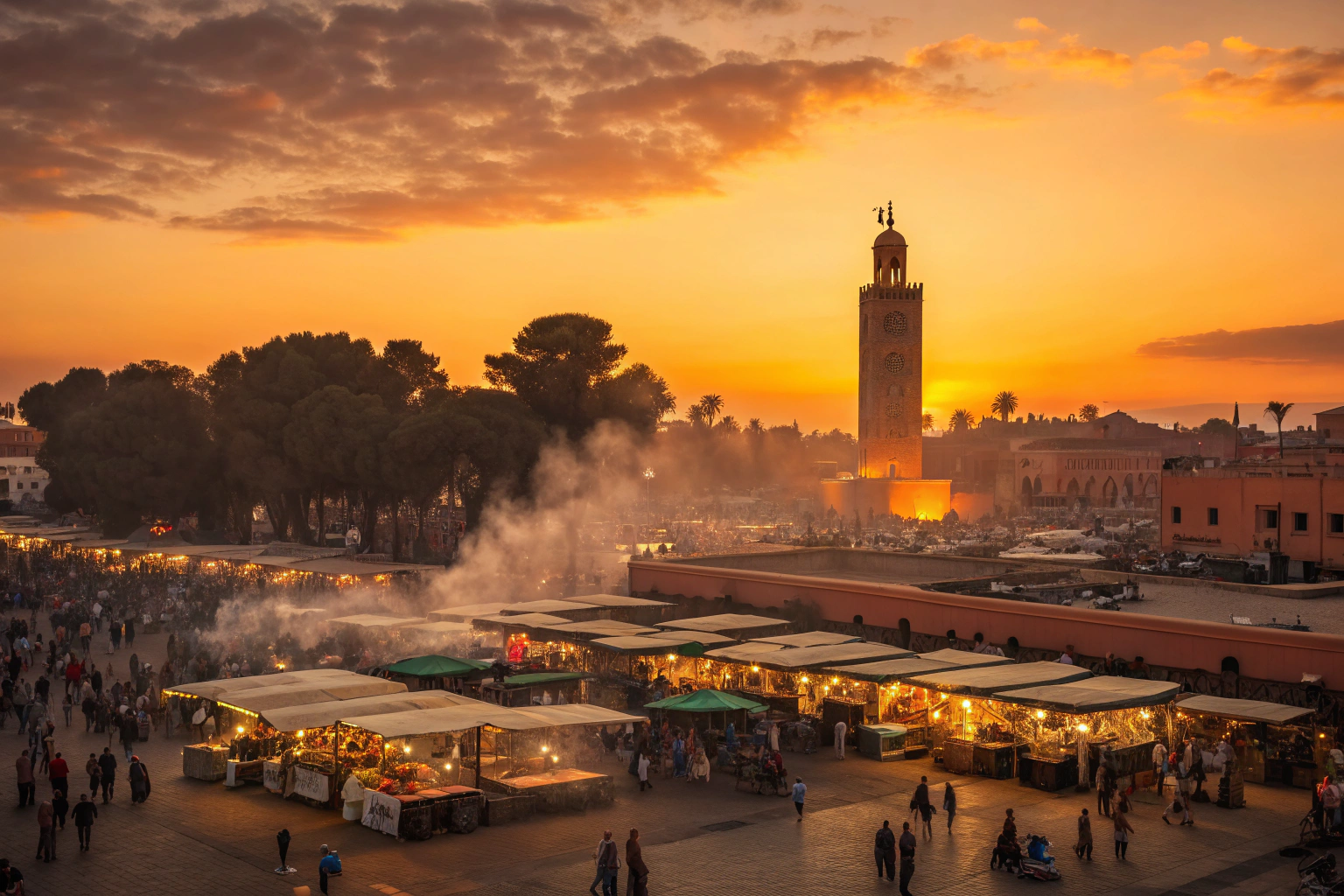
In Marrakech, the Koutoubia Mosque serves as both a spiritual center and the city’s most iconic landmark, visible from virtually every rooftop terrace and alleyway. Built in the 12th century during the Almohad dynasty, its 77-meter minaret has inspired mosque architecture across North Africa and into Andalusia — the Giralda tower in Seville was directly modeled after it. The name “Koutoubia” derives from the Arabic word kutubiyyin (booksellers), reflecting the mosque’s historical location near a vibrant book market where scholars once gathered to exchange knowledge and manuscripts.
Al-Qarawiyyin Mosque, Fez
The Al-Qarawiyyin Mosque in Fez holds an extraordinary distinction: founded in 859 CE by Fatima al-Fihri, a woman of vision and faith, it evolved into the world’s oldest continuously operating university. Its prayer hall can accommodate 20,000 worshippers, and its library houses manuscripts dating back over a thousand years, including a 9th-century Quran written on camelkin parchment. While non-Muslims cannot enter, the courtyard views through ornate doorways reveal some of the finest examples of Moroccan Islamic architecture anywhere.
Architectural Elements to Watch For
Morocco’s mosques showcase distinctive architectural elements that blend functionality with breathtaking beauty. Intricate zellij tilework creates mesmerizing geometric patterns in blues, greens, and earth tones — each tile cut by hand and arranged in patterns that can contain over 10,000 individual pieces. Horseshoe arches frame entrances and prayer halls, while carved stucco (gebs) adds delicate floral and geometric details that seem to dance in changing light. Cedar wood ceilings feature elaborate paintings and carvings that demonstrate skills passed down through generations of master craftsmen.
💡 Most Moroccan mosques restrict entry to Muslims only — but visitors can still appreciate their external beauty. Courtyards, gardens, and ornate doorways offer plenty to admire. Beyond the Hassan II Mosque, the Tin Mal Mosque in the High Atlas (currently under restoration) has historically welcomed non-Muslim visitors.
Religious buildings serve purposes extending far beyond prayer in Morocco. Many mosques include madrasas (religious schools) where students study Islamic theology, Arabic language, and classical texts. Beautifully preserved madrasas like the Ben Youssef Madrasa in Marrakech and the Bou Inania Madrasa in Fez are open to all visitors and offer stunning examples of Islamic architecture that rival any mosque interior. These are essential stops for understanding how religion in Morocco shaped education and intellectual life for centuries.
Religious Festivals and Celebrations
Morocco’s religious festivals transform the kingdom into a vibrant tapestry of celebration, devotion, and community spirit throughout the year. These occasions offer travelers unique opportunities to witness faith in action while experiencing the joy and hospitality that define Moroccan culture at its most exuberant. Our detailed guide to religious festivals in Morocco provides comprehensive dates and practical planning advice.
Ramadan: The Holy Month
Ramadan stands as the most transformative religious observance in Morocco, reshaping daily rhythms for an entire month. As the ninth month of the Islamic calendar begins, Muslims fast from dawn to sunset, abstaining from food, drink, and other physical needs. This practice cultivates spiritual discipline, empathy for the less fortunate, and gratitude for life’s blessings. The pre-dawn meal (suhoor) and evening breaking of the fast (iftar) become cherished family moments that bond entire communities.
During Ramadan evenings, Morocco comes alive with special energy. Streets fill with vendors selling traditional foods like harira soup (a rich tomato-and-lentil broth), chebakia honey cookies twisted into flower shapes, and fresh dates. Mosques host extended prayers called taraweeh, while families visit relatives and friends late into the night. The spirit of generosity intensifies as people increase charitable giving and share meals with those in need — many mosques serve free iftar meals to hundreds of people each evening.
Traveling during Ramadan offers a truly unique cultural experience. While some restaurants close during daylight hours, tourist areas maintain options for visitors. The evening atmosphere after iftar is magical — streets come alive, and the communal joy is infectious. Many riads and hotels organize special iftar experiences for guests.
Eid al-Fitr: The Festival of Breaking the Fast
Eid al-Fitr, marking the end of Ramadan, erupts in three days of joyous celebration across Morocco. Families dress in their finest clothes — often purchasing new outfits specifically for the occasion. Special morning prayers draw massive congregations to mosques and open spaces, followed by festive meals featuring traditional sweets, pastries, and dishes like pastilla and rfissa. Children receive gifts and money called Eidiya, while adults strengthen social bonds through visits and shared celebrations that can last well into the night.
Eid al-Adha: The Festival of Sacrifice
Eid al-Adha, known locally as Aid el-Kebir, commemorates Prophet Abraham’s willingness to sacrifice his son in obedience to God. This is arguably Morocco’s most significant religious holiday. Families purchase a sheep — often weeks in advance, keeping it at home — and perform the ritual sacrifice on the morning of Eid. The meat is divided into three parts: one-third for the family, one-third for relatives and friends, and one-third for those in need. The festival emphasizes themes of sacrifice, obedience, generosity, and community solidarity.
Mawlid an-Nabi and Local Moussems
Mawlid an-Nabi celebrates the birthday of the Prophet Muhammad with special prayers, communal meals, and Sufi musical performances. Beyond these major Islamic holidays, Morocco celebrates numerous local religious festivals called moussems that honor local saints and combine religious devotion with cultural festivities. The Moussem of Moulay Idriss near Meknes attracts thousands of pilgrims annually, while the Moussem of Tan-Tan — a UNESCO-recognized event — features spectacular horsemanship displays and Saharan cultural traditions.
For travelers planning their trip around these celebrations, our Moroccan festivals 2026 guide provides updated dates and locations for both religious and secular events throughout the year.
Travel Tips for Visiting Religious Sites in Morocco
Visiting religious sites requires cultural sensitivity and awareness of local customs. Whether you’re admiring mosque exteriors, exploring historic madrasas, or attending a local moussem, these practical guidelines ensure respectful interactions that enrich your travel experience and earn genuine appreciation from the Moroccans you meet.
Dress Code Essentials
Modest clothing is essential when visiting religious sites and culturally conservative areas. Women should cover shoulders, arms, and legs below the knee, and bringing a lightweight scarf for head covering is advisable — particularly for entering madrasas or mausoleums that welcome visitors. Men should wear long pants and shirts with sleeves. Avoid tight-fitting or revealing clothing. Many religious sites provide appropriate coverings at entrances for unprepared visitors, but carrying your own ensures comfort and proper fit.
Photography Etiquette
Always ask permission before photographing people at or near religious sites. While exterior photography of mosques is generally welcomed and encouraged, interior photography is typically prohibited in active places of worship. At tourist-friendly sites like the Hassan II Mosque, photography rules are clearly communicated during guided tours. Respect posted signs and local guidance — when in doubt, ask your guide or a nearby attendant.
Navigating Prayer Times
Be aware of the five daily prayer schedules, especially the Friday noon prayer (Jumu’ah), which holds special significance. Many businesses and shops close temporarily during prayer times — typically for 15-30 minutes — and increased activity around mosques requires extra courtesy. Plan museum and attraction visits around prayer times, and use the pauses as opportunities to sit in a café and observe the rhythm of daily life that makes Morocco so distinctive.
Mosque Entry and Shoe Protocol
Remove shoes before entering any mosque, madrasa, or religious building open to visitors. Most sites provide shoe storage areas or plastic bags for carrying footwear. This universal practice maintains cleanliness in sacred spaces. Wear socks or bring a pair — bare feet on marble or tile floors can be cold, especially in winter months.
General Behavior Guidelines
Maintain quiet, respectful behavior near all religious sites. Avoid loud conversations, music, public displays of affection, and disruptive activities near mosques and mausoleums. During Ramadan, be considerate about eating, drinking, or smoking in public during daylight hours. While legally you’re free to do so as a non-Muslim, discretion shows respect and is deeply appreciated by locals.
📌 Safety note: Morocco is one of the safest countries in North Africa for travelers. For comprehensive safety information, including tips for solo and female travelers, see our Morocco safety travel guide 2026.
For those seeking deeper cultural immersion, consider booking a guided tour of Marrakech’s historic sites with a knowledgeable local guide who can provide context about the religious significance of what you’re seeing, ensure appropriate etiquette, and open doors — sometimes literally — that independent visitors cannot access.
Staying Connected While Exploring
Navigating between religious sites, checking prayer time schedules, and translating Arabic signage all require reliable internet access. An eSIM for Morocco provides instant connectivity from the moment you land — no need to hunt for a SIM card shop in the airport. Data-only eSIMs work with most modern smartphones and let you access maps, translation apps, and our online guides seamlessly throughout your trip.
Getting Around Between Sites
Morocco’s major religious sites are spread across multiple cities — from Casablanca’s Hassan II Mosque to Fez’s Al-Qarawiyyin and Marrakech’s Koutoubia. If you plan to visit religious sites across several destinations, arranging reliable transportation is essential. Pre-booking an airport transfer ensures a smooth start, while Morocco’s excellent train network connects Casablanca, Rabat, Fez, and Marrakech efficiently. For more remote sites like the Tin Mal Mosque in the Atlas Mountains, consider renting a car or joining an organized day trip.
Reserve Your Spot
Experience Morocco’s Sacred Heritage
Explore Morocco’s most magnificent mosques, historic madrasas, and cultural landmarks with expert local guides. Instant confirmation, free cancellation on most tours.
Frequently Asked Questions
Everything you need to know about religion in Morocco before you go
✦ Your Morocco Journey Starts Here
Walk Through Centuries of Living Faith
Morocco’s religious heritage isn’t locked behind glass — it’s alive in every call to prayer at dawn, every cup of mint tea offered by a stranger, and every tile laid by hand in a 900-year-old mosque. Book a guided cultural tour and experience the spiritual heartbeat of this extraordinary kingdom for yourself.