
Islam in Morocco: Complete 2026 Guide to Islamic Culture, Traditions & Daily Life
Discover Islam in Morocco with our complete 2026 guide to Islamic culture, traditions, history, and daily life. Learn about Moroccan Islamic practices, festivals, and customs that shape this extraordinary North African kingdom.
What does it sound like when an entire nation pauses five times a day? In Morocco, the answer arrives through the haunting melody of the adhan — the call to prayer — echoing from thousands of minarets across ancient medinas, modern cities, and remote mountain villages. Islam in Morocco isn’t merely a religion practiced behind mosque doors. It’s the rhythm of daily life, the architecture that shapes skylines, the hospitality extended to every stranger, and the invisible thread that connects over 37 million people in shared faith, identity, and purpose.
✦ Key Takeaways
Islam is practiced by over 99% of Moroccans, making it one of the most religiously unified countries in the world
Moroccan Islam blends Arab and Amazigh (Berber) traditions, creating a unique cultural expression found nowhere else
The King of Morocco holds the title “Commander of the Faithful,” serving as both political and religious leader
Ramadan, the Five Pillars of Islam, and daily prayer form the cornerstone of religious life in Morocco
Morocco promotes moderate Islam internationally and maintains peaceful relationships with religious minorities
Historical Background of Islam in Morocco
The story of Islam in Morocco began in the 7th century when Arab armies brought the new faith to North Africa. The Amazigh people (Berbers) had lived in Morocco for thousands of years before Islam arrived. At first, many Berber tribes resisted the new religion, but over time they embraced Islam and made it distinctly their own — blending Islamic teachings with local customs that persist to this day.
The Idrisid dynasty played a crucial role in establishing Islam as the dominant faith across the region. Founded by Idris I in 788 CE, this dynasty built the city of Fez, which became one of the most important centers of Islamic learning in the medieval world. The Idrisids promoted the concept of sharifian legitimacy — the belief that descendants of Prophet Muhammad held the rightful authority to rule. This principle still underpins Moroccan governance today, as the current royal family traces its lineage back to the Prophet.
💡 The University of al-Qarawiyyin in Fez, founded in 859 CE, is recognized by UNESCO as the oldest continuously operating university in the world — a testament to Morocco’s deep commitment to Islamic scholarship that began over a millennium ago.
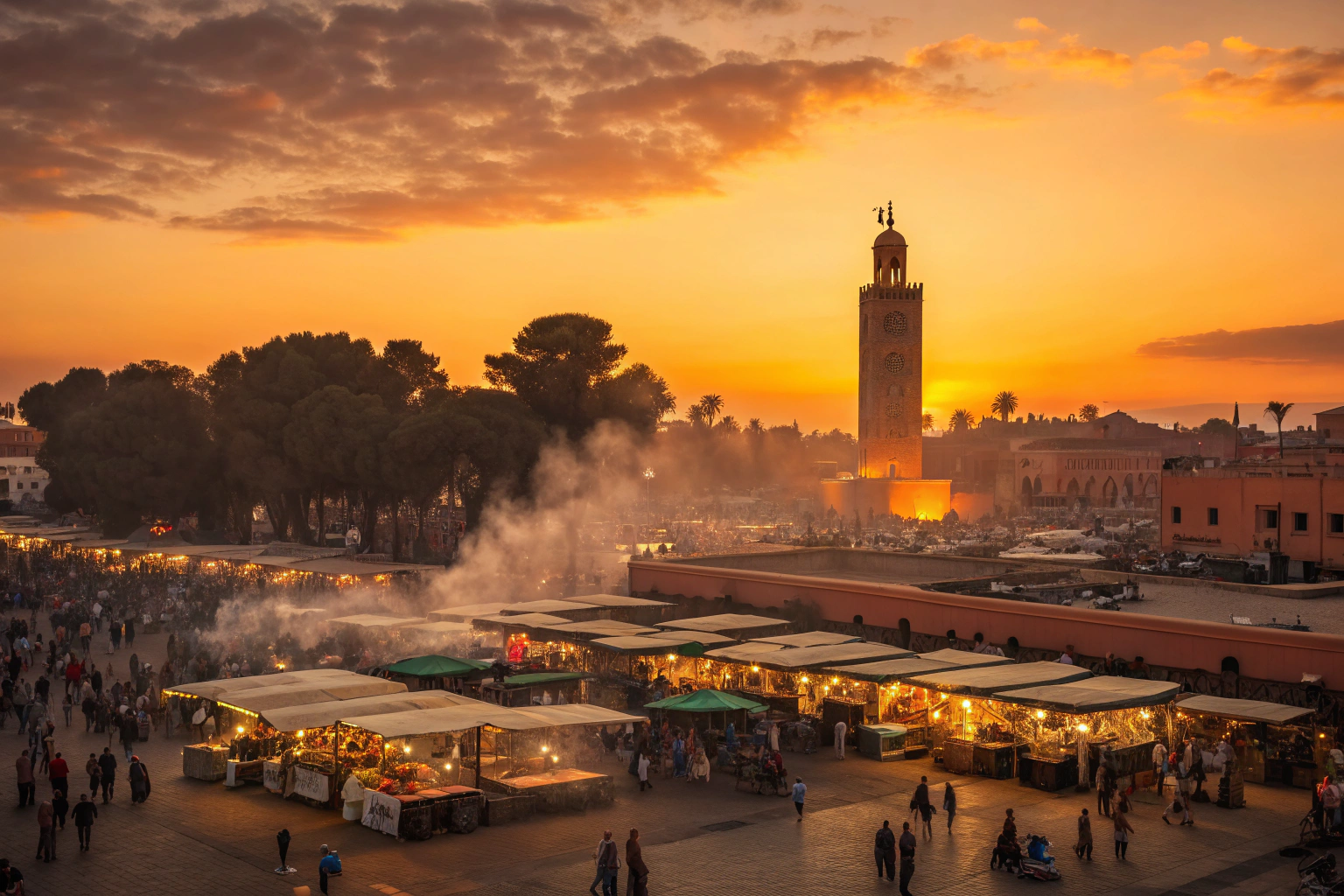
The Almoravid dynasty in the 11th century spread Maliki Sunni Islam throughout Morocco and into Spain. They built magnificent mosques and established religious courts, laying the institutional foundations for Islamic governance. Following them, the Almohad dynasty in the 12th century further consolidated Islamic rule and culture, constructing iconic monuments like the Koutoubia Mosque in Marrakech and the Hassan Tower in Rabat — architectural treasures that still define Morocco’s skyline.
What makes the historical development of Moroccan Islam truly special is how Arab and Amazigh traditions blended together over centuries. The Berbers kept many of their customs — seasonal festivals, communal decision-making, reverence for nature — while wholeheartedly embracing Islamic faith. This created a unique expression of Islam that respects local heritage while following core Islamic teachings. To witness this cultural blend firsthand, consider visiting some of the unique villages in Morocco where these traditions remain vibrantly alive.
Islam as the Dominant Religion in Morocco
Today, Islam dominates Morocco’s religious landscape with over 99.9% of the population identifying as Muslim. The vast majority follow the Maliki school of Sunni Islam, one of the four main schools of Islamic jurisprudence. This extraordinary religious unity makes Morocco one of the most cohesive faith communities on Earth — a fact that profoundly shapes every aspect of the nation’s character.
The constitution of Morocco declares Islam as the state religion. The King holds the special title Amir al-Mu’minin (Commander of the Faithful), making him both the political head of state and the supreme religious authority. This dual role means the monarch protects Islamic values, oversees religious institutions, and ensures that national laws harmonize with Islamic principles. For a deeper understanding of how this shapes Moroccan society, our comprehensive religion in Morocco guide explores the full religious landscape.
Unlike some Muslim-majority nations where religious authority is diffuse, Morocco’s system centralizes religious guidance under the monarchy. The King appoints the Supreme Council of Ulema (scholars), oversees Friday sermon content nationwide, and mediates between tradition and modernity — creating remarkable religious stability.
Islam shapes daily life in ways both visible and subtle. Schools teach Islamic studies alongside math and science from primary level onward. Courts use Islamic family law (Mudawwana) for matters of marriage, divorce, and inheritance. The work week accommodates Friday congregational prayers, and the rhythm of the day is punctuated by the five calls to prayer.
For visitors and newcomers, understanding Morocco as an Islamic country helps navigate social situations with confidence. Modest dress is appreciated, alcohol is available primarily in licensed establishments and tourist areas, and pork is absent from traditional cuisine. During Ramadan — the holy month of fasting — many restaurants close during daylight hours, and a spirit of shared devotion transforms public life entirely. Travelers should review Moroccan etiquette guidelines to show proper respect for these customs.
Despite being overwhelmingly Muslim, Morocco maintains remarkably peaceful relationships with religious minorities. Small Jewish and Christian communities practice their faiths freely under constitutional protection. The country preserves synagogues, maintains Jewish cemeteries, and celebrates its interfaith heritage — a reflection of the moderate, tolerant character that defines Moroccan Islam.
Islamic Culture in Morocco
Islamic culture in Morocco represents a breathtaking fusion of religious devotion, artistic mastery, and social customs that has been refined over thirteen centuries. Unlike some Islamic societies that draw strict boundaries between sacred and secular life, Moroccan Islam embraces local traditions and artistic expressions — creating a cultural tapestry where faith and creativity are inseparable.
Architecture and Sacred Spaces
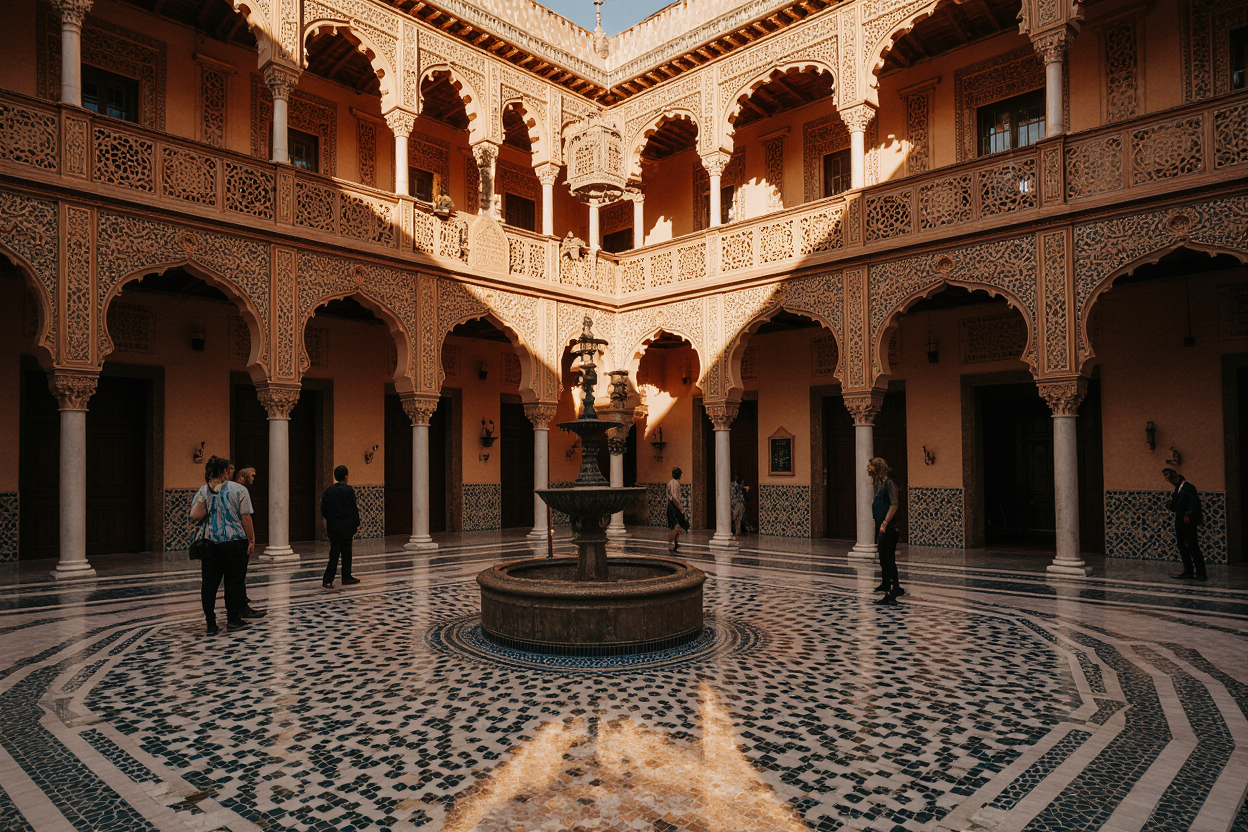
The most visible expression of Islamic culture in Morocco appears in its architecture. Moroccan builders perfected the art of intricate calligraphy, covering mosque walls with Quranic verses rendered in flowing Arabic script. Geometric patterns — called zellij when fashioned from hand-cut tiles — cover surfaces in mesmerizing, mathematically precise designs. These patterns reflect a core Islamic artistic principle: since representing living beings is traditionally avoided in sacred spaces, artists channel their genius into abstract beauty that suggests the infinite nature of the divine.
The Koutoubia Mosque in Marrakech stands as perhaps the finest example of Moroccan Islamic architecture, its minaret visible from nearly every point in the city. The Hassan Tower in Rabat, though never completed, demonstrates the staggering ambition of medieval Moroccan builders. And the Hassan II Mosque in Casablanca — the largest mosque in Africa — proves that this architectural tradition continues to evolve. These monuments are among Morocco’s most treasured UNESCO World Heritage sites.
💡 In Morocco’s old medinas, Islamic architectural principles shape every building — arched doorways symbolize the transition between worldly and spiritual realms, interior courtyards represent paradise gardens, and intricate muqarnas (honeycomb vaulting) evoke the celestial dome.
Music, Crafts, and Artistic Expression
Music reflects Islamic culture throughout Morocco in profound ways. Religious songs called anasheed praise God and the Prophet Muhammad. Sufi brotherhoods perform devotional music that uses rhythm and repetition to induce spiritual states of closeness to the divine. Even non-religious traditional Moroccan music often weaves in references to faith, gratitude, and Islamic values — blurring the line between entertainment and worship.
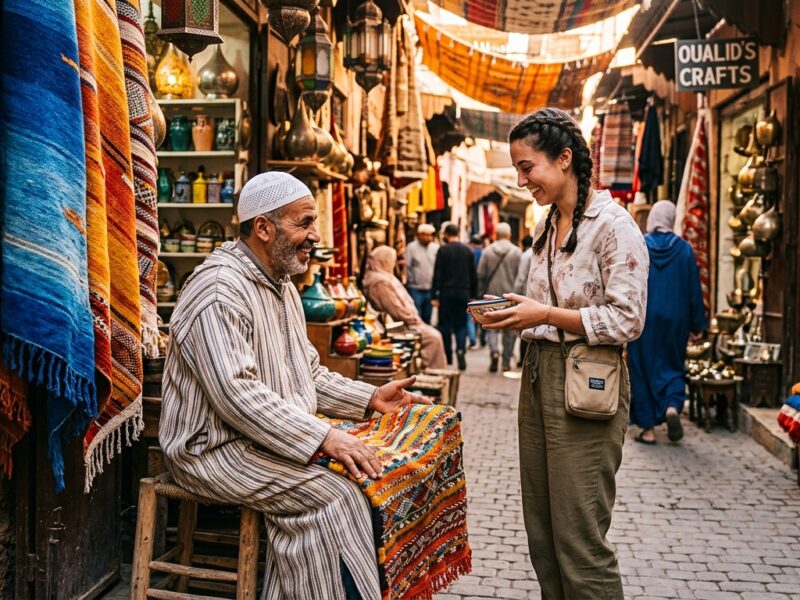
Moroccan crafts carry Islamic influence in every brushstroke and hammer blow. Artisans create stunning pottery inscribed with Arabic calligraphy. Metalworkers fashion intricate lamps whose pierced patterns cast geometric shadows that dance on walls like living geometry. Carpet weavers incorporate prayer rug motifs into their designs. These crafts keep Moroccan Islam alive through everyday objects — transforming homes into quiet galleries of devotional art.
Food Culture and Islamic Dietary Laws
Moroccan cuisine follows Islamic dietary laws with care and reverence. All meat must be halal — animals are treated humanely and blessed before slaughter in accordance with Quranic instruction. Many traditional dishes emerged directly from Islamic celebrations and customs. The famous tagine stews often feature ingredients mentioned in Islamic texts for their health-giving properties: dates, honey, olives, and black seed. For a deeper understanding of these culinary traditions, explore the vibrant food scene through food tours in Marrakech where Islamic food culture comes alive in every dish.
The tradition of offering food and mint tea to guests — even unexpected ones — stems directly from Prophetic teachings about honoring visitors. In Morocco, refusing hospitality can cause genuine offense, because the act of feeding a guest is considered an act of worship. This principle is why Moroccan hospitality feels so deeply sincere.
Moroccan Islamic Traditions
Moroccan Islamic traditions shape family life from the moment of birth to the final farewell. When a baby enters the world, parents whisper the adhan — the call to prayer — into the newborn’s ear, ensuring the very first words a Muslim child hears are about God. Seven days later, families hold an aqiqah ceremony with prayers, animal sacrifice, and a feast to give thanks for the gift of new life.
Ramadan: The Sacred Month
Ramadan stands as the most significant religious observance in Moroccan Islam — a month that transforms the entire nation. During these thirty days, Muslims fast from dawn to sunset: no food, no water, no smoking during daylight hours. Families wake before dawn for suhoor, the pre-fast meal. When the sunset call to prayer finally sounds, they break their fast with dates and harira soup, following traditions that stretch back to the earliest days of Islam.
But Ramadan in Morocco is far more than abstinence. It becomes a time of intense community and spiritual renewal. Streets that bustled during the day grow quiet as families gather for iftar, the evening meal that becomes the most important social event of the day. Mosques overflow with worshippers performing special night prayers called tarawih. Charity increases dramatically, with families sharing food with neighbors and supporting those in need. The collective experience of shared sacrifice and celebration makes Ramadan a cornerstone of Moroccan identity, celebrated alongside other religious festivals in Morocco throughout the Islamic calendar.
Eid Celebrations
Eid al-Fitr marks the end of Ramadan with an explosion of joy. Families buy new clothes, prepare elaborate sweets like kaab el ghazal (gazelle horns) and chebakia, and visit relatives across the city. Children receive money and gifts. The morning begins with special congregational prayers at the mosque, followed by festive meals that can last all day. These celebrations coincide with various Moroccan festivals that weave religious and cultural observances together.
Eid al-Adha — the Festival of Sacrifice — commemorates Abraham’s willingness to sacrifice his son in obedience to God. Families who can afford it sacrifice a sheep or goat, distributing the meat in three equal portions: one for the family, one for friends and neighbors, and one for the poor. This tradition powerfully reinforces the Islamic values of charity, sacrifice, and community solidarity that define Moroccan society.
Traditional Dress and Islamic Identity
Traditional clothing reflects Moroccan Islamic values of modesty while showcasing remarkable artistry. Many men wear djellabas — long, flowing robes with pointed hoods that provide both dignity and protection from the elements. Women’s dress ranges from the colorful hijab (headscarf) to full-coverage garments, though styles vary enormously from conservative to contemporary. The choice of dress reflects personal faith, family tradition, and regional identity rather than any single imposed standard. For more insights into traditional attire, explore this guide to Moroccan dress and clothing.
Marriage and Family Life
Marriage ceremonies in Morocco beautifully blend Islamic requirements with distinctly Moroccan customs. The religious ceremony includes Quranic recitation, the signing of a marriage contract specifying the bride’s rights, and prayers for the couple’s future. But Moroccan weddings also feature multi-day celebrations with henna parties, traditional music, elaborate feasts, and the bride appearing in up to seven different stunning outfits — each representing a different region of Morocco. These celebrations show how Moroccan Islam embraces joy, beauty, and community with equal fervor.
Religious Practices and Beliefs
The five daily prayers — salat — form the spiritual backbone of religious practice in Morocco. The call to prayer rings out from mosque minarets at dawn (Fajr), midday (Dhuhr), afternoon (Asr), sunset (Maghrib), and evening (Isha). Many Moroccans pause whatever they’re doing to pray — in mosques, at home, in shops, or even by the roadside. Friday noon prayer holds special importance, with men expected to attend the mosque for communal worship and a sermon (khutba) that addresses both spiritual and social matters.
The Role of Mosques
Mosques serve as far more than prayer spaces in Morocco. They function as community centers where people gather for religious education, social events, charitable distribution, and conflict resolution. Large mosques often include libraries, Quranic schools, meeting rooms, and spaces for teaching children. The imam (prayer leader) provides guidance on religious matters and often serves as a trusted mediator in community disputes — a role that dates back to the earliest Islamic communities.
Most mosques in Morocco are closed to non-Muslim visitors, with the notable exception of the Hassan II Mosque in Casablanca, which offers guided tours. However, you can still appreciate mosque architecture from the outside, and exploring the areas around major mosques reveals some of the most authentic neighborhood life in any Moroccan city.
Fasting and Spiritual Discipline
Beyond the month-long Ramadan fast, some devout Moroccans fast on Mondays and Thursdays throughout the year, following the practice of Prophet Muhammad. Others fast on the 13th, 14th, and 15th of each Islamic month. This voluntary fasting demonstrates personal devotion and self-discipline beyond the minimum requirements — a quality deeply admired in Moroccan society.
The Hajj Pilgrimage
The pilgrimage to Mecca — called Hajj — remains a lifelong aspiration for many Moroccans. Those who complete this journey earn the honored title “Hajji” (for men) or “Hajja” (for women), a distinction that carries genuine social respect. When community members return from Hajj, neighborhoods celebrate with painted house facades, welcome-home parties, and an outpouring of communal pride that reflects how deeply personal faith and community identity are intertwined.
The Maliki School and Moroccan Islamic Practice
The Maliki school of Islamic jurisprudence shapes how Moroccans practice their faith in ways that distinguish them from Muslims in other regions. This school tends to be more pragmatic and flexible than others, allowing for local customs, practical considerations, and consensus-based reasoning. For example, Maliki law accommodates certain business practices and social customs that stricter schools might question — helping Islam in Morocco adapt gracefully to modern economic and social realities without sacrificing core principles.
Religious education starts young and runs deep. Children attend msid (Quranic schools) where they memorize verses, learn proper Arabic pronunciation, and study Islamic ethics. Many continue their religious education alongside secular schooling, creating a generation that understands Islam not as a set of rigid rules but as a comprehensive framework for living well. To experience these traditions in their most authentic setting, travelers can visit rural Morocco where daily life and religious observance remain beautifully integrated.
📌 Social behavior in Morocco reflects Islamic values at every level: hospitality toward guests comes from Prophetic teachings about kindness to strangers; respect for elders stems from Quranic verses about honoring parents; and community solidarity during hardship embodies the Islamic principle that believers should support each other like a single body — when one part suffers, the whole body responds.
Contemporary Role of Islam in Morocco
In modern times, Islam in Morocco continues to shape politics, governance, and national identity in ways that few other Muslim-majority nations can match. The monarchy draws its deepest legitimacy from religious authority — the king’s role as Commander of the Faithful isn’t merely ceremonial but carries genuine spiritual weight. This dual political-religious authority helps maintain a stability that has allowed Morocco to navigate the turbulence of recent decades with remarkable resilience.
Education and Islamic Scholarship
Islamic education remains fully integrated into Morocco’s public school system. Students learn Arabic — the language of the Quran — study Islamic history, and discuss moral values grounded in religious teachings. Universities offer advanced Islamic studies programs, and the Mohammed VI Institute for the Training of Imams has become internationally recognized for preparing religious leaders who promote moderate, tolerant interpretations of Islam. This institution trains imams not only from Morocco but from across Africa and Europe.
Balancing Tradition and Modernity
The balance between tradition and modernity creates fascinating dynamics across contemporary Moroccan society. Urban areas — particularly Casablanca, Rabat, and Marrakech — see more relaxed interpretations of religious custom, with young professionals mixing traditional values with modern lifestyles. Rural communities often maintain stricter observance of Islamic practices, from dress codes to communal prayer attendance. This diversity within unity characterizes modern Moroccan Islam and can be experienced through hidden gems across the country that reveal both traditional and evolving Islamic life.
Technology brings new dimensions to religious practice. Many Moroccans use smartphone apps for prayer times, Quranic recitation, and Islamic scholarship. Social media spreads religious knowledge and connects believers across distances. Online platforms offer Islamic education to those who cannot attend traditional schools. These innovations help Moroccan Islam stay relevant and accessible to digital-native generations without diluting its core message.
Morocco has gained international recognition for promoting moderate Islam worldwide. The country trains imams from over 40 African and European nations in Moroccan Islamic values of tolerance and coexistence. The Marrakech Declaration of 2016, signed by over 250 Muslim scholars and leaders, affirmed the protection of religious minorities — positioning Morocco as a global leader in countering extremism through education and dialogue.
Interfaith Dialogue and Tolerance
Interfaith dialogue represents one of the most distinctive aspects of contemporary Moroccan Islam. Morocco hosts international conferences bringing together Muslim, Christian, and Jewish leaders. The country actively preserves Jewish heritage sites — synagogues, cemeteries, and mellahs (historic Jewish quarters) — and promotes understanding between faiths. King Mohammed VI’s visit to Pope Francis at the Vatican and the Pope’s reciprocal visit to Rabat demonstrated this commitment at the highest level.
Morocco’s rich history of interfaith coexistence provides a living model for how a deeply Muslim society can embrace religious pluralism. The country’s Jewish community — though small today — is celebrated as an integral part of national heritage, not marginalized as a footnote.
Islamic Economics and Modern Development
Economic development increasingly reflects Islamic principles in practical ways. Islamic banking options have grown dramatically, offering financial services that comply with Sharia law by avoiding interest-based transactions. Businesses pursue halal certification for products targeting both domestic and international markets. Tourism authorities promote Morocco as a destination that honors Islamic values while welcoming visitors of all backgrounds — a balance that the cultural experiences available across the country beautifully illustrate.
Traditional wellness practices also embody Islamic teachings. The hammam — the Moroccan steam bath — reflects the Islamic emphasis on ritual purification and physical cleanliness as prerequisites for spiritual readiness. This ancient tradition continues to thrive in modern Morocco, where hammams range from neighborhood public baths to luxurious spa experiences.
Experiencing Islam in Morocco: A Living Faith
Islam in Morocco stands as far more than a religion confined to mosques and prayer mats — it forms the foundation of national identity, cultural expression, and social life. From the dawn call to prayer that begins each day to the evening family gatherings where faith and fellowship merge seamlessly, Islamic principles guide the rhythms and milestones of Moroccan life with a warmth and authenticity that visitors find genuinely moving.
The rich blend of Arab and Amazigh influences creates a form of Islamic culture found nowhere else on Earth. The architectural wonders of Fez and Marrakech, the artistic traditions preserved in every medina workshop, the culinary heritage that transforms each meal into an act of gratitude — all reflect how deeply thirteen centuries of Islam have shaped this extraordinary nation.
Understanding Islamic culture in Morocco helps visitors appreciate the depth and beauty of this living faith. Whether you’re exploring ancient cities where Islamic civilization flourished, joining a family for iftar during Ramadan, or simply sharing mint tea with strangers who treat you like honored guests, the influence of Islam transforms every encounter into something meaningful.
For those wishing to experience Moroccan Islamic culture firsthand, the opportunities are boundless. Walk through medinas where the architecture itself tells the story of Islamic civilization. Visit the secret spots in Morocco where traditional life continues unchanged. Join a cooking class in a Berber village where Islamic hospitality is not a concept but a way of being. In Morocco, Islam isn’t something you study from a distance — it’s something you’re welcomed into with open arms.
Reserve Your Spot
Experience Moroccan Islamic Heritage
Immerse yourself in Morocco’s living Islamic culture — from guided medina tours and traditional cooking classes to Berber village visits. Instant confirmation, free cancellation on most experiences.
Frequently Asked Questions
Everything you need to know about Islam in Morocco
✦ Your Morocco Journey Starts Here
Step Into Centuries of Living Islamic Heritage
Morocco’s Islamic culture isn’t preserved behind glass — it’s alive in every medina alley, every shared meal, every sunset call to prayer. Whether you join a cooking class in a Berber village, explore the sacred architecture of Fez, or simply share mint tea with a family who treats you like one of their own, you’ll discover a faith tradition that transforms travel into something profound.