Sahara Desert Tours Morocco: The Complete 2026 Guide to Camel Treks, Luxury Camps & Desert Adventures
Discover the best Sahara Desert tours Morocco has to offer in our 2026 guide. Compare luxury and budget Morocco desert trips, get tips for classic Sahara camel tours, and find everything you need to book your perfect adventure.
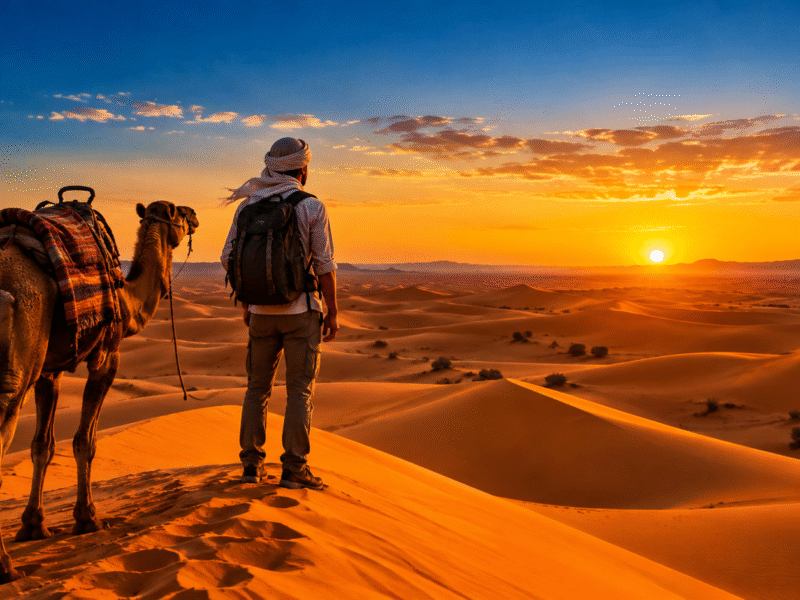
Imagine standing at the crest of a 150-metre sand dune as the sun melts into the horizon, painting the Sahara in shades of amber and violet. The only sounds are the soft padding of camel hooves behind you and the murmur of your Berber guide reciting a desert proverb. This isn’t a movie scene—it’s a Tuesday evening on a Sahara Desert tour in Morocco, and it’s an experience that rewrites your understanding of silence, scale, and wonder. But with hundreds of operators, wildly different price points, and routes that range from half-day escapes to week-long expeditions, choosing the right tour can feel as vast as the desert itself. This comprehensive guide cuts through the noise, giving you everything you need to plan an unforgettable Morocco desert trip in 2026.
✦ Key Takeaways
Morocco offers the most accessible and diverse Sahara experiences, from Erg Chebbi’s iconic dunes to Erg Chigaga’s remote wilderness.
A 3-day tour is the minimum recommended for the classic Merzouga experience from Marrakech or Fes; shorter trips only reach the rockier Zagora desert.
The best tours balance driving time with quality stops, feature experienced guides, and offer fully transparent pricing with no hidden fees.
Desert accommodation ranges from basic Berber tents to luxury glamping with en-suite bathrooms—your choice significantly impacts comfort and cost.
Pack layers for extreme temperature swings, bring cash in Moroccan Dirhams, and carry a portable power bank—non-negotiables for the Sahara.
Why Choose Morocco for Your Sahara Adventure?
While the Sahara stretches across eleven countries and covers an area roughly the size of the United States, Morocco offers a unique combination of accessibility, safety, and cultural richness that no other gateway can match. Thanks to excellent road infrastructure, you can travel from the bustling souks of Marrakech to a tranquil desert camp at the foot of towering dunes in a single day’s drive—no bush planes, no border crossings, no logistical headaches.
The country’s political stability provides a secure environment for all types of travellers, a critical factor when venturing into remote territory. Morocco consistently ranks among the safest destinations in Africa, and the well-established tourism infrastructure along desert routes means help is never far away. Furthermore, the experience is deeply interwoven with the ancient culture of the Amazigh (Berber) people, whose intimate knowledge of the desert and profound hospitality traditions transform a simple tour into a meaningful cultural exchange.
💡 Why Morocco over other Sahara countries? — Morocco’s desert tourism infrastructure is decades ahead of neighbours like Algeria or Mauritania. You get paved roads to within kilometres of the dunes, camps ranging from rustic to five-star, and multilingual guides—all without the visa complications or security concerns of other Saharan nations.
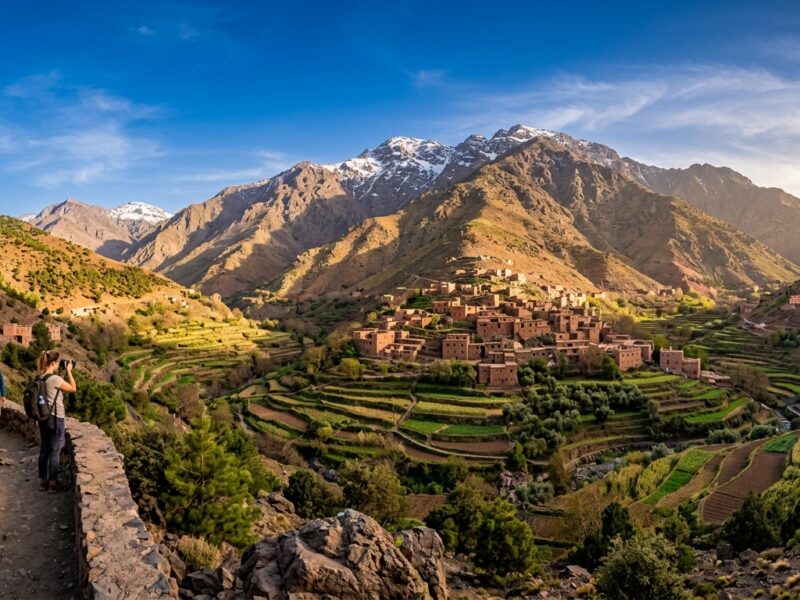
The sheer diversity of landscapes is another draw. In a single Morocco desert trip, you’ll cross the snow-capped High Atlas Mountains, wind through ancient river gorges, pass palm-fringed oases, and arrive at seas of golden sand that stretch to the horizon. It’s a cinematic road trip that packs a continent’s worth of scenery into a few hundred kilometres.
Powered by GetYourGuide
Decoding the Types of Sahara Desert Tours
Choosing the right format is the first and most important step in planning your perfect trip. Your decision will depend on your budget, available time, and travel style. Here’s how to decode your options.
By Duration: How Much Time Do You Need?
2-Day Tours typically run to the Zagora region and are designed for travellers extremely short on time. Be prepared for long drives—around seven to eight hours each way. You’ll experience a rockier desert landscape known as hamada, with smaller dunes. These tours offer a taste of the desert, but they’re fast-paced and leave little time for soaking in the atmosphere.
3-Day Tours are the most popular option and the minimum recommended for reaching the iconic Erg Chebbi dunes near Merzouga. This format breaks up the long journey with an overnight stay in a scenic location like the Dades Valley or Todra Gorge, transforming the drive itself into part of the adventure. You’ll have time for a proper sunset camel trek, a night under the stars, and a desert sunrise before heading back.
4+ Day Tours allow for a significantly more relaxed pace. You can spend an extra full day in the desert—exploring by 4×4, sandboarding, or simply sitting in silence on the dunes. Many travellers use the extra days to create a one-way trip from Marrakech to Fes (or vice versa), combining the desert with a visit to Morocco’s spiritual and cultural capital.
If you’re choosing between a 2-day and a 3-day tour, always choose the 3-day. The difference in experience is enormous—Erg Chebbi’s towering dunes are the real Sahara, while Zagora’s landscape, while beautiful, is more of a rocky steppe. That extra day is the difference between “nice” and “life-changing.”
By Style: Group, Private, Luxury, or Budget?
Group Tours are the most budget-friendly choice. You’ll travel in a minibus with up to 17 other people, and it’s a great way to meet fellow travellers. The trade-off is less flexibility—photo stops and break times are fixed, and you’ll follow a set itinerary with no room for detours.
Private Tours offer maximum flexibility and comfort. Travelling in a private 4×4 with a dedicated driver-guide, you control the pace entirely. Want to spend an extra 30 minutes photographing a ruined kasbah? No problem. This format is ideal for families, photographers, or anyone wanting a deeply personalised experience.
Budget vs. Luxury Camps represent the biggest variable in your desert experience. Standard camps are social and authentic, with communal dining areas and shared bathroom facilities—think flush toilets and sometimes lukewarm showers. Luxury “glamping” camps are an entirely different world: private tents with en-suite bathrooms, hot showers, king-sized beds draped in Berber textiles, and restaurant-quality dining under chandeliers of stars. The price difference can be substantial, but so is the comfort level.
Powered by GetYourGuide
Finding the Best Sahara Tours: What to Look For
Not all Morocco desert trips are created equal. The difference between a mediocre tour and a magnificent one often comes down to details that aren’t immediately obvious from a booking page. Here’s what separates the best operators from the rest.
Detailed and Balanced Itineraries: The best operators provide a clear day-by-day plan with realistic driving times. Beware of itineraries that seem rushed—if a tour promises eight stops in a single day with seven hours of driving, you’ll spend most of your time in a vehicle rather than experiencing Morocco. Quality tours balance road time with meaningful stops where you actually get out, explore, and breathe.
Experienced and Licensed Guides: A great guide is simultaneously a storyteller, historian, and logistics expert. They should be multilingual, deeply knowledgeable about local culture and customs, and trained in desert safety protocols. The best guides are Amazigh locals who grew up in the desert region—their connection to the landscape adds an authenticity that no training course can replicate.
💡 Red flag to watch for: — If a tour operator can’t tell you the specific name and location of the desert camp you’ll stay at, or if they use phrases like “similar standard camp,” move on. Reputable operators are proud of their camps and will share photos, GPS coordinates, and even guest reviews of the specific accommodation.
Quality Vehicles and Accommodation: Ensure vehicles are modern, comfortable, and equipped with air conditioning—a non-negotiable for desert travel where temperatures can exceed 40°C. Check photos and descriptions of the camp carefully, and cross-reference with independent review sites.
Transparent Pricing: A reputable tour company will clearly state what is included (meals, accommodation, activities) and what is not (lunches, drinks, tips, entrance fees). There should be no hidden fees or surprise charges at the end.
Positive and Recent Reviews: Look for consistently high ratings on trusted platforms. Pay close attention to reviews from the last six to twelve months—quality can change rapidly when staff turnover or management shifts. Read the negative reviews too; a single complaint about weather isn’t concerning, but a pattern of complaints about vehicle breakdowns or misleading descriptions is.
Ethical Practices: The best Sahara desert tours prioritise animal welfare, ensuring camels are well-fed, properly rested between treks, and not overloaded. They also support local communities by employing Amazigh guides, sourcing food from nearby villages, and contributing to local development projects.
Popular Destinations for Morocco Desert Trips
Erg Chebbi (Merzouga) — The Classic Sahara
This is the Morocco of your imagination. The Erg Chebbi dunes are a vast sea of golden-orange sand covering approximately 50 kilometres in length and 5-10 kilometres in width, with some peaks soaring over 150 metres. Located near the small town of Merzouga, this is the most popular destination for Sahara Desert tours from Morocco’s main cities—and for good reason. The sheer scale of the dunes, combined with easy accessibility from a paved road, creates a perfect balance of dramatic landscape and logistical convenience.
Here you’ll find the widest range of desert camps, from simple shared-tent setups costing as little as €30 per night to ultra-luxurious glamping experiences exceeding €500. Activities include camel trekking, sandboarding, 4×4 excursions into the deeper dunes, and visits to nearby Gnawa music villages. The area is also home to seasonal lakes—Dayet Srji—that attract flamingos after rainfall, creating a surreal juxtaposition of pink birds against golden sand.
Powered by GetYourGuide
Erg Chigaga — The Remote Wilderness
For travellers seeking a more isolated and untouched experience, Erg Chigaga is the answer. Located further south near the town of M’hamid El Ghizlane and requiring a two-hour 4×4 journey across open desert from the nearest road, these dunes feel genuinely wild. There are fewer camps, fewer tourists, and a palpable sense of being at the edge of the known world. The camps here tend to be more rustic, catering to adventurers who want an off-the-grid experience rather than creature comforts. It’s a key destination for anyone exploring the hidden gems of Morocco beyond the well-trodden tourist trail.
Erg Chebbi is easier to reach, has more infrastructure, and offers the biggest dune variety. Erg Chigaga is harder to access but far more remote and atmospheric. If it’s your first Sahara trip, Erg Chebbi is the safer bet. If you’ve been before and crave solitude, Erg Chigaga delivers.
Agafay Desert — The Quick Desert Fix
Located just 40 minutes from Marrakech, the Agafay is a rocky, moon-like desert plateau rather than a sand dune landscape. While it lacks the iconic rolling sands of the true Sahara, it offers a fantastic desert-adjacent experience for travellers with only one day or evening to spare. You can enjoy a camel ride, quad biking, and a magical dinner under the stars before returning to your hotel the same night. It’s also become a popular destination for luxury glamping, with several high-end camps offering infinity pools overlooking the Atlas Mountains.
What to Expect: A Typical 3-Day Sahara Tour Itinerary
To help you visualise the journey, here’s a breakdown of the most popular 3-day desert tour from Marrakech to Merzouga. This route is the gold standard for Sahara experiences and the one most travellers choose.
Cross the mountains, visit a UNESCO World Heritage kasbah
The journey begins early morning with a spectacular drive over the Tizi n’Tichka pass (2,260m) in the High Atlas Mountains. The road climbs through terraced Berber villages, past roadside mineral sellers, and into landscapes that shift from green valleys to barren, rust-coloured peaks. Your guide will make several stops for photographs and leg stretches at scenic viewpoints.
The highlight of Day 1 is a visit to Ait Benhaddou, a fortified ksar (fortified village) that is a UNESCO World Heritage Site and has served as a filming location for Gladiator, Game of Thrones, and Lawrence of Arabia. You’ll have roughly an hour to explore the labyrinthine mud-brick streets and climb to the hilltop granary for panoramic views. The day ends with a drive through the dramatic Dades Valley, where you’ll check into a small hotel or kasbah-style guesthouse tucked into the gorge walls.
Enter the Sahara, ride camels into Erg Chebbi at sunset
After breakfast, you’ll head to the massive Todra Gorge—a 300-metre-deep canyon carved by the Todra River, with sheer limestone walls narrowing to just 10 metres apart at their tightest point. You’ll have time for a short walk along the riverbed, and adventurous travellers can spot rock climbers scaling the vertical walls above.
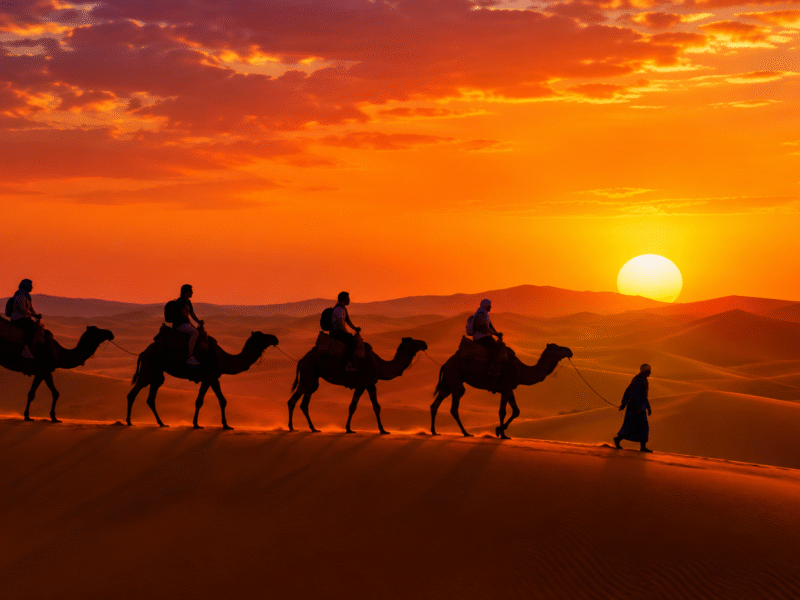
The landscape then flattens dramatically as you approach the Sahara. The transition is extraordinary—one moment you’re in rocky scrubland, the next the horizon glows with the unmistakable amber of Erg Chebbi. In the late afternoon, you’ll arrive at the edge of the dunes, swap your air-conditioned vehicle for a dromedary camel, and begin a 60-to-90-minute trek into the heart of the sand sea. The timing is deliberate: you’ll reach camp just as the sun sets, painting the dunes in impossible shades of gold, pink, and violet. After a traditional Berber dinner of tagine and couscous, your hosts will play Gnawa drums around a campfire beneath a sky dense with stars.
Desert sunrise, then the long scenic drive home
An early wake-up call—usually around 5:30 AM—is rewarded with a magnificent desert sunrise. Watching the first light creep across the undulating dunes, illuminating ripple patterns in the sand and casting long violet shadows, is one of those moments that stays with you permanently. After breakfast at camp, you’ll ride camels (or take a 4×4) back to Merzouga and begin the long drive back to Marrakech.
The return route often follows the Draa Valley, famous for its vast palm groves stretching along Morocco’s longest river. You’ll pass through small Amazigh towns, fortified kasbahs, and oases before crossing the Atlas Mountains once again via the Tizi n’Tichka pass. Arrival in Marrakech is typically in the evening, between 8 and 9 PM.
Powered by GetYourGuide
Sahara Camel Tours: An Iconic Experience
No trip to the Sahara is complete without a camel trek. These gentle giants—single-humped dromedaries, technically, not the two-humped Bactrian camels—have been central to nomadic desert life for centuries. They’re perfectly adapted to the Sahara: their wide, padded feet spread across soft sand, their thick eyelashes shield against sandstorms, and they can go days without water.
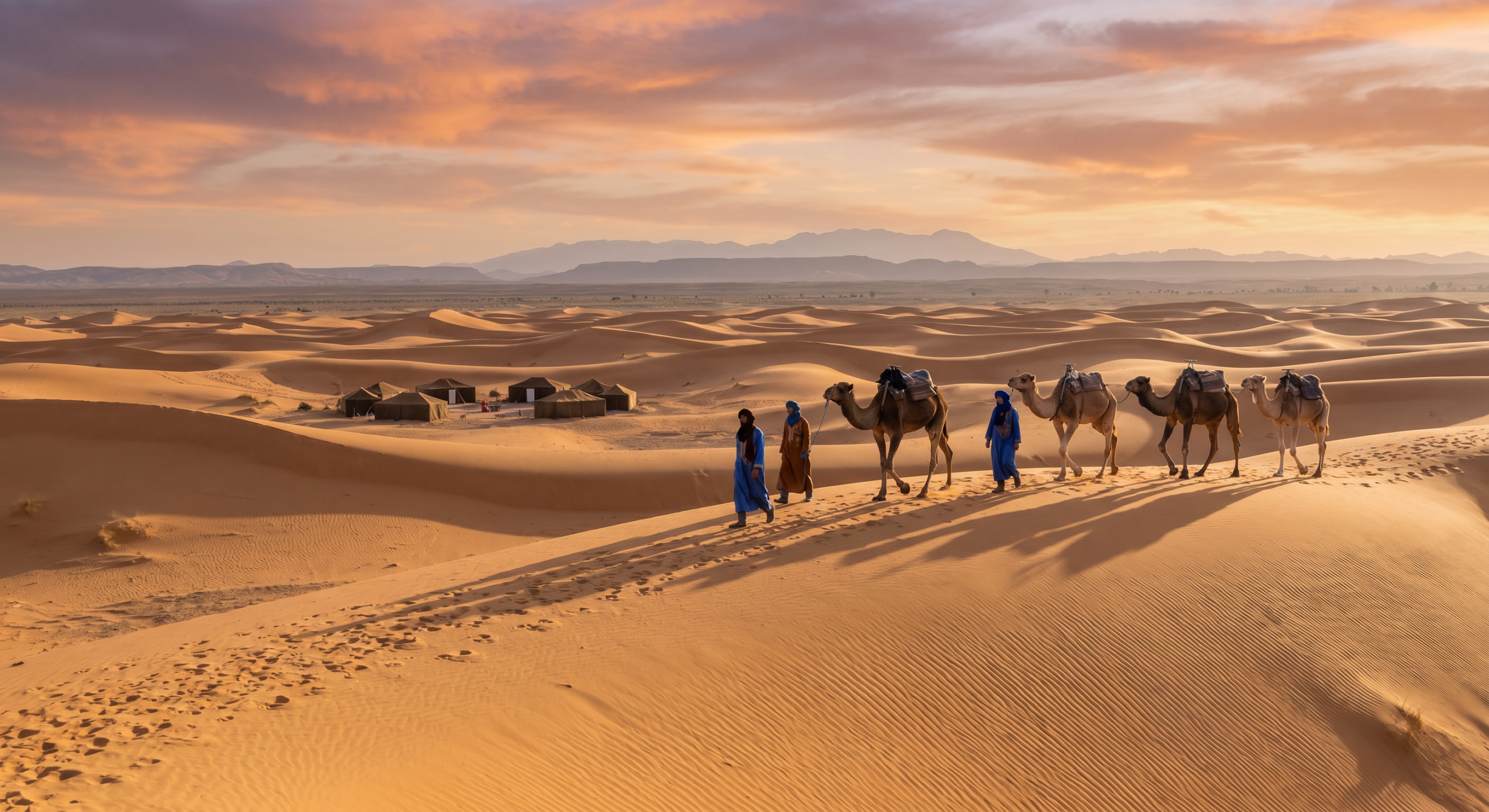
A typical Sahara camel tour involves a 60-to-90-minute ride into the dunes to reach your overnight camp, timed to coincide with the setting sun. Your Amazigh guide will lead a small caravan in single file along dune ridges, stopping at the most photogenic points. The experience is meditative rather than thrilling—the slow, rhythmic sway of the camel, the vast silence, the ever-changing play of light on sand. It’s the kind of experience that demands you put your phone away and simply be present.
For those who are unable or prefer not to ride, all reputable camps offer 4×4 transfers as an alternative—there’s no pressure to mount a camel if it’s not for you. If you’re travelling as a family with children, shorter camel ride options are usually available, and younger children can ride with a parent. For a deeper look at what to expect, see our detailed camel riding in the Sahara guide.
Powered by GetYourGuide
What’s Included in Morocco Desert Trips (And What’s Not)
To budget effectively and avoid unpleasant surprises, it’s crucial to understand exactly what your tour price covers. Most standard Morocco desert trip packages include the following:
- Round-trip transportation in an air-conditioned vehicle with a professional driver-guide
- Accommodation: one night in a hotel or kasbah (Day 1) and one night in a desert camp (Day 2)
- Daily breakfast and dinner (two breakfasts and two dinners on a 3-day tour)
- The sunset camel trek into the dunes and morning camel ride back
- Cultural experiences like evening drumming sessions and campfire gatherings
What is usually NOT included:
- Lunches and drinks — budget approximately 100-120 MAD per lunch at roadside restaurants
- Entrance fees to sites like Ait Benhaddou (usually around 10-20 MAD)
- Tips for your driver, guides, and camp staff (10-15% of the tour cost is customary if service is good)
- Optional activities like quad biking, sandboarding, or 4×4 dune excursions
- Travel insurance — always arrange this independently before your trip
📌 Budget estimate: For a 3-day tour, bring 600-800 MAD (approximately €55-75) in cash per person to comfortably cover lunches, drinks, snacks, and tips. ATMs are unavailable once you leave the larger towns, so withdraw cash before departure. Our Morocco on a Budget Guide has detailed spending breakdowns.
How to Book Your Sahara Desert Tour in 2026
It’s highly recommended to book your tour in advance, especially during the peak season from October to April when demand is highest and the best camps sell out weeks ahead. Here are your main booking options:
Online Marketplaces: Platforms like GetYourGuide offer a wide variety of tours, from budget-friendly shared options like this 3-day all-inclusive Marrakech-to-Merzouga tour to private luxury excursions. The main benefits are verified reviews from real travellers, secure online payment with consumer protection, and free cancellation policies on most tours. This is the recommended approach for first-time visitors.
Directly with Local Operators: Booking directly can sometimes offer more customisation and occasionally slightly lower prices since you’re cutting out the middleman. However, it requires significantly more research to verify an operator’s reputation, and payment often involves international bank transfers or cash-on-arrival, which provides less consumer protection if something goes wrong.
Through Your Riad or Hotel: Many accommodations in Marrakech and Fes can arrange desert tours on your behalf, which is certainly convenient. However, they typically add a commission of 15-25%, and you have less control over which specific operator and camp you’ll end up with.
No matter how you book, always get a written confirmation (email or WhatsApp message) that details: the full day-by-day itinerary, the specific camp name, all inclusions and exclusions, pickup time and location, emergency contact numbers, and cancellation terms. If an operator can’t provide this, look elsewhere.
Essential Travel Tips for Your Sahara Adventure
What to Pack for the Desert
Clothing: The desert’s temperature swings are dramatic—expect 35-45°C during the day and as low as 5°C at night in winter months. Pack lightweight, breathable layers for daytime and a warm jacket, fleece, hat, and gloves for evenings. Long trousers are recommended for camel riding to avoid chafing. A scarf or chèche (Saharan headscarf) is invaluable for sun and sand protection—your guide will likely help you wrap one. For broader packing advice on what to wear in Morocco, see our clothing guide.
Sun Protection: A wide-brimmed hat, UV-protective sunglasses, and SPF 50+ sunscreen are non-negotiable. The desert sun reflects off sand, intensifying UV exposure from below as well as above. Apply sunscreen to the underside of your chin and behind your ears—spots most people miss.
Footwear: Closed-toe shoes like trainers or light hiking boots are essential for walking on sand and in rocky gorges. Leave sandals for the camp—sand gets scorching hot during the day and surprisingly cold at night.
Electronics: A portable power bank (minimum 10,000 mAh) is essential since electricity in desert camps ranges from limited solar power to none at all. A dust-proof bag or sleeve for your camera and phone will protect against the fine Saharan sand that works its way into everything.
Connectivity: Cell service is patchy to non-existent in the deep desert. Download offline maps (Google Maps or Maps.me) before departing, and consider an eSIM from a provider like Airalo for connectivity during the driving portions of your journey. You’ll likely have no signal at camp itself—embrace it.
Health & Comfort: A small first-aid kit, motion sickness medication (mountain roads are winding), SPF lip balm, wet wipes, and toilet paper (roadside rest stops can be basic) will all prove their worth.
Money: Bring enough Moroccan Dirhams in cash for lunches, drinks, tips, and small souvenirs. The last reliable ATMs are in towns like Ouarzazate, Errachidia, or Rissani—once you pass them, it’s cash only. For detailed budgeting strategies, consult our Morocco travel cost guide.
Best Time to Visit the Sahara
The peak season runs from October to April, when daytime temperatures are pleasant (20-30°C) and nights are cool but manageable. This is when the vast majority of tours operate and when you’ll find the best selection of camps open. Within this window, October-November and March-April offer the ideal balance of comfortable temperatures and fewer crowds.
Summer months (June to August) bring extreme heat—daytime temperatures regularly exceed 45°C—and most luxury camps close entirely. Some budget tours still operate with adjusted schedules (departing very early and resting during midday), but the experience is significantly less comfortable.
Getting There: Transport Options
Most Sahara desert tours from Morocco depart from either Marrakech or Fes, with Marrakech being the more popular starting point. If you’re arriving by air, pre-booking an airport transfer in Marrakech ensures a smooth start. For travellers who prefer to explore independently, our guide to renting a car in Morocco covers everything you need to know about self-driving to the desert—though be aware that the final stretch to some camps requires 4×4 capability and desert driving experience.
Reserve Your Spot
Book Your Sahara Desert Experience
Choose from the best-rated desert tours in Morocco — from 3-day Marrakech-to-Merzouga adventures to overnight camel treks in Erg Chebbi. Instant confirmation, free cancellation on most tours.
Frequently Asked Questions
Everything you need to know before you go
✦ Your Morocco Journey Starts Here
The Desert Is Calling — Answer It
A journey into the Moroccan Sahara is an investment in memories that last a lifetime. The silence of the dunes, the warmth of Berber campfire hospitality, the blazing canopy of desert stars—these aren’t things you watch on a screen. They’re things you feel. Compare the best Sahara tours, check 2026 availability, and take the first step toward your most extraordinary adventure.