Unique Villages Morocco: Discover the Most Authentic Rural Gems
Discover the most unique villages Morocco has to offer. Our guide explores the best rural and authentic Moroccan villages for an unforgettable cultural journey far from the crowded medinas.
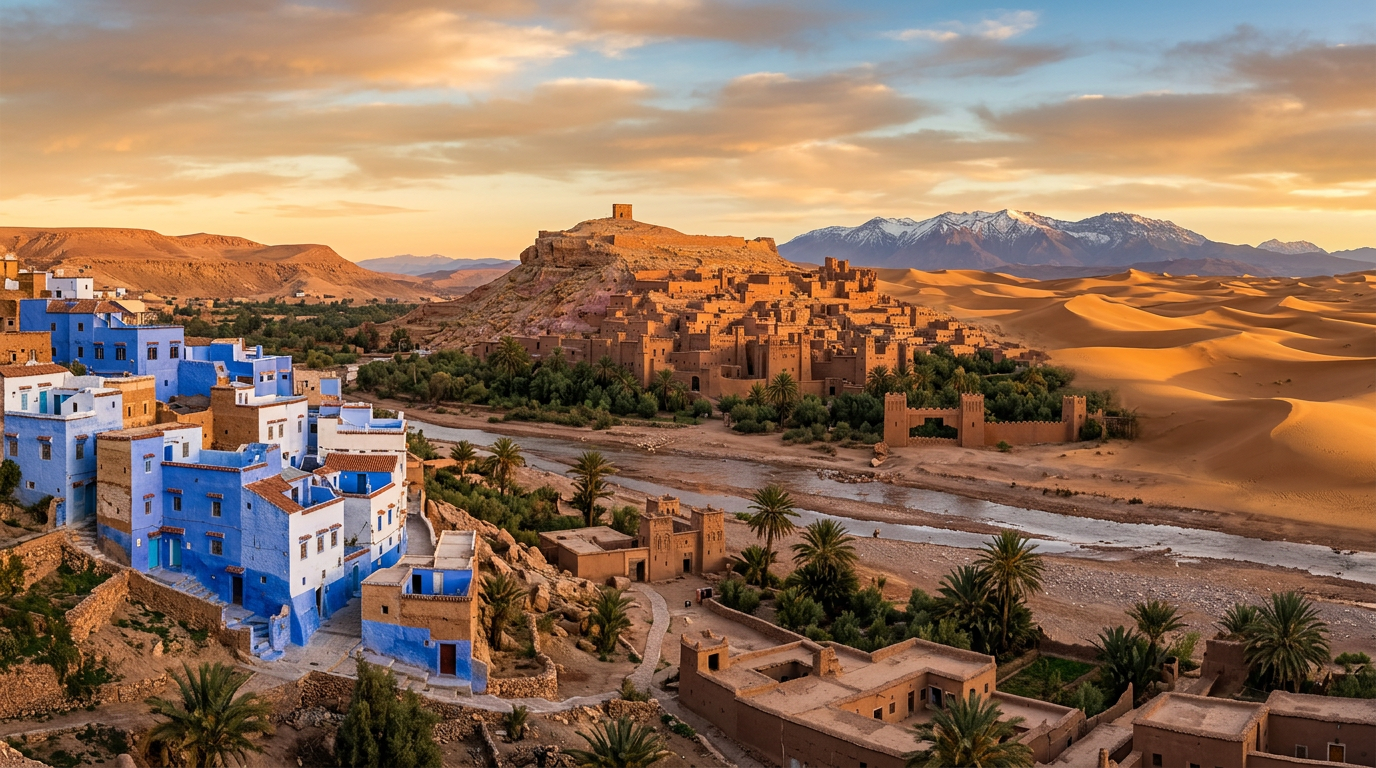
What if the most extraordinary part of Morocco isn’t found in the neon-lit squares of Marrakech or the grand boulevards of Casablanca — but in a sun-baked village where time moves to the rhythm of a donkey’s hooves and the call to prayer echoes across a valley of almond blossoms? Morocco’s unique villages are where the country’s soul lives, untouched by mass tourism, preserved by centuries of tradition, and breathtakingly beautiful in ways no city can replicate. In this guide, you’ll discover the best villages Morocco has to offer — from the iconic blue-painted streets of Chefchaouen to the ancient earthen fortress of Aït Benhaddou — and learn exactly how to experience these authentic Moroccan villages responsibly and memorably.
✦ Key Takeaways
Morocco’s true cultural essence is found in its unique rural villages, offering authentic immersion away from bustling cities.
Must-visit destinations include the blue pearl of Chefchaouen, the UNESCO-listed Aït Benhaddou, trekking hub Imlil, and desert gateway Merzouga.
Visiting authentic Moroccan villages allows for deep connections through homestays, local markets, and traditional crafts.
Responsible travel — respecting customs, supporting local economies, and minimizing environmental impact — is crucial for preservation.
Practical planning for transport, accommodation, and cultural etiquette is key to making the most of your village journey.
Why Visit Unique Villages in Morocco?
Visiting the unique villages Morocco is renowned for is the single best way to experience the country’s true spirit. While the cities dazzle with their energy, the rural villages offer something far more profound — an unfiltered window into a way of life that has endured for centuries. Here’s why these destinations should be at the top of your Morocco itinerary.
Cultural Immersion: Rural villages let you step into a world where centuries-old customs are still alive. You’ll see traditional Moroccan dress, hear Amazigh (Berber) languages spoken in daily conversation, and witness daily routines — from bread baking in communal ovens to harvesting saffron — that haven’t changed for generations. Unlike the rehearsed performances sometimes found in tourist zones, the culture here is lived, not staged.
💡 Authentic Moroccan villages offer a genuine window into real Moroccan life — mud-brick houses clinging to mountainsides, bustling weekly souks where farmers trade livestock, and the warm, unreserved Moroccan hospitality that defines rural communities.
Natural Beauty: Many of Morocco’s most unique villages are set in utterly stunning locations — carved into mountain passes, perched above desert oases, or nestled in valleys painted green with terraced farms. The landscapes themselves are as memorable as the culture, whether you’re watching sunrise paint the Erg Chebbi dunes golden or clouds drift through the High Atlas peaks above Imlil.
Tradition and Craftsmanship: In rural villages, you can watch artisans weaving Berber carpets on wooden looms passed down through families, shaping pottery using techniques unchanged since the Merinid dynasty, or hammering intricate silver jewelry. Local festivals and traditional Gnawa and Amazigh music bring communities together in celebrations that visitors are often warmly invited to join.
- Benefits for All: Research consistently shows that rural tourism creates a positive feedback loop — travelers gain unique, perspective-shifting experiences, while communities receive direct economic support that helps preserve their heritage and livelihoods.
- Slow Pace and Personal Connection: Life moves at a gentler rhythm in authentic Moroccan villages. You’ll have time to share mint tea with a family, join in daily activities, and simply breathe in the peaceful atmosphere — a stark, welcome contrast to the sensory overload of Morocco’s cities.
- Environmental and Cultural Authenticity: These villages are often more inherently sustainable, with traditional rain-fed farming, locally sourced food, and eco-friendly building practices using rammed earth and local stone.
If you want to see the real Morocco — not the postcard, but the living, breathing country — start with its unique villages. These rural communities provide a profound contrast to the tourist-heavy cities and offer a more genuine connection to Morocco’s ancient heritage.
What Makes a Village Unique in Morocco?
Not every village earns a spot on this list. When searching for the best villages Morocco has, specific qualities separate the truly extraordinary from the merely pleasant. Here’s the criteria we used — and the same lens you can apply when planning your own village exploration.
- Distinctive Architecture: Look for kasbahs (fortified family homes), adobe and rammed-earth houses, blue-painted medinas, and ancient ksars (fortified villages). These styles of Moroccan architecture are unique to authentic Moroccan villages and represent building traditions perfected over millennia.
- Rich History and Traditions: The best villages have deep roots — festivals tied to agricultural cycles, crafts handed down through families for generations, oral storytelling traditions, and music that reflects the specific history of that community.
- Geographic Setting: Whether dramatically positioned in the High Atlas Mountains, on the edge of the Sahara Desert, within a lush palm oasis, or along the windswept Atlantic coast, rural villages in Morocco are profoundly shaped by their breathtaking surroundings.
- Community and Authenticity: We prioritize villages where people still live traditional lifestyles, govern themselves through local councils, and welcome visitors with genuine — not transactional — hospitality.
- Accessibility and Safety: The selected villages are reachable, safe, and open to visitors seeking authentic experiences without requiring extreme logistics.
- Sustainability: A focus on villages that actively protect their environment and culture, ensuring these treasures endure for future generations.
The most rewarding village experiences happen when you slow down. Rather than ticking off five villages in two days, spend two or three nights in one village. You’ll move from “tourist” to “guest” in the eyes of the community — and the difference is transformative.
These criteria ensure you’ll discover only the most hidden gems Morocco has — the kind of places that don’t appear on every travel blog but linger in your memory for years.
Top Unique Villages Morocco Has to Offer
Here are the top unique villages Morocco has that you should not miss. Each one offers something irreplaceable — whether it’s architecture that seems to grow from the earth itself, a culture that has resisted homogenisation, or natural beauty that stops you mid-sentence. These are the best villages in Morocco for an authentic adventure.
Chefchaouen — The Blue Pearl of the Rif
Chefchaouen — the blue city Morocco is famous for — needs little introduction, yet it never fails to astonish in person. Located in the Rif Mountains of northern Morocco, this village’s medina is drenched in every conceivable shade of blue, from powder to indigo, creating an atmosphere that feels somewhere between a dream and a painting. The tradition of blue-washing is attributed to Jewish refugees who settled here in the 1930s, though locals offer multiple stories about its origin — each one worth hearing over a glass of mint tea.
- Location: Rif Mountains, northern Morocco. Accessible from Tangier (approximately 3 hours by bus) or Tetouan (1.5 hours).
- Unique Features: The blue-painted medina streets, the peaceful Ras el-Maa waterfall at the edge of town, the Spanish Mosque hike for panoramic views, and the blend of Berber and Andalusian cultural influences.
- Authenticity: Despite its Instagram fame, Chefchaouen retains a genuine village character. Local crafts — woven blankets, goat cheese, handmade leather goods — are still produced by families who have lived here for generations. It’s one of the best villages Morocco showcases to the world.
- Best Time to Visit: Spring (March–May) and autumn (September–November) for mild weather and fewer crowds.
- What to Do: Wander the medina’s labyrinthine alleys, shop at artisan workshops, take a guided city tour, hike to the Akchour waterfalls nearby, and try the local goat cheese — it’s exceptional.
Aït Benhaddou — UNESCO World Heritage Kasbah
Rising from the banks of the Ounila River like a sandcastle sculpted by centuries rather than tides, Aït Benhaddou is Morocco’s most dramatic fortified village — a UNESCO World Heritage Site and a living monument to Moroccan earthen architecture. This ksar (fortified village) was a crucial stop on the ancient trans-Saharan trade route linking the Sahara to Marrakech, and its massive defensive walls, corner towers, and decorated granaries tell the story of that commercial heritage.
- Location: Ounila Valley, near Ouarzazate, along the road between Marrakech and the Sahara.
- Unique Features: The entire ksar is constructed from rammed earth, mud brick, and straw — materials that glow amber and rose at sunset. It’s been the filming location for “Gladiator,” “Game of Thrones,” and “Lawrence of Arabia.” A handful of families still live inside the ancient walls, maintaining the structures as they have for generations.
- Authenticity: Traditional ksar life is preserved here, making it one of the most authentic Moroccan villages. Walk through the kasbah, climb to the granary at the summit for panoramic views of the valley, and speak with residents who can trace their lineage in this place back centuries.
- Getting There: Day trips from Marrakech are readily available (approximately 4 hours each way), or you can stop here en route to the Sahara Desert.
- Best Seasons: Spring and autumn to avoid the extreme heat of summer in this semi-arid region.
💡 Arrive before 9 AM or after 4 PM — the light is magical, the tour buses haven’t arrived (or have left), and you’ll have the ancient streets largely to yourself. The sunset view from the top of the ksar is one of Morocco’s most unforgettable moments.
Imlil — Gateway to the High Atlas
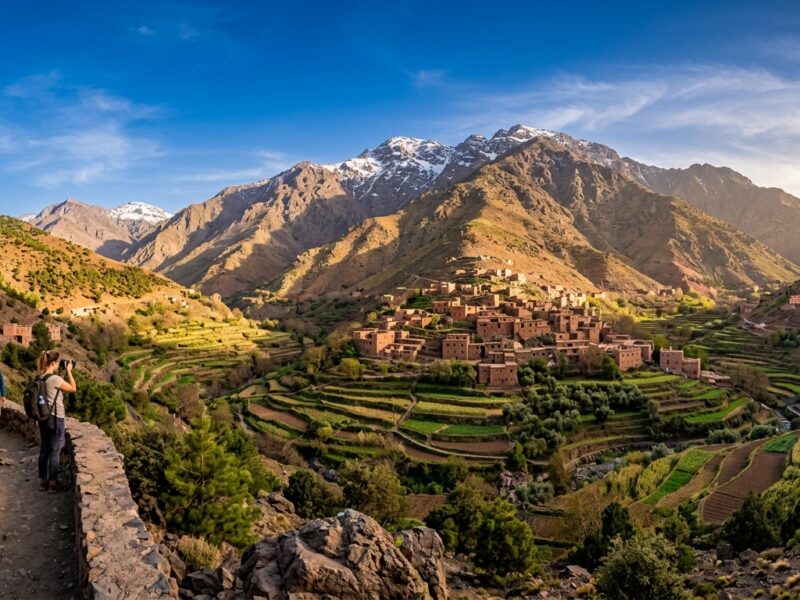
Tucked into a steep valley at 1,740 metres elevation, Imlil is the kind of village that makes you reconsider everything you thought you knew about Morocco. There are no sandy deserts here — only terraced walnut orchards, rushing mountain streams, and the massive presence of Mount Toubkal, North Africa’s highest peak (4,167 m), looming above. This is Morocco’s premier trekking base and one of the most rewarding Berber villages to visit.
- Location: High Atlas Mountains, approximately 90 minutes south of Marrakech.
- Unique Features: A living, bustling Amazigh (Berber) village surrounded by terraced farmland and dramatic mountain scenery. The weekly market draws villagers from surrounding hamlets, creating an authentic spectacle of rural commerce.
- Authenticity: Imlil’s economy is directly tied to its community — local guides lead treks, families run guesthouses (gîtes), and mule handlers transport supplies. Hiring locally ensures your visit directly supports these rural villages Morocco depends on. Book an Atlas Mountains trek for the full experience.
- What to Do: Base yourself here for a trek to Toubkal Summit, explore surrounding villages on day hikes, take a cooking class in a Berber village, or simply sit on a rooftop terrace watching clouds gather around the peaks.
- Accommodation: Stay in a local gîte (guesthouse) for an authentic Moroccan village experience — many offer home-cooked tagine dinners with ingredients grown in the family garden.
Even if you’re not attempting Toubkal, the day hike from Imlil to the village of Armed (45 minutes) and the shrine of Sidi Chamharouch (2.5 hours) is spectacular and manageable for most fitness levels. The trail passes through some of the most stunning scenery in the Atlas Mountains.
Merzouga — Edge of the Sahara
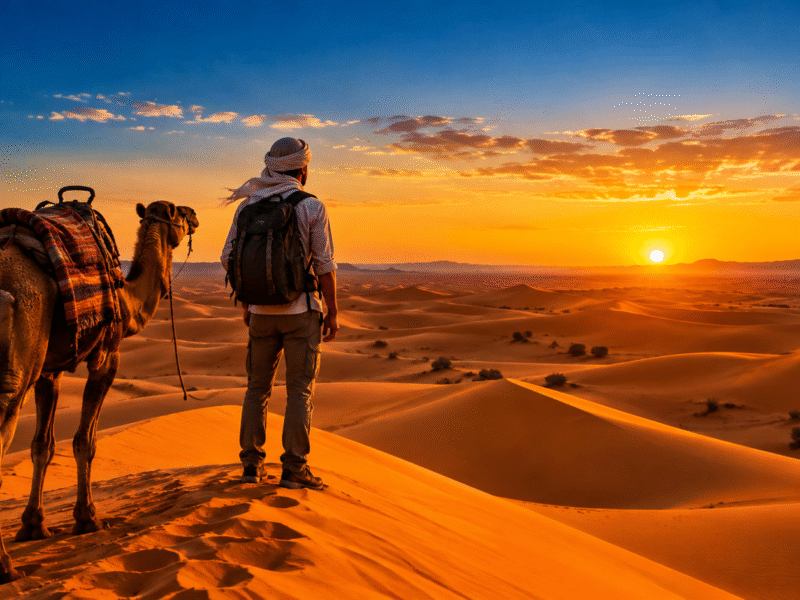
If Morocco’s mountain and coastal villages represent one end of the country’s extraordinary diversity, Merzouga represents the other — the threshold where settled life meets the vast, rolling silence of the Sahara Desert. This small village sits at the base of the Erg Chebbi dunes, a sea of golden-orange sand that rises up to 150 metres and stretches to the Algerian border. The experience of watching these dunes shift colour from dawn to dusk — from pink to amber to deep purple — is among Morocco’s most transcendent moments.
- Location: On the edge of the Erg Chebbi dunes, southeastern Morocco. Reachable by road from Marrakech (approximately 9–10 hours) or Fez (approximately 8 hours), or via a multi-day Sahara Desert tour.
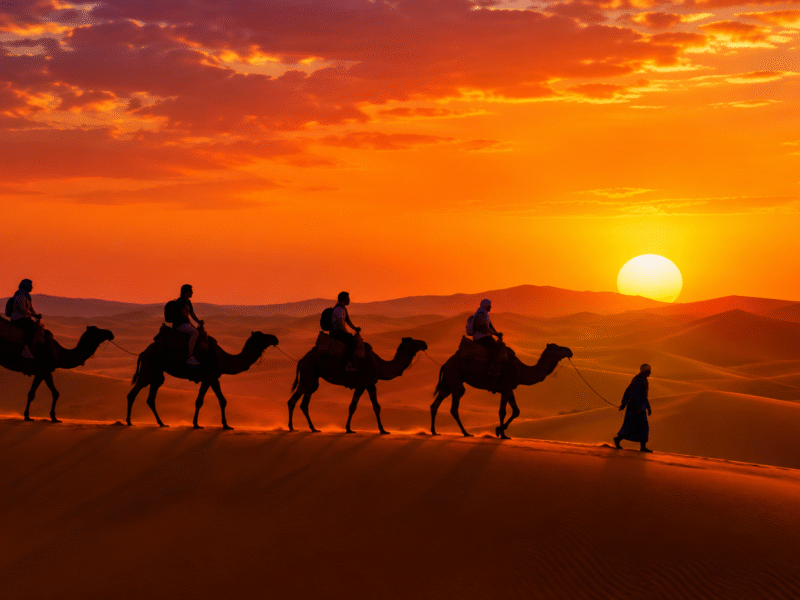
- Unique Features: Towering sand dunes at your doorstep, camel treks at sunrise and sunset, Gnawa music performances around desert campfires, and some of the clearest stargazing skies in all of North Africa.
- Authenticity: Experience the semi-nomadic Berber lifestyle, listen to traditional Gnawa music under a canopy of stars, and sleep in a desert camp — from simple bivouacs to luxury desert glamping.
- What to Do: Take an overnight camel trek deep into the dunes, try sandboarding, visit the nearby Khamlia village for Gnawa music, and don’t miss the unforgettable sunrise over Erg Chebbi — it’s worth every early morning alarm.
Experiencing Rural Villages in Morocco
Life in the rural villages Morocco holds dear is vastly different from the cities — and that’s precisely the point. Understanding what daily life looks like before you arrive transforms a visit from sightseeing into genuine cultural experience. Here’s what to expect.
Daily Life in Moroccan Villages
- Communal Living: Extended families often share compounds, with daily chores — baking bread, tending animals, processing argan nuts — divided among household members. Community bonds run deep, and mutual aid between neighbours isn’t charity; it’s the social fabric itself.
- Agricultural Practices: Many villages rely on subsistence and small-scale farming — growing olives, almonds, dates, saffron, or herding sheep and goats across mountain pastures. In oasis villages, ancient irrigation channels (khettaras) distribute water with remarkable efficiency.
- Daily Routines: Early mornings, visits to the communal well or fountain, market days where entire villages converge, and long afternoons of tea and conversation are the rhythm of these unique villages in Morocco.
Opportunities for Cultural Immersion
- Local Markets: Visit weekly souks to see how villagers buy and sell food, textiles, spices, livestock, and handmade crafts. These markets are social events as much as commercial ones — the real theatre of Moroccan rural life.
- Traditional Crafts: Learn weaving, pottery, or jewelry-making directly from local artisans. Many villages specialise in particular crafts — Tazenakht is famous for carpets, while villages in the Ourika Valley are known for pottery.
- Homestays: Staying with a family is the single most powerful way to experience authentic Moroccan villages firsthand. A traditional riad or guesthouse run by a local family immerses you in the daily rhythm of village life.
- Traditional Food: Enjoy tagine, couscous, and mint tea prepared the traditional way — slow-cooked over charcoal, with ingredients picked from the garden that morning. Consider a cooking class to learn recipes you’ll treasure long after you return home.
- Village Festivals: Join in music, dance, and celebrations unique to each village — from harvest festivals to religious celebrations that welcome respectful visitors with open arms.
📌 Planning note: Weekly souks happen on specific days in each village (e.g., Tuesday in one, Thursday in another). Research the market day for your destination village and time your visit accordingly — a village on its market day is a completely different experience from one the day after.
How to Respect and Support Authentic Moroccan Villages
Responsible tourism is the difference between a visit that enriches both traveler and community, and one that erodes the very authenticity you came to experience. Here’s how to ensure your exploration of authentic Moroccan villages leaves a positive legacy.
Cultural Respect
- Dress Modestly: Cover shoulders and knees, especially in conservative rural areas. Loose-fitting clothing is both culturally appropriate and practical in Morocco’s climate. Our guide to Moroccan etiquette covers all the nuances, and understanding Islam’s role in Moroccan culture provides essential context.
- Ask Before Photos: Always get explicit permission before photographing people or looking into private homes. In many villages, photography of women without consent is considered deeply disrespectful. A smile and a gesture asking “okay?” goes a long way.
- Learn Basic Greetings: A few words in Darija (Moroccan Arabic) or Tamazight (Berber) — even just “Salaam alaikum” (peace be upon you) or “Azul” (hello in Tamazight) — signal respect and open doors that remain closed to the hurried tourist.
Economic Support
- Buy crafts directly from artisans — the money goes straight to the maker, not a middleman in a city souk.
- Eat at family-owned restaurants and village cafés rather than chain establishments.
- Choose homestays, gîtes, or community-run guesthouses over large commercial hotels when visiting rural areas.
- Hire local guides — they know the terrain, the stories, and the shortcuts, and your fee supports their families directly.
Environmental Responsibility
- Reduce waste — bring reusable water bottles and bags. Water refill stations are increasingly available in trekking areas.
- Use eco-friendly products, especially sunscreen and soap, which can contaminate water sources in remote villages.
- Stay on marked trails when hiking to prevent erosion, and never remove stones, plants, or artefacts from village sites.
If you want to give back meaningfully, ask your guesthouse host if the village has a school or community project that accepts donations of supplies (pens, notebooks, educational materials). Direct cash donations to individuals — especially children — can create unhealthy dynamics. Supporting established community initiatives is always more impactful.
Practical Travel Tips for Visiting Unique Villages in Morocco
Planning your trip to unique villages in Morocco is straightforward with the right information. Here’s everything you need to know about getting there, where to stay, and what to expect.
Getting There
- Bus: Morocco’s bus network connects many villages to major cities. CTM and Supratours run comfortable intercity routes, while local buses reach more remote areas. See our Morocco Transportation Guide for detailed route information and schedules.
- Taxi: Shared grands taxis are the backbone of rural transport — affordable and efficient for shorter intercity distances. Private taxis offer flexibility but at a higher cost.
- Rental Car: Renting a car gives you the ultimate flexibility to explore rural villages in Morocco at your own pace — essential for reaching some of the more remote gems. Roads have improved significantly in recent years, though a 4×4 is recommended for some mountain routes.
- Guided Tours: Many reputable companies offer village-focused tours that handle all logistics. An Atlas Mountains & Berber Villages day trip from Marrakech is an excellent introduction if you’re short on time.
🚗 Driving tip: If you’re driving yourself, download offline maps before leaving the city. Mobile signal can be patchy in mountain valleys and desert areas. Also, fill up your fuel tank whenever you see a station — distances between fuel stops can be significant in rural Morocco.
Accommodation
Stay in local guesthouses, hotels, or homestays whenever possible. This directly supports the community and gives you a far more authentic experience than any standardised hotel could offer. In mountain villages like Imlil, family-run gîtes serve home-cooked meals and offer rooftop terraces with jaw-dropping views. In desert villages like Merzouga, eco-lodges and desert camps range from simple and affordable to luxuriously appointed.
Food and Drink
Enjoy traditional Moroccan food in village restaurants — the tagine cooked over a charcoal kanoun in a roadside café often surpasses anything you’ll find in Marrakech’s tourist restaurants. Drink bottled or filtered water as a precaution in remote areas. And never refuse the local mint tea — accepting a glass is one of the most important gestures of connection in Moroccan culture, and the ritual of its preparation is an experience in itself.
Safety and Health
Rural villages in Morocco are generally very safe — crime rates are typically lower than in cities, and communities look out for their guests. That said, use standard travel precautions: inform your accommodation of your hiking plans, carry a basic first-aid kit, protect yourself from the sun, and consult our Morocco safety guide for current region-specific advice. For women traveling in Morocco, rural areas are often more relaxed than cities, though modest dress remains important.
Staying Connected
Mobile coverage can be unreliable in remote mountain and desert villages. Consider picking up a local SIM card or an eSIM from Airalo before heading to rural areas — it ensures you have connectivity when you need it for maps, emergencies, or sharing those incredible sunset photos from a kasbah rooftop.
Reserve Your Spot
Book Your Village Experience
Choose from the best village tours and experiences across Morocco — from Atlas Mountains Berber villages to Sahara Desert camps. Instant confirmation, free cancellation on most tours.
Frequently Asked Questions
Everything you need to know before exploring Morocco’s unique villages
✦ Your Morocco Journey Starts Here
Step Into Morocco’s Most Authentic Villages
The blue alleys of Chefchaouen, the ancient walls of Aït Benhaddou, the mountain air of Imlil, the desert silence of Merzouga — these aren’t just destinations; they’re invitations to experience Morocco the way it was meant to be experienced. Don’t just visit Morocco — become part of its story, even if only for a few unforgettable days.