25 Best Moroccan Dishes: The Ultimate Guide to Must-Try Traditional Food
Discover the 25 best Moroccan dishes in this ultimate guide. From savory tagines to sweet pastilla, explore the must-try traditional food of Moroccan cuisine.
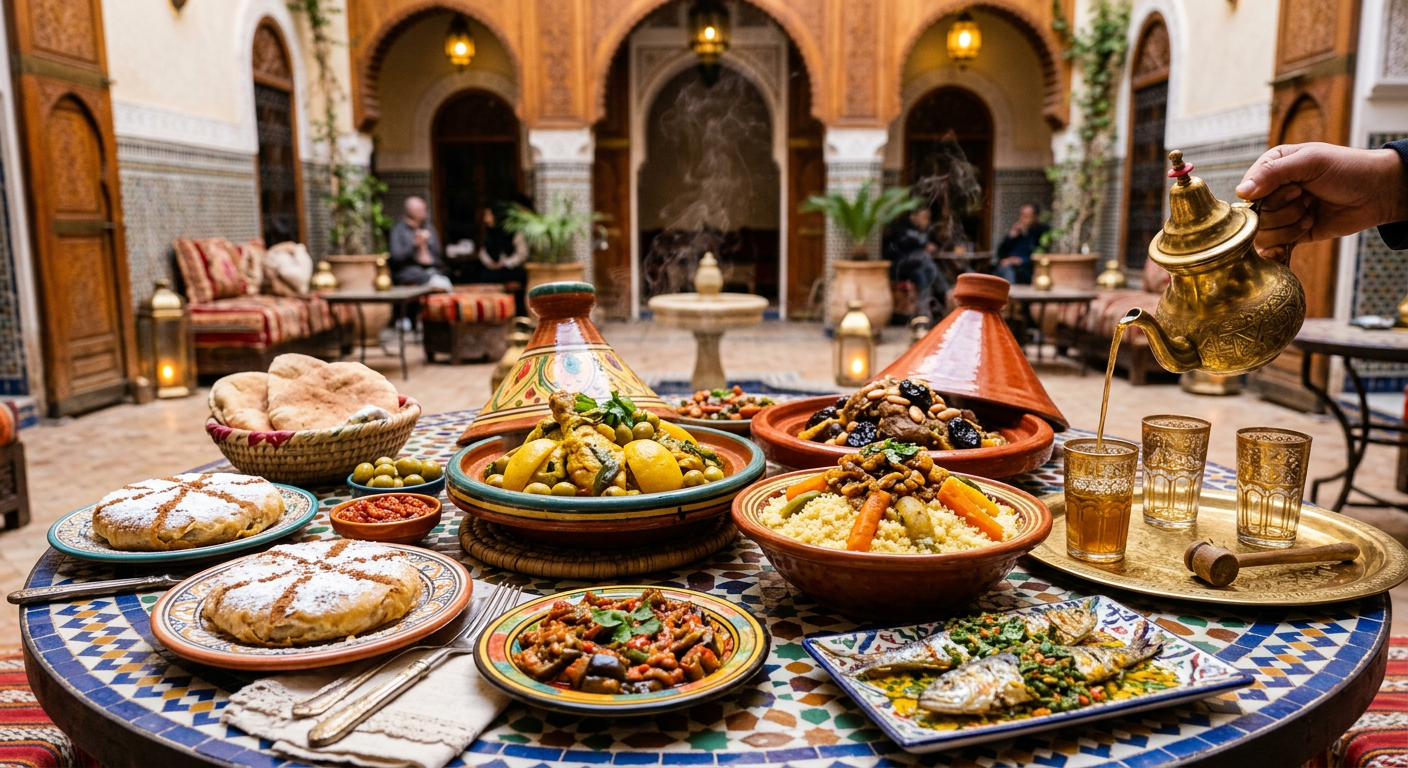
The best Moroccan dishes tell a story of centuries-old traditions, where Amazigh (Berber) roots blend with Arab, Andalusian, and Mediterranean influences to create something truly magical. Moroccan cuisine stands out for its signature spice blends like ras el hanout—a complex mix that typically includes cumin, coriander, ginger, cinnamon, turmeric, paprika, and nutmeg, though every vendor guards their own secret recipe. The cuisine’s soul lies in preserved lemons that add citrus umami, green olives, aged butter called smen, and chermoula—a vibrant herb-garlic marinade. Slow-cooking in clay vessels like tagines and Marrakchi tanjias creates tender, flavor-packed dishes, while the hallmark sweet-savory balance appears in classics like lamb with prunes or chicken with almonds and honey.
This guide delivers a concise shortlist of must-try Moroccan food followed by deep dives explaining what each dish is, why it’s iconic, where to try it, and how to order like a local. We’ve selected these traditional Moroccan dishes based on their cultural significance across regions and holidays (think couscous on Fridays and harira during Ramadan), availability and practicality for travelers navigating both street food stalls and sit-down restaurants, regional musts from coastal seafood to Marrakech tanjia to Fes pastilla, and a good spread of options including vegetarian staples.
✦ Key Takeaways
Moroccan cuisine blends Amazigh, Arab, Andalusian, and Mediterranean influences with signature spice blends like ras el hanout.
Iconic dishes include tagines, couscous, pastilla, and tanjia, featuring preserved lemons, olives, and sweet-savory combinations.
Regional specialties range from Marrakech’s tanjia to coastal seafood with chermoula, making each area a unique culinary destination.
Street food and snacks like sfenj (doughnuts) and briouats (stuffed pastries) offer accessible entry points to Moroccan flavors.
Many vegetarian options are available, including bissara (fava bean purée), zaalouk (eggplant dip), and seven-vegetable couscous.
Quick-Hit Cheat Sheet: Must-Try Moroccan Food at a Glance
Here’s your essential guide to the best Moroccan dishes with helpful icons to identify dietary options and budget levels at a glance:
💡 Icon Key: V = vegetarian-friendly · VV = vegan-friendly · CH = chili-heat · B = budget-friendly · IC = iconic · TD = time of day
The Essential 15:
- Chicken tagine with preserved lemon & olives (IC, B) — savory-citrus classic served everywhere
- Lamb tagine with prunes & almonds (IC) — sweet-savory celebration dish
- Kefta tagine with eggs (B) — spiced meatballs, tomato sauce, baked eggs
- Couscous tfaya (7-veg, caramelized onions & raisins) (V, IC) — Friday lunch ritual
- Pastilla/B’stilla (chicken or pigeon) (IC) — flaky sweet-savory palace pie
- Rfissa (chicken, lentils, fenugreek over trid) (TD) — comforting feast dish
- Tanjia Marrakchia (IC) — Marrakech clay-urn beef/lamb slow-baked in embers
- Mechoui (IC) — fall-apart spit-roasted lamb, cumin-salt dip
- Sardines with chermoula (B) — grilled or stuffed; coastal staple
- Seafood tagine (IC) — mixed catch with tomatoes, peppers, chermoula
- Harira (V, TD) — tomato-lentil-chickpea soup; Ramadan favorite
- Bissara (VV, TD, B) — silky fava bean puree, olive oil, cumin
- Zaalouk (VV, B) — smoky eggplant-tomato dip; warm salad
- Briouats (B) — crisp stuffed pastries (cheese/meat/almond)
- Sfenj (B, TD) — airy yeast doughnut, dusted with sugar
Signature Mains in Moroccan Cuisine
Understanding Tagine: The Heart of Traditional Moroccan Dishes
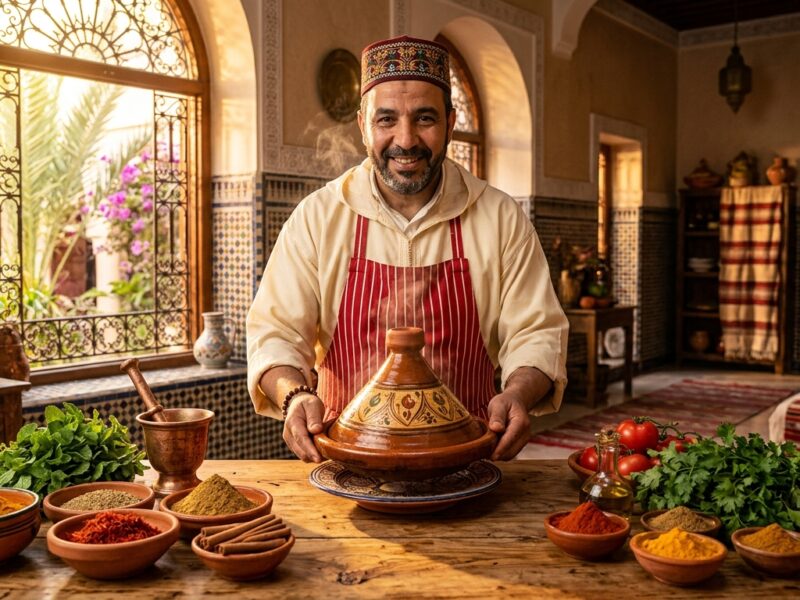
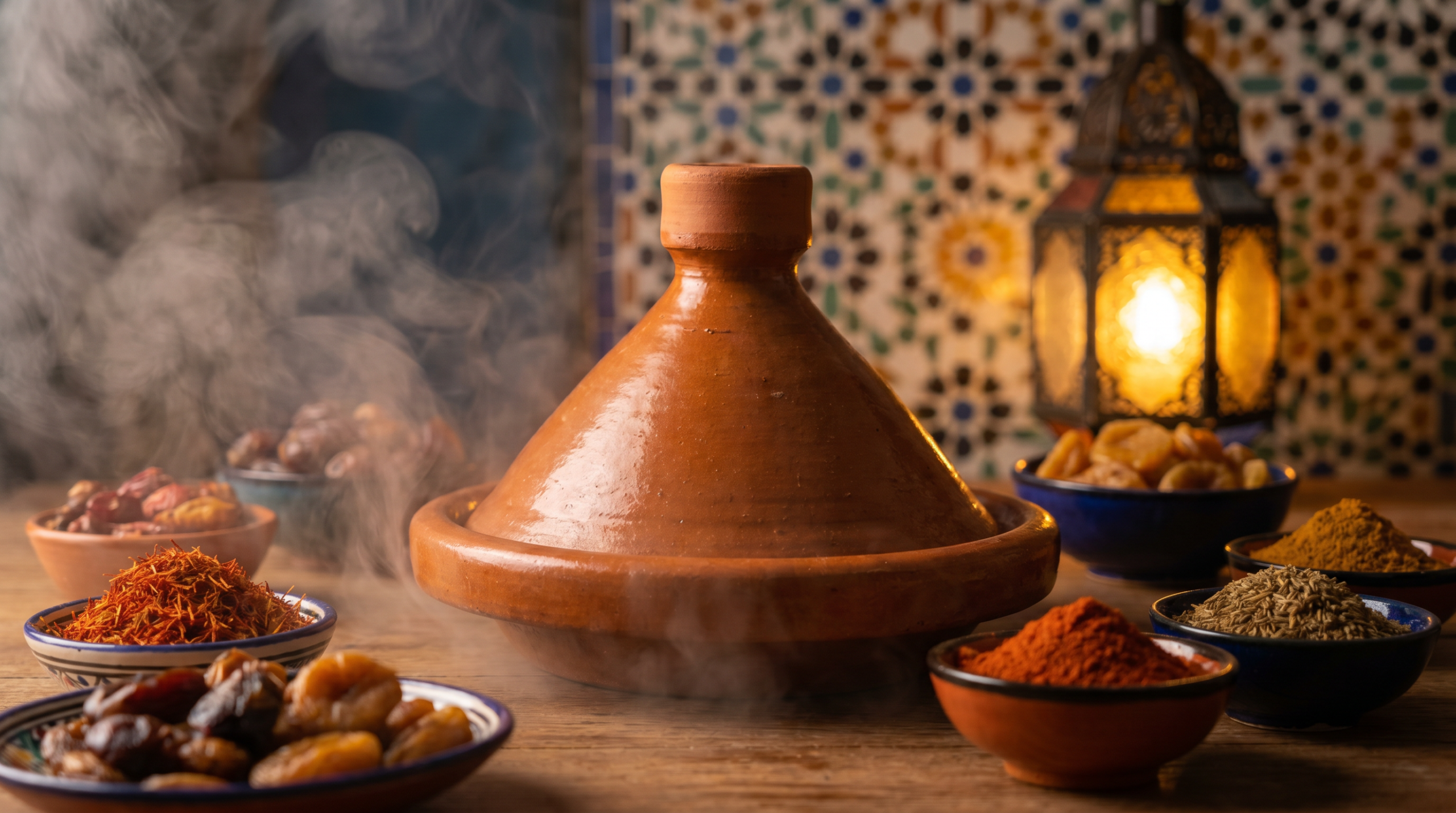
Before diving into specific dishes, let’s clarify what makes a tagine. The word refers to both the conical clay pot and the slow-braised dish cooked inside it. The cone-shaped lid creates a unique cooking environment where steam condenses and drips back down, keeping everything moist while concentrating flavors. This foundational technique of Moroccan cuisine showcases preserved lemons, olives, dried fruits, and the famous ras el hanout spice blend.
The key distinction every traveler should know: tagine means the nationwide braised dish in a conical pot, while tanjia specifically refers to Marrakech’s clay urn slow-roasted in embers with minimal liquid. Ordering one when you mean the other is the fastest way to spot a tourist!
Chicken Tagine with Preserved Lemon & Olives
This dish represents everything wonderful about traditional Moroccan dishes. Chicken pieces braise slowly with onion, garlic, saffron, ginger, and turmeric until tender, then get finished with briny green olives and strips of preserved lemon peel. The combination creates layers of flavor—earthy spices, bright citrus, and salty olives—that make this one of the best Moroccan dishes you’ll find on nearly every menu. This must-try Moroccan food is a staple you cannot miss.
You’ll find reliable versions at local “tanjia/tagine” counters throughout medina restaurants. When ordering, ask for “djaj bel hamd mraquad w zitoun” and request fresh cilantro or parsley on top. If you love tartness, ask for extra preserved lemon. This budget to mid-range option often appears as a daily special. Pair it with khobz (round bread) and Moroccan mint tea for the full experience.
Lamb Tagine with Prunes & Almonds
This dish embodies the sweet-savory profile that defines Moroccan cuisine. Lamb shanks or shoulder pieces slow-braise with onions, cinnamon, and saffron until fork-tender. The meat gets topped with stewed prunes and toasted almonds, often glazed with honey for extra richness. It’s a celebratory dish that appears at banquets and special occasions, and it’s considered one of the best Moroccan dishes for celebrations.
Look for this at sit-down restaurants, and consider pre-ordering at traditional kitchens for maximum tenderness. If you prefer less sweetness, ask for “moins sucré” or request the prunes on the side. This mid to higher-range dish pairs beautifully with Moroccan salads like taktouka or zaalouk.
Kefta Tagine with Eggs
Comfort food at its finest, this budget-friendly option features spiced beef or lamb meatballs simmering in tomato sauce, finished with eggs cracked right on top. The kefta (meatballs) pack flavor from cumin, paprika, parsley, and coriander, while the eggs add richness to the tangy tomato base. This popular example of Moroccan cuisine is both hearty and affordable.
Neighborhood eateries serve this as a late lunch staple with fast turnover. When ordering, specify how you want your eggs—runny yolks are traditional but you can ask for them more cooked. Add a sprinkle of cumin at the table for extra flavor.
Powered by GetYourGuide
Couscous Tfaya: The Friday Tradition
Hand-rolled semolina gets steamed multiple times over a bubbling stew, creating fluffy grains that soak up all the flavors. The traditional seven-vegetable version includes zucchini, carrot, pumpkin, cabbage, turnip, and chickpeas, topped with tfaya—caramelized onions mixed with raisins. This represents one of the most important traditional Moroccan dishes, served every Friday after prayers as a communal lunch. It is a truly authentic must-try Moroccan food.
Most restaurants serve couscous on Fridays, though some offer it daily. Request the broth on the side to control moisture levels, and ask “sans viande” for a vegetarian version. This budget to mid-range dish showcases the communal spirit of Moroccan cultural traditions.
💡 Friday is couscous day. Nearly every Moroccan family serves couscous after Friday prayers. If you visit a restaurant on Friday, couscous will likely be the freshest and most lovingly prepared dish on the menu—order it without hesitation.
Pastilla/B’stilla: The Royal Pie
Flaky warqa pastry layers encase shredded poultry (traditionally pigeon, now often chicken), mixed with almonds, cinnamon, and eggs, all scented with orange blossom water. The whole creation gets dusted with powdered sugar and cinnamon, creating the ultimate sweet-savory experience. This Fassi specialty represents palace cuisine at its finest. This masterpiece of Moroccan cuisine is a highlight for many travelers.
Fes produces the best versions, especially in classic riads during festivals and celebrations. When ordering, confirm whether it’s chicken or pigeon, and ask about almond quantities if you have nut sensitivities. This labor-intensive dish sits in the mid to high price range but delivers an unforgettable taste of traditional Moroccan dishes.
Rfissa: Soul-Warming Comfort
Slow-cooked chicken, lentils, and fenugreek create a saffroned broth that gets poured over shredded msemen or trid (a type of flatbread). The fenugreek adds a unique aromatic quality that makes this dish distinctive. Traditionally served at celebrations, especially after births, rfissa warms both body and soul.
Home-style restaurants serve the best versions, though you might need to pre-order in some cities. Ask for extra broth if you like it saucier, and confirm the fenugreek presence if you’re sensitive to its distinctive flavor. This mid-range dish represents comfort food in Moroccan cuisine.
Tanjia Marrakchia
This Marrakech specialty showcases a completely different cooking method from tagine. Beef or lamb pieces marinate with cumin, garlic, preserved lemon, and smen (aged butter), then get sealed in a clay urn. The urn slow-bakes for hours in wood-ember ovens, traditionally using hammam (bathhouse) coals. The result? Incredibly tender meat with concentrated flavors unique to this cooking method, making it a must-try Moroccan food.
You’ll only find authentic tanjia in Marrakech—look for dedicated “tanjia” houses and traditional ovens. Choose shoulder or shank cuts for the best texture, and ask for extra cooking juices. This mid-range dish represents one of the best Moroccan dishes specific to the Red City.
Powered by GetYourGuide
Mechoui
Whole lamb slowly spit-roasts or pit-roasts until the meat literally falls off the bone. Served simply with salt and cumin for dipping, mechoui showcases the purity of Moroccan meat cookery without masking the lamb’s natural flavors. This celebratory dish brings people together for communal feasting.
Marrakech mechoui stalls and roadside grills serve the best versions. Request shoulder meat for juicier cuts. Sold by weight, it ranges from moderate to high in price but delivers an authentic taste of traditional Moroccan dishes.
Coastal Classics to Try
Sardines with Chermoula
Morocco ranks among the world’s top sardine producers, making these grilled sardines a coastal staple. Fresh sardines get marinated in chermoula—a vibrant mix of parsley, cilantro, garlic, cumin, paprika, and lemon—then grilled over charcoal. Another popular preparation stuffs sardines together sandwich-style with chermoula before frying until crispy.
Essaouira and other coastal towns offer the freshest options at simple seaside grills. Ask for grilled if you prefer lighter fare, or try the stuffed and fried version for something richer. This very budget-friendly option represents must-try Moroccan food at its most accessible.
In Essaouira’s harbor, you can pick your fish fresh from the boats and have it grilled on the spot at the market stalls. Arrive before noon for the best selection—sardines, sea bream, and shrimp are all cooked to order with chermoula and served with bread and salad for just a few dirhams.
Seafood Tagine
Coastal towns put their spin on the tagine tradition with mixed fish and seafood simmered with tomatoes, peppers, olives, and chermoula. The gentle cooking preserves the seafood’s texture while infusing it with bright, briny, aromatic flavors that capture the essence of Moroccan cuisine by the sea.
Atlantic coast towns excel at this dish, with market-side kitchens that will cook your fresh catch. Choose firm fish like monkfish or sea bass to avoid flaking, and confirm shellfish ingredients if you have allergies. This mid-range option showcases the best Moroccan dishes from coastal regions.
Soups and Stews You’ll See Everywhere
Harira
This tomato-based soup combines lentils, chickpeas, vermicelli or rice, celery, and herbs, often thickened with tadouira (a flour-lemon slurry). As the iconic Ramadan sunset soup, harira holds deep cultural significance in Moroccan cuisine, though many enjoy it year-round as a comforting bowl.
Cafés and street stalls serve harira, especially popular at dusk. During Ramadan, ask for dates and chebakia (honey cookies) on the side. Any time of year, request a lemon wedge to brighten the flavors. This budget-friendly option represents one of the most beloved traditional Moroccan dishes.
Bissara
This velvety dried fava bean puree gets finished with good olive oil, cumin, and paprika, creating a protein-rich start to the day. As a breakfast staple in northern regions and mountain towns, bissara offers hearty sustenance that’s naturally vegan-friendly.
Morning street stands and mountain villages serve the best versions. Ask for extra olive oil drizzled on top and pile on the cumin to taste. This very budget-friendly dish showcases how traditional Moroccan dishes can be both simple and satisfying.
Powered by GetYourGuide
Warm and Cold Moroccan Salads
Zaalouk
Smoky eggplant and tomatoes combine with garlic, paprika, and cumin, finished with olive oil to create this ubiquitous starter. The eggplant gets charred for smokiness, then mixed with cooked tomatoes for a spread that works perfectly with bread. Great for vegetarians, zaalouk appears on nearly every traditional restaurant menu.
Any traditional restaurant serves zaalouk, often warm. If you prefer a lighter version, request “less oily” when ordering. This dish represents how traditional Moroccan dishes transform simple vegetables into complex flavors.
Other Essential Salads
Taktouka brings together roasted green peppers and tomatoes with garlic, paprika, and olive oil for a bright, pepper-forward counterpart to zaalouk. Carrot chermoula features blanched or roasted carrots dressed with the herb-garlic-lemon marinade, creating an herbaceous, zesty side that’s excellent at room temperature. The Moroccan mixed salad presents small plates of diced tomatoes, cucumbers, beets, potatoes, and olives—a common accompaniment to mains throughout Moroccan cuisine.
💡 Salad starter sets are a Moroccan dining tradition. Don’t be surprised when 4–6 small salad plates arrive before your main course—this spread is called “khlii” or “salades marocaines” and it’s meant to be shared using torn bread. It’s included in the price of your meal at most traditional restaurants.
Everyday Breads and Griddled Staples
Msemen
This laminated square flatbread gets pan-griddled until flaky outside and chewy inside. Moroccans enjoy msemen at breakfast or tea time, and when shredded, it becomes trid—the base for rfissa. The layers trap butter or oil, creating rich pockets of flavor.
Baghrir
Known as “thousand-hole pancakes,” these spongy semolina creations absorb honey-butter like delicious little sponges. The unique texture comes from a yeasted batter that creates countless tiny holes during cooking.
Harcha
This tender semolina pan bread offers a slightly sweet flavor that pairs perfectly with jam or cheese. Its crumbly texture and buttery taste make it a tea-time favorite.
Khobz
Round hearth bread serves as the utensil of the Moroccan table. Diners use pieces to scoop up tagines and salads, making it essential to any meal. When possible, ask for bread “fresh off the griddle” for the best experience of these traditional Moroccan dishes.
In many neighborhoods, families send their raw bread dough to the local communal oven (ferran) to be baked. You can spot these bakeries by the stacks of wooden trays outside. The bread that comes out—crisp crust, soft center, kissed by wood smoke—is leagues beyond anything a restaurant can offer.
Quick Bites to Hunt Down
Briouats
These triangular or cylindrical pastries come stuffed with minced meat, cheese, or sweet almond paste, then fried until golden and crispy. Popular as Moroccan street food snacks, briouats showcase the sweet and savory options that define must-try Moroccan food.
Maakouda
Cumin-spiced potato fritters often get stuffed into khobz as a sandwich, creating a classic budget street bite. The crispy exterior gives way to fluffy spiced potatoes inside.
Babbouche
This peppery snail broth serves as a beloved late-night restorative. Vendors provide toothpicks for extracting the snails from their shells while you sip the spiced broth.
Sfenj
These airy ring doughnuts taste best hot from the oil, either plain or dusted with sugar. Morning and afternoon vendors fry them fresh, making perfect companions for mint tea. These represent some of the most accessible traditional Moroccan dishes for travelers exploring Marrakech’s food scene.
Powered by GetYourGuide
Desserts and Holiday Favorites
Chebakia
Flower-shaped sesame pastries get deep-fried until crispy, then dipped in honey and sprinkled with sesame seeds. The anise notes make these especially popular during Ramadan, paired with harira. These sticky, fragrant treats embody celebration in Moroccan cuisine.
Sellou
Also called sfouf or zmita, this crumbly mixture combines toasted flour, ground almonds or sesame, spices, honey, and butter. High in calories and nutrients, sellou provides energy during celebrations and special occasions.
Ghoriba
These tender shortbread cookies come in almond or coconut varieties, perfect for tea time. Their crumbly texture and subtle sweetness make them everyday favorites among traditional Moroccan dishes.
What to Drink in Morocco
Moroccan Mint Tea (Atay B’nana)
Green tea brewed strong, heavily sweetened, and infused with fresh spearmint defines hospitality in Moroccan cuisine. Servers pour from great heights to create foam and cool the tea. This ritual accompanies any time of day. If you prefer less sugar, ask for “b shwiya d sukker.” Learn more about this ritual in our guide to Moroccan tea culture and traditions.
Fresh Juices
Orange juice stands dot every corner, with Marrakech’s Jemaa el-Fnaa square famous for its rows of juice vendors. Seasonal options include pomegranate, and don’t miss the avocado-almond “milkshake” blended with dates and honey for a nutritious treat. These fresh juices represent must-try Moroccan food in liquid form, offering refreshment between meals.
Where to Try the Best by Region
Each region of Morocco brings its own specialties to the table, making regional exploration essential for experiencing the best Moroccan dishes. In Marrakech, seek out tanjia in traditional ovens near the medina, visit mechoui stalls for succulent roasted lamb, and don’t miss the iconic fresh juice stands in Jemaa el-Fnaa square.
Fes delivers refined versions of traditional Moroccan dishes, particularly the city’s famous pastilla—often considered the best in Morocco. The ancient capital also serves hearty harira and palace-style cuisine that reflects centuries of culinary refinement. In the Sahara and Atlas regions, Amazigh (Berber) influences shine through in dishes like rfissa, barley-based breads, and tagines heavy on cumin and local spices.
The Atlantic coast showcases Morocco’s seafood prowess. Essaouira’s sardines, Oualidia’s oysters, and Agadir’s fish tagines represent coastal Moroccan cuisine at its finest. Up north in Tangier and Tetouan, Spanish influences appear in seafood tapas-style preparations and cheese-filled briouats, adding another layer to the country’s diverse food landscape.
For the most immersive experience, consider joining a Berber village cooking class where you’ll learn traditional techniques directly from local families.
Powered by GetYourGuide
Etiquette, Timing, and Ordering Tips
Understanding local customs enhances your experience with traditional Moroccan dishes. When sharing communal plates, eat with your right hand and use bread as your utensil. Take food from the triangular section directly in front of you rather than reaching across the dish. Begin meals with “Bismillah” (in the name of God) and finish with “Saha” (to your health).
Tipping runs 5–10% at restaurants, while street stalls and cafés appreciate 1–5 MAD in coins. Timing matters too—couscous traditionally appears at Friday lunch, harira at sunset during Ramadan, bissara in the mornings, sfenj during morning and afternoon tea times, and babbouche late at night.
Master these ordering terms to navigate menus like a local. “Tfaya” refers to the caramelized onions and raisins topping couscous. When ordering pastilla, clarify whether you want chicken or pigeon, and mention any nut allergies. Remember the key distinction: tagine means the nationwide braised dish in a conical pot, while tanjia specifically refers to Marrakech’s clay urn slow-roasted in embers with minimal liquid.
For food safety, choose busy stalls with high turnover and eat foods piping hot. Skip salads if you’re unsure about washing practices, and stick to bottled or filtered water. These precautions help you enjoy must-try Moroccan food without worry.
If your host insists you eat more, they’re showing love—politely accept a small portion rather than refusing outright. When you’re truly full, place your hand over your heart and say “Saha” to signal grateful satisfaction. Leaving a tiny bit on your plate tells the host you’ve been well fed.
Vegetarian, Vegan, Gluten, and Nut Guidance
Moroccan cuisine offers numerous options for different dietary needs. Vegetarian and vegan-friendly picks include bissara, zaalouk, taktouka, seven-vegetable couscous (request “sans viande” for without meat), carrot chermoula, Moroccan mixed salad, and vegetable tagines without meat. Watch out for butter or smen in couscous and tagines—ask them to cook with olive oil instead.
Gluten presents more challenges since staples like khobz, msemen, baghrir, harcha, and couscous are wheat-based. Fully gluten-free couscous rarely appears outside modern restaurants. Safer orders include tagines without thickened sauces, grilled brochettes, rice (available in some mid to high-end places), and potato-based sides.
Those with nut allergies should inquire carefully about almonds in pastilla and sellou, sesame in chebakia and sellou, and ask about specific ras el hanout blends and dessert garnishes. Learn these helpful phrases: “bla l7em” (without meat), “bla smen” (without butter/ghee), and “ma kaynsh louz/jenjlane?” (no nuts?). These tools help you navigate traditional Moroccan dishes safely.
📌 Planning note for dietary restrictions: If you have severe allergies or strict dietary needs, consider booking a traditional Moroccan cooking class where you can control ingredients directly. It’s also the best way to learn which dishes are naturally safe for your diet.
A Long Weekend Eating Plan
Experience the best Moroccan dishes with this three-day tasting itinerary designed to hit every essential flavor across Morocco’s top culinary regions.
Tagines, tanjia, and late-night snails
Lunch: Start with a kefta tagine with eggs at a medina eatery, paired with zaalouk on the side. Choose a spot with visible clay pots bubbling on charcoal for the most authentic experience. Budget around 40–60 MAD for the full meal.
Afternoon: Head to a café terrace for Moroccan mint tea with sfenj (fresh doughnuts). The rooftop cafés near Jemaa el-Fnaa offer the best people-watching while you snack.
Dinner: Compare tanjia (pre-order at a dedicated tanjia house for the slow-baked urn version) with a mechoui tasting at a nearby stall. Ask for shoulder cuts. Cap the night with a bowl of restorative babbouche (spiced snail broth) from a night vendor.
Palace cuisine and mountain comfort food
Breakfast: Find a morning stall serving bissara with khobz. In Fes, the Old Medina stalls near Bab Boujloud are your best bet. Drizzle on the olive oil and sprinkle cumin generously—the whole bowl costs about 5–10 MAD.
Lunch: This is pastilla time. Order the city’s famous pastilla alongside a warm salad set featuring taktouka and zaalouk. A guided tour of the Fes medina can help you find the most authentic spots tucked into unmarked alleys.
Dinner: Choose rfissa (if you can pre-order) or a lamb tagine with prunes and almonds at a traditional riad restaurant. Finish with sticky-sweet chebakia for dessert.
Seafood, sardines, and sunset tea
Lunch: Head to the harbor for grilled sardines with chermoula and a mixed seafood tagine. In Essaouira, pick your fish at the port and have it cooked on the spot. Add a side of Moroccan mixed salad and fresh bread.
Afternoon: Snack on crispy briouats (try both savory cheese and sweet almond versions) with fresh-squeezed orange juice from a street vendor.
Sunset: Wind down at a seaside café with mint tea paired with crumbly ghoriba cookies. Watch the Atlantic sun set while reflecting on three days of extraordinary flavors.
Reserve Your Spot
Book Your Moroccan Food Experience
From hands-on cooking classes to guided food tours through ancient medinas — taste authentic Moroccan cuisine with expert local guides. Instant confirmation, free cancellation on most experiences.
Frequently Asked Questions
Everything you need to know about Moroccan cuisine before you go
✦ Your Morocco Culinary Journey Starts Here
Taste Morocco’s Finest Flavors Firsthand
From sizzling tagines in Marrakech’s medina to flaky pastilla in Fes and grilled sardines on the Atlantic coast—the best Moroccan dishes are waiting for you. Whether you join a guided food tour, book a hands-on cooking class, or simply wander the souks following your nose, every meal tells a story. For comfortable accommodations close to these gastronomic treasures, explore Morocco’s best hotel options.