The Ultimate Moroccan Food Guide: Discover Authentic Flavors
Discover authentic Moroccan food from tagines to breads in our complete guide. Learn about traditional flavors, must-try dishes, and where to find the best food in Morocco.
What if a single cuisine could transport you through centuries of trade routes, royal feasts, and mountain villages? Moroccan food does exactly that. It’s a living library of Berber, Arab, Jewish, Moorish, and French influences — each bite telling a story of conquest, adaptation, and celebration. And the best part? You don’t need a plane ticket to start exploring. From the steam rising from a clay tagine to the ritual pour of fresh mint tea, this Moroccan cuisine guide helps you taste the culture, whether you’re planning a trip or cooking at home tonight.
✦ Key Takeaways
Moroccan cuisine blends Berber, Arab, Jewish, Moorish, and French influences.
Essential spices include cumin, ginger, turmeric, cinnamon, saffron, and ras el hanout.
Must-try dishes: tagines, couscous, pastilla, and traditional breads like khobz & msemen.
Regional variations offer coastal seafood, desert hearty meals, and sophisticated city cuisine.
Authentic experiences happen in souks, riads, and through hands-on cooking classes.
Introduction to Moroccan Cuisine
Moroccan cuisine represents a vibrant tapestry of cultural influences woven together over centuries. Beginning with the indigenous Berbers and enriched by Arab, Jewish, Moorish, and French contributions, this cuisine has evolved into something truly extraordinary. More than just sustenance, it’s a cultural expression that showcases Morocco’s unique position as a crossroads between Africa, Europe, and the Middle East.
What sets Moroccan food apart is its masterful use of spices, time-honored cooking methods like the tagine, and deeply rooted mealtime traditions. The aromatic blend of sweet and savory, the careful balance of textures, and the communal nature of dining all contribute to an unforgettable experience. Whether you’re planning to explore food in Morocco during your travels or searching for authentic Moroccan recipes at home, this guide will help you navigate these remarkable flavors.
💡 Insider tip: The best way to understand Moroccan cuisine is to eat where locals eat — follow the lunchtime rush in medinas and always accept the first glass of mint tea.
The Rich Heritage of Moroccan Food
The story of Moroccan food stretches back thousands of years, beginning with the Berbers. They introduced fundamental elements that remain central today, including couscous and the distinctive clay cooking vessels known as tagines. When Arab peoples arrived, they brought sophisticated spice combinations, nuts, dried fruits, and the concept of blending multiple spices. The Moorish influence added the artful sweet‑and‑savory combination — meat cooked with honey, fruits paired with savory ingredients.
Jewish communities contributed invaluable preservation techniques for lemons and olives, giving Moroccan dishes that distinctive tang you can’t replicate with fresh ingredients. During the French colonial period, delicate pastries and café culture were integrated. In Morocco, meals transcend nutrition — they are sacred social experiences. Families gather around a single large plate, using bread as their utensil, reinforcing bonds that have held for generations. For a deeper dive into the dishes that define this heritage, see our dedicated guide to Best Moroccan Dishes.
Traditional Flavors and Ingredients
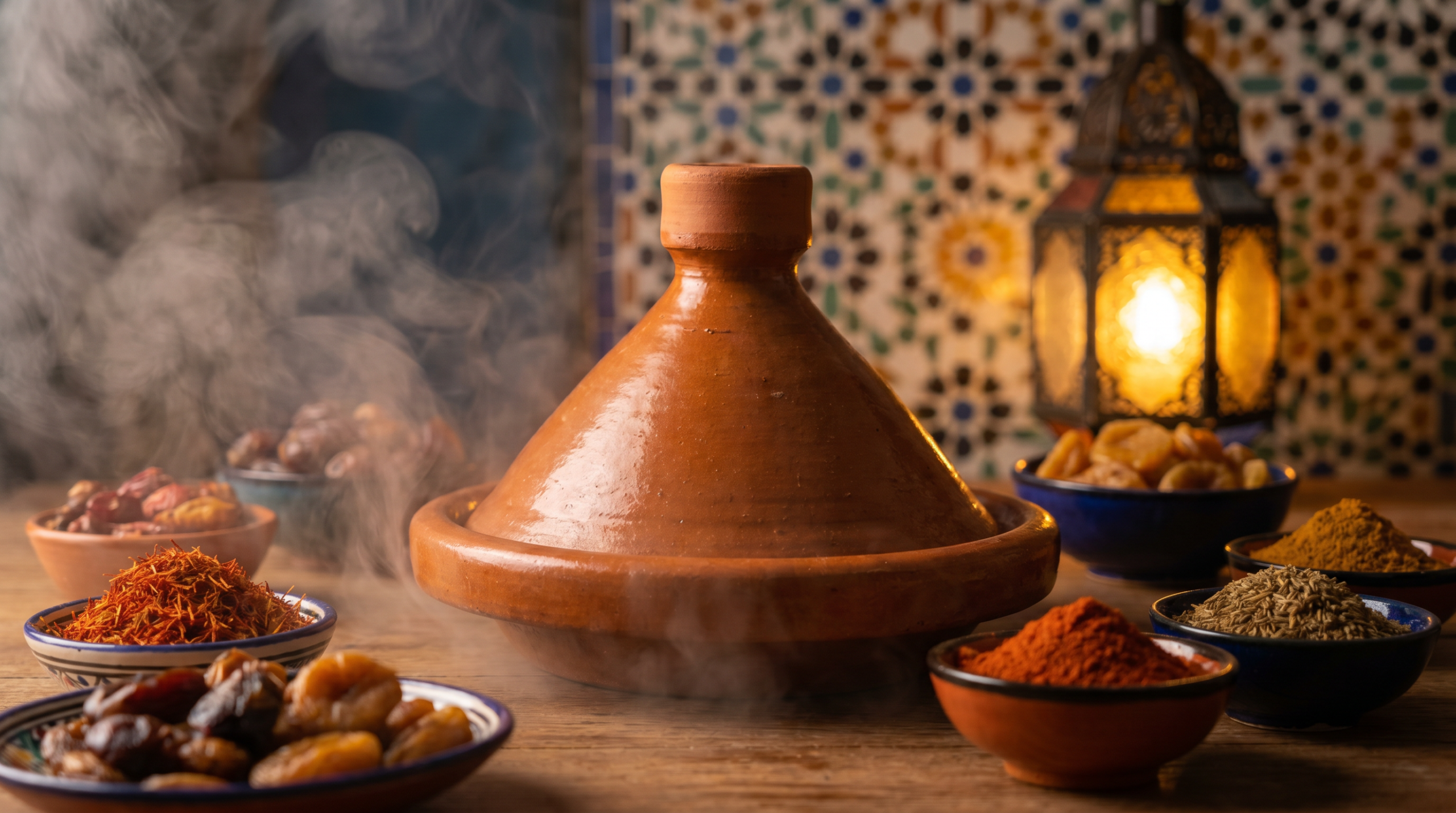
The magic of Moroccan cuisine lies in its masterful spice blends. Essential spices include cumin (earthy foundation), ginger (gentle heat), turmeric (golden color and subtle flavor), cinnamon (sweetness for both desserts and savory meat), saffron (the world’s most expensive, for celebrations), and paprika (vibrant color). The crown jewel is ras el hanout — “head of the shop” — a complex blend that can contain up to 30 spices, each family guarding their secret recipe.
Preserved lemons are another cornerstone, giving dishes a tangy, slightly fermented flavor. Honey, dates, apricots, prunes, and almonds frequently appear alongside lamb and chicken. Olive oil flows generously, while argan oil — produced exclusively in Morocco — adds a distinctive nutty flavor. Fresh herbs like mint, parsley, and cilantro bring brightness and balance to slow‑cooked stews.
When buying ras el hanout in a souk, ask to smell before buying — freshness is everything. A good blend should smell floral and warm, not dusty or one‑note.
Essential Moroccan Dishes
Tagine: The Iconic Slow‑Cooked Stew
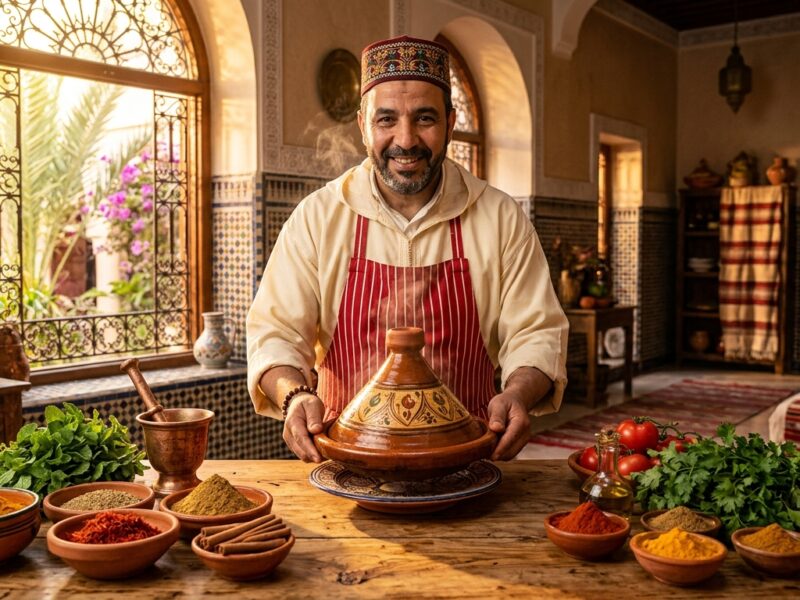
The word “tagine” refers both to the cone‑shaped clay vessel and the stew within. As steam rises, it condenses on the cool lid and drips back, basting the ingredients. Popular varieties include chicken with preserved lemon and olives, lamb with prunes and almonds, kefta with eggs, and vegetable tagines.
Couscous: The National Dish
Couscous consists of tiny steamed semolina granules, traditionally served on Fridays. Topped with a rich stew of vegetables and meat, the art of making proper couscous requires rolling, steaming, fluffing, and steaming again.
Moroccan Breads
Bread holds sacred status. Khobz are round flat loaves baked in communal ovens; msemen is a square layered flatbread; baghrir is the “thousand‑hole pancake” perfect for soaking up honey and butter.
Pastilla & Harira
Pastilla (bastilla) is an elaborate pie with paper‑thin dough, spiced pigeon (or chicken), almonds, and a dusting of powdered sugar and cinnamon — the perfect sweet‑savory bite. Harira is a hearty tomato‑based soup with lentils, chickpeas, and fresh herbs, used to break the daily fast during Ramadan.
👩🍳 Learn to make authentic tagine and couscous with a local chef
Best Moroccan Dishes: A Culinary Journey
While we’ve covered classics, Morocco’s repertoire extends far beyond. From elaborate mechoui (whole roasted lamb) at celebrations to simple bissara (fava bean soup) for breakfast, each dish tells a story. Dishes like rfissa (chicken and lentil dish), seffa (sweet couscous), and mrouzia (sweet lamb for Eid) showcase incredible diversity. For a full exploration of Morocco’s most iconic dishes, including detailed ingredients and cultural significance, visit our in‑depth guide to the Best Moroccan Dishes.
Street Food in Morocco: The Ultimate Experience
The streets come alive with the sizzle of grills and aroma of spices. Must‑try street foods include brochettes (charcoal‑grilled meat skewers), merguez (spicy lamb sausages), sfenj (Moroccan donuts), and maakouda (crispy potato fritters). Coastal cities offer grilled sardines; inland, hearty soups and meat snacks dominate. Street food also includes fresh orange juice, sugar cane juice, and summer almond milk called sharbat. To navigate this vibrant scene safely and deliciously, explore our comprehensive Street Food Morocco guide.
🍢 Taste your way through Djemaa el‑Fna with a local guide
Moroccan Tea Culture: Traditions & Rituals
Moroccan mint tea (atay) is a symbol of hospitality and an art form. The ceremony involves green tea (Chinese gunpowder), fresh spearmint, and sugar, poured from a height to create a frothy top. Tea accompanies every social interaction – business deals, welcoming guests, and ending meals. Refusing tea can be considered impolite. Regional variations exist: wormwood might replace mint in winter, or tea might be flavored with saffron or orange blossom in the south. Herbal infusions like verbena and sage are also common for their health benefits. To master this tradition, including an authentic step‑by‑step recipe, visit our detailed guide to Moroccan Tea Culture.
Food Tours in Marrakech: Culinary Adventures
Marrakech offers the most diverse food scene, from the theatrical stalls of Jemaa el‑Fnaa to hidden gems in the medina’s alleys. Professional food tours guide you to hygienic vendors, authentic preparations, and cultural stories behind each dish. Tours often include spice market visits where you learn to identify real saffron, traditional bakeries, and even cooking classes in Berber villages. Evening tours focus on the transformation of the main square into an open‑air restaurant – try snail soup or sheep’s head with expert explanation. For a curated selection of the best food tours, see our Food Tours Marrakech guide.
🥘 Explore hidden stalls and taste 10+ authentic Moroccan bites
Regional Variations
Moroccan food varies dramatically by region. Northern Morocco (Tangier, Tetouan) shows Spanish influence, lighter and less spicy, with seafood tagines featuring tomatoes and peppers. Central Morocco (Fez, Meknes) is the gastronomic heart, known for sophisticated spice combinations and elaborate pastilla. Southern Morocco (Marrakech, pre‑Sahara) has stronger Berber influences and bolder flavors – the famous tanjia of Marrakech. Coastal regions emphasize seafood – Essaouira for grilled sardines, Agadir for fish tagines. Eastern regions near Algeria feature more legumes. Mountain regions like the Atlas Mountains use barley, mountain herbs, and locally raised meats.
📌 Pro tip: If you can only visit one city for food, make it Fez. The old medina has restaurants that have perfected recipes for centuries, and you’ll find the most authentic versions of classic dishes.
Where to Find Authentic Moroccan Food
Fez remains the gold standard for traditional cuisine. Marrakech offers the greatest variety – from street food to high‑end riads; consider booking a Marrakech food tour to navigate with local expertise. Essaouira is the destination for seafood lovers. Casablanca offers modern interpretations. Traditional markets (souks) and riads often serve exceptional dishes with recipes passed down through generations. Many riads in Morocco’s destination cities also offer cooking classes. When searching for Moroccan food near you internationally, look for tagines cooked to order, fresh fluffy couscous, proper bread service, and ceremonial mint tea.
🏔️ Combine hiking and a traditional Berber lunch in the Atlas Mountains
Cooking Moroccan Food at Home
Bringing Morocco into your kitchen is easier than you think. Start with a simple chicken tagine with preserved lemon and olives, or make your own khobz bread. Essential equipment includes a tagine pot (a Dutch oven works), a couscoussier (or steamer basket), and a mortar and pestle for fresh grinding. Create your own ras el hanout by blending equal parts cumin, coriander, cinnamon, ginger, and turmeric, with smaller amounts of allspice, cloves, and cayenne. If preserved lemons are elusive, combine fresh lemon zest with salt. For hands‑on learning, consider taking Moroccan cooking classes either locally or during travels.
Always toast whole spices in a dry pan for 30 seconds before grinding – it wakes up the essential oils and transforms the depth of your tagine.
Modern Moroccan Cuisine and Global Influence
Today’s Moroccan food scene is evolving. Chefs like Mourad Lahlou and Najat Kaanache respect tradition while introducing modern techniques. Ras el hanout seasons everything from roasted vegetables to popcorn; preserved lemons appear in cocktails and desserts. The health benefits – emphasis on vegetables, legumes, whole grains, and moderate lean meat – align with Mediterranean diet principles. Food tourism has grown, with travelers seeking culinary experiences that combine Moroccan cultural experiences with gastronomy. As diners become more adventurous, Moroccan cuisine is poised for even greater global influence.
Reserve Your Spot
Book Your Moroccan Culinary Adventure
From cooking classes to food tours and desert escapes – secure your spot with trusted partners.
Frequently Asked Questions
Everything you need to know before you go
✦ Your Morocco Journey Starts Here
Savor Morocco, One Bite at a Time
From sizzling street food stalls to hands‑on cooking classes in centuries‑old riads – let the flavors of Morocco transform the way you travel and eat. Book your culinary experience now.