Marrakech’s Most Beautiful Gardens: Jardin Majorelle, Menara Gardens & Secret Garden Guide
Discover Marrakech’s most beautiful gardens — Jardin Majorelle, Menara Gardens, and Secret Garden. Get essential visitor info, rich history, and insider tips for exploring these tranquil oases in the heart of Morocco’s Red City.
Marrakech is a city of fascinating contrasts, where the chaotic energy of bustling souks and narrow medina streets gives way to peaceful garden sanctuaries that have enchanted visitors for centuries. Among these tranquil oases, Jardin Majorelle Marrakech stands as the most famous garden in Morocco, drawing travelers from around the world with its striking cobalt blue buildings and extraordinary exotic plant collections. But while Jardin Majorelle may claim the spotlight, Marrakech harbors other equally enchanting green spaces that deserve your attention — including the historic Menara Gardens with their Atlas Mountain panoramas, and the recently restored Secret Garden hidden in the heart of the ancient medina.
✦ Key Takeaways
Jardin Majorelle features vibrant cobalt blue architecture and rare exotic plants, saved from destruction by Yves Saint Laurent.
Menara Gardens offers a historic agricultural landscape with olive groves and mountain views — admission is free!
Secret Garden combines Islamic geometric design with global botanicals in the heart of Marrakech’s medina.
Visit Jardin Majorelle early or late to avoid crowds; Menara at sunset for perfect photos; Secret Garden mid-morning for tranquility.
All three gardens reflect Morocco’s mastery of water management and offer peaceful escapes from city chaos.
Jardin Majorelle Marrakech: A Cobalt Blue Paradise
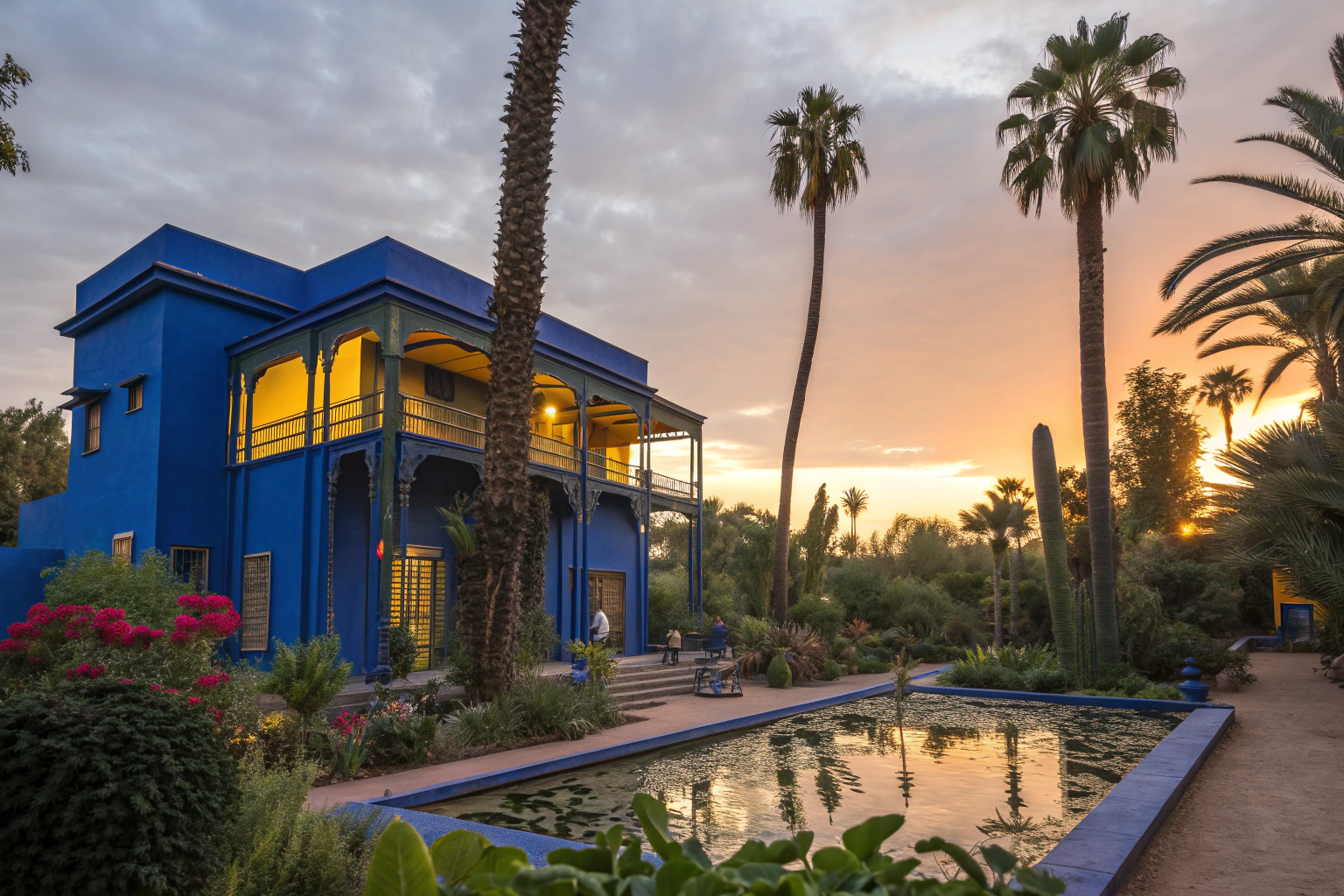
Jardin Majorelle is not just a garden — it’s an artistic masterpiece, a vibrant botanical wonderland and painter’s living canvas nestled in Marrakech’s Ville Nouvelle district. This two-acre sanctuary has become one of Morocco’s most visited sites, famous for its striking color palette, extraordinary plant collection spanning five continents, and its deeply intertwined connection to the world of high fashion.
History and Cultural Significance
The story of Jardin Majorelle Marrakech begins in 1924 with French painter Jacques Majorelle. Drawn to Morocco’s extraordinary light and colors, Majorelle purchased a plot of land on the outskirts of Marrakech — then considered countryside — and spent the next four decades meticulously crafting his botanical masterpiece. The garden became his living work of art, where he could experiment with colors and compositions while cultivating rare plants gathered from his global travels.
Following a car accident and subsequent divorce, Majorelle faced financial difficulties and opened his garden to the public in 1947. After his departure from Morocco, the garden fell into disrepair and was threatened by real estate developers who planned to demolish it for a hotel complex.
The garden’s fate changed dramatically in 1966 when fashion designer Yves Saint Laurent and his partner Pierre Bergé discovered it during their first visit to Marrakech. Alarmed by rumors of demolition, they purchased it in 1980 and embarked on a careful restoration. They restored the intense blue buildings, replanted the garden, and installed a sophisticated irrigation system that ensured its survival.
After Yves Saint Laurent’s death in 2008, his ashes were scattered in the garden, cementing its place as a memorial to the designer’s legacy. Today, Jardin Majorelle belongs to the Foundation Pierre Bergé – Yves Saint Laurent, a French nonprofit dedicated to preserving the garden and its cultural heritage.
The Garden’s Unique Features
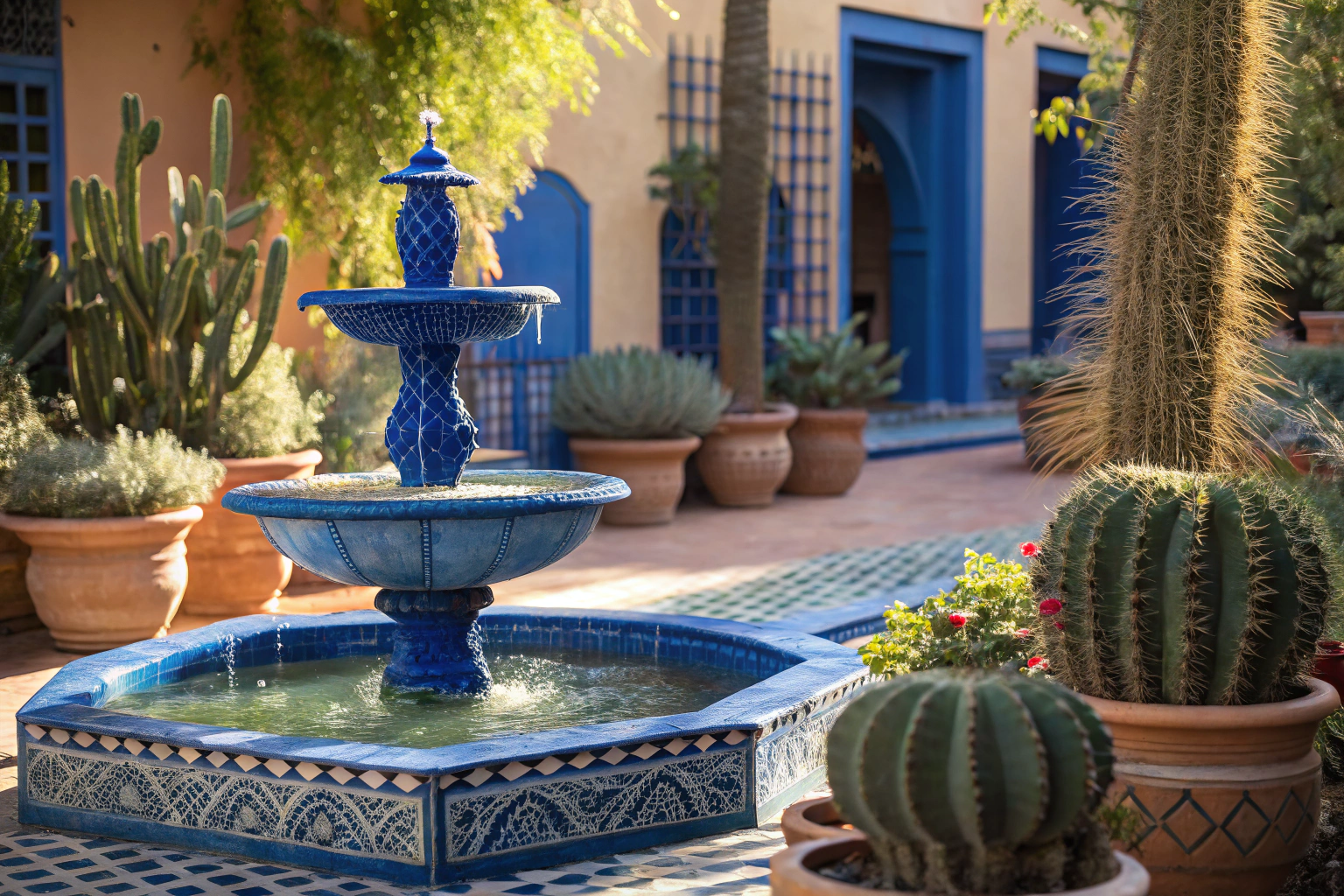
The most immediately striking feature of Jardin Majorelle Marrakech is its bold use of color — particularly the intense cobalt blue that covers fountains, pots, and buildings throughout the garden. This specific shade, later trademarked as “Majorelle Blue,” creates a dramatic contrast against the garden’s greenery and terra cotta elements that has made it one of the most photographed spots in all of Morocco.
The botanical collection is truly impressive, featuring over 300 plant species from five continents. Visitors wander through groves of bamboo, collections of cacti in extraordinary shapes and sizes, towering palm trees, and vibrant bougainvillea. Water features are strategically placed throughout, with lily ponds and bubbling streams creating a cool microclimate that offers relief from Marrakech’s heat.
💡 Don’t miss the Berber Museum — housed in Majorelle’s former studio, this small but exquisite museum displays traditional jewelry, costumes, weapons, and textiles from Morocco’s indigenous Amazigh communities. Learn more about this heritage in our guide to rural Morocco and authentic Berber experiences.
A simple yet moving Yves Saint Laurent Memorial stands in the garden, honoring the designer who saved this special place. Nearby, visitors can browse the boutique and gift shop offering high-quality souvenirs inspired by the garden’s aesthetic, or relax at the café serving refreshing drinks and light meals.
Practical Information for Visitors
Location: Rue Yves Saint Laurent, Marrakech 40090, Morocco
Opening Hours: Open daily from 8:00 am to 6:30 pm, with last entry at 6:00 pm
Ticket Prices (2026):
- Garden only: 70 MAD (approximately $7 USD)
- Garden + Berber Museum: 100 MAD (approximately $10 USD)
- Garden + Berber Museum + Yves Saint Laurent Museum: 180 MAD (approximately $18 USD)
For the best experience, visit early in the morning (before 9:00 am) or late afternoon (after 4:00 pm) to avoid both crowds and the midday heat. The garden is most crowded between 10:00 am and 2:00 pm. Plan to spend at least 1–2 hours exploring the garden and museum. Photography is permitted throughout the garden but not inside the Berber Museum.
Purchase tickets online through the official website to avoid queues that can exceed an hour during peak tourist season. Consider booking your airport transfer in Marrakech in advance to streamline your arrival and maximize garden time.
Menara Gardens Marrakech: A Historic Oasis with Mountain Views
In contrast to the intimate artistic space of Jardin Majorelle, Menara Gardens offers visitors a vast, historic landscape that reflects Morocco’s agricultural ingenuity and architectural heritage. Spanning approximately 250 acres, this expansive garden provides a completely different experience — one of open skies, ancient olive groves, and spectacular views of the Atlas Mountains that have captivated visitors for nearly nine centuries.
History and Origins
Menara Gardens boasts an impressive history dating back to 1147 when the Almohad Caliph Abd al-Mu’min established them following his conquest of Marrakech. The garden was designed not merely as a pleasure ground but as part of an innovative agricultural and irrigation system that demonstrated the engineering prowess of the era.
During the 16th century, the gardens underwent extensive renovation under the Saadian dynasty, with further significant improvements made during the 18th century by Sultan Sidi Mohammed ibn Abdallah. These renovations enhanced both the garden’s beauty and its functional irrigation systems that continue to operate today.
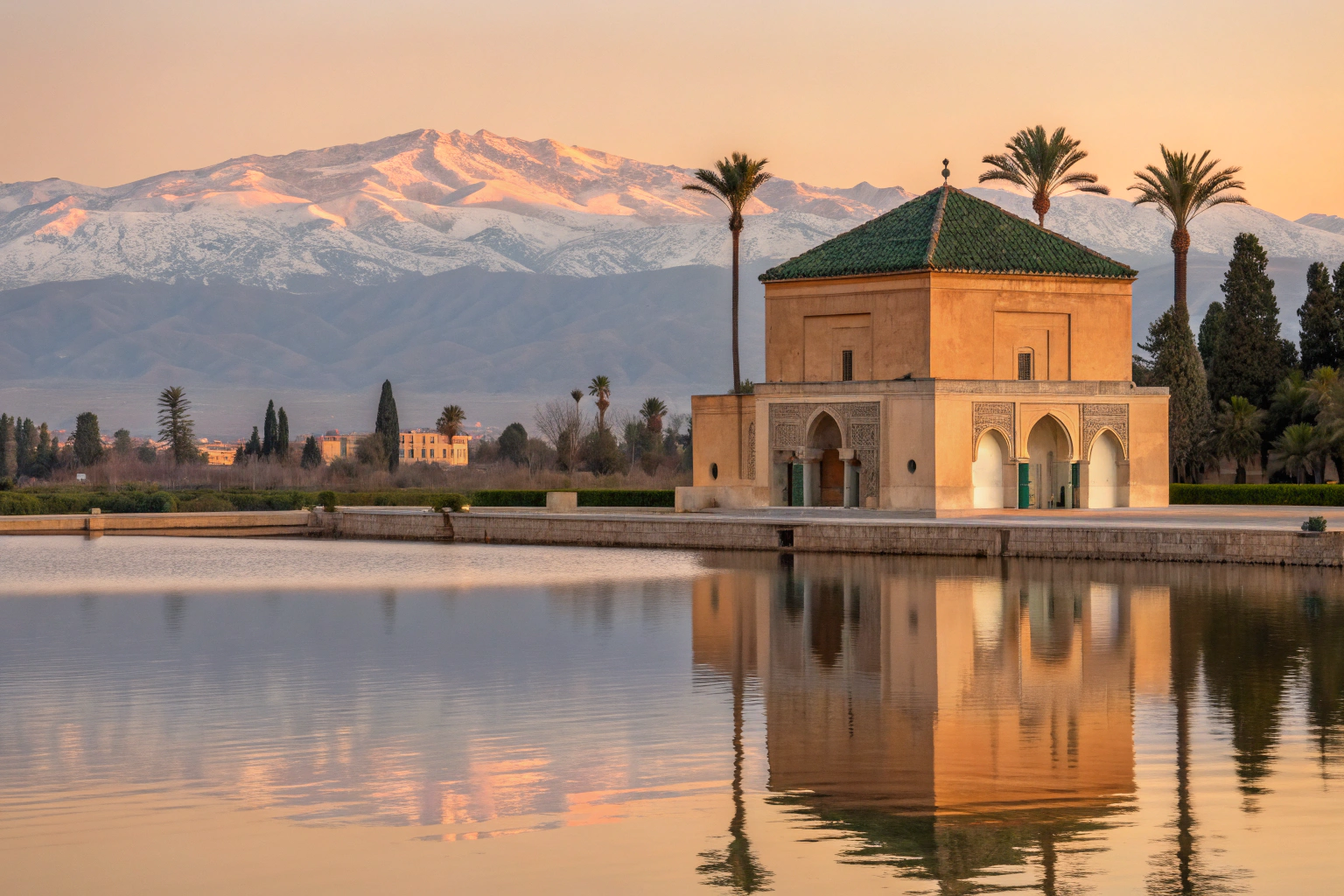
The name “Menara” derives from the pavilion with its distinctive small green-tiled pyramid roof (menzeh), which has become an iconic symbol of Marrakech itself. The word relates to a lighthouse or place that shines — likely referring to the pavilion’s prominence in the landscape rather than any actual lighthouse.
Layout and Notable Features
The most striking feature of Menara Gardens is its vast olive groves containing thousands of trees, some of which are over 100 years old and still productive. These groves not only provide beauty but continue to serve their original agricultural purpose, producing olives that are harvested annually — a living connection to centuries of Moroccan farming tradition.
At the center of the garden lies a large artificial lake or basin that serves two important functions. First, it acts as a reservoir for irrigating the surrounding olive groves and orchards. Second, it creates a stunning reflecting pool that mirrors the pavilion and mountains beyond, offering exceptional photo opportunities particularly at sunset.
💡 Ancient engineering marvel: The sophisticated khettara underground irrigation system brings water from the Atlas Mountains through a network of underground channels — a technology that allowed gardens to flourish in this semi-arid climate centuries before modern infrastructure. Discover more about Morocco’s diverse landscapes in our guide to Morocco’s natural wonders.
The pavilion itself, built during the 16th century and renovated in 1869, stands at the edge of the pool featuring traditional Moroccan architecture. It once served as a summer residence for sultans and royalty who would retreat here to escape the city heat. The ground floor contains a cool water tank, while the upper floor offers panoramic views across the gardens toward the snow-capped Atlas Mountains.
Visitor Information
Location: Avenue de la Menara, Marrakech
Entry Fee: Free (small fee of about 10 MAD to enter the pavilion)
Opening Hours: Daily from sunrise to sunset
Unlike the meticulously manicured Jardin Majorelle, Menara Gardens presents a more rustic, natural landscape. Visitors should understand that this is a working agricultural space rather than a formal garden, with fewer amenities available. The best time to visit is late afternoon when the setting sun creates a golden glow on the water and illuminates the Atlas Mountains in the background.
Bring water and snacks as facilities are limited, and wear comfortable walking shoes if you plan to explore the full 250-acre grounds. The expansive gardens offer plenty of shaded space for a picnic under the ancient olive trees — a quintessentially Moroccan experience that’s completely free.
Secret Garden Marrakech: A Hidden Gem in the Medina
While Jardin Majorelle and Menara Gardens have long histories as public spaces, the Secret Garden represents a more recent addition to Marrakech’s garden collection. Tucked away in the heart of the ancient Marrakech medina, this restored historic garden offers visitors a peaceful retreat from the surrounding souks and narrow streets — a genuine hidden gem that many visitors miss entirely.
History and Restoration
The Secret Garden occupies the site of one of the most important palace complexes of the 16th century during the Saadian dynasty. Originally built by Moulay Abdullah al-Ghalib, a Saadian sultan who ruled from 1557 to 1574, the complex contained a grand riad with beautiful gardens. Over centuries, the property changed hands multiple times, gradually falling into disrepair after Morocco’s capital moved to Fez.
By the early 20th century, the once-magnificent garden had been subdivided and largely forgotten. Its rebirth began in 2008 when the property was acquired with plans for careful restoration. Archaeological work uncovered the original garden’s layout and water systems, providing valuable insights into historic Moroccan garden design principles.
The ambitious restoration project, led by British landscape architect Tom Stuart-Smith and completed in 2016, transformed the neglected space into a garden that honors both its historical roots and Morocco’s rich botanical traditions. The result is an extraordinary blend of archaeological authenticity and contemporary garden craft that feels utterly timeless.
Garden Design and Features
What makes the Secret Garden particularly special is its division into two distinct garden areas, each representing different horticultural traditions. The Islamic garden features a strict geometric layout with quadrilateral paths dividing the space into four parts — symbolizing the four elements of life (earth, fire, water, and air) and representing the paradise gardens described in the Quran. This section contains plants traditionally grown in Morocco, including citrus trees, date palms, and pomegranates.
The exotic garden, by contrast, showcases plants from around the world with a more relaxed design. Rare cacti, succulents, and tropical plants create a fascinating botanical display that demonstrates how species from diverse climates can thrive in Marrakech’s conditions.
💡 Climb the tower — surrounding the gardens are historic buildings including a tower that visitors can ascend for panoramic views over the medina rooftops and toward the Atlas Mountains. It’s one of the best elevated viewpoints accessible in the old city. The beautiful blue and green zellige tilework throughout exemplifies traditional Moroccan architectural craftsmanship.
Visitor Information
Location: 121 Rue Mouassine, Marrakech Medina
Opening Hours: Daily from 9:00 am to 6:30 pm (last entry at 6:00 pm)
Admission Price: 80 MAD (approximately $8 USD)
The Secret Garden’s rooftop café offers panoramic views over the medina and serves Moroccan mint tea, coffee, and light refreshments — an ideal spot to relax after exploring. Guided tours are available in several languages and provide valuable insights into the garden’s design principles. The garden is typically less crowded than Jardin Majorelle, especially in the morning hours.
The Secret Garden sits in the heart of the medina, making it easy to combine with a Marrakech food tour to sample local flavors like b’stilla, msemen, and freshly squeezed orange juice from the nearby souks.
Comparing Marrakech’s Three Garden Experiences
Each of Marrakech’s premier gardens offers a unique experience. Here’s how they compare across the most important factors to help you plan your visits:
Jardin Majorelle: Compact at 2 acres, densely planted with exotic specimens. Modernist artistic vision with bold colors. Vibrant, colorful, often crowded, highly curated experience.
Menara Gardens: Expansive at 250 acres, primarily olive groves with a central water feature. Traditional Moroccan agricultural landscape. Spacious, peaceful, rustic setting with mountain views.
Secret Garden: Intimate at approximately 1 acre, divided into two distinct garden styles. Authentic Islamic geometric garden combined with exotic plants. Tranquil, historically authentic with fewer tourists.
Jardin Majorelle: 70–180 MAD depending on ticket option. Allow 2–3 hours including museums.
Menara Gardens: Free (small fee for pavilion entry). Allow 1–2 hours.
Secret Garden: 80 MAD. Allow 1–2 hours.
Jardin Majorelle: Ville Nouvelle (new city), northwest of the medina. Walkable from Gueliz hotels.
Menara Gardens: Western outskirts of Marrakech. Requires transportation from most accommodations.
Secret Garden: Heart of the old medina, surrounded by souks. Accessible on foot from medina riads.
Garden Visitor Itineraries
Whether you have a full day or just a few hours, here are optimized itineraries to help you make the most of Marrakech’s gardens:
All three gardens in one perfect day
8:00 am – 10:00 am: Start at Jardin Majorelle when it opens. Beat the crowds and enjoy soft morning light on the cobalt blue buildings — ideal for photography. Explore the Berber Museum and YSL Memorial.
11:00 am – 12:30 pm: Take a short petit taxi (about 30 MAD) to Secret Garden. Explore both the Islamic and exotic gardens, climb the tower for panoramic views, and enjoy mint tea at the rooftop café.
12:30 pm – 2:00 pm: Lunch in the nearby medina — you’re steps from some of Marrakech’s best street food and restaurant options.
4:00 pm – sunset: Head to Menara Gardens (about 50 MAD by taxi). Arrive as the afternoon light softens and stay for sunset when the Atlas Mountains glow pink behind the pavilion’s perfect reflection.
Jardin Majorelle + Secret Garden
Both gardens are relatively close to each other. Start at Jardin Majorelle at 8:00 am, then walk or taxi to Secret Garden by 10:30 am. You’ll be finished by noon with time for a leisurely medina lunch.
Menara Gardens at golden hour
Menara Gardens is best visited later in the day when sunset light transforms the scene. Arrive around 4:00 pm, bring a picnic, and stay until the mountains turn golden. Since entry is free, this is perfect for a budget-friendly Morocco experience.
Seasonal Considerations
- Spring (March–May): Best time for all gardens when flowers are blooming and temperatures are pleasant.
- Summer (June–August): Very hot — visit gardens in early morning or evening to avoid temperatures exceeding 100°F (38°C).
- Fall (September–November): Pleasant temperatures and excellent light for photography.
- Winter (December–February): Cooler temperatures but still enjoyable, with significantly fewer crowds.
Transportation Between Gardens
Petit taxis (small red taxis) are the most convenient way to travel between gardens. Always agree on a price before entering or insist on the meter. Approximate fares:
- Jardin Majorelle → Secret Garden: ~2.5 km (about 30 MAD)
- Secret Garden → Menara Gardens: ~4 km (about 50 MAD)
- Jardin Majorelle → Menara Gardens: ~5 km (about 60 MAD)
For convenient transportation, consider using Welcome Pickups for airport transfers or InDrive for affordable rides between locations. For more on getting around, see our complete taxi services in Morocco guide.
Other Notable Gardens in Marrakech
While Jardin Majorelle, Menara Gardens, and Secret Garden are the must-visit green spaces in Marrakech, several other gardens are worth exploring if you have extra time:
Agdal Gardens: Another historic garden dating from the 12th century, Agdal is one of the oldest existing gardens in the world. Located south of the Royal Palace, these gardens cover nearly 1,000 acres and feature numerous fruit orchards in geometric patterns. Access can be limited as it remains a royal property.
Anima Garden: Created by Austrian artist André Heller, this botanical garden and art installation sits about 30 minutes outside Marrakech in the Ourika Valley foothills. The garden combines exotic plants with contemporary sculptures for a unique experience. Book a day trip to Anima Garden & Ourika Valley to explore this artistic oasis alongside traditional Berber villages.
Cactus Thiemann: A specialized garden featuring over 150 species of cacti and succulents on the outskirts of Marrakech. This private collection offers guided tours by appointment — a hidden treasure for plant enthusiasts.
Parc Lalla Hasna: A public park near Koutoubia Mosque in the center of Marrakech, offering shaded walkways, fountains, and a convenient place to rest while exploring the city’s top attractions.
Photography Tips for Garden Visitors
Each of Marrakech’s gardens offers unique photographic opportunities that reward different approaches:
Jardin Majorelle Photography
- Capture the iconic cobalt blue buildings early in the morning when crowds are minimal and light is soft.
- Look for contrasting colors — the blue buildings against terra cotta pots and green foliage create striking compositions.
- Shoot close-ups of exotic plant textures and architectural details for unique portfolio shots.
- Best light: early morning for soft tones on the blue pavilion, or late afternoon for warm golden hues.
Menara Gardens Photography
- Position yourself to capture the pavilion’s reflection in the still basin — tripods help for mirror-like shots.
- Frame the pavilion with the Atlas Mountains in the background for the classic postcard composition.
- Photograph at sunset when the mountains take on a pink glow and warm light bathes everything in gold.
- Use wide-angle lenses to convey the expansiveness of the ancient olive groves.
Secret Garden Photography
- Shoot downward from the tower for striking aerial views of the geometric Islamic garden layout.
- Capture details of the zellige tilework and water features that exemplify Moroccan craftsmanship.
- Look for frames within frames using doorways, archways, and carved plaster screens.
- Photograph the contrast between the structured Islamic garden and the more natural exotic garden.
Bring a polarizing filter to reduce glare on water features and enhance foliage colors. Visit during golden hour (early morning or late afternoon) for the most flattering light. Include people in some shots to show scale, but always be respectful of other visitors’ space.
Practical Tips for Garden Visits
Comfort and Protection
- Wear comfortable walking shoes suitable for uneven surfaces, especially in Menara Gardens.
- Bring sun protection — hats, sunglasses, and sunscreen are essential year-round.
- Carry a water bottle, particularly when visiting Menara Gardens where facilities are limited.
- Consider a light scarf or shoulder covering, especially if combining garden visits with stops at nearby mosques or religious sites.
Accessibility Information
- Jardin Majorelle: Mostly accessible with paved paths, though some areas have steps.
- Menara Gardens: Fairly flat terrain but with unpaved sections that may be challenging for wheelchairs.
- Secret Garden: Limited accessibility with steps and narrow pathways throughout.
📌 Planning note: Spring (March–May) offers the ideal combination of pleasant weather and blooming plants. If visiting in summer, avoid midday entirely — temperatures can exceed 100°F (38°C). Book accommodations near the gardens to minimize transit time in the heat. Stay connected with an Airalo eSIM for navigation between garden locations.
Where to Stay Near the Gardens
Your accommodation choice affects how easily you can access each garden. If you’re staying in a traditional Moroccan riad in the medina, the Secret Garden is walkable while Jardin Majorelle and Menara Gardens require a short taxi ride. Hotels in the Gueliz neighborhood put you closest to Jardin Majorelle. For detailed neighborhood breakdowns and hotel recommendations, check our guide to where to stay in Marrakech.
What to Do After the Gardens
After a morning exploring Marrakech’s gardens, the city offers countless ways to continue your adventure. Unwind with a traditional Moroccan hammam experience, explore the vibrant Marrakech souks for unique souvenirs, or refuel with some of the best Moroccan dishes at a nearby restaurant. For more hidden discoveries beyond the gardens, explore our guide to hidden gems of Morocco.
Reserve Your Spot
Book Your Marrakech Garden Experience
Explore Marrakech’s most beautiful gardens with expert-guided tours, skip-the-line access, and unforgettable cultural experiences. Instant confirmation, free cancellation on most tours.
Frequently Asked Questions
Everything you need to know before visiting Marrakech’s gardens
✦ Your Morocco Journey Starts Here
Discover Marrakech’s Garden Magic
From the cobalt blue paradise of Jardin Majorelle to the ancient olive groves of Menara Gardens and the hidden Islamic courtyards of the Secret Garden — Marrakech’s green sanctuaries offer unforgettable moments of beauty and tranquility. Book your garden tour today and experience why these spaces have captivated visitors for generations.