Marrakech Museums — Exploring Cultural Treasures of the Red City
Discover the soul of Morocco through Marrakech museums like Dar Si Said and the Marrakech History Museum. Explore Islamic art, Berber heritage, and centuries-old craftsmanship in the Red City.
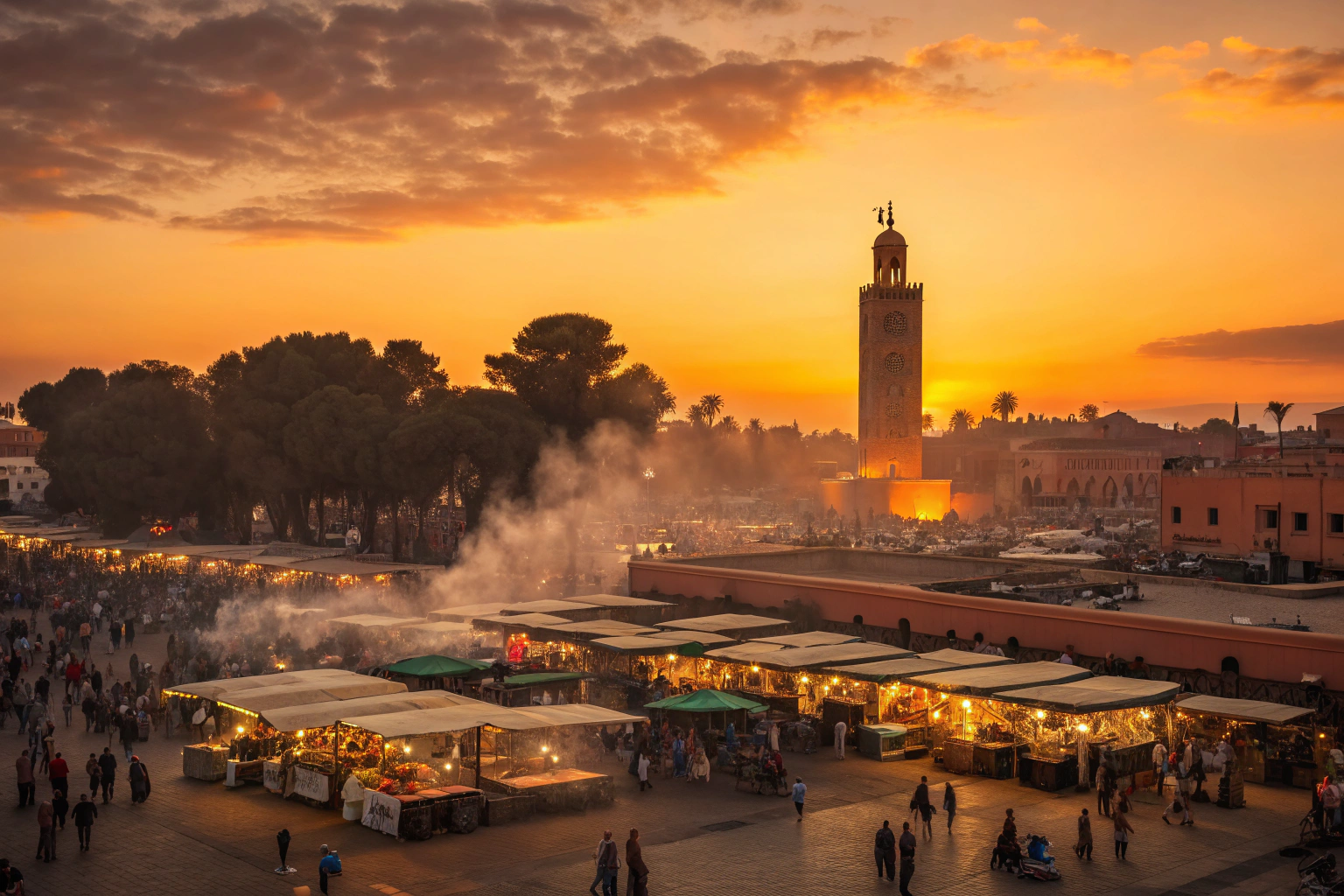
Imagine walking through streets bathed in warm, terracotta hues, where ancient walls whisper stories spanning a thousand years of history. This is Marrakesh — Morocco’s legendary Red City. Founded between 1070–72 by the Almoravids, this vibrant cultural capital has captivated travelers for centuries. At the heart of understanding this magical place are the Marrakech museums, magnificent repositories that preserve the city’s rich historical legacy and offer visitors a window into Moroccan heritage that no souk walk or garden stroll can match.
✦ Key Takeaways
Explore Dar Si Said Museum’s 19th-century palace architecture and traditional Moroccan crafts including woodcarvings, ceramics, and Berber jewelry.
Visit the Marrakech Museum housed in Dar Menebhi Palace for evolving Moroccan art, historical documents, and stunning Islamic architectural details.
Discover contemporary African art at MACAAL and fashion history at the Yves Saint Laurent Museum for a modern cultural perspective.
Plan museum visits around cooler morning or late afternoon hours, especially during summer when temperatures exceed 100°F.
Connect museum exhibits with real-life artisans in the medina souks and historic sites nearby for the deepest cultural immersion.
The Historical Significance of Marrakech
To truly appreciate Marrakech museums, we must first understand the remarkable history they represent. The city was established in 1070 by Abu Bakr ibn Umar of the Almoravid dynasty. From these humble beginnings, Marrakesh quickly blossomed into a vibrant cultural, religious, and trading hub for the entire Maghreb region — a legacy so profound that the city’s name eventually gave Morocco itself its identity.
The city’s historical importance is so deep that UNESCO recognized the Medina of Marrakech as a World Heritage site in 1985. This ancient walled city center contains many of the museums we’ll explore, each housed in historic buildings that are themselves architectural treasures worth the visit alone.
💡 Marrakech’s strategic location at the foot of the Atlas Mountains made it a natural crossroads where diverse cultures — Sub-Saharan African, Middle Eastern, and European — met and mingled for over a millennium. This rich cultural tapestry is beautifully displayed across Marrakech’s history museums.
For more context on Morocco’s broader heritage and the sites that shaped the kingdom, explore our guide to Moroccan UNESCO World Heritage Sites. Understanding this cultural backdrop transforms a simple museum visit into a deeply meaningful journey through time.
Dar Si Said Museum Marrakech — A Palace of Moroccan Crafts
The Dar Si Said Museum Marrakech stands as one of the city’s most impressive cultural institutions. Housed in a magnificent 19th-century palace built by Si Said — the brother of Grand Vizier Ba Ahmed — this museum offers visitors a stunning glimpse into traditional Moroccan craftsmanship that has been refined over countless generations.
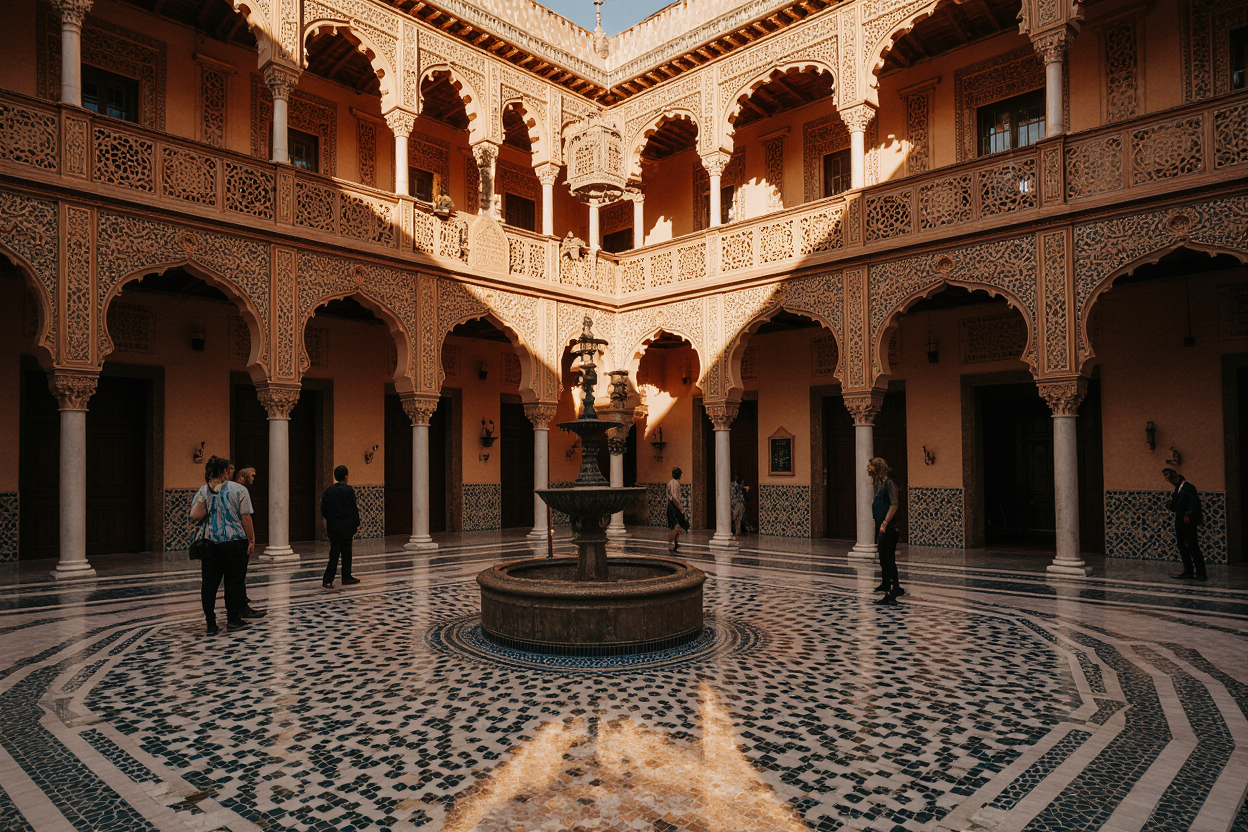
As you enter, you’ll be immediately struck by the palace’s breathtaking architecture. The central courtyard features an elegant fountain surrounded by intricate zellige tilework — those colorful geometric mosaics that Moroccan architecture is famous for worldwide. Look up to admire the ornately carved wooden balconies and cedar wood ceilings, each surface showcasing the remarkable skill of Moroccan artisans whose techniques have been passed down through families for centuries.
Visit the Dar Si Said Museum first thing in the morning when the light filters through the courtyard. The zellige tilework reflects morning sunlight in extraordinary ways that photographs can’t capture in the afternoon shade. Plus, you’ll often have entire rooms to yourself before tour groups arrive around 10:30 AM.
What You’ll Find Inside
The Dar Si Said Museum Marrakech houses an extraordinary collection of traditional Moroccan crafts that tells the story of the region’s artistic evolution:
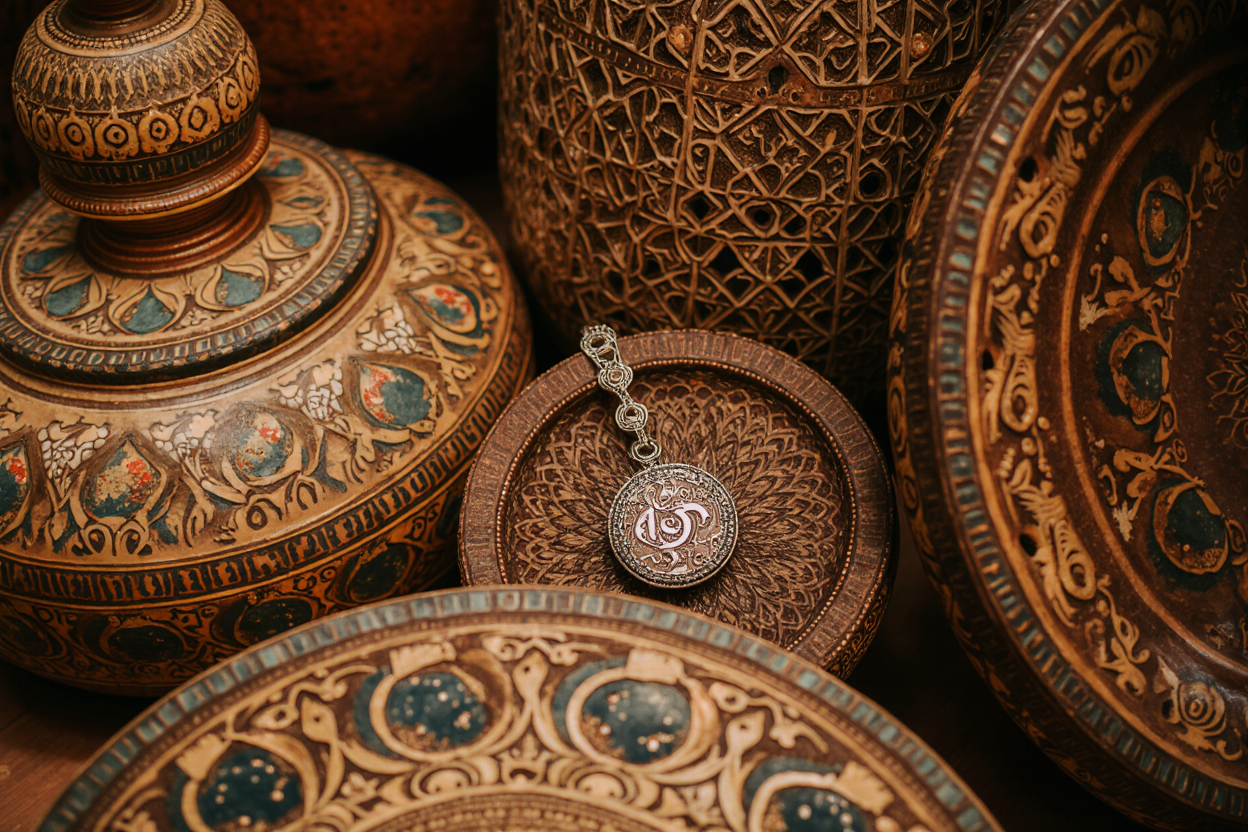
- Exquisite woodcarvings and cedar wood ceilings — created by master craftsmen from the Atlas Mountains using techniques unchanged for centuries
- Colorful ceramics from Safi and Fez — displaying regional pottery techniques passed down through generations of artisan families
- Stunning Berber jewelry and textiles — highlighting the artistic traditions of Morocco’s indigenous peoples, with silver pieces featuring symbolic Amazigh motifs
- A remarkable 10th-century marble basin — the museum’s crown jewel, originally from Cordoba, Spain, a testament to the deep cultural exchange between Al-Andalus and Morocco
What makes this museum special is its focus on regional craftsmanship. Each exhibit celebrates the skilled artisans who created these works and helps preserve knowledge of traditional techniques that might otherwise be lost to time. If you’re fascinated by the story of Moroccan architecture that surrounds you here, our guide to Moroccan Architecture: Tradition and Innovation explores these design principles in greater depth.
Marrakech Museum — From Madrasa to Cultural Center
Another gem among Marrakech museums is the Marrakech history museum, commonly known simply as the Marrakech Museum. This cultural treasure is housed within the walls of the magnificent Dar Menebhi Palace, constructed in the late 19th century by Mehdi Menebhi, who served as Morocco’s Minister of Defense.
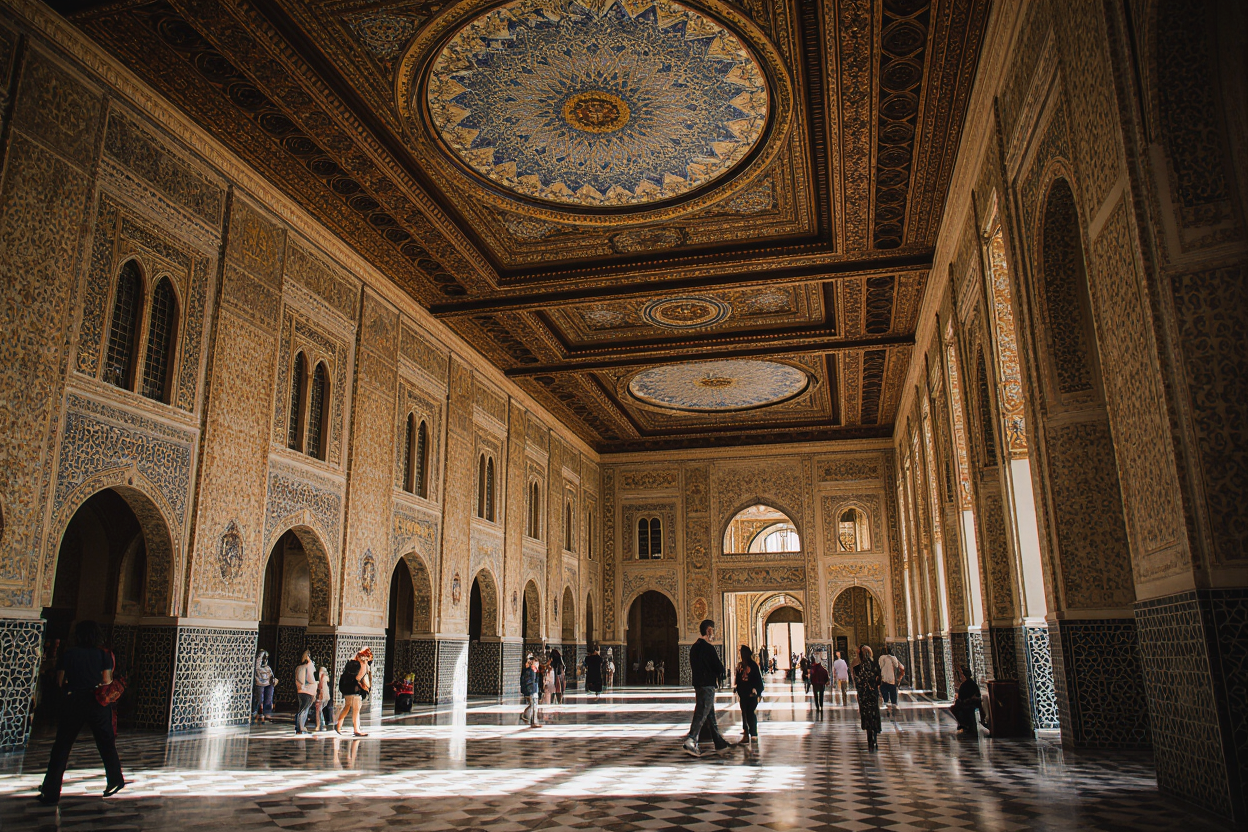
The building’s history is as fascinating as the collections it contains. After serving as a private palace, it later became a Koranic school (madrasa) before being carefully restored and converted into a museum in 1997. This transformation preserved the building’s architectural splendor while creating a space to showcase Morocco’s rich cultural heritage through evolving exhibitions of Moroccan art, historical documents, and contemporary works.
💡 The grand central courtyard is the architectural highlight — your eyes will be drawn upward to the stunning painted cedar wood ceilings, while walls display masterful examples of carved plasterwork (geps) and colorful zellige tilework. The massive central chandelier weighing over a ton is often the first thing visitors photograph.
The museum is just steps away from the historic Ben Youssef Madrasa, one of the largest theological colleges in North Africa. Pairing these two visits creates a powerful understanding of how education, art, and Islamic architecture intersected in medieval Marrakesh. To learn more about this broader history, our article on Morocco’s History: From Ancient Kingdoms to Modern Heritage provides essential context.
Other Notable Museums in Marrakech
While the Dar Si Said and Marrakech museums might be the most famous, the city offers a remarkable range of cultural institutions that span centuries of history and push into the contemporary art world:
MACAAL — Museum of African Contemporary Art Al Maaden
This private museum opened in 2016 and represents a different side of Marrakech museums entirely. Dedicated to promoting contemporary African art, MACAAL hosts rotating exhibitions that showcase innovative works by artists from across the continent — proving that Marrakesh remains a vibrant cultural center not just for preserving the past, but for shaping Africa’s artistic future.
Yves Saint Laurent Museum
Fashion lovers shouldn’t miss this striking modern building that opened in 2017. It honors the legendary designer who fell in love with Marrakech in the 1960s and found endless inspiration in its colors and culture. The museum displays his iconic designs alongside temporary exhibitions exploring fashion’s artistic dimensions. It sits adjacent to Jardin Majorelle, making for a perfect combined visit — see our complete Jardin Majorelle guide for planning tips.
Maison de la Photographie
This intimate museum houses over 8,000 photographs taken in Morocco between 1870 and 1960. These remarkable images document a crucial period in Moroccan history, capturing traditional ways of life, historic events, and ordinary people going about their daily lives. The rooftop café offers one of the best panoramic views of the Marrakech Medina.
The Berber Museum at Majorelle Garden
Located within the famous Majorelle Garden, this museum offers profound insight into Morocco’s indigenous cultures. Its carefully curated collection includes jewelry, textiles, weapons, and household items that illustrate the rich cultural heritage of the Berber (Amazigh) people who have inhabited Morocco for thousands of years.
The Moroccan Culinary Arts Museum in the beautifully restored Dar El Bacha palace celebrates Morocco’s world-renowned gastronomy and tea culture. Complement your visit with a Marrakech food tour or a traditional Moroccan cooking class to bring those historical recipes to life.
Museum of Perfume (Musée du Parfum)
This sensory museum offers an interactive journey through Morocco’s aromatic heritage. Exhibits explain how traditional perfumes are created from local ingredients — rose, orange blossom, amber, musk — and the important role that scents play in Moroccan culture, from daily rituals to wedding ceremonies.
Cultural Immersion: What Visitors Learn at Marrakech Museums
Marrakech museums offer much more than beautiful objects to admire — they provide deep insights into the cultural forces that have shaped Morocco over centuries and continue to define its identity today.
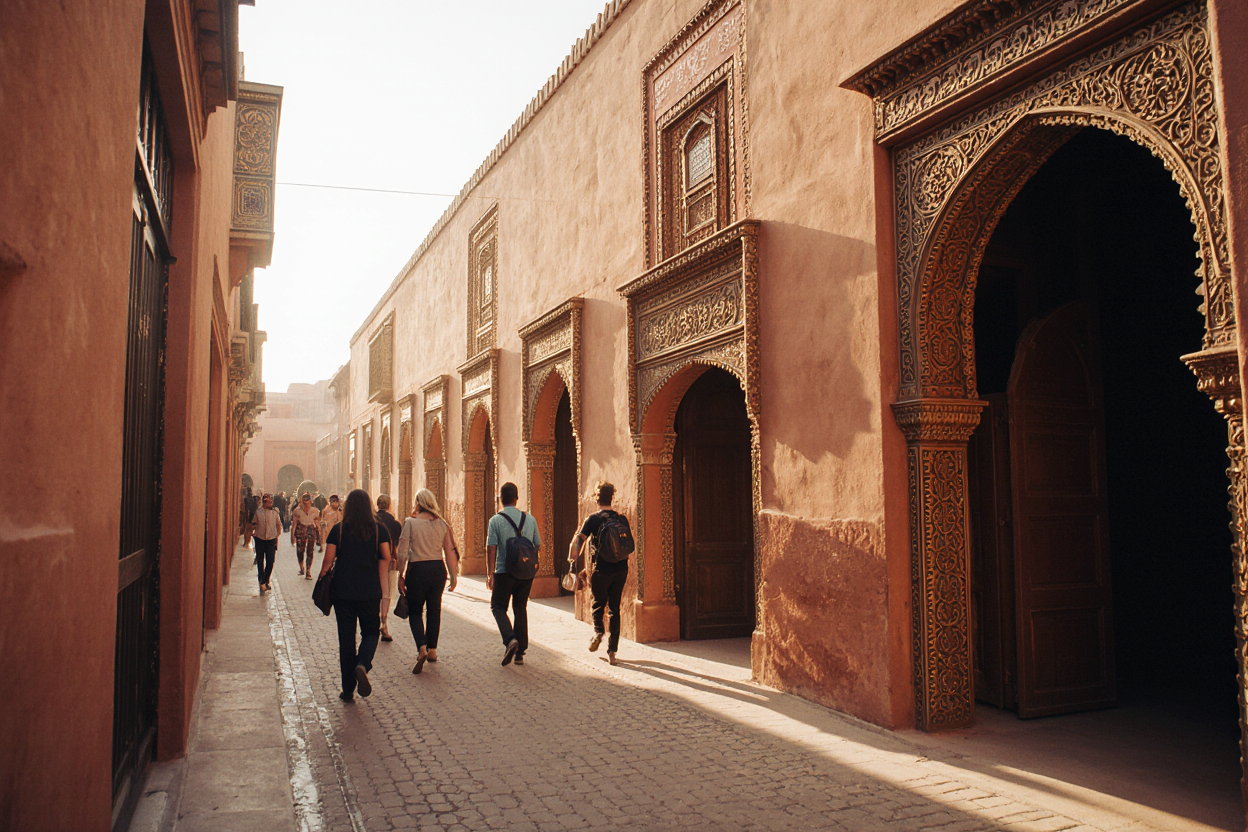
Visitors discover how Berber and Arab influences have blended to create Morocco’s unique cultural identity. Exhibits show how indigenous Berber traditions combined with Arab influences following the Islamic conquest, creating the distinctive Moroccan aesthetic we recognize today — from geometric patterns to Arabic calligraphy guiding creative expression for centuries. To dive deeper into local life beyond the museum walls, consider exploring Rural Morocco: Authentic Experiences.
Traditional craftsmanship takes center stage in many Marrakech museums. Visitors discover ancient techniques for working with wood, metal, clay, and textiles — many of which continue to be practiced by artisans in workshops throughout the medina today. The artifacts on display show how diverse influences have been absorbed and transformed into something uniquely Moroccan, giving visitors context that transforms their entire experience of the city.
Planning Your Visit to Marrakech Museums
To make the most of Marrakech museums, consider this suggested itinerary that balances walking distances, opening hours, and energy levels:
Start early to beat the heat and the crowds
Begin at the Marrakech Museum at Dar Menebhi Palace (allow 2 hours). The morning light through the courtyard is magnificent for photography. Then walk to the nearby Maison de la Photographie (1 hour) — it’s just a few minutes on foot. End your morning with mint tea on its rooftop terrace overlooking the medina rooftops.
Marrakech Museum: Place Ben Youssef · 9 AM–6:30 PM daily · ~50 MAD (~$5 USD)
Refuel and escape the peak heat
Enjoy a traditional Moroccan meal at a local restaurant in the medina. This is especially important during summer months (June–August) when temperatures regularly exceed 100°F (38°C). Use the hottest midday hours for a leisurely lunch or a traditional hammam experience with massage.
Dar Si Said and the southern medina
Explore the Dar Si Said Museum Marrakech (2 hours), followed by the Bahia Palace which is just a short walk away. The late afternoon golden light makes both these sites especially photogenic.
Dar Si Said Museum: Riad Zitoun Jdid · 9 AM–5 PM (closed Tuesdays) · ~30 MAD (~$3 USD)
📌 Planning note: Spring (March–May) and fall (September–November) offer the most comfortable weather for museum visits. Consider hiring a local guide who specializes in art and history — their expert knowledge will bring the collections to life. You can book a comprehensive Marrakech City Tour that includes key museum visits.
For a smooth arrival, pre-book your airport transfer in Marrakech so you can start exploring immediately. For longer stays where you want to explore beyond the city, renting a car through Localrent gives you the flexibility to visit outlying museums and cultural sites at your own pace.
Photography and Etiquette at Marrakech Museums
Before taking photos in Marrakech museums, always check the posted policy. Some allow unrestricted photography, while others prohibit flash or charge a small fee for taking pictures. The Dar Si Said Museum Marrakech generally permits photography without flash, but certain exhibits — particularly those with ancient textiles or sensitive documents — may have restrictions.
Dress respectfully when visiting museums, especially those housed in former religious buildings. Both men and women should cover shoulders and knees. Women might consider carrying a light scarf that can be used to cover hair when appropriate — particularly at sites near mosques or former madrasas. For more cultural tips, read our comprehensive Moroccan Etiquette for Travelers guide.
When viewing religious or culturally significant artifacts, maintain a respectful attitude. Some items hold spiritual importance for local people even when displayed in a museum context. Ask before photographing other visitors or museum staff — a smile and a polite “mumkin?” (may I?) goes a long way.
Most Marrakech museums offer excellent publications and guidebooks available for purchase. These make wonderful souvenirs and provide deeper information about the collections than can be included on exhibit labels. Stay connected during your museum explorations by picking up an Airalo eSIM for reliable data access throughout Morocco.
Beyond the Museums: Connecting History to Present-Day Marrakech
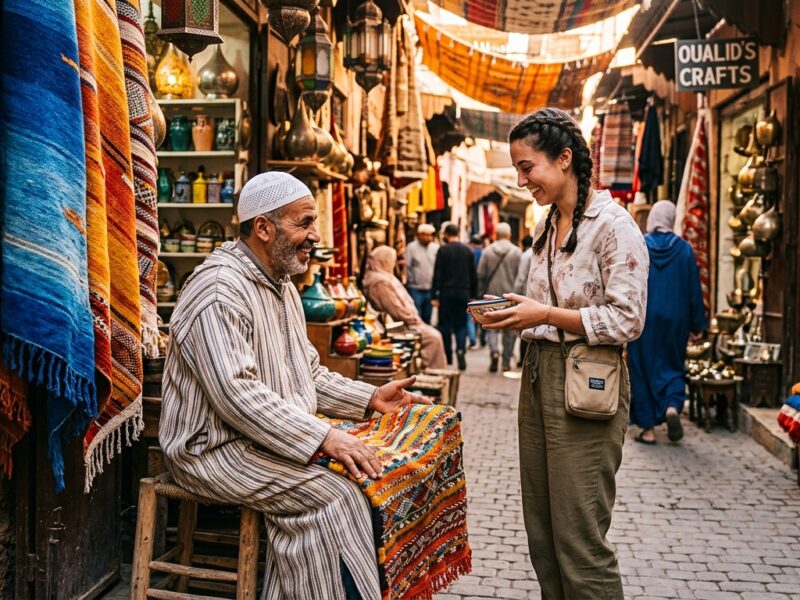
The magic of visiting Marrakech museums is seeing how history connects directly to the living city around you. After admiring the traditional crafts in the Dar Si Said Museum Marrakech, head to the medina’s souks where artisans still practice these ancient skills. Watch woodcarvers create intricate designs, metalsmiths hammer decorative patterns into brass, and weavers produce textiles using traditional looms — the very same techniques displayed behind museum glass. Our guide to Moroccan Markets will help you navigate the souks with confidence.
The historical knowledge gained from the Marrakech history museum will enhance your appreciation of the city’s architectural wonders. You’ll recognize the stylistic elements of different dynasties — Almoravid, Almohad, Saadian, Alaouite — in buildings throughout the medina and understand how these structures relate to Morocco’s broader history. Even modern Marrakesh shows the influence of its rich past: contemporary restaurants serve dishes with centuries of tradition behind them, and modern Moroccan fashion designers often incorporate traditional elements into their cutting-edge creations.
Consider extending your cultural immersion beyond the museums themselves. Explore Traditional Moroccan Music to understand the soundscape of the medina, or discover the Hidden Gems of Morocco for cultural experiences beyond the well-trodden tourist paths. Every connection you make between what you see in the museums and what you experience in the streets deepens your understanding of this extraordinary city.
Reserve Your Spot
Book Your Marrakech Cultural Experience
Explore Marrakech’s museums, medina, and cultural treasures with expert local guides. Instant confirmation, free cancellation on most tours.
Frequently Asked Questions
Everything you need to know before visiting Marrakech museums
✦ Your Morocco Journey Starts Here
Step Inside a Thousand Years of Moroccan History
Marrakech museums don’t just display artifacts — they unlock the soul of an entire civilization. From Berber silverwork that tells stories of mountain life to Islamic geometric patterns that encode spiritual meaning, every exhibit deepens your connection to this extraordinary culture. Don’t just visit Marrakesh — understand it.