Best Souvenirs From Morocco: 25 Authentic Gifts & Insider Tips
Discover the best souvenirs from Morocco with insider tips on authentic gifts, shopping spots, and haggling advice to bring home meaningful Moroccan treasures.
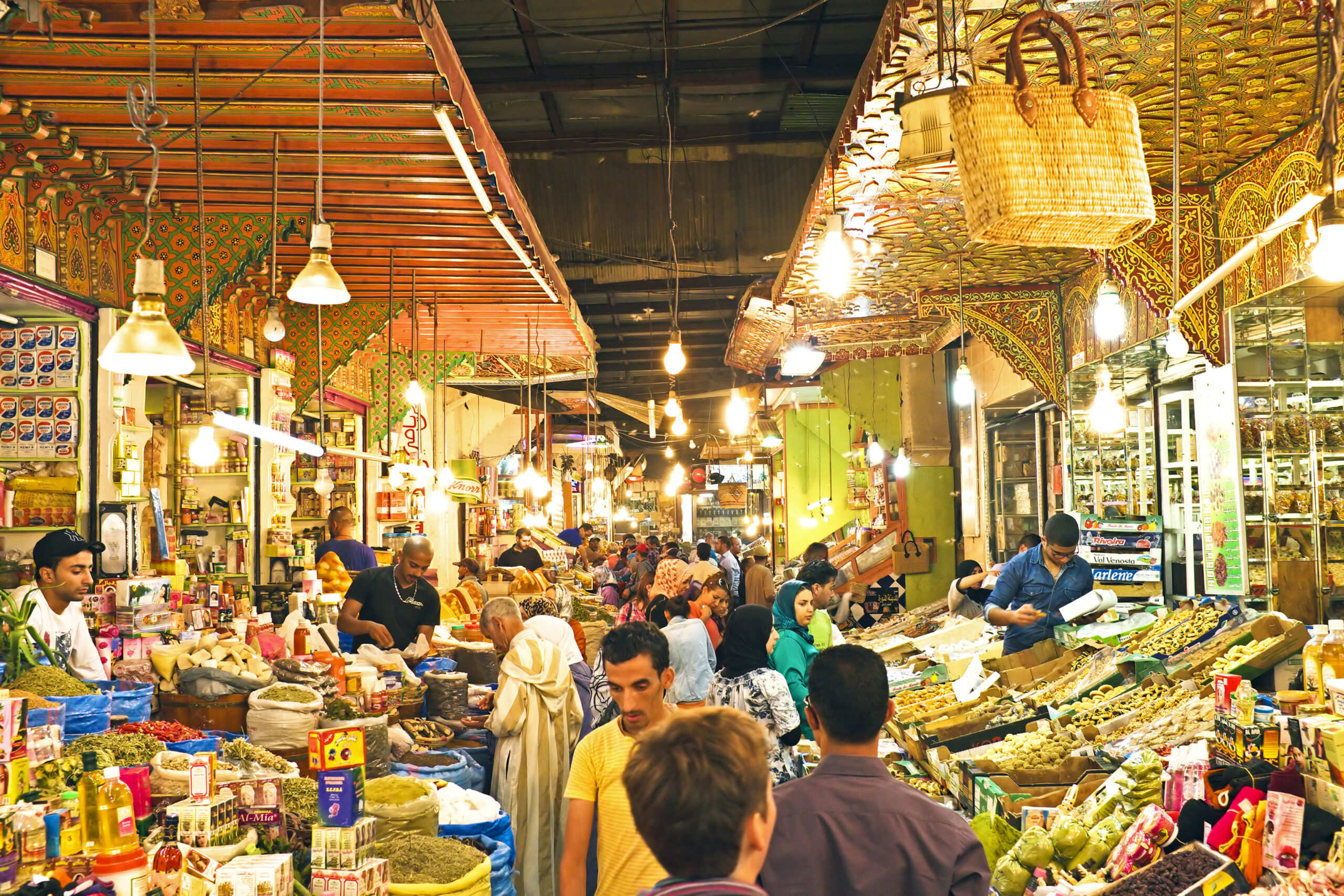
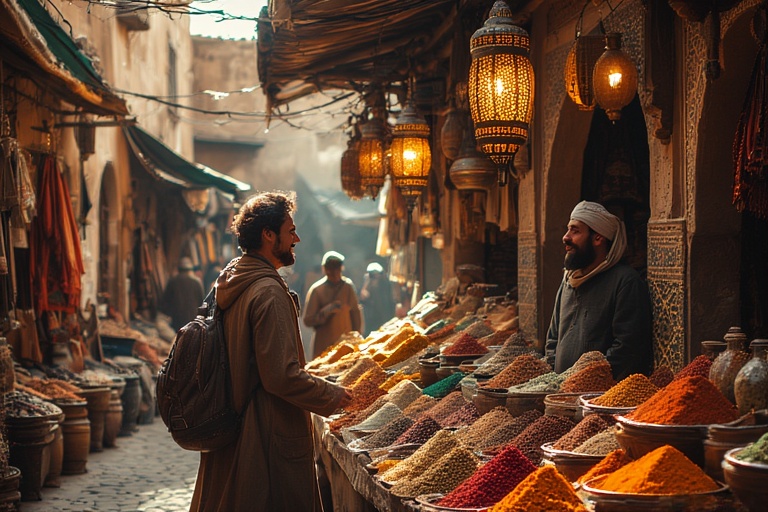
Picture yourself weaving through narrow medina passages lined with glowing brass lanterns, past pyramids of vibrant spices that tickle your nose, and into hidden workshops where artisans shape silver with tools passed down through generations. The best souvenirs from Morocco aren’t mass-produced trinkets—they’re hand-crafted pieces carrying centuries of Amazigh, Arab, and Andalusian tradition in every stitch, glaze, and grain. This guide reveals exactly what to buy in Morocco, where to find authentic pieces, how to spot quality, and how to haggle like a local. For navigating souks like a seasoned pro, our guide to Moroccan markets and bargaining is the perfect companion.
✦ Key Takeaways
Prioritize authenticity—buy from cooperatives, family workshops, and certified stores where possible.
Learn quick quality checks for rugs, leather, spices, argan oil, and ceramics to avoid counterfeits.
Haggle politely—target 30–40% off initial prices and be willing to walk away.
Pack smart: double-wrap spices, roll rugs, and remove glass panels from lanterns before travel.
Shop by region for specialties, and support ethical, sustainable crafts that keep traditions alive.
Why Bring Back Moroccan Souvenirs?
A souvenir serves as more than just a purchase—it’s an item that recalls a place or experience long after you’ve returned home. Moroccan souvenirs carry deep cultural stories within their threads, glazes, and grains. Each geometric pattern on a Berber rug tells the history of an Amazigh tribe from the Atlas Mountains. The deep blue indigo textiles of Chefchaouen echo the city’s origin myth, when Jewish refugees painted buildings blue to mirror the sky and feel closer to heaven.
Buying Morocco souvenirs directly impacts local communities. Artisan cooperatives typically keep around 80 percent of each sale price, while tourist-only shops often pass less than 30 percent to the actual makers. Your purchase helps preserve traditional crafts that risk disappearing as younger generations move to cities for modern jobs. Understanding Moroccan cultural experiences adds even more meaning to every item you bring home.
💡 Practical vs. decorative — Consumable items like spices and argan oil let you taste Morocco months later. Decorative pieces like ceramics and rugs become family heirlooms that transform your living space with authentic Moroccan style.
Quick-Glance Table – Top 15 Best Souvenirs
Before diving deep into each item, here’s a snapshot of the best souvenirs Morocco offers—from budget-friendly spices to investment-worthy rugs:
| Item | Avg. Price (MAD / USD) | Best City / Region | Packability |
|---|---|---|---|
| Berber Rugs | 750–6,000 ($75–600) | Marrakech, Atlas Mountains | Ship ✈ |
| Leather Poufs | 200–500 ($20–50) | Fez, Marrakech | Ship ✈ |
| Argan Oil (100ml) | 100–200 ($10–20) | Essaouira, Agadir | Carry-on ✓ |
| Spice Blends | 20–100 ($2–10) | Marrakech | Carry-on ✓ |
| Ceramic Tagines | 150–400 ($15–40) | Fez, Safi | Ship ✈ |
| Brass Lanterns | 200–800 ($20–80) | Marrakech | Ship ✈ |
| Thuya Wood Boxes | 100–300 ($10–30) | Essaouira | Carry-on ✓ |
| Babouche Slippers | 50–200 ($5–20) | All major cities | Carry-on ✓ |
| Silver Jewelry | 200–1,000 ($20–100) | Marrakech, Fez | Carry-on ✓ |
| Fossils / Geodes | 50–500 ($5–50) | Erfoud | Carry-on ✓ |
| Painted Ceramics | 30–200 ($3–20) | Fez, Safi | Ship ✈ |
| Beni Ourain Blankets | 500–2,000 ($50–200) | Atlas Mountains | Ship ✈ |
| Kaftans | 300–1,500 ($30–150) | Marrakech | Carry-on ✓ |
| Indigo Textiles | 100–400 ($10–40) | Chefchaouen | Carry-on ✓ |
| Tea Sets | 150–500 ($15–50) | All major cities | Ship ✈ |
These souvenirs from Morocco range from budget-friendly spices perfect for sharing to investment-worthy rugs that become family heirlooms, ensuring options for every traveler and every budget.
Deep Dive Into the Best / Most Unique Moroccan Souvenirs
Below is your complete field guide to the best souvenirs from Morocco—how to authenticate them, what to pay, and where to find trusted sellers.
Hand-Woven Berber Rugs & Kilims
Berber rugs represent centuries of Amazigh tribal artistry from the Atlas Mountains. Women weave these unique Moroccan souvenirs using sheep or camel wool, creating patterns that tell family stories and ward off evil spirits. Premium rugs feature 90 to 120 knots per square inch and use natural plant dyes from saffron, henna, and pomegranate. If you’re venturing into the High Atlas, pair shopping with scenic trails from our Atlas Mountains trekking guide.
- Where to buy: Atlas Mountain villages offer the most authentic pieces, though Marrakech’s Ensemble Artisanal provides certified quality at fixed prices
- Quality checks: Perform the burn test—real wool smells like burnt hair and self-extinguishes. Check the back for hand-tied knots versus machine uniformity
- Price benchmarks: Opening prices start at 3,000 MAD for small rugs; aim for 40 percent off. A quality 1.5 × 2 meter rug settles around 2,000–3,500 MAD
- Packing advice: Roll tightly and wrap in plastic. Ships easily via DHL from major cities for 300–500 MAD
For a culture-rich day with artisan stops, consider an Ourika Valley, Berber villages & waterfall tour that often includes cooperative visits where you can watch weavers at work and buy directly.
Moroccan Leather (Poufs, Bags, Journals)
The 11th-century Chouara Tannery in Fez still processes leather using ancient methods. Workers soak hides in limestone and pigeon droppings for ammonia, then dye them in massive stone vats filled with natural colors—saffron creates yellow, poppy makes red, and indigo produces blue. These Moroccan souvenirs smell earthy and feel buttery soft when properly treated.
- Where to buy: Fez medina offers the widest selection near the tanneries, while Marrakech provides more modern styles
- Quality checks: Real leather shows natural grain patterns and absorbs water drops within seconds. Fake leather repels water and smells like plastic
- Price benchmarks: Poufs start at 500 MAD in shops but settle around 200–300 MAD. Bags range from 150–600 MAD depending on size
- Packing advice: Stuff poufs with clothes to save space. Leather journals and small bags fit easily in carry-ons
Pure Argan Oil & Beauty Products
Women’s cooperatives around Essaouira and Agadir produce the world’s finest argan oil through cold-pressing methods. Authentic oil glows golden without cloudiness and contains natural sediment that settles at the bottom. These Morocco gifts offer proven benefits for skin and hair, packed with vitamin E and fatty acids.
- Where to buy: Visit certified women’s cooperatives for guaranteed purity and fair wages. Avoid roadside sellers with suspiciously cheap prices
- Quality checks: Pure argan oil absorbs quickly without greasiness. Check labels for a single ingredient: “argania spinosa kernel oil”
- Price benchmarks: Expect 150–200 MAD for 100ml of cosmetic grade, 100–150 MAD for culinary grade
- Packing advice: EU and US customs allow containers up to 100ml in carry-on luggage within sealed plastic bags
💡 Argan oil authenticity test — Place a drop on your wrist. Pure argan oil absorbs within 30 seconds, leaving no greasy residue. If it sits on your skin or smells strongly of nuts, it’s likely diluted with cheaper oils.
Traditional Spices & Ras el Hanout
Morocco’s signature spice blend combines up to 60 ingredients, creating layers of flavor impossible to recreate elsewhere. Master spice merchants guard their ras el hanout recipes, balancing cinnamon, cumin, coriander, paprika, turmeric, and rare additions like rose petals. Fresh Morocco souvenirs like these transform ordinary dishes into Moroccan feasts. Want to learn how to use your haul? Try a hands-on Moroccan cooking class to master tagines and chermoula.
- Where to buy: Marrakech’s Rahba Kedima (Spice Square) offers the freshest blends from longtime merchants
- Quality checks: Pinch spices between fingers—vibrant aroma indicates freshness. Avoid pre-packaged tourist versions
- Price benchmarks: Quality ras el hanout costs 60–100 MAD per 100 grams. Individual spices run 20–50 MAD
- Packing advice: Double-bag in sealed plastic, then wrap in clothes to prevent spills. Fits easily in carry-on
Ceramics & Zellige Pottery
The pottery masters of Fez and Safi shape clay into functional art using techniques unchanged since medieval times. Authentic pieces feature lead-free glazes that create distinctive crackle patterns called “tinglaze.” These unique Moroccan souvenirs showcase geometric designs inspired by Islamic art, with signature cobalt blues and saffron yellows.
- Where to buy: Fez pottery district for traditional styles, Safi for contemporary designs
- Quality checks: Tap gently—quality ceramics ring like a bell. Check for lead-free certification stickers
- Price benchmarks: Small bowls start at 30 MAD, decorative plates 100–200 MAD, serving tagines 200–400 MAD
- Packing advice: Wrap each piece in bubble wrap, then nestle inside soft clothes. Consider shipping larger sets
Brass & Pewter Lanterns
Metalworkers hand-cut intricate patterns into brass sheets, creating shadows that dance across walls when lit. These Moroccan souvenirs come in oxidized finishes for antique appeal or polished bright for modern homes. Colored glass inserts add jewel tones to the light display.
- Where to buy: Marrakech souks near Place des Ferblantiers (Metalworkers Square)
- Quality checks: Hand-cut edges feel slightly rough versus machine-smooth cuts. Brass shouldn’t attract magnets
- Price benchmarks: Small lanterns 200–400 MAD, large statement pieces 600–1,000 MAD
- Packing advice: Remove glass panels and wrap separately. Stuff the lantern body with socks or underwear
Thuya Wood Boxes & Inlay Work
Essaouira’s master woodworkers transform thuya root burls into aromatic treasures. The wood releases a cedar-like scent from natural thujone oils, and features swirling grain patterns unique to each piece. These souvenirs from Morocco showcase meticulous inlay work with ebony and citron wood creating geometric designs.
- Where to buy: Essaouira’s woodworking cooperatives along the medina walls
- Quality checks: Genuine thuya has magnetic-like natural hinges that close smoothly. The scent intensifies when rubbed
- Price benchmarks: Small boxes 100–200 MAD, jewelry boxes 200–400 MAD, chess sets 500–1,000 MAD
- Packing advice: Wrap in soft paper to preserve the natural oils and scent
Essaouira’s cooperative workshops let you watch artisans carve and polish thuya in real time. Prices here are fixed and fair—no haggling needed—and your money goes directly to the craftsperson.
Babouche Slippers
Traditional pointed-toe slippers crafted from soft goat or sheep leather mold to your feet within days. Morocco gifts like these come in every color imaginable—bright yellows for good luck, deep reds for celebration. Men’s styles feature rounded toes while women’s come to dramatic points.
- Where to buy: Every medina sells babouches, but Fez offers the highest quality traditional styles
- Quality checks: Interior stitching should be neat and even. Leather should feel supple, not stiff
- Price benchmarks: Basic styles 50–100 MAD, embroidered versions 150–250 MAD
- Packing advice: Stuff with socks to maintain shape. These Morocco souvenirs pack flat in luggage corners
Amazigh (Berber) Silver Jewelry
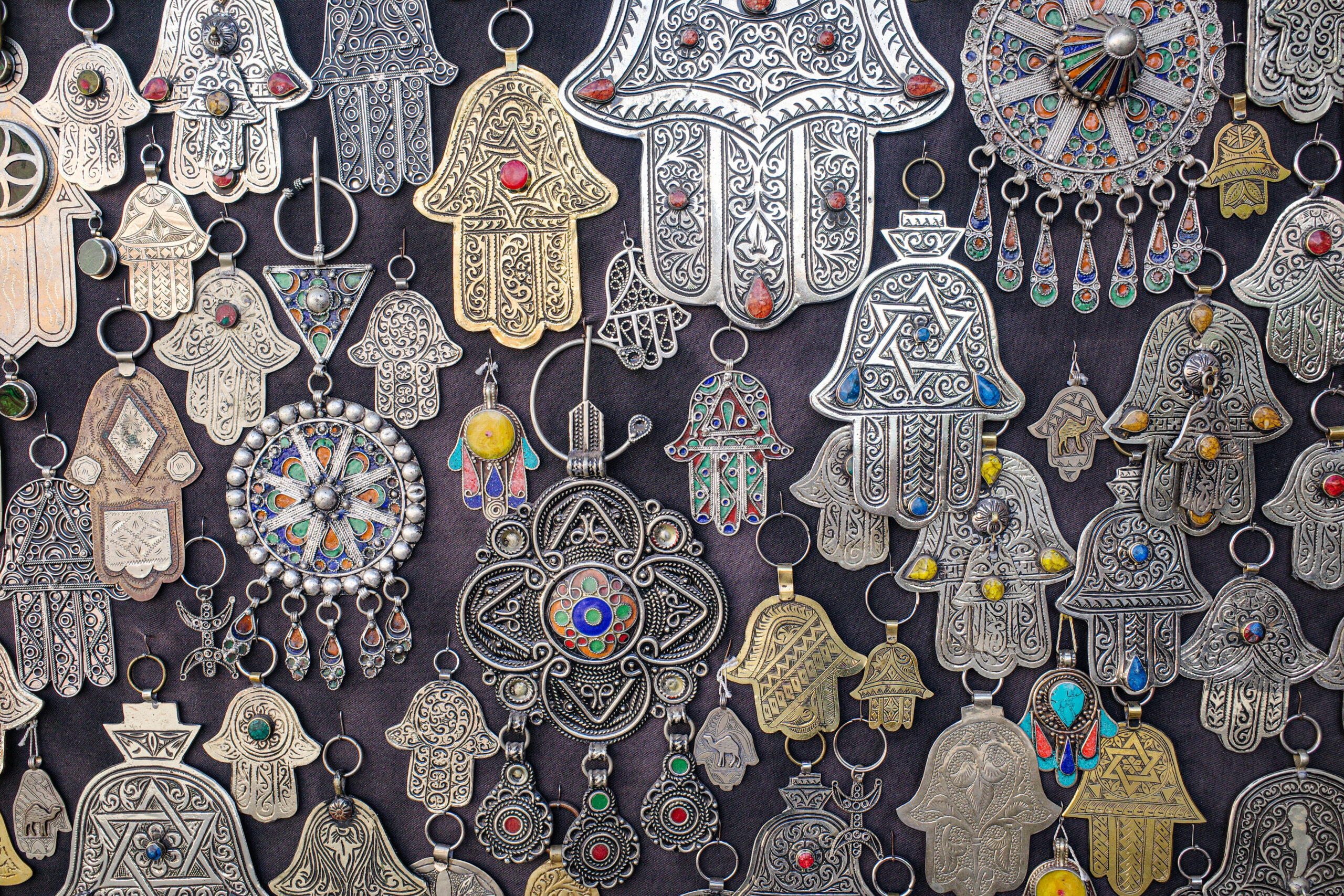
Bold silver pieces feature protective symbols like the hand of Fatima, evil eyes, and geometric patterns. Berber women traditionally wore their wealth in silver, passing pieces through generations. These unique Moroccan souvenirs carry cultural significance beyond mere decoration.
- Where to buy: Tiznit in southern Morocco for authentic antique pieces, Marrakech for contemporary designs
- Quality checks: Look for 800–900 silver purity stamps. Real silver won’t stick to magnets
- Price benchmarks: Simple rings 100–200 MAD, elaborate necklaces 500–1,500 MAD
- Packing advice: Store in soft cloth pouches to prevent scratching
Desert-Sourced Fossils & Geodes
The Sahara near Erfoud yields orthoceras and trilobite fossils dating back 400 million years. Polished plates reveal prehistoric sea creatures frozen in stone, while split geodes sparkle with crystal formations. These best souvenirs Morocco offers connect you to ancient history. Adventurers can combine rock-hunting with epic dunes on curated Sahara Desert tours.
- Where to buy: Erfoud fossil workshops or Rissani market for authentic specimens
- Quality checks: Real fossils show natural imperfections. Fakes look too perfect or painted
- Price benchmarks: Small pieces 50–200 MAD, museum-quality plates 300–1,000 MAD
- Packing advice: Wrap carefully in clothes. Large pieces may require export permits—keep all receipts
Hand-Painted Tagines & Cooking Utensils
Functional tagines differ from decorative versions—cooking tagines have unglazed bottoms that conduct heat evenly. Hand-painted designs feature traditional motifs like eight-pointed stars and arabesque swirls. These Morocco souvenirs bring Moroccan cooking traditions to your kitchen.
- Where to buy: Fez or Safi for authentic cooking tagines, tourist areas for decorative only
- Quality checks: Cooking tagines feel heavier with thicker walls. Decorative versions may have lead glazes—ask specifically
- Price benchmarks: Small cooking tagines 150–250 MAD, large family sizes 300–500 MAD
- Packing advice: Nest smaller items inside tagine cone, wrap entire piece in bubble wrap
Beni Ourain Blankets & Cushions
Thick undyed sheep wool from the Middle Atlas creates these cloud-soft blankets marked with simple black geometric lines. Berber women weave these Moroccan souvenirs during long winter months, with each pattern holding family meaning. A typical blanket measuring 1.8 × 2.5 meters weighs about 4 kilograms.
- Where to buy: Source directly from Middle Atlas villages or trusted Marrakech dealers
- Quality checks: Authentic pieces have irregular patterns and natural wool variations. Machine-made copies look too perfect
- Price benchmarks: Small throws 500–1,000 MAD, full blankets 1,500–3,000 MAD
- Packing advice: Vacuum-seal bags reduce bulk significantly for shipping
Kaftans & Djellabas
Traditional robes showcase Morocco’s textile artistry through intricate embroidery styles. Sfifa embroidery uses silk braiding, while maâlem features gold threadwork. For a deeper look at Moroccan dress and traditional clothing, explore our dedicated guide. These what to buy in Morocco favorites work as elegant loungewear or special occasion pieces.
- Where to buy: Marrakech has the most variety, Fez for traditional styles
- Quality checks: Hand embroidery shows slight irregularities on the reverse. Check seam quality
- Price benchmarks: Simple cotton djellabas 200–400 MAD, embroidered silk kaftans 800–2,000 MAD
- Packing advice: Fold carefully with tissue paper between embroidered sections
Natural Indigo & Other Dyes (Chefchaouen)
The blue city of Chefchaouen specializes in natural indigo textiles that mirror its famous blue-washed walls. Plant-based dye vats create deep blues that actually improve with washing. These unique Moroccan souvenirs capture the essence of Morocco’s most photogenic town.
- Where to buy: Chefchaouen’s Place Outa el Hammam and surrounding streets
- Quality checks: Rub damp white cloth on fabric—quality dyes won’t transfer color
- Price benchmarks: Scarves 100–200 MAD, throws 300–600 MAD, clothing 200–500 MAD
- Packing advice: Wash separately first time to remove excess dye
Spiced Tea Sets
Moroccan tea culture revolves around ornate brass teapots (berrad) and small decorated glasses (beldi). Recycled glass creates the distinctive bubbled texture of traditional tea glasses. These Morocco gifts capture the ritual of Moroccan hospitality, where refusing three glasses of mint tea borders on rudeness. Dive deeper into ceremony and recipes with our guide to Moroccan tea culture.
- Where to buy: Find complete sets in Marrakech’s metalwork souks or Fez’s brass district
- Quality checks: Quality teapots have smooth-operating hinges and well-fitted lids. Glasses should have no sharp edges
- Price benchmarks: Basic 6-glass sets with tray 150–300 MAD, ornate silver-plated sets 400–800 MAD
- Packing advice: Wrap each glass individually in socks or paper. Nest inside teapot for space-saving
Spotlight – Truly Unique Moroccan Souvenirs
Beyond typical market finds, Morocco offers extraordinary unique Moroccan souvenirs for adventurous shoppers. Camel-bone chess sets from Saharan workshops feature hand-carved pieces depicting desert life. Henna tattoo kits containing 100 percent lawsonia inermis powder let you recreate traditional body art at home—Marrakech’s Henna Cafe sells authentic supplies.
Musical souls treasure handcrafted instruments like the oud (pear-shaped lute) from Casablanca’s instrument makers or bendir frame drums from Fez. Our guide to traditional Moroccan music dives deeper into these instruments and their cultural roots. The Ourika Valley near Marrakech specializes in hand-carved cedar door knockers shaped like the Hand of Fatima, bringing Moroccan protection symbols to your front door. These best souvenirs from Morocco require extra hunting but reward with true originality.
For first-time visitors keen to orient themselves in the medina and bargain confidently, the Marrakech City Tour: Souks, Palaces & Hidden Gems is a smart warm-up that introduces you to the layout, key workshops, and fair pricing before you shop solo.
Morocco Gifts Tailored to Your Recipient
Choosing Morocco gifts becomes easier when you match souvenirs to personalities:
- Foodie Friend: Pack their pantry with ras el hanout spice blend, preserved lemons from Fez, and a traditional tea set. Add saffron from Taliouine and authentic harissa paste for complete Moroccan cooking adventures. Our Moroccan food guide helps pair spices with the right recipes.
- Design Lover: Zellige ceramic tiles create instant accent walls. Pair with a brass lantern and Beni Ourain throw for a complete Moroccan corner. Small thuya wood boxes work as sophisticated desk accessories.
- Beauty Buff: Pure argan oil forms the foundation, but don’t miss rhassoul clay soap from the Atlas Mountains. Black soap (savon beldi) and natural rose water from Kelaat M’Gouna complete a spa-worthy collection.
- Kids: Mini leather camels in bright colors delight young ones. Hand-woven basket drums introduce world music. Colorful babouche slippers in child sizes make dress-up extra special.
- Corporate Colleagues: Slim leather notebooks embossed with Moroccan patterns offer daily use. Silver tea spoon sets or small brass boxes provide desk-worthy conversation starters without taking up space.
Practical Buying Tips
Haggling etiquette starts with a greeting—”salaam alaikum” opens doors and hearts. Initial prices typically run double the fair value. Aim for 30 to 40 percent off through friendly negotiation. Never show too much interest in your desired item; browse others first. Walk away slowly if prices stay high—sellers often call you back with better offers. For deep bargaining tactics and must-visit stalls, bookmark our souks bargaining guide.
Currency matters in Morocco’s cash-based economy. Dirham (MAD) rules the souks, with ATMs limiting daily withdrawals to 2,000 MAD. Many stalls operate cash-only, so stock up before shopping sprees. Watch for counterfeit 100 MAD notes—run your finger over the king’s portrait to feel raised printing. For detailed budget planning, our Morocco travel cost guide covers everything.
📌 Stay connected while shopping — An eSIM like Airalo helps you message sellers, translate quickly, and use maps without roaming surprises. Essential for coordinating deliveries and checking prices on the go.
Avoid counterfeits by learning authentic signatures. Real argan oil lists only “argania spinosa kernel oil” as the ingredient. Fake versions include additives or fragrances. UV stamp tests reveal counterfeit money. Ask about certificates for silver jewelry and lead-free pottery.
Navigate customs by knowing import limits. Untreated wood and fossils face restrictions. Declare cash amounts over 10,000 MAD. Food items like spices pass easily in personal quantities. Keep all receipts for valuable purchases.
Pack fragile treasures with care. Double-box ceramics using local newspaper as padding. Roll rugs tightly and seal in plastic against moisture. Items over 20 kilograms ship affordably via DHL or Poste Maroc—budget 300–500 MAD for shipping costs.
Claim VAT refunds on purchases over 2,000 MAD from certified stores. Complete Global Blue forms at purchase, then get airport customs stamps before checking luggage. Refunds process to credit cards within weeks.
Shopping Hotspots Cheat-Sheet
The ultimate souvenir capital
Start at Jemaa el-Fna for the full sensory experience, then explore specialized souks for leather, spices, and metalwork. Visit Ensemble Artisanal for fixed prices and quality guarantees. Short on time? A curated city tour of souks and palaces helps you cover more ground. Explore our Marrakech medina guide for navigation tips.
Leather, copper, and ceramics heartland
Navigate Talaa Kebira for leather goods and copper work. Chouara Tannery rooftop terraces offer bird’s-eye views of the dyeing process. The pottery district is one of Morocco’s last remaining centers for authentic hand-painted zellige.
Thuya wood and argan oil haven
Seek thuya wood marquetry cooperatives along the medina walls. Women’s argan cooperatives line the road to Agadir, offering fair-trade certified oils with guaranteed purity.
Indigo textiles and blue-city charm
Indigo textile workshops cluster around Place Outa el Hammam and the surrounding streets. Don’t miss local goat cheese at morning markets—an unexpected but delicious souvenir.
Fossils, geodes, and desert crafts
Authentic fossil preparation workshops and desert rose mineral specimens abound. Rissani’s Sunday market offers rural crafts you won’t find in big cities. Combine with a Sahara desert tour for the full experience.
Modern takes on traditional crafts
The Habous Quarter houses ceramic workshops and modern interpretations of traditional crafts. Perfect for travelers who prefer curated, fixed-price shopping over souk haggling.
Sustainable & Ethical Buying
Supporting responsible tourism through your unique Moroccan souvenirs makes a real difference. Seek Women’s Argan Cooperative labels and fair-trade certifications like “Coopérative Agrée.” These groups ensure living wages and reinvest profits in education and healthcare for rural communities.
Avoid products containing tortoise shell, coral, or ivory—all banned under CITES international agreements. Choose plant-dyed textiles over chemical versions for environmental and quality reasons. Solar-tanned leather from newer cooperatives reduces environmental impact compared to traditional methods.
💡 Ask about the maker’s story — Family workshops and cooperatives gladly share their heritage, while mass-production outlets stay vague about origins. Your conscious choices preserve traditional crafts for future generations and deliver better quality souvenirs.
Reserve Your Spot
Book Your Morocco Shopping Experience
Explore Marrakech’s legendary souks with expert local guides who know the best workshops, fair prices, and hidden artisan studios. Instant confirmation, free cancellation on most tours.
Frequently Asked Questions
Everything you need to know about buying souvenirs in Morocco
✦ Your Morocco Journey Starts Here
Bring Home Morocco’s Story
From hand-woven Berber rugs carrying Atlas Mountain stories to pure argan oil supporting women’s cooperatives, the best souvenirs from Morocco transform from simple purchases into meaningful treasures when you understand their origins. Your Morocco gifts will spark conversations and memories long after your tan fades.