Women Traveling Morocco: Safety, Culture & Confidence Guide for 2026
Women traveling Morocco in 2026? Get the ultimate safety guide with cultural etiquette, dress rules, transit tips, and smart solo travel strategies to explore this North African gem with confidence.
Picture yourself sipping fresh mint tea on a sunlit riad rooftop while the call to prayer echoes across the Marrakech medina below. Now imagine navigating the labyrinthine souks, catching a train to the blue-washed streets of Chefchaouen, and falling asleep under a canopy of Sahara stars — all on your own terms, as a woman. It sounds magical, and it absolutely can be. But between the dream and the reality sits one persistent question: Is it actually safe?
With Morocco welcoming over 13 million tourists annually and the U.S. State Department maintaining a Level 2 advisory, the safety landscape deserves nuance rather than fear. Recent surveys show 73% of Moroccan women themselves report street harassment — yet violent incidents against tourists remain rare. This comprehensive guide transforms statistics into actionable advice for women traveling Morocco, covering cultural etiquette, practical dress codes, transportation strategies, sample itineraries, and emergency preparedness so you can experience every corner of this extraordinary country with clarity and confidence.
✦ Key Takeaways
Morocco is generally safe for women travelers who understand cultural norms and follow common-sense precautions.
Modest dress — collarbone to below knee — reduces unwanted attention by approximately 40%.
Strategic accommodation choices like riads and female-only hostel dorms significantly enhance safety.
Learn key phrases like “La, shukran” (No, thank you) to handle unwanted attention firmly but politely.
Connecting with local women through cooperatives and cooking classes provides authentic experiences while enhancing safety.
Snapshot: Is Morocco Safe for Women?
Morocco safety for women encompasses three key elements: absence of violent crime, effective harassment management, and terrorism awareness. The data paints a nuanced picture that every woman considering travel to Morocco should understand before booking her flight.
Morocco welcomes more than 13 million tourists each year, with tens of thousands being solo female travelers who experience few violent incidents. The country ranks 114th out of 215 nations on the Women Safety Index, positioning it as safer than Egypt and Tunisia while maintaining violent crime rates comparable to Portugal. For broader context on the country’s security landscape, our Morocco safety travel guide for 2026 provides a comprehensive overview.
💡 Key statistic: A 2017 government survey found 73% of Moroccan women reported experiencing public-space harassment. However, violent crime against foreign tourists remains exceptionally rare — petty theft in crowded medinas poses a far greater risk.
The U.S. State Department maintains a Level 2 advisory for Morocco, recommending travelers “exercise increased caution” primarily due to terrorism concerns, though actual terror attacks have been rare since 2018. When comparing Morocco to other North African destinations, distinct safety patterns emerge:
- Harassment levels: Lower than Egypt, similar to Tunisia
- Petty theft risk: Moderate, concentrated in tourist areas like Djemaa el-Fna and Fes medina
- Terror threat: Low, with enhanced security measures at major sites
- Violent crime: Rare against tourists, comparable to Southern European levels
The clear verdict: Morocco remains generally safe for women who respect cultural norms and follow common-sense precautions. Understanding these realities helps answer the question “is it safe for a woman to travel to Morocco” with confidence rather than fear. The key is preparation — and that’s precisely what the rest of this guide delivers.
Cultural Foundations for Traveling to Morocco as a Woman
Traveling to Morocco as a woman becomes significantly easier when you understand the cultural framework shaping daily interactions. Morocco follows predominantly Sunni-Maliki Islam, which influences social norms alongside a strong hospitality tradition called “diyafa” — a deep-rooted commitment to welcoming guests that you’ll experience firsthand in tea invitations, unsolicited directions, and genuine warmth from strangers.
Gender norms shape public interactions in specific ways. Handshakes between opposite genders remain uncommon unless initiated by the woman. Street life tends to be male-dominated, particularly in traditional areas like the old medinas of Fes and Marrakech, though this varies significantly by neighborhood and city. Modern districts in Casablanca and Rabat feel markedly different from rural mountain villages. Both elder males and females command respect in social hierarchies.
Unwanted attention doesn’t always signal malicious intent. Sometimes it reflects genuine curiosity about foreign visitors, while other times it represents aggressive sales tactics. Learning to distinguish between these motivations helps you respond appropriately — and reduces stress dramatically.
The phrase “La, shukran” (No, thank you) delivered politely but firmly becomes your most valuable tool. Understanding these cultural foundations reduces hassles by approximately 50%, according to aggregated traveler reports. When you recognize that conservative public behavior codes exist to maintain social harmony, adapting becomes easier rather than restrictive.
Morocco travel tips for women consistently emphasize that respecting local customs while maintaining personal boundaries creates the optimal travel experience. For a deeper dive into navigating social situations gracefully, our Moroccan etiquette guide for travelers covers everything from greetings to dining customs. This balance allows you to engage authentically with Moroccan culture while protecting your comfort and safety.
Dress & Behaviour Cheat-Sheet
How to travel in Morocco as a woman starts with strategic wardrobe choices. The golden rule: coverage from collarbone to below knee, avoiding tight or transparent fabrics. This approach reduces catcalling by approximately 40% based on aggregated traveler reports — a significant difference that also keeps you cooler in Morocco’s desert heat.
Essential packing items for women traveling Morocco include:
- Lightweight scarf: Covers shoulders, hair in mosques, and provides sun protection — arguably the most versatile item in your bag
- Loose linen pants: Comfortable in heat while maintaining modesty
- Maxi dresses: Full coverage with effortless style
- Modest swim cover-up: Essential for beach visits outside private resort pools
- Closed walking shoes: Critical for navigating uneven medina streets and avoiding debris
💡 Practical insight: Loose clothing isn’t just culturally respectful — it’s physically smarter. Breathable fabrics like linen and cotton keep you significantly cooler than tight-fitting alternatives in temperatures that regularly exceed 38°C (100°F) during summer months. For more on traditional Moroccan dress and clothing customs, our dedicated guide provides full context.
Behavioral guidelines enhance your cultural integration beyond clothing:
- Avoid public displays of affection — this applies to all couples, not just tourists
- Maintain low voice volumes in sacred sites and residential neighborhoods
- Use your right hand for eating and handshakes (the left hand is considered unclean)
- Accept mint tea invitations graciously — declining can unintentionally cause offense
- Photograph people only with explicit permission, especially in rural areas
These adjustments might feel restrictive initially, but most women find them minor compared to the rich experiences Morocco offers. Your clothing choices signal cultural awareness, often resulting in warmer local interactions, better prices in souks, and enhanced safety throughout your journey.
Street Smarts: Handling Harassment & Common Scams
Solo female travel Morocco requires developing effective responses to common challenges. Street harassment typically involves phrases like “Gazelle!” or “Bonjour madame!” delivered by men seeking attention. Based on hundreds of female traveler reports, three responses prove most effective: complete ignorance (keep walking with purpose), firm eye contact paired with a neutral “Non,” or wearing sunglasses and headphones to signal unavailability.
Common scams targeting tourists — regardless of gender, though women may be targeted more frequently — include:
- Fake guides: Men offering to “help” navigate medinas, then demanding payment. Simply say “I know the way” and keep walking
- “Shop closed” redirects: Being told your intended destination is closed, then led to commission-based stores
- Henna artists: Grabbing hands without permission and demanding payment — keep hands in pockets or crossed when walking through Djemaa el-Fna
- Broken meter taxis: Drivers claiming meters are broken to inflate fares
Download authorized ride-hailing apps like Heetch and Careem before arriving in major cities. These provide tracked journeys with predetermined pricing, eliminating the taxi negotiation stress entirely. Always share your live location with a trusted contact when traveling between destinations.
Nighttime safety requires extra vigilance for solo female travel Morocco:
- Stay on well-lit main streets — particularly in the ville nouvelle (new town) areas
- Pair up with other travelers you’ve met at your accommodation after 11 PM
- Choose accommodations with 24-hour reception and clear directions from main roads
- Keep emergency numbers readily accessible on your phone’s lock screen
Essential emergency contacts:
- Police: 19 (landline) or 190 (mobile)
- Tourist Police: 177 — specifically trained for tourist incidents
- Ambulance: 150
Can women travel to Morocco alone successfully? Absolutely, when armed with these street-smart strategies. Most harassment remains verbal rather than physical, and confident responses typically end unwanted interactions within seconds. Your safety increases dramatically when you project awareness and purpose in your movements — walk like you know where you’re going, even when you don’t.
Transport & Mobility
Solo female travel Morocco becomes smoother with strategic transportation choices. Each option offers different safety levels and cultural considerations for women, and knowing which to choose — and when — can make or break your comfort level.
ONCF trains provide the safest intercity travel option, featuring reserved seating and controlled environments. For overnight journeys, choose “Couchette” night-train cabins with lockable doors — these compartments offer privacy and security particularly important when traveling to Morocco as a woman alone. Our Morocco trains travel guide covers routes, schedules, and booking tips in detail.
Supratours and CTM buses maintain reliable baggage ticket systems preventing theft. Staff often accommodate requests to seat women next to other women, enhancing comfort during longer journeys. Book tickets in advance through official websites or stations to avoid street touts who charge inflated prices.
For shared grand taxis, request the front seat to minimize unwanted physical contact in cramped rear conditions. Always agree on fares before departure and confirm the price covers your specific destination — not a drop-off “near” it. For comprehensive guidance, see our complete guide to taxi services in Morocco.
Major cities increasingly offer ride-hailing apps providing tracked journeys and predetermined pricing. Casablanca has piloted female-only tram carriages, reflecting growing awareness of women’s transport needs. These digital services significantly enhance safety for solo female travelers by creating an accountability trail.
Transportation safety essentials:
- Screenshot your route before traveling — signal can drop in rural areas
- Keep small bills (10–20 MAD notes) for exact taxi fares
- Avoid accepting rides from unofficial sources, regardless of how friendly the offer
- Trust your instincts about vehicle conditions — if something feels off, wait for the next one
For more detail on every mode of transport including domestic flights and car rentals, our Morocco transportation guide provides comprehensive coverage.
Accommodation Strategies
Morocco travel tips for women emphasize accommodation selection as crucial for safety and comfort. Where you sleep directly affects how confidently you explore — the right choice eliminates stress and creates a secure home base for each stage of your journey.
Riads provide the most authentic cultural experience, with small staff teams who quickly learn your name and lockable doors behind thick medina walls. These traditional houses converted into guesthouses offer extraordinary charm and security within their walls. However, their medina locations can prove challenging for nighttime navigation through narrow, winding alleys. Book riads with clear GPS-pinned directions and plan to arrive during daylight hours whenever possible. Explore curated options in our Morocco riads travel guide.
Hostels catering to international travelers increasingly offer female-only dormitories with coded entry systems. These budget-friendly options facilitate meeting other solo female travelers while maintaining security — many women report their best travel friendships forming in these dorms. Our hostels in Morocco guide highlights properties with strong safety records.
💡 Booking strategy: When researching accommodations, search reviews for keywords like “solo female,” “safe area,” and “night staff.” These terms quickly identify properties with strong safety records for women travelers. Prioritize places with at least 50+ reviews mentioning these terms positively.
International hotel chains excel for late-night arrivals, offering larger security teams, 24-hour reception, and well-lit surrounding areas. While less culturally immersive than riads, they provide predictable safety standards familiar to first-time visitors.
Essential accommodation checklist for women traveling Morocco:
- Arrange airport pickup through your lodging — especially for late arrivals
- Confirm 24-hour reception or after-hours contact availability
- Request upper-floor rooms for added privacy from street noise and access
- Verify door locks function properly upon check-in
- Check proximity to main roads, landmarks, or taxi ranks for nighttime navigation
For convenient options across all price ranges and cities, browse our complete list of Morocco accommodation options.
🚐 Pre-book your airport transfer for a stress-free arrival:
Solo Itineraries & Group Alternatives
Can women travel to Morocco alone while maximizing safety and cultural experiences? These curated itineraries balance adventure with security considerations, designed specifically for solo female travel Morocco. Each destination has been chosen for its traveler-friendly infrastructure and rewarding experiences for women.
7-Day Imperial Cities & Desert Taster
Hassan II Mosque & coastal orientation
Arrive in Casablanca and settle into your hotel in the modern Gauthier or Maarif districts — both well-lit and easy to navigate solo. Visit the stunning Hassan II Mosque, one of the few Moroccan mosques open to non-Muslims, with guided tours available throughout the day. The mosque’s oceanfront setting is spectacular at sunset.
Wander the Corniche waterfront promenade in the evening, where families and couples stroll — a comfortable environment for solo women. Dine at one of the seafood restaurants overlooking the Atlantic.
Capital city charm & onward to the Blue Pearl
Take the morning train to Rabat — Morocco’s peaceful capital city with a relaxed medina that’s perfect for solo exploration. Visit the Kasbah of the Udayas and the Hassan Tower. In the afternoon, catch a CTM bus north to Chefchaouen, the famous blue city nestled in the Rif Mountains.
Chefchaouen is widely regarded as one of Morocco’s safest and most welcoming destinations for solo female travelers, with a laid-back mountain atmosphere and a compact medina that’s nearly impossible to get truly lost in.
Blue streets, mountain hikes & artisan shopping
Spend a full day exploring Chefchaouen’s photogenic blue-washed streets. Hike to the Spanish Mosque viewpoint for panoramic views — the trail is well-marked and safe during daylight. Browse artisan workshops where Rif Mountain women sell handwoven blankets and natural goat cheese.
Women’s cooperatives & the world’s oldest medina
Travel to Fes and hire an official guide (identifiable by their brass badge) to navigate the world’s largest car-free urban area. Visit women’s cooperatives producing traditional embroidery and ceramics — these provide safe cultural immersion and support local female entrepreneurs. The Chouara Tanneries and Al-Qarawiyyin University, founded by a woman named Fatima al-Fihri in 859 CE, are must-sees.
Merzouga camel trek & desert camp under the stars
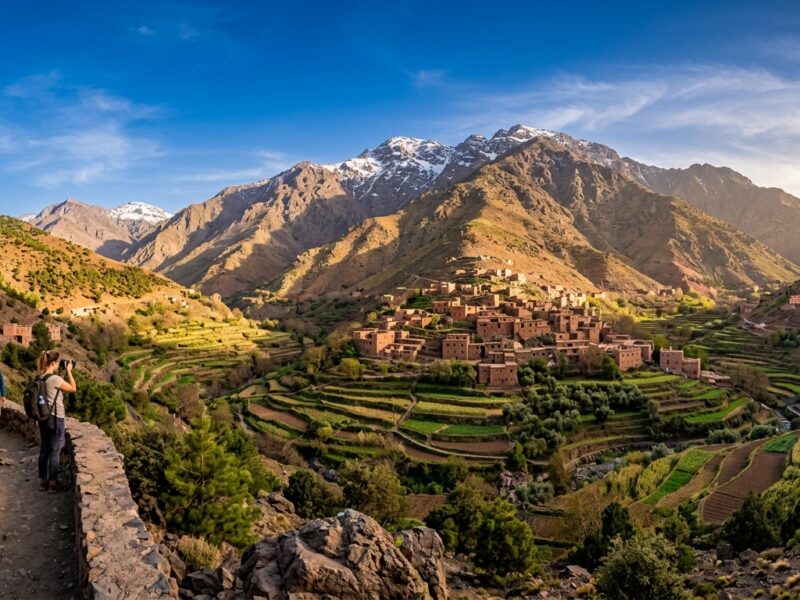
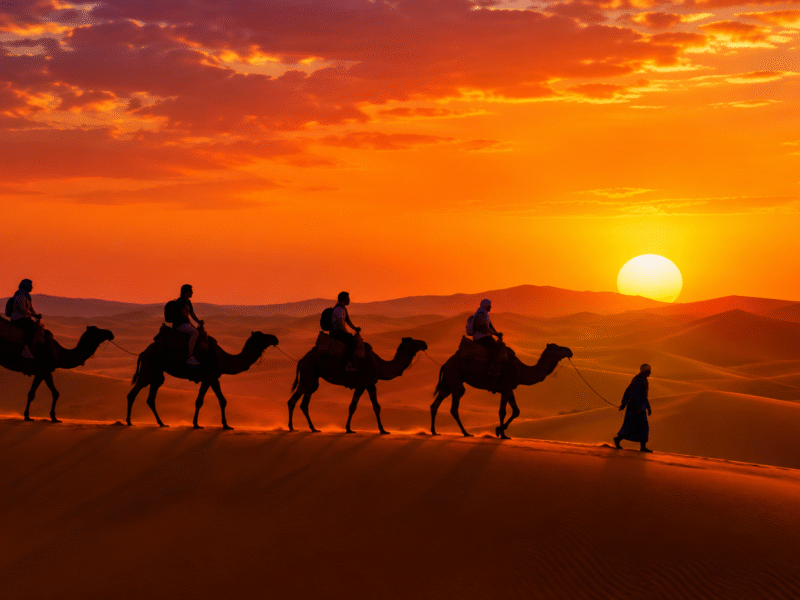
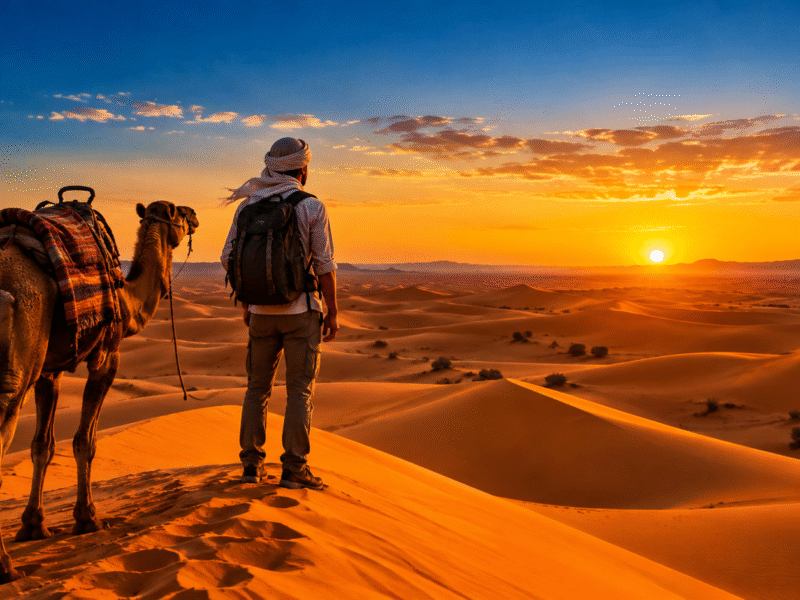
Join a reputable Sahara desert tour from Marrakech to Merzouga offering private tents for solo travelers. The journey passes through the Todra Gorge and Ait Benhaddou kasbah. At Erg Chebbi, ride camels to your desert camp as the sun sets over the dunes — one of Morocco’s most unforgettable experiences.
Reputable camps employ mixed-gender staff, provide lockable tents, and maintain toilet facilities. Many solo women rate this as the highlight of their trip.
Souks, palaces & a farewell cooking class
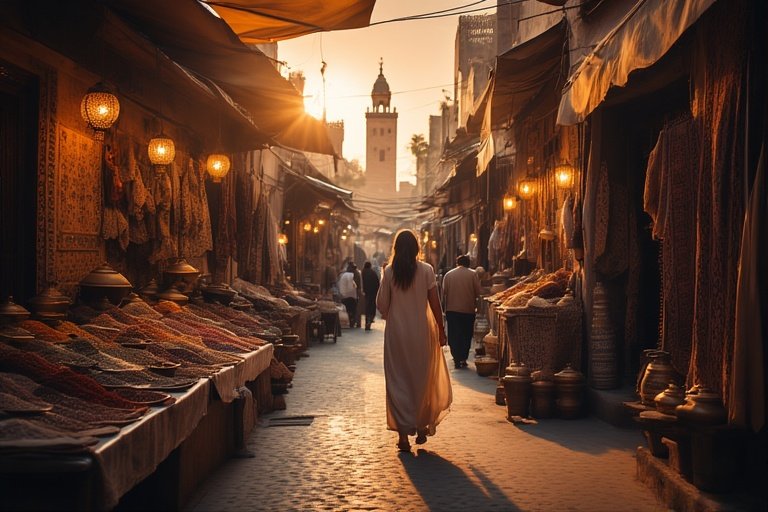
Arrive in vibrant Marrakech and navigate the souks with your hard-earned street smarts. Visit Bahia Palace, Jardin Majorelle, and the bustling Djemaa el-Fna square. End your journey with a women-led cooking class where you’ll learn to prepare tagine and pastilla — the perfect way to carry Morocco home with you.
14-Day Mountains, Medinas & Atlantic Adventure
This extended journey adds coastal Essaouira, featuring women-led surf schools and a thriving artistic community that attracts solo female travelers year-round. Include Atlas Mountain tours with visits to authentic Berber villages, where families are accustomed to hosting independent women travelers. Each destination offers specific women-friendly experiences enriching your journey.
Women traveling Morocco benefit from targeted activities across both itineraries:
- Women-led cooking classes in Marrakech and Berber villages
- Female hammam sessions (typically mornings in traditional hammams)
- Artisan workshops with women’s cooperatives producing argan oil, textiles, and ceramics
- Surf lessons in Essaouira and Taghazout — increasingly popular with solo female travelers
Women-only tour companies offer bilingual guides and vetted drivers, eliminating common stress points while maintaining adventure. These options particularly suit first-time visitors seeking cultural immersion without navigation concerns. Explore our complete guide to Morocco’s destinations to craft your perfect route.
Health, Hygiene & Emergency Prep
Morocco travel tips for women must address practical health considerations that go beyond what general travel guides cover. Preparation prevents most common travel health issues and ensures minor setbacks don’t derail your adventure.
Food safety requires vigilance without paranoia. Eat at establishments with high customer turnover — locals lining up is the best quality indicator. Avoid tap water completely, using sealed bottles for drinking and brushing teeth. Pack oral rehydration salts and loperamide for traveler’s diarrhea, though well-stocked pharmacies are abundant throughout Morocco’s cities and towns. For a full breakdown of food hygiene and health tips for Morocco travel, see our dedicated guide.
💡 Menstrual product note: Pads are widely available, but tampons with applicators prove rare outside major cities like Casablanca, Rabat, and Marrakech. Pack sufficient supplies for your entire trip. Menstrual cups offer sustainable alternatives for longer journeys and eliminate the need to hunt for specific products in rural areas.
Beach and pool etiquette when traveling to Morocco as a woman requires cultural sensitivity. Wear one-piece swimsuits with rash guards at public beaches — you’ll notice Moroccan women swimming fully clothed. Reserve bikinis for private resort pools where Western swimwear norms apply. This approach respects local customs while allowing you to enjoy Morocco’s beautiful Atlantic and Mediterranean coastlines.
Health preparation checklist:
- Verify routine vaccines (MMR, Hepatitis A/B) — our vaccinations for Morocco guide covers requirements
- Check tetanus booster status (10-year validity)
- Pack comprehensive first-aid kit including blister treatment for medina walking
- Include SPF 50+ sunscreen — desert and mountain UV is intense year-round
- Bring hand sanitizer for medina exploration and before street food tasting
Stay connected: For reliable mobile connectivity without roaming charges, set up an eSIM from Airalo before departure. This ensures access to maps, translation tools, ride-hailing apps, and emergency contacts throughout your journey — essential tools for solo female travelers.
📱 Stay connected throughout Morocco with an eSIM:
Register with your embassy before departure for SMS security alerts and streamlined passport replacement assistance. Complete registration through your country’s foreign affairs website — it takes five minutes and provides invaluable support if anything goes wrong.
Connecting with Local Women
Women traveling Morocco gain the most profound insights through respectful connections with local women. These interactions offer authentic cultural exchange far beyond typical tourist experiences — and they often become the stories you tell for years afterward.
Volunteer and cooperative visits provide structured ways to engage meaningfully. Argan oil cooperatives near Essaouira welcome visitors interested in women’s economic empowerment — you can watch the entire production process while learning about the women’s stories. Literacy centers in High Atlas villages appreciate short-term teaching assistance. Research organizations thoroughly before committing to ensure legitimate, community-beneficial operations.
Cultural exchanges often begin with tea ceremony invitations. Accepting these offers opens doors to genuine friendships that transcend the tourist-local divide. Bring small gifts like quality dates, nuts, or sweets to show appreciation for hospitality — these gestures demonstrate cultural awareness and are deeply valued.
One excellent way to connect authentically with local culture is through cooking classes in Berber villages, where you’ll learn traditional recipes alongside local women in their homes — kneading bread, rolling couscous, and sharing stories over steaming tagines.
Photography etiquette remains crucial when traveling to Morocco as a woman. Always request permission before photographing people, especially in rural areas where communities may have privacy concerns tied to religious or cultural beliefs. Offering to share photos via WhatsApp creates genuine connection and is always appreciated.
These connections transform solo female travel from passive observation to active participation, creating memories and friendships lasting far beyond your journey’s end.
Ultimate Packing Checklist for Women Traveling Morocco
Women traveling Morocco benefit from strategic packing that addresses security, modesty, and practicality in equal measure. This comprehensive checklist ensures you’re prepared for diverse situations — from medina heat to mountain chill, from hammam sessions to desert camps.
🔒 Security Essentials
- Anti-theft cross-body bag with lockable zippers — your most important item
- RFID-blocking wallet protecting cards from digital theft
- Door-stop alarm for accommodation security (weighs almost nothing)
- Personal safety whistle for emergency situations
- Photocopies of passport, insurance, and important documents stored separately from originals
👗 Clothing for Morocco
- 2 loose-fitting pants (linen or cotton — quick-drying if possible)
- 2 maxi dresses with full coverage from collarbone to below knee
- 1 lightweight cardigan for cool evenings and air-conditioned buses
- 1 versatile large scarf (mosque visits, sun protection, blanket, beach cover)
- Modest swim cover-up for public beaches
- Comfortable closed-toe walking shoes with good grip for cobblestones
- Sandals for riads, hotels, and hammam visits
💊 Health & Hygiene
- Mini first-aid kit with bandages, antiseptic, and blister patches
- SPF 50+ sunscreen — desert and mountain sun is deceptively intense
- Hand sanitizer for medina exploration and pre-meal hygiene
- Menstrual cup or full tampon/pad supply for your trip duration
- Prescription medications with copies of prescriptions
- Oral rehydration salts and loperamide
📱 Technology & Communication
- Universal adapter (Type C and E plugs used in Morocco)
- Portable charger — essential for long excursion days away from outlets
- Downloaded offline maps (Google Maps or Maps.me) for medina navigation
- eSIM pre-installed for immediate connectivity upon arrival
- Translation app with offline Arabic/Darija and French packs
If you have early arrivals or late departures, luggage storage services like Radical Storage let you explore bag-free. Available in Marrakech, Casablanca, and Fes — perfect for maximizing your final hours in the city.
This checklist addresses specific challenges women face while maximizing packing efficiency. Adapt based on your itinerary length, season, and planned activities, but these essentials provide a solid foundation for safe, comfortable travel across Morocco.
Reserve Your Spot
Book Women-Friendly Morocco Experiences
From guided medina tours to desert adventures and cooking classes — choose vetted experiences designed for confident, independent exploration. Instant confirmation and free cancellation on most bookings.
🏨 Find women-friendly accommodations across Morocco:
Frequently Asked Questions
Everything women traveling Morocco need to know before they go
✦ Your Morocco Journey Starts Here
Travel Bold. Travel Smart. Travel Morocco.
You now have the cultural insight, street smarts, and practical strategies to explore Morocco on your own terms. Every woman who travels this country confidently opens the door a little wider for the next — and comes home with stories that change her perspective forever. Your adventure is waiting.