
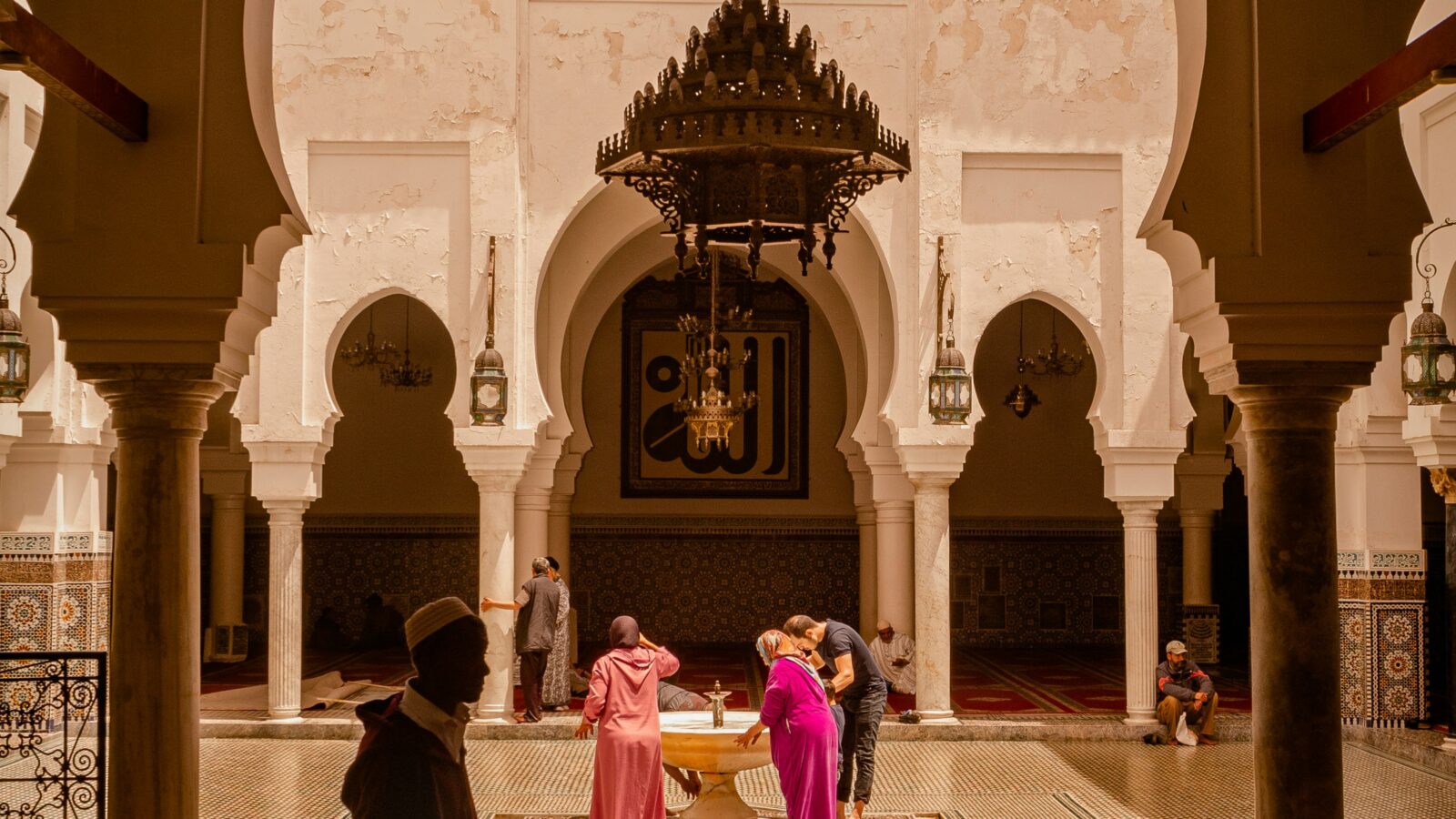
The muezzin’s call ricochets off stone walls at dawn, a donkey brays under a load of leather hides, and woodsmoke from a dozen breakfast braziers threads through alleys so narrow two people must turn sideways to pass.
Fes Morocco is not the easiest city to love on first meeting—its medina is a labyrinth designed to confound invaders, and it still works on tourists with roller bags—but it is the one that travellers remember longest. If Marrakech polished itself for the international stage, Fes kept the calluses. It smells of cedar, coriander, and centuries-old tanneries. It is Morocco’s spiritual and intellectual capital, home to the world’s oldest continuously operating university, and it rewards patience more than any other imperial city.
- Region
- Fès-Meknès
- Stay
- 2–3 nights
- Best months
- Mar–May, Sep–Nov
- Airport
- Fes-Saïss (FEZ) – 15km
- Medina alleys
- 9,000+
- UNESCO listed
- 1981
Why go to Fes
Fes el-Bali is the largest contiguous car-free urban zone on the planet. More than 9,000 alleyways knot together inside medieval ramparts, and Google Maps gives up halfway through. Goods move by donkey and handcart; navigation happens by asking shopkeepers every fifty metres. This inaccessibility is precisely what preserved the medina’s fabric when other Moroccan cities bulldozed theirs for boulevards.
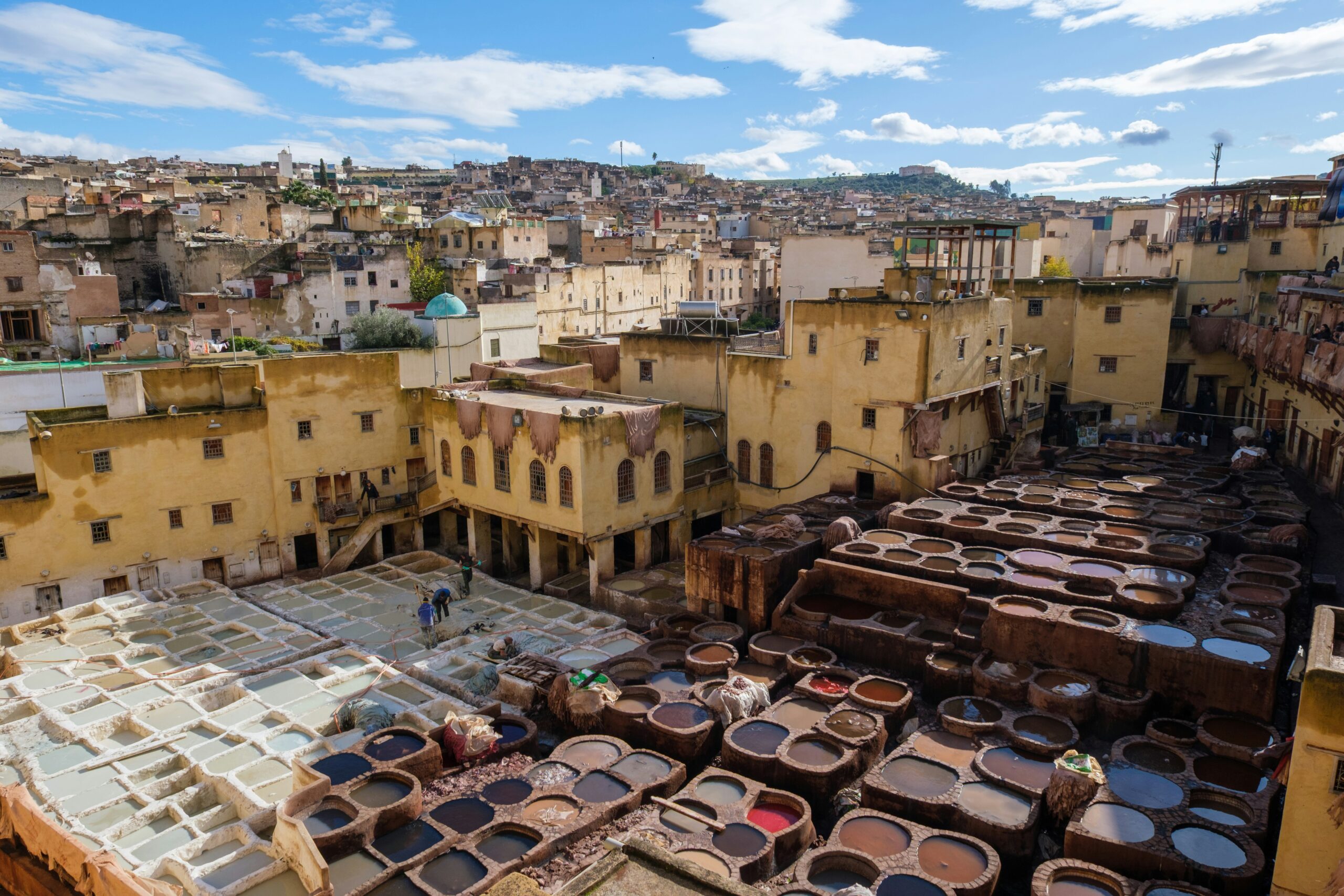
At the heart sits Al Quaraouiyine, founded in 859 CE by Fatima al-Fihri and recognised by UNESCO and Guinness as the oldest degree-granting university in continuous operation. It is still a working institution—non-Muslims cannot enter the prayer hall, but you can admire the zellij courtyard from the entrance on Talâa Kebira. Nearby, the Chouara Tannery has dyed leather in stone vats for 700 years; the smell hits you two blocks away, and rooftop leather shops hand out sprigs of mint to visitors who venture onto their terraces for the view.
Fes attracts fewer package tourists than Marrakech, which means the medina’s rhythm is still set by residents, not souvenir schedules. Families buy vegetables in the same fondouks their grandparents used; boys apprentice to metalworkers under the same vaulted ceilings where their fathers learned. The city hosted 1.1 million passengers through its airport in the first seven months of 2026, steady but not overwhelming, and the Fes Festival of World Sacred Music every June draws an audience that skews academic rather than Instagram.
The medina is not navigable with wheeled luggage. Book a riad that offers porter service from the nearest vehicle access point, usually Bab Boujloud or Rcif. Expect to walk ten to twenty minutes over uneven stone.
Things to do in Fes
Fes is a city of artisans and scholars, and the best activities put you in contact with both. Budget a full morning just to get lost—it is the only way the medina starts to make sense—and another half-day for a proper guide who can unlock workshop doors and family courtyards closed to solo wanderers.
Fes Medina Guided Tour
Navigate the 9,000 alleys with a local expert who can take you into artisan workshops and hidden fondouks.
Fes Food Tour
Taste your way through street stalls and family kitchens, from b’ssara to pastilla, with a foodie guide.
Fes Cooking Class
Learn to roll couscous by hand and build a proper tagine in a riad kitchen, then eat what you make.
Chefchaouen Day Trip from Fes
The blue city sits three hours north; a day trip gives you half a day to wander its whitewashed lanes.
Volubilis & Meknes Day Trip
Roman mosaics at Volubilis and the imperial granaries of Meknes make an easy joint excursion.
Fes to Merzouga Desert Tour
Multi-day trips cross the Middle Atlas, overnight in Merzouga, and return via the Ziz Valley.
Al Quaraouiyine Mosque and University
Founded in 859 by Fatima al-Fihri, this complex is the world’s oldest continuously operating degree-granting university according to UNESCO and Guinness. The library reopened in 2016 after a painstaking restoration and holds manuscripts dating to the 9th century, including an original Qur’an written in Kufic script on camel hide. Non-Muslims cannot enter the prayer hall, but the entrance courtyard off Talâa Kebira offers a view of the zellige tilework and carved cedar. Visit mid-morning when light slants through the archways. No admission fee; dress modestly.
Chouara Tannery
The stone vats date to at least the 11th century, and the process—soaking hides in pigeon dung and quicklime, then dyeing them with poppy, indigo, and henna—has not changed. The smell is astonishing. Leather-goods shops line the streets above; ask to see the tannery from their rooftop terraces (they will hand you mint). Best light for photographs is late morning. No official entrance, but shopkeepers expect you to browse their stock afterward; if you are not buying, tip 20–30 dirhams.
Bou Inania Madrasa
Built in 1350 by the Marinid sultan Abu Inan Faris, this is the only madrasa in Morocco that once functioned as both school and mosque. The carved stucco, cedar mashrabiya, and onyx columns are the finest examples of Marinid art in the city. It is open to non-Muslims. Admission 20 dirhams. Open daily 09:00–17:00 except during prayer times; Friday mornings are quieter.
Artisan workshops
Fes still trains metalworkers, ceramicists, embroiderers, and zellige-tile cutters in the medieval guild system. The Seffarine Square blacksmiths hammer copper over anvils set into the pavement; the noise is biblical. Pottery workshops cluster near Bab Ftouh. A good guide can take you into ateliers where three generations work side by side. Do not photograph without asking; a tip of 20 dirhams per artisan is respectful if you are not commissioning work.
The authentic artisan co-operatives are along the medina walls—Ensemble Artisanal near Bab Boujloud has fixed prices and no hassle. The “artisan workshops” in the deep medina that touts steer you toward often tack 300% onto the selling price and split it with the guide.
Jnan Sbil Gardens
When the medina overwhelms, walk ten minutes south to these formal Andalusian gardens. Shaded paths, fountains, and peacocks; almost no tourists. Free entry. Open 08:00–18:30.
Where to stay in Fes
Fes is divided into three zones: Fes el-Bali (the old medina), Fes el-Jdid (the 13th-century royal quarter), and Ville Nouvelle (the French-built modern district). Most visitors choose a riad inside Fes el-Bali for atmosphere, but access requires a ten-to-twenty-minute walk from the nearest taxi drop. If you value a good night’s sleep over morning authenticity, the Ville Nouvelle is quiet, walkable, and has hotels with parking.
Fes el-Bali (the old medina)
Staying inside the medina puts you in the heart of the action—and the noise. Riads here are converted merchant houses with central courtyards; the best have rooftop terraces with views over a sea of satellite dishes and minarets. Expect narrow staircases, low doorways, and no vehicle access. Porter service is essential. Nights are punctuated by the call to prayer at 04:30. Book a riad with thick walls if you are a light sleeper.
Ville Nouvelle
The French-built new town has wide streets, mid-range hotels, and restaurants where you can get a cold beer. It feels like any regional French city from the 1930s—a little dull, but restful after a day in the medina. Taxis are plentiful. Ideal if you are driving; many hotels have private parking. Not much atmosphere, but you will sleep.
Fes el-Jdid
The 13th-century “new Fes” sits between the ancient medina and Ville Nouvelle. Quieter than Fes el-Bali, more characterful than the French quarter. A few good guesthouses near the Mellah (Jewish quarter) and Bab Dekkakin offer easier vehicle access than the deep medina while keeping some old-city flavour.
Some links on this page earn ComeMorocco a commission at no extra cost to you. It never changes what we recommend. How this works.
Best time to visit Fes
Spring (March–May)
Daytime highs 18–25°C, cool evenings. The city shakes off winter; almond blossom appears in the surrounding hills. The Fes Festival of World Sacred Music runs early June (technically summer, but planned in spring). Crowds are moderate. Good walking weather before the heat sets in.
Summer (June–August)
Daytime highs 30–38°C; the medina’s stone walls trap heat and the tannery smell intensifies. Mornings and late afternoons are tolerable; mid-afternoon is brutal. Fewer European tourists in July–August (they are at the beach), but domestic Moroccan visitors increase. The Sacred Music Festival in early June is a highlight if you can handle the June heat.
Autumn (September–November)
Peak season. Temperatures drop to 20–28°C, skies are clear, and the medina is busy but not unpleasant. October is the sweet spot: warm days, cool nights, and the summer crowds gone. November can bring the first rain, which clears the dust and makes the tilework shine.
Winter (December–February)
Daytime highs 12–16°C; nights drop near freezing. Riads without central heating are genuinely cold; check before booking. Rain is intermittent. Far fewer tourists, which means lower prices and medina shopkeepers with time to talk. If you can handle the chill, winter Fes has an austere beauty the high-season crowds never see.
Getting to and around Fes
| From | How | Time | Notes |
|---|---|---|---|
| Casablanca | Train | 3h 40min | Hourly departures; book first class in summer for AC and space |
| Marrakech | Train | 7h | Overnight sleeper available; book couchette in advance |
| Tangier | Train | 4h 30min | Direct service via new LGV line; scenic through the Rif |
| Chefchaouen | Bus / shared taxi | 3h 30min–4h | CTM bus or grand taxi from Bab Ftouh; taxis leave when full |
| Meknes | Train / grand taxi | 45min train, 30min taxi | Trains every 90 minutes; taxis cost 30 DH per seat |
| Fes-Saïss Airport | Taxi / shuttle | 25min | Fixed taxi fare ~120 DH; some riads arrange pickup for 150 DH |
Inside Fes, the medina is entirely car-free. You walk, or goods ride a donkey. Petit taxis (small blue cabs) cover Ville Nouvelle and the route between the new town and medina gates; meters start at 7 DH, and a cross-town trip rarely exceeds 25 DH. Agree on the meter before setting off, or on a price if it is late at night. Grand taxis (usually white or beige Mercedes) run fixed intercity routes and leave when all six seats are full; you can buy extra seats for space or speed.
Day trips from Fes
60km · 1h drive to Volubilis, 30min to Meknes
Volubilis is Morocco’s best-preserved Roman site: a hillside city with floor mosaics still vivid after 1,800 years. The House of Orpheus and the Triumph of Dionysus mosaics are worth the trip alone. Combine it with Meknes, the fourth imperial city, where Moulay Ismail’s monumental granaries and the Bab Mansour gate demonstrate what absolute power looked like in the 17th century. Half a day at each site is enough. Organised tours from Fes run around 400–600 DH per person; a private grand taxi for the day costs 600–800 DH total if you negotiate at Bab Ftouh.
200km · 3h 30min drive
The blue-washed mountain town is Morocco’s most photogenic corner, and it is doable as a long day trip from Fes—though an overnight stay is better if your schedule allows. Leave early (07:00), arrive by 11:00, and you have five hours to wander the Kasbah, Plaza Uta el-Hammam, and the medina’s blue-on-blue lanes before heading back. CTM buses leave Fes at 08:00 and 15:00 (85 DH one way); shared grand taxis leave when full from Bab Ftouh (100 DH per seat, faster). Private day-trip tours cost 800–1,200 DH per person. Read our full Chefchaouen guide before you go.
65km to Ifrane · 1h drive
Ifrane is an alpine-style town built by the French in the 1930s, complete with steep chalets and a lion statue that looks lifted from Switzerland. It is surreal and pointless and oddly charming. Combine it with a walk in the nearby cedar forests of Azrou, where Barbary macaques lounge in the branches and will steal your lunch if you turn your back. A comfortable half-day loop. Expect cool temperatures year-round; the Middle Atlas sees snow in winter. Grand taxis to Ifrane cost around 50 DH per seat; a private trip runs 400–500 DH return with waiting time.
28km · 30min drive
A smaller, quieter version of Fes with a walled medina, a seasonal river, and almost no tourists. Sefrou was once Morocco’s cherry capital; the Cherry Festival in June still draws locals but barely registers internationally. The mellah (old Jewish quarter) is one of Morocco’s best-preserved. It is an easy afternoon trip by grand taxi (15 DH per seat from Bab Ftouh) and gives you a sense of what Moroccan medina life looks like without the tourist infrastructure—or the hassle.
What to eat in Fes
Fes claims to have invented Moroccan haute cuisine, and Fassi families guard recipes the way French chefs guard their Michelin stars. The city’s signature dishes reflect its Andalusian heritage and centuries of cross-Mediterranean trade.
Pastilla (b’stilla)
Fes’s most famous dish: layers of thin warqa pastry filled with spiced pigeon (or chicken), almonds, and eggs, dusted with cinnamon and icing sugar. The interplay of sweet and savoury is the point. Order it at Café Clock or Dar Roumana, or ask your riad to prepare it with a day’s notice. A full pastilla serves four; expect to pay 180–300 DH depending on the kitchen.
Mechoui
Whole lamb slow-roasted in an underground clay oven until the meat falls off the bone. Sold by weight at street stalls around Rcif; the vendors carve it to order. A quarter-kilo portion with bread costs around 40 DH. Eating it standing at the stall at 13:00 while the call to prayer echoes overhead is the Fes experience distilled.
Harira
A thick tomato-and-lentil soup eaten year-round but especially during Ramadan to break the fast. Street vendors sell it with dates and chebakia (sesame cookies fried in honey). A bowl costs 5–8 DH. Try the stall opposite Bab Boujloud around sunset; locals queue there for a reason.
B’ssara
Dried fava-bean soup, olive oil pooled in the centre, eaten with dense khobz bread for breakfast. It costs 5 DH a bowl from the cart vendors around Talâa Kebira at 07:00. Fills you until dinner.
The unmarked door at 13 Zkak Rouah (off Talâa Sghira) leads to a family kitchen that serves a five-course Fassi lunch to anyone who knocks—if they have space and you call ahead. Ask your riad to phone Hajja Fatima in the morning. 150 DH per person, cash only, worth every dirham.
Fes questions
01How many days do I need in Fes?
Two full days is the minimum to see the medina, major monuments, and a tannery without constant rushing. Three days lets you add a cooking class or day trip to Volubilis and Meknes. One day is possible if your schedule is tight, but you will leave wishing you had stayed longer—Fes rewards slow exploration more than any other Moroccan city.
02Is Fes safe for tourists?
Yes. Violent crime against tourists is extremely rare. Petty theft happens—keep your phone out of back pockets and your day bag zipped—but the medina is well-policed and locals intervene if they see trouble. The bigger annoyance is persistent touts offering to “help” you navigate in exchange for steering you into carpet shops that pay commission. A firm “no thank you” works; if someone keeps following, duck into a shopkeeper you have already spoken to.
03Do I need a guide for the Fes medina?
Not strictly, but a good guide transforms the experience. The medina’s 9,000 alleys defeat even paper maps, and a guide unlocks workshops, family homes, and historical context you would never find solo. Budget 400–600 DH for a half-day with an official guide (book through your riad or the tourist office at Place Rcif). Unofficial guides are cheaper and sometimes more charismatic, but quality varies wildly. Spend your first morning wandering alone to get a feel for the layout, then hire a guide for the second day.
04Can I visit Al Quaraouiyine University?
Non-Muslims cannot enter the prayer hall of Al Quaraouiyine Mosque, which is the university’s heart. You can see the entrance courtyard and zellige tilework from the doorway on Talâa Kebira, and the recently restored library sometimes offers pre-booked tours for researchers and serious students of Islamic history (arrange weeks in advance through official channels). The exterior and the neighbourhood around it are still worth visiting for context—this is where continuous higher education began in 859 CE.
05What is the best way to get from Fes to Marrakech?
The train is the most comfortable option: seven hours, direct service, with cafe car. Book a first-class seat for air conditioning and space (around 220 DH). The overnight sleeper train offers couchettes if you want to save a hotel night (book ahead; they sell out). CTM buses are cheaper (150 DH) and take roughly the same time but are less comfortable. Shared grand taxis are faster (six hours) and more cramped; expect to pay 200 DH per seat. If you are driving, the route via Beni Mellal takes about six hours and passes through beautiful Middle Atlas scenery.
06Is Fes or Marrakech better?
Different travellers, different answers. Fes is more traditional, less polished, harder to navigate, and more deeply rooted in Moroccan intellectual and craft traditions. Marrakech is more cosmopolitan, easier to enjoy quickly, better for nightlife and contemporary art, and has the Atlas Mountains on the doorstep. If you want the Morocco of medieval guilds and Quranic scholarship, choose Fes. If you want accessible exoticism with good restaurants and day trips to the Sahara, choose Marrakech. If you have a week, visit both—they complement rather than compete.
Keep planning
Plan the rest of your Morocco trip
Fes is one piece of a bigger picture. Our full Morocco guide covers imperial cities, the Sahara, coast, mountains, and everything between—including transport, budgets, and the itineraries that actually work.