
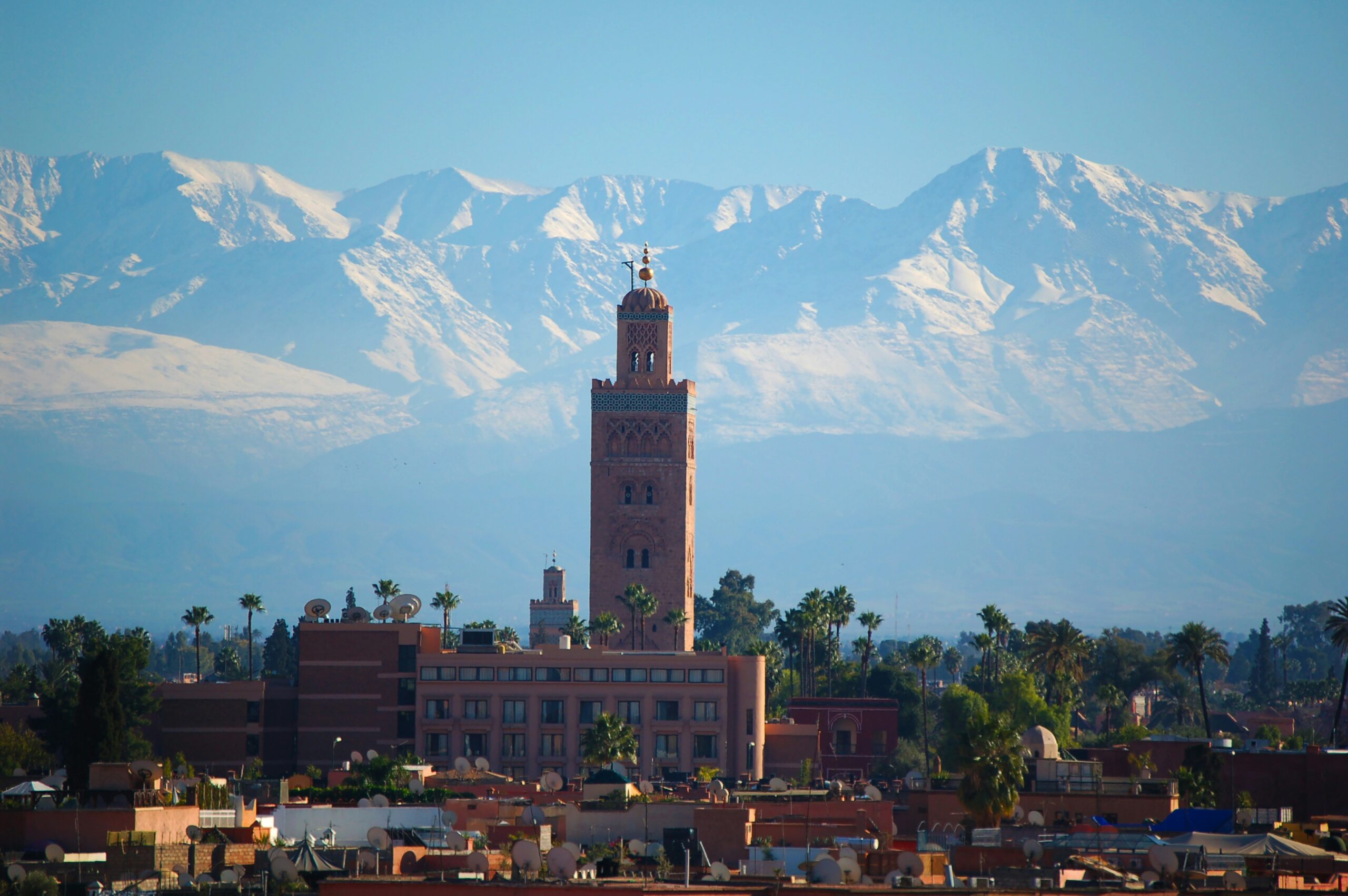
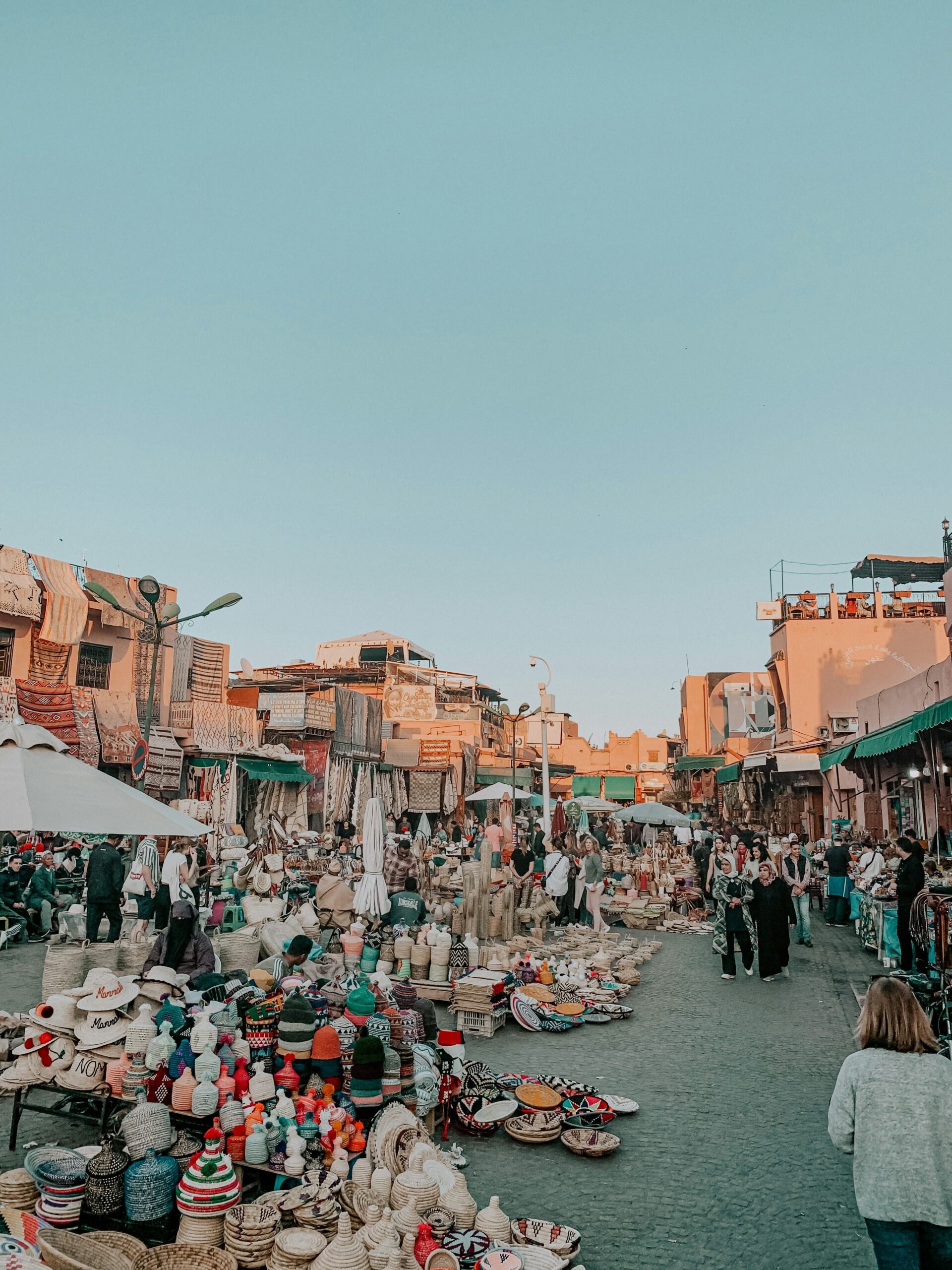
At around 6 pm in Marrakech Morocco, the medina starts to glow: warm light catches the red walls, spice stalls scent the lanes, and Jemaa el-Fna begins filling with food vendors, musicians and storytellers.
Marrakech suits travellers who want Morocco at full volume: historic architecture, busy souks, rooftop dinners, gardens, hammams and easy access to the High Atlas. It is not the quietest Moroccan city, and the medina can feel intense if you prefer orderly streets or slow-paced sightseeing. But if you give yourself time to adjust, the city’s density becomes part of the experience.
- Region
- Marrakech-Safi
- Stay
- 3–5 nights
- Best months
- Spring & autumn
- Airport
- RAK — Marrakech Menara
- Known as
- Red City
- UNESCO
- Medina since 1985
Why go to Marrakech
Marrakech is one of Morocco’s four imperial cities and one of the country’s most recognizable destinations. Its old city was founded in the 11th century under the Almoravid dynasty, while its distinctive reddish walls and buildings explain the enduring nickname “Red City.” The medina has been a UNESCO World Heritage site since 1985.
The appeal is the concentration of experiences within a relatively compact area. You can walk through the historic heart of the city to the souks, Marrakech’s medina and souks, Ben Youssef Madrasa, Bahia Palace, the Koutoubia area and Jemaa el-Fna, then spend the evening eating on a rooftop above the old city.
Marrakech also works well as a base. A stay of three days covers the major sights without rushing too badly; four or five days gives you room for a hammam, cooking experience, slower souk wandering and a day trip toward the Atlas Mountains, Agafay or Essaouira.
The one thing people get wrong about Marrakech:
the medina is not designed like a modern city. Its lanes are dense and sometimes confusing, so choose accommodation with practical access and arrange porter help if you have heavy luggage.
Things to do in Marrakech
The best things to do in Marrakech combine major landmarks with experiences that make the city feel lived-in. Start with the medina and its historic monuments, then leave time for gardens, food, hammams and an organized excursion.
For a broader activity list, see our guide to
the best things to do in Marrakech
and our wider guide to
planning a Morocco itinerary.
Marrakech Medina & Souks Tour
Explore the historic medina, souks and major old-city sights with a local guide who can explain the city’s architecture and history.
Powered by
GetYourGuide
Marrakech Cooking Class
Learn how Moroccan dishes are prepared and turn the city’s food culture into a hands-on experience.
Powered by
GetYourGuide
Marrakech Hammam Experience
A traditional hammam is a chance to slow down after walking the medina and experience a classic Moroccan bathing ritual.
Powered by
GetYourGuide
Atlas Mountains Day Trip
Trade the city for mountain scenery, Berber villages and valleys on a full-day excursion from Marrakech.
Powered by
GetYourGuide
Agafay Desert Experience
Head outside Marrakech for a desert-style landscape and an easy evening or day excursion without travelling deep into the Sahara.
Powered by
GetYourGuide
Essaouira Day Trip
Combine Marrakech with a change of scenery on the Atlantic coast, where the pace is slower and the sea breeze replaces the medina heat.
Powered by
GetYourGuide
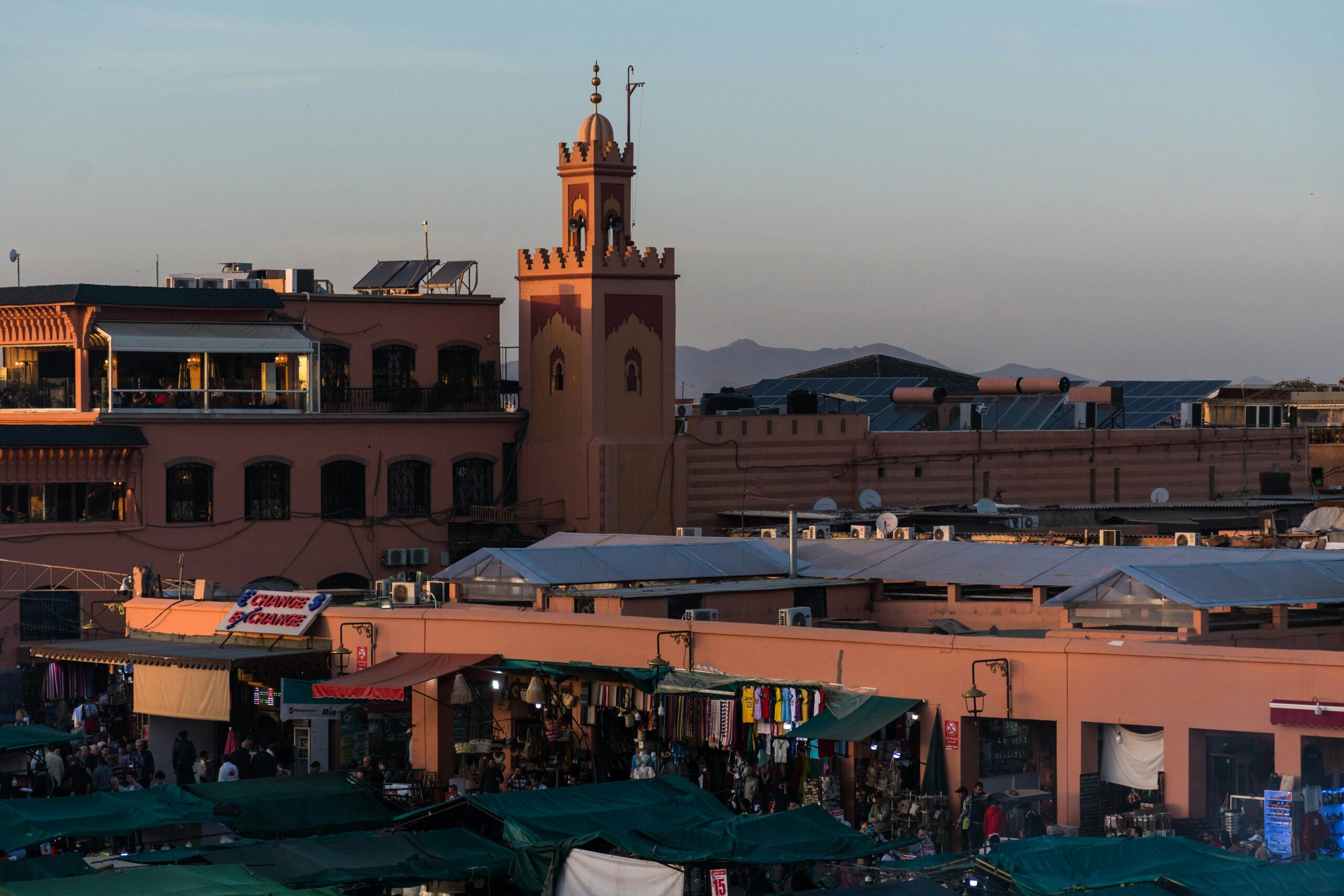
Jemaa el-Fna
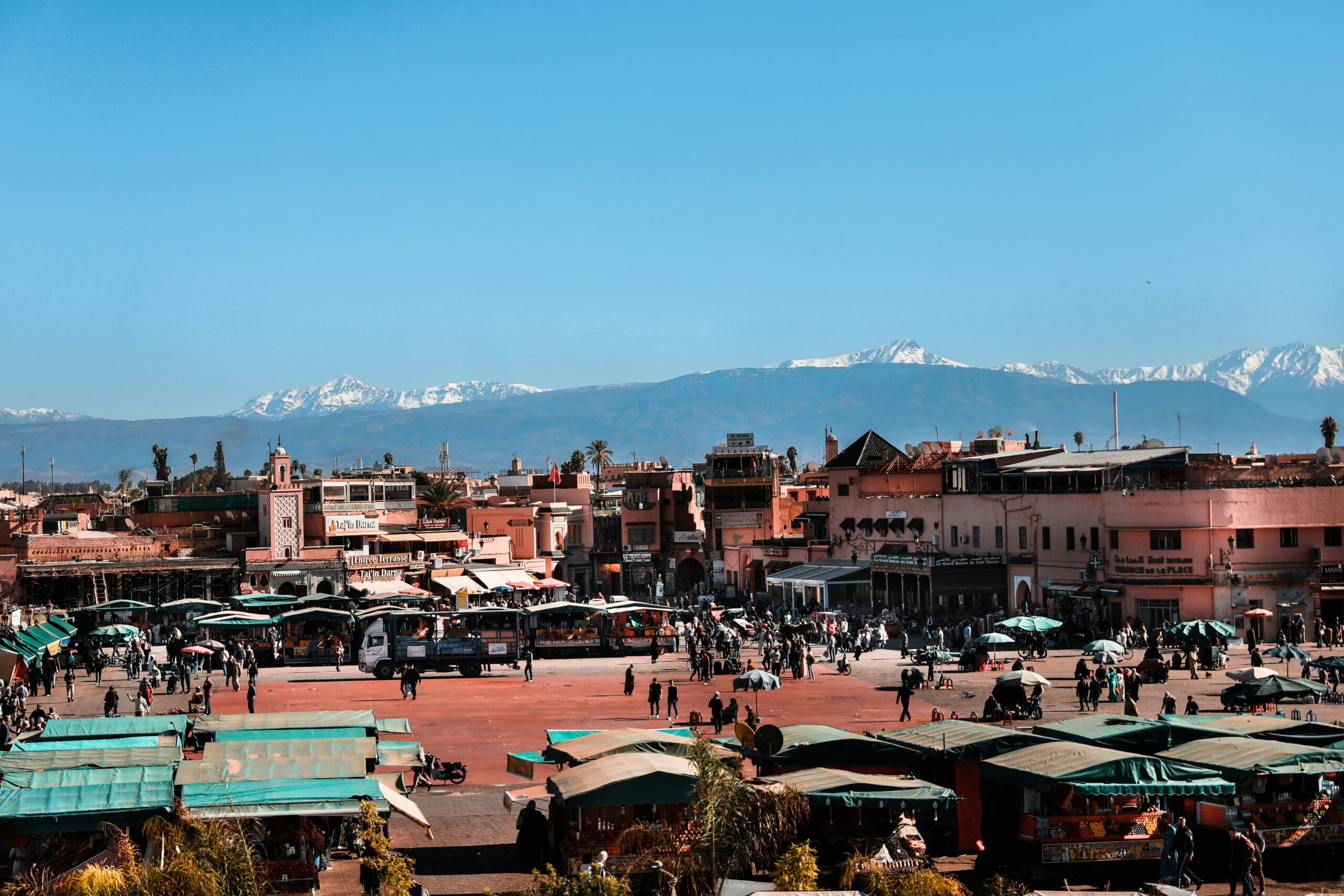
Jemaa el-Fna is Marrakech’s great public stage. During the day it is a busy meeting point in the heart of the medina; toward evening, food stalls, musicians, storytellers and performers transform the square.
Go around sunset if you want to see the transition from daytime activity to the nightly atmosphere. For a more detailed look at the square and surrounding landmarks, see our
Marrakech attractions guide.
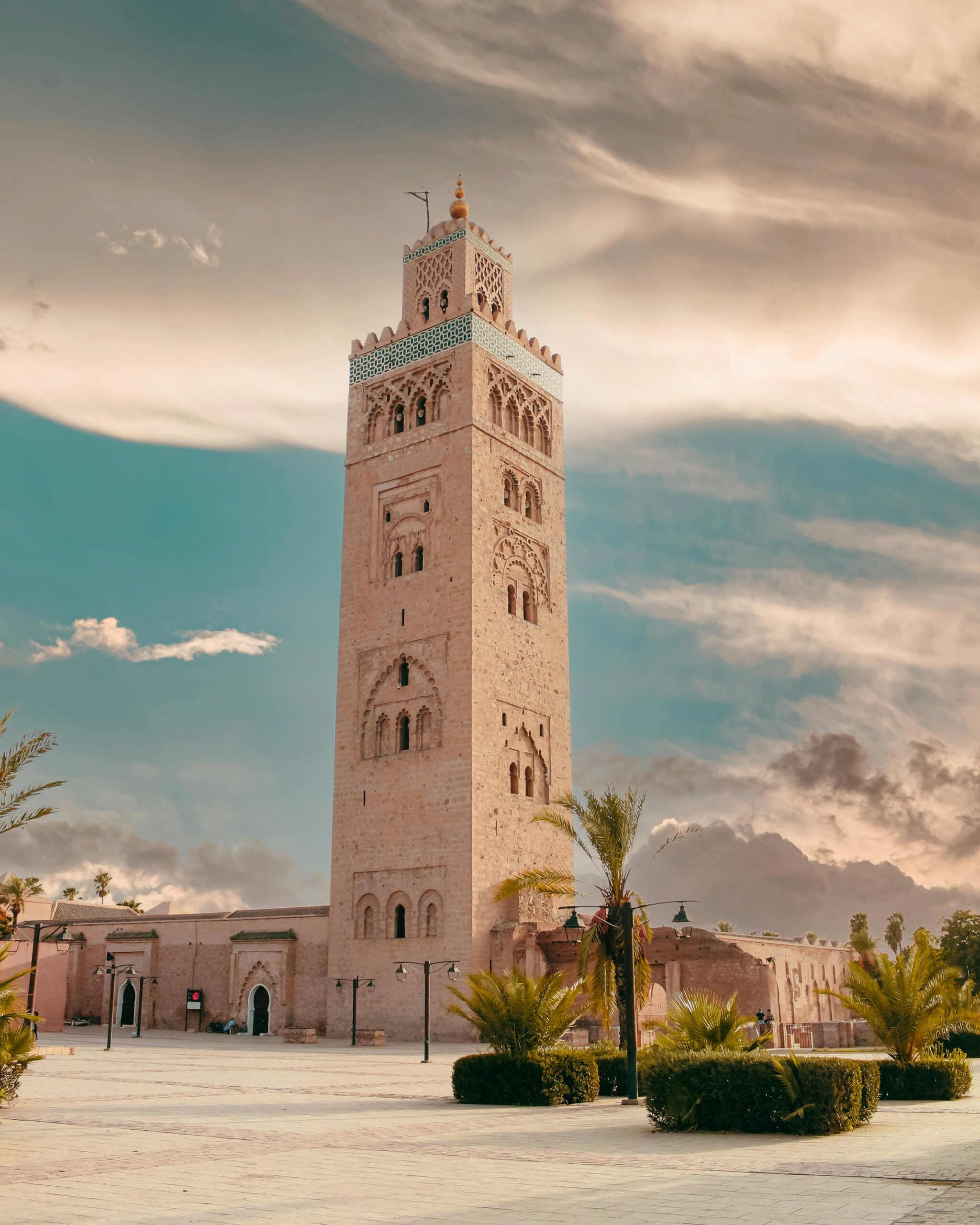
Koutoubia Mosque and Minaret
The Koutoubia is the city’s most recognizable religious landmark and its minaret is one of Marrakech’s defining landmarks. Non-Muslim visitors cannot enter the mosque, but the exterior, surrounding gardens and views toward the medina make the area an important stop on a first visit.
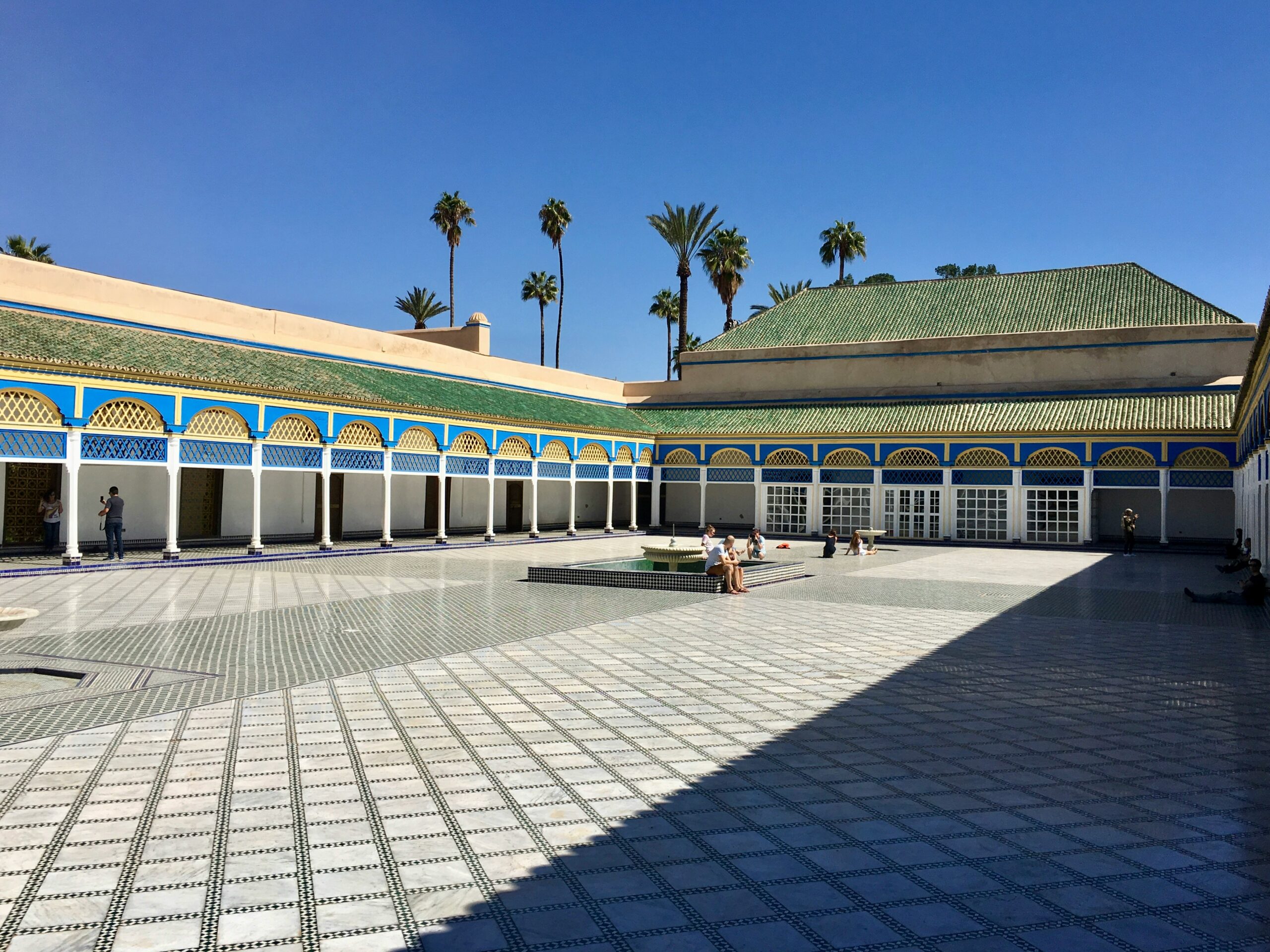
Bahia Palace
Bahia Palace is a 19th-century palace complex associated with grand vizier Si Moussa and his son Ba Ahmed. Its courtyards, rooms, carved decoration and zellij provide a useful introduction to the craftsmanship of historic Marrakech.
Ben Youssef Madrasa
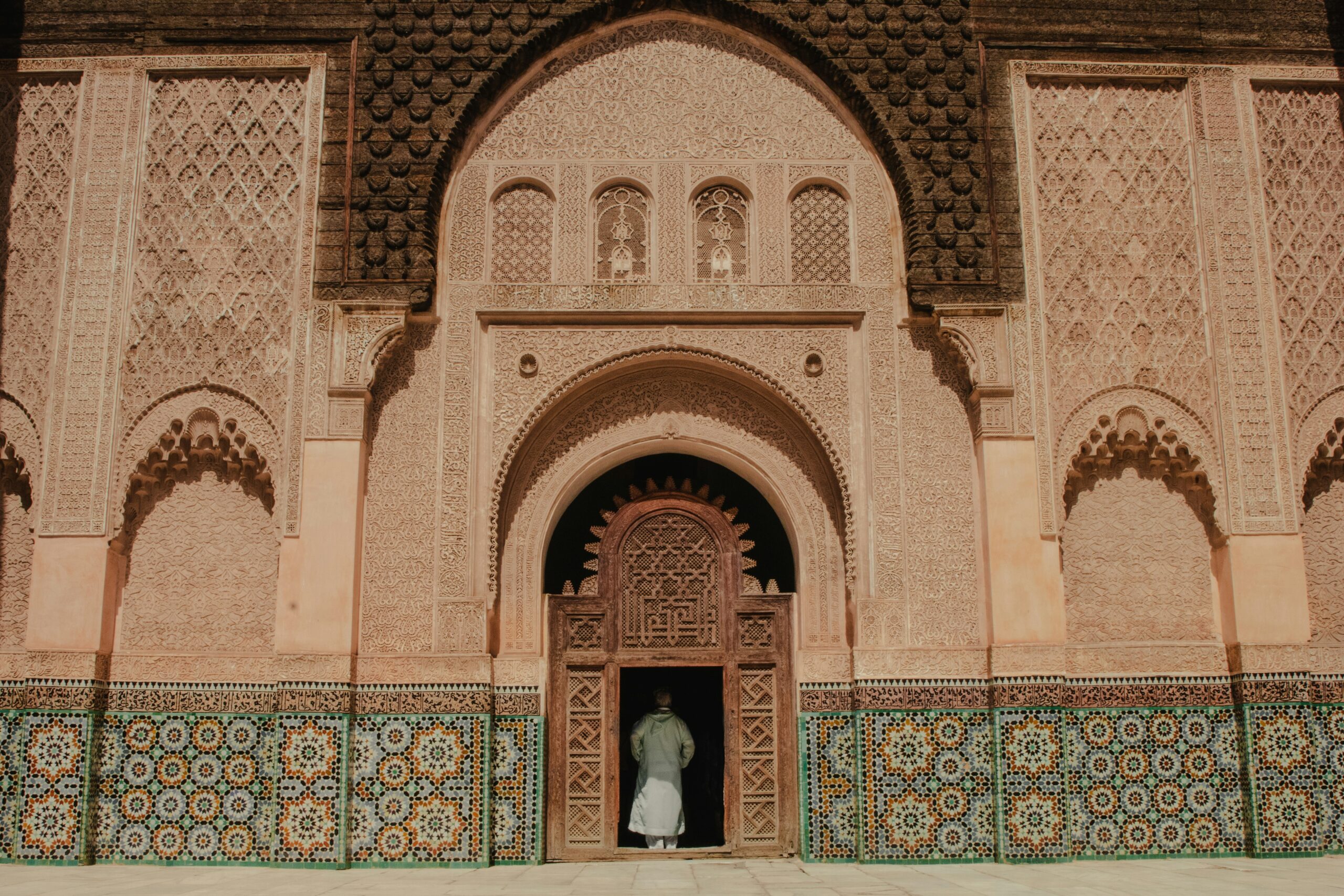
Ben Youssef Madrasa is one of the medina’s standout examples of Moroccan decorative architecture. The former Islamic college is particularly known for carved cedar, stucco and zellij tilework. It is best paired with a walk through the surrounding souks because the madrasa sits within the historic heart of the old city.
Local tip
Do not try to “finish” the medina in one straight walk. Give yourself permission to wander, then use a recognizable landmark such as Jemaa el-Fna, Koutoubia or a known riad entrance to re-orient yourself.
Jardin Majorelle and the Yves Saint Laurent Museum
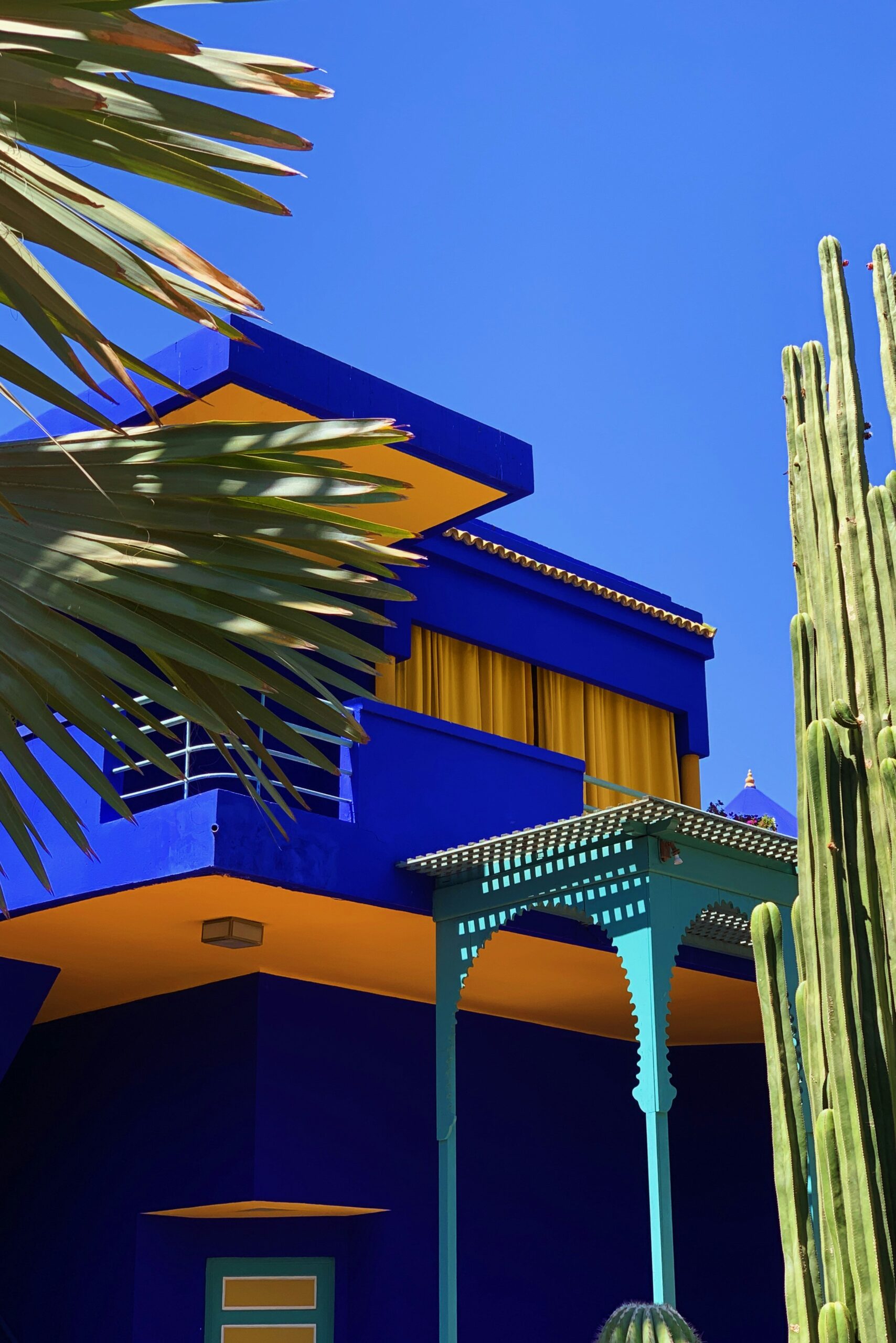
Jardin Majorelle combines a cobalt-blue villa with an extensive collection of plants and a carefully designed garden setting. The adjacent Yves Saint Laurent Museum adds a fashion-focused dimension to the visit.
Because this is one of Marrakech’s most popular attractions, advance online booking is recommended. For more detail, see our
Jardin Majorelle Marrakech guide.
Where to stay in Marrakech
Choosing where to stay changes the character of a Marrakech trip. A
riad in the medina
puts you close to the historic sights and souks, while modern areas outside the old city generally offer easier vehicle access, larger hotels and a more predictable street layout.
For a first visit, a well-located riad is hard to beat if you are comfortable with narrow lanes. You can also compare the advantages of traditional accommodation and conventional hotels in our
Riad vs Hotel in Marrakech guide.
Medina riads
Riads turn the traditional house into part of the accommodation experience, usually with rooms arranged around an interior courtyard. The trade-off is access: some properties are deep inside pedestrian lanes, so confirm the nearest vehicle-accessible point and whether the property offers porter assistance.
If you’re looking for lower-cost options, see our guide to
affordable riads in Marrakech.
Gueliz
Gueliz offers a different side of Marrakech, with wider streets, contemporary restaurants, cafés and easier vehicle access. It is a practical choice if you want the old city during the day but prefer a modern neighbourhood when you return to your hotel.
Hivernage
Hivernage is one of the city’s established upscale hotel areas and works well for travellers prioritizing resort facilities, restaurants and a quieter hotel environment. You give up some of the immediate old-city atmosphere in exchange for easier access and more conventional hotel infrastructure.
For more accommodation ideas, explore our
Marrakech areas and hotels guide.
Some links on this page earn ComeMorocco a commission at no extra cost to you. It never changes what we recommend.
How this works.
Best time to visit Marrakech
Marrakech can be visited throughout the year, but the experience changes considerably with the seasons. For a more detailed month-by-month overview, see our
best time to visit Marrakech guide.
Spring — March to May
Spring is one of the most comfortable periods for sightseeing, with conditions that suit long walks through the medina and excursions outside the city.
Summer — June to August
Summer can be extremely hot in Marrakech, especially during the middle of the day. Plan outdoor sightseeing for mornings and late afternoons.
Autumn — September to November
Autumn brings the city back into a comfortable sightseeing rhythm as temperatures ease. September can still be hot, while later autumn is increasingly attractive for medina walks.
Winter — December to February
Winter is generally a quieter period for the city and can be pleasant in the daytime. Evenings can feel cool, so pack layers.
Getting to and around Marrakech
Marrakech is well connected to other major Moroccan destinations by train, road and air. Your best option depends on where you’re coming from and whether Marrakech is the start, middle or end of your Morocco itinerary.
| From | How | Typical use | Notes |
|---|---|---|---|
| Casablanca | Train / bus / car | City-to-city travel |
Compare the options in our Casablanca to Marrakech transport guide. |
| Fes | Train | Imperial-city itinerary | A practical rail connection when combining Morocco’s historic cities. |
| Essaouira | Bus / private transfer | Atlantic coast day trip | A popular overland pairing with Marrakech. |
| Marrakech Menara Airport | Taxi / arranged transfer | Airport-city transfer |
See our Marrakech airport to city guide before arriving. |
Once you arrive, the historic medina is best explored on foot. Taxis are useful for journeys between the medina and areas such as Gueliz, Hivernage or the airport.
For airport arrival planning, you can also read our guide to
Marrakech airport taxis, fares and transfers.
For broader transport planning, our
Morocco transportation guide
covers trains, buses, taxis, rental cars and other ways of getting around the country.
Day trips from Marrakech
Marrakech is especially useful as a base because several very different landscapes and destinations can be reached as day trips. If you want a detailed comparison, see our
best day trips from Marrakech guide.
Mountain scenery · full-day excursion
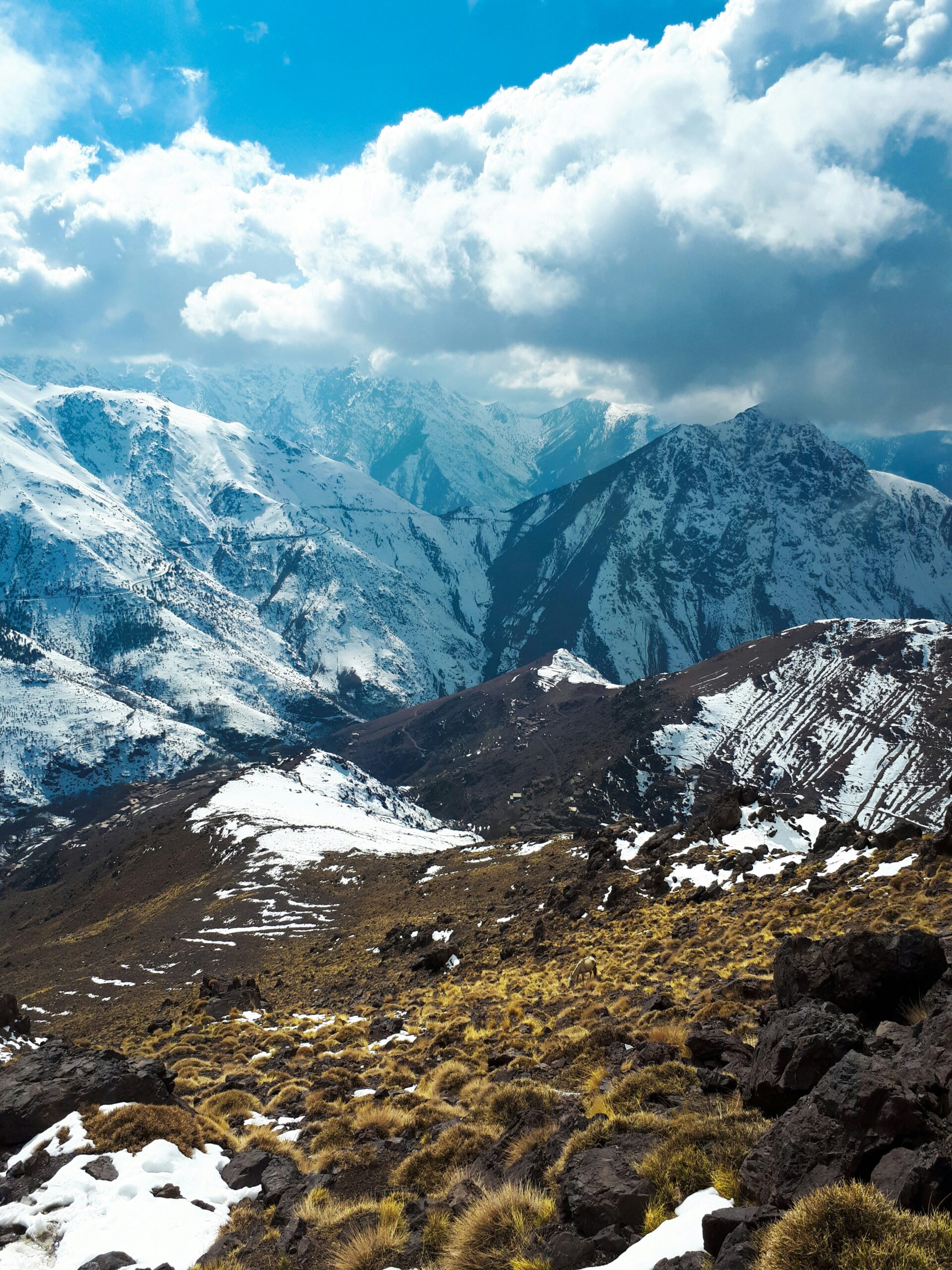
The Atlas Mountains are the strongest choice if you want landscapes and rural Morocco rather than another urban sightseeing day. Organized excursions commonly combine mountain scenery with villages and local experiences.
Read our detailed
Atlas Mountains day-trip guide from Marrakech
before booking.
Near Marrakech · half-day or full-day
Agafay offers a rocky desert landscape close to Marrakech, making it useful when you want a desert-style experience without committing to the long journey required for the Sahara.
If you want a genuine Sahara journey instead, compare the options in our
Sahara tours from Marrakech guide.
Atlantic coast · long day by road
Essaouira is the best day trip when you want to escape Marrakech’s heat and intensity. The Atlantic port has a more relaxed rhythm, historic ramparts and a strong seafood-and-coast atmosphere.
See our
complete Essaouira day-trip guide from Marrakech
for planning details.
What to eat in Marrakech
Marrakech is one of the best places in Morocco to build a trip around food. The medina supplies everything from simple street food to traditional restaurants and rooftop dining, while the city’s modern districts add international restaurants and contemporary interpretations of Moroccan cooking.
For a broader introduction to Moroccan cuisine, see our
guide to the best Moroccan dishes
and
ultimate Moroccan food guide.
Tagine
Tagine is a slow-cooked Moroccan dish prepared in the distinctive earthenware vessel that gives it its name. In Marrakech you will encounter meat, chicken, vegetable and fruit-based versions.
Couscous
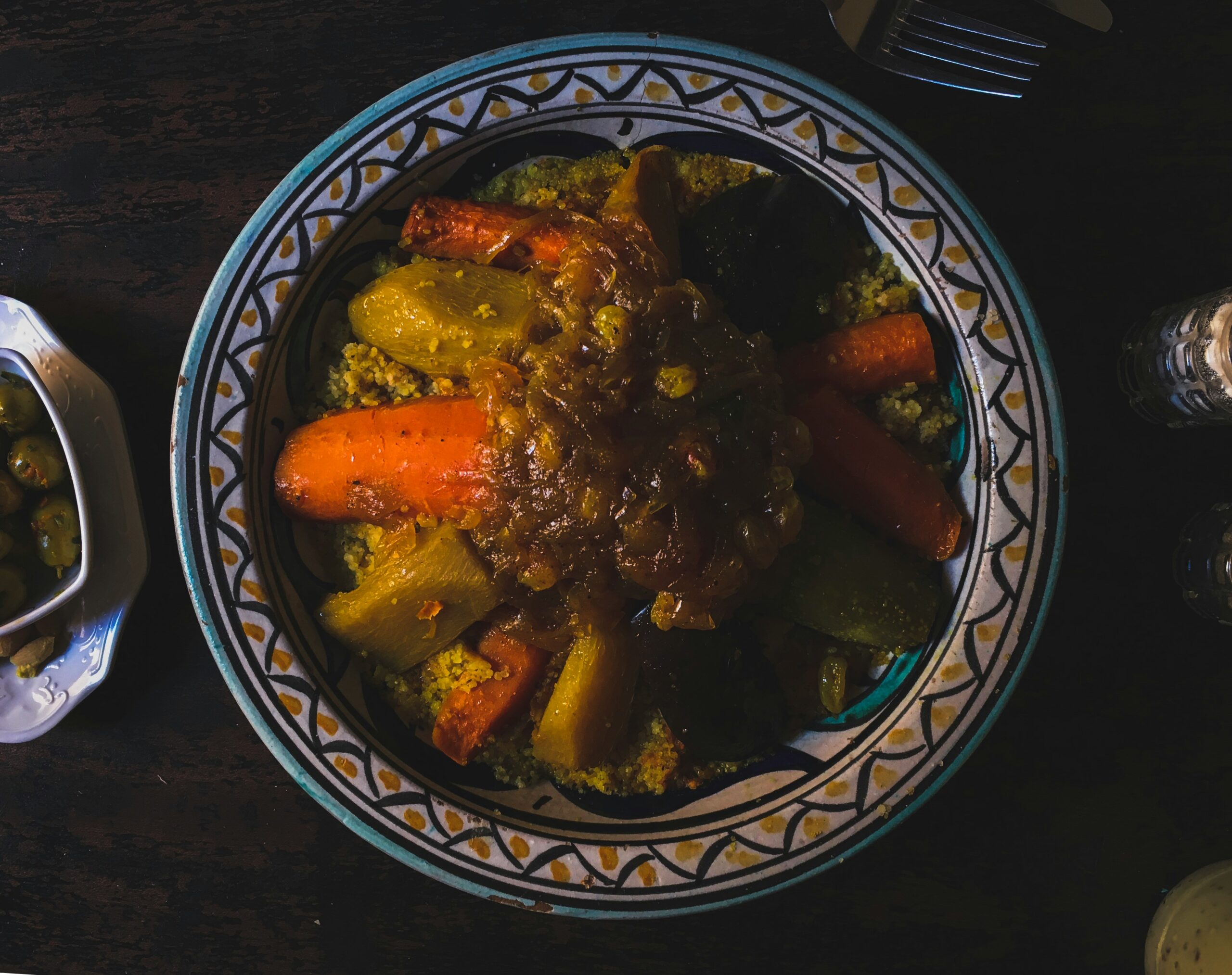
Couscous is traditionally associated with the main family meal of Friday, although visitors can find it in restaurants throughout the week. Look for versions served with vegetables and meat.
Street food and Moroccan tea
Jemaa el-Fna becomes particularly food-focused in the evening, while the surrounding medina has juice stalls, bakeries, cafés and small eateries. Moroccan mint tea is part of everyday hospitality and is worth slowing down for.
If food is one of your main reasons for visiting, explore our
Marrakech restaurants and street-food guide
or consider a guided
Marrakech food tour.
Local tip
If you want the atmosphere of Jemaa el-Fna without making the square itself your entire evening, consider eating while the evening activity builds, then move to a nearby rooftop for a wider view of the lights and crowds.
Practical Marrakech travel tips
How many days do you need?
Three days is a strong starting point for a first visit. You can cover the major historic sights, spend time in the souks and still have evenings free for food and rooftop views. Four or five days works better if you want a day trip, cooking class, hammam or a slower pace.
Our dedicated
Marrakech itinerary guide
compares two-, three-, four- and five-day stays.
What should you pack?
Pack according to the season and expect considerable temperature changes between daytime and evening during cooler months. Comfortable shoes are particularly useful because exploring the medina means spending considerable time walking.
For a more detailed seasonal checklist, see
what to pack for Marrakech.
Is Marrakech safe for tourists?
Marrakech is a major international tourist destination, but visitors should use normal city awareness, particularly in crowded medina areas. Be cautious with unsolicited guides, keep valuables secure and confirm taxi arrangements before travelling.
For a more detailed overview, read our
Marrakech safety guide
and our wider
Morocco safety guide.
What currency is used?
Morocco uses the Moroccan dirham (MAD). Carry some cash for small purchases, particularly in traditional markets and smaller businesses, while keeping a card available for hotels, larger restaurants and other establishments that accept electronic payments.
See our
Marrakech currency and cash guide
for practical advice.
Marrakech questions
01
How many days do I need in Marrakech?
Three days is enough to cover Marrakech’s main sights, including Jemaa el-Fna, the Koutoubia area, Bahia Palace, Ben Youssef Madrasa, the souks and a garden. Four to five days gives you more time for food, hammam experiences and a day trip.
02
Is Marrakech safe for tourists?
Marrakech is a major international tourist destination, but visitors should use normal city awareness, particularly in crowded medina areas. Be cautious with unsolicited guides, keep valuables secure and confirm taxi arrangements before travelling.
03
Do I need a guide for Marrakech?
You can explore much of Marrakech independently, especially the major streets and attractions. A licensed local guide can be worthwhile for a first visit if you want historical context or help navigating the dense medina and souks.
04
What is Marrakech famous for?
Marrakech is famous for its red-walled medina, Jemaa el-Fna, souks, historic palaces, gardens, riads and distinctive Moroccan architecture. It is also a popular base for trips into the Atlas Mountains, Agafay and toward Essaouira.
05
What is the best time to visit Marrakech?
Spring and autumn are generally the most comfortable seasons for walking and sightseeing. Summer can be very hot, while winter offers pleasant daytime sightseeing but cooler evenings, especially in traditional riads.
06
Is Marrakech good for a first trip to Morocco?
Yes. Marrakech concentrates many of Morocco’s most recognizable experiences into one destination, including historic architecture, souks, food, riads and organized excursions. It can feel intense at first, so a well-located hotel or riad and a flexible first day can make the introduction easier.
07
Can I visit the Sahara Desert from Marrakech?
Yes, but the Sahara is much farther away than Agafay. If you want the dunes and desert camps of southeastern Morocco, plan a multi-day trip rather than a rushed day excursion. Compare the different options in our
Sahara Desert tours from Marrakech guide.
08
Is Marrakech expensive to visit?
Marrakech can suit different budgets. Traditional riads, local restaurants and public transport can help reduce costs, while luxury riads, hotels, private transfers and premium experiences can make a trip considerably more expensive.