
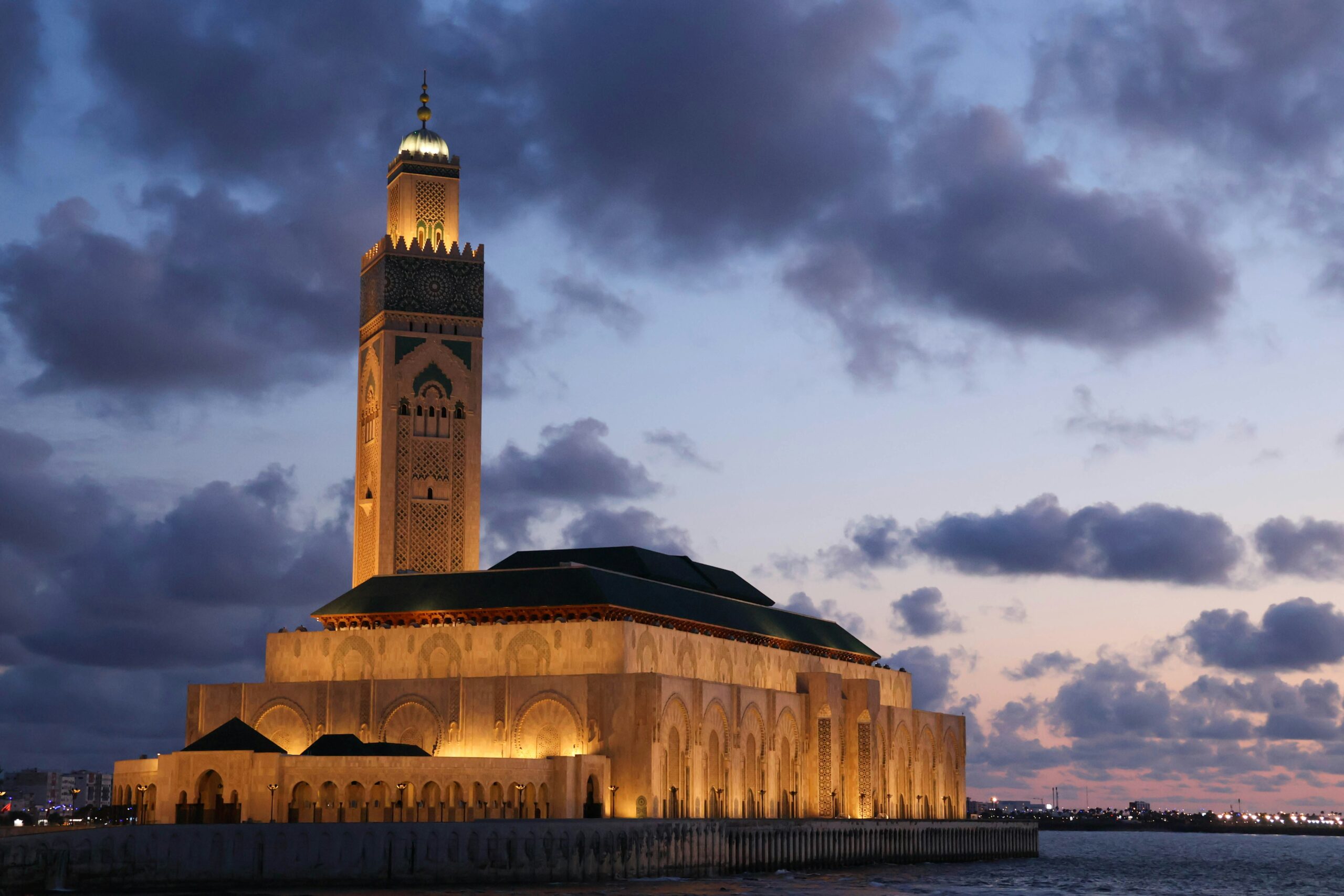
At 6 pm in Casablanca Morocco, Atlantic air rolls in from the Corniche, cafés fill their pavements, and the last light catches the white façades before the city settles into another busy evening.
Casablanca suits travellers who want Morocco with an urban edge: architecture, seafood, shopping, business districts, art-deco streets and one of the country’s most spectacular mosques. It is not the city to choose if your dream of Morocco means quiet riads, desert silence or a compact medieval old town. For those, Marrakech, Fes or the Sahara make stronger bases. But if you want to understand modern Morocco, Casablanca deserves at least a day or two.
Use this guide to plan the practical side of a visit, from the Casablanca travel hub and Mohammed V International Airport to the Hassan II Mosque, the old medina, Habous, Ain Diab and easy Atlantic-coast day trips.
- Region
- Casablanca-Settat
- Stay
- 1–3 nights
- Best months
- Mar–May, Sep–Nov
- Airport
- CMN — about 30 km
- Character
- Atlantic metropolis
- Known for
- Hassan II Mosque
Why go to Casablanca
Casablanca is where Morocco’s traditional identity meets its modern economy. The city is the country’s principal business and financial centre, a major Atlantic port and the gateway for many international visitors arriving through Mohammed V International Airport. Its scale can feel overwhelming at first, but that is also its appeal: Casablanca gives you a very different picture of Morocco from the postcard version built around souks and kasbahs.
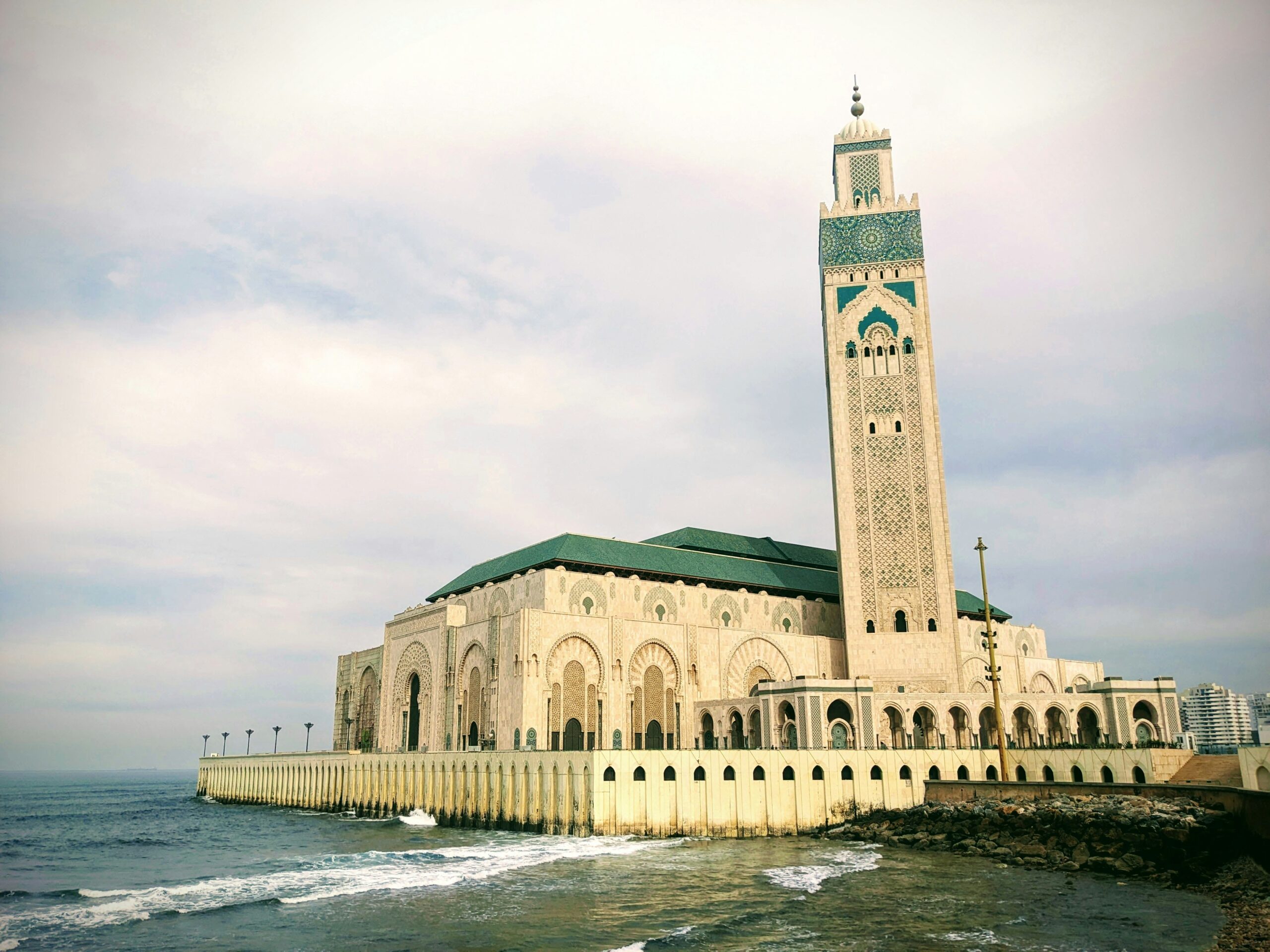
The landmark that changes the equation is the Hassan II Mosque. Built beside the Atlantic, its enormous prayer hall, detailed tilework, carved plaster and towering minaret make it the city’s essential visit. Allow time for the guided interior visit rather than treating it as a quick photo stop.
Elsewhere, the old medina is compact enough to explore on foot, while the Habous Quarter offers a more orderly introduction to Moroccan architecture and shopping. Around Place Mohammed V and Boulevard Mohammed V, early-20th-century Art Deco buildings reveal another layer of Casablanca’s history. Further west, Ain Diab and the Corniche shift the mood towards cafés, restaurants, beaches and Atlantic sunsets.
Casablanca is also a useful transport hub. High-speed and conventional trains connect it with Rabat, Tangier, Marrakech and other Moroccan cities, while the airport gives travellers an easy entry or exit point. If Casablanca is your first stop, it works particularly well as the beginning or end of a wider Morocco itinerary.
The one thing people get wrong about Casablanca. It is not simply a stopover city. The medina, Hassan II Mosque, Habous, Art Deco centre and Corniche can fill a rewarding 24–48 hours, especially if you are interested in architecture and contemporary Moroccan life.
Things to do in Casablanca
The best Casablanca itinerary mixes one major landmark with neighbourhood walks, architecture, food and time beside the Atlantic. These are the experiences most worth putting on your schedule.
Tour the Hassan II Mosque
Take a guided visit inside Morocco’s spectacular Atlantic-side mosque and learn about its architecture, craftsmanship and history.
Powered by GetYourGuide
Explore Casablanca on a city tour
A guided city tour connects the medina, central Casablanca, Habous, Art Deco architecture and the city’s major landmarks.
Powered by GetYourGuide
Discover Moroccan food
Food-focused experiences are a good way to go beyond tourist restaurants and understand Casablanca’s everyday culinary culture.
Powered by GetYourGuide
Visit Casablanca’s old medina
Walk the lanes around the historic medina, browse small shops and combine the visit with nearby central Casablanca landmarks.
Powered by GetYourGuide
Take a Rabat day trip
Combine Casablanca with Morocco’s capital for a contrasting day of royal heritage, the Kasbah of the Udayas and Atlantic scenery.
Powered by GetYourGuide
Explore Casablanca’s architecture
Look beyond the headline attractions for Art Deco façades, Place Mohammed V and the architectural layers of the city centre.
Powered by GetYourGuide
Hassan II Mosque
The Hassan II Mosque is Casablanca’s must-see attraction and one of Morocco’s most recognisable buildings. Its location directly on the Atlantic gives the visit an unusual sense of scale, while the interior reveals intricate zellige tilework, carved plaster, painted wood and enormous architectural spaces. Non-Muslim visitors can enter during scheduled guided tours, so check the current visiting timetable before arriving. If you want the full experience, allow roughly 1–2 hours for the visit and exterior photography.
Powered by GetYourGuide
Old Medina and Place des Nations Unies
Casablanca’s old medina is smaller and less maze-like than the medinas of Fes or Marrakech, which makes it manageable for a first walk. Start around Place des Nations Unies and explore the lanes towards the historic city walls, shops and small cafés. This is a good area for observing everyday Casablanca rather than ticking off monumental sights. Keep your valuables secure in crowded areas and take your time rather than trying to cover every lane.
Habous Quarter and Mahkama du Pacha
The Habous Quarter was developed during the French protectorate but deliberately incorporates Moroccan architectural traditions. Its arcades, shops, bakeries and calm streets make it an easier place to browse than some of the busier souks. Nearby, the Mahkama du Pacha is known for elaborate Moroccan craftsmanship and is best appreciated with a local guide when access is available. Look for traditional leather goods, pastries and other Moroccan products rather than treating Habous as a generic shopping centre.
Pair Habous with the central city instead of visiting it as a standalone attraction. The neighbourhood is calmer earlier in the day, while the medina and Corniche work better later when you want a change of pace.
Ain Diab, the Corniche and the Atlantic
Ain Diab and the Corniche show Casablanca at its most relaxed. Come for an Atlantic walk, coffee, seafood or a sunset rather than expecting a traditional Moroccan beach town. The area is particularly useful after a morning of sightseeing because it gives you space to slow down. For a deeper look at the coastline, see our Casablanca Morocco beach guide.
Where to stay in Casablanca
Choosing where to stay in Casablanca is mostly about deciding whether you value historic atmosphere, central transport connections or the Atlantic coast. For a first visit, central Casablanca is practical; for a slower leisure stay, Ain Diab and the Corniche are more relaxed. Habous is attractive for travellers who want Moroccan architecture and a quieter neighbourhood feel.
City Centre and Sidi Belyout
The central districts put Place Mohammed V, Boulevard Mohammed V, the old medina and major tram and rail connections within easy reach. This is the most convenient choice if Casablanca is one stop in a larger Morocco itinerary. The trade-off is traffic and a more urban atmosphere than you get in a traditional riad town.
Ain Diab and the Corniche
Stay here if you want the Atlantic outside your door and expect to spend evenings around restaurants, cafés and the Corniche. It is less convenient for repeated medina sightseeing but better suited to a relaxed coastal break. Ocean-view accommodation is concentrated around this broader western side of the city.
Habous Quarter and Mers Sultan
This area works well for travellers who prefer a neighbourhood atmosphere over a business-district hotel. You are close to Habous shops, cafés and traditional architecture, while central attractions remain reachable by taxi or public transport.
Some links on this page earn ComeMorocco a commission at no extra cost to you. It never changes what we recommend. How this works.
Best time to visit Casablanca
Spring (March–May)
One of the easiest seasons for sightseeing, with generally comfortable Atlantic weather and good conditions for walking through the medina and central districts.
Summer (June–August)
Warm, bright and busy, with the coast offering relief from inland heat. Expect stronger demand around peak holiday periods and give yourself flexibility around beach and airport traffic.
Autumn (September–November)
September and October are particularly appealing for combining city sightseeing with the Atlantic coast. November becomes cooler but can still be pleasant for urban exploration.
Winter (December–February)
Cooler and quieter, with occasional Atlantic rain. It can be a good-value period for travellers who care more about museums, architecture and food than beach weather.
Getting to and around Casablanca
| From | How | Time | Notes |
|---|---|---|---|
| Rabat | Train | About 1h | One of the easiest intercity connections; frequent services make a day trip practical. |
| Marrakech | Train | About 2h 30min–3h | High-speed rail is not the full route, but the rail connection is straightforward. |
| Tangier | High-speed train | About 1h 30min | Al Boraq services make Casablanca–Tangier one of Morocco’s quickest long-distance rail links. |
| Mohammed V Airport | Train | About 30–40 min | The airport rail station provides a useful alternative to road transfers, especially during heavy traffic. |
| Mohammed V Airport | Taxi / private transfer | About 30–60 min | Road time varies significantly with Casablanca traffic; agree the fare before a traditional taxi journey. |
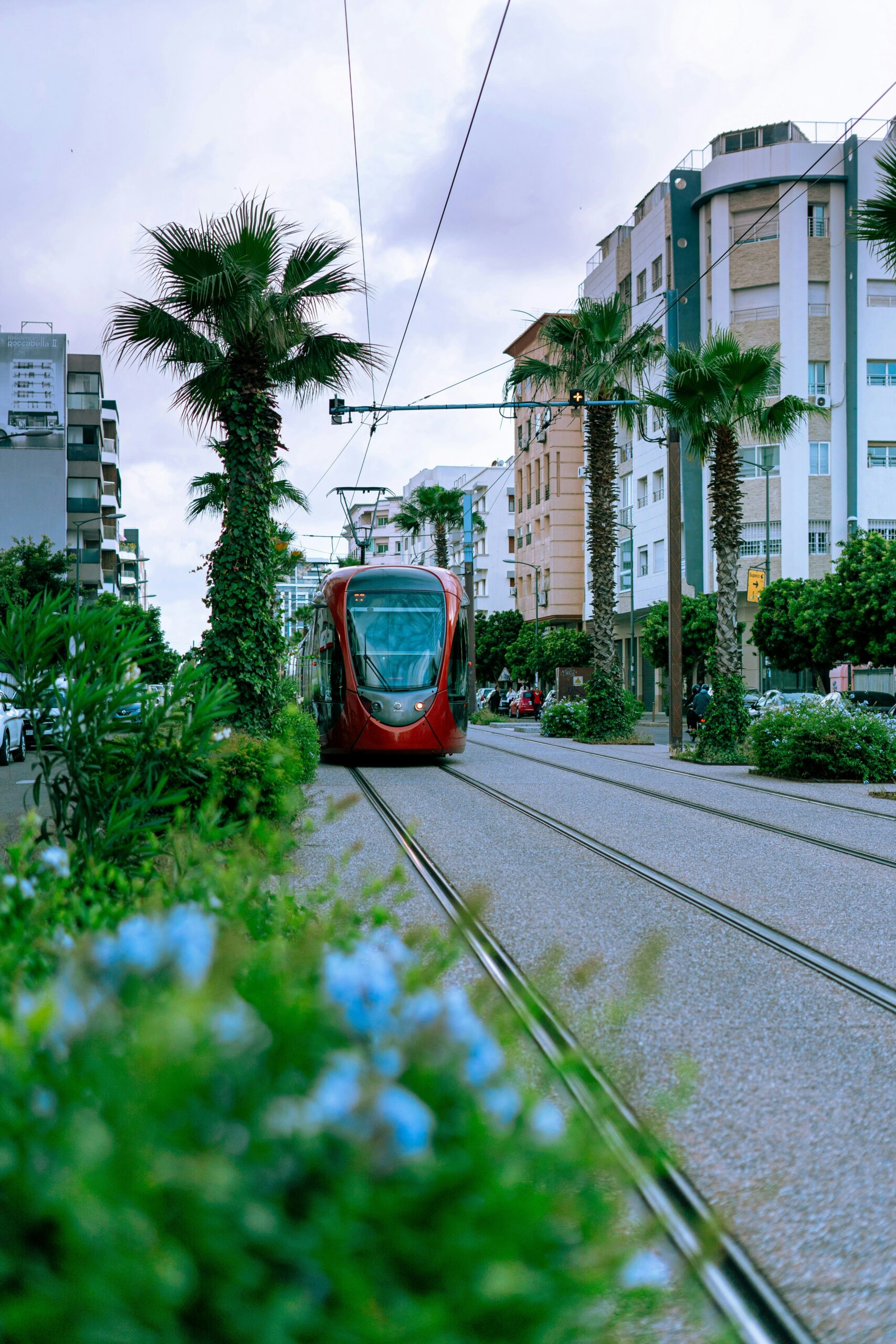
Once you arrive, Casablanca is best handled with a mixture of walking, tram, train and petit taxis. Walking works particularly well around the central districts, Place Mohammed V and the old medina. For longer journeys, use the city’s public transport or a taxi rather than trying to walk across the entire metropolis. For a broader explanation of Moroccan transport options, see our Morocco transportation guide and Morocco train guide.
If you are renting a vehicle after landing, compare the options before leaving the airport. Our Casablanca Airport car rental guide covers the practical side of collecting a vehicle.
Day trips from Casablanca
About 90 km · roughly 1h–1h 30min by road
Rabat is the easiest major day trip from Casablanca. Explore the Kasbah of the Udayas, Hassan Tower, the Mohammed V Mausoleum and the old medina before returning by train or road. It is particularly worthwhile if Casablanca is your only chance to see Morocco’s capital.
About 100 km · roughly 1h 30min drive
Head south along the Atlantic for El Jadida, where Portuguese-era architecture gives the coastal city a distinctive character. The old Portuguese City and its famous cistern are the main reasons to visit. A car makes the day easier, although rail connections can also be useful.
About 30 km · roughly 30–45 min drive
For a lighter coastal escape, Mohammedia is much closer than El Jadida or Rabat. Come for the seaside atmosphere, beaches and restaurants rather than a long list of monuments. It is a sensible option when you want half a day away from Casablanca without committing to a full excursion.
What to eat in Casablanca
Casablanca’s food scene reflects its size and Atlantic location. You will find classic Moroccan dishes alongside seafood, French-influenced cafés, bakeries and contemporary restaurants. The city is a particularly good place to try Moroccan staples in an urban setting, then switch to fresh Atlantic fish or shellfish around the coast.
Tagine
Tagine is one of Morocco’s essential dishes: slow-cooked meat, poultry or vegetables prepared with aromatic spices in the familiar conical cooking vessel. In Casablanca, look for restaurants serving tagine alongside salads, bread and mint tea rather than judging a place by its décor alone. It works equally well for lunch or dinner.
Couscous
Friday is traditionally associated with couscous in Morocco, although restaurants serve it throughout the week. The dish combines steamed semolina with vegetables and often meat or chicken, with the preparation varying by household and region. If you want to explore Moroccan food more deeply, use our guide to the best Moroccan dishes.
Atlantic seafood
Casablanca’s coastal position makes seafood one of the city’s most natural specialities. Look for grilled fish, prawns, calamari and other fresh catches, particularly around the coastal districts. For the best experience, choose restaurants with a busy local clientele and ask what arrived fresh that day.
Do not rush dinner in Casablanca. A late meal followed by a walk along the Corniche is one of the simplest ways to experience the city after the sightseeing crowds have thinned.
Casablanca questions
01How many days do I need in Casablanca?
One full day covers the Hassan II Mosque, old medina, central architecture and Habous at a brisk pace. Two nights are better if you also want time around Ain Diab and the Corniche or prefer a slower itinerary.
02Is Casablanca safe for tourists?
Casablanca is a major tourist and business city, but normal big-city precautions are sensible. Keep valuables secure in crowded places, be cautious with unofficial guides and taxis, and use reputable transport at night.
03Do I need a guide for Casablanca?
You can explore the main districts independently, but a guide is particularly useful for understanding the city’s Art Deco architecture, history and the Hassan II Mosque. A guided tour can also save time when you only have one day.
04What is Casablanca best known for?
Casablanca is best known for the Hassan II Mosque, its Atlantic coast, Art Deco architecture, historic medina and role as Morocco’s largest economic and business centre. It is also closely associated internationally with the classic 1942 film Casablanca, although the film was made primarily in Hollywood.
05What is the best time to visit Casablanca?
Spring and early autumn are excellent for comfortable sightseeing, while summer is attractive for travellers who want beach and coastal time. Winter is cooler and can be wetter but often offers a quieter city experience.
06How far is Casablanca Airport from the city?
Mohammed V International Airport is roughly 30 km south of central Casablanca. The airport train is often convenient, while driving time varies with traffic and can be considerably longer during busy periods.
Keep planning
Build your Morocco itinerary
Casablanca works brilliantly as the start or finish of a wider Moroccan journey. Continue with our practical Morocco travel guide to connect the city with Marrakech, Fes, Rabat and the Sahara.