
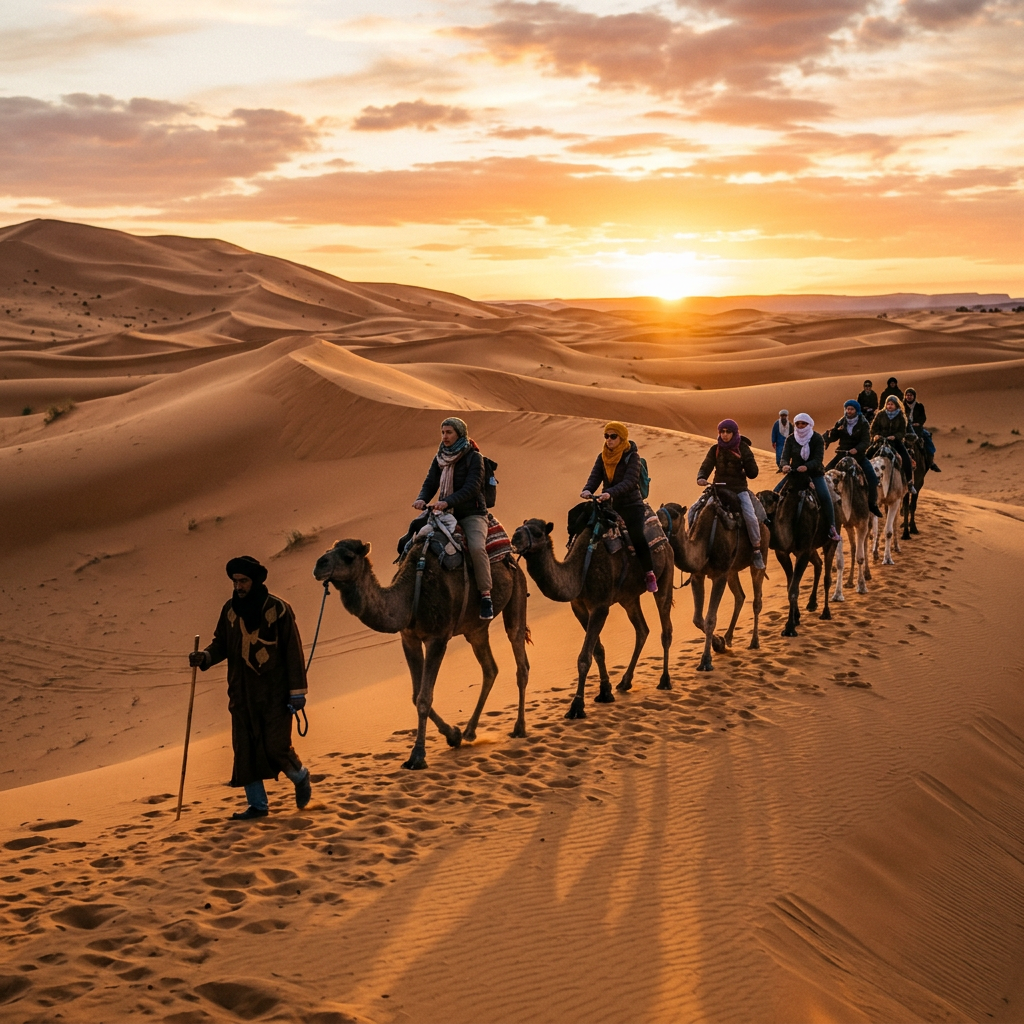
By late afternoon the Erg Chebbi dunes turn from pale gold to a deep, burnt orange, and the only sound left is wind moving a few grains of sand at a time.
Merzouga isn’t really a town to explore — it’s a small, sun-bleached staging post at the edge of the Sahara, and everything about it points toward the dunes just past the last house. If you’re hoping for grand riads, museums, or a walkable medina, this isn’t that kind of place; treat it as a one- or two-night stop, not a destination in its own right. But if the plan is to fall asleep on a bed of Sahara sand and wake up to nothing but wind and light, Merzouga is why most Morocco itineraries bend south in the first place. The catch is getting there: it’s a full day’s drive from Marrakech or Fes, so this only really works if you’ve got the days to spare, or you fly into Errachidia to cut the journey short.
- Region
- Drâa-Tafilalet
- Stay
- 1–2 nights
- Best months
- Mar–May, Sep–Nov
- Airport
- Errachidia (ERH), ~2h drive
- Erg Chebbi dunes
- Up to ~150m tall
- Currency
- Moroccan dirham (MAD)
Why go to Merzouga
Erg Chebbi is what most people picture when they imagine the Sahara: a true sand sea, roughly 50km long and up to 5km wide, with dunes climbing close to 150 metres above the plain. Merzouga sits right on its southeastern edge, which is why nearly every overland tour from Marrakech or Fes ends here — it’s the easiest place in Morocco to actually sleep inside real, wind-sculpted dunes rather than just admire them from a viewpoint.
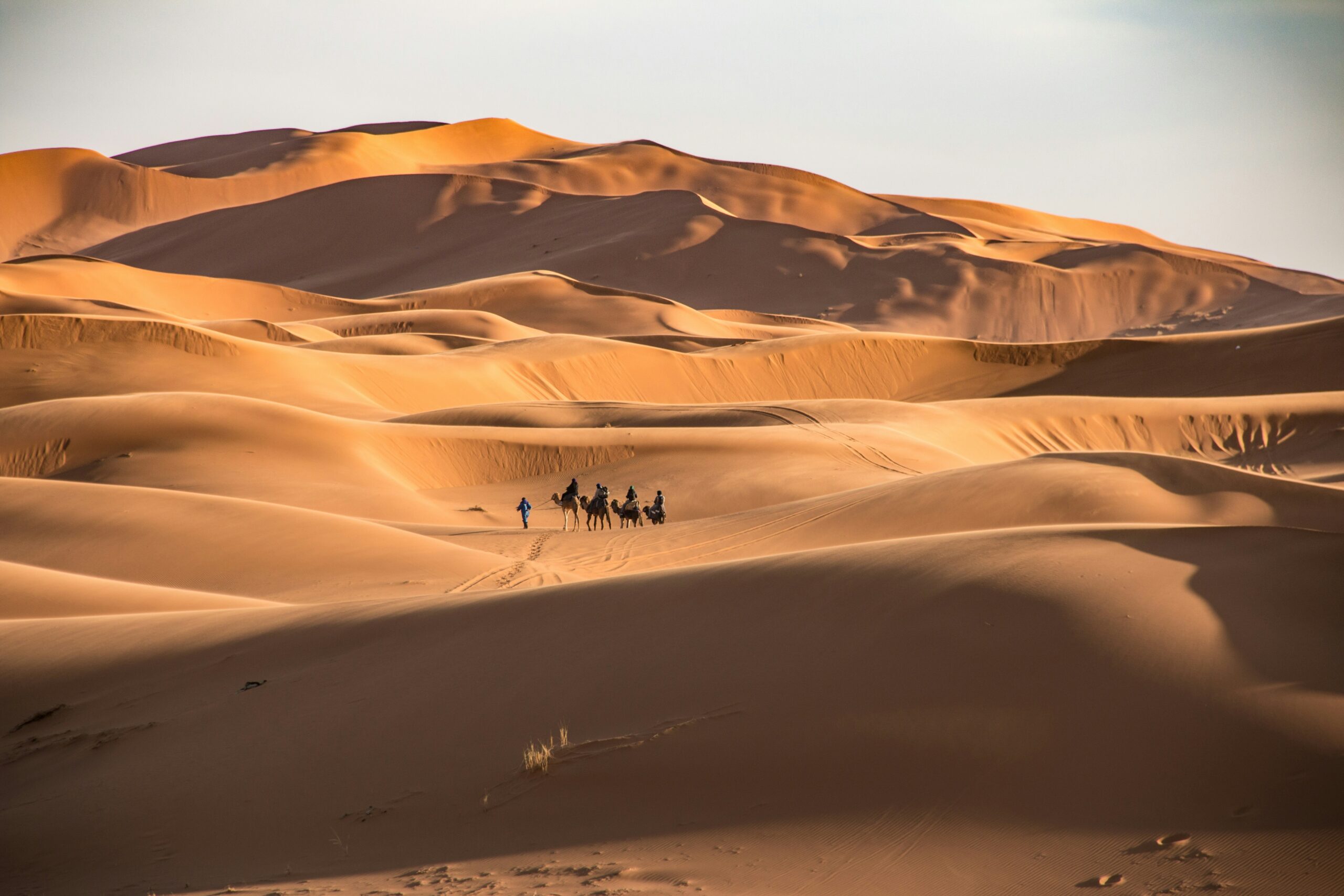
The track into Merzouga follows a stretch once made famous by the Paris–Dakar Rally, but the area’s real history runs much further back. For centuries this was a vital stop on the trans-Saharan caravan route to Timbuktu, and Sijilmasa — a trading city near modern-day Rissani — grew wealthy on the gold, salt, and goods that passed through here for over 600 years. That history is still visible in the region’s Amazigh (Berber) villages, where families keep date-palm gardens and irrigation channels that are centuries old, and where Gnawa musicians descended from West African communities still perform in villages like Khamlia.
Not every “Merzouga camp” turns out to be the one in the photos. Desert tours are heavily oversold around Marrakech’s medina and on short-notice booking apps, and budget trips sometimes swap in a lower-standard camp than the one advertised. Book with a named camp or an operator you can verify online, ask exactly which camp you’ll be assigned before paying, and confirm whether you’ll actually be sleeping inside Erg Chebbi or in a “desert camp” that’s still in the village.
Things to do in Merzouga
Almost everything worth doing here happens in, on, or around Erg Chebbi. Most visitors build their day around the two golden hours — camel treks and 4×4 trips are timed to reach a high dune for sunset or sunrise — and fill the rest of the time with something slower, like tea with a nomad family or a stop in a Gnawa music village. For the wider route in and out, our guide to Sahara desert tours in Morocco compares the main ways to book this leg of a trip.
Sunset camel trek
The classic way into Erg Chebbi: a slow dromedary ride timed to reach a high dune as the light turns orange, usually ending at your overnight camp.
Powered by GetYourGuide
Overnight in a desert camp
A night under canvas deep in the dunes, with a Berber dinner, drumming around the fire, and — on a clear night — more stars than most people have ever seen at once.
Powered by GetYourGuide
4×4 excursion to Khamlia
A half-day loop through black volcanic hammada to Khamlia village, the old M’Fis mines, and Berber nomad tents on the dune edge — the same stretch of track used by the Paris–Dakar Rally.
Powered by GetYourGuide
Sandboarding the dunes
Rent a board and drop down a real Saharan dune face — steeper, softer, and far more tiring than any snow-sport equivalent.
Powered by GetYourGuide
Quad biking the dunes
A noisier, faster way to cover more of Erg Chebbi’s edge than a camel trek allows, usually offered as a standalone hour or bundled with a camel ride.
Powered by GetYourGuide
Multi-day desert tour from Marrakech or Fes
For travellers without their own transport, a 2–4 day guided loop is the standard way to reach Merzouga, usually via Aït Ben Haddou, the Dadès or Todra Gorge, and the Ziz Valley.
Powered by GetYourGuide
Erg Chebbi Dunes
Erg Chebbi is the reason Merzouga exists as a tourist stop at all: a genuine erg, or sand sea, stretching roughly 50km north to south with dunes that climb close to 150 metres in places — among the tallest in Morocco. There’s no gate and no entry fee; you can walk in from the edge of the village in minutes, though most people experience it by camel or 4×4 so they can go deeper and time their visit for sunrise or sunset, when the colour shift is most dramatic. Photographers should budget at least one full day-night cycle here if they can, since the dunes look almost unrecognisable at midday compared with first and last light.
Powered by GetYourGuide
Camel trek and desert camp: what to expect
Most camel treks leave Merzouga village in the late afternoon, ride for roughly 1–2 hours to reach a camp already pitched inside the dunes, and arrive in time to watch the sunset from a nearby high point. Camps range from simple shared Berber tents with communal meals to private tents with real beds and en-suite bathrooms — the gap in comfort is bigger than the gap in what you actually experience, since everyone gets the same stars and the same silence once any generators switch off. Expect a tagine or couscous dinner, drumming around the fire, and a genuinely cold pre-dawn wake-up call for sunrise, even in summer.
Sandboarding and quad biking
Erg Chebbi’s steep, loose dune faces suit sandboarding better than most beach or desert spots in Morocco — a short hike up, then a fast, sandy run down, usually arranged as an add-on to a camel trek or overnight stay. Quad bikes cover more ground for travellers who want to see further into the dune field without committing to a multi-hour 4×4 circuit, though they’re noisier and less suited to anyone who came specifically for the silence.
Ask a 4×4 guide about Gara Medouar, a horseshoe-shaped rock formation once used as a film location and rarely mentioned in standard camel-trek itineraries. It’s a short detour off the usual Khamlia route and, unlike Erg Chebbi itself, almost always empty of other tourists.
Dayet Srji — the seasonal desert lake
West of the village, Dayet Srji is a shallow salt lake that fills after winter and spring rain and can dry to cracked mud by late summer — there’s no way to guarantee it’ll have water when you visit. When it does, it draws flamingos, herons, and migratory birds crossing between Europe and Africa, and it’s one of the few spots around Merzouga where the desert feels alive with something other than tourism. Ask your camp or guide about current water levels before planning a special trip out.
Where to stay in Merzouga
Where you sleep in Merzouga says a lot about what kind of trip you’re having. The choice isn’t really about neighbourhoods — it’s about how deep into the dunes you want to be, and how much comfort you’re willing to trade for it.
Merzouga village & Hassi Labied
The village and neighbouring Hassi Labied sit right on the edge of Erg Chebbi, so you get dune views from a rooftop without needing a camel or 4×4 to reach your bed. This is the practical base: restaurants, shops, and ATMs are all within walking distance, and it’s the easiest option if you’re arriving late, travelling with young kids, or just want a shower you don’t have to think about.
Standard desert camps inside Erg Chebbi
This is the trip most people picture when they book “Merzouga”: a genuine tent camp set among the dunes, reached by camel or 4×4, with a shared Berber dinner and a fire. Comfort varies a lot between operators at similar prices, from simple shared tents with an outdoor toilet block to private tents with real beds — read recent reviews for the specific camp, not just the tour company, before booking.
Luxury desert camps
A newer tier of five-star camps and boutique hotels — properties like Sunrise Palace Merzouga — sit at the foot of Erg Chebbi with pools, private bathrooms, and real beds, while still arranging camel treks and campfire evenings a short walk from your room. It’s “sleeping in the Sahara” with none of the discomfort, at a price closer to a city hotel than a Berber tent.
Some links on this page earn ComeMorocco a commission at no extra cost to you. It never changes what we recommend. How this works.
Best time to visit Merzouga
Spring (March–May)
Warm, mostly clear days and cool nights make spring the most comfortable stretch for camel treks and camping — it’s also when Dayet Srji is most likely to hold water and draw migratory birds.
Summer (June–August)
Brutal by midday, with highs regularly above 38°C and little shade anywhere in the dunes. Treks shift to early morning or dusk, and camp life mostly happens after dark — prices drop and crowds thin out for travellers who can plan around the heat.
Autumn (September–November)
The other peak season, with conditions close to spring: mild days, comfortable nights, and camps booking up well in advance for the cooler months ahead.
Winter (December–February)
Daytime temperatures are still pleasant, but desert nights can fall close to freezing, so a “summer Morocco” packing list is a real mistake here — bring proper layers even if you’re travelling from a warm coastal city.
Getting to and around Merzouga
| From | How | Time | Notes |
|---|---|---|---|
| Marrakech | Guided tour or private transfer | 2–3 days | Most people split the ~560km, 9–10h drive over the High Atlas into a multi-day tour via Aït Ben Haddou, rather than driving it in one push |
| Fes | Private transfer or overnight bus | ~6h | Runs via the Middle Atlas and the Ziz Valley — a faster, more direct route than from Marrakech |
| Errachidia Airport (ERH) | Taxi or hotel pickup | ~2h | The closest airport with regular domestic flights; confirm pickup with your camp or riad in advance |
| Ouarzazate Airport (OZZ) | Taxi or private transfer | ~4h | A common alternative when Errachidia flight times don’t line up with your dates |
Merzouga village itself is small enough to walk, but the dunes are not — once you’re booked into a camp, the camel or 4×4 transfer is arranged for you as part of the trip. There’s no real public transport network around the dunes, so agree a fixed price for any local transfers with your riad or camp before you get in the vehicle, not after.
Day trips from Merzouga
~15km · 20 min drive
A small village known for its Gnawa musicians, descendants of West African communities brought north along the old caravan routes. Most 4×4 tours stop for a short live set and mint tea with the group — a tip or small payment for the music is customary, and it’s worth it.
~35km · 40 min drive
The market town that grew up after the medieval city of Sijilmasa declined, and the birthplace of Morocco’s ruling Alaouite dynasty. Time your visit for a Tuesday, Thursday, or Sunday to catch the souk in full swing — dates, spices, and livestock trading through a maze of covered alleys — and stop at the Sijilmasa ruins and the Ksar Oulad Abdelhalim on the way.
~55km · 1h drive
Morocco’s fossil capital, where roadside workshops cut ancient trilobites and ammonites into sinks, tables, and tiles. It’s also the practical stop for the Ziz Valley’s palm groves and a good half-day add-on if you’re already heading toward Errachidia.
Merzouga questions
01How many days do I need in Merzouga?
One night is enough for the classic camel-trek-and-camp experience, but two nights let you add a 4×4 excursion or a day trip to Rissani without rushing. Most travellers treat Merzouga as a stop within a longer Marrakech–Sahara–Fes loop rather than a standalone destination.
02How far is Merzouga from Marrakech?
It’s about 560km by road, roughly 9–10 hours of driving through the High Atlas — most tours split this into a 2–3 day trip with overnight stops rather than doing it in one push. Flying into Errachidia, the closest regional airport, cuts the overland portion to about 2 hours.
03Is Merzouga safe for tourists?
Yes — the bigger risk is being oversold a lower-quality tour rather than personal safety. Book desert camps and tours through a named, verifiable operator, agree on prices before you travel, and treat aggressive touts in nearby towns the same way you would anywhere else in Morocco.
04Do I need a guide, or can I visit independently?
You can drive yourself as far as Merzouga village, but you’ll still need a guide, camel handler, or 4×4 driver to actually get into Erg Chebbi and reach a desert camp — there are no roads across the dunes themselves. Independent travellers typically book a camel trek or camp locally rather than joining a multi-day tour from Marrakech.
05What’s the difference between a standard and a luxury desert camp?
Both put you inside Erg Chebbi with a camel trek, a Berber dinner, and a night under the stars — the difference is mainly the bed, the bathroom, and the price. Standard camps often mean shared tents and shared toilet blocks; luxury camps add private bathrooms, real beds, and sometimes a pool back at a linked hotel.
06What should I pack for a night in the Sahara?
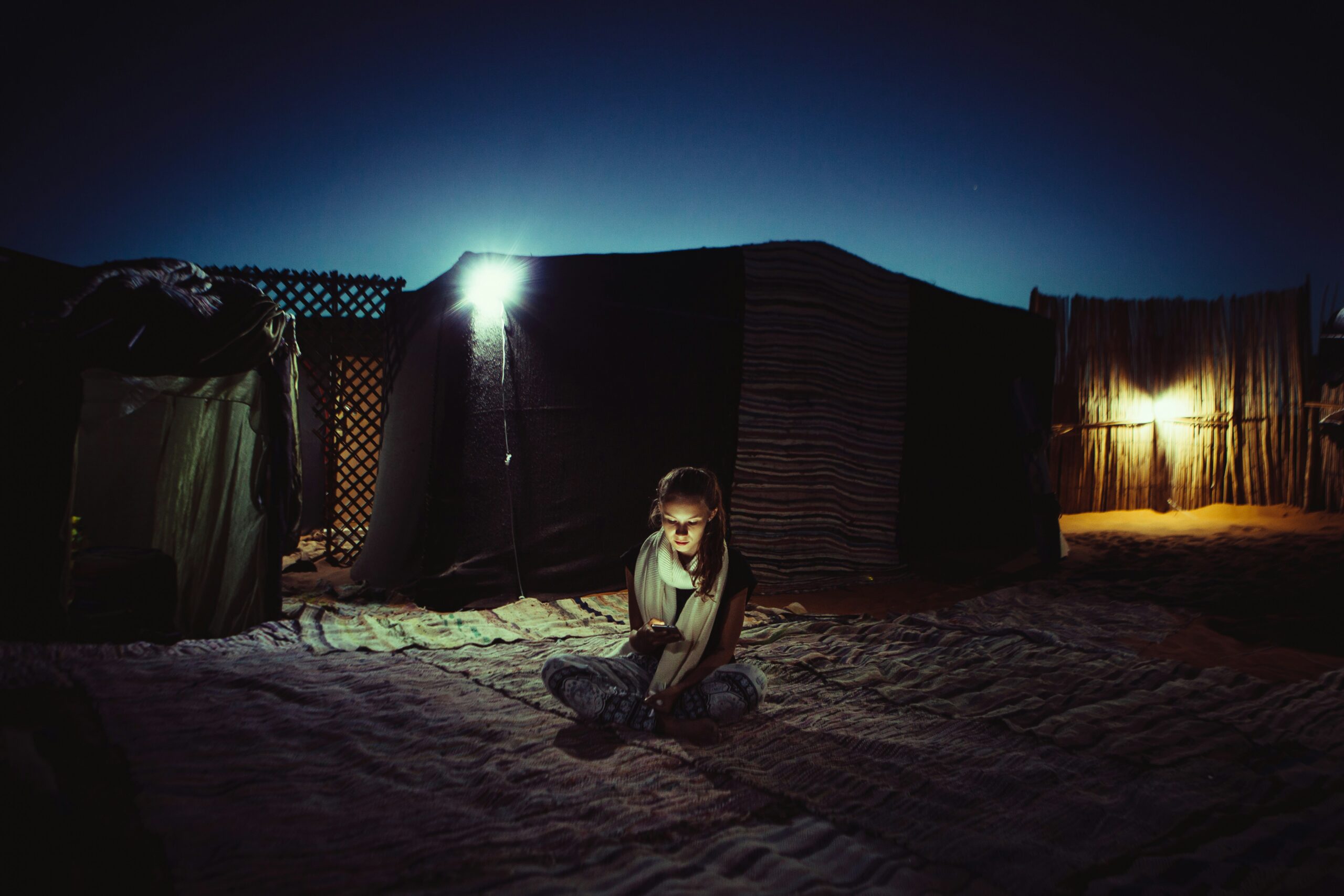
Layers — desert nights get cold even when the day was hot, so pack something warmer than you’d expect for Morocco in that season. Add sun protection, a scarf or buff for blowing sand, a headlamp, and a portable charger, since power in most camps is limited.
Keep planning
Building a longer Morocco route?
Merzouga usually fits into a wider loop through the Atlas Mountains and the south — see how a desert tour from Marrakech or a stop in Ouarzazate or Fes can fit around it.