
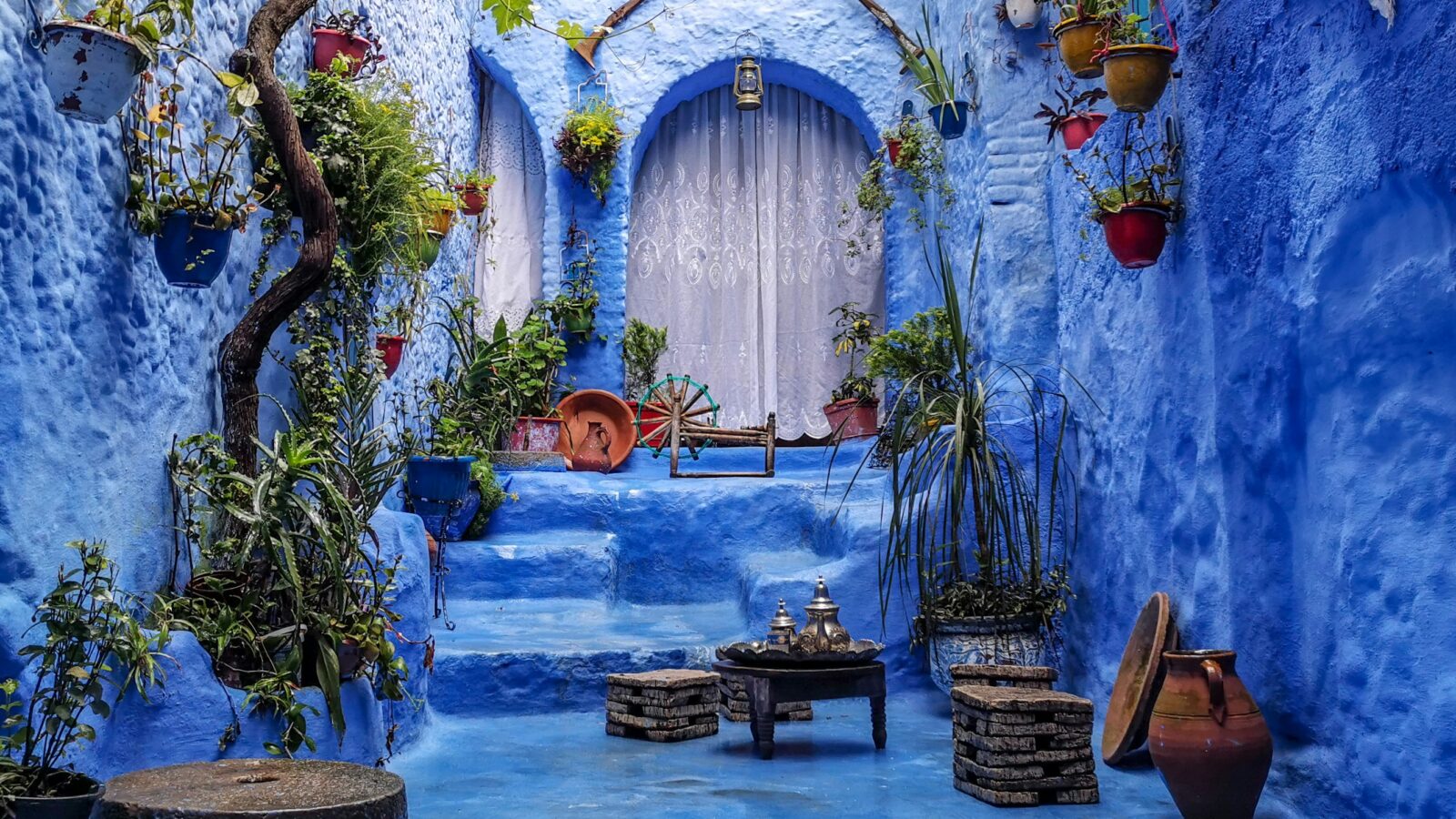
At dusk in Chefchaouen, the indigo walls of the medina deepen to the colour of the Rif Mountains above them, and the smell of cedar woodsmoke drifts down from the hillside café where everyone watches the light go out.
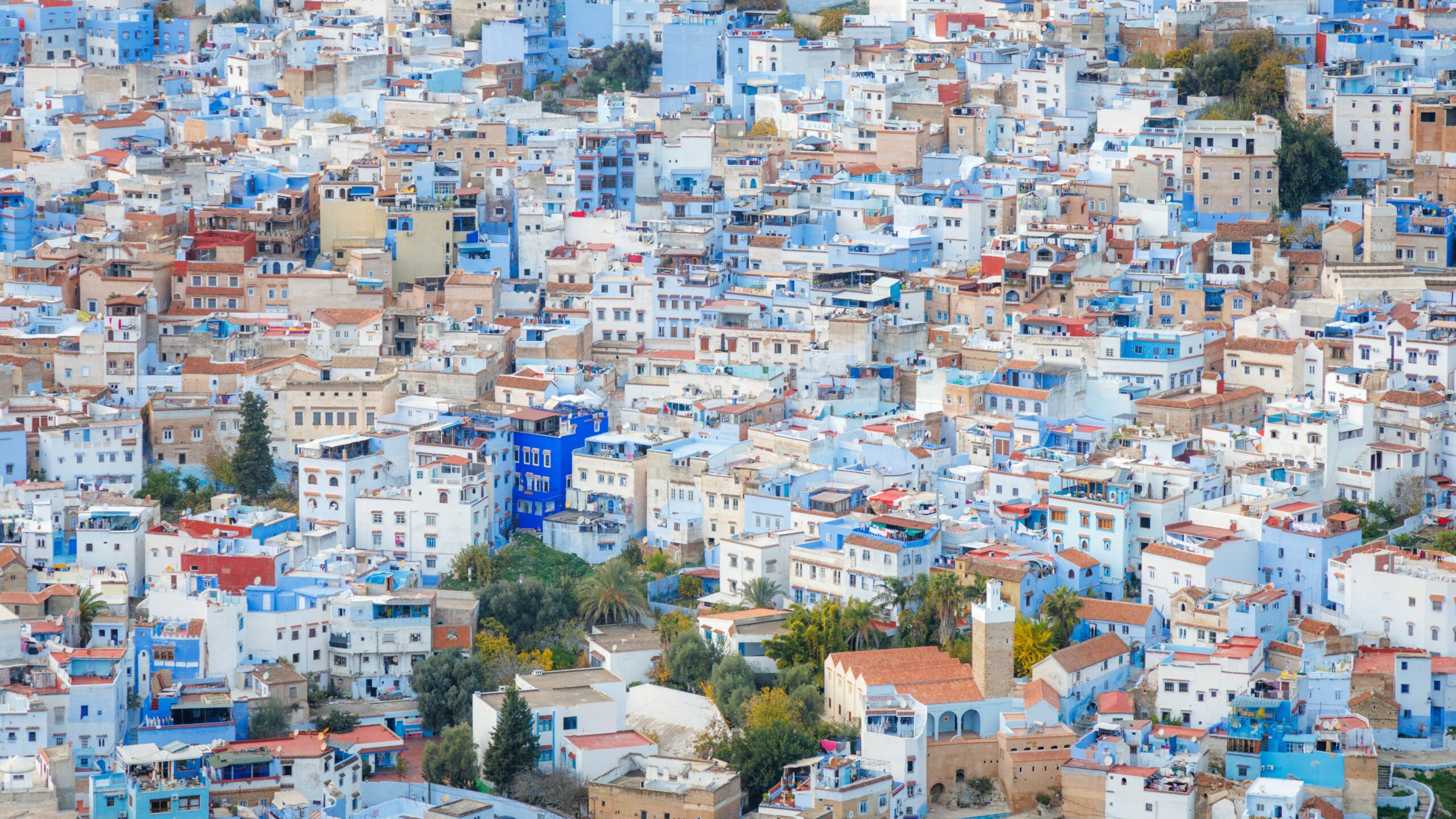
Chefchaouen is the most photographed town in Morocco and, handled correctly, one of the most rewarding. It genuinely is this blue — every alley, staircase, and flower pot — and the Rif Mountain backdrop is as dramatic as it looks on Instagram. What photos don’t show is how small and walkable the old medina is, how early the day-trippers leave, and how calm things become by late afternoon. Stay at least one night and the place is yours. Come only for the day and you’ll spend most of it avoiding other cameras.
- Region
- Tanger-Tétouan-Al Hoceïma
- Stay
- 1–3 nights
- Best months
- Mar–May, Sep–Nov
- Nearest airport
- TNG — 120 km
- Elevation
- ~600 m (Rif foothills)
- Founded
- 1471
Why go to Chefchaouen
The blue city’s appeal is architectural and atmospheric in equal measure. The medina is small enough to absorb in a morning — roughly 20 minutes corner to corner — which makes it one of the few Moroccan medinas where you can feel genuinely unrushed. The lanes are steep and photogenic, the handicrafts (particularly wool blankets and leather goods) are among the best-priced in the country, and the surrounding Rif Mountains offer hiking and waterfalls that most visitors who come only for a day entirely skip.
Chefchaouen also has a distinct character that sets it apart from the imperial cities further south. Founded in 1471 as a fortress and later shaped by Andalusian Muslim and Sephardic Jewish exiles fleeing Spain, it carries a hybrid heritage visible in its roofline tiles — closer to southern Europe than anything you’ll see in Fes or Marrakech — and in the particular shade of blue that its streets have worn since the 1930s. That history, laid out across a photogenic hillside, is the honest reason to come.
If you are travelling Morocco on a tight north-to-south route, Chefchaouen fits naturally between Tangier and Fes. If you’re based in Marrakech, it requires a full day of travel each way — worthwhile, but plan it as an overnight at minimum. Couples, solo travellers, and anyone with a serious interest in craft shopping or mountain walking will get the most from it. Families with young children will find the steep medina stairs more challenging than rewarding.
The medina is not flat. Every riad is accessed via a network of narrow staircase lanes. Wheeled suitcases are effectively useless — pack a soft bag, or arrange with your accommodation to have luggage collected from a drop-off point near the bus station. Most riads will organise this for free if you ask when booking.
Things to do in Chefchaouen
Chefchaouen is compact but the surrounding region is not. Budget time for at least one activity outside the medina itself — the Akchour waterfalls in particular are a reason to stay an extra night that most visitors don’t know about until they’ve already left.
Guided Medina Walking Tour
A knowledgeable local guide unlocks the founding history, the Andalusian-Sephardic architectural layers, and the best photography spots before the day-trippers arrive.
Powered by GetYourGuide
Day Trip from Tangier to Chefchaouen
The most popular way to reach the blue city from the north — a guided excursion that handles transport and gives you a full afternoon in the medina.
Powered by GetYourGuide
Akchour Waterfalls Hiking Tour
A half-day hike through the Talassemtane National Park gorge to a series of cascading waterfalls — one of the best nature days in northern Morocco.
Powered by GetYourGuide
Spanish Mosque Sunset Walk
A guided evening walk up to the hillside Spanish Mosque for panoramic views over the blue medina and the Rif peaks turning gold at dusk.
Powered by GetYourGuide
Cooking Class in the Rif
Learn to prepare northern Moroccan dishes — harira, Rif-style tagine, and msemen flatbreads — in a home kitchen with a local host.
Powered by GetYourGuide
Private Transfer from Tangier Port
A comfortable private vehicle from Tangier’s cruise port or Tanger Ibn Battouta Airport straight to your riad in the medina — no buses, no connection stress.
Powered by GetYourGuide
The Blue Medina
The old walled medina is small enough to explore without a map but layered enough to reward two or three circuits at different times of day. The main square, Plaza Uta el-Hammam, anchors the western side — it’s where the cafés are, where locals gather after evening prayers, and where the 15th-century Kasbah fortress sits. Allow two to three hours to walk every lane properly. Early morning (before 8 am) and after 5 pm belong almost entirely to people who are staying overnight; the midday rush of day-trippers clears the authentic atmosphere faster than the heat does. Entry to the medina itself is free. See our guide to ancient cities in Morocco for the broader historical context.
Powered by GetYourGuide
Kasbah Museum
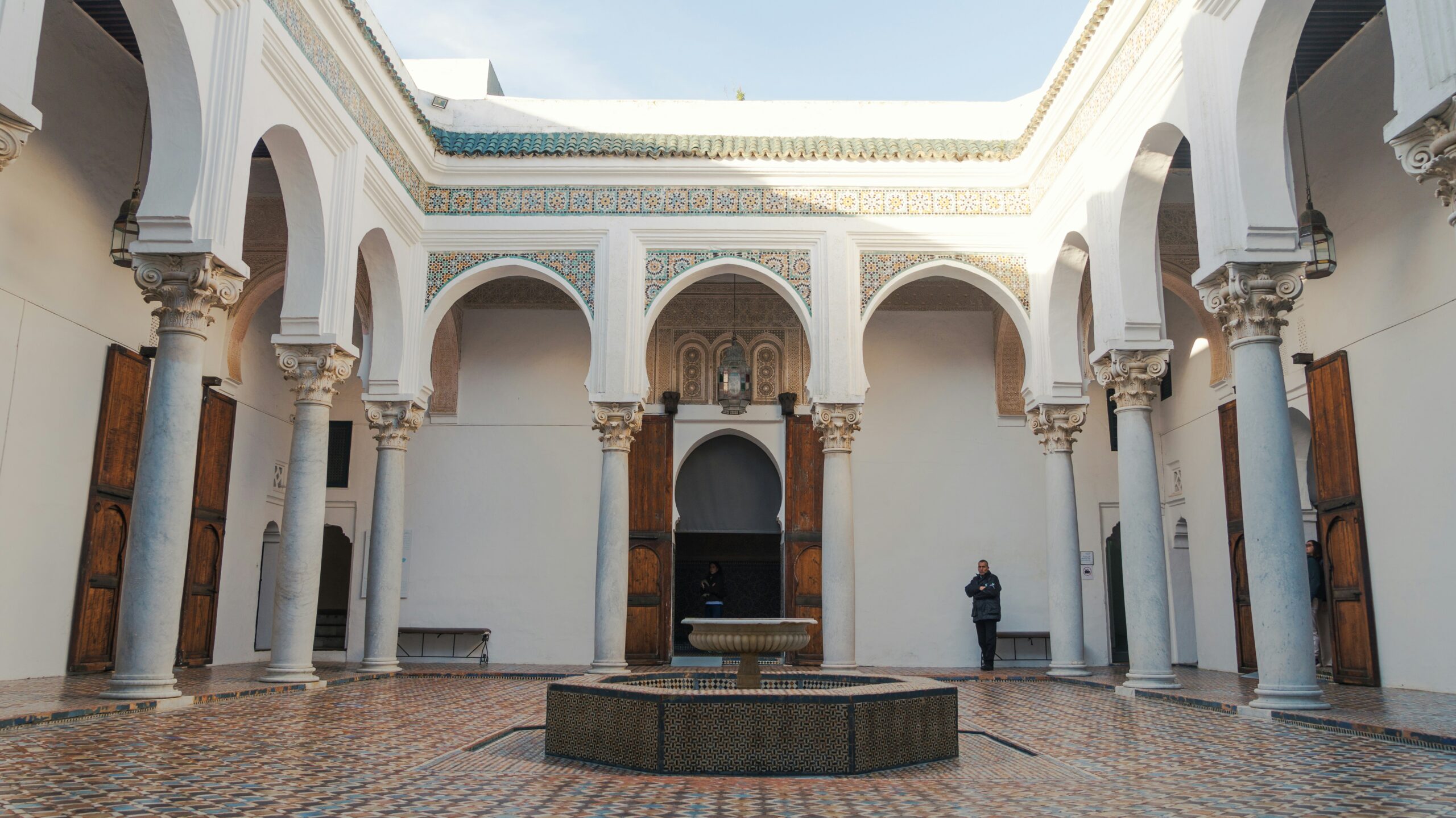
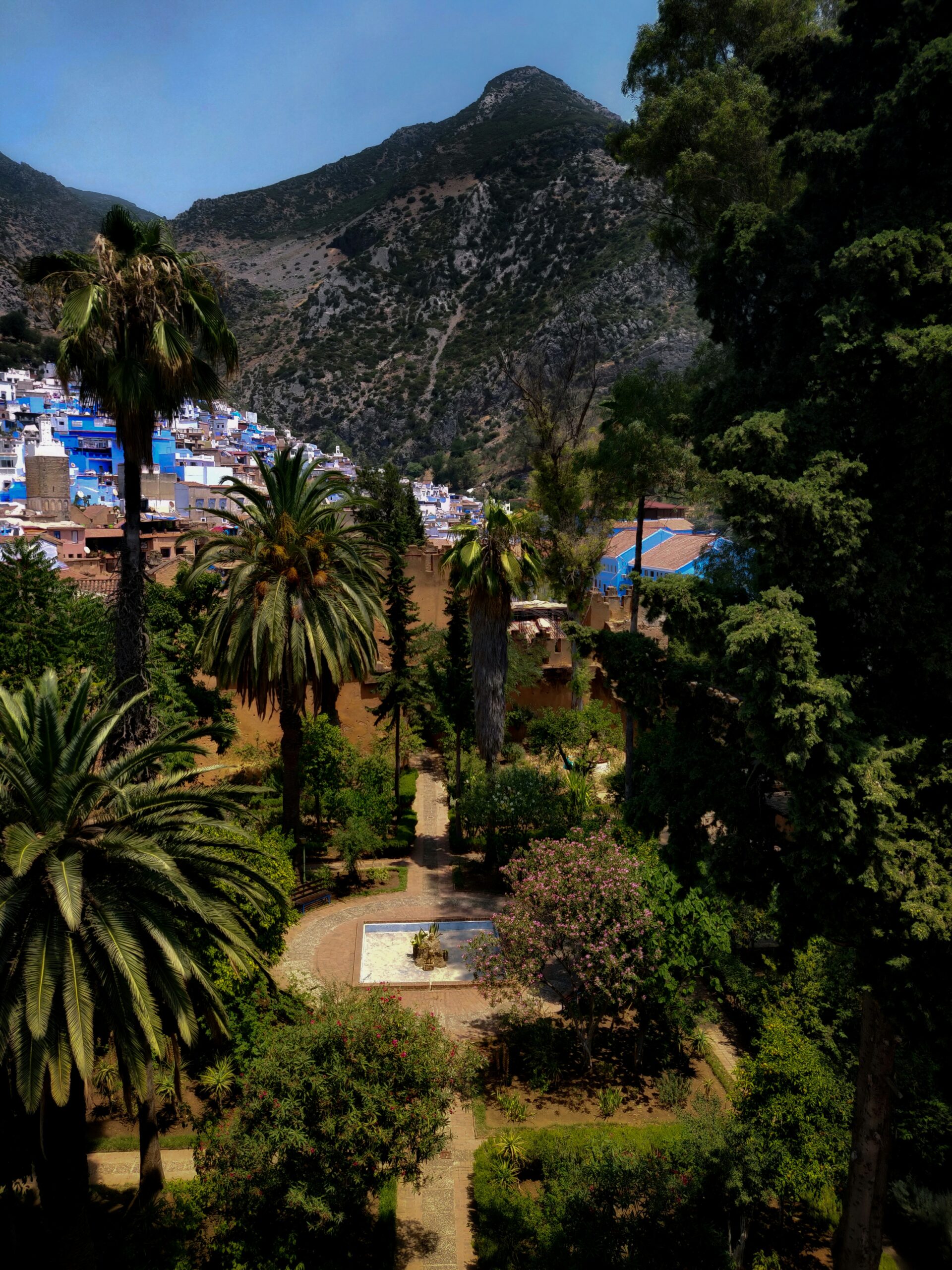
The 15th-century Kasbah at the centre of Plaza Uta el-Hammam houses a small ethnographic museum covering the town’s Andalusian and Berber heritage, traditional costumes, and local crafts. The real draw is the interior garden and the views from the rampart towers over the medina rooftops. Budget around an hour; the entrance fee is modest (typically 10–20 DH). The fortified tower is the oldest surviving structure in the city, dating from the original 1471 foundation.
Spanish Mosque & Ras el Ma Spring
Two short walks from the medina that most day-trippers miss. The Spanish Mosque sits on a hillside a 20-minute walk above the medina and offers the postcard panorama of blue rooftops against the Rif Mountains — best at golden hour before sunset. No entry fee; the mosque itself is closed to non-Muslims. Ras el Ma is a spring and small waterfall at the opposite, eastern edge of the medina where women still wash laundry in the traditional way and local men sit under the trees. It costs nothing to visit and takes 15 minutes from the main square.
The path to the Spanish Mosque runs through a residential quarter above the medina. On the way back down, take the left fork rather than retracing your steps — it brings you out near the upper medina gate, past a cluster of carpet workshops that are almost never on a tourist itinerary and where prices reflect it.
Akchour Waterfalls & Talassemtane National Park
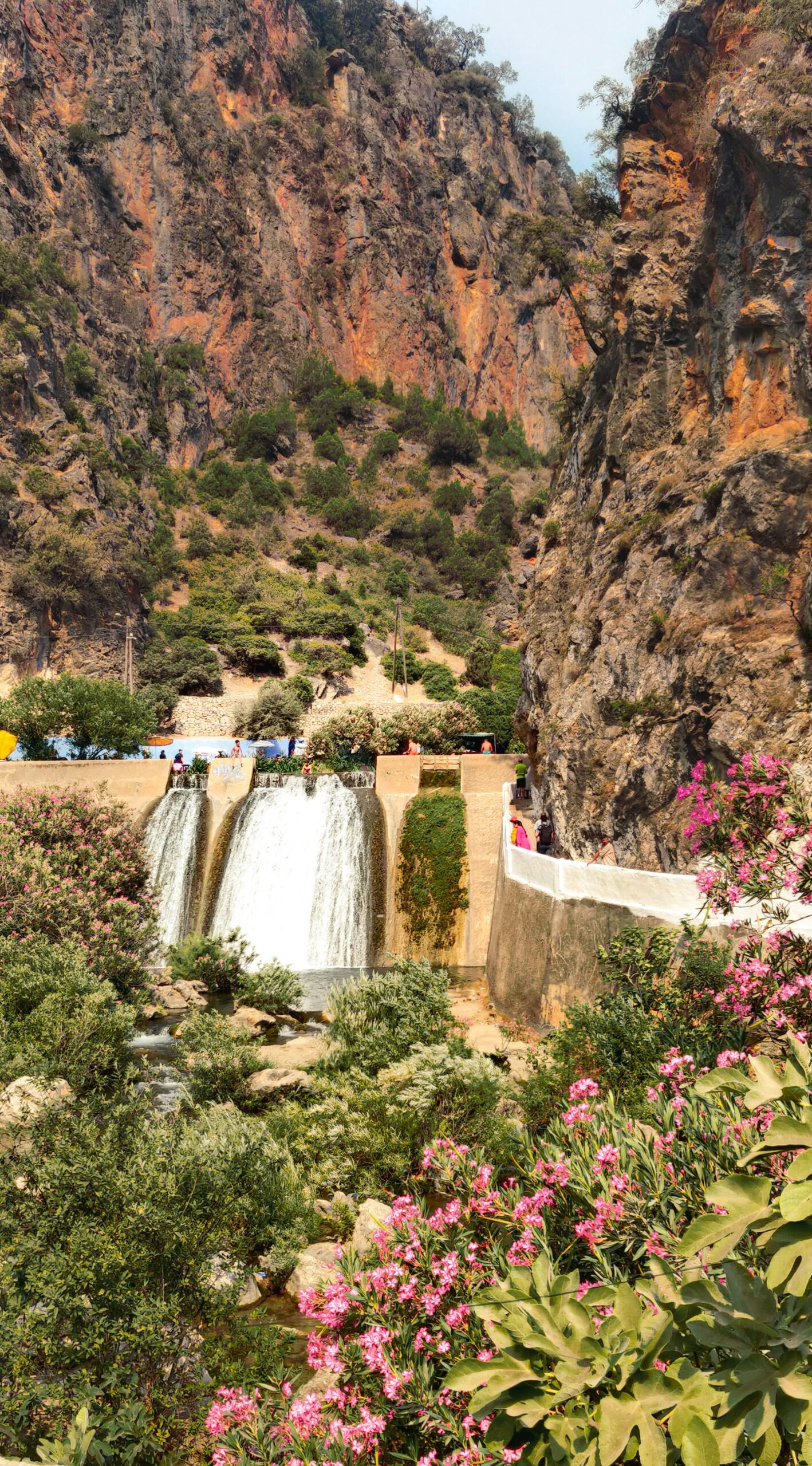
The single best reason to stay an extra night in Chefchaouen is Akchour, 30 km east in Talassemtane National Park. A shared taxi from the bus station (around 20–30 DH per person) drops you at the trailhead. The lower waterfall is a 40-minute walk through cedar and fir forest; the upper cascade and natural pool require a further two hours of hiking with some scrambling. Bring water, sturdy shoes, and more time than you think you need. The park is free to enter; guided hikes are available in the village at the trailhead for those who prefer a route with context.
Where to stay in Chefchaouen
The choice in Chefchaouen is simple: inside the medina or outside it. Staying inside means waking to the blue lanes before anyone else arrives — it’s the only way to experience the place properly. Staying outside means easier luggage access and more modern amenities, but you lose the atmosphere that makes the town worth visiting in the first place. For first-timers and anyone who values the experience over convenience, a medina riad is the correct answer. See our full guide to Morocco riads for what to look for when booking.
Medina Riads
The medina has a good range of riads from budget guesthouses (300–500 DH per night) to beautifully restored mid-range properties with rooftop terraces and Rif Mountain views (700–1,200 DH). The catch is luggage — arrange soft bags and coordinate with your riad to have your bags collected from the nearest drop-off road before you walk in. Most properties handle this without charge. Book well ahead for spring and autumn weekends, when Moroccan and European visitors fill the good riads fast.
Hotels Outside the Medina
A cluster of hotels sits in the newer town below and around the medina, reachable by road and therefore accessible with a suitcase. Rates are generally lower than medina riads for equivalent comfort, and parking is possible if you’re driving from Tangier or Fes. The trade-off is that you’ll walk 10–15 minutes uphill to reach the medina each time. Good for those who want Chefchaouen as a base for Akchour and Rif Mountain day trips rather than for the medina itself.
Some links on this page earn ComeMorocco a commission at no extra cost to you. It never changes what we recommend. How this works.
Best time to visit Chefchaouen
Spring (March–May)
The best time to visit. Temperatures are mild (15–22°C), wildflowers cover the Rif hillsides, and the light is soft and photogenic. Crowds build through April and peak in early May — book accommodation two to three weeks ahead for spring weekends.
Summer (June–August)
Warmer than people expect for a mountain town (up to 35°C midday in July and August) but cooler than Fes or Marrakech. Peak domestic tourism season — the medina fills with Moroccan families on holiday and European visitors. Not unpleasant, just busy. Akchour is at its best for swimming.
Autumn (September–November)
Excellent. Temperatures drop back to 18–25°C from September, crowds thin noticeably after mid-October, and the Rif Mountains turn amber and gold. October is arguably the single best month to visit. Occasional rain from late November.
Winter (December–February)
Cold (5–12°C), occasionally frosty above the medina, and the higher Rif trails may have snow. Crowds are minimal and riad rates drop significantly. The blue walls are striking against grey winter skies. A genuine off-season option for travellers who don’t mind a jacket.
Getting to and around Chefchaouen
| From | How | Time | Notes |
|---|---|---|---|
| Tangier | CTM / Supratours bus | 2h 30min | Several departures daily; book ahead in high season. Full transport guide. |
| Tangier | Private taxi or transfer | 1h 45min | Grand taxis depart from the Tangier Morjane taxi stand; agree the fare before departure (~250–350 DH shared). See our Morocco taxi guide. |
| Fes | CTM bus | 4h–4h 30min | One direct daily departure; check schedule at the bus station. Alternatively change at Ouezzane. |
| Tangier Ibn Battouta Airport (TNG) | Grand taxi to Tangier, then bus | 3h total | No direct airport-to-Chefchaouen service; a private transfer is the stress-free alternative. See private transfer from Tangier to Chefchaouen. |
| Marrakech | Bus (change in Casablanca or Fes) | 9–11h | A long journey best broken with an overnight stop. Consider flying Marrakech–Tangier (around 1h) and bussing from there. See Morocco domestic flights. |
Inside Chefchaouen, the medina is entirely on foot — there are no vehicles inside the walls. The newer town below the medina has petit taxis for moving between the bus station, car parks, and the medina gates; fares within town are 10–20 DH. For Akchour and other Rif excursions, shared grand taxis leave from the main bus station square. Agree the fare before getting in and confirm whether it’s per person or for the whole vehicle. Renting a car in Morocco is an option worth considering if you plan to explore the wider Rif region — the roads between Chefchaouen, Tetouan, and the coast are particularly scenic. See our car rental guide for practical details.
Day trips from Chefchaouen
30 km · 45 min by shared taxi
Talassemtane National Park’s Akchour gorge is the most rewarding half-day trip from Chefchaouen and consistently undervisited relative to the medina itself. Shared grand taxis leave from the bus station square for around 20–30 DH per person. The lower waterfall trail is easy and family-friendly (40 minutes each way); the upper God’s Bridge and natural pool require three to four hours total with moderate scrambling. Bring food and water — the single café at the trailhead is not always open. Return before 3 pm to catch the last shared taxis back.
60 km · 1h 15min by bus or grand taxi
Tetouan’s UNESCO-listed medina is one of the least-visited in Morocco despite being arguably the most authentically Andalusian — wide whitewashed lanes, Spanish-era architecture, and a souq where the tourist-to-local ratio is still heavily in favour of locals. The city served as the capital of the Spanish Protectorate and retains a distinct character you won’t find anywhere else in Morocco. Grand taxis run directly from Chefchaouen; the journey takes around an hour and fifteen minutes. Budget a full day if you go — Tetouan’s medina rewards unhurried exploration. See our guide to unique places in Morocco for context.
Trailhead above the medina · 4–6h round trip
For those with hiking boots already in the bag, the trail up Jebel El Kelaa begins directly above the Spanish Mosque and climbs through pine and cedar forest to a ridge with views back over Chefchaouen and the entire Rif valley. The full circuit takes four to six hours depending on pace. No guide is strictly necessary for the main route in clear weather, but the path is not always well-marked — hiring a local guide (arrange through your riad the evening before, budget 200–300 DH) makes the day easier and the descent faster. Best done in spring when the wildflowers are out and the ridge is not yet baked by summer heat.
What to eat in Chefchaouen
Chefchaouen’s food is simpler and more mountain-inflected than what you’ll find in Fes or Marrakech. The Rif region produces excellent goat’s cheese, wild honey, olive oil, and dried figs — all available in the medina market — and the town’s café culture is strong enough that sitting with a pot of mint tea and a plate of msemen (pan-fried flatbread) counts as a legitimate morning activity. Restaurant prices here are some of the most honest in Morocco; a full tagine lunch with bread and tea rarely exceeds 60–80 DH. For a deeper exploration of Moroccan food traditions, see our guide to the best Moroccan dishes.
Msemen and Beghrir
The breakfast staple of northern Morocco. Msemen are square, flaky flatbreads cooked on a griddle and served with argan oil, honey, or jam — best from the small bakeries that open from around 7 am near the medina gates. Beghrir are sponge-like semolina pancakes, sometimes called thousand-hole pancakes, served warm with honey and butter. Both cost 5–10 DH per portion. The cafés on Plaza Uta el-Hammam are convenient but pricier; walk one lane back for the same quality at half the price.
Rif-Style Tagine
Mountain tagines here lean toward lamb with prunes and almonds, or chicken with preserved lemon and olives — versions cooked more slowly and with more aromatic spice than their Marrakech equivalents. The best are found in the smaller riads that offer dinner to non-guests (ask your accommodation to recommend one) rather than in the tourist-facing restaurants around the main square. Budget 50–80 DH for a full tagine, bread, and salad.
Rif Goat’s Cheese and Honey
The medina market (reached via the small souq street off the main square) sells rounds of local goat’s cheese and jars of wild thyme honey from the Rif hillsides. Neither is widely exported. Buy a round of cheese and a small jar of honey to eat with bread from the bakery next door — it is one of the better picnics available in Morocco for under 50 DH and something almost no guidebook mentions.
The café terrace at Lina Riad, in the upper medina near the Bab Onsar gate, opens its rooftop to non-guests for tea and breakfast. The views over the blue rooftops and across to the Rif ridge are better from here than from any restaurant on the main square — and the mint tea is made properly, not the bag-in-a-glass version. Go before 9 am or after 4 pm to avoid the day-tripper rush.
Chefchaouen questions
01How many days do I need in Chefchaouen?
Two nights is the sweet spot for most travellers. One full day covers the medina thoroughly, including the Kasbah, Spanish Mosque, and Ras el Ma spring. A second day allows a half-day trip to Akchour waterfalls or a hike above the town — experiences that are genuinely worth the extra time. One night is enough if you’re on a tight Morocco itinerary and primarily want the blue medina experience; a day trip from Tangier is only worthwhile if you have absolutely no flexibility.
02How do I get from Marrakech to Chefchaouen?
There is no direct bus between Marrakech and Chefchaouen. The most common route is by bus via Casablanca or Fes, which takes nine to eleven hours in total — a full day of travel. The more practical option for most visitors is a domestic flight from Marrakech Menara to Tangier Ibn Battouta (around one hour), then a bus or grand taxi onward to Chefchaouen (two to two-and-a-half hours). See our Morocco domestic flights guide for airline options and booking tips.
03How do you pronounce Chefchaouen?
The most common English approximation is shef-SHAW-en (three syllables, stress on the second). The Arabic is closer to shaf-SHA-wan, with a guttural initial sound. Locals and most Moroccan Arabic speakers often shorten it simply to Chaouen — which is also how it appears on some road signs and bus tickets. Either form is understood anywhere in northern Morocco.
04Is Chefchaouen safe for tourists?
Yes — Chefchaouen is one of the safest destinations in Morocco for independent travellers, including solo women. The medina is small and well-trafficked, hassle from touts is noticeably lower than in Fes or Marrakech, and the town has a relaxed atmosphere that sets it apart from the busier imperial cities. Standard Morocco travel precautions apply: keep an eye on bags in crowded market areas, use agreed taxi fares, and be aware that unofficial guides offering their services near the medina gates are not always necessary. See our broader Morocco safety guide for general advice.
05Why is Chefchaouen painted blue?
The most widely cited explanation attributes the blue-wash tradition to the Sephardic Jewish community that settled in Chefchaouen after being expelled from Spain in the late 15th century. The colour blue held spiritual significance — associated with the sky and a reminder of God — and the practice of painting walls and steps blue became widespread from the 1930s onward. Over time the aesthetic was embraced by the broader community, reinforced by tourism and photography, and it is now actively maintained as part of the town’s identity. No single authority mandates the colour; residents paint their own walls, which is why the shade varies from pale sky-blue to deep indigo across different lanes.
06What is the best time to visit Chefchaouen?
Spring (March to May) and autumn (September to November) offer the best combination of mild temperatures, good light for photography, and manageable crowds. October is particularly good — summer visitors have left, the Rif hillsides are still green, and accommodation prices begin to ease. Summer is warm and busy but not extreme by Moroccan standards given the altitude. Winter is cold and quiet, with the lowest prices and the medina almost to yourself — a genuine option for travellers who pack layers.
Keep planning
Build your full Morocco itinerary
Chefchaouen pairs naturally with Tangier, Fes, and the Atlantic coast. Our complete Morocco travel guide covers every route, budget, and season — with honest advice on what to skip.