
At dusk in Rabat the scent of jasmine drifts through the Kasbah of the Udayas, mingling with salt air from the Atlantic while the call to prayer echoes across the medina’s blue-and-white lanes.
Rabat suits travellers who want Morocco’s imperial grandeur without Marrakech’s intensity. If you prefer a capital city that closes for lunch rather than one that never sleeps, if you’d rather stroll wide French boulevards beneath jacaranda trees than navigate a chaotic souk, Rabat is your entry point. Those seeking the sensory overload of Jemaa el-Fna should head straight to Marrakech instead.
- Region
- Rabat-Salé-Kénitra
- Stay
- 1–2 nights
- Best months
- Mar–May, Sep–Nov
- Airport
- RBA — 8km
- Population
- ~580,000
- UNESCO
- Since 2012
Why go to Rabat
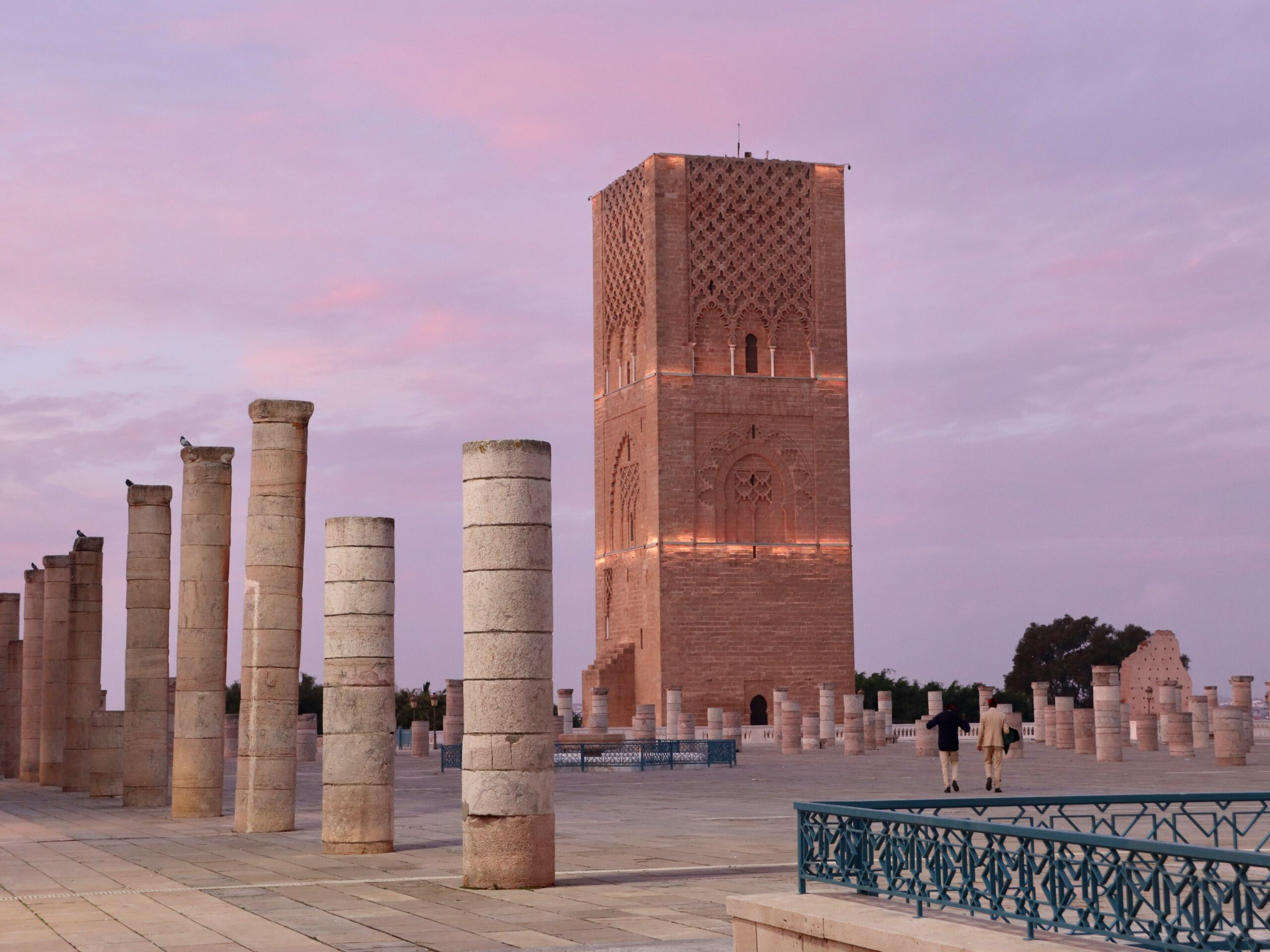
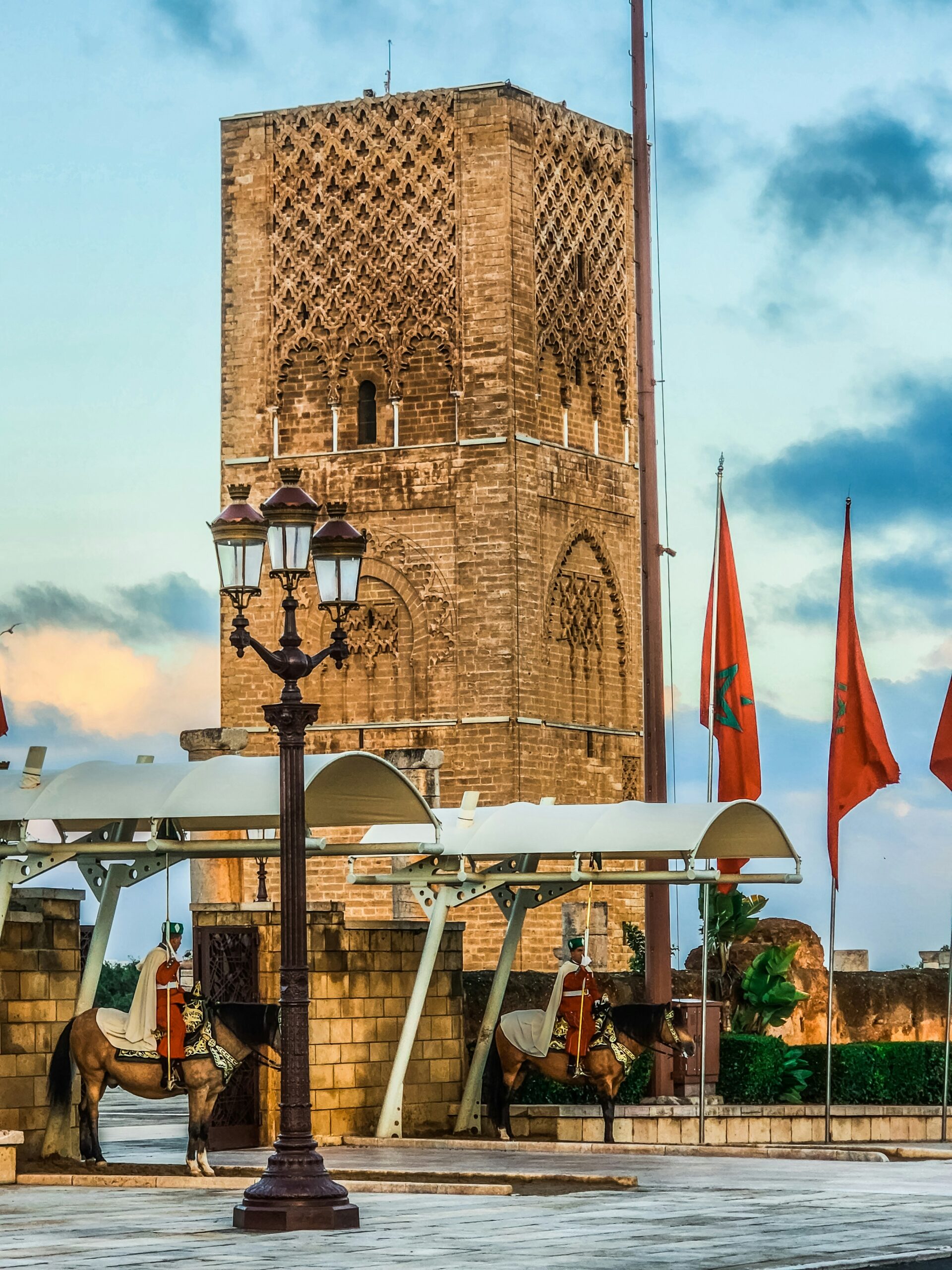
Rabat became Morocco’s capital in 1912 under the French Protectorate and never lost its administrative cool. The UNESCO-listed city blends a 12th-century Almohad medina, the fortified Kasbah of the Udayas with its Andalusian garden, and the unfinished Hassan Tower—a minaret that was meant to crown the world’s largest mosque but stands today as a serene ruin. Across the esplanade, the Mausoleum of Mohammed V glows with zellige tilework and carved cedar, guarded by royal sentries in crimson cloaks.
The Ville Nouvelle unfolds south of the medina in tidy grids: embassies, ministries, art-deco apartment blocks, and the tree-shaded Avenue Mohammed V where civil servants pause for mint tea at polished cafés. Rabat’s real rhythm is governmental—parliament sits, ministries buzz until mid-afternoon, then the city exhales. By evening the corniche along the Bou Regreg River fills with joggers, fishermen, and families buying grilled sardines from carts.
Rabat is not a souk city. The medina here is quieter and more residential than Fes or Marrakech. Come for imperial monuments and orderly exploration, not for haggling over carpets until midnight.
Things to do in Rabat
Most visitors anchor a day around the Hassan Tower complex and the Kasbah, then wander the medina and Chellah ruins. Rabat’s compact historic core makes it easy to cover on foot, though you’ll want a petit taxi to reach Chellah if the midday heat climbs.
Rabat city walking tour
A guided walk through the medina, Kasbah of the Udayas, and Hassan Tower with historical context you won’t find on plaques.
Powered by GetYourGuide
Day trip to Casablanca
Combine Rabat’s landmarks with a same-day visit to Hassan II Mosque and the Casablanca corniche, just one hour south by train.
Powered by GetYourGuide
Rabat food tour
Taste pastilla, harira, and fresh seafood in family-run spots tucked into the medina and Ville Nouvelle neighborhoods.
Powered by GetYourGuide
Chellah necropolis visit
Explore Roman ruins overtaken by storks’ nests and a medieval Muslim cemetery in one atmospheric archaeological site.
Powered by GetYourGuide
Private transfer to Marrakech
Skip the three-hour train and book a comfortable door-to-door transfer if you’re carrying luggage or traveling as a family.
Powered by GetYourGuide
Mohammed VI Museum of Modern Art
Morocco’s premier contemporary art gallery, showcasing 20th-century Moroccan painters and rotating international exhibits.
Powered by GetYourGuide
Hassan Tower and Mausoleum of Mohammed V
The Hassan Tower is the stub of a 12th-century minaret that was planned to reach 80 meters; it stopped at 44 when Sultan Yacoub al-Mansour died in 1199. Around it stand hundreds of broken columns—the intended mosque’s arcade—now open to the sky. Entry is free; the site opens daily from 8:30 am. Across the plaza the Mausoleum of Mohammed V holds the tombs of King Mohammed V, King Hassan II, and Prince Abdallah; interior access is permitted to non-Muslims but you must dress modestly and remove shoes.
Kasbah of the Udayas
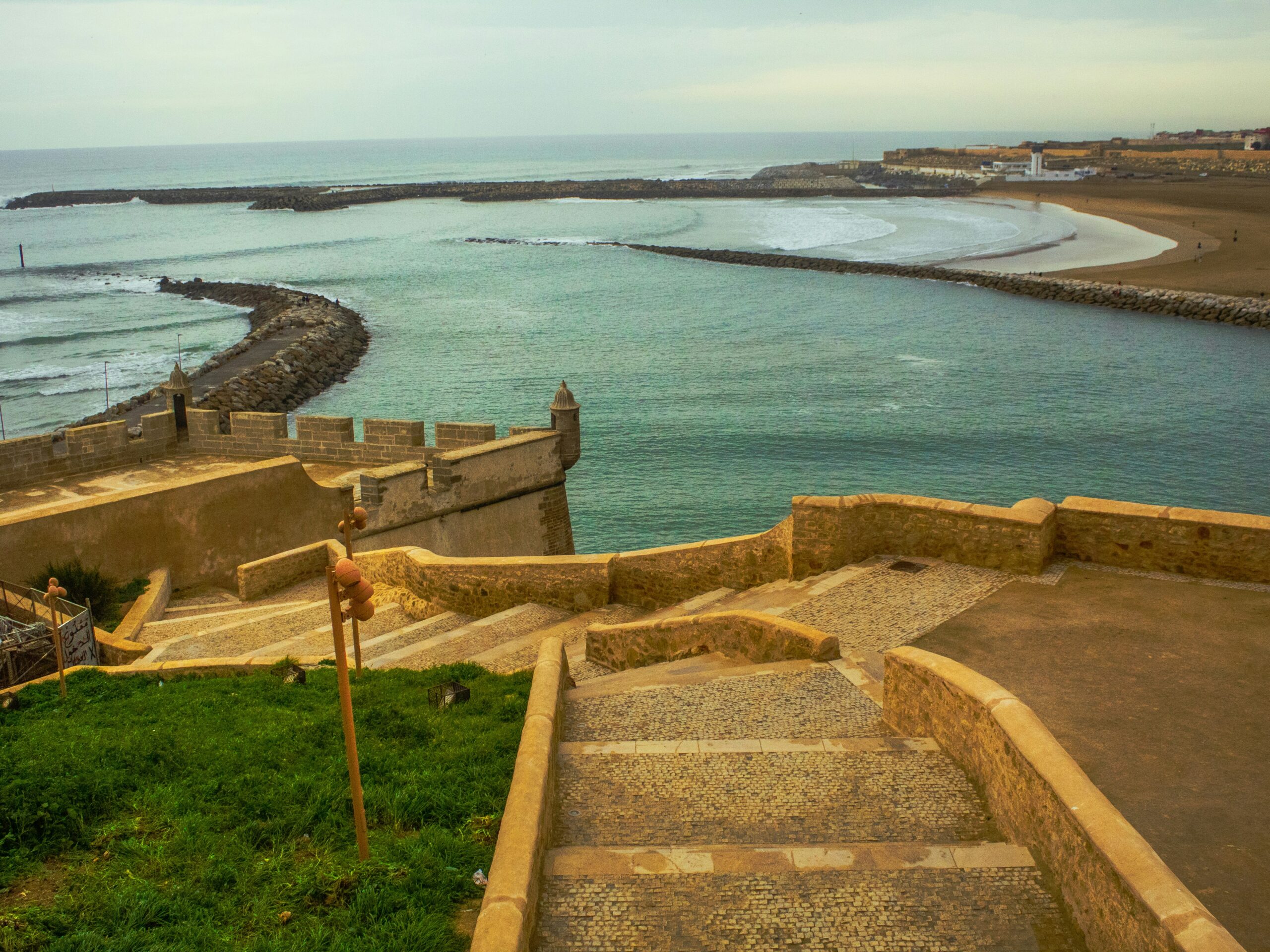
Perched above the river mouth, the kasbah is a walled fortress-village painted in shades of blue and white. Enter through the monumental Almohad gate, Bab Oudaia, then wander narrow lanes to the Andalusian Garden—a formal courtyard garden planted with orange trees, date palms, and flowering vines. At the southern tip, the Oudayas Museum occupies a 17th-century palace; entry costs 20 dirhams and includes rooms of Berber jewelry, carpets, and musical instruments. The terrace of Café Maure, tucked into the kasbah ramparts, serves mint tea and almond pastries with a sweeping view of Salé across the river.
Chellah
Two kilometers south of the medina, Chellah is a Roman ruin-turned-medieval necropolis enclosed by crenellated walls. Storks nest atop broken minarets, and the remains of a mosque, madrasa, and royal tombs sit among fig trees and Roman column fragments. Entry is 70 dirhams; the site closes at 5:30 pm in winter, 6:30 pm in summer. Arrive in late afternoon when the light is golden and the resident storks clatter overhead.
Rabat’s medina is surprisingly residential and calm. For the best souk experience, visit the Rue des Consuls on a weekday morning when craftsmen are at work and locals are shopping for household goods rather than tourist trinkets.
Rabat Medina
The medina of Rabat runs along the western edge of the old city, enclosed by 12th-century Almohad walls. It lacks the labyrinthine intensity of Fes but offers a gentler introduction to Moroccan market life. Rue des Consuls and Rue Souika are the main souk arteries, lined with fabric vendors, spice stalls, and a handful of traditional leather babouche workshops. Entry is free and the medina is open all hours, though most shops close by 8 pm.
Where to stay in Rabat
Rabat is small enough that staying in the Ville Nouvelle or medina puts you within a 15-minute walk or five-minute taxi of the main sights. The Ville Nouvelle offers modern comforts and proximity to restaurants; the medina delivers atmosphere and early-morning calls to prayer.
Rabat Medina
The medina holds a small selection of restored riads with rooftop terraces, tiled courtyards, and traditional breakfasts. Nights here are quiet compared to Marrakech or Fes. Expect narrow streets that cars cannot enter—your riad will arrange a porter to meet you at the nearest gate.
Ville Nouvelle – Avenue Mohammed V
Tree-lined boulevards, international hotels, and easy access to cafés, pharmacies, and the train station. This district feels more European than Moroccan but offers reliable Wi-Fi, air conditioning, and breakfast buffets. A petit taxi to the Kasbah costs around 15 dirhams.
Agdal – Near embassies
A leafy residential quarter south of the centre with apartment rentals, local bakeries, and fewer tourists. It suits travellers who want to live like a Rbati for a week or more, but you’ll rely on taxis to reach the main sights.
Some links on this page earn ComeMorocco a commission at no extra cost to you. It never changes what we recommend. How this works.
Best time to visit Rabat
Spring (March–May)
Temperatures sit between 16–24°C, perfect for walking tours. Jacarandas bloom along Avenue Mohammed V in April. Occasional rain showers; pack a light jacket.
Summer (June–August)
Atlantic breezes keep Rabat cooler than inland cities—expect 22–28°C—but humidity climbs. Mornings are ideal for sightseeing; afternoons suit the beach at nearby Témara. Peak tourist season means higher hotel rates.
Autumn (September–November)
The best season: warm days around 20–26°C, calm seas, and thinner crowds after French school holidays end. Chellah’s gardens are lush, and the annual Mawazine music festival draws international acts in late June (though technically early summer).
Winter (December–February)
Mild but unpredictable—daytime highs of 15–18°C, with occasional cold snaps and rain. Hotels drop prices, and you’ll have Hassan Tower almost to yourself. Bring layers and an umbrella.
Getting to and around Rabat
| From | How | Time | Notes |
|---|---|---|---|
| Casablanca | Train | 1h | Every 30–60 min; first class 60 DH, second class 35 DH. ONCF operates clean, punctual services. |
| Marrakech | Train | 3h 30min | Al-Boraq high-speed service twice daily; standard trains hourly. First class ~200 DH. |
| Fes | Train | 3h 40min | Direct services via Meknès. Book first class for air conditioning in summer. |
| Tangier | Train | 4h 30min | Al-Boraq high-speed line cuts the journey to 2h 10min; premium fare ~300 DH. |
| Rabat-Salé Airport | Taxi | 20 min | Fixed fare ~150 DH to city centre. Airport bus line 3 runs to Rabat Ville station for 20 DH. |
Rabat’s compact core is walkable: Hassan Tower to the Kasbah is 1.5 kilometers along the coast; the medina to Chellah is 2 kilometers through the Ville Nouvelle. Petit taxis (blue in Rabat) use meters and cost 7–20 dirhams for short hops. The modern tramway connects Salé, Rabat Ville station, and the southern suburbs but is less useful for tourists than in Casablanca. For day trips, Morocco’s train network radiates from Rabat Ville station to every major city.
Day trips from Rabat
90km · 1h by train
Morocco’s economic capital holds the Hassan II Mosque, one of the world’s largest and the only mosque in Morocco open to non-Muslim visitors via guided tour (120 DH, hourly departures). The Art Deco downtown, the Corniche beach clubs, and Rick’s Café (a themed reconstruction of the Casablanca film set) fill a half-day. Trains depart Rabat Ville every 30 minutes; return fares start at 70 dirhams second class.
140km · 2h 30min drive or guided tour
Meknès is Morocco’s smallest imperial city, known for the monumental Bab Mansour gate and the underground granaries of Moulay Ismail. Thirty kilometers north, Volubilis is the country’s best-preserved Roman site, with intact mosaics and triumphal arches set among wheat fields. Most visitors book a guided day tour (around 600–800 DH per person) that combines both; independent travelers can take the train to Meknès (1h 10min, 50 DH) then hire a grand taxi to Volubilis (150 DH return with waiting time).
135km · 2h drive
A whitewashed Atlantic fishing town with Portuguese ramparts and murals painted during its annual arts festival each August. The medina is tiny and walkable in 90 minutes; the beach stretches north for kilometers. CTM buses run twice daily from Rabat (3h, 50 DH) but renting a car or joining a private tour offers more flexibility to stop at the Roman ruins of Lixus near Larache on the return.
Rabat questions
01How many days do I need in Rabat?
One full day covers the Hassan Tower, Kasbah of the Udayas, medina, and Chellah if you start early. Two days lets you explore at a relaxed pace, add the Mohammed VI Museum of Modern Art, and take a half-day trip to Salé across the river. Rabat works well as a stopover between Casablanca and Tangier or as a calm base for day trips to Meknès and Volubilis.
02Is Rabat safe for tourists?
Yes. Rabat is Morocco’s most orderly city, with a visible police presence around government buildings and tourist sites. Petty theft exists—watch bags on café terraces and in crowded medina lanes—but aggressive hassle is rare compared to Marrakech or Fes. Women traveling solo report fewer unwanted approaches here than in other Moroccan cities. Standard precautions apply: avoid empty streets after dark, use registered petit taxis, and keep valuables out of sight.
03Do I need a guide for Rabat?
No. Rabat’s medina is small and navigable without a guide; signage in French and Arabic points to major monuments, and the kasbah’s lanes are easy to explore independently. A licensed guide adds historical depth at Hassan Tower and Chellah—expect to pay 200–300 dirhams for a half-day tour—but isn’t essential unless you’re short on time or prefer structured context. Freelance touts outside the kasbah gate should be politely declined; book official guides through your riad or the tourist office near the train station.
04What is Rabat known for?
Rabat is Morocco’s political and administrative capital, a UNESCO World Heritage Site recognized for its blend of medieval Islamic urbanism and 20th-century French colonial planning. It’s known for the Hassan Tower, the Kasbah of the Udayas, the Mausoleum of Mohammed V, and the ancient Chellah necropolis. Unlike Marrakech or Fes, Rabat is calm, orderly, and green—a city of civil servants, embassies, and shaded boulevards rather than bustling souks.
05Can I visit Rabat as a day trip from Casablanca?
Yes. Trains run every 30–60 minutes between Casablanca Voyageurs and Rabat Ville, taking one hour. Leave Casablanca by 9 am, spend six hours covering Hassan Tower, the Kasbah, the medina, and lunch, then return by early evening. It’s a manageable day trip but you’ll miss Chellah and any evening atmosphere. Consider staying one night to see Rabat properly.
06What should I wear in Rabat?
Rabat is more conservative and formal than coastal resort towns. Men and women should cover shoulders and knees when visiting the Mausoleum of Mohammed V and any mosque. In the Ville Nouvelle, business-casual dress is common; in the medina, locals wear a mix of traditional djellabas and Western clothing. Women traveling alone will attract less attention in loose trousers or a long skirt and a top that covers the chest and upper arms. Beachwear is fine on the Atlantic beaches but cover up when walking through residential neighborhoods.
Plan your Morocco trip
Explore Morocco beyond the capital
Rabat is a calm introduction, but Morocco’s real range unfolds in the Atlas peaks, the Sahara dunes, and the medinas of Fes and Marrakech. Start planning your full itinerary.