
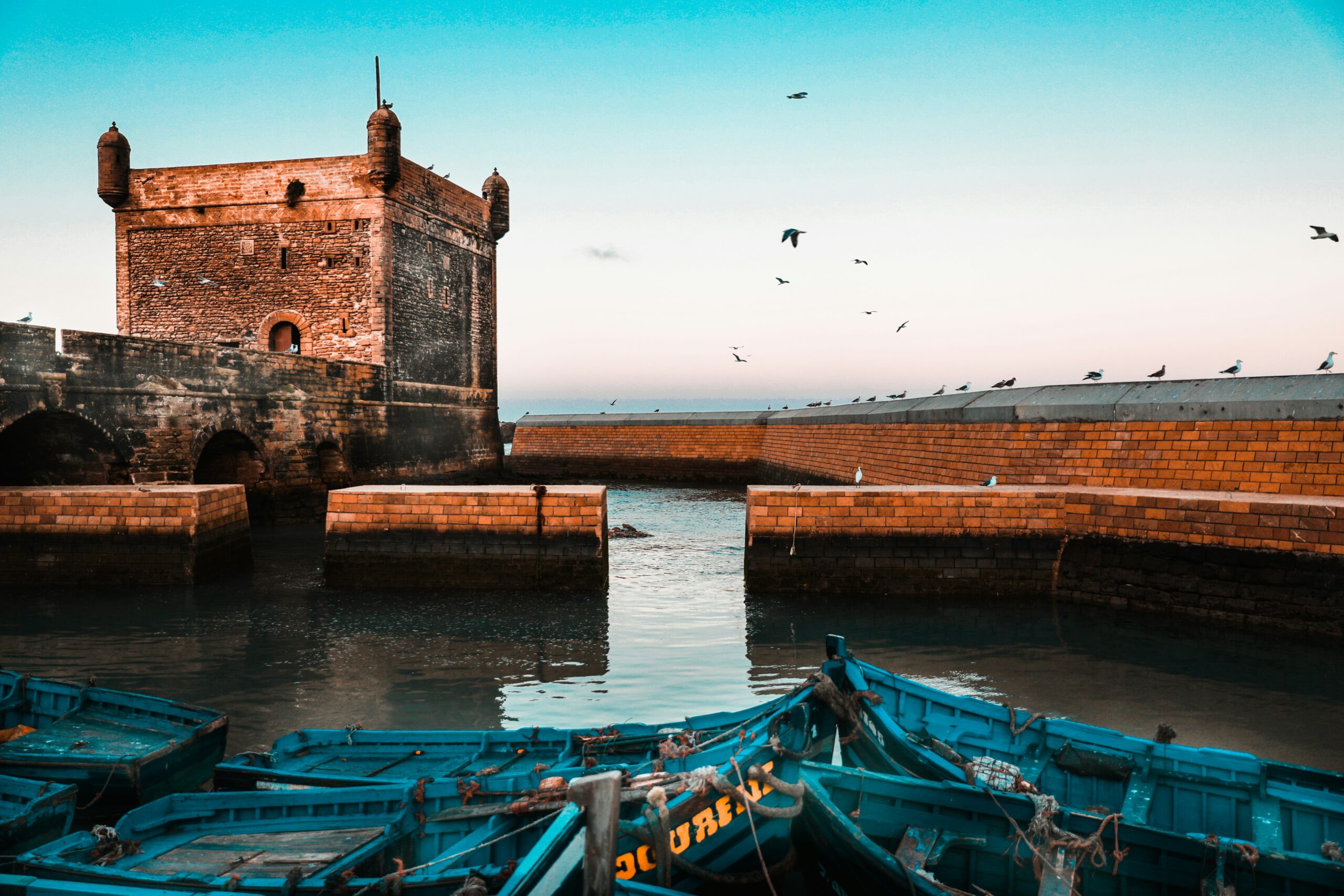
At six in the evening, the Atlantic wind has been blowing all day and the last light turns the ramparts a deep copper-orange, while the smell of grilled sardines drifts up from the harbor and a Gnawa musician somewhere in the medina begins his low, insistent beat.
Essaouira suits travellers who want Morocco at a slower speed — no moped convoys through the souk, no hard sell on every corner, a beach big enough to lose yourself on. It suits photographers and surfers and anyone who has heard too many people describe Marrakech as overwhelming. It does not suit anyone looking for luxury resort infrastructure, nightlife beyond a few rooftop bars, or a beach where the water is calm enough for swimming; the Atlantic here is cold, powerful, and almost always choppy. Come for the wind and the walls and the music, not the sea.
- Region
- Marrakech-Safi
- Stay
- 2–3 nights
- Best months
- Apr–Jun, Sep–Oct
- Nearest city
- Marrakech — 2.5h
- UNESCO
- Since 2001
- Wind season
- Jun–Sep (kite/surf)
Why go to Essaouira
Few cities in Morocco feel as immediately legible as Essaouira. The medina was designed in the 1760s by a European engineer commissioned by Sultan Sidi Mohammed ben Abdallah, who wanted a proper Atlantic trading port — and the result is unusual: straighter streets than Fes or Marrakech, proper cross-ventilation, ramparts that face the ocean rather than wrap inward. You can understand its geography in an afternoon. That clarity of layout is part of why artists, musicians, and writers have been coming here for generations. It rewards wandering without demanding a guide.
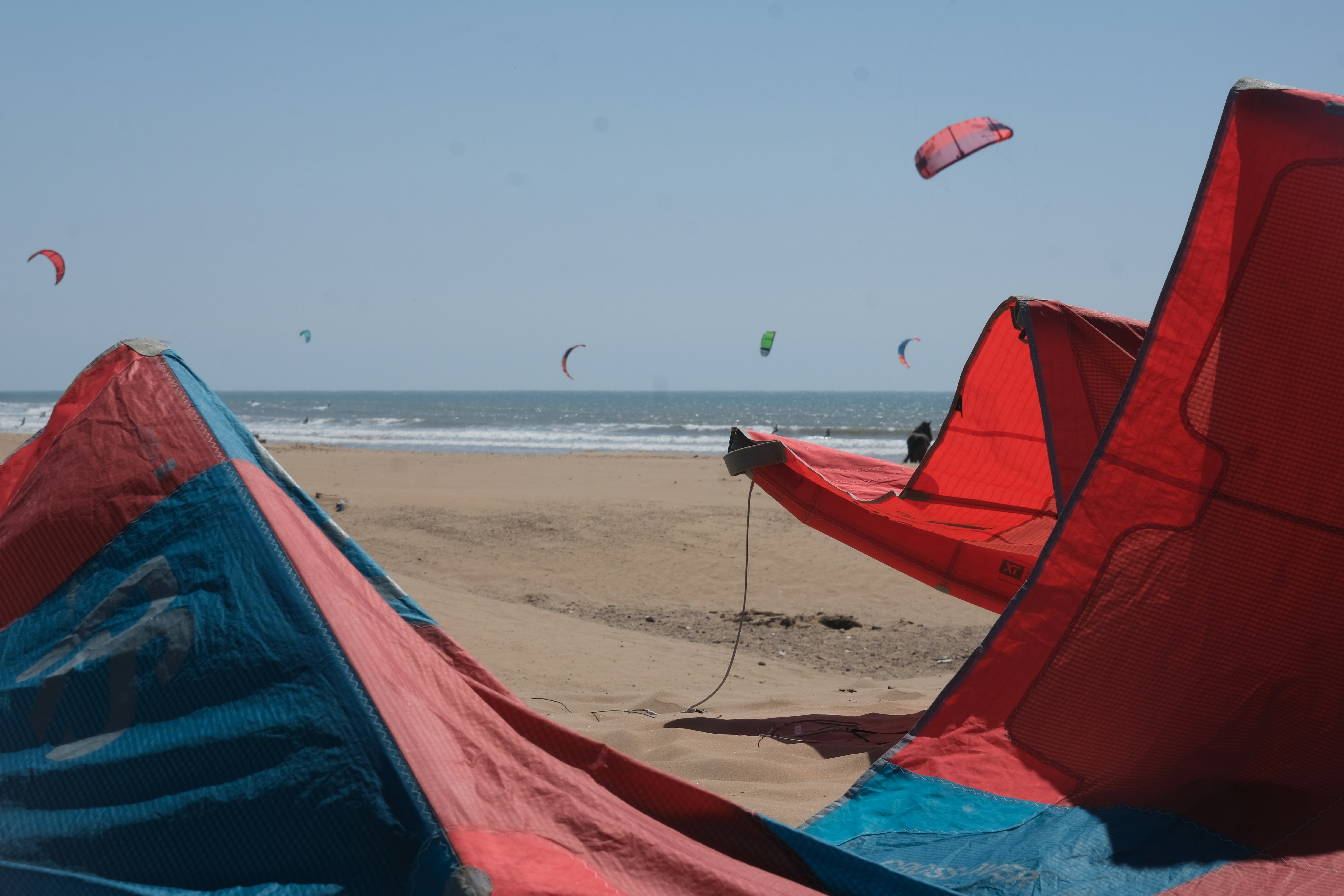
The city’s second claim on travellers is elemental: the wind. The Atlantic trade winds that made Mogador a commercial prize in the 18th century are still blowing, making Essaouira one of the world’s most consistent kitesurfing and windsurfing destinations. On the long beach south of the medina walls, the kite schools set up by mid-morning and the sky fills with colour by noon. Even if you never get in the water, watching the beach from the Skala sea ramparts while the wind tears at everything is its own kind of spectacle.
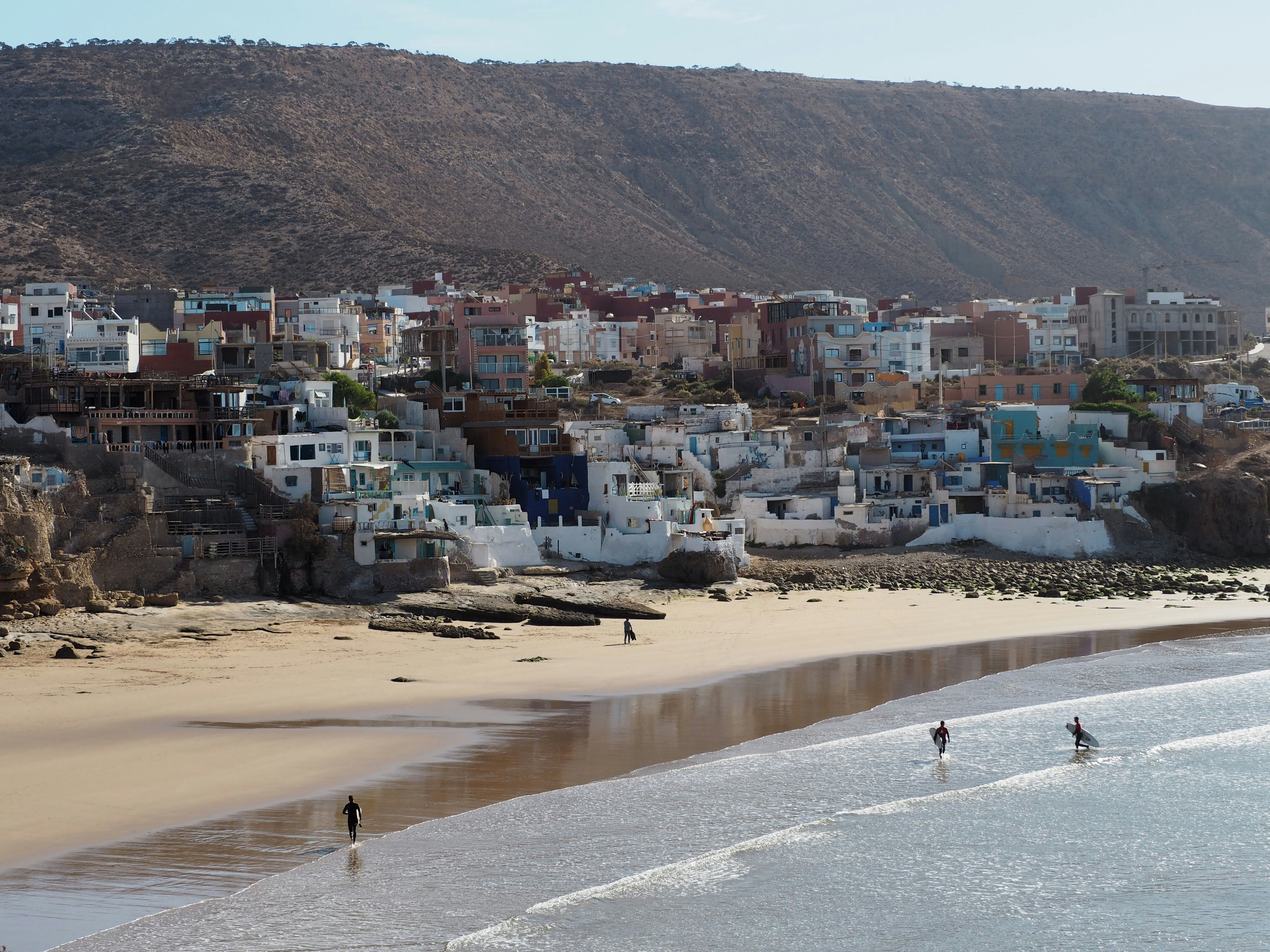
Essaouira is also the heartland of Gnawa music — a spiritual tradition with West African roots that survived the slave trade and took root here centuries ago. The annual Gnaoua World Music Festival draws hundreds of thousands of visitors each June, but the music is here year-round: in small cafés near Place Moulay Hassan, in private lila ceremonies, and on the street corners of the medina most evenings. It is one thing you will not find in the same form anywhere else in Morocco.
The medina is far windier than you expect. Even in spring and autumn, the gusts through the alleys are strong enough to knock over a street stall. Pack a layer for evenings regardless of the season, and secure anything loose in your bag when you’re on the ramparts.
Things to do in Essaouira
The city is compact enough that most of the main sites are walkable from any riad in the medina. The activities below range from a free ramparts walk to multi-day kitesurfing courses — book the water sports in advance in summer, everything else you can arrange on arrival.
Medina Walking Tour
A guided walk through the UNESCO-listed medina unlocks the history behind the unusually straight streets, the merchant houses, and the Mellah — context that is easy to miss when exploring independently.
Powered by GetYourGuide
Kitesurfing Lessons
The long beach south of the medina is one of the world’s top kitesurfing spots — consistent offshore winds and a flat sandy bottom make it ideal for beginners and experienced riders alike.
Powered by GetYourGuide
Windsurfing
Essaouira has hosted world-class windsurfing competitions; even a half-day lesson with one of the beach schools gives you a sense of why this stretch of Atlantic coast earned its reputation.
Powered by GetYourGuide
Moroccan Cooking Class
Essaouira’s cooking classes typically focus on coastal flavours — chermoula-marinated fish, seafood tagines, and preserved-lemon techniques that are distinct from Marrakech’s inland cuisine.
Powered by GetYourGuide
Day Trip from Marrakech
A guided day trip covers the 2.5-hour drive each way with stops at argan cooperatives en route — a good option if you only have one day and prefer not to navigate independently.
Powered by GetYourGuide
Camel Ride on the Beach
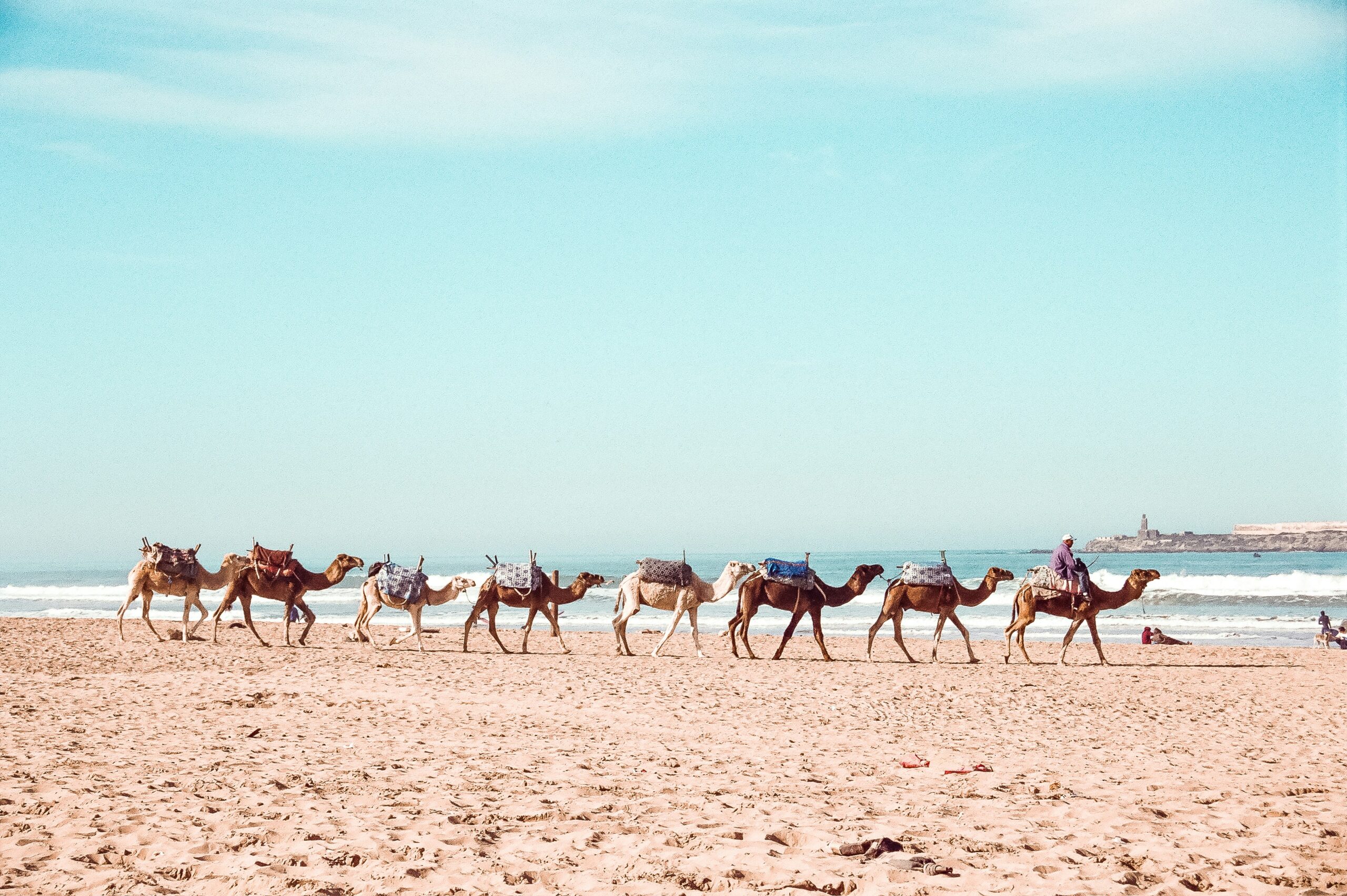
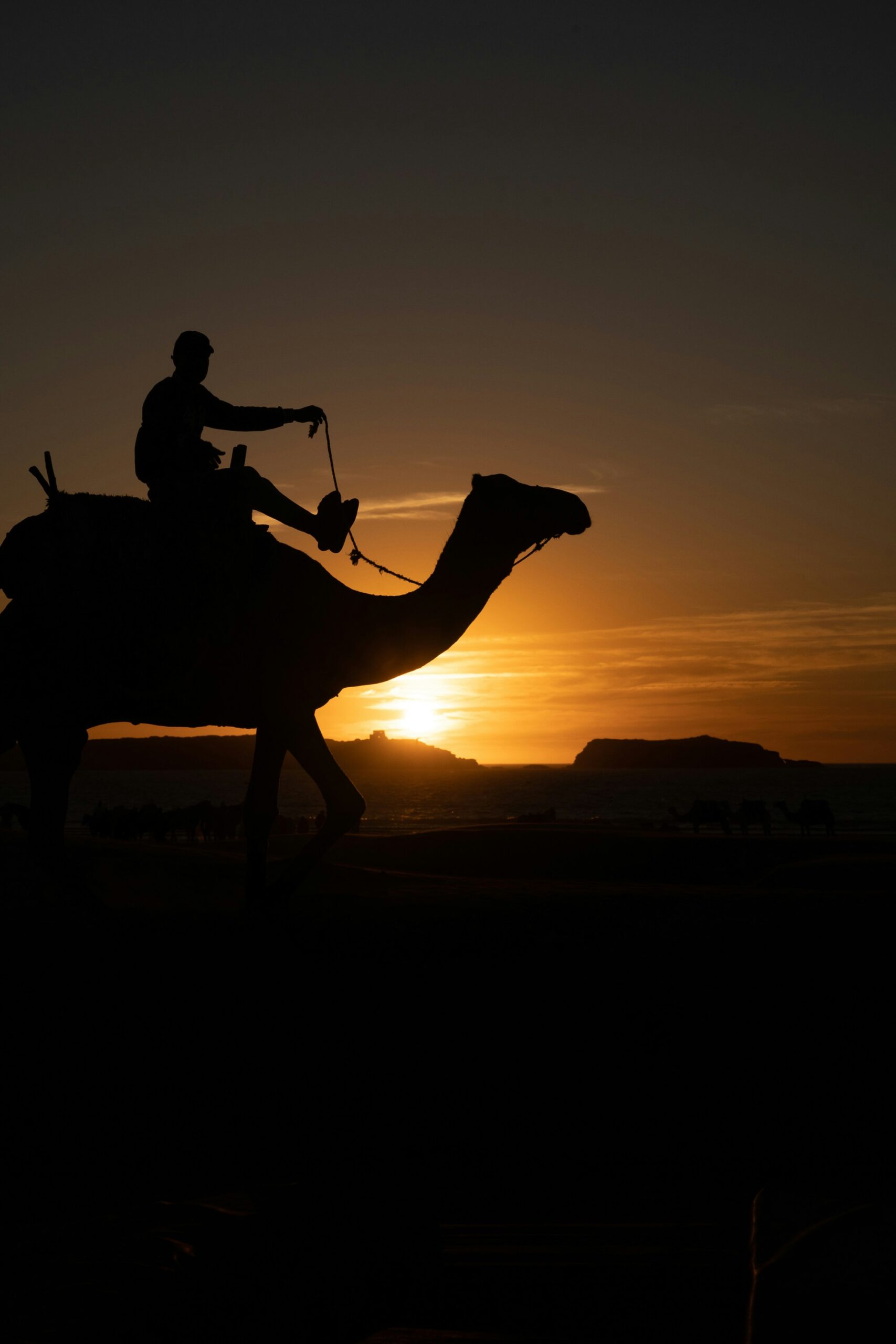
The wide beach south of the medina is one of the more atmospheric places in Morocco to ride — dunes back the shore, the ramparts are visible behind you, and the Atlantic stretches ahead.
Powered by GetYourGuide
The Skala Ramparts
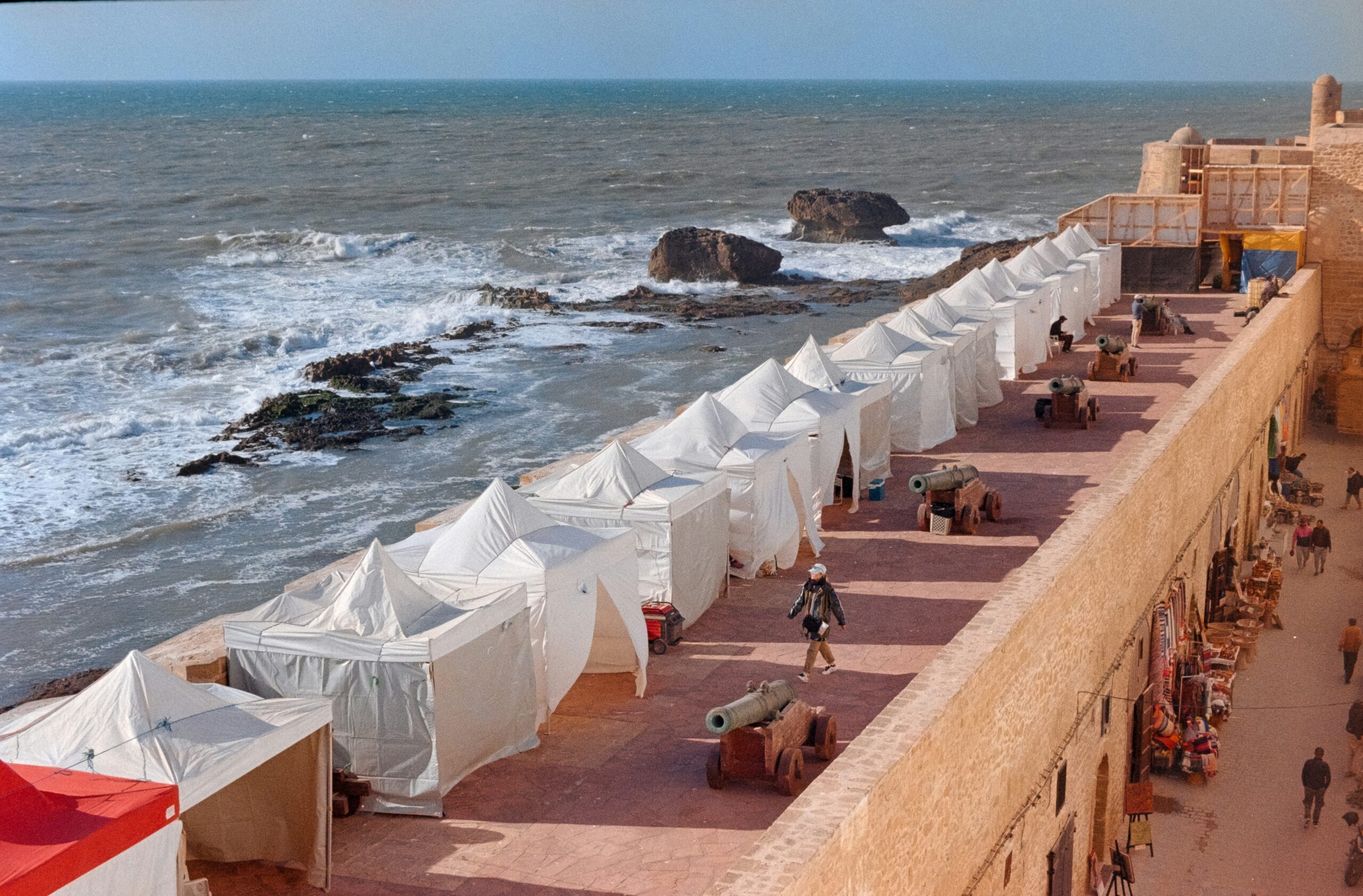
The city’s two sea bastions — the Skala de la Ville on the north tip and the smaller Skala de la Kasbah by the port — are the single most photographed thing in Essaouira, and deservedly so. The Skala de la Ville is a long walkway lined with old Portuguese and Spanish cannons, open to the sky and battered by Atlantic wind. Entry is free; the view west at sunset is extraordinary. Early morning (before 8 am) you’ll have it almost entirely to yourself. The thuya-wood workshops that line the street immediately below the Skala are where much of the city’s famous woodcraft is carved — worth a look even if you’re not buying. For more on Morocco’s UNESCO World Heritage sites, the medina’s inscription criteria explain why this particular fortification earned global recognition.
Powered by GetYourGuide
The Medina and Souks
Unlike the great labyrinths of Fes or the dense tangle of central Marrakech, Essaouira’s medina was laid out on an unusually regular grid — the French engineer Théodore Cornut’s 18th-century plan is still legible today. The main artery, Avenue de l’Istiqlal, runs straight from Bab Doukkala to Place Moulay Hassan at the harbor end. The souks on either side sell spices, textiles, argan products, and the city’s distinctive thuya woodcraft. Bargaining applies but the pressure is lighter than in Marrakech; sellers are accustomed to browsers. If you want to shop well, read our guide to bargaining in Moroccan markets before you go. Budget two to three hours for a proper wander.
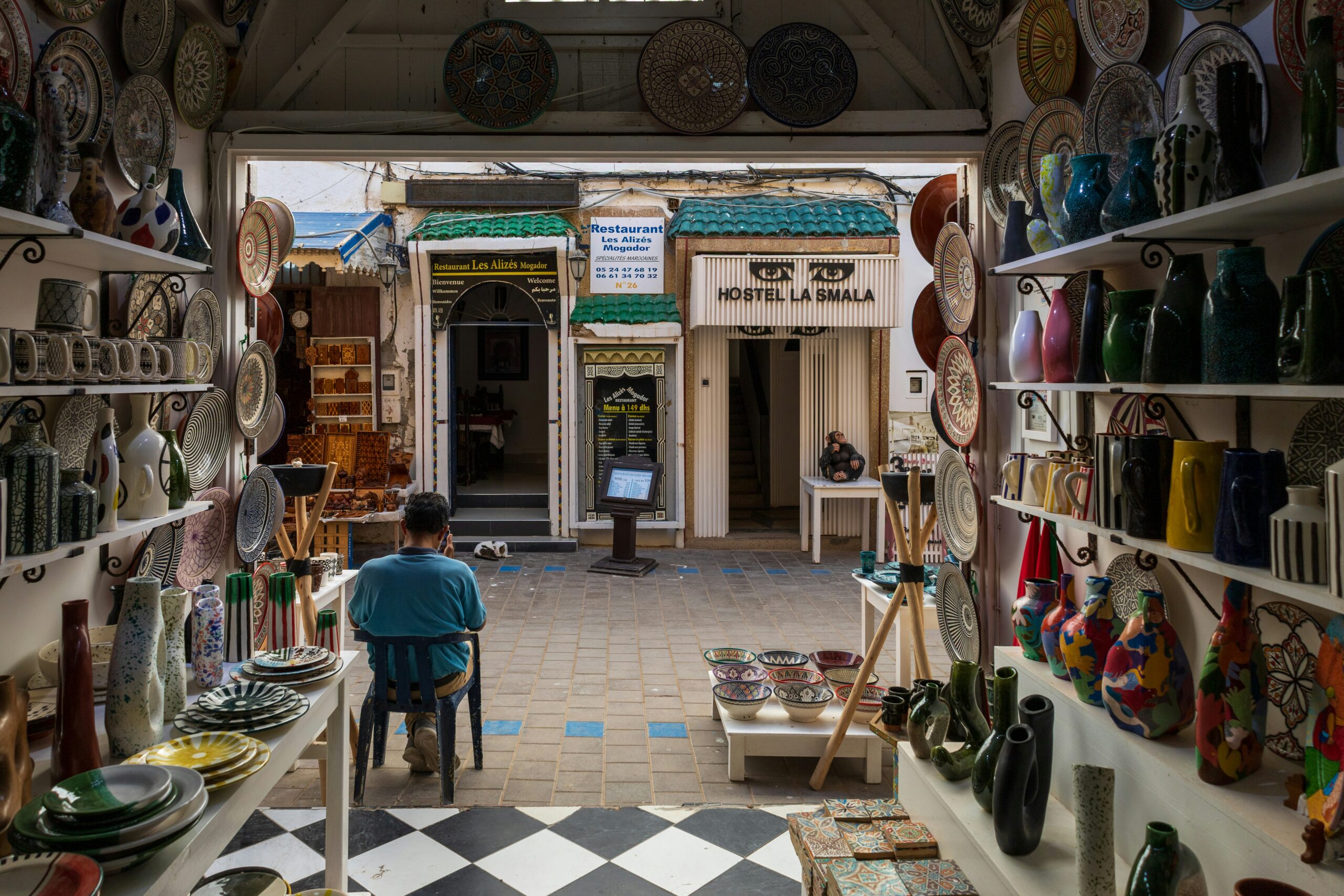
The Fishing Harbor and Seafood Stalls
The working harbor at the southern end of the medina is one of the most atmospheric in Morocco — dozens of distinctive blue wooden boats, seagulls everywhere, and fishermen unloading the morning catch. Immediately adjacent, a row of open-air stalls sells grilled fish and seafood platters at very reasonable prices (expect around 60–100 DH for a full plate of prawns, calamari, and sardines). The fish auction happens in the early morning — arrive before 7 am if you want to see it. This is the kind of honest, unpretentious meal that Essaouira does better than anywhere else on Morocco’s coast.
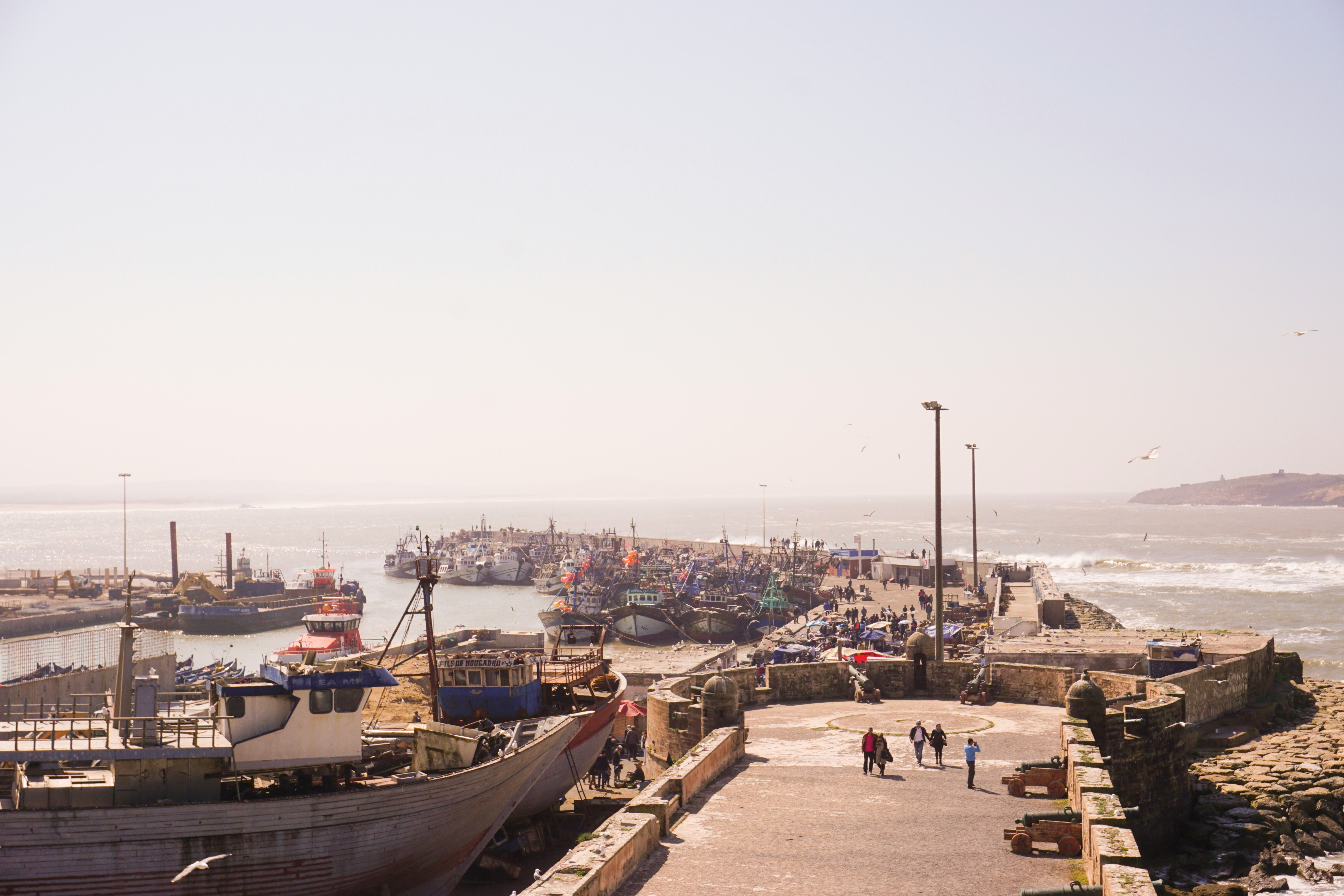
The seafood stalls nearest the harbor entrance get the tourist trade; walk to the far end of the row, past the blue boats, for the stalls that locals use. The price difference is small but the atmosphere is markedly better.
Gnawa Music and the Bayt Dakira
Essaouira is the spiritual home of Gnawa music — a tradition with West African roots carried to Morocco through the slave trade and now recognized as an Intangible Cultural Heritage. The annual Gnaoua World Music Festival in June draws enormous crowds (book accommodation months ahead if you’re visiting then), but the music is present year-round. Most evenings you’ll hear musicians around Place Moulay Hassan and in the small cafés of the medina. The Bayt Dakira cultural center — opened in 2021 — houses the restored archives of Essaouira’s Sephardic Jewish community, with documents, photographs, and objects that document the cosmopolitan merchant city Mogador once was. Entry is free, and it is one of the most thoughtful small museums in Morocco. Jewish cemeteries and old mellah streets nearby round out this part of the city’s story.
Essaouira Beach and Wind Sports
The beach stretching south from the medina walls is around 10 km of Atlantic sand — wide, flat, backed by dunes, and almost always windy. The northern section, directly below the ramparts, is where most visitors walk; the kite and windsurf schools set up further south, roughly a 20-minute walk from the medina gate. The water here is cold year-round (typically 17–20°C) and the currents are strong — it is not a swimming beach in the conventional sense, but for wind sports it is genuinely world-class. Lessons start from around 400–600 DH for a two-hour introduction. See our full Essaouira beach guide for school recommendations, equipment rental, and the best months for each discipline.
Powered by GetYourGuide
Where to stay in Essaouira
Nearly all visitors stay inside the medina walls, which is the right call — the city is small enough that location within the medina matters less than the quality of the riad itself. The exception is if you’re here primarily for wind sports, in which case staying closer to the beach (just outside the southern medina gate) saves you a 20-minute walk each morning carrying gear.
Inside the Medina
Riads tucked into the medina are the default choice and generally the right one. The streets are quiet at night — Essaouira is not a noisy city — and you’re within a few minutes of everything. Note that no vehicles enter the medina; your riad will typically arrange a porter to meet you at the nearest gate. Luggage with wheels is awkward on the cobblestones.
Near the Beach (South of Medina)
A handful of guesthouses and small hotels sit just outside the southern walls, close to where the kite schools operate. You lose the immersion of the medina but gain easy beach access and the ability to arrive with a car. This area is quieter and less atmospheric, but practical if your trip is structured around lessons.
Some links on this page earn ComeMorocco a commission at no extra cost to you. It never changes what we recommend. How this works.
Best time to visit Essaouira
Spring (March–May)
The most comfortable time for most visitors. Temperatures hover between 18–24°C, the wind is present but not overpowering, and the medina is unhurried. Wildflowers in the countryside around the city peak in April.
Summer (June–August)
Peak season for wind sports — the Atlantic trade winds are strongest and most consistent. The Gnaoua World Music Festival falls in June (book accommodation four to six months ahead). Temperatures are mild by Moroccan standards (22–26°C) but the wind is constant and occasionally exhausting.
Autumn (September–November)
Arguably the best all-round window: summer crowds thin after mid-September, the sea is at its warmest (though still cool), and the light in October is exceptional for photography. Wind sports conditions remain good through October.
Winter (December–February)
The quietest and cheapest season. Storms roll in off the Atlantic and the city is at its most dramatic — big surf, empty ramparts, low-season riad prices. Unsuitable for beach activities but excellent for medina exploration and the local food scene without crowds.
Getting to and around Essaouira
| From | How | Time | Notes |
|---|---|---|---|
| Marrakech | CTM/Supratours bus | 2h 45min–3h | Multiple departures daily; book ahead in summer. Drops you at the bus station 10 min from the medina gate. |
| Marrakech | Shared taxi (grand taxi) | 2h 30min | Departs when full from Bab Doukkala. Cheaper than the bus but cramped; negotiate the full seat fare if you want space. |
| Marrakech | Private transfer | 2h 30min | Around 500–700 DH one-way; many riads arrange this. Most comfortable option for families or heavy luggage. |
| Casablanca | Bus (CTM) | 5h 30min | One or two direct departures daily via Marrakech or El Jadida. A long ride; overnight not available on this route. |
| Agadir | Bus or grand taxi | 2h 30min | A logical stop if traveling the Atlantic coast south; bus is more reliable than shared taxis on this stretch. |
Essaouira has no airport with commercial flights; the closest is Marrakech Menara, roughly 2.5 hours away. Once inside the medina, you’ll walk everywhere — the old city is roughly 800m by 800m. Petit taxis are plentiful outside the medina gates for the beach or the bus station; agree on the fare before setting off (typically 10–20 DH for any in-town trip). For the full picture of getting around Morocco, our Morocco transportation guide covers all options and current prices.
Day trips from Essaouira
25 km · 30 min drive
A small fishing village 25 km south, Sidi Kaouki has one of Morocco’s most striking beaches: a sweeping bay backed by dunes with a marabout (saint’s shrine) on a rocky outcrop at the south end. There are a handful of guesthouses and surf camps here, but it works well as a half-day excursion from Essaouira. Grand taxis run from the main taxi rank outside Bab Marrakech for around 15 DH per seat; arrange a return time with your driver. There’s a small surf school here and the beach is less crowded than Essaouira’s main strand.
5 km · 20 min walk or 10 min taxi
An easy half-day trip on foot along the beach or by taxi, Diabat is a small village at the mouth of the Oued Ksob river, surrounded by the ruins of a palace said to have been used by Sultan Sidi Mohammed ben Abdallah. It’s famous in music history as a place Jimi Hendrix reportedly visited in 1969 — a connection local guides are happy to elaborate on at length, though historians are sceptical about the details. The ruins themselves are genuinely atmospheric: crumbling arches, goats picking through the stonework, dunes all around. Walk back along the beach at low tide.
175 km · 2h 30min drive
Most people travel in the opposite direction — Essaouira as a day trip from Marrakech — but it works both ways. If you’re based in Essaouira for two or three nights, a day in Marrakech for Jemaa el-Fna, the Mellah, and the Majorelle Garden is easily arranged. See our complete guide to the Marrakech–Essaouira route for bus schedules, driving tips, and what to see en route at argan cooperative stops.
What to eat in Essaouira
Essaouira’s cuisine is shaped by the Atlantic and by centuries of cosmopolitan trade — Amazigh, Arab, Jewish, and Portuguese influences are all present in the food. The default tagine exists here too, but the city’s real culinary identity is built around fish and seafood, and the best meals are often the simplest: something grilled and just pulled from the water.
Grilled sardines at the harbor
The row of seafood stalls immediately beside the working fishing harbor is the most authentic meal in the city. A plate of grilled sardines — Morocco’s most underrated fish — costs around 20–30 DH. They’re at their best between 11 am and 2 pm when the catch is fresh. Ask the stall owner to cook them over charcoal rather than gas; the difference is significant. Pair with khobz (Moroccan bread), harissa, and a glass of mint tea from the adjacent café. For a broader look at Morocco’s coastal food traditions, our guide to Moroccan dishes covers the full range.
Chermoula-marinated fish tagine
Chermoula — a marinade of fresh coriander, cumin, paprika, lemon, and olive oil — is the defining flavour of Essaouira’s cooking. Fish tagines here use whatever was caught that morning; the sauce is applied before and after cooking. Most sit-down restaurants in the medina serve a version; expect to pay 80–130 DH for a single-portion tagine. The best are often at small places without menus, where you eat what they have. Avoid the tourist-facing restaurants immediately on Place Moulay Hassan; the side streets one block in are consistently better value. For travellers who want to learn the technique, a Moroccan cooking class in Essaouira typically starts with the market and ends with a shared meal.
Seafood bastilla
A coastal adaptation of the famous Fassi pastilla, this version replaces pigeon with prawns, fish, and sometimes crab, wrapped in warqa pastry and dusted with a little cinnamon. It’s harder to find than the standard tagine — ask your riad to recommend where they eat it — but it is the most distinctly Essaouiran thing on any menu. Budget around 100–150 DH per portion. It is rich; order it as a main, not a starter.
The market (souk Jdid) behind the main street opens early and has the city’s best produce, fresh spices, and preserved lemons at local prices. Get there before 9 am; by 11 it is busy and a portion of what you see has been marked up for tourists. The argan oil sold here is a fraction of what you’ll pay in the tourist shops on the main street.
Essaouira questions
01How many days do I need in Essaouira?
Two full days is enough to see the main sites — the ramparts, medina, harbor, and beach — at a comfortable pace. Three nights is the sweet spot for most visitors, especially if you plan to take a wind sports lesson, do a day trip to Sidi Kaouki, and spend an evening listening to Gnawa music. Visiting as a day trip from Marrakech is possible but leaves you with only four to five hours in the city.
02Is Essaouira worth visiting?
Yes — if you want a slower, more atmospheric alternative to Marrakech. Essaouira is one of Morocco’s most distinctive cities: a UNESCO-listed medina with a unique architectural character, a world-class wind sports beach, and a living Gnawa music tradition. It is not the right choice if you want luxury resort facilities, a warm swimming beach, or a packed nightlife scene.
03How do I get from Marrakech to Essaouira?
The most reliable option is the CTM or Supratours bus, which takes around 2 hours 45 minutes and runs several times daily from Marrakech’s main bus station near Bab Doukkala. Shared grand taxis are faster (about 2.5 hours) but cramped. Private transfers arranged through your riad cost 500–700 DH and are the most comfortable option. There is no train connection. Our full guide to the Marrakech to Essaouira route covers all options in detail.
04What is Essaouira famous for?
Essaouira is famous for four things: its UNESCO-listed 18th-century medina with an unusually regular grid layout; its consistent Atlantic winds that make it one of the world’s top kitesurfing and windsurfing destinations; its status as the heartland of Gnawa spiritual music and the annual Gnaoua World Music Festival; and its working fishing harbor and seafood. It was formerly known as Mogador and served as Morocco’s primary Atlantic trading port for two centuries.
05Is Essaouira safe for tourists?
Essaouira is considered one of Morocco’s safer and more relaxed cities for tourists. The persistent tout culture found in Fes or Marrakech’s medina is much milder here, and the city’s small size means it is hard to get genuinely lost. Standard precautions apply: keep valuables out of sight, be assertive but polite with persistent vendors, and arrange accommodation before arrival so you’re not visibly searching for a riad with luggage. Solo female travellers generally report fewer problems here than in other major Moroccan cities. Our Morocco safety guide covers the broader picture.
06What is the best time to visit Essaouira?
April to June and September to October are the best months for most visitors — mild temperatures, manageable crowds, and good conditions for both sightseeing and beach activities. June brings the Gnaoua World Music Festival but also the biggest crowds; book well ahead. July and August are peak wind sports season and the city fills up. Winter (December–February) is quiet, atmospheric, and cheap, but stormy and unsuitable for beach time.
Keep planning
Morocco’s coast has more to explore
From Agadir’s resort beaches to Taghazout’s surf breaks, Morocco’s Atlantic shore is one of Africa’s most varied coastlines. Our full Morocco travel guide covers every city, every route, and every budget.