
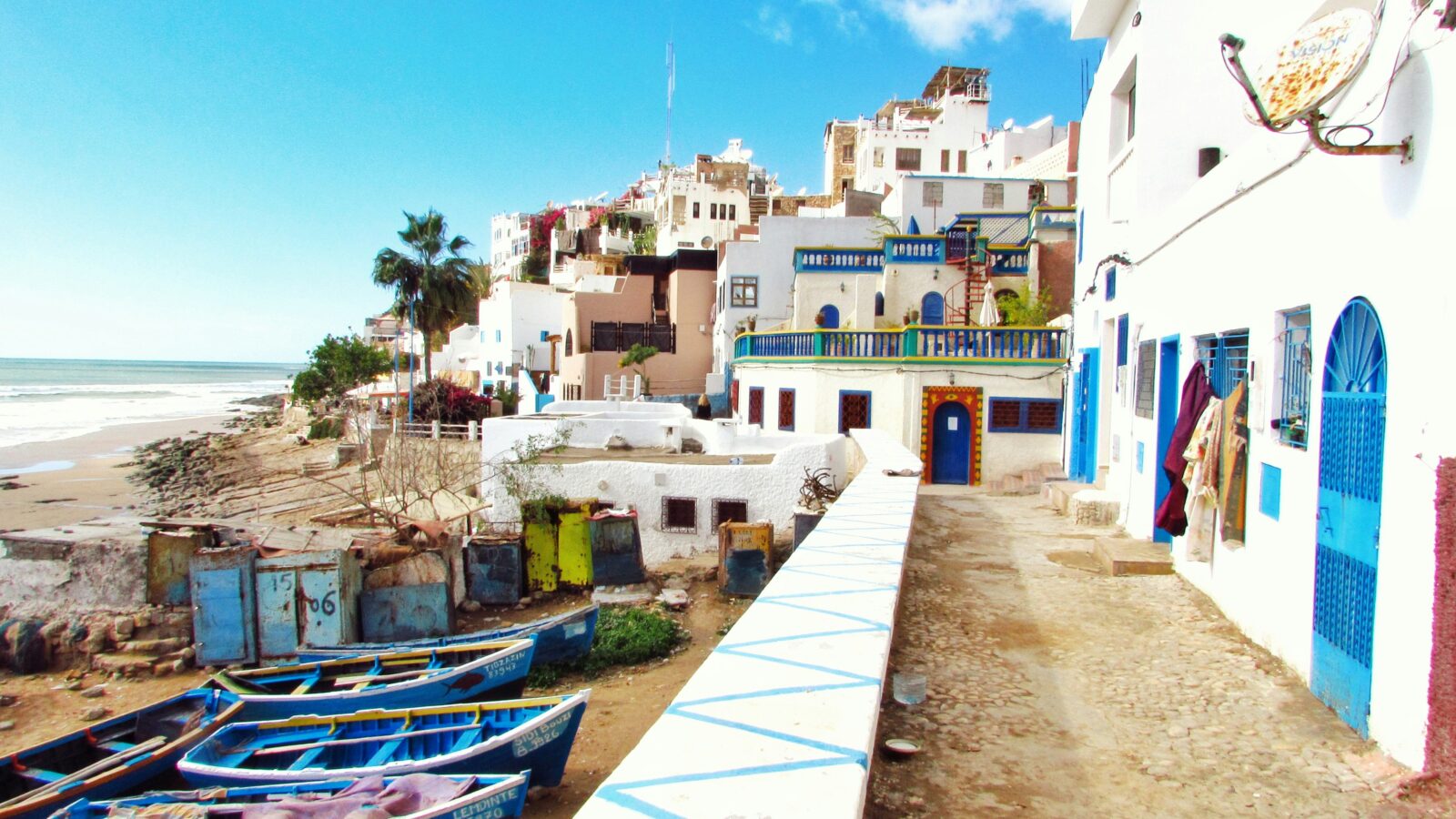
At six in the evening in Tangier, the scent of grilled sardines and mint tea drifts through the medina as the call to prayer echoes across the rooftops and the last ferry from Spain pulls into port.
Tangier is Morocco’s gateway city, perched where the Mediterranean meets the Atlantic and Africa nearly touches Europe. It suits travellers who want a working port town with layers of history, not a polished resort. If you need pristine beaches and manicured promenades, go to Agadir. Tangier rewards curiosity, not checklists.
- Region
- Northern Morocco
- Stay
- 2–3 nights
- Best months
- Apr–Jun, Sep–Nov
- Airport
- TNG — 12km
- Port
- Tanger Med — 45km
- From Spain
- Ferry 1h
Why go to Tangier
Tangier sits at the crossroads. Spain is fourteen kilometres north across the Strait of Gibraltar, close enough that on clear mornings you see the hills of Andalusia. The city has always been a meeting point—Phoenicians, Romans, Portuguese, and the French all left their mark—but today it is Morocco’s industrial and logistics powerhouse, anchored by Tanger Med, one of the largest container ports in the Mediterranean.
The medina is smaller and less overwhelming than Fes or Marrakech. You can walk the old town in a morning, stop at Café Hafa for mint tea overlooking the sea, and still have time to visit the Kasbah Museum or take a taxi out to Cap Spartel where the Atlantic and Mediterranean converge. The city moves at a different pace—less frantic, more cosmopolitan, with a lingering hint of its International Zone days when artists, writers, and spies made it home.
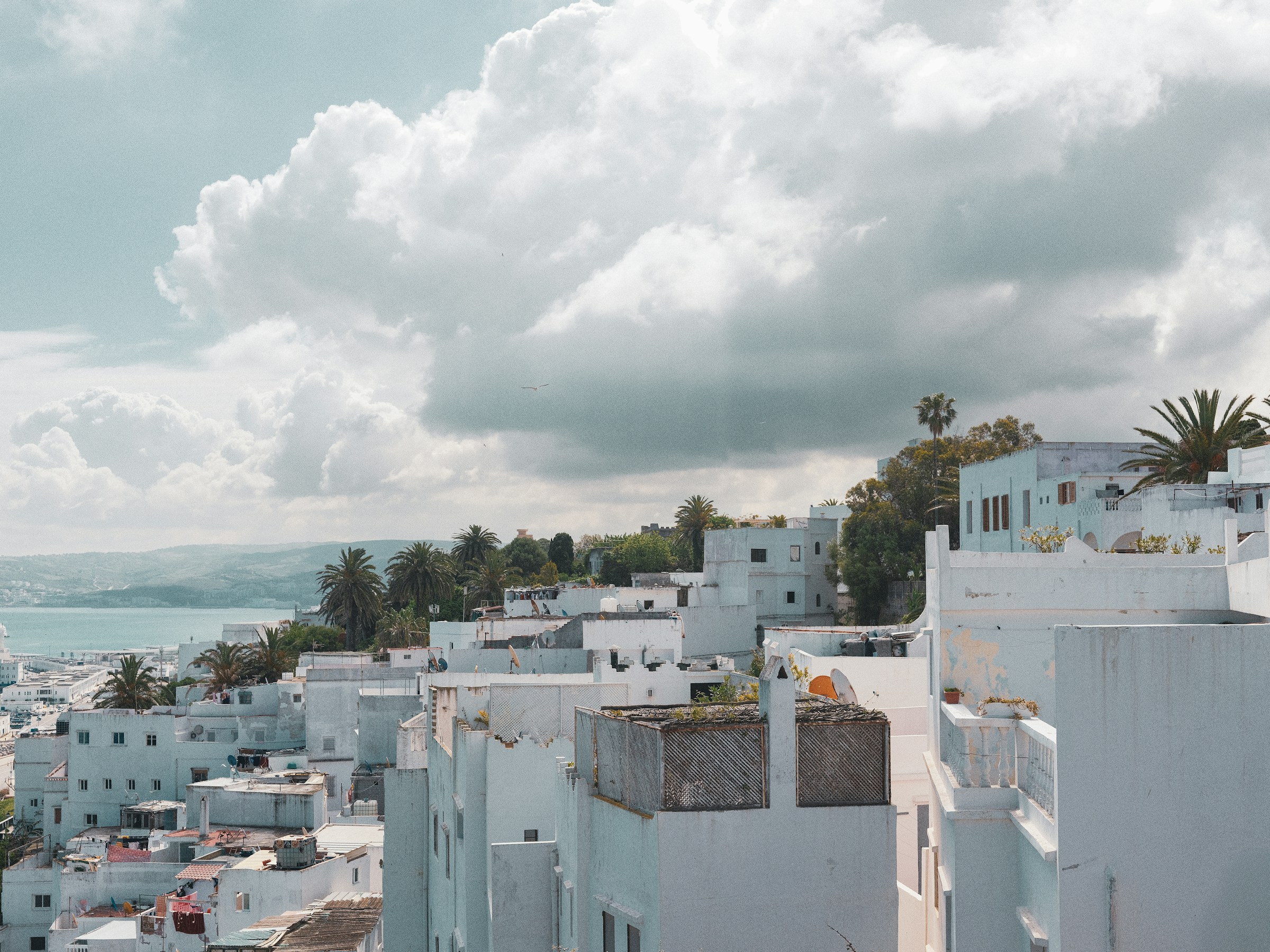
Tangier is also a practical hub. High-speed trains connect it to Casablanca and Rabat in under three hours. Day trips to Chefchaouen, Asilah, and Tétouan are easy. If you are arriving by ferry from Spain, this is often your first taste of Morocco—chaotic, aromatic, and utterly different from the other side of the water.
Tangier is not a beach holiday destination. The city beaches are functional, not picturesque. If you want Morocco’s best coastline, head south to Essaouira or the surf spots around Taghazout.
Things to do in Tangier
Tangier’s attractions are a mix of historic sites, atmospheric cafés, and natural viewpoints. Most are walkable from the medina, though you will need a taxi or tour for Cap Spartel and the Caves of Hercules.
Tangier Medina Walking Tour
Explore the medina, Kasbah, Grand and Petit Socco with a local guide who knows the history behind the whitewashed alleys.
Powered by GetYourGuide
Cape Spartel & Caves of Hercules Tour
Visit the northwestern tip of Africa where the Atlantic meets the Mediterranean, then explore the legendary caves.
Powered by GetYourGuide
Chefchaouen Day Trip from Tangier
The blue city is two hours southeast—join a guided day trip to explore the painted streets and mountain scenery.
Powered by GetYourGuide
Tangier Camel Ride & Beach Experience
Ride camels along Achakar Beach with views of the Atlantic—ideal for families and sunset seekers.
Powered by GetYourGuide
Tangier Food Tour
Taste Tangier’s street food, seafood, and pastries with a local guide in the medina and market stalls.
Powered by GetYourGuide
Asilah Day Trip from Tangier
Discover the coastal art town of Asilah, forty-five minutes south, known for murals, seafood, and Portuguese ramparts.
Powered by GetYourGuide
Kasbah Museum and the Medina
The Kasbah sits at the highest point of the medina. The museum occupies the former Sultan’s palace—Dar el-Makhzen—and houses Roman mosaics, Berber jewellery, and artifacts from Tangier’s layered past. Entry is around twenty dirhams. The gardens offer panoramic views over the strait. From there, descend through narrow lanes to the Grand Socco, the main square where the medina meets the ville nouvelle, and the Petit Socco, a small plaza once frequented by beatniks and writers.
American Legation Museum
The only U.S. National Historic Landmark outside the United States, this former diplomatic mission documents Tangier’s International Zone era and Morocco-U.S. relations. It is tucked in the medina near Rue du Portugal. Free entry, though donations are encouraged. The art collection includes paintings by Eugène Delacroix and James McBey.
Café Hafa
Perched on the cliffs west of the medina, Café Hafa has served mint tea since 1921. The terraced seating looks out over the strait toward Spain. It is the best spot in the city to watch the sun set. Arrive before five in the afternoon if you want a seat with a view. Expect to pay ten to fifteen dirhams for tea.
Powered by GetYourGuide
Cap Spartel and the Caves of Hercules
Cap Spartel is the northwestern tip of Africa, fourteen kilometres west of Tangier. The lighthouse marks the meeting point of the Atlantic Ocean and the Mediterranean Sea. A few kilometres south, the Caves of Hercules open onto the ocean through a rock formation shaped like the African continent. Entry to the caves is around sixty dirhams. Most visitors combine both in a half-day taxi tour for around two hundred and fifty dirhams, or book a guided tour that includes transport and a stop at Achakar Beach.
If you are walking the medina without a guide, keep small change ready—boys will offer to show you the way and expect a tip. Ten to twenty dirhams is standard if you accept help.
Grand Mosque of Tangier and the Port
Non-Muslims cannot enter, but the exterior and surrounding streets are worth a stroll. The port area is industrial and busy—ferries arrive from Spain all day. The fish market near the port sells the day’s catch; restaurants around it will grill what you buy for a small fee.
Where to stay in Tangier
Tangier’s accommodation splits between the medina and the ville nouvelle. The medina offers atmosphere and proximity to sights; the ville nouvelle has modern hotels, beach access, and parking.
Medina
Stay in a traditional riad with rooftop terraces and tiled courtyards. The streets are narrow and car-free—most riads send a porter to meet you at the edge of the medina if you arrive by taxi. Noise can be an issue near the Grand Socco.
Ville Nouvelle
Wide boulevards, modern hotels, restaurants, and the beachfront Corniche. Quieter at night than the medina. If you are driving or need reliable WiFi and air conditioning, this is the practical choice.
Malabata and the Eastern Beaches
Malabata sits east of the city centre, quieter and more residential. Beach clubs and seafood restaurants line the coast. You will need a car or frequent taxis to see the sights.
Some links on this page earn ComeMorocco a commission at no extra cost to you. It never changes what we recommend. How this works.
Best time to visit Tangier
Spring (March–May)
Mild temperatures, fifteen to twenty-three degrees Celsius. Wildflowers bloom in the hills. Easter and Eid holidays bring Moroccan families, so book ahead.
Summer (June–August)
Warm and busy—Moroccans living abroad return in July and August. Ferry traffic peaks. Temperatures reach thirty degrees but ocean breezes keep the coast comfortable. Book accommodation early.
Autumn (September–November)
Peak travel season. Clear skies, warm days, cooler evenings. September is ideal for combining city sightseeing with day trips to Chefchaouen or Tétouan. October and November see occasional rain.
Winter (December–February)
Cool and wet. Temperatures drop to eight to fifteen degrees. Fewer tourists, lower hotel rates. Cafés and restaurants stay open, but some beach clubs close. Bring a jacket and waterproof shoes.
Getting to and around Tangier
| From | How | Time | Notes |
|---|---|---|---|
| Casablanca | Train | 2h 45min | Al Boraq high-speed line; hourly departures; book first class for space and comfort |
| Rabat | Train | 1h 45min | Frequent service via the high-speed line |
| Fes | Train | 5h | Standard service; slower but affordable |
| Marrakech | Train | 6–7h | Change at Casablanca; consider overnight or fly instead |
| Tarifa, Spain | Ferry | 1h | Multiple daily sailings; book in advance in summer |
| Algeciras, Spain | Ferry | 1h 30min | More frequent than Tarifa; cars allowed |
| Tangier Ibn Battouta Airport | Taxi | 25 min | Fixed fare around one hundred and fifty dirhams; agree price before departure |
| Tanger Med Port | Taxi / bus | 1h | Taxis cost around two hundred dirhams; CTM buses connect to the city for less |
Within Tangier, the medina is best explored on foot. Petit taxis are blue and metered—insist the driver uses the meter or agree a price before setting off. Expect to pay fifteen to thirty dirhams for short trips within the city. Grand taxis (usually white or beige Mercedes) run fixed routes to nearby towns like Asilah and Tétouan, departing when full. For day trips, negotiate a half-day or full-day rate with a taxi driver—around four hundred to six hundred dirhams depending on distance.
If you are arriving by ferry, porters at the port will offer to carry bags. Agree a price first—twenty to thirty dirhams per bag is standard. Taxis wait outside the port terminal; the ride to the medina takes ten to fifteen minutes.
Day trips from Tangier
110km · 2h drive
The blue city sits in the Rif Mountains, two hours southeast. The medina’s painted walls and Plaza Uta el-Hammam are the main draws. Most visitors book a guided day trip from Tangier that includes transport and a walking tour—prices start around four hundred dirhams per person. You can also take a CTM bus for around sixty dirhams each way, departing early morning and returning late afternoon. Independent drivers should allow three to four hours to explore the medina, Spanish Mosque, and Ras el-Maa waterfall.
45km · 45min drive
This coastal town south of Tangier is known for street murals, Portuguese ramparts, and seafood restaurants. In August, the International Cultural Moussem festival brings artists from across Morocco and beyond. The medina is compact—two hours is enough to walk the walls, browse galleries, and have lunch. Grand taxis from Tangier cost around twenty-five dirhams per person when full, or hire a private petit taxi for the round trip for around two hundred dirhams. Trains also run regularly for around thirty dirhams.
60km · 1h drive
Tétouan’s medina is a UNESCO World Heritage site, less touristy than Tangier’s and more Andalusian in character. The white-and-green buildings reflect Spanish and Moroccan influences. Highlights include the Ethnographic Museum and the souk for leather and textiles. Grand taxis depart from Tangier when full for around thirty dirhams per person, or negotiate a private round trip for around three hundred dirhams including waiting time.
85km · 1h 30min drive
Ceuta is a Spanish enclave on the Moroccan coast. You will need your passport to cross the border. The town itself is less interesting than the journey—most visitors go for duty-free shopping or to experience the odd hybrid of Spanish and North African culture. Grand taxis run to the border at Fnideq; from there, walk across and take a local bus into Ceuta. The entire trip takes two to three hours each way.
What to eat in Tangier
Tangier’s food reflects its position as a port city—seafood dominates, and Spanish influences appear in tapas bars and churro stalls. The medina has cheaper street food; the ville nouvelle has sit-down restaurants and international options.
Grilled Sardines
Fresh sardines are grilled on street corners throughout the medina and near the port. Served with bread, olives, and harissa, a portion costs around twenty dirhams. The best stalls are near the fish market—arrive before one in the afternoon for the freshest catch.
Seafood Tagine
Tangier’s version of tagine often includes fish, prawns, or calamari cooked with tomatoes, peppers, and preserved lemon. Expect to pay sixty to one hundred and twenty dirhams depending on the restaurant. Avoid places with no locals inside.
Pastilla
Though originally from Fes, pastilla appears on many Tangier menus—layers of thin pastry filled with pigeon or chicken, almonds, and cinnamon, dusted with icing sugar. It is rich and sweet-savoury. A single serving costs around seventy dirhams.
Mint Tea and Pastries
Café culture is strong in Tangier. Mint tea is served everywhere, often with almond or honey-soaked pastries. Café Hafa, Café Baba, and Grand Café de Paris are institutions. Expect to pay ten to twenty dirhams for tea.
For the freshest fish, buy from the port market and take it to a nearby grill restaurant—they will cook what you buy for a small fee, usually around twenty dirhams per person. You pay market price for the fish plus the cooking charge.
Tangier questions
01How many days do I need in Tangier?
Two to three days is enough to see the medina, Kasbah, Cap Spartel, Caves of Hercules, and take a day trip to Chefchaouen or Asilah. If you are just passing through on the way to or from Spain, one full day covers the main sights.
02Is Tangier safe for tourists?
Yes, Tangier is generally safe. Petty theft and hustling happen in crowded areas, especially near the port and in the medina. Keep bags zipped, avoid flashing valuables, and politely but firmly decline uninvited guides. Solo female travellers report fewer issues here than in Marrakech, but the usual precautions apply.
03Do I need a guide for Tangier?
Not necessary, but helpful if you want historical context or prefer not to navigate the medina alone. Unofficial guides can be pushy—if you want a guide, book one through your riad or a reputable tour company to avoid hassle.
04Can I visit Tangier as a day trip from Spain?
Yes, ferries from Tarifa take one hour, and from Algeciras around ninety minutes. You will have five to six hours in Tangier if you take the morning ferry and return in the afternoon. It is enough to see the medina, Kasbah, and have lunch, but you will miss Cap Spartel and any day trips.
05What is the best way to get from Tangier to Chefchaouen?
The easiest option is a private transfer or day-trip tour, which costs around four hundred to six hundred dirhams per person. CTM buses run twice daily for around sixty dirhams each way, departing early morning. Grand taxis can also be hired for a round trip for around six hundred dirhams total if you negotiate well.
06Where is Tanger Med port and how do I get to the city from there?
Tanger Med is forty-five kilometres east of Tangier city. Taxis wait outside the terminal and charge around two hundred dirhams for the hour-long drive to the medina or ville nouvelle. CTM buses connect the port to the city for less, but they can be infrequent and crowded after ferry arrivals.
Keep planning
Ready to explore more of Morocco?
From Tangier’s medina to the Sahara dunes, our complete Morocco travel guide has everything you need to plan your trip—transport, cities, itineraries, and insider tips.