Moroccan Tea Culture: Traditions, Etiquette & Authentic Mint Tea Recipe
Unlock the secrets of Moroccan tea culture. Learn to brew authentic Moroccan mint tea with our step-by-step recipe, from its fascinating history to mastering the perfect high pour.
The rich aroma of gunpowder green tea mingling with fresh spearmint, the theatrical cascade of amber liquid pouring from a silver teapot held high above ornate glasses, the gentle clink of sugar dissolving into a steaming brew — this is Moroccan tea culture, and it is far more than a simple drink. Known locally as Atay, Moroccan mint tea is a living ritual of hospitality, respect, and fraternity that anchors daily life from the bustling medinas of Marrakech to the quiet courtyards of rural Berber villages. This complete guide explores the history, reveals the proper etiquette, shares an authentic recipe you can recreate at home, and walks you through every detail of the traditional Moroccan tea set.
✦ Key Takeaways
Moroccan tea (Atay) blends gunpowder green tea, fresh spearmint, and sugar — it’s the nation’s symbol of hospitality.
The preparation is a multi-step ritual: rinsing leaves, brewing, and performing a signature high pour to create foam.
An authentic Moroccan tea set includes a metal teapot (berrad), decorated glasses, and a serving tray.
The core ingredients are gunpowder green tea, fresh spearmint, and a generous amount of sugar for balance.
Traditional service consists of three rounds, each with a different flavor profile symbolizing life, love, and death.
What Is Moroccan Tea?
Moroccan tea, locally known as “Atay,” combines Chinese gunpowder green tea with fresh mint and generous amounts of sugar to create Morocco’s beloved national drink. While some might wonder about the difference between Moroccan tea and Moroccan mint tea, in everyday use these terms mean the same thing — mint serves as the defining flavor element that makes this beverage uniquely Moroccan.
The foundation of authentic Moroccan mint tea starts with moroccan mint loose leaf tea, which consists of tightly rolled gunpowder green tea pellets that unfurl beautifully during brewing. This cultural cornerstone appears at every gathering, business meeting, and family meal, commonly served multiple times throughout the day as a symbol of welcome. Whether you’re sipping tea in a Marrakech medina or in the quiet courtyard of a mountain village, the ritual remains the same.
💡 Key components of authentic Moroccan mint tea: — Base tea: gunpowder green (rolled pellets that unfurl during brewing). Fresh herb: primarily spearmint for a cool, sweet aroma. Sweetness: traditionally high; sugar balances green tea’s natural bitterness.
A Sip of History & Culture
The story of Moroccan tea began when Chinese gunpowder green tea arrived through Saharan trade routes and British imports during the 18th century, though legendary associations connect tea service to Sultan Moulay Ismail’s court in the 17th–18th centuries. This imported beverage quickly transformed into a distinctly Moroccan tradition that reflects the nation’s values of warmth, generosity, and artistry.
The etiquette surrounding Moroccan tea service reveals its deep cultural significance. Pouring from a height serves both practical and symbolic purposes — it aerates the tea while creating an impressive foam that enhances flavor and presentation. Traditional service includes three rounds of tea, with each pour symbolizing different aspects of life and hospitality as the tea’s sweetness and strength evolve throughout the ceremony.
The ornate Moroccan tea set plays a central role in this ritual. The berrad (metal teapot), decorated glasses, and serving tray showcase Moroccan craftsmanship while anchoring the ceremony in centuries of tradition. These beautiful implements transform simple tea service into an art form that honors both guests and heritage. For an authentic cultural immersion beyond tea ceremonies, consider visiting some of Morocco’s unique villages where these traditions remain vibrant parts of daily life.
Refusing tea in Morocco can be considered impolite. Even if you’re not thirsty, accepting at least one glass shows respect for your host. The tea ritual is about connection, not just the drink itself.
🎫 Experience Moroccan tea culture and traditions firsthand:
Powered by GetYourGuide
Ingredients at a Glance
Understanding each component helps create authentic Moroccan mint tea that balances robust tea flavor with cooling mint and satisfying sweetness. The core ingredient, moroccan mint loose leaf tea, consists of tightly rolled gunpowder green tea pellets chosen for their robustness and consistent flavor that stands up beautifully to sugar and mint.
Fresh spearmint (Mentha spicata) remains the traditional choice for its smooth, sweet aroma that defines classic Moroccan mint tea. However, seasonal and regional variations add fascinating diversity to this beloved drink:
- Lemon verbena — for bright citrus notes, popular in summer
- Orange blossom water — adds floral complexity to special occasions
- Absinthe (chiba) — a bold, slightly bitter herb used in northern Morocco
- Sage, oregano, or thyme — regional herbs that create unique local profiles
📌 Baseline Moroccan Mint Tea Recipe (serves 4 small glasses): — 1 tablespoon gunpowder green tea, 1 large handful of fresh spearmint (about 10–15 sprigs), 3–4 tablespoons sugar (adjust to taste), and 3½ cups (about 830 ml) of near-boiling water.
The sweetener plays an essential role in achieving authentic taste. Moroccans traditionally use granulated sugar or traditional sugar bricks, adding generous amounts that might surprise Western palates but prove integral to proper flavor balance. If you’re looking to expand your Moroccan culinary skills beyond tea, explore authentic cooking classes to learn how tea pairs beautifully with local Moroccan cuisine.
Equipment Checklist
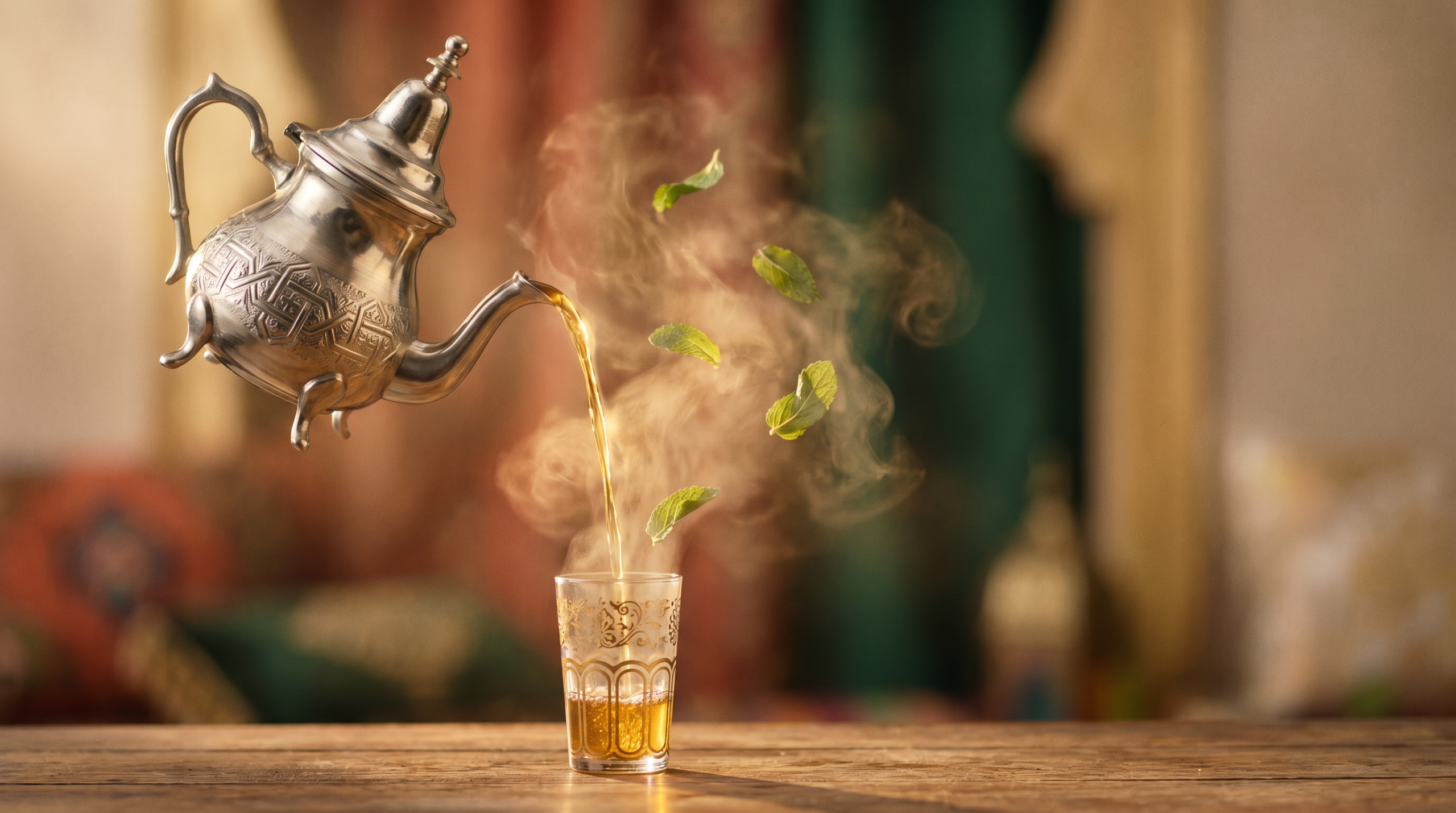
A traditional Moroccan tea set elevates the experience through both function and beauty. The berrad, a metal teapot with a long, curved spout, facilitates the signature high pour that creates foam and blends flavors. Small, decorated tea glasses catch the cascading tea while an ornate serving tray displays the entire setup, often accompanied by a matching sugar bowl.
Berrad (teapot): Metal, with a long curved spout for high pouring. Tea glasses: Small, decorated, heat-resistant. Serving tray: Ornate metal, often silver-toned. Sugar bowl: Matching design, for sugar cubes or granulated sugar.
Modern kitchens can still produce excellent Moroccan tea using simple substitutions. Any small saucepan paired with a fine strainer works well, along with heat-safe small glasses and a kettle for boiling water. The key lies in technique rather than equipment, though the curved spout of a traditional teapot does help control the dramatic pour.
For practical purposes, a 0.6–1.0 liter teapot proves ideal for home use, providing enough capacity for multiple rounds while remaining manageable. If you’re visiting Morocco, a traditional tea set makes one of the most meaningful souvenir purchases — look for handcrafted sets in the souks of Fez or Marrakech.
🎫 Shop for authentic tea sets in Morocco’s legendary souks:
Powered by GetYourGuide
How to Make Moroccan Mint Tea: The Authentic Method
Creating authentic Moroccan mint tea requires precision and patience. This moroccan mint tea recipe follows traditional methods passed down through generations, answering the common questions of how do you make moroccan tea and how to make moroccan mint tea with authentic technique.
💡 Perfect ratios: — 1 tablespoon gunpowder tea per 3½ cups (about 830 ml) water, 10–15 spearmint sprigs lightly bruised to release oils, and 3–4 tablespoons (45–60 g) sugar. Use near-boiling water at 95–100°C (203–212°F) and steep for just 2–3 minutes.
Cleanse and awaken the gunpowder pellets
Add your gunpowder green tea to the teapot. Pour a small splash of hot water over the leaves — just enough to cover them. Swirl gently for 10–15 seconds to cleanse the leaves and begin opening the tightly rolled pellets, then discard this rinse water. This crucial step removes any dust, reduces initial bitterness, and prepares the leaves for a cleaner brew.
Combine tea, sugar, and mint
Pour the full volume of near-boiling water (830 ml) over the rinsed tea leaves. Add your 3–4 tablespoons of sugar, swirling gently to start dissolving the sweetener. Tuck fresh spearmint sprigs into the pot, ensuring all leaves submerge in the hot liquid. Allow a brief steep of 2–3 minutes total — no longer, or bitterness will develop.
Taste for the right balance: you want a soft green-tea grip with noticeable sweetness and a bright mint aroma. Adjust sugar if needed at this stage.
The signature technique that defines Moroccan tea
This step distinguishes Moroccan tea from any other preparation. Pour tea from the pot into a glass and back into the pot 3–5 times. This blends all the flavors thoroughly. Then perform the high pour — hold the teapot 20–30 cm (8–12 inches) above the glasses and pour in a steady stream. This aerates the tea, creates a light foam on the surface, and integrates the sweetness completely.
Practice with a lower pour at first and gradually raise the teapot as you gain confidence. The foam is a sign of a well-prepared tea.
The ceremonial heart of Moroccan tea culture
Traditional service involves pouring three rounds, each offering subtle flavor variations as the tea steeps longer and mint oils continue to release. The first round is gentlest, the second strongest, and the third carries a deeper, more contemplative flavor — mirroring the Moroccan proverb about life, love, and death.
Without a berrad, replicate this process using a small saucepan and fine-mesh strainer, still practicing careful, higher pours into glasses to achieve proper aeration.
In rural Morocco, families still practice these methods daily, often brewing tea multiple times throughout the day as a way to welcome guests and mark the rhythm of the afternoon.
🎫 Learn traditional tea preparation alongside Moroccan cooking:
Powered by GetYourGuide
Flavor Tweaks & Troubleshooting
Mastering Moroccan mint tea means understanding how to adjust and correct common issues. More sugar softens any bitterness while accentuating mint aromatics, creating the characteristic sweet-fresh balance. Experimenting with different grades of loose-leaf gunpowder tea allows you to find your preferred strength and flavor profile.
Too bitter? Limit steep time to 2 minutes and rely on aeration for body. Weak mint? Add fresh sprigs after the initial steep and aerate again. Muddy flavor? Switch to filtered water for a brighter, cleaner taste.
Water quality significantly impacts your final moroccan mint tea recipe. Hard tap water can muddy flavors, so use filtered water for a brighter, cleaner taste that lets each ingredient shine. When making tea ahead, brew slightly stronger to account for dilution from additional aerated pours or ice if serving cold.
Serving & Enjoying
Proper service transforms Moroccan tea from beverage to experience. Begin by warming the glasses with a small rinse of hot water, preventing thermal shock while preparing them to hold heat. Pour from several inches above each glass, creating gentle foam that enhances both aroma and visual appeal.
The three-round custom reflects Moroccan hospitality at its finest. Refill guests’ glasses across three pours, allowing the tea’s flavor to evolve slightly with each round as mint oils release and sugar fully integrates. This practice shows respect while encouraging leisurely conversation.
💡 Perfect pairings: — Serve Moroccan mint tea alongside almond ghriba cookies, sweet dates, or Moroccan street food favorites for a classic tea-time spread. The combination of fresh sweetness with nutty, caramel notes creates an unforgettable afternoon ritual.
For a truly immersive experience, consider complementing your tea ritual with a traditional hammam experience in Marrakech — two pillars of Moroccan wellness culture that have been intertwined for centuries. You can also explore the complete hammam guide to understand the full ritual.
🎫 Complete your Moroccan wellness experience with a traditional hammam:
Powered by GetYourGuide
Beyond the Basics
Iced Moroccan Mint Tea
Iced Moroccan mint tea offers a refreshing variation perfect for warm weather. Brew using the core method but at 1.25x strength to account for ice dilution. Sweeten while hot to ensure sugar dissolves completely, then cool the tea completely before serving. Pour over ice and garnish with fresh mint sprigs and a slice of lime for added brightness.
Moroccan Tea Sets as Cultural Gifts
A premium Moroccan tea set makes an exceptional cultural gift that shares tradition and beauty. Look for gold-toned teapots with matching decorated trays and glasses, bundled with quality tins of moroccan mint loose leaf tea. Whether you pick one up in a Moroccan souk or order one online, this thoughtful combination provides everything needed to begin exploring Moroccan tea culture at home.
Where to Experience Tea Culture in Morocco
After mastering tea preparation at home, nothing compares to experiencing the ritual in its native setting. The diverse landscapes of Morocco’s natural wonders provide stunning backdrops for enjoying freshly brewed mint tea — especially in mountain settings where mint grows abundantly and the tea tradition remains strongest. Consider exploring hidden gems of Morocco where local tea ceremonies offer authentic cultural exchanges away from tourist crowds.
Visit a Berber village in the Atlas Mountains for a tea ceremony with a local family, explore the tea stalls surrounding Djemaa el-Fna in Marrakech, or join a cooking class in a Berber village where tea preparation is part of the cultural experience.
🎫 Visit an authentic Berber village and share tea with a local family:
Powered by GetYourGuide
Your Moroccan Tea Journey Begins Now
Moroccan tea culture embodies a rich experience that transcends the simple act of drinking tea — it represents a daily ritual of hospitality and tradition that connects people across generations. Now that you understand the history, technique, and cultural significance, brew this authentic recipe at home, practice your high pour, and share the experience with friends and family. The beauty of Moroccan mint tea is that it transforms any gathering into something meaningful.
Continue your journey through Moroccan cuisine by exploring traditional tagines, refreshing salads, and sweet treats that pair perfectly with Moroccan mint tea. Or, if you’re planning a trip, discover how Moroccan cultural experiences can deepen your appreciation for this ancient tradition.
Reserve Your Spot
Experience Moroccan Tea Culture Firsthand
From cooking classes where you’ll learn the art of the perfect pour to cultural tours through ancient medinas — book your authentic Moroccan experience with instant confirmation and free cancellation.
Frequently Asked Questions
Everything you need to know about Moroccan tea culture and preparation
✦ Your Morocco Journey Starts Here
Taste Morocco’s Soul, One Glass at a Time
Whether you brew your first pot of authentic Moroccan mint tea at home or share three rounds with a Berber family in the Atlas Mountains, you’re stepping into a tradition that has connected people for centuries. The teapot is waiting — all you need is to pour.