Morocco Beach FAQs: 15 Questions Every Traveler Asks
Planning a trip to Morocco’s coastline is exciting, but it’s normal to have concerns — from safety and swim conditions to cultural etiquette and food safety. This guide answers the 15 most critical Morocco beach questions with expert-backed research and honest local insight.
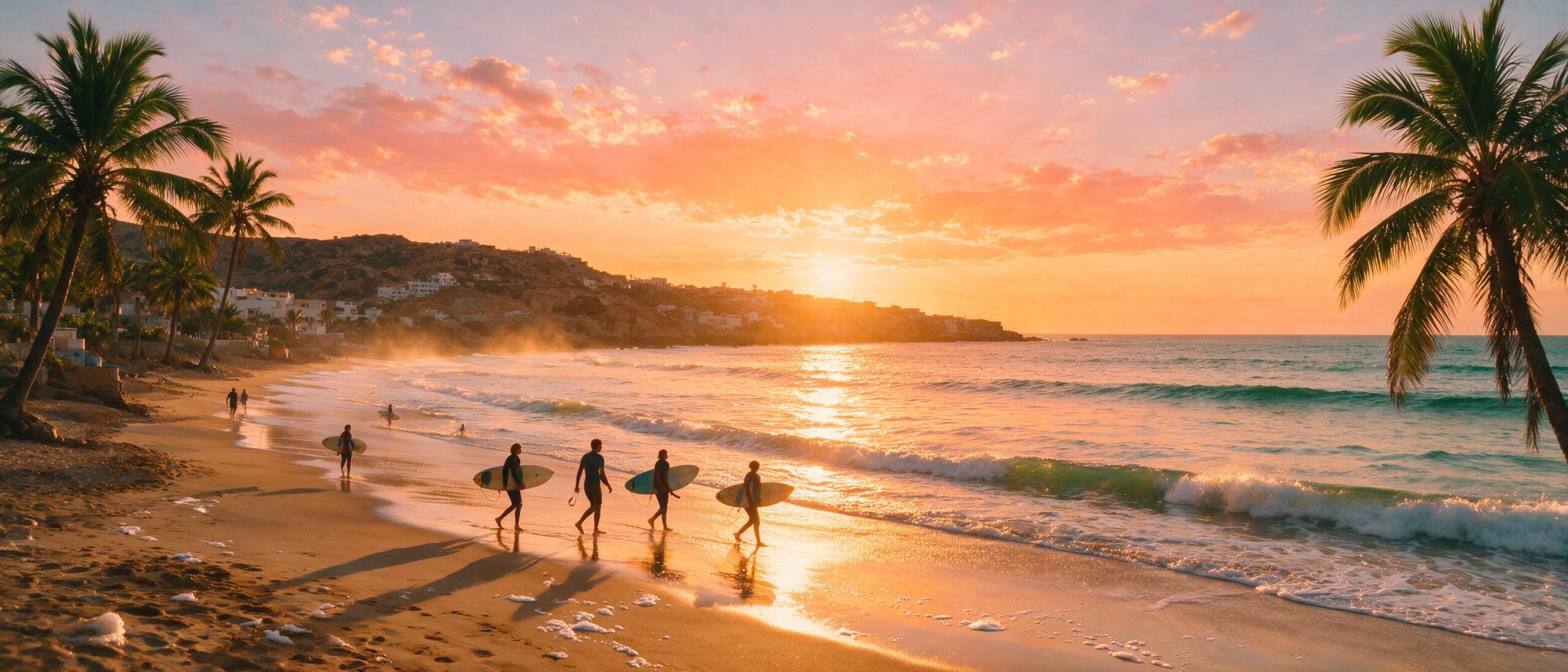
Morocco’s 1,800-mile coastline splits between two seas — the wild Atlantic and the calm Mediterranean — offering variety few countries can match. Whether you’re asking “is Morocco beach safe” for solo travel, wondering “does Morocco have good beaches” for a family holiday, or need practical tips on avoiding stomach bugs and beach scams, you’ll find clear, actionable answers below. We’ve distilled official advisories, local knowledge, and on-the-ground experience into one comprehensive FAQ so you can relax and enjoy the sand and surf.
✦ Key Takeaways
Swim only at lifeguarded beaches during peak season (June–Sept); Atlantic riptides are real and dangerous.
Petty theft is the main risk — use a money belt, leave valuables in hotel safes, never leave bags unattended.
Drink only sealed bottled water, avoid ice in cheap spots, and stick to freshly cooked food to prevent stomach bugs.
Dress modestly off the sand — cover-ups for women, boardshorts for men — respect local culture on public beaches.
Always carry your own toilet paper and hand sanitizer; public beach facilities rarely provide them.
Is Morocco Beach Safe? Understanding Real Risks
When travelers ask is Morocco beach safe, they usually worry about two things: drowning in strong currents and petty crime on the sand. The truth is that Moroccan beaches are generally safe if you follow basic precautions — much like coastal destinations worldwide. Let’s break down the real risks so you stay smart without being scared.
Swimming Conditions and Water Safety
Many Moroccan beaches along the Atlantic coast have strong currents and riptides. The CDC advises travelers to “swim only in designated swimming areas. Obey lifeguards and warning flags on beaches. Do not dive into shallow water.” These aren’t suggestions — they can save your life.
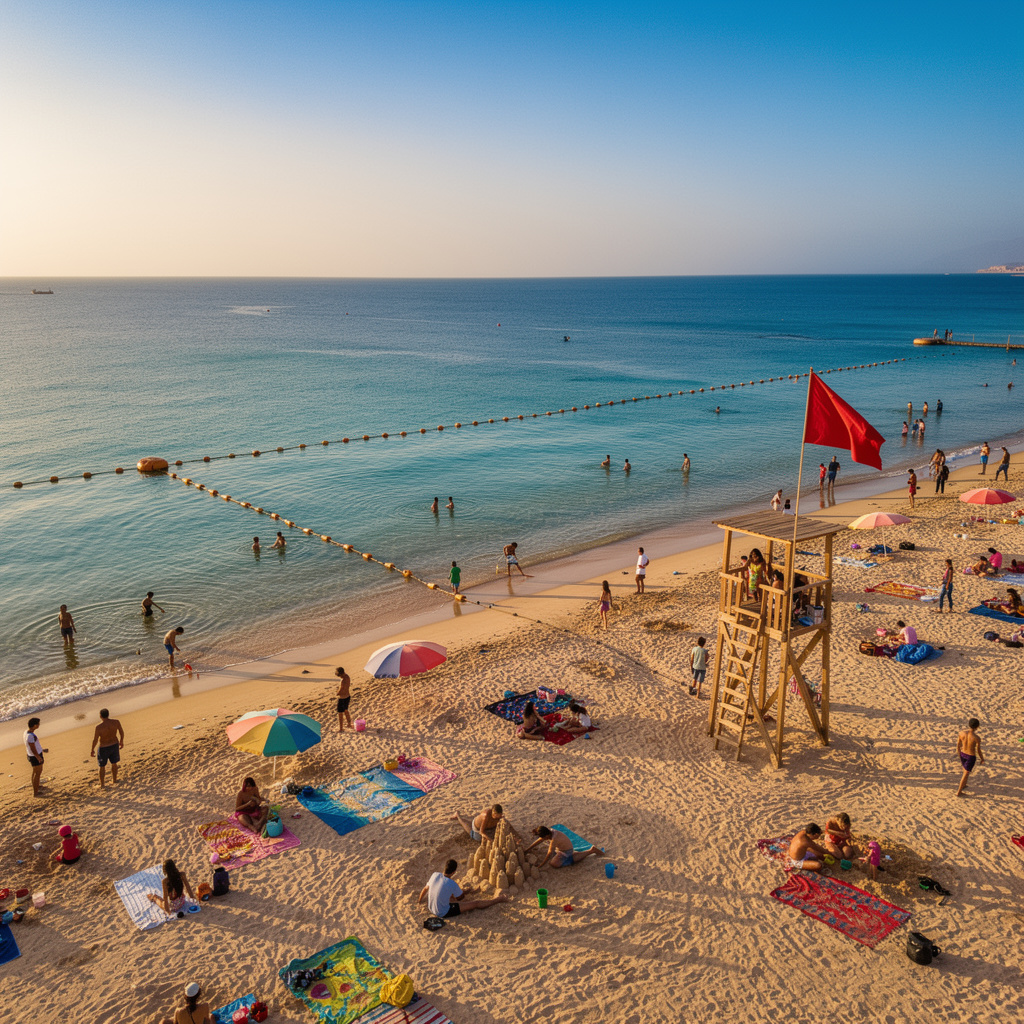
Popular beaches like Taghazout and Agadir have lifeguards during peak season (June through September). But remote beaches such as Legzira may lack any supervision at all. Here’s what you need to know:
- Rip currents are common on Atlantic beaches. Never swim alone.
- Ask locals about conditions before entering the water — they know which spots are dangerous.
- Check for warning flags: Red means danger; green means safe.
- Avoid swimming after storms when currents become stronger and visibility drops.
💡 Expert tip: If caught in a rip current, swim parallel to the shore — not against the current. Stay calm, conserve energy, and wave for help. The sea in Morocco can be unpredictable; waves that look small from shore can knock you off your feet.
Petty Crime and Theft on the Beach
The UK Foreign Office warns that “criminals have used knives against tourists in street attacks, thefts and burglaries in major cities and along beaches.” That sounds alarming, but here’s the reality: petty crime is the main risk, not violent crime. As travel expert Nomadic Matt explains, “Morocco is actually a safe place to visit, with crime rates declining steadily… there’s really only petty crime.”
Bag-snatching and pickpocketing happen on crowded beaches, just like anywhere else in the world. To protect yourself:
- Use a money belt under your clothes for cash and documents.
- Leave valuables in your hotel safe — don’t bring expensive jewelry or extra credit cards to the beach.
- Never leave bags unattended on the sand while you swim.
- Avoid quiet areas after dark. Stick to well-lit, busy beaches at night.
Most tourists have zero problems. The key is being aware, not paranoid. For deeper safety strategies, see our complete Morocco safety guide with region-specific advice.
Solo Female Travel on Moroccan Beaches
Elle UK reports that “it is safe for women travellers in Morocco, but the same rules apply as anywhere else in the world. Do take a reliable guide if going anywhere remote.” Solo female travelers do report occasional unwanted attention, especially from men offering unsolicited help or directions.
But here’s the good news: beaches with families and resorts — like Saïdia on the Mediterranean coast — are generally very comfortable for women traveling alone. The best strategies include:
- Staying at beachfront hotels with good security and female-friendly staff.
- Avoiding isolated beaches after dark, even if they seem beautiful.
- Dressing modestly when walking away from the sand (more on that later).
- Trusting your instincts — if a situation feels wrong, leave immediately.
Ignore catcalls and keep walking. Most of it is noise, not danger. For comprehensive solo female strategies, our 2026 solo female safety guide covers dressing codes, transport, and harassment responses in detail.
Explore Taghazout surf lessons:
Powered by GetYourGuide
Does Morocco Have Good Beaches? A Look at Coastline Quality
The short answer is absolutely yes. Morocco has over 1,800 miles of coastline split between two different seas, giving you variety that few countries can match. Lonely Planet highlights both coasts in their “8 best beaches in Morocco” article, and the contrast is striking.
Atlantic vs. Mediterranean – What’s the Difference?
Atlantic Coast (long, windy, great for surfing):
- Taghazout: Famous surfing town with waves for beginners and pros — read our complete Taghazout guide for surf spots, accommodations, and local tips.
- Legzira: Iconic red rock arches for incredible photos (though partially collapsed in 2016, the beach remains stunning).
- Essaouira: Windy spot perfect for windsurfing and kitesurfing — see our Essaouira guide for wind sport details and where to stay.
Mediterranean Coast (calmer, warmer, resort-style):
- Saïdia: Known as the “Blue Pearl” with seven miles of golden sand and calm waters ideal for families.
- Al Hoceima: Secluded coves surrounded by pine forests.
- Martil: Popular weekend getaway with gentle waves and beachside cafes.
💡 Quick rule: Surfers head west to the Atlantic; swimmers and families go north to the Mediterranean. Rough Guides includes both coasts in their “Best beaches in Morocco” list, confirming each offers unique beauty.
Book Essaouira windsurfing sessions:
Powered by GetYourGuide
Beach Quality – Cleanliness and Blue Flags
Many Moroccan beaches have earned Blue Flag status, meaning they meet strict standards for cleanliness, safety, and facilities. Agadir, Saïdia, and Asilah are among the cleanest and best-maintained. TripAdvisor and Club Med both highlight these spots for well-kept sand and clear water.
However, some less crowded beaches may have litter, especially after weekends when local families visit. Before you go:
- Check recent TripAdvisor reviews for up-to-date cleanliness reports.
- Look for Blue Flag certification online — it’s a reliable quality marker.
- Visit during weekdays if you prefer quieter, cleaner stretches of sand.
For a detailed breakdown of which beaches are swimmable by season and region, see our guide Are Morocco Beaches Swimmable? Safety, Water Quality & Best Seasons.
Best Beaches for Different Activities
| Activity | Best Beaches | Why |
|---|---|---|
| Surfing | Anchor Point, Killer Point (Taghazout), Tamraght | World-class breaks; beginner-friendly options at Tamraght |
| Swimming & Family | Saïdia, Agadir, Martil | Calm waters, gentle slopes, lifeguards, facilities |
| Sunbathing & Scenery | Legzira, Tamraght, Asilah | Dramatic arches, quiet coves, picturesque medina backdrop |
Discover the most beautiful beaches in Morocco with our complete photo guide, or plan a full coastal trip with our 7-day Morocco beach itinerary.
What to Be Careful of in Morocco: Scams, Currents & Sun
Beyond safety and beach quality, travelers need to know what to be careful of in Morocco. Three main issues trip up tourists: scams, sun exposure, and hidden hazards on untouched beaches.
Common Beach Scams to Watch For
Scams on Moroccan beaches are annoying but easy to avoid once you know them. Happytowander’s 14 Crucial Morocco Safety Tips and Roafly’s 2026 safety guide both list the same common tricks:
- Fake guides approach offering to “show the best spot,” then demand payment. Politely say no from the start.
- Overpriced beach chairs and umbrellas — always agree on the price before sitting down.
- “Friendship bracelet” scam: Someone ties a bracelet on your wrist without asking, then demands money. Say “la, shukran” (no, thank you) firmly.
- Henna tattoo scammers on the beach — agree on price before they start, or skip it entirely.
A polite but firm “no thanks” and walking away. Don’t engage in long conversations with persistent sellers. For airport transfer scams specifically, see our Marrakech airport taxi guide.
Sun Exposure and Heat Safety
Morocco’s sun is intense, especially during summer months. The CDC and travel.state.gov both warn about the high UV index. Heatstroke is a real danger. Follow these rules:
- Use SPF 50+ sunscreen and reapply every two hours.
- Wear a wide-brimmed hat and UV-protective sunglasses.
- Drink bottled water constantly — aim for at least 2 liters per day.
- Avoid alcohol during midday heat — it dehydrates you faster.
- Recognize heatstroke signs: dizziness, nausea, confusion, hot dry skin. Get to shade immediately and drink cool water.
The sun in Morocco hits harder than in Europe or North America. Respect it.
Hidden Hazards on Untouched Beaches
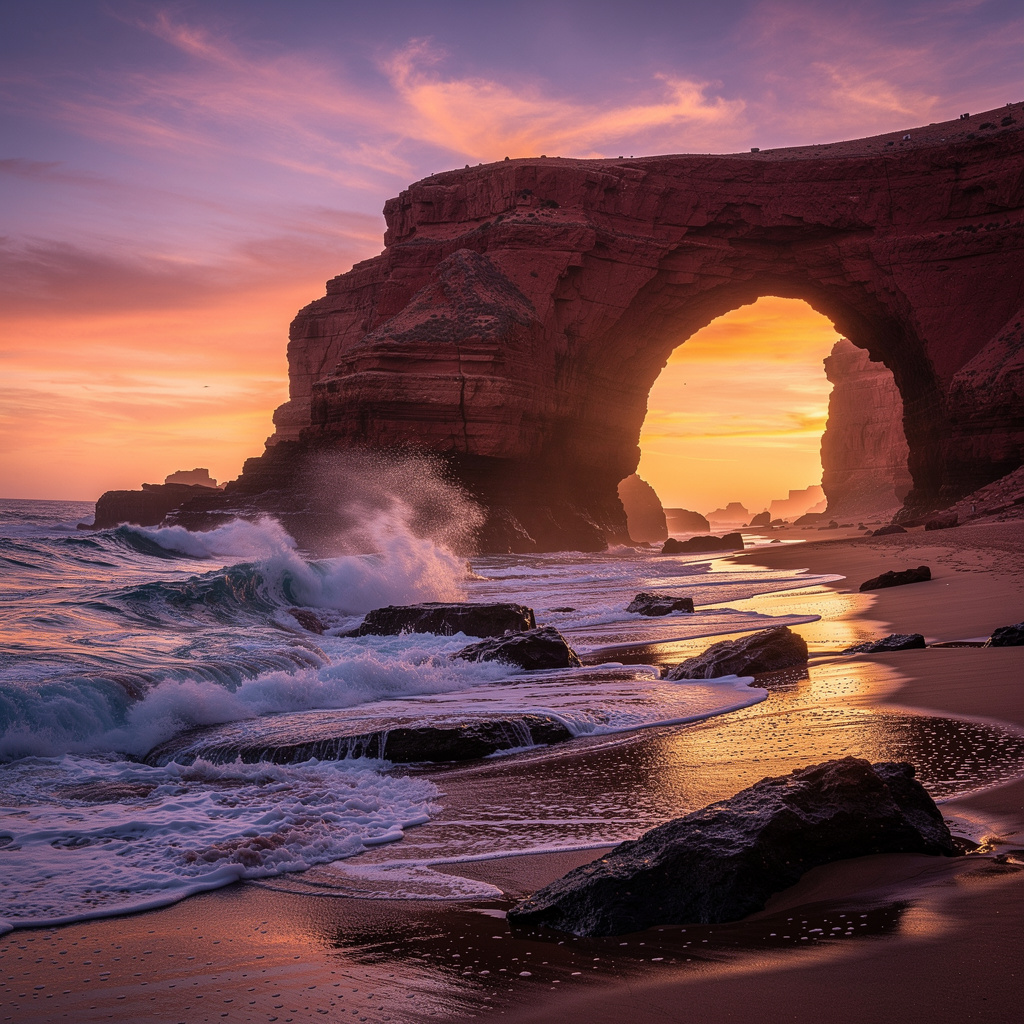
Remote beaches like Legzira and Atlantic coves have hidden dangers. Dangerous Business notes unpredictable sea conditions that catch tourists off guard:
- Sneaker waves on the Atlantic coast can appear suddenly and drag people into the sea. Never turn your back on the ocean.
- Strong waves and hidden rocks make swimming dangerous at many undeveloped beaches.
- Jellyfish and sea urchins are common on rocky beaches. Carry vinegar for stings and wear water shoes.
Before entering the water at any unfamiliar beach, look for local warning signs or ask nearby shopkeepers. Your safety is worth thirty seconds of asking.
How to Avoid Stomach Bug in Morocco: Food & Water Safety
Almost every traveler worries about how to avoid stomach bug in Morocco. “Montezuma’s Revenge” is common but totally preventable with the right habits.
Why Traveler’s Diarrhea Happens
Your stomach isn’t used to the different bacteria found in Moroccan food and water. The CDC Travelers’ Health page for Morocco advises: “Do not swim in freshwater in developing areas… practice safe food and water habits.” Getting sick doesn’t mean Morocco is dirty — it means your body needs time to adjust.
Most cases come from:
- Tap water (never drink it)
- Raw vegetables or fruits washed in tap water
- Street food left sitting out in the heat
Safe Food Choices on the Beach
Eating on the beach is one of life’s great pleasures. Just be smart about it:
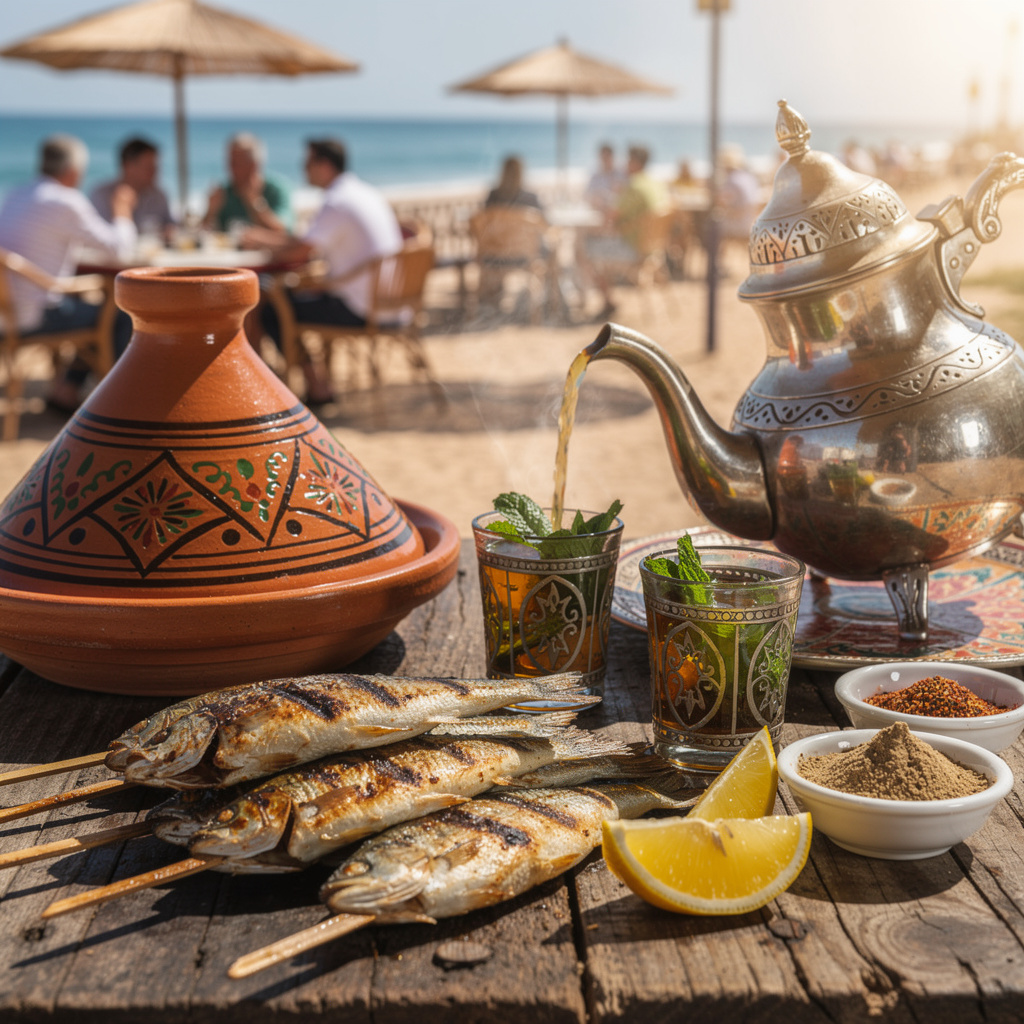
- Stick to freshly cooked food. Grilled fish, skewers, and tagines made right in front of you are generally safe.
- Avoid raw salads and pre-cut fruit unless you saw it washed with bottled water.
- Choose busy restaurants with high customer turnover — check TripAdvisor reviews first.
- Skip buffets where food sits out for hours in the sun.
Street food is fine if it’s cooked fresh. The smell of sizzling grills is your friend.
Water: Bottled is Best
Tap water in Morocco is not safe for drinking. Period. Follow these rules:
- Buy sealed bottled water from shops, not street vendors who might refill bottles.
- Avoid ice in cheap drinks. Only accept ice from reputable hotels or restaurants.
- Use bottled water to brush your teeth. It sounds fussy, but it prevents illness.
- Carry a reusable bottle and refill at your hotel — many have filtered water stations for guests.
📌 Pack this: Electrolyte powders or rehydration salts in case you do get sick. Prevention is easier than cure, but preparation beats panic.
Cultural Etiquette & Practical Facilities
Morocco is a Muslim country with different customs than many Western travelers expect. Understanding practical questions will save you awkward moments.
Do Moroccans Use Toilet Paper?
Yes, but not always in public restrooms. Many Moroccan toilets have a bidet spray (called a shattaf) and a small bucket of water. Toilet paper may not be provided, or it may be placed outside the stall.
Essential tip: Always carry your own small pack of toilet paper and hand sanitizer. This is standard advice across travel guides. Beachside cafes and public bathrooms often charge a small fee (2–5 MAD) and may have limited supplies. Also worth knowing: squat toilets are common. Practice squatting before your trip if you’re not used to it.
Dressing Codes on Moroccan Beaches
Morocco is conservative, but beach attire is generally accepted in resort areas. Bikinis are fine on the sand and in the water. However, cover up when walking to and from the beach or going into town.
- For women: Wear a sarong, kaftan, or cover-up when leaving the beach.
- For men: Avoid Speedos — boardshorts are fine and show more respect.
- For everyone: Remove shoes before entering mosques (doesn’t apply to beaches).
Inspiring Vacations notes that locals are used to tourists in swimwear on the sand, but modesty matters away from the shore.
Public Bathrooms and Showers
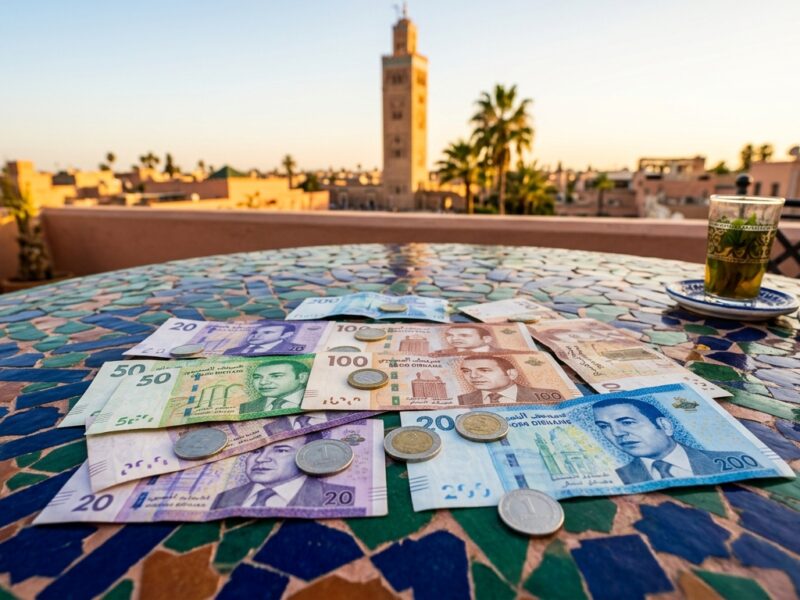
Many popular beaches (Agadir, Saïdia, Martil) have paid public bathrooms and outdoor showers. Bring small change — coins are essential.
- Public bathrooms usually cost 2–5 MAD. Keep coins handy.
- Toilet paper is rarely provided. Bring your own supply.
- On less developed beaches, facilities may not exist at all. Plan accordingly.
- Beach showers are often cold but refreshing after swimming.
Packing wet wipes and hand sanitizer makes a huge difference.
Book Agadir day trips from Marrakech:
Powered by GetYourGuide
Or book a private Marrakech–Agadir transfer:
Powered by GetYourGuide
Add an Atlas Mountains day trip to your coastal itinerary:
Powered by GetYourGuide
Reserve Your Spot
Book Your Morocco Beach Experience
From Taghazout surf camps to Agadir family resorts and Essaouira windsurfing — choose from the best coastal experiences across Morocco. Instant confirmation, free cancellation on most activities.
Frequently Asked Questions
Everything you need to know before you go
✦ Your Morocco Journey Starts Here
Ready for the Coast That Has It All
Morocco’s beaches deliver something rare: world-class surf, calm family coves, dramatic cliffs, and deep cultural richness — all on one coastline. You’ve got the answers. Now you just need the sand between your toes.