Morocco Beach Weather: Your Ultimate Month-by-Month Guide to Finding the Perfect Season
With 300 days of sunshine yearly and distinct coastal microclimates, Morocco beach weather offers something for every traveler — from summer sun worshippers to winter surf seekers.
Understanding morocco beach weather is the single most important factor in planning the perfect coastal getaway. Unlike some Mediterranean destinations where the answer is simple, Morocco’s coastline has distinct microclimates. What feels great in July might feel too chilly in December, and what works for a surfer might disappoint a sunbather. The good news? According to Morocco’s national meteorological agency, the country enjoys an average of 300 days of sunshine per year. That means there’s rarely a truly bad day at the Moroccan shore — just different experiences depending on when you go. Whether you dream of swimming in warm waters, riding perfect waves at taghazout morocco surf spots, or exploring quiet coastal towns without crowds, this guide breaks down morocco beach seasons by month so you can find your ideal window.
✦ Key Takeaways
Spring (March–May) and fall (September–November) offer the best balance of warm air, comfortable seas, and fewer crowds.
October is the hidden gem — the Atlantic retains summer warmth while air temperatures stay pleasant at 25°C (77°F).
Winter (December–February) delivers world-class surfing at Taghazout with consistent swells and empty beaches.
Summer brings peak crowds and prices, but Agadir and Saidia offer developed infrastructure for families and sun lovers.
The rainy season runs October–April, but coastal areas still see frequent sunny days — pack layers and a light waterproof jacket.
Understanding the Three Main Morocco Beach Seasons
Morocco’s coast features a classic Mediterranean climate, with mild wet winters and hot dry summers. But the experience changes dramatically across the year. Let’s look at the three big seasons that define morocco beach weather patterns.

Summer (June–August): The Sun Seeker’s Peak
Summer brings the hottest weather to the coast. Coastal temperatures hover around 25°C to 30°C (77°F to 86°F), according to Approach Tours. Inland? That’s another story — summer temperatures can hit 40°C or higher, making the coast a welcome escape. The trade-off is clear: maximum sun but maximum crowds. Beach resorts fill up, and prices peak. If you love lively beaches and don’t mind sharing your spot, summer delivers. For a deeper dive into the best beaches in Morocco for summer swimming, our complete coastal guide has you covered.
Spring & Fall (March–May & September–November): The Sweet Spot
Travel experts at Audley Travel confirm that the best time to visit Morocco is actually spring or fall. These shoulder seasons offer the perfect balance. Temperatures sit at a pleasant 20°C to 25°C (68°F to 77°F). The sun shines warmly without blistering heat. This is prime time for combining beach relaxation with sightseeing, hiking, and exploring charming port towns like Essaouira and Asilah.
Winter (December–February): The Surf & Solitude Season
Winters on the coast are surprisingly mild. Approach Tours reports temperatures of 15°C to 18°C (59°F to 64°F). Yes, it’s the rainy season — Britannica states that “the rainy season generally extends from October to April.” But here’s the secret: winter brings Morocco’s best surfing conditions, especially at Taghazout. The beaches empty out, hotels drop prices, and you get a completely different coastal experience.
💡 Local insight: The Atlantic coast has a cooling Canary Current that keeps sea temperatures lower than the Mediterranean side, even in summer. For the warmest swimming, head to Saidia on the Mediterranean in July or August.
Ready to ride Morocco’s legendary winter swells?
Powered by GetYourGuide
Spring Sunshine: Morocco Beach Weather April & May
Spring transforms Morocco’s coastline into something magical. The rains of winter have passed, leaving behind lush green landscapes and wildflowers in bloom. This is when the morocco beach weather april experience truly shines for active travelers.

Why April is the “Green Season”
TourRadar data shows April’s average temperature sits at 17°C (63°F). That’s crisp in the morning but gorgeous by afternoon. Is it swimming weather? Not for everyone — the sea remains cool from winter. However, this is the absolute best month for long beach walks. Explore the artistic town of Asilah with its whitewashed streets and colorful murals. Walk the ramparts of Essaouira without breaking a sweat. The landscape glows green thanks to recent rains, creating incredible photo opportunities.
May’s Warmth: The Transition Month
May marks the turning point. TourRadar records an average temperature of 20°C (68°F) and describes conditions as “dry, mild.” By late May, the sea has started warming from its winter chill. Hardy swimmers might take a dip. This is when Morocco’s beaches begin coming alive. You get the greenery of spring with warmth that approaches summer. Hotel prices remain reasonable before June’s surge. It’s the perfect goldilocks month for travelers asking when is the best time to travel to morocco for combined culture and coast.
April and May coincide with festival season in coastal towns. Asilah’s annual arts festival typically runs in summer, but spring brings smaller cultural events and art exhibitions without the crowds.
Explore Essaouira’s medina and ramparts on a guided day trip from Marrakech:
Powered by GetYourGuide
The Golden Window: Morocco Beach October & November
Fall offers Morocco’s best kept secret for beach lovers. The summer crowds have vanished, the sea still holds summer warmth, and the sun remains generous. This is the answer to best time of year to travel to morocco for pure beach enjoyment.
October’s “Indian Summer”
October comes highly recommended by Audley Travel, which names fall as one of the best times to visit. Here’s why: the Atlantic Ocean retains its summer heat. Air temperatures in the south — places like Agadir — still reach a balmy 25°C (77°F). This month delivers excellent swimming, sunbathing, and water sports conditions. The water feels comfortable for hours of floating and playing. Plus, the sun isn’t harsh enough to burn quickly. It’s everything you want from a beach holiday without the intense heat of July and August.
November’s Tranquility & Lower Prices
November signals the start of the rainy season, but coastal areas still enjoy plenty of sunny days. TourRadar shows temperatures dropping to a pleasant 18–20°C (64–68°F). The real advantage? Peace and savings. Fewer tourists mean quieter beaches and significantly lower hotel rates. A beachfront room that cost double in August now feels affordable. This month works beautifully for travelers seeking a calm, relaxing escape. Long walks, reading by the shore, and peaceful sunsets define November on the Moroccan coast.
💡 Pro tip: Book October accommodations by June for the best selection. November deals often appear last-minute — check cancellation policies for flexibility.
Add adventure to your fall beach stay with sandboarding near Agadir:
Powered by GetYourGuide
Winter Escapes: Morocco Beach in December & January
Can you really enjoy Morocco’s beaches in winter? Absolutely — if you adjust your expectations. Winter serves a different purpose for coastal visitors, and understanding morocco beach in december conditions unlocks unique experiences.

Morocco Beach in December – Is It Warm Enough?
December stands as the wettest and coolest month on the coast. The World Bank Climate Profile notes Morocco’s mean annual air temperature is 18.14°C, with winter dipping much lower. But here’s the reality: in Taghazout and Agadir, daytime highs can still reach 18–20°C (64–68°F), according to Approach Tours. On a sunny, still day, you can absolutely sunbathe comfortably. Swimming? That requires a wetsuit for most people. The sea temperature drops to around 17°C (63°F). Winter’s true gift is surfing. These months bring the biggest, most consistent swells to the Atlantic coast. Taghazout transforms into a surfer’s paradise with world-class waves. Even beginners find good conditions with lessons available everywhere.
Morocco Beach January Weather: What to Expect
January mirrors December in many ways. TourRadar records an average temperature of 12°C (54°F), describing conditions as “Rainy, snow in mountainous areas.” Before you worry, remember that “rainy” on the coast doesn’t mean constant downpours. It means occasional Atlantic storms pass through, followed by bright clearing skies. An MSN article on winter weather preparedness confirms the country takes winter weather seriously, but extreme conditions rarely affect the coast.
Packing advice: Bring a light jacket, jeans, and a windbreaker for evenings. Morning and evening temperatures feel cool, but afternoons in direct sunlight turn pleasantly warm. Layers are your best friend. For the ultimate winter surf experience, consider a multi-day surf camp at Taghazout where wetsuits, boards, and expert coaching are included.
Commit to the full Taghazout experience with a 5-day surf camp:
Powered by GetYourGuide
Quick Reference: Morocco Beach Seasons at a Glance
This table summarizes morocco beach weather so you can quickly compare options across the main morocco beach seasons.
| Season | Best For | Average High Temp | Sea Temp | Crowds | Rain |
|---|---|---|---|---|---|
| Spring (Mar–May) | Sightseeing & moderate beach days | 17–22°C (63–72°F) | Cool | Moderate | Low |
| Summer (Jun–Aug) | Sunbathing & swimming | 25–28°C (77–82°F) | Warm | High | None |
| Fall (Sep–Nov) | Perfect balance | 24–20°C (75–68°F) | Warm | Moderate | Increasing |
| Winter (Dec–Feb) | Surfing & solitude | 17–15°C (63–59°F) | Cold | Low | Highest |
Best Morocco Beaches for Each Season
Different seasons call for different stretches of sand. Here’s where to go based on the calendar.
For Summer: Agadir and Saidia
Agadir offers the most developed beach infrastructure in Morocco. Long sandy beaches, water parks, beachfront cafes, and gentle waves make it perfect for families and sun lovers. Saidia, on the Mediterranean coast, provides calm, protected waters ideal for swimming without strong currents. Both destinations feature extensive resort options — browse our Morocco hotels guide for beachfront accommodations.
For Winter: Taghazout and Legzira
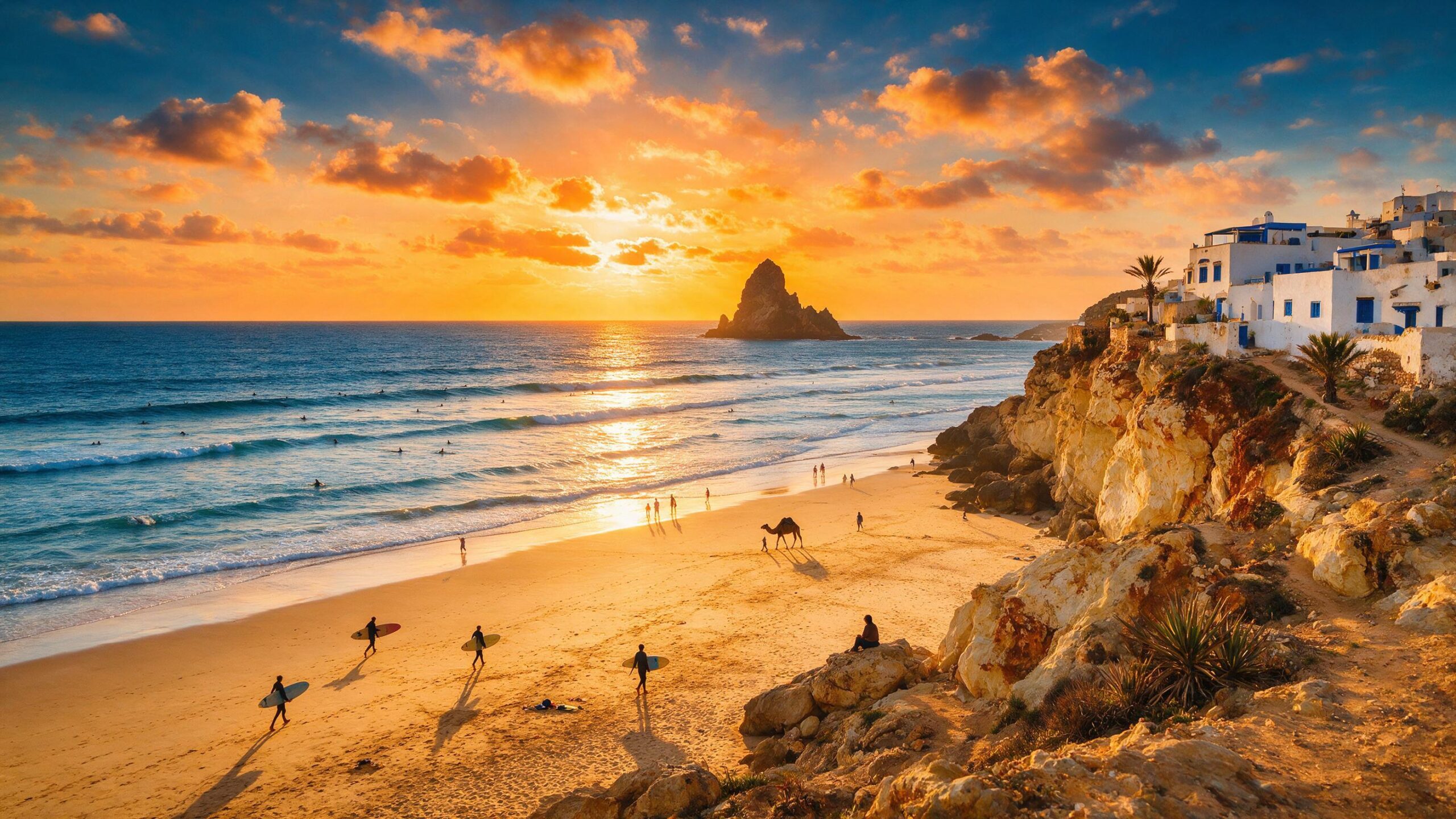
Taghazout claims the title of Morocco’s surfing capital. Winter delivers consistent swells that attract wave riders from around the world. Even non-surfers enjoy the laid-back vibe and dramatic sunsets. Legzira features famous sea arches carved by the ocean — best visited during calm winter and spring days when you can explore without summer heat. For swimmers, check whether Morocco beaches are swimmable in winter conditions.
For Spring/Fall: Essaouira and Asilah
Essaouira gets windy in summer, making spring and fall the perfect times to visit. Its historic medina, fresh seafood stalls, and kite-surfing scene shine without the summer gusts. Asilah charms visitors with its artsy community, whitewashed buildings, and annual cultural festival. Both towns offer cultural beach holidays with comfortable temperatures.
Spring and fall are ideal for combining beach time with day trips. From Essaouira, you can easily visit the Ouzoud Waterfalls or explore the Ait Benhaddou kasbah on guided tours.
Deepen your coastal stay with a Berber cooking class near Agadir:
Powered by GetYourGuide
Reserve Your Spot
Book Your Morocco Beach Experience
Choose from the best coastal activities across Morocco — from Taghazout surf camps to Essaouira day trips. Instant confirmation, free cancellation on most tours.
Frequently Asked Questions
Everything you need to know before you go
✦ Your Morocco Journey Starts Here
Find Your Perfect Coastal Season
Whether you’re chasing winter swells at Taghazout, October sunshine at Essaouira, or spring wildflowers at Asilah, Morocco’s 300 days of sunshine guarantee your ideal beach moment exists. The only question is: when will you go?