Sahara Desert in Winter: How Cold? An Honest 2027 Guide
Sahara desert in winter: how cold? Plan for the night low, not the daytime high.
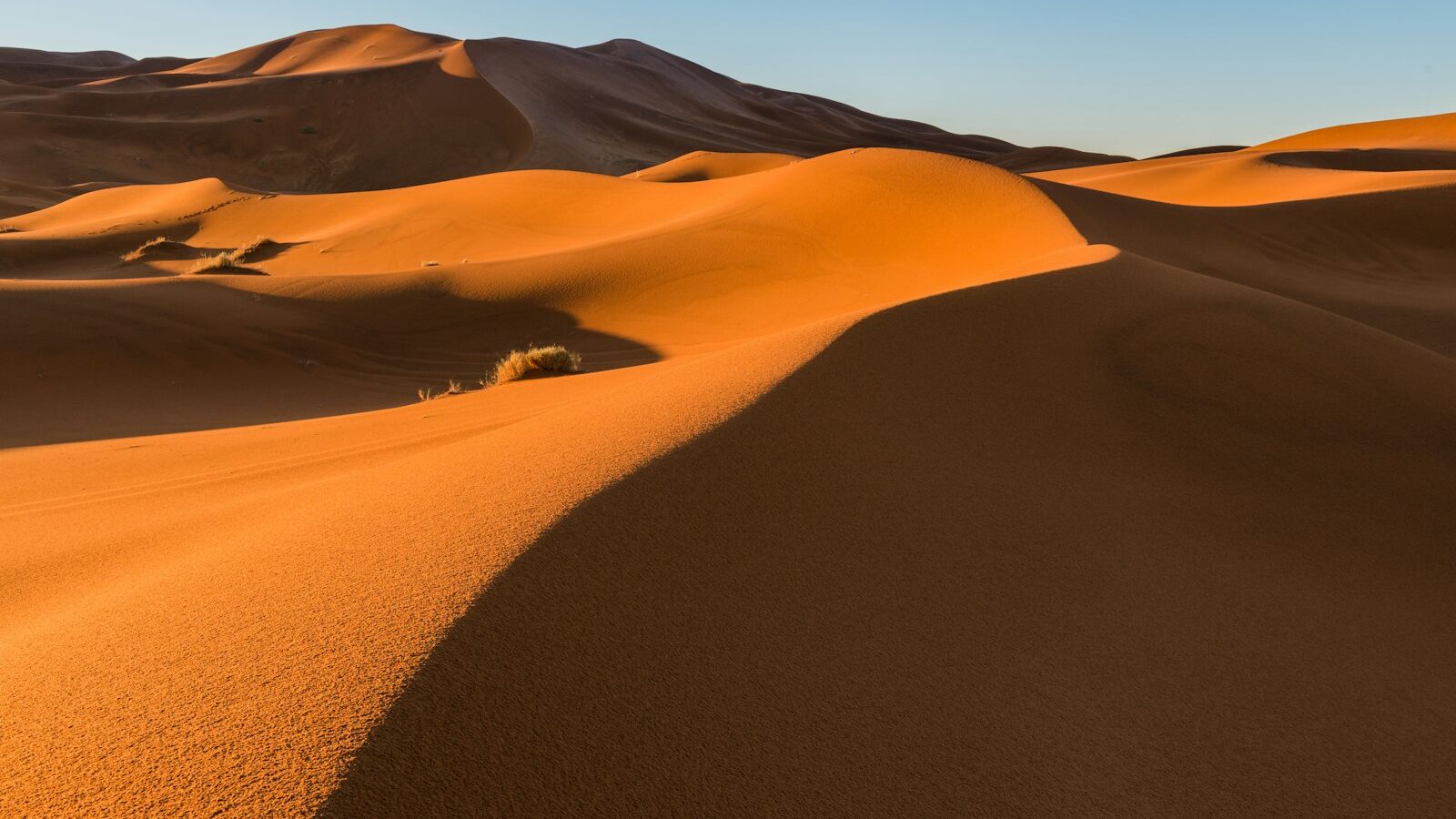
Sahara desert in winter: how cold does it get? In Erg Chebbi, near Merzouga, daytime highs usually reach about 17-23°C, while nights drop to roughly 2-8°C from December to February. A clear, still January night can reach freezing, so the night low should decide what you pack.
This guide is for travellers planning a winter desert trip in 2027. If you want the mildest balance, February is our pick. If you’re fine with colder nights, December and January work too, as long as you pack for near-freezing temperatures.
The figures below come from the travel sources and reference climate data cited in this article, and we point out where they disagree. You’ll get day and night numbers, a month-by-month table, snow and rain, camp comfort and a packing plan you can use tonight.
✦ Key Takeaways
Plan for Erg Chebbi winter nights of about 2-8°C and days of about 17-23°C, with clear January nights that can freeze.
Pack by the night low, not the daytime high, because the coldest hours come after sunset.
February is the mildest winter month for desert nights, while January is the coldest period on average.
Snow mainly affects the High Atlas passes, which can add driving time on routes from Marrakech to the desert.
Ask each camp about heating and bedding before you book, because wind and open air make camps feel colder than the forecast.
Sahara desert in winter: how cold does it get?
In Erg Chebbi, near Merzouga, winter days usually reach about 17-23°C, while nights drop to roughly 2-8°C from December to February. A clear, still January night can reach freezing. So it’s warm at lunch and properly cold after sunset.

Winter in the Moroccan Sahara is dry, sunny and mild by day. That’s the part everyone enjoys. The problem is the drop once the sun goes down, because the air cools fast and nothing holds the warmth in. Plan around that drop and the trip is comfortable.
Sahara desert temperature today: how to check the right number
Check a forecast for your exact location on the day you travel. For a dune camp, look at Merzouga or Erg Chebbi. For a route that passes through Zagora, check Zagora. If you’re still planning the rest of your trip, our guide to winter temperatures in Marrakech helps you judge the drive in.
Compare that live forecast with the monthly averages in this guide. If the forecast is several degrees colder than the table, trust the forecast and pack for it.
Why ‘the Sahara’ is too big for one forecast
The Sahara covers a vast area, and conditions change with country, elevation, latitude and how close you are to the coast. A forecast for Algiers or Tunis tells you nothing about a dune camp in southeast Morocco. Always search for the town or dune field you’ll sleep in.
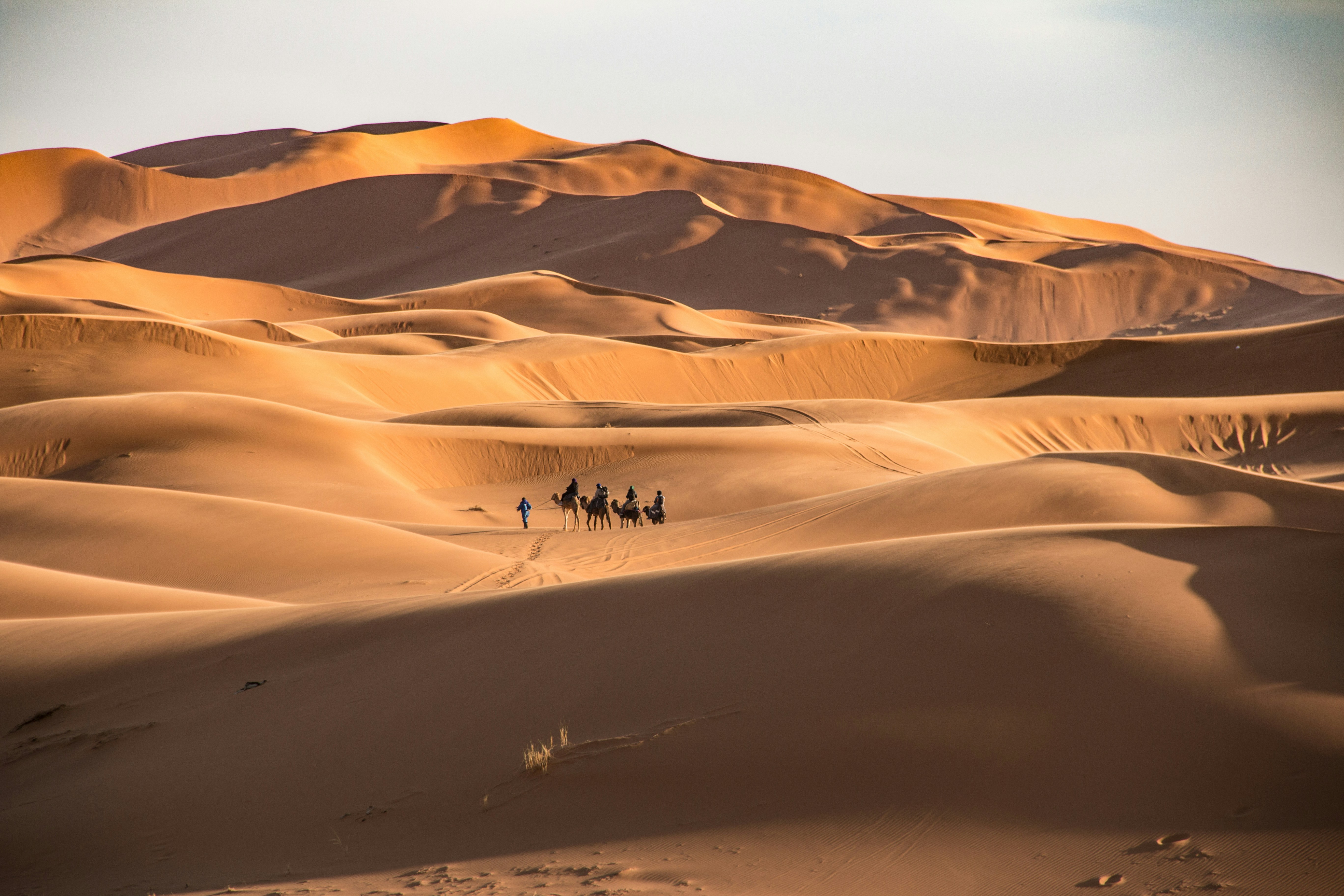
An overnight camel trek over the Erg Chebbi dunes puts you outside after dark, which is when the cold arrives. Plan for the coldest hour of the night, not the warm afternoon before it.
🎟️ Overnight camel trek over Erg Chebbi dunes
Verify before you go: check a live forecast for your exact dates a few days ahead.
Plan your whole Morocco winter in one guide
Morocco Unlocked
Still deciding between desert, cities and mountains? Our guide lays out itineraries, realistic prices and the scams to avoid for 2027.
Get the guide · $12Instant PDF download
Why is the Sahara desert so cold at night?
The Sahara gets cold at night because its air is dry and its skies are clear, so heat escapes fast after sunset. Britannica describes large day-night swings across the desert, with a broad December to February average of about 20°C by day and 5°C by night.

Why dry air and clear skies matter
Think of it this way: a cloudy night works like a lid on a pot, trapping warmth from the ground. Without clouds or humidity, that warmth rises straight into space. The result is a sharp temperature drop in just a few hours.
Britannica’s Britannica’s Sahara climate overview notes that some Sahara areas can fall to about -3.9°C at night. That’s the extreme end, not the usual Erg Chebbi winter night, but it shows how far the desert can swing.
💡 Key insight – The daily average hides the bad night. A calm, cloudless night is always colder than the average suggests.
What one guide says about Merzouga nights
Morocco Travel Base, in its Morocco Travel Base winter desert guide, puts Merzouga January nights around 0°C. Erg Chebbi ranges in the Morocco-specific figures run about 2-6°C in January, so the two numbers describe different nights, not a contradiction.
Both figures matter for a camp. The 2-6°C range is the typical low, while the near-0°C figure is what a clear, still night can deliver on an open dune. Pack for the colder number.
If your camp sits at the edge of the dunes rather than in a sheltered spot, expect colder nights than the average suggests.
How cold is the Sahara in December, January and February?
December, January and February are the coldest months for Sahara desert nights in Morocco. Erg Chebbi nights run about 3-7°C in December, 2-6°C in January and 4-8°C in February, while February days are the warmest at about 20-23°C.
For the rest of the country, our city-by-city winter weather breakdown shows how the coast and the mountains differ from the desert. Use it alongside the table below.
| Location and month | Daytime high | Nighttime low | Best for |
|---|---|---|---|
| Erg Chebbi, December | 18-21°C | 3-7°C | Winter camel rides and camp stays |
| Erg Chebbi, January | 17-20°C | 2-6°C | Cool daytime activity; coldest nights |
| Erg Chebbi, February | 20-23°C | 4-8°C | Best winter compromise for warmth |
| Ouarzazate, January | About 17.3°C | About 1.8°C | Gateway sightseeing and road itineraries |
| Errachidia, January | About 15.9°C | About 2.0°C | Eastern desert-route stop |
| Broad Sahara, December to February | About 20°C | About 5°C | General climate explanation |
December vs January: which is colder?
January is colder on average. Erg Chebbi January days run slightly cooler than December, and the January nights are the lowest of the three months. Expect the coldest nights in January, with the widest chance of freezing on clear evenings.
- December pros: warmer days, comfortable camel rides, lower chance of freezing nights.
- December cons: nights still reach about 3-7°C, so you still need a proper warm layer.
- January pros: dry, clear skies and bright afternoons for dune walks.
- January cons: the coldest nights, with clear, still evenings that can reach freezing.
- February pros: the warmest days at about 20-23°C and nights of about 4-8°C.
- February cons: nights are still cold, so the mild days can fool you after sunset.
Where these numbers come from
The Erg Chebbi figures come from a Morocco tour-operator guide, while the Ouarzazate and Errachidia figures are January averages from a Morocco travel publisher. Gateway towns sit at different elevations, which is why their lows differ from the dunes.
Read the gateway numbers as a sign of the wider climate, not as dune figures. Ouarzazate’s January low of about 1.8°C and Errachidia’s about 2.0°C show that inland Morocco gets cold nights in winter.
Use the gateway towns as a checkpoint on your route, then confirm the dune camp forecast before you leave.
Not sure which month suits your dates?
Tell us your dates and whether you’re travelling as a couple, a family or solo. We’ll tell you whether December, January or February fits your nights.
Does it snow in the Sahara desert?
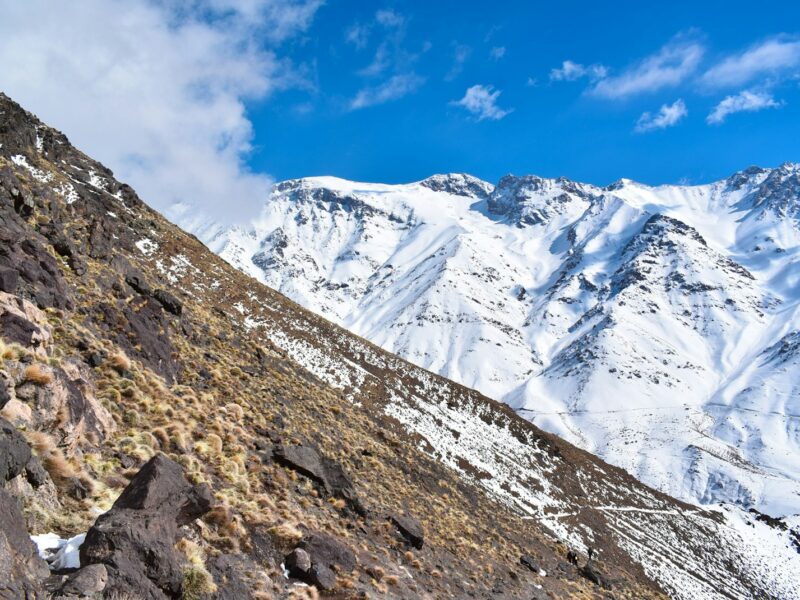
Snow is a High Atlas story, not a Sahara dune story. Winter snow is more likely to affect the High Atlas passes than the sandy dunes around Merzouga, and it can add driving time on routes from Marrakech.
Wanderlust Morocco’s Wanderlust Morocco’s seasonal Sahara guide explains the same pattern and advises extra time on winter road days. You won’t see snow on the dunes in a typical winter, but the drive to them can get slow.
Rain in the Moroccan Sahara in winter
Winter in the Moroccan Sahara is generally dry, so rain is the exception rather than the rule. When it does rain, the real risk is flash flooding in dry riverbeds, which can block a desert transfer for a while.
If you’re asking whether it rains in the Moroccan Sahara in winter, the honest answer is that it’s dry most of the time. Check conditions before you set off, especially after a stormy spell in the mountains.
How snow and roads change a desert transfer
Snow on the High Atlas passes can slow a transfer from Marrakech to the desert by hours, not minutes. Leave earlier than you think you need to, and build a buffer into the first day. Our guide to where snow falls in Morocco shows which routes are most exposed.
💡 Key insight – Snow is a road problem first. Plan extra driving time, not a different desert climate.
Is a desert camp warm enough in winter?
A desert camp often feels colder than the official low, because wind and open air pull heat away from you. Air temperature, wind chill and tent temperature are different numbers, so plan for the coldest one, not the forecast headline.

Air temperature vs wind chill vs tent temperature
Air temperature is the number on the forecast. Wind chill is what your skin feels on a dune or a camel ride, and it is always colder when the wind blows. Tent temperature depends on the tent type, whether the flap is closed, and how much bedding you bring.
Sand temperature also matters, because sand cools quickly after sunset. Evening campfires are exposed to the same wind, so the most comfortable spot is often the one behind a windbreak.
Keep your warm layer on for the first hour after sunset, when wind and cooling both peak.
Heating and bedding: what to ask your camp before you book
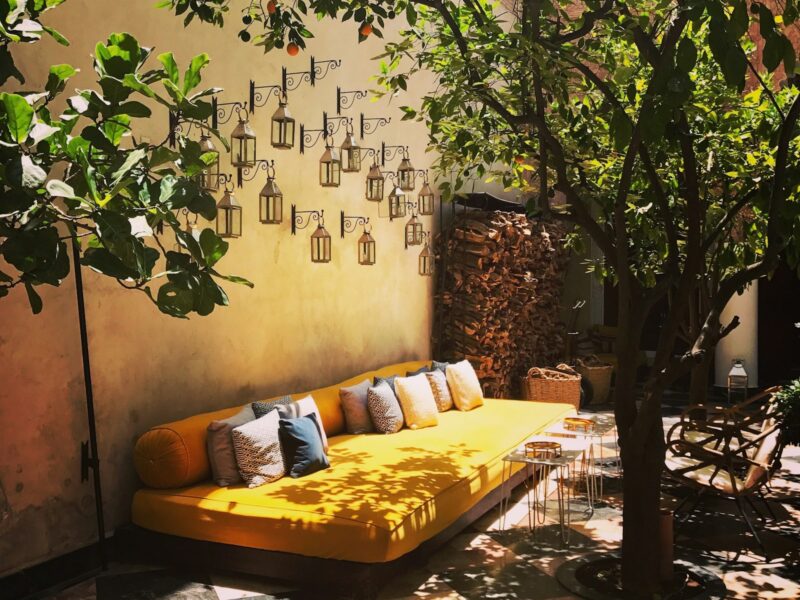
Heating and bedding vary by camp, so ask before you book. A standard bivouac tent and a luxury camp can differ a lot in blankets, sleeping bags and heating, and you should not assume they match.
- Heating: is there any heat in the tent or the shared area?
- Bedding: are blankets and sleeping bags included, or do you bring your own?
- Camp type: is it a standard bivouac tent or a luxury camp with a private tent?
- Evening: is there a heated lounge or a campfire area out of the wind?
If you want a multi-day option that covers these details, our 3-day tour with a luxury desert camp lists its bedding and camp setup. Confirm everything in writing before you pay a deposit.
🎟️ 3-day Merzouga desert safari with food
Ask for written confirmation, not verbal promises. Camps that answer clearly are usually the ones you can trust on a cold night.
What should you pack for a winter Sahara camp?
Pack warm layers, not just one jacket: a fleece or insulated jacket, a hat and warm sleepwear are the core items for a winter Sahara camp. Keep the hat and warm layer within reach at bedtime, because the coldest part of the day is after sunset.
Here’s our contrarian take: for winter desert trips, the daytime high is the wrong number to pack by. Erg Chebbi days run about 17-23°C, but nights drop to about 2-8°C, and clear January nights can reach freezing. The coldest hours come after sunset, when a camp feels colder than the forecast headline.
The core winter layers
- Insulated layer: a fleece or lightweight insulated jacket for evenings and dawn.
- Wind layer: a windproof shell for dunes, camel rides and campfires.
- Hat and gloves: a warm hat is the cheapest way to stay comfortable at night.
- Warm sleepwear: thermal layers to sleep in, since camp bedding varies.
- Daytime clothes: light layers work for the midday warmth of about 17-23°C.
The ComeMorocco Night-Number Rule
Use this rule to turn the numbers into a packing and booking decision. It takes about two minutes and works for any desert trip in winter.
- Find the night low for your exact location, not the regional average for ‘the Sahara’.
- Pack for the coldest clear, still night on your itinerary, using about 2-8°C at Erg Chebbi as the range.
- Add a layer for wind on dunes, camel rides and evening campfires, since open air feels colder than the forecast.
- Ask each camp about heating and bedding before you book, and confirm it in writing.
Common packing mistakes
- Packing for the afternoon only: the warm lunch hides the cold night.
- Skipping the wind layer: open dunes and camel rides feel colder than the air temperature.
- Forgetting warm sleepwear: camp bedding varies, so bring your own warmth.
- Assuming heat is included: confirm heating with the camp before you travel.
💡 Key insight – Pack for the night and you’ll be fine by day. Pack for the afternoon and you’ll be cold by 9pm.
Which winter Sahara trip should you book?
Pick February if you want the mildest days and the most balanced nights, at about 20-23°C by day and 4-8°C by night. Pick December or January if you’re fine with colder nights and cooler days, and plan for near-freezing temperatures on clear, still nights.
Is a winter Sahara trip worth it?
Yes, if you want desert scenery with clear days and you pack for the nights. Skip it if you expect summer heat or plan to sleep in the open without warm layers.
- Best for couples: February, for the mildest evenings by the fire.
- Best for families: February, with warm layers for every child and a camp that confirms heating.
- Best for solo travellers: December or January, if you’re comfortable with colder nights and want quieter camps.
- Not right for: anyone who needs warm nights without planning, or who can’t handle a long winter road day.
Compare your options with our Sahara desert tour options compared guide before you commit. It shows which routes suit short trips and which suit longer desert stays.
Booking a night in a desert camp puts you on the dunes at the coldest hour. Choose a camp that confirms its bedding, and book early for February, which is the most popular winter month.
🎟️ Book a Merzouga desert camp night
Next steps before you book
- Check a live forecast for Merzouga or Zagora on your travel dates, and compare it with the night lows in this guide.
- Confirm camp heating, blankets and sleeping bags in writing before you pay a deposit.
- Book a private transfer from Marrakech to the desert and add buffer time for snow on the High Atlas passes.
Reserve Your Spot
Book This Experience
Hand-picked, top-rated options with instant confirmation and free cancellation on most tours.
Frequently Asked Questions
Everything you need to know before you go
📚 Sources we checked (3)
Prices, hours and rules change. We re-check this guide regularly; last check November 26, 2026.
✦ Your Morocco Journey Starts Here
Ready to see the dunes after dark?
If February’s mild days and cold nights suit you, our 3-day Marrakech to Merzouga tour covers the Erg Chebbi camel trek and camp.
Disclosure: some links in this guide are affiliate links. If you book through them, ComeMorocco may earn a small commission at no extra cost to you. We only recommend experiences we would suggest to friends.
Chat with us on WhatsApp →