9 minutes
Key Takeaways
- AFCON 2025 will be hosted across 10 stadiums in six Moroccan cities from December 21, 2025, to January 18, 2026
- The Grand Stade de Casablanca, set to hold 115,000 fans, will be one of Africa’s largest stadiums and a centerpiece venue
- Morocco has invested over $41 billion in infrastructure improvements including high-speed rail and stadium upgrades for the tournament
- Historic venues like Stade Mohammed V blend with ultra-modern facilities featuring sustainable design and cutting-edge technology
- The tournament serves as a crucial preparation phase for Morocco’s co-hosting of the 2030 FIFA World Cup
Table of Contents
AFCON 2025 Stadiums in Morocco: A Complete Guide to the Venues Hosting Africa’s Premier Tournament
Introduction
As Morocco prepares to host the 2025 Africa Cup of Nations (AFCON), the AFCON 2025 stadiums in Morocco are undergoing significant transformations to showcase the best of African football. This will be the 35th edition of the tournament, running from December 21, 2025, to January 18, 2026. It’s Morocco’s second chance to host after a delay from the original plan. The event celebrates African unity, talent, and the passion for football across the continent.
This blog gives a full, easy-to-follow guide to the AFCON 2025 stadiums in Morocco. We’ll cover their locations, sizes, histories, upgrades, and how they affect the event. Whether you’re a fan wanting to plan a trip, a traveler excited about the action, or just a football lover, this overview helps you understand the venues. Morocco has a strong base for football, thanks to its work getting ready for the 2030 FIFA World Cup co-hosting. Big investments are already improving these spots.
For example, new high-speed trains and better roads make it easy for fans to get around the country. When picking Morocco stadiums, organizers looked at the whole country. Key sites like Stade Mohammed V and Grand Stade de Casablanca stand out as main hubs. From a quick look at all the venues to deep dives on the biggest ones, this post walks you through everything. Get ready to learn why these places will make AFCON 2025 unforgettable.
Overview of AFCON 2025 Stadiums in Morocco
The AFCON 2025 stadiums in Morocco include about 10 main venues spread across six host cities: Casablanca, Rabat, Tangier, Marrakesh, Agadir, and Fes. This setup makes the tournament accessible nationwide and highlights different parts of the country, from busy cities to coastal spots. These Morocco stadiums were chosen to host matches for 24 teams, bringing exciting games to fans everywhere.
Here’s a quick list of the key AFCON 2025 stadiums with basic facts:
- Stade Mohammed V (Casablanca): Holds 45,000 fans. It’s a historic spot at the heart of Moroccan football, home to top clubs like Wydad and Raja Casablanca.
- Grand Stade de Casablanca (Casablanca): Still being built, with a planned size of around 115,000 seats. This new wonder will be one of Africa’s biggest arenas, set for big games.
- Stade Ibn Batouta (Tangier): Fits 75,000 people. A modern giant opened in 2011, perfect for large crowds in the north.
- Stade de Marrakech (Marrakesh): Seats 45,000. Freshly updated with $40 million spent on new lights and sound, ready for hot desert days.
- Stade Adrar (Agadir): Has room for 45,480 fans. Right by the beach, it offers great views and fan-friendly spots.
- Complexe Sportif de Fès (Fes): Takes 45,000 spectators. Blends sports with the city’s old culture, in a historic area.
- Stade Ahmed El Abbes (Berkane): About 10,000 seats, but can grow bigger. A smaller field great for early matches.
- Stade Al Inbiaat (near Agadir): Size details are still being finalized after upgrades. It’s getting modern touches to handle games well.
- Stade El Barid (Rabat): 18,000 capacity. Brand new from 2024, ready for action in the capital.
- Stade Moulay El Hassan (Rabat): Around 15,000 to 20,000 seats. Fully fixed up and named for the king’s son, set for key plays.
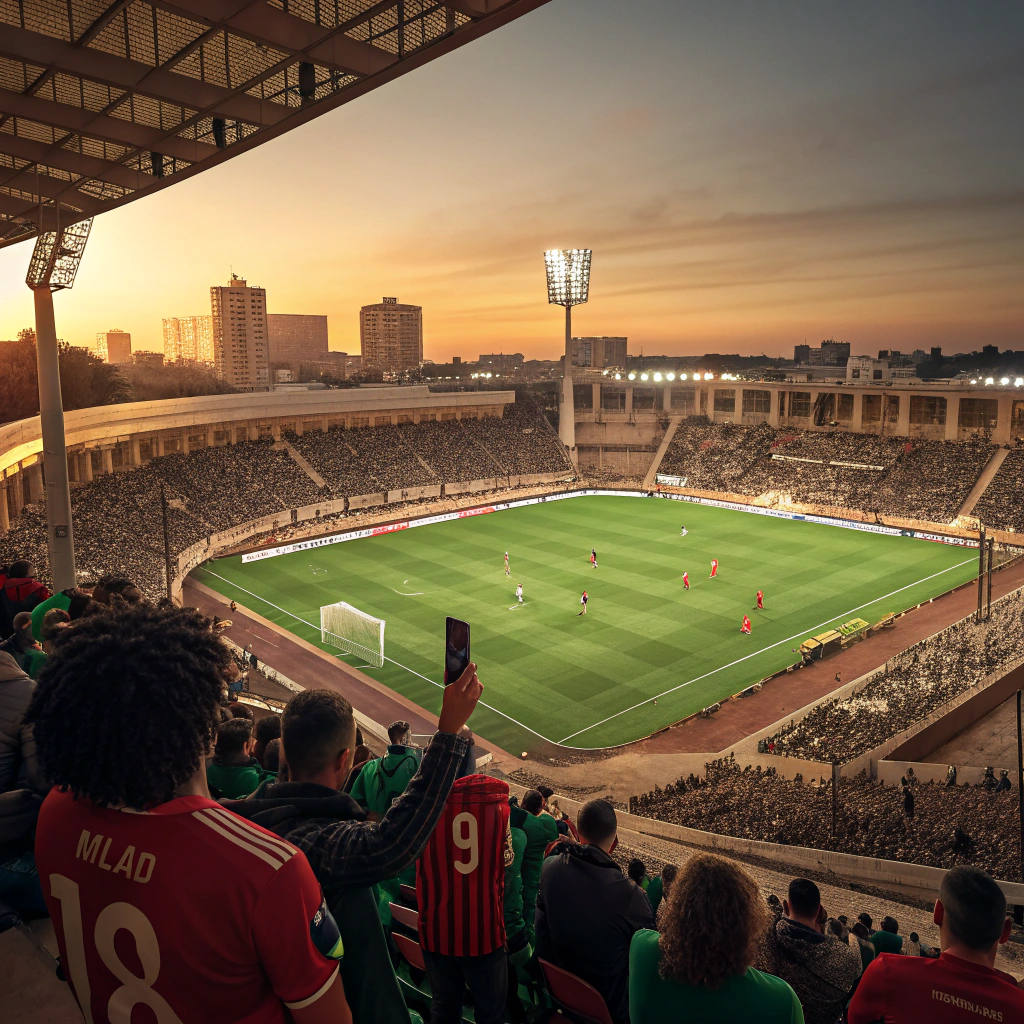
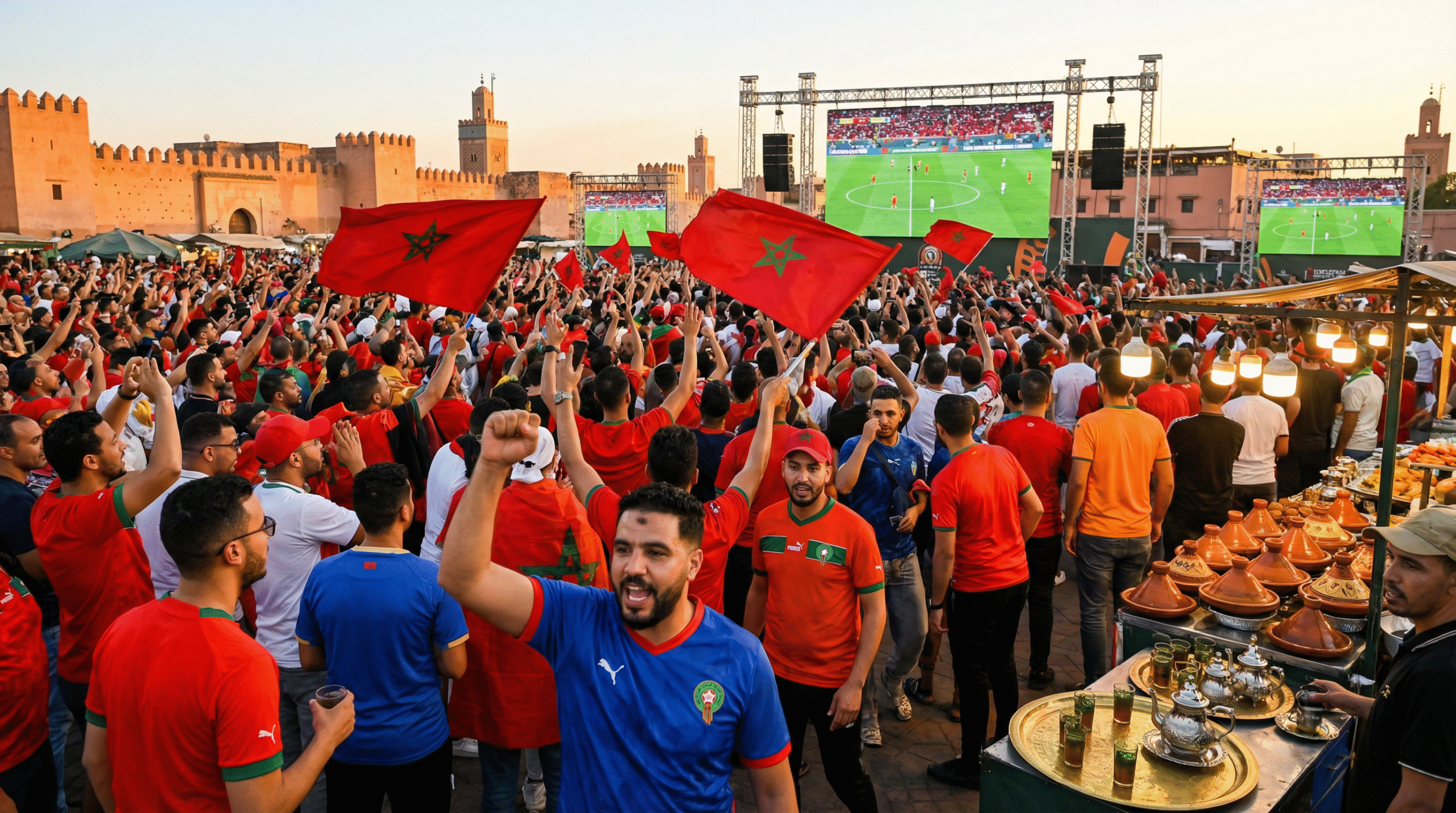
The electric atmosphere at Stade Mohammed V showcases Morocco’s passionate football culture
These venues were picked for their big sizes—most hold over 45,000 for main matches. They’re close to transport like airports and the new high-speed trains. Plus, they can support TV broadcasts with top tech. This list of Morocco stadiums shows Morocco’s big push, with $41 billion going into projects that help both AFCON 2025 and the 2030 World Cup. Just recently, three new stadiums opened in two days, starting a fresh chapter for sports. These spots will make the tournament smooth and fun for all.
In-Depth Profile: Stade Mohammed V (Casablanca)
Stade Mohammed V is a key part of the AFCON 2025 stadiums in Morocco. It’s the famous home for clubs Wydad Casablanca and Raja Casablanca. Built in 1955, this venue has a long story of big events, like the 1988 AFCON final win for Cameroon. Fans love its energy in the middle of Casablanca, Morocco’s biggest city.
Right now, it seats 45,000 people. You can reach it easily by bus or train from the city center. It has a mix of grass and fake turf that’s tough for lots of games. Bright floodlights light up night matches, and there are special areas for reporters and cameras.
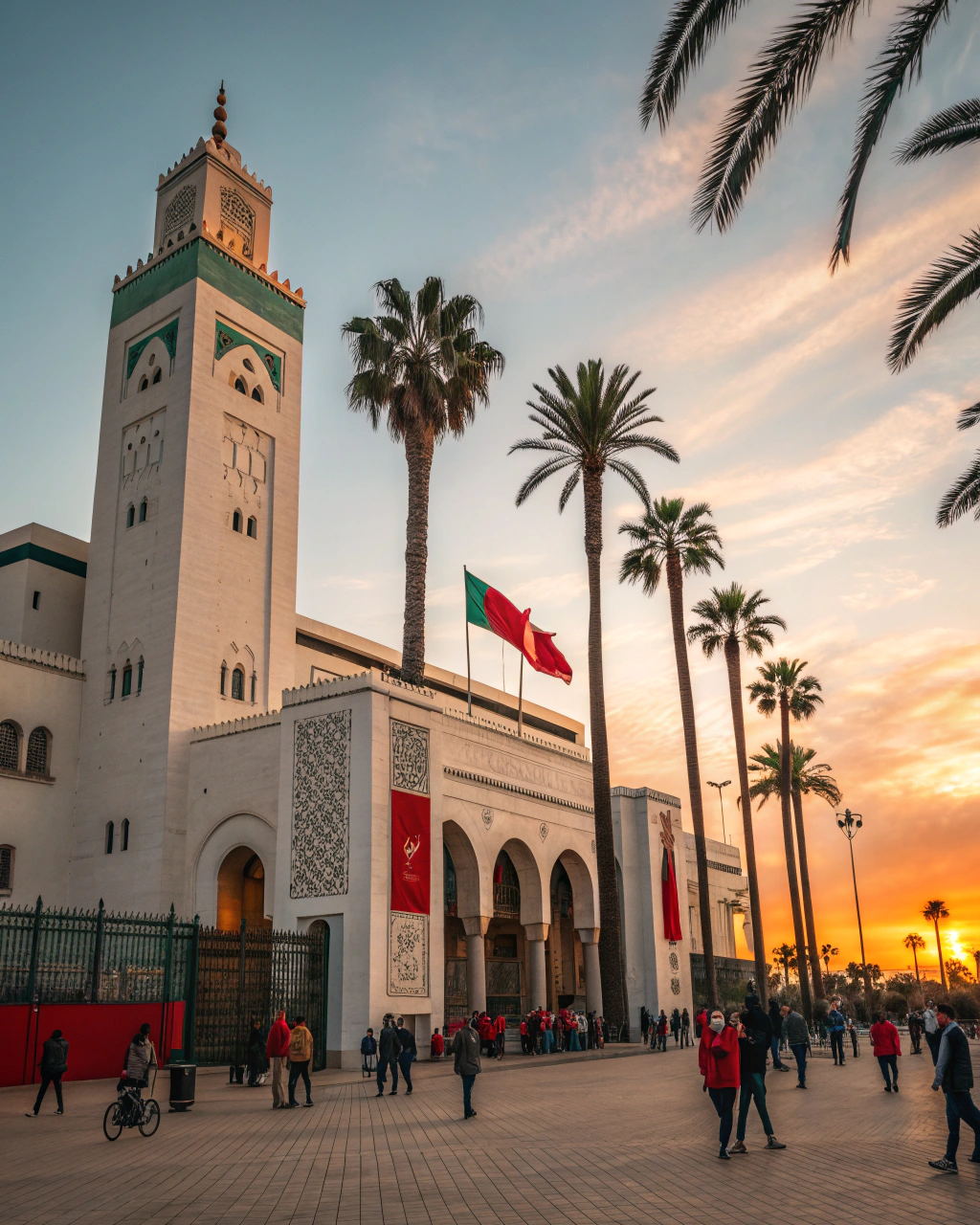
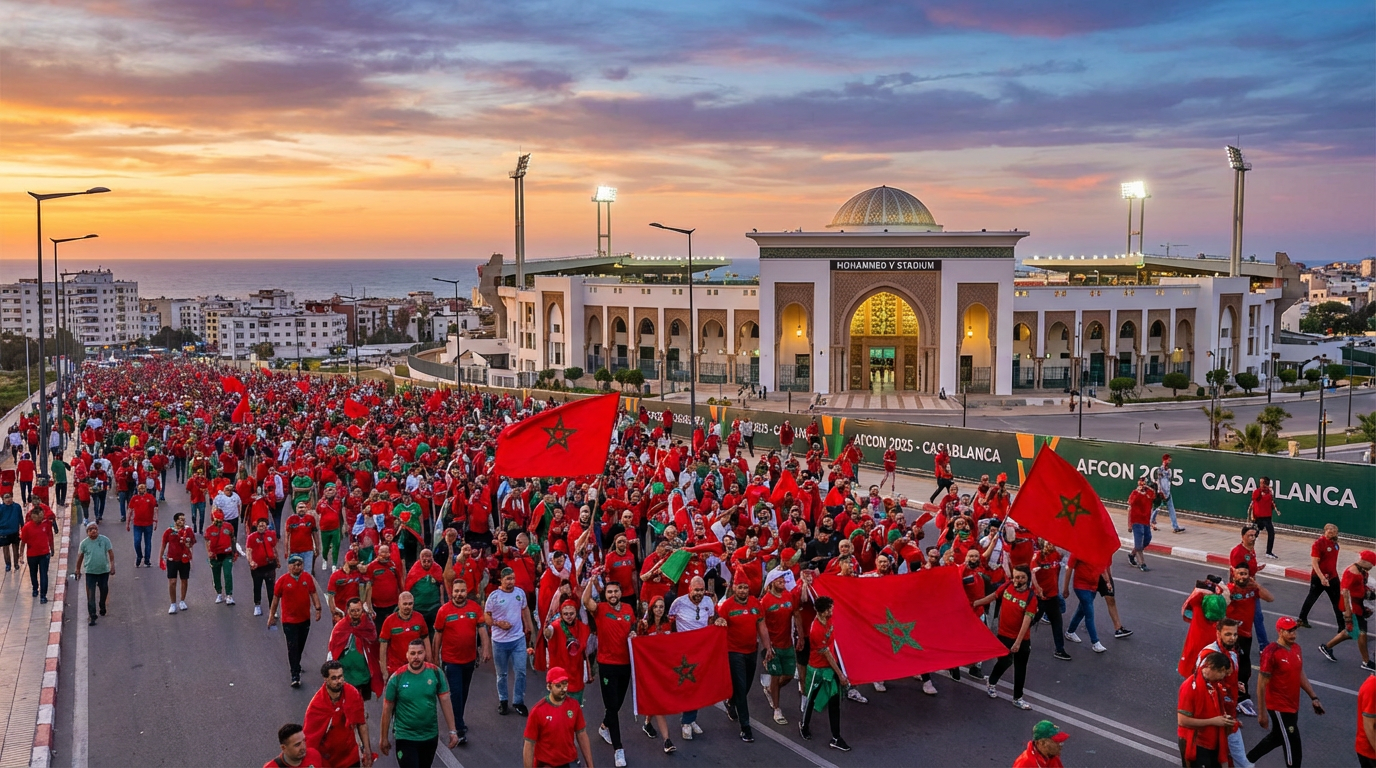
The iconic Stade Mohammed V entrance welcomes thousands of passionate football fans in Casablanca
For AFCON 2025, it’s getting better spots for important guests, easier ways for fans with disabilities to get in, and new video tech for fair calls on plays. These changes match what the African football group wants. The stadium started as a simple design from old times but got a full makeover in 2014-2015. Now, it’s a true sign of Morocco’s love for the game.
Sure, it has had some upkeep needs over the years, like fixing seats or drains. But the focus is on its strengths—it’s set to shine during the tournament. As one of the top AFCON 2025 stadiums Morocco offers, Stade Mohammed V will host group games and more, drawing huge crowds.
In-Depth Profile: Grand Stade de Casablanca
The Grand Stade de Casablanca is a shiny new star among Morocco stadiums for AFCON 2025. Builders are working hard on it, aiming to finish by late 2025. Experts from around the world designed it to hold 115,000 fans, making it one of the largest in Africa (tied to World Cup plans). It’s in the outskirts of Casablanca, mixing well with the city around it.
This place will use green ideas like sun-powered roofs, collecting rain for water, and materials that don’t harm the earth. Fans will enjoy fancy boxes to watch from, fun areas outside the seats, health rooms, and super-clear TV setups. It’s built to last and help the planet.
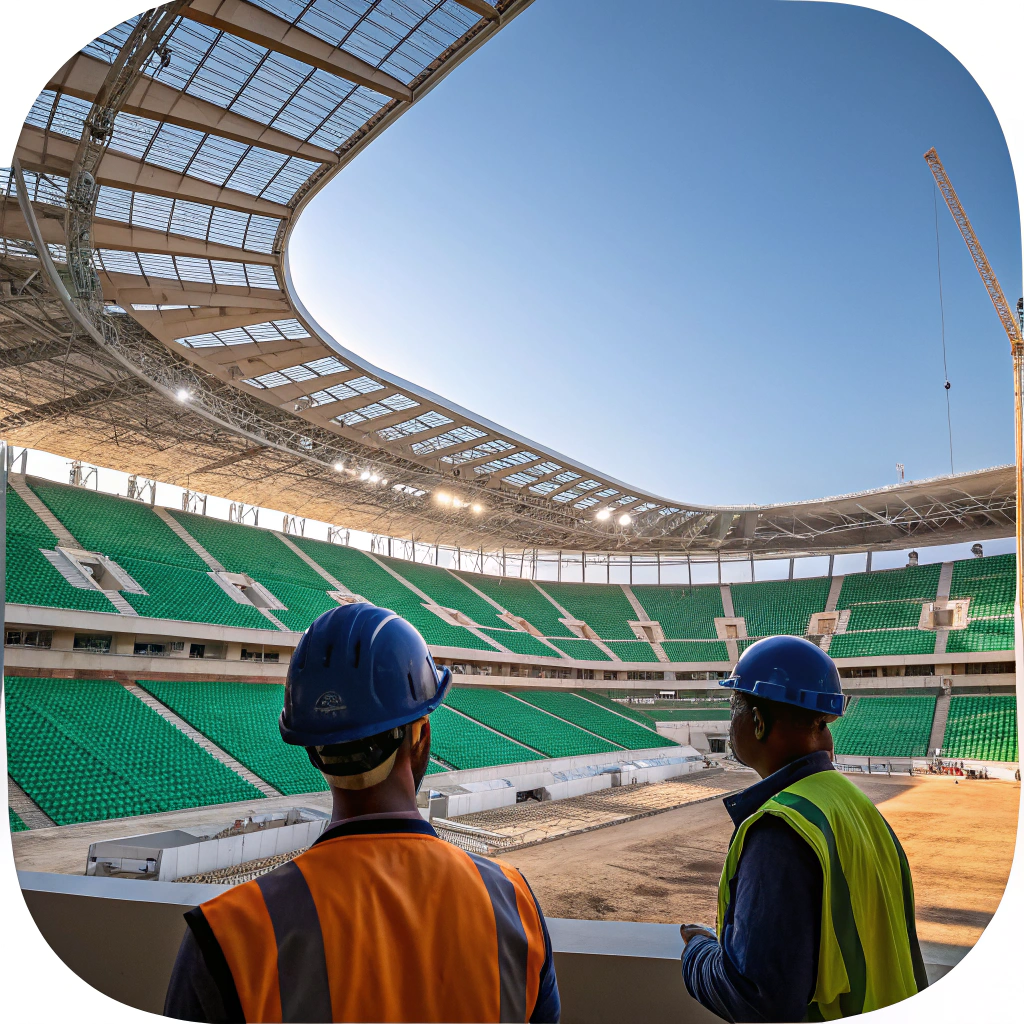
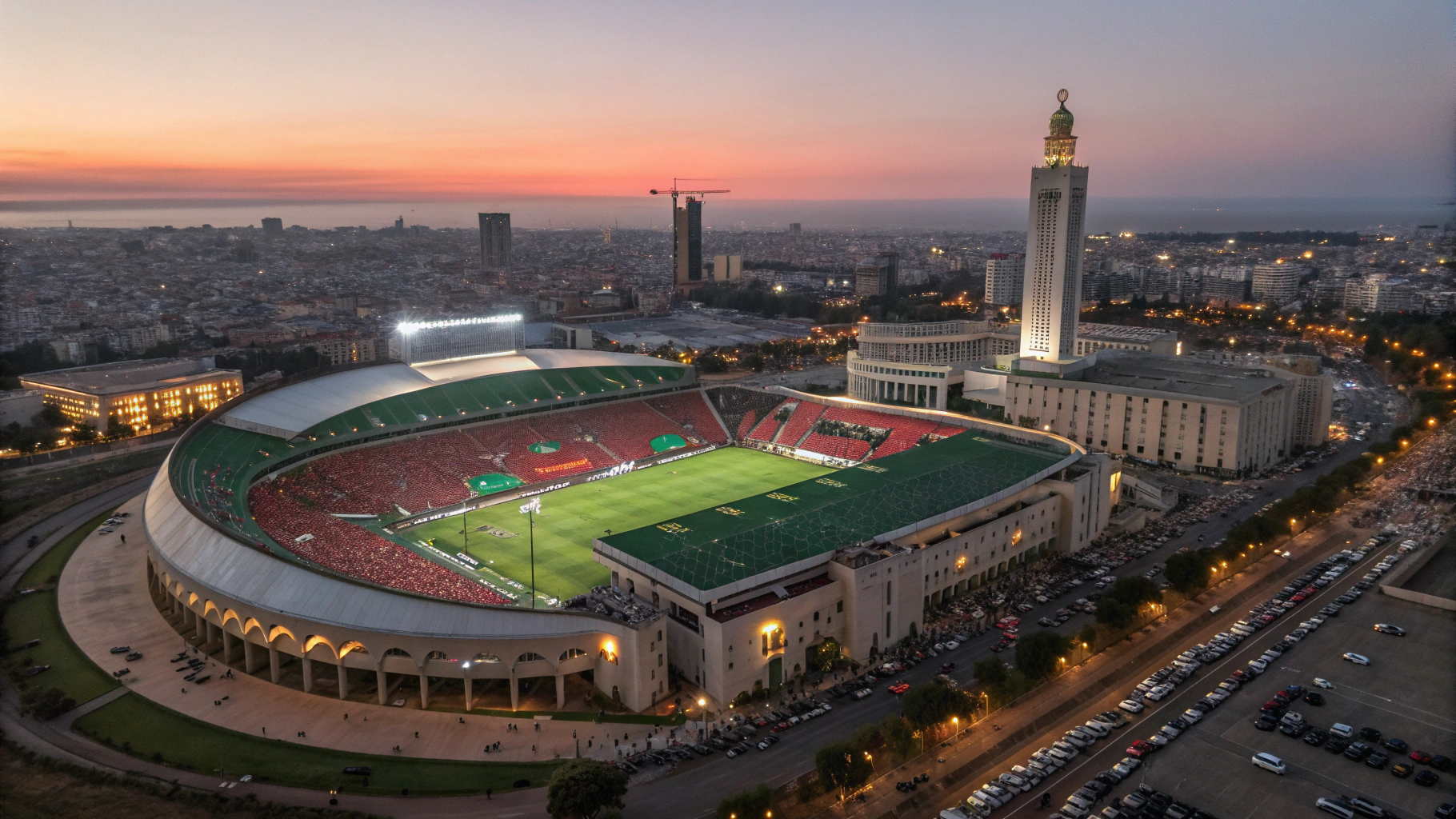
The massive Grand Stade de Casablanca rises as a symbol of Morocco’s football ambitions
In AFCON 2025, it could open the whole event and host semi-final games because of its huge size. That will make the tournament feel even bigger. Morocco is spending over $40 million on sports like this, showing how it plans for events long after 2025.
As a fresh addition to the AFCON 2025 stadiums, the Grand Stade de Casablanca points to Morocco’s bright future in football. It will welcome teams and fans with top comfort and style. If you’re planning to explore Casablanca during the tournament, consider taking a guided city tour to discover the city’s rich history and vibrant culture between matches.
Profiles of Other Key AFCON 2025 Stadiums
These other spots round out the AFCON 2025 stadiums in Morocco. We’ve grouped them by city to make it simple. Each has its own charm, from sea views to city vibes, and all are near easy travel like trains or airports. They offer player rooms, press areas, and special designs that fit local culture.
Stade Ibn Batouta (Tangier)
Stade Ibn Batouta in Tangier seats 75,000 and joins the list of exciting Morocco stadiums. Opened in 2011 for games and other sports, it has a track around the field for running events. Upgrades fixed the grass drains and added comfy seats. It might even host the final—imagine the buzz!
Near the Tangier port and fast trains, it’s easy to reach. But there were some water leak problems lately, fixed quickly with repairs. For AFCON, it’ll handle big group matches with its strong fan zones and lights.
Stade de Marrakech (Marrakesh)
In sunny Marrakesh, Stade de Marrakech holds 45,000. This Morocco stadium got a $40 million refresh, with new fake grass that stays cool, bright LED lights, and loud speakers for cheers. It’s made for the warm desert, with shade and water spots.
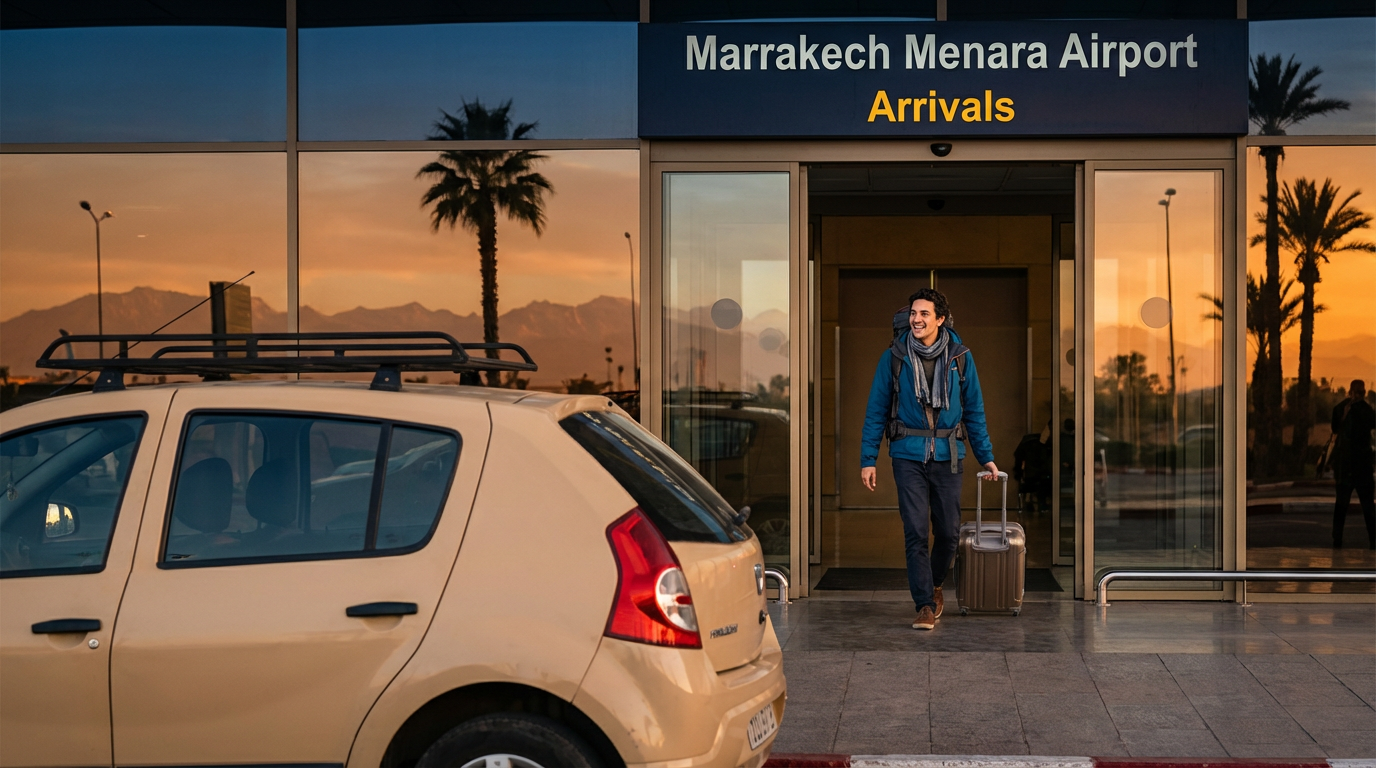
Close to the airport and trains, fans can fly in and go straight there. It’ll host early games, letting teams feel the red city’s energy. Unique touches include patterns from local art on the walls. While you’re in Marrakesh for matches, don’t miss the chance to explore the city’s famous medina, historic palaces, and bustling souks with a comprehensive city tour. For more ideas on what to see, check out our guide to top Marrakech attractions.
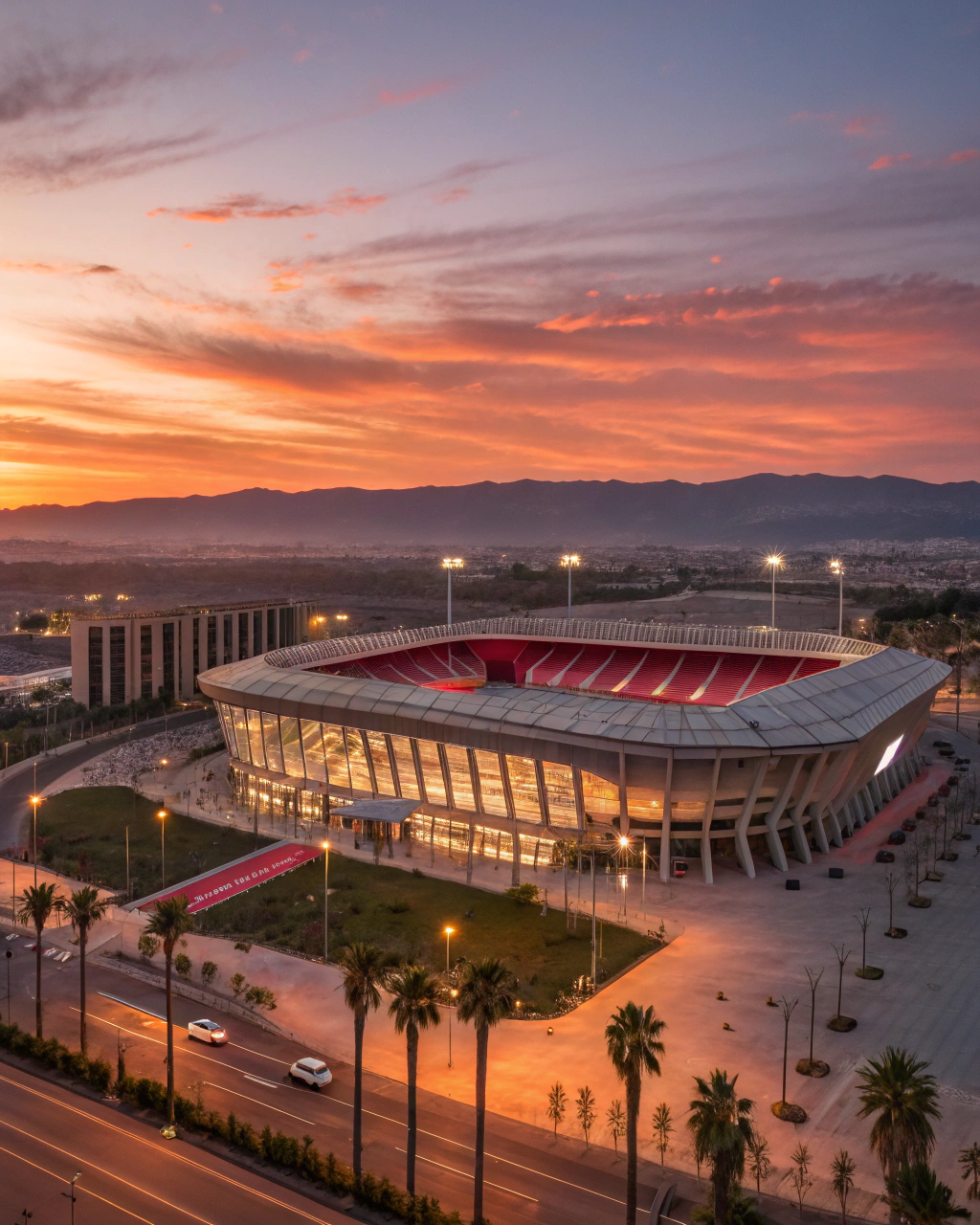
Stade de Marrakech glows at sunset, blending modern sports facilities with the red city’s charm
Stade Adrar (Agadir)
Stade Adrar by the ocean in Agadir fits 45,480 fans. Built in 2013, it’s all about comfort with shade covers and sea breezes. Small tech boosts help cameras catch every goal.
Right near Agadir’s beach and airport, it’s perfect for travelers. For AFCON 2025 stadiums, it might do group stages, with locker rooms and medical help ready. The wave views make it a fan favorite.
Complexe Sportif de Fès (Fes)
Complexe Sportif de Fès in old Fes takes 45,000 people. Set in a city full of history, this Morocco stadium got a full fix-up for safe seats and new big screens. It mixes sports with cultural feels, like nearby ancient walls.
Easy access via trains from big cities. It’ll host matches that blend game excitement with Fes’s charm, focusing on family-friendly areas. Fans visiting Fes should take time to wander through the ancient medina, one of the world’s best-preserved medieval cities.
Stade El Barid and Stade Moulay El Hassan (Rabat)
In Rabat, Stade El Barid is new with 18,000 seats, opened in 2024. Stade Moulay El Hassan, nearby, holds 15,000-20,000 after a big remodel, named for the prince. Both have youth training spots and community links.
They’re set for 2026 World Cup tests too, with better video refs and lights. Close to the capital’s trains, they’ll do early AFCON rounds. Fresh designs include green spaces for fans to relax. Consider exploring Morocco’s capital city with a guided Rabat tour to see historic landmarks and royal palaces.
Additional Venues: Stade Ahmed El Abbes (Berkane) and Stade Al Inbiaat (near Agadir)
Stade Ahmed El Abbes in Berkane has about 10,000 seats that can expand. It’s smaller but key for starter games, with basic upgrades for safety.
Stade Al Inbiaat near Agadir is around 20,000, getting modern fixes. Both are near roads and trains, used for low-key matches in AFCON 2025 stadiums. They add to the nationwide feel with local fan support.
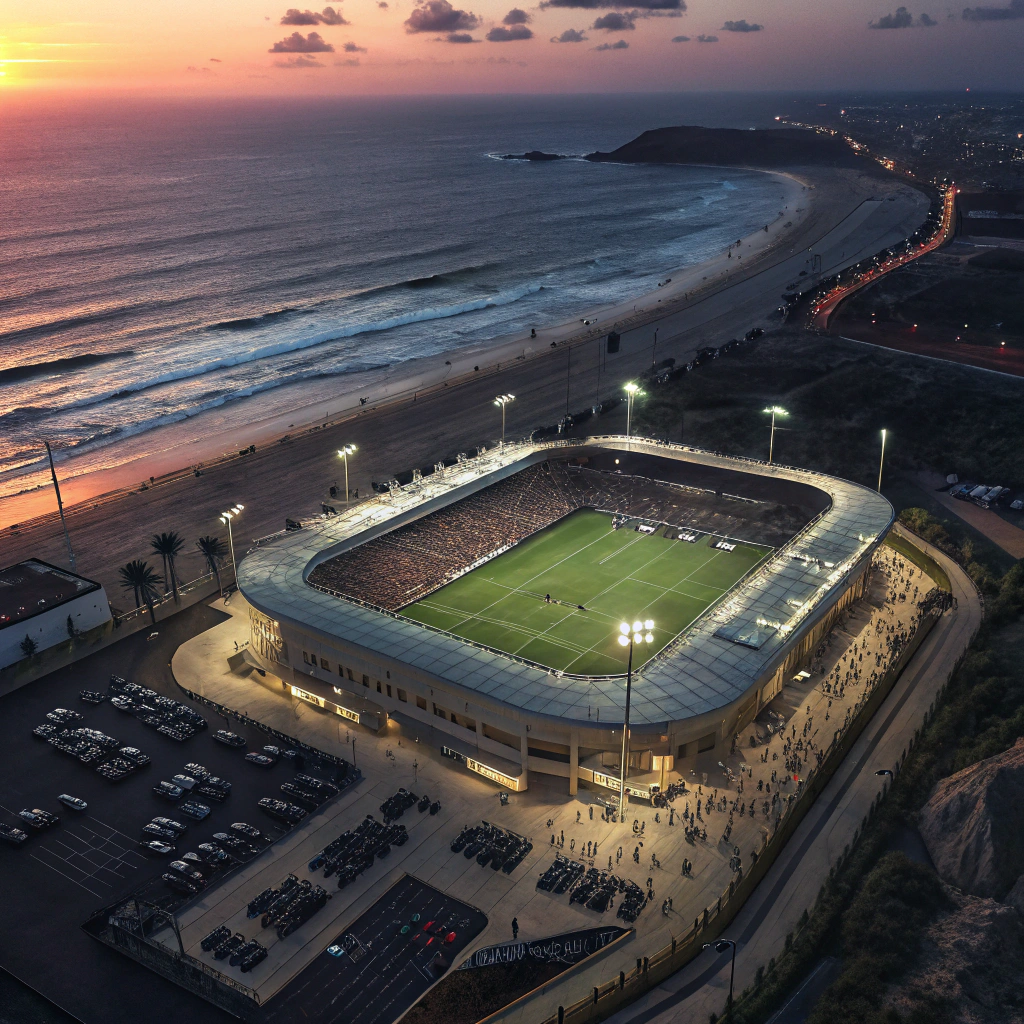
Stade Adrar in Agadir offers stunning coastal views and a unique beachside football experience
Stadium Upgrades and Infrastructure Development for AFCON 2025
The AFCON 2025 stadiums in Morocco are getting huge makeovers as part of a big plan. Morocco is pouring billions into this, like $41 billion for World Cup-linked projects that also help here. It’s all to make games safe, fun, and green.
Upgrades cover many areas:
- Seats and Safety: Adding more spots, fire alarms, and strong fences to keep crowds secure.
- Lights and Tech: New LED bulbs for clear night views, 5G for fast internet, and better sound so cheers echo far.
- Getting Around Easily: Ramps and lifts for everyone, including those with wheelchairs.
- Field Quality: Tough mix-grass that handles rain and heavy play.
- Green Ideas: Lights that save power and designs that use less water.
For example, Marrakech’s $40 million work added cool turf. Three stadiums just opened fast. Some spots like Tangier and Al Inbiaat had water issues, but the government fixed them quick for readiness.
Beyond stadiums, roads and high-speed trains connect cities better. Morocco’s excellent transportation infrastructure for 2025 makes it incredibly easy for fans to travel between venues. Hotels and tours are growing too, so fans can stay comfy. These changes make Morocco stadiums world-class for the event.
If you’re planning to attend AFCON 2025, consider booking your accommodation early to secure the best options near the stadiums. International fans should also look into getting an eSIM for Morocco to stay connected throughout their journey.
Impact of AFCON 2025 on Moroccan Football and Beyond
AFCON 2025 will change Moroccan football for good. The new setups in these Morocco stadiums will boost local teams in the Botola Pro league with better practice spots. Stadiums like those in Rabat will help young players grow through school programs.
On the money side, it will bring millions of visitors, spiking tourism and jobs in building. Think hotels full and streets alive. After the games, venues will host shows and local events, leaving a fun legacy.
The tournament from December 21, 2025, to January 18, 2026, builds hype with great matchups. It shows Morocco’s prep for the 2030 World Cup. The AFCON 2025 stadiums will unite Africa and grow the sport long-term.
Conclusion
The AFCON 2025 stadiums in Morocco mix old favorites like Stade Mohammed V with new giants like Grand Stade de Casablanca. From December 21, 2025, to January 18, 2026, they’ll host thrilling games across cities, showing off the best of African football.
This guide covers all you need to know about these venues—their spots, sizes, updates, and why they matter. Morocco is all in on making AFCON a hit, proving its love for the game.
What’s your top pick among the Morocco stadiums? Share in the comments or start planning your trip to see the excitement live! For comprehensive information on budgeting your tournament adventure, explore our Morocco travel cost guide to help you plan an affordable trip.
Frequently Asked Questions
Which stadium will host the AFCON 2025 final?
While not officially confirmed, the Grand Stade de Casablanca, with its 115,000-seat capacity, is the most likely venue for the AFCON 2025 final on January 18, 2026. Stade Ibn Batouta in Tangier (75,000 capacity) is also being considered as a potential final venue.
How many stadiums are being used for AFCON 2025 in Morocco?
AFCON 2025 will utilize approximately 10 main stadiums across six Moroccan cities: Casablanca, Rabat, Tangier, Marrakesh, Agadir, and Fes. These venues range from historic stadiums like Stade Mohammed V to brand-new facilities like Grand Stade de Casablanca.
What is the largest stadium hosting AFCON 2025 matches?
The Grand Stade de Casablanca will be the largest stadium at AFCON 2025, with a planned capacity of 115,000 spectators. This makes it one of the biggest stadiums in Africa and positions it as the tournament’s flagship venue.
How can fans travel between AFCON 2025 stadiums in different cities?
Morocco has invested heavily in transportation infrastructure, including high-speed rail connections between major cities. Fans can use the Al Boraq high-speed train, domestic flights, buses, and rental cars to travel between tournament venues. Most stadiums are also located near airports and major transport hubs for easy access.
What sustainable features are being incorporated into AFCON 2025 stadiums?
Many AFCON 2025 stadiums feature eco-friendly upgrades including solar-powered roofs, rainwater collection systems, energy-efficient LED lighting, sustainable building materials, and water conservation designs. The Grand Stade de Casablanca is particularly notable for its green architecture and environmental innovations.
When was the last time Morocco hosted the Africa Cup of Nations?
Morocco last hosted AFCON in 1988, when the tournament was held at Stade Mohammed V in Casablanca. Cameroon won that edition, defeating Nigeria 1-0 in the final. AFCON 2025 marks Morocco’s return as host after nearly four decades.
How much has Morocco invested in stadium upgrades for AFCON 2025?
Morocco has invested over $41 billion in infrastructure projects related to both AFCON 2025 and the 2030 FIFA World Cup co-hosting. This includes stadium construction and renovation, transportation improvements, hospitality facilities, and technological upgrades across all venues.
Ready to Experience AFCON 2025 in Morocco?
The AFCON 2025 stadiums in Morocco are preparing to host the most spectacular African football tournament in decades. From the historic grounds of Stade Mohammed V to the futuristic Grand Stade de Casablanca, these world-class venues will showcase the passion, unity, and excellence of African football.
Whether you’re a dedicated football fan planning to attend matches, a traveler eager to experience Moroccan culture, or simply curious about these impressive stadiums, now is the perfect time to start planning your AFCON 2025 adventure.
Explore our comprehensive AFCON 2025 Morocco guide for tournament schedules, qualified teams, and travel tips. Don’t miss this historic celebration of African football on Moroccan soil!