Spice stalls, leather workshops, the constant hum of Djemaa el-Fna — the Marrakech medina is a world of its own. But step past the city gates and four completely different worlds open up, each reachable in a single day.
If you’re planning day trips from Marrakech to complement your city stay, you have four world-class options within easy reach: the Atlas Mountains, the Atlantic coast at Essaouira, the thundering Ouzoud Falls, and the stone desert of Agafay. This guide covers what each one actually involves, when to go, and how to choose between them.
Key takeaways
Four distinct landscapes — mountains, coast, waterfall, desert — all reachable within 1–3 hours of Marrakech.
Spring (Mar–May) and autumn (Sep–Nov) offer the best weather for all four destinations, with moderate crowds.
Guided tours (350–500 MAD) include transport, guide and lunch — the least stressful option for first-time visitors.
Agafay Desert is the only realistic single-day desert experience — the Sahara needs 2–3 nights minimum.
Ourika Valley suits families, Essaouira suits food and culture lovers, Ouzoud Falls delivers a natural spectacle you won’t find elsewhere.
Contents
Why take day trips from Marrakech?
Marrakech is perfectly positioned as a base for exploring Morocco’s diverse landscapes. Within one to three hours of driving, you can reach mountains, the Atlantic coast, spectacular waterfalls, or a rocky desert — which makes day trips an essential part of any visit.
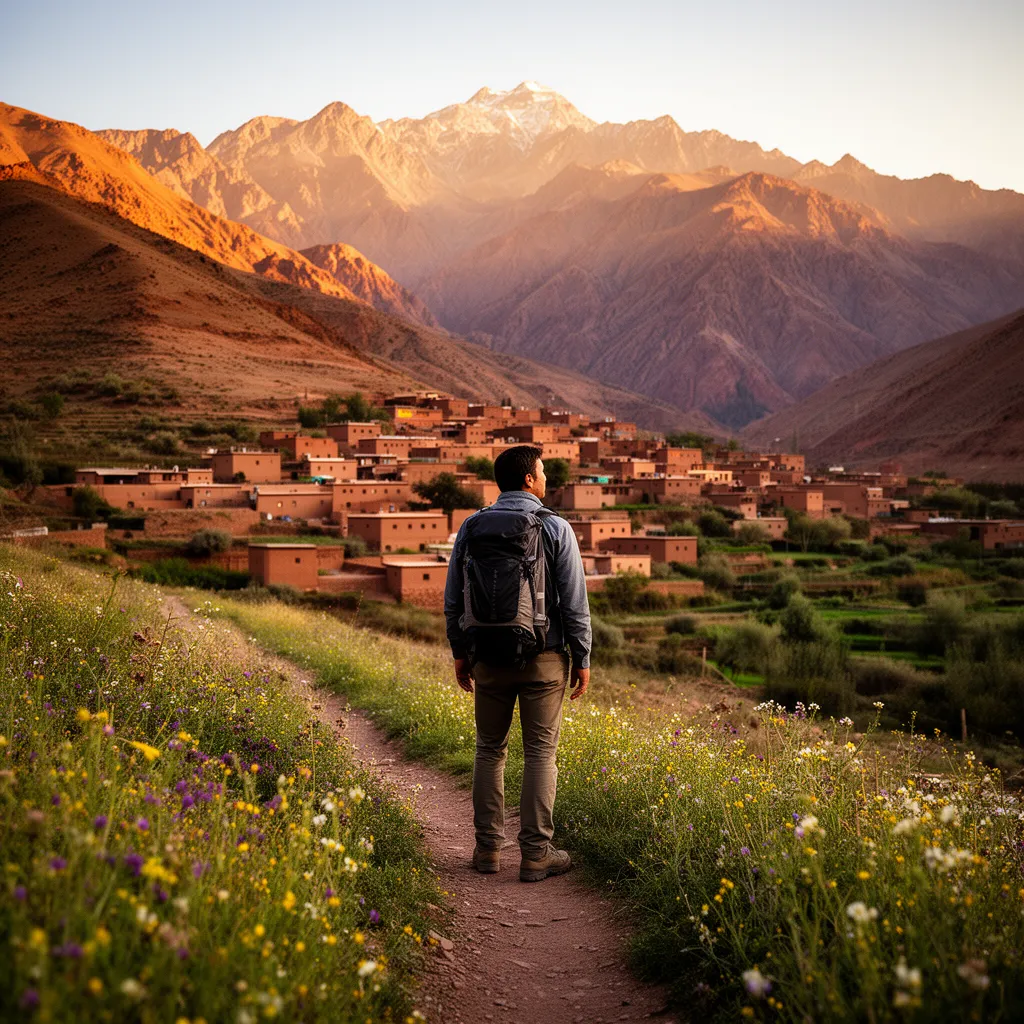
The best all-round window for day trips is spring (March–May) and autumn (September–November). Temperatures are warm but walkable, days are long, and crowds are moderate, so you can get a full adventure out of a single day without rushing.
Insider insight: distance matters when planning. The closest option, Agafay Desert, is just 30–40 minutes away. The farthest, Essaouira and Ouzoud Falls, take 2.5–3 hours each way — timing becomes crucial on those longer drives.
Day trips suit many travel styles: solo travellers appreciate the ease of a guided group tour, couples enjoy a romantic escape, families find gentle options for kids, adventure seekers get their hiking fix, and culture lovers soak up Berber traditions. Whoever you’re travelling as, there’s a day trip that fits — our travel blog has more planning guides if you want to go deeper on any one route.
Atlas Mountains day trip — mountain escape and Berber culture
Why choose an Atlas Mountains day trip?
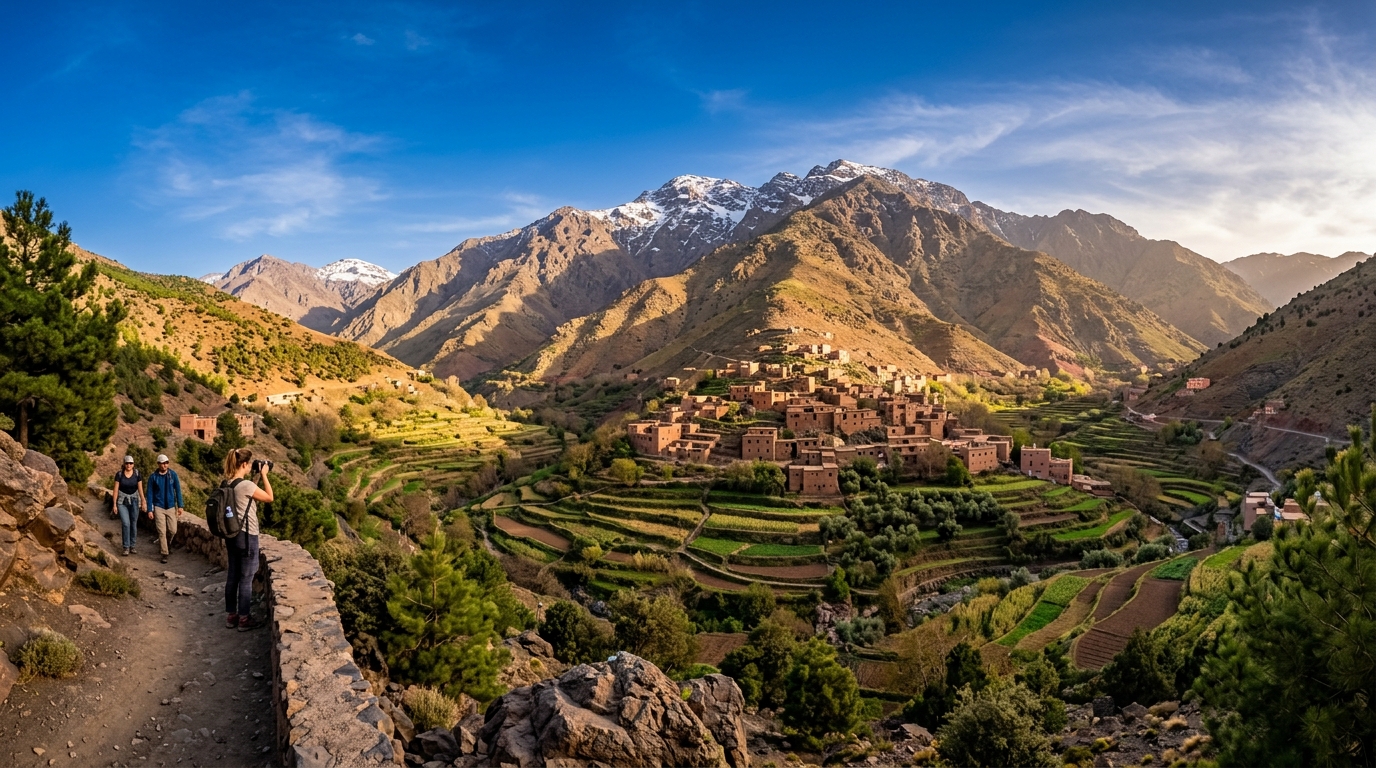
The Atlas Mountains offer dramatic scenery, authentic Berber village visits and hiking for all fitness levels. The two main valleys within reach as a day trip are Imlil and Ourika Valley.
Imlil sits 64 kilometres (about 1.5 hours) from Marrakech and is the main trailhead for Mount Toubkal, North Africa’s highest peak — a favourite with serious trekkers and multi-day hikers. The village sits at 1,740 metres, surrounded by walnut trees and terraced fields.
Ourika Valley is closer still, at 30–45 kilometres (45 minutes to an hour). It’s ideal for families and casual nature lovers, following a river through the foothills with easy walks and waterfall visits. Standard guided prices for an Imlil day trip start around 350 MAD, while a private driver-guide runs US$120–180 per vehicle.
What to expect on a typical trip
For Ourika Valley, depart Marrakech around 7:00–8:00 am and arrive in the valley by 8:15–9:00 am. A typical itinerary includes a stop at an argan or herb cooperative, a trek through the valley, tagine lunch at a local guesthouse, and mint tea in a Berber home, returning to Marrakech by 17:00–18:00.
For Imlil, leave a little later (8:00–9:00 am) and arrive by 10:00–10:30 am. Hike valley trails with a local guide, eat lunch in a mountain guesthouse with sweeping views, and return by around 18:00. A guided Atlas Mountains hike is the easiest way to do either route without worrying about navigation.
The Atlas is accessible year-round, but the best trekking conditions are May–October. Spring, especially May, brings wildflowers, snowy peaks and green valleys. Winter (December–February) can block some high trails with snow but gives dramatic backdrops. Summer (June–August) is hot but manageable with an early start.
A guided tour includes transport, guide and lunch, which takes the stress out of planning. Self-drive is possible, but the roads can be winding and narrow. Private driver-guides offer more flexibility at a higher cost — either way, go with someone who knows the terrain and the culture.
Essaouira day trip — coastal culture and fresh seafood
The Essaouira day trip experience
Essaouira is a UNESCO-listed former Portuguese fort town on the Atlantic coast, known for windsurfing, fresh seafood and a relaxed, bohemian vibe. The drive from Marrakech takes roughly 2.5–3 hours each way, covering about 175 kilometres. UNESCO lists Essaouira’s medina as an outstanding example of a late-18th-century fortified town.
An Essaouira day trip is doable as a long full day with an early start, though the six-hour round-trip drive leaves only four to five hours at the coast — some travellers prefer an overnight stay to fully appreciate the town. Frequent buses run from Marrakech in around three hours, making it accessible without a tour.
The medina itself is compact and easy to explore in a single day, and noticeably less chaotic than Marrakech’s, with wide streets and a relaxed atmosphere. Full details on the town and its beaches are in our Essaouira destination guide.
Top things to do
Start at the Skala du Port, the historic sea wall with cannons overlooking the Atlantic, then wander the blue-and-white medina — a photographer’s dream of bright doors and winding streets. Visit the fishing harbour to watch the day’s catch come in, and if the wind is up (March–November is best), try windsurfing or kiteboarding — the strong Atlantic winds make this a world-class spot.
Food is a real highlight here. Grilled sardines, octopus, calamari and lobster are available at modest prices, with the best stalls near the port and the Skala — you can eat fish just metres from where it was caught.
Best time to visit: spring (April–May) and autumn (September–October) bring mild temperatures and manageable crowds. Summer (July–August) can be windy but pleasant. December–February isn’t beach weather, though the town stays charming year-round.
Essaouira vs. other day trips
Unlike Agadir, roughly 2.5 hours south, Essaouira has a walled medina, a stronger seafood culture and unique Portuguese architectural heritage — the walls, cannons and blue fishing boats make it feel like a different world. Among the four day trips, Essaouira wins for food lovers and culture seekers.
Ouzoud Falls day trip — Morocco’s most spectacular waterfall
Discovering Ouzoud Falls
Ouzoud Falls, or Cascades d’Ouzoud, is a 110-metre, multi-tiered waterfall in the Middle Atlas, roughly 150 kilometres (2.5–3 hours) northeast of Marrakech, and widely ranked as the most impressive waterfall in the country.
It’s a great choice for nature lovers and hikers. The falls are at their most powerful in spring (March–May) when snowmelt swells the water volume — the sight of water crashing over red cliffs into a deep pool is unforgettable.
What makes it special
The falls cascade over red cliffs, throwing up rainbows on sunny days, and the surrounding valley is lush with olive, fig and almond trees — it feels like a hidden paradise.
Wildlife highlight: Barbary macaques live in the trees around the falls — the only wild monkeys in Africa north of the Sahara, and visitors often see them playing in the branches. They’re wild animals, so don’t feed them or get too close.
Activities include a short boat ride to the base of the falls (small fee), hiking the cliff-edge trails, swimming in the pools during warmer months, and lunch at one of the cliff-top restaurants with waterfall views — hearing the water thunder while eating tagine is quite an experience. A guided hiking tour covers this route well if you’d rather not navigate the trails alone.
Practical logistics
Plan for a full day: depart Marrakech 7:00–8:00 am, arrive by 10:00–10:30 am, spend three to four hours exploring, eat lunch, and return by 17:00–18:00.
Best time of year: spring (March–May) for maximum water flow and green scenery; autumn (September–November) is also excellent. Summer (June–August) has less water but is still beautiful, and winter is cold but dramatic, with fewer crowds.
Guided tours typically cost 350–500 MAD and include transport, guide and lunch. Self-drive is possible on good roads, though the last stretch winds through the mountains. Entrance runs roughly 20–30 MAD per person. Of the four day trips, Ouzoud offers a natural wonder you won’t find anywhere else.
Agafay Desert day trip — the Sahara alternative, minutes from Marrakech
Experience the desert without the drive
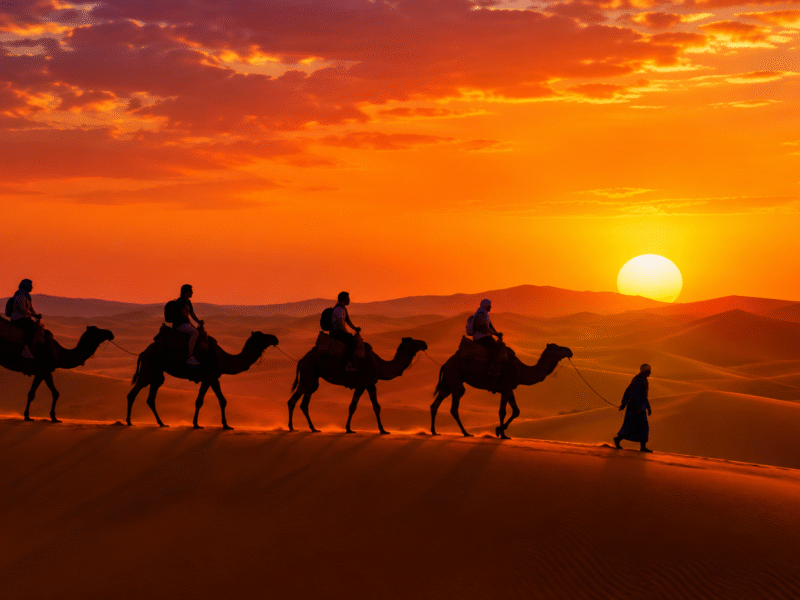
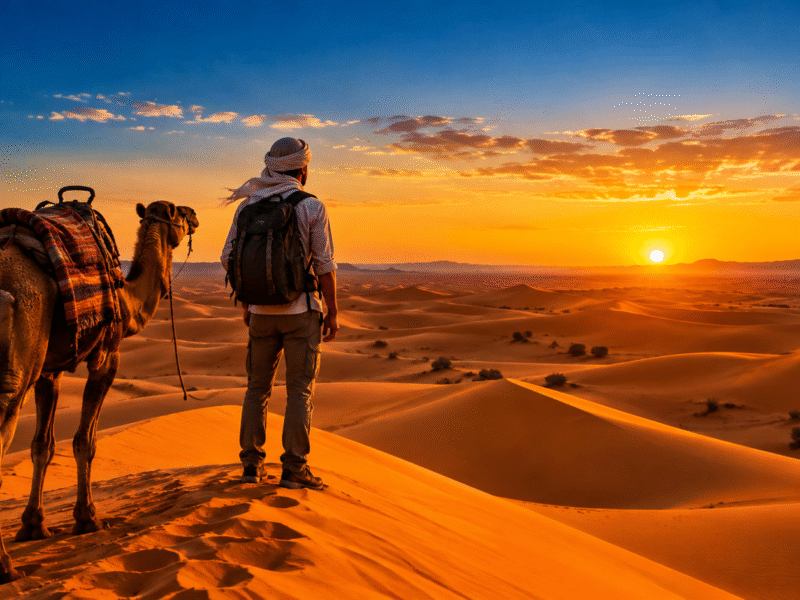
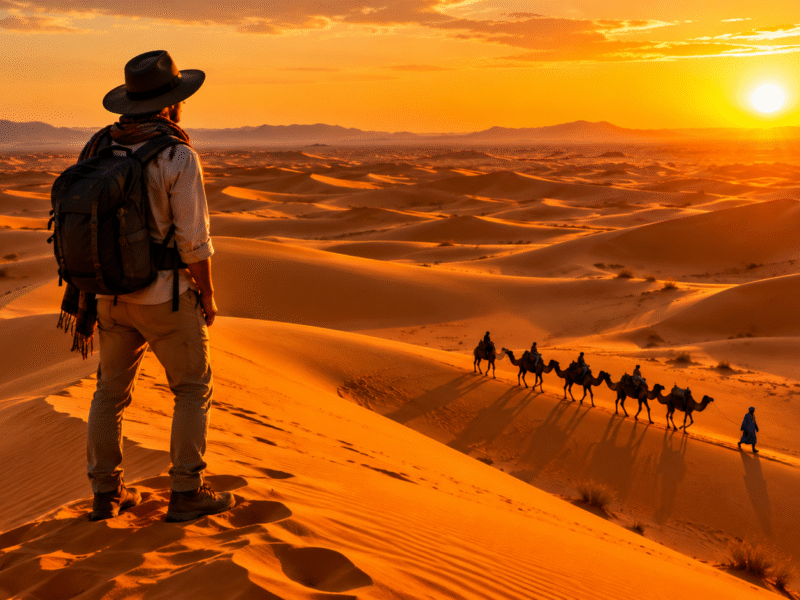
The Agafay Desert is a stone desert, or hamada, just 30–40 kilometres (under an hour) from Marrakech. It lacks the sand dunes of the Sahara, but it offers a dramatic, lunar-like landscape with views of the snow-capped Atlas — and it’s the closest desert experience to the city, which makes it the perfect quick escape for travellers with limited time.
What makes it different from the Sahara
The Sahara — Merzouga or Zagora — needs a two- to three-day commitment from Marrakech. If you have the time, a proper Sahara desert camping experience is worth the extra days. Agafay, on the other hand, gives you a taste of the desert — the silence, the vast horizons, the starry skies — in a single day.
Seasonal highlights: April and October bring near-perfect 20–27°C daytime temperatures with snow still visible on the Atlas. Winter (December–February) offers fewer crowds and dramatic snow-capped backdrops. Summer (June–August) can be very hot (40°C+), though morning and evening trips are still comfortable.
Activities and experience options
A camel ride is the classic highlight — typical 30–60 minute treks across the rocky plateau, often timed for sunset photography. Quad biking is popular with adventure travellers, with one-hour guided sessions across the lunar terrain.
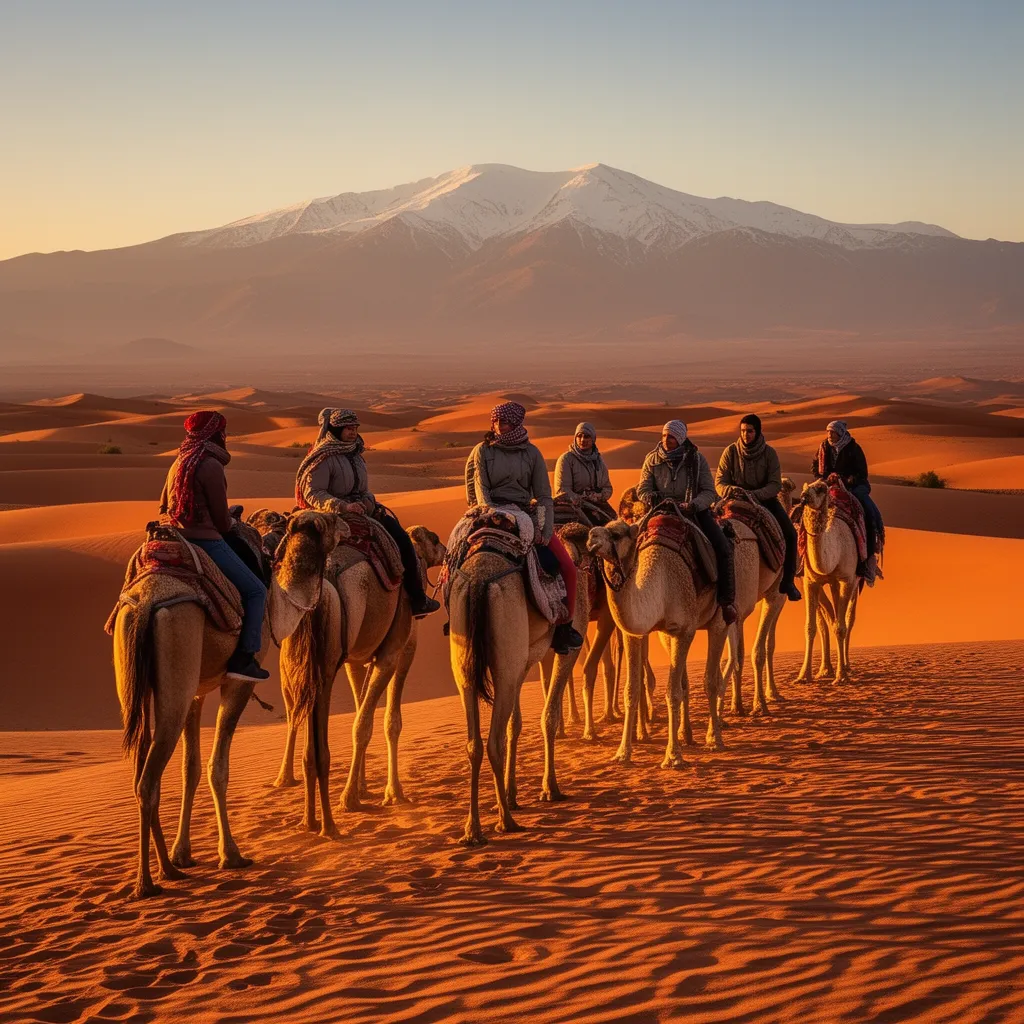
Sunset tea and dinner are the other big draw: mint tea at a Berber camp, followed by tagine or couscous under the stars with traditional music. The silence and darkness of the desert at night is genuinely striking.
Luxury options include glamping camps with proper beds, electricity and private bathrooms — a mid-range alternative to a Sahara desert camp. Budget options start around 300–400 MAD and include transport, a camel ride, and lunch. Some operators also combine Agafay with the Atlas Mountains: desert in the morning, Ourika Valley in the afternoon, for two landscapes in one day.
Of the four day trips, Agafay is the only realistic desert option for a single day.
How to choose the best day trip for you
For nature lovers
Compare the Atlas Mountains against Ouzoud Falls. Choose the Atlas for hiking, Berber culture and mountain scenery, with endless trails and cultural encounters. Choose Ouzoud for one spectacular, focused natural wonder with easier walking.
For culture and food lovers
Essaouira offers the richest cultural experience — Portuguese architecture, art galleries, a lively music scene, and exceptional seafood. Its medina is easier to navigate than Marrakech’s, and the fishing port and artisan shops make for relaxed exploring.
For a quick desert escape
Agafay is the only realistic desert day trip from Marrakech — ideal if you want a taste of the desert without sacrificing a full day or committing to an overnight Sahara tour. Guided prices range from 300–500 MAD for basic trips up to 800–1,200 MAD for luxury glamping.
For families with children
Ourika Valley in the Atlas is the best choice: a short drive, easy walks, argan cooperative visits and cooking demonstrations that kids enjoy. Agafay’s camel rides are also family-friendly. Ouzoud’s cliffs and steep paths make it trickier with very young children, and Essaouira’s long drive can be too much for little ones.
Planning note: when choosing a day trip for your family, prioritise short travel times and gentle activities over ticking off every destination.
| If you… | Choose |
|---|---|
| Only have one day | Atlas Mountains |
| Love seafood and art | Essaouira |
| Want a unique natural wonder | Ouzoud Falls |
| Are short on time but want desert vibes | Agafay Desert |
Want a bucket-list perspective on the whole region? A sunrise hot air balloon ride over the Atlas foothills is worth adding to any of these itineraries.
Essential tips for planning your day trips
Best time of year for each destination
Spring (March–May) is the best overall season for all four destinations — mild temperatures, long daylight, wildflowers in the Atlas, powerful Ouzoud Falls, and pleasant coast weather.
Summer (June–August) is good for Atlas trekking, great for Agafay morning and evening trips (avoid the midday heat), windy but warm in Essaouira, and has less water at Ouzoud.
Autumn (September–November) is excellent across the board, with September and October the peak months for pleasant weather and fewer crowds than spring.
Winter (December–February) is accessible everywhere, but expect cold mornings and evenings. Atlas snow can block the highest trails while providing dramatic views, Agafay sees fewer crowds and snow-capped backdrops, and Essaouira stays mild without being beach weather.
April–May and September–October are consistently the best windows for day trips from Marrakech, whichever destination you pick.
Transportation options
Guided tours are the most convenient, including transport, guide, lunch and entrance fees — typically 350–500 MAD per person for group tours, or US$120–180 per vehicle for a private tour.
Self-drive is possible for all four destinations. Roads to Ourika Valley and Agafay are good; the routes to Ouzoud and Imlil have mountain sections and parking fees at the sites.
Bus or public transport works well for Essaouira: frequent CTM buses run from Marrakech in around three hours for roughly 80 MAD one way. Public transport to the other destinations is limited, so a taxi or tour is the better option.
Need a reliable airport transfer? Welcome Pickups offers pre-booked, fixed-price rides with English-speaking drivers, ideal for a stress-free arrival before an early-start day trip.
Stay connected on day trips: an Airalo eSIM gives you instant mobile data across Morocco, with no physical SIM swap needed.
Travel insurance for peace of mind: EKTA Travel Insurance covers medical emergencies and trip cancellations, with policies issued in minutes.
What to pack for any day trip
Sun protection (hat, sunglasses, SPF 50+), layers for cool mornings and evenings, sturdy closed-toe walking shoes, at least 1.5–2 litres of water per person, a camera or phone with a spare battery, cash in dirhams for tips and small purchases, and swimwear if you’re heading to Ouzoud or Essaouira in summer.
Before you go: being prepared turns a day trip from good to great — check our blog for more destination-specific guides, or browse our full range of Marrakech activities to build your own itinerary.
Reserve your spot
Book your Marrakech day trip
Choose from the best guided tours across all four destinations — Atlas Mountains, Essaouira, Ouzoud Falls and Agafay Desert. Instant confirmation, free cancellation on most tours.
Instant confirmation
Free cancellation on most tours
Some links on this page earn ComeMorocco a commission at no extra cost to you. It never changes what we recommend. How this works.
Questions
01Are day trips from Marrakech worth it?
Yes. Each destination offers a completely different experience you can’t get within the city, and the diversity of landscapes within one to three hours makes Marrakech an ideal base — mountains, coast, waterfalls and desert, all from one city.
02Can I do multiple day trips in one week?
Yes — most travellers do two to three day trips during a five- to seven-day stay in Marrakech. A typical schedule might be the Atlas Mountains one day, Essaouira another, and Agafay Desert on a third, with Ouzoud Falls substituting for one of these if you’re not doing a Sahara trip.
03Which day trip is best for first-time visitors?
The Atlas Mountains, specifically Ourika Valley, are the most popular and accessible choice for first-timers. It’s the closest option, offers a taste of Berber culture, and requires minimal physical exertion — a gentle introduction to Morocco’s natural beauty.
04Do I need a guide for day trips?
For the Atlas Mountains and Ouzoud Falls, a guide adds real value — navigation, cultural insight and safety. For Essaouira and Agafay, tours are convenient but self-driving is feasible. Guides tend to matter most on the nature-focused trips. Browse our Marrakech activities for guided options across all four destinations.
05What about Ramadan?
Ramadan (March–April in 2026) affects daytime hours — restaurants and shops may be closed during daylight. Day trips still run, with adjusted schedules, and evening meals become available after sunset. It’s a unique time to experience Moroccan culture, but plan accordingly.
06Is the Agafay Desert the real Sahara?
No. Agafay is a stone desert (hamada), not a sand-dune desert like Erg Chebbi or Erg Chigaga in the Sahara. It offers a desert atmosphere — silence, vast horizons, starry skies — in a single day trip from Marrakech. The real Sahara needs a two- to three-day commitment.
07What should I pack for a day trip from Marrakech?
Sun protection (hat, sunglasses, SPF 50+), layers for temperature changes, sturdy closed-toe walking shoes, 1.5–2L of water per person, a camera or phone with a spare battery, cash in dirhams for tips and small purchases, and swimwear if you’re heading to Ouzoud or Essaouira in summer.
Your Morocco trip
Ready to explore beyond the red city?
Four worlds wait just beyond Marrakech’s gates — mountain trails, Atlantic waves, thundering falls, and desert silence. Pick your adventure and book your spot below; the best day trip is the one you actually take.