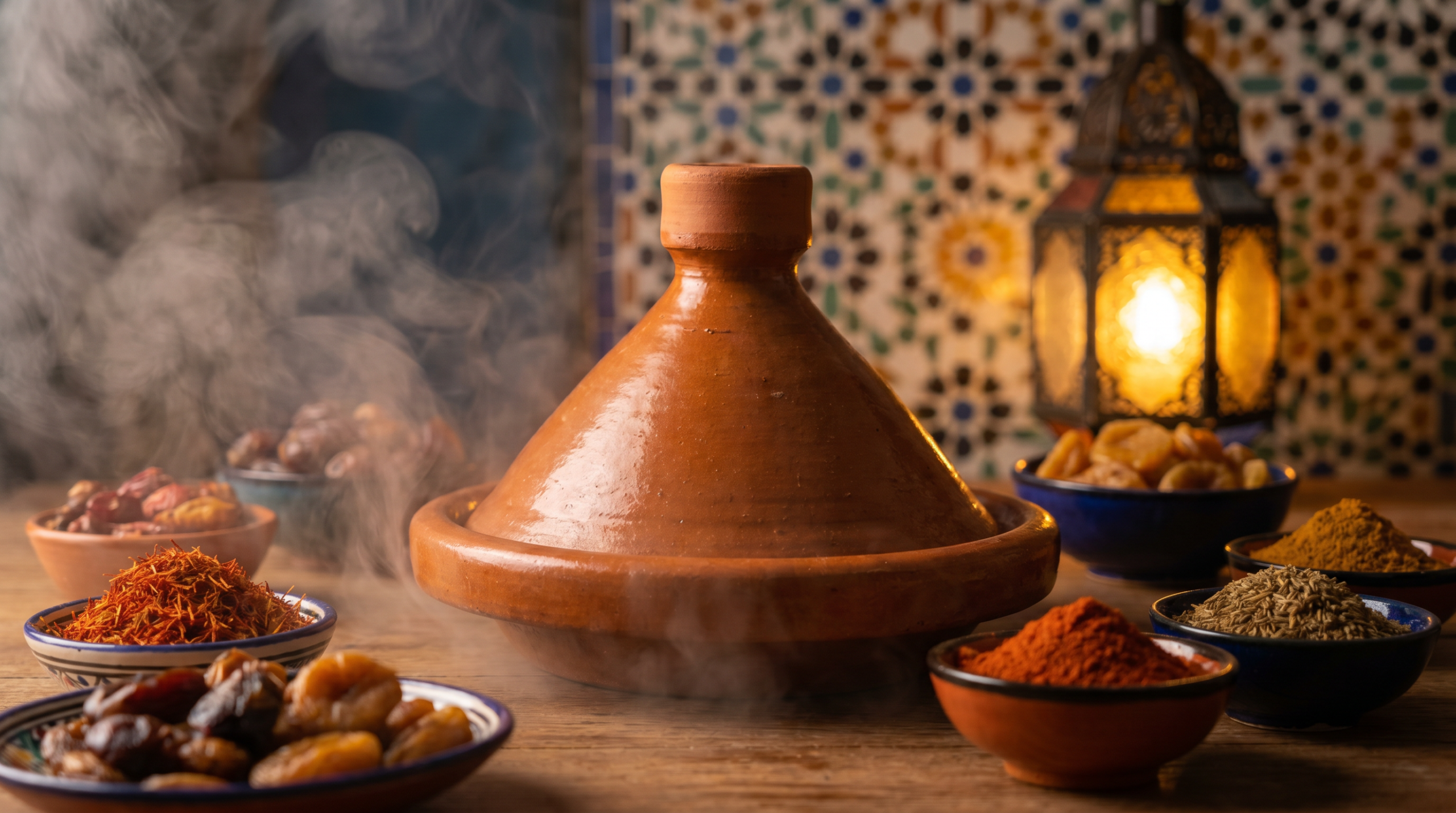
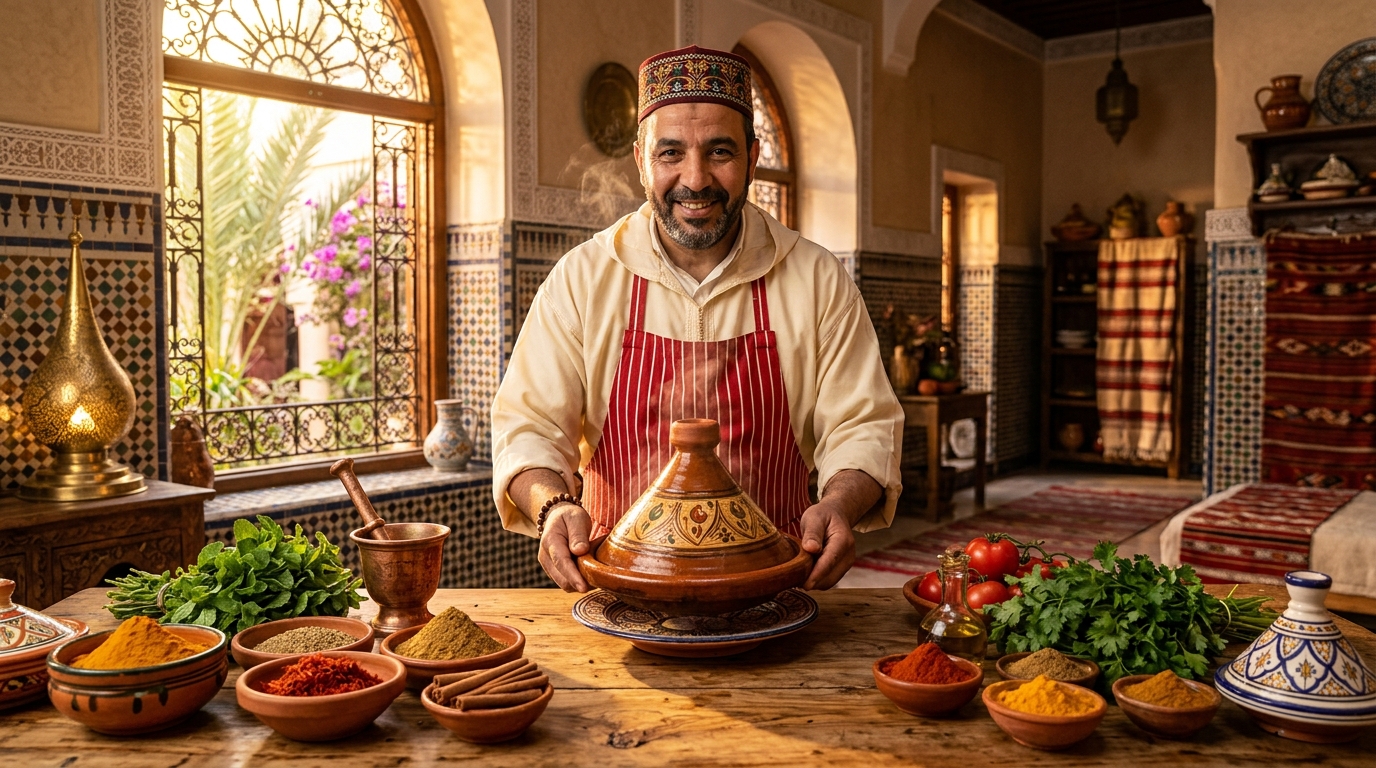
A Moroccan cooking class for tourists is the best souvenir from Morocco—not a lamp or a rug, but the skill to recreate an authentic tagine at home. Discover how to choose between Marrakech’s bustling souk immersion and Essaouira’s relaxed coastal seafood classes.
If you’re planning a trip to Morocco, you’ve likely dreamed of the smells wafting from a clay tagine: preserved lemon, olives, slow-braised lamb, and that heady Ras el Hanout spice blend. But eating it at a restaurant is only half the story. The real magic? Learning to cook it yourself. A Moroccan cooking class for tourists hands you the knife, the spices, and the centuries-old techniques—so you bring the flavor home long after your tan fades.
Key takeaways
Marrakech Moroccan cooking classes center on classic meat tagines, pastilla, and chaotic souk market tours.
Essaouira excels at fresh seafood, chermoula marinades, and rooftop kitchens with ocean views.
Authenticity check: insist on hearth or charcoal cooking—not induction stovetops—for real flavor.
Look for classes naming specific chefs (Chef Fatima, Chef Youssef) in reviews—avoids tourist factories.
Book early: top-rated classes in both cities fill fast, especially April–October peak season.
Contents
Why Is a Moroccan Cooking Class the Ultimate Tourist Experience?
What makes a cooking class better than just visiting a restaurant? The answer is simple: you get your hands dirty. A Moroccan cooking class is a structured, 3-4 hour journey. It combines a market tour in the souks with hands-on cooking. You learn about fresh produce and spices like Ras el Hanout. Then you cook the meal yourself.
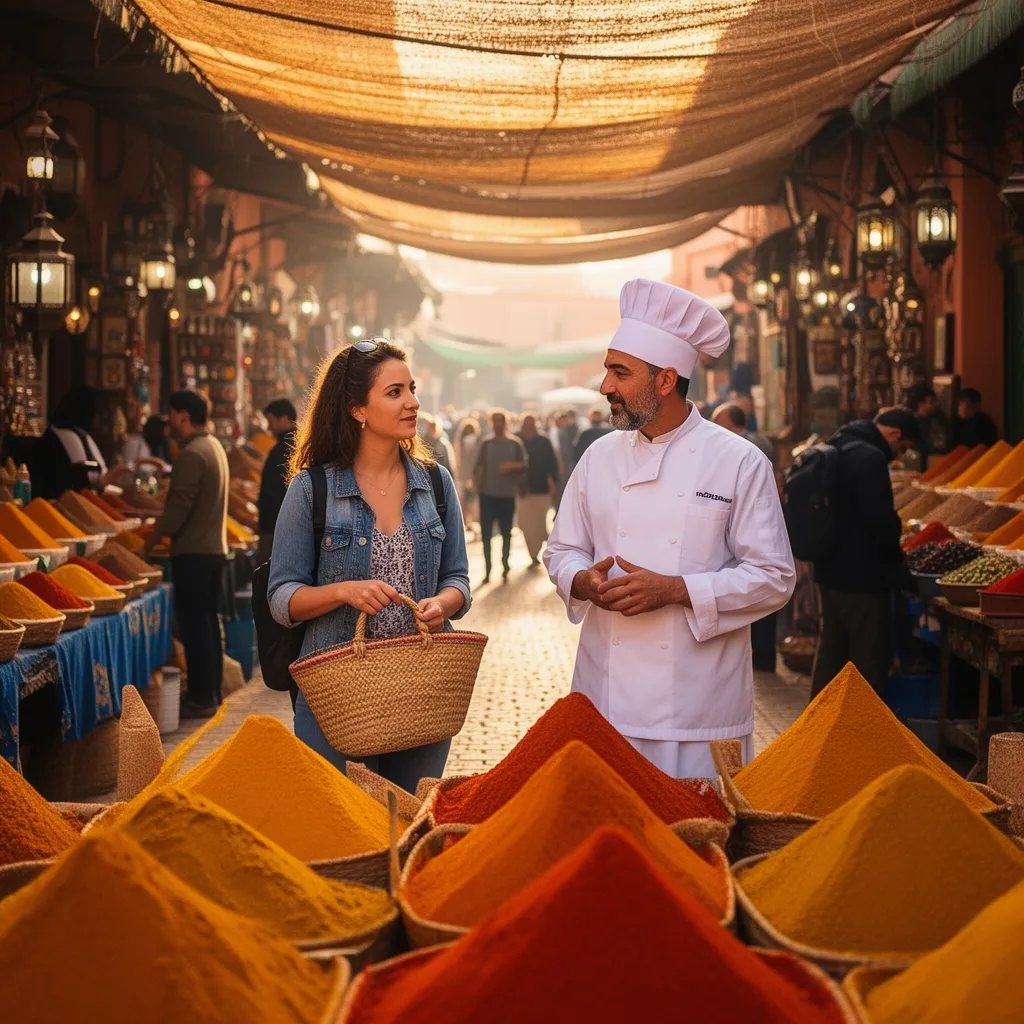
This isn’t a demonstration. The “How to Be a Real Moroccan Chef” class in Essaouira makes this clear: it’s “Hands-on, not a demo: you shop the souk, learn the spices, and…” You actually do the work. The payoff is incredible. You sit down to eat a multi-course Moroccan meal—tagine, couscous, pastilla—that you cooked, guided by a local chef. That’s an authentic Moroccan cuisine experience you can’t find in any restaurant.
Pro tip: The market tour isn’t just shopping—it’s a masterclass in Moroccan terroir. Ask your chef which stalls they trust for saffron, preserved lemons, and the best olive oil. Those relationships are generational.
For a deeper dive into the city’s full food scene beyond the classroom, our Marrakech destination guide maps every must-try dish and where to find it. If you’re interested in exploring beyond cooking, Lonely Planet’s Marrakech guide offers additional context on the city’s culinary heritage.
Explore Marrakech food tours & market visits:
The Top-Rated Marrakech Experience: Souks, Spices, and Tagines
A Marrakech Moroccan cooking class is the gold standard for many tourists. It often starts with a chaotic and exciting visit to the Jemaa el-Fna food stalls or the Bab Doukkala market. You step straight into the heart of the city.
The Classic Market Tour + Cooking Combo
You meet your chef-guide, like Youssef, at 8:00 AM at Café de France on the square. Before the crowds arrive, you visit spice merchants. The chef explains the role of each spice in Moroccan cooking. According to Riad Vendome, the structure is simple: “market tour + cook tagine, couscous & pastilla + enjoy your meal.”
Cost and duration are important. An authentic Marrakech cooking class at Riad Vendome starts from €48 per person. It lasts about 3 hours. Groups range from 2 to 20 people. Other classes, like those at La Maison Arabe, can cost up to €120 for a premium experience. You have options at every budget.
Book the earliest slot (8 AM). You’ll beat the tour buses at the spice stalls, get the freshest produce, and finish eating by 1 PM—leaving your afternoon free for the Marrakech Medina.
Book a Marrakech cooking class with market tour:
What You Will Cook in Marrakech
The menu focuses on classic dishes. Tagine, couscous, and pastilla are the stars. Pastilla is the complex, sweet-and-savory pie that tourists often admire. It’s a pie with layers of flaky dough, spiced meat, and a dusting of cinnamon and sugar. Many people are intimidated to make it at home. That’s why it’s a highlight of the class. You learn the secrets from a local chef during your Moroccan cooking class in Marrakech.
The Best Moroccan Cooking Classes in Essaouira: Seafood, Rooftops, and Coastal Vibes
While Marrakech is classic, Essaouira has some of the top-rated Moroccan cooking classes. For example, the “How to be a Real Moroccan Chef” class has a perfect 5.0★ rating from 215 reviews. That’s rare in the Moroccan tourism industry.
Booking Cooking Classes in Essaouira: The Seafood Focus
When booking Moroccan cooking classes in Essaouira, you’ll notice the seafood focus. The class centers on the day’s fresh catch from the port. Fishermen bring in their boats each morning. You choose the fish you want to cook. Prices range from about $45 for a 4-hour class to $65 for a premium experience.
Specific providers include “Cooking With Chef FATIMA” on Tripadvisor. “Latifa Cooking Classes” has 382 reviews and is another highly-rated option. These classes exemplify the friendly, traditional vibe of Essaouira. You learn in a relaxed atmosphere with a personal touch.
Explore Essaouira seafood cooking experiences:
The Rooftop Experience
Many Essaouira Moroccan cooking classes take place on a rooftop kitchen overlooking the medina. Marcooking, located at N° 120, Souq Ar-Rahba, is a perfect example. The flow includes a welcome with Moroccan mint tea. Then you get spice guidance. The cooking happens in small groups lasting 2 to 2.5 hours.
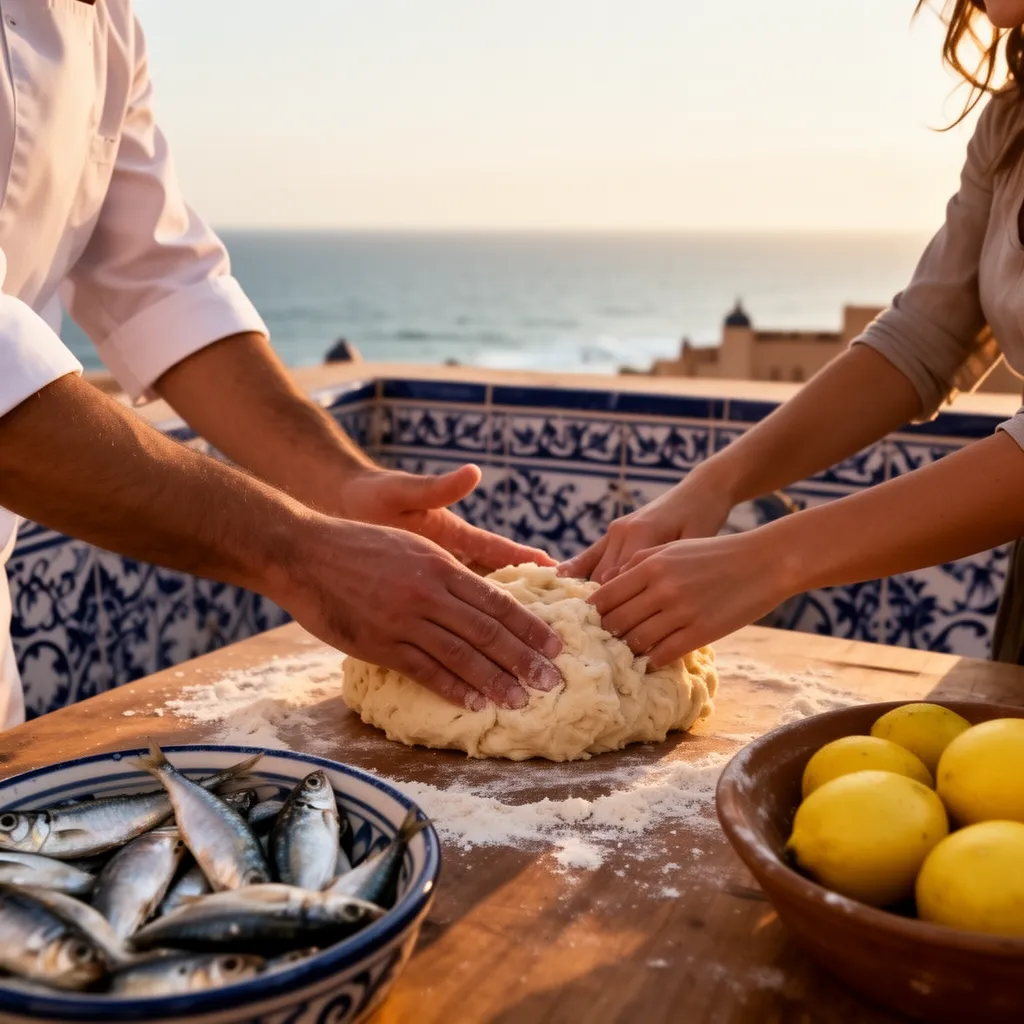
The benefit is the cooler ocean breeze and stunning views. This is a differentiator from the busy, ground-level souks of Marrakech. You cook with the Atlantic wind on your face. It’s a calm, refreshing experience unique to Moroccan cooking classes in Essaouira.
Book an Essaouira cooking class with rooftop views:
Marrakech vs. Essaouira: A Detailed Comparison for the Tourist
This is the core of your decision. Let’s compare the two cities side-by-side based on what matters most to you when choosing a Moroccan cooking class.
Vibe & Setting (Busy Souk vs. Coastal Chill)
Marrakech: Bustling, energetic, sensory overload. You learn in the heart of the medina. The sounds, smells, and colors are intense. It’s an adventure from the moment you step out.
Essaouira: Relaxed, artistic, fresh air. You often learn on a rooftop with a sea view. The pace is slower. The atmosphere is calm. You can breathe.
Typical Menu (Lamb Tagine vs. Fish Chermoula)
Marrakech: Heavy on meat—lamb, chicken. Complex pastries like pastilla. Classic Moroccan dishes passed down for generations. The tagine is the star of any Marrakech Moroccan cooking class.
Essaouira: Focuses on fresh seafood—fish tagine, sardines. You learn different spice blends like Chermoula, which is a green herb and lemon marinade. This is different from the Ras el Hanout you find in Marrakech.
Cost & Duration (Research-Based)
Marrakech: Roughly €40 to €120 per person. Usually 3-4 hours. You have a wider price range, with luxury experiences at the top end.
Essaouira: Roughly $45 to $65 (approx. €40-€60) per person. Usually 3-4 hours. The value is incredible in the mid-range for any Moroccan cooking class.
| City | Cost per Person | Duration | Best For |
|---|---|---|---|
| Marrakech | €40–€120 | 3-4 hours | Classic tagines, pastilla, souk immersion |
| Essaouira | $45–$65 (€40–€60) | 3-4 hours | Fresh seafood, chermoula, rooftop views |
Planning note: Marrakech offers a wider price range for luxury experiences. Essaouira provides incredible value in its mid-range. Choose based on your budget and what you want to learn—meat mastery or seafood finesse.
How to Avoid Tourist Traps and Choose the Right Moroccan Cooking Class
Not all Moroccan cooking classes are created equal. Here’s how to find the real deal.
Top-Rated Moroccan Cooking Classes: Are They Actually Good?
You don’t just need a high average rating. You need consistent reviews mentioning the chef. Top-rated Moroccan cooking classes have a specific chef’s name in the reviews. Look for Chef Naima at Riad Vendome. Look for Chef Youssef at Souk Adventures. Look for Chef Fatima in Essaouira. If a class has 400 reviews but they all say “great experience” without naming the chef, it might be a tourist machine. Personal connection matters.
Hearth vs. Stove (Essential for Authenticity)
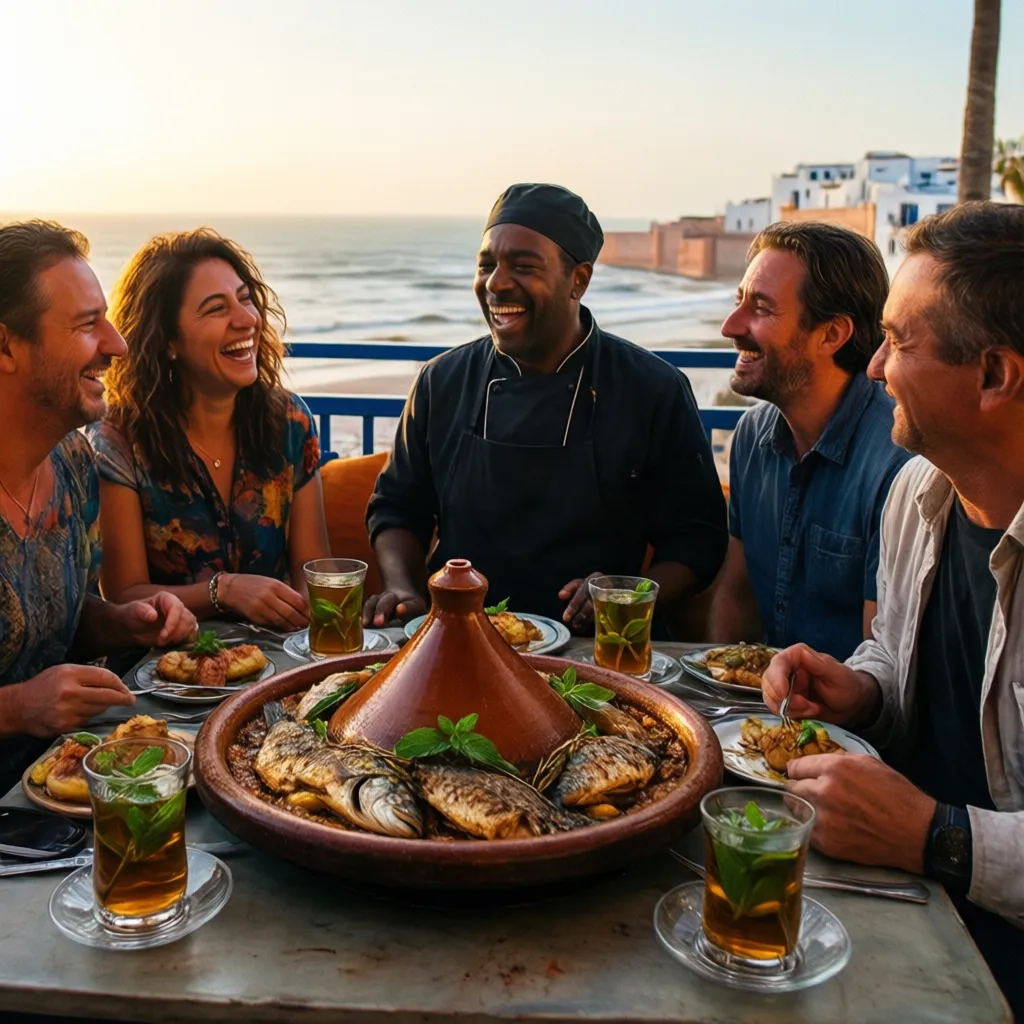
An authentic Moroccan cuisine experience requires cooking in a tagine over a charcoal fire or a traditional hearth. Not a standard induction cooktop. The smoky, slow-cooked flavor comes from the fire. Check class descriptions for phrases like “cooking on a traditional fire” or “hearth cooking.” According to BBC Travel, cooking over open flame is central to Moroccan culinary tradition. This ensures you get the real taste of Morocco. Don’t settle for a stovetop version.
Browse all Moroccan cooking class options:
A Step-by-Step Look at What to Expect in Your Moroccan Cooking Class
Let’s walk through a typical 4-hour timeline for any Moroccan cooking class. This will reduce any anxiety about what to expect.
Morning start
You arrive at the riad or rooftop. The chef greets you with Moroccan mint tea. They explain the menu for the day. Then they hand you a shopping basket. You’re ready to go.
1 hour
You walk to the nearest souk. The chef teaches you how to pick fresh vegetables. They explain the function of each spice. You also learn Arabic words for ingredients. This is a real cultural lesson, not just cooking. The Marrakech souks have been trade centers for centuries.
2 hours
Back in the kitchen. You knead dough for bread. You chop the onions for the tagine. You layer the pastilla. The chef provides guidance, but you do the work. Your hands are covered in flour and spices. It’s messy, fun, and educational during your Moroccan cooking class.
Enjoy your creation
You sit down with the group. Sometimes there’s a glass of wine or more tea. You eat the meal you just mastered. This is the payoff for the morning’s work. You taste your own creation. You feel proud. You’ve learned a skill that will last a lifetime from this Moroccan cooking class for tourists.
Reserve a Marrakech market tour & cooking experience:
Reserve your spot
Book Your Moroccan Cooking Class
Choose from the best options across Morocco — from Marrakech medinas to Essaouira rooftops. Instant confirmation, free cancellation on most tours.
Instant confirmation
Free cancellation on most tours
Some links on this page earn ComeMorocco a commission at no extra cost to you. It never changes what we recommend. How this works.
Questions
01What is the difference between a Marrakech and Essaouira Moroccan cooking class?
Marrakech Moroccan cooking classes focus on classic meat tagines, pastilla, and couscous with a bustling souk market tour. Essaouira classes specialize in fresh seafood, chermoula marinades, and often take place on rooftops with ocean views. The vibe in Marrakech is high-energy; Essaouira is relaxed and coastal.
02How much do Moroccan cooking classes cost in 2026?
In Marrakech, expect €40–€120 per person depending on the venue (riad vs. luxury palace). In Essaouira, prices cluster around $45–$65 (€40–€60) for 3-4 hour sessions. Both include market tour, ingredients, instruction, and the meal. These Moroccan cooking classes for tourists offer excellent value for the experience.
03Do I need to book Moroccan cooking classes in advance?
Yes. Top-rated classes with named chefs (Chef Fatima, Chef Naima, Chef Youssef) fill weeks ahead in peak season (April–October). Book at least 2-3 weeks early via GetYourGuide or the provider’s direct site to secure your preferred date and time slot.
04What should I look for to ensure an authentic Moroccan cooking class experience?
Three non-negotiables: (1) Classes cooked over charcoal/hearth, not induction; (2) Reviews naming a specific chef by name; (3) A market tour included, not just pre-bought ingredients. Avoid “demonstration only” classes—you want hands-on.
05Are Moroccan cooking classes suitable for vegetarians or dietary restrictions?
Most classes accommodate vegetarians easily—tagines and couscous adapt well to vegetables, chickpeas, and dried fruits. For vegan, gluten-free, or allergies, notify the provider at booking. Essaouira seafood classes are less flexible; Marrakech offers more plant-based variety.
06Can I combine a Moroccan cooking class with other activities in the same day?
Yes. Morning classes (8 AM–1 PM) leave your afternoon free. In Marrakech, pair with a Medina walking tour or explore the city’s historical sites. In Essaouira, enjoy the beach, ramparts, or a sunset camel ride after your rooftop lunch.
07What spices should I buy at the market during the Moroccan cooking class tour?
Your chef will guide you, but prioritize: Ras el Hanout (the signature blend), saffron threads (buy small amounts from trusted stalls), preserved lemons, smen (aged butter), and high-quality cumin. Avoid pre-mixed tourist blends—ask for the chef’s personal spice merchant. These are essential for recreating your Moroccan cooking class recipes at home.
✦ Your Morocco Journey Starts Here
Taste Morocco Like a Local
Whether you choose the spice-laden souks of Marrakech or the salt-kissed rooftops of Essaouira, a Moroccan cooking class transforms you from spectator to participant. You’ll leave with stained fingers, a full belly, and recipes that carry the soul of Morocco into your home kitchen.