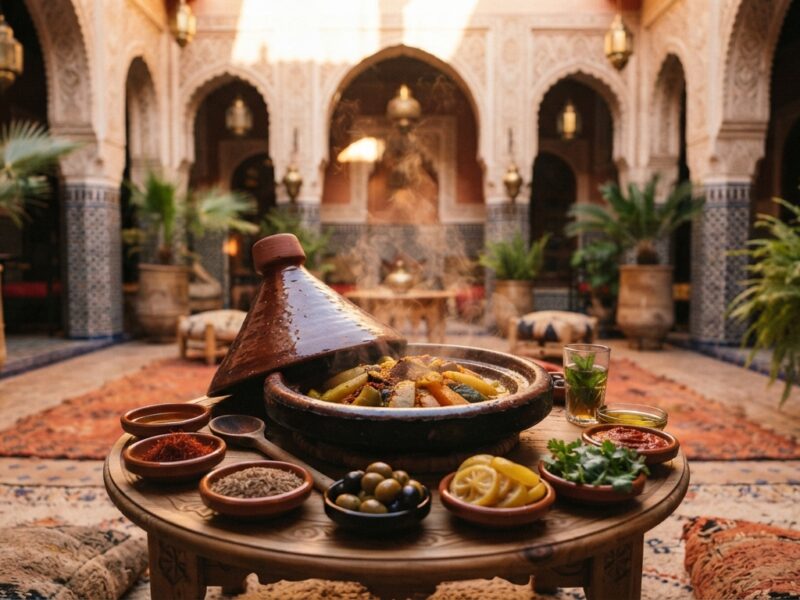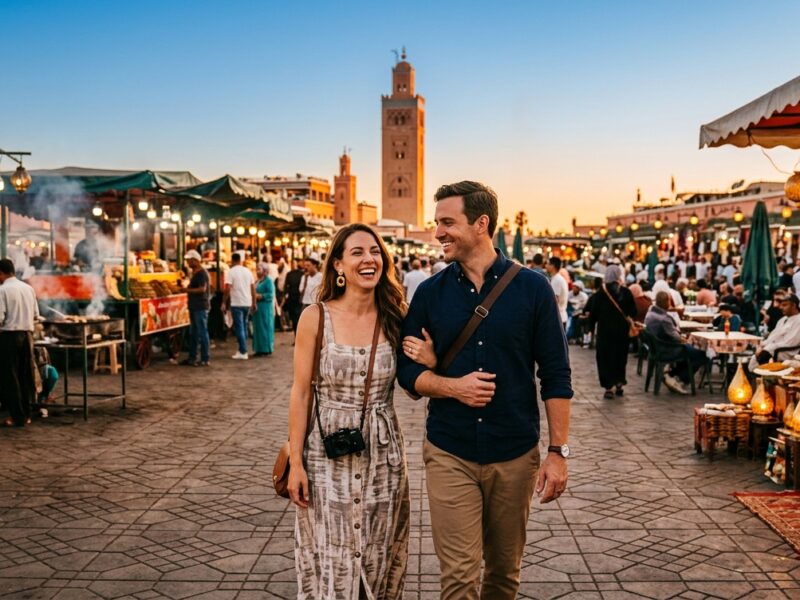
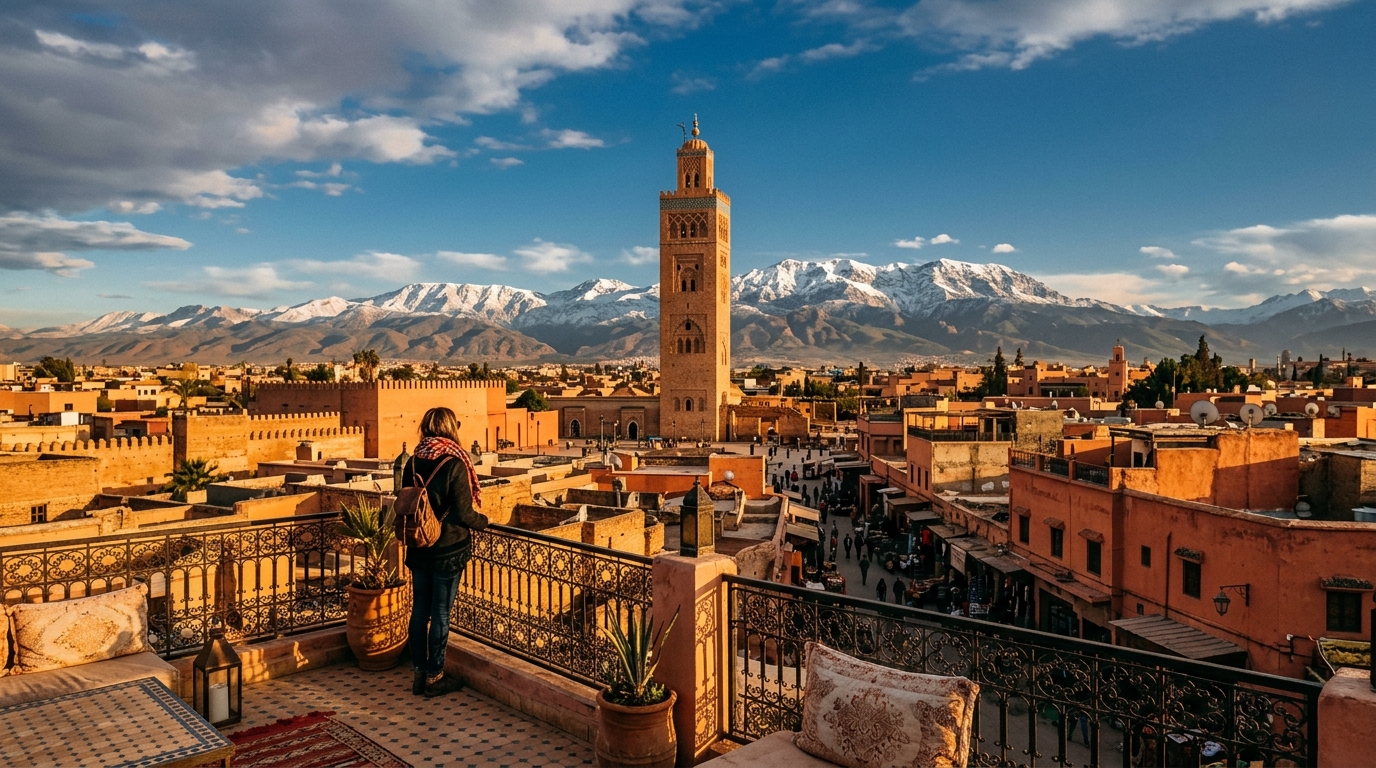
From the scent of cumin in labyrinthine souks to the echoing call to prayer from the Koutoubia Minaret, Marrakech bewitches every traveler who steps through its ancient gates.
If you’re dreaming of visiting Marrakech, Morocco in 2026, you’ve chosen one of the most captivating destinations on earth. Marrakech, Morocco is a city that bewitches every traveler who steps through its ancient gates. Imagine the scent of cumin and saffron drifting through labyrinthine souks, the distinctive red-ochre hue of ancient walls glowing in the afternoon sun, the echoing call to prayer from the Koutoubia Minaret, and the chaotic energy of Jemaa el-Fnaa Square coming alive at dusk with storytellers, snake charmers, and food stalls. This is a city that feels like stepping into another world.
This complete travel guide covers everything you need to plan an unforgettable trip. We’ll answer: where exactly Marrakech is located, what country it belongs to, the best time to visit based on weather patterns and seasonal highlights, the local time zone and how it affects planning, and the top attractions that make the city of Marrakech unmissable. Let’s dive into your ultimate 2026 adventure.
Key takeaways
Marrakech sits at the foot of the Atlas Mountains, 240 km south of Rabat, in western Morocco.
Spring (Mar–May) and autumn (Sep–Nov) offer ideal weather; summer exceeds 40°C, winter nights drop to 5°C.
Top attractions: Jemaa el-Fnaa, Koutoubia Mosque, Bahia Palace, Saadian Tombs, Majorelle Garden.
Day trips to Ourika Valley, Agafay Desert, and Ait Ben Haddou are easily accessible.
Book airport transfers, riads, and popular tours in advance; carry cash for souks and tip in dirhams.
Contents
Where is Marrakech? Understanding the Location of the Red City
Before you pack your bags, you need to understand exactly where you’re going. The location of Marrakech shapes everything about your experience—from the climate to the landscapes you’ll explore.
The Geography of Marrakech: At the Foot of the Atlas Mountains
To answer the question “where is Marrakech” precisely, this vibrant city is located in western Morocco, at the foothills of the majestic Atlas Mountains. Marrakech sits approximately 240 kilometers (150 miles) south of the capital city Rabat and about 580 kilometers (360 miles) southwest of Casablanca.
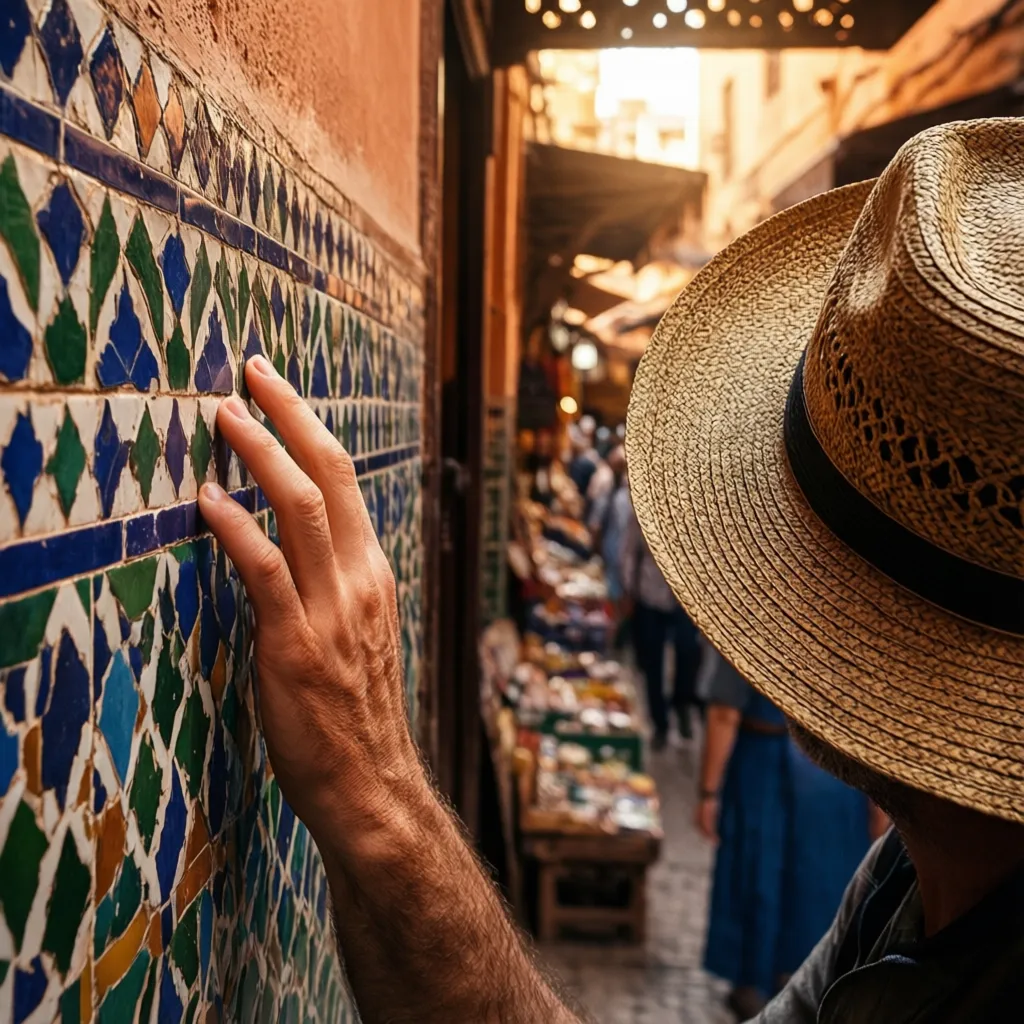
The city’s position is truly special. It lies at the base of the High Atlas Mountains, which rise dramatically to the south, reaching peaks over 4,000 meters (13,000 feet). These mountains aren’t just a beautiful backdrop—they directly influence the city’s climate by blocking moisture from the south, creating the semi-arid conditions that define Marrakech. The region surrounding the city is semi-arid, with vast palm groves called the Palmeraie to the north and east, while the beginnings of the Sahara Desert stretch further south. The fertile Ourika Valley and other river valleys cut through the nearby mountains, offering green escapes when you need a break from the city buzz.
Local insight: The Palmeraie’s 100,000+ palm trees create a microclimate—several degrees cooler than the Medina in summer—making it ideal for luxury resorts and quad biking tours.
Marrakech Which Country? Clarifying the Location for Travelers
Marrakech, which country does it belong to? The answer is simple: Marrakech is exclusively in Morocco, a North African country bordered by the Atlantic Ocean to the west, Algeria to the east, and Western Sahara to the south. Marrakech, which country—this question often comes up because some travelers confuse it with other North African cities or assume it might be part of a different nation. But make no mistake: Marrakech is unequivocally in Morocco, North Africa.
Morocco is a constitutional monarchy with a rich history shaped by Berber, Arab, and French influences. Marrakech holds special status as one of the country’s four imperial cities, alongside Fes, Meknes, and Rabat. It was founded in 1070 by the Almoravid dynasty and has been a center of culture, trade, and power ever since. For more context on Morocco’s imperial cities, see our guide to Morocco Imperial City Tours: Marrakech to Fez Journey.
The City of Marrakech vs. The Marrakech-Safi Region
When people talk about visiting the city of Marrakech, they’re usually referring to two distinct parts: the historic Medina and the modern Gueliz district. The Medina is the ancient walled old city with narrow alleyways, bustling souks (markets), and historic palaces. It’s a UNESCO-protected area where you’ll find most of the famous attractions. Gueliz, on the other hand, is the French-designed Ville Nouvelle (new city) with wide boulevards, sidewalk cafes, art galleries, and contemporary hotels.
The city of Marrakech also serves as the capital of the Marrakech-Safi administrative region, which stretches from the Atlantic coast all the way to the Atlas Mountains. However, when travelers say “visiting Marrakech,” they almost always mean the historic core and its immediate surroundings. A practical tip: most attractions, traditional riads (Moroccan houses with interior gardens), and authentic restaurants are concentrated within the Medina walls, while modern amenities, shopping malls, and luxury international hotels are found in Gueliz. To help choose where to stay, read our Riad vs Hotel in Marrakech: Which One Is Right for You in 2026?.
Best Time to Visit Marrakech in 2026: Weather, Seasonality & Events
Timing your visit perfectly can make or break your trip. Understanding Marrakech weather is essential for planning a trip in 2026, as the climate varies dramatically between seasons. Let’s break down what each season offers so you can choose the perfect dates.
Understanding Marrakech Weather: A Climate Overview
Marrakech has a hot semi-arid climate (scientists call it Köppen classification BSh). In simple terms, this means hot, dry summers, mild winters, and very little rain. The city receives only about 250mm of rainfall per year—most of that falls between November and March.
Daytime temperatures range from around 18°C (64°F) in winter to over 40°C (104°F) in summer. The good news is that the low humidity makes the heat feel less oppressive than in tropical destinations. However, nights can get surprisingly cool, especially in winter and spring when desert winds sweep through the city. Rain is infrequent but when it comes, it’s usually in short, heavy bursts during the cooler months. Summers are virtually rainless with clear blue skies every single day.
Spring in Marrakech (March to May) – The Ideal Season for Most Travelers
Spring brings daytime temperatures of 22°C to 28°C (72°F to 82°F), with cool mornings around 12°C (54°F) in March rising to 16°C (61°F) in May. Multiple travel sources confirm spring as the most recommended season for visiting Marrakech.
This is when Marrakech truly shines. The city’s gardens—Majorelle, Menara, and Cyber Park—are at their most lush and colorful. The Atlas Mountains still have snow-capped peaks visible from the city, creating stunning photo opportunities. This is also the season of the Almond Blossom (February-March) in nearby valleys, where entire hillsides turn white with delicate flowers.
However, spring is peak tourist season, especially during Easter and European spring breaks. Prices for riads and flights are higher, and popular attractions can get crowded. Book your accommodations at least 2-3 months in advance if you plan to visit during this period. Key events include the Marrakech Marathon (usually January) and the Marathon des Sables, an ultramarathon through the Sahara (typically April).
🎈 Elevate your spring visit — book a sunrise hot air balloon flight over the Atlas Mountains:
Powered by GetYourGuide
Summer in Marrakech (June to August) – For Heat-Tolerant Travelers Seeking Bargains
Midday temperatures regularly exceed 38°C (100°F) and can reach 45°C (113°F) in July and August. Nighttime lows remain around 22°C (72°F). Multiple sources confirm this is the hottest period—summer is not for the faint-hearted.
If you do visit during summer, sightseeing should be done early morning (before 10am) or late afternoon (after 5pm). Many travelers use midday for pool time, siestas, or visiting air-conditioned museums. The city feels quieter as tourists avoid the heat, and locals also slow down their pace. The advantage? Flight and accommodation prices drop significantly. This is the best season for budget-conscious travelers. Plus, the Festival of Popular Arts takes place in July, celebrating Moroccan music, dance, and crafts.
Bring lightweight, loose-fitting cotton or linen clothing, a wide-brimmed hat, sunglasses, high-SPF sunscreen, and a reusable water bottle. A small spray bottle for misting yourself is a local trick that really works.
Autumn in Marrakech (September to November) – Shoulder Season Perfection
September remains warm (30-35°C / 86-95°F), but October and November are idyllic with 22-28°C (72-82°F) daytime highs and crisp evenings around 15°C (59°F). Research sources consistently rank October-November as equally excellent as spring.
The summer crowds have thinned, the heat is comfortable, and the light is beautiful for photography. This is harvest season, so markets overflow with fresh dates, figs, and pomegranates—a feast for the senses. Autumn is also an excellent time for desert excursions and Atlas Mountain treks because the temperatures are perfect for hiking without being too hot or too cold.
Key events include the Marrakech International Film Festival (usually late October/early November). Packing tip: layers are essential. Warm days give way to cool evenings, so a light jacket or sweater is needed after sunset.
Winter in Marrakech (December to February) – Mild Days, Chilly Nights, and Fewer Crowds
Daytime temperatures range from 18°C to 22°C (64-72°F), but nights can drop to 5-8°C (41-46°F). Occasional rain is possible (2-5 rainy days per month). Snow is extremely rare in the city itself, but the Atlas Mountains are beautifully capped in white.
This is the quietest tourist season overall, except for Christmas and New Year’s week when prices spike temporarily. The Medina is less crowded, allowing for a more relaxed, unhurried experience. The light is softer and more golden, ideal for photography enthusiasts. Flights and accommodations are cheapest outside the holiday period. This is the best time for travelers who dislike intense heat and prefer cooler walking conditions. The views of snow-covered Atlas peaks are absolutely spectacular.
Planning Around Marrakech Morocco Time: Time Zone, Jet Lag, and Daily Rhythms
Understanding Marrakech Morocco time is crucial for daily planning. During winter months, the country operates on UTC+0 (Greenwich Mean Time). However, Morocco observes daylight saving time (DST), moving clocks forward to UTC+1 from approximately the last Sunday of March to the last Sunday of October. This shift is important because it pushes sunset later, giving you more evening exploration time.
While understanding Marrakech weather is crucial, knowing the local time zone is equally important for daily planning. During DST (summer), the sun sets around 8:30-9:00pm, making late-afternoon sightseeing comfortable. During winter (UTC+0), sunset is around 5:30-6:00pm, so attractions close earlier and dinner times shift earlier.
For travelers from North America, the time difference is 5-8 hours (east coast to west coast). From Europe, it’s only 0-2 hours. I suggest arriving early in the day to adjust, and spending your first afternoon walking gently through the Medina rather than booking intense activities.
Also keep in mind that shop hours in the Medina can be irregular. Many close for lunch (12pm-3pm) and for the Friday midday prayer. Plan shopping excursions for morning (10am-12pm) and late afternoon (4pm-7pm) during DST months.
For 2026, Ramadan is expected to fall approximately from late February to late March (dependent on moon sighting). During Ramadan, many restaurants close during daylight hours, opening only after sunset (iftar). Souks have reduced daytime hours but come alive after dark. This is a culturally rich but logistically different time to visit. For solo female travelers, see our Solo Travel to Morocco: Complete Guide for Women (Safety, Tips & Itinerary Planning).
Top 12 Unmissable Marrakech Attractions for 2026
Now that you know when to go, let’s talk about what to see. The marrakech attractions here are world-class and varied—from ancient palaces to modern museums, peaceful gardens to vibrant squares.
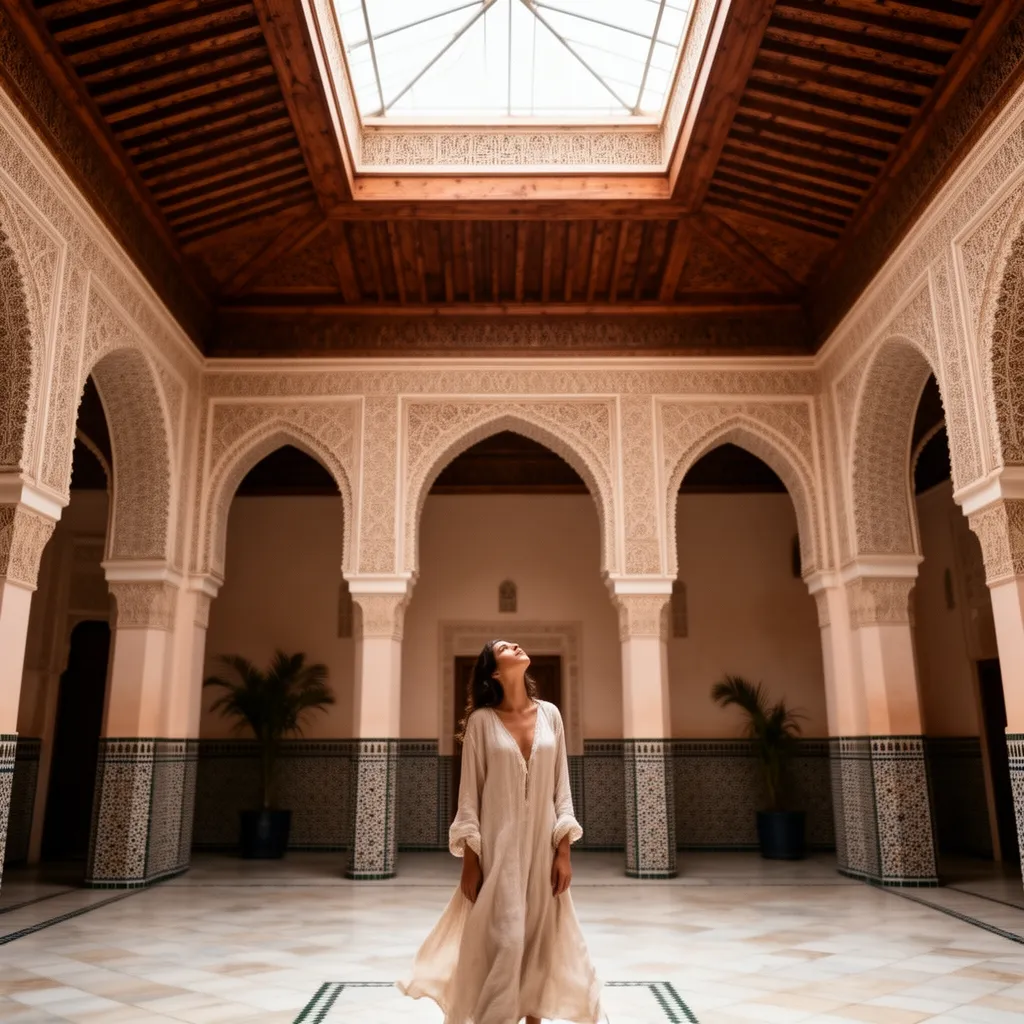
The Historic Heart of the City of Marrakech
The historic core of the city of Marrakech is a UNESCO-protected treasure trove of Islamic architecture, ancient palaces, and bustling public squares.
Jemaa el-Fnaa Square
Jemaa el-Fnaa Square is the pulsating heart of Marrakech. By day, it’s a hub of orange juice stalls, henna artists, and snake charmers. By night (from around 6pm), it transforms into an enormous open-air food market with dozens of stalls serving grilled meats, snails, harira soup, and Moroccan pancakes. UNESCO recognized it as a Masterpiece of the Oral and Intangible Heritage of Humanity. Visit both day and night for completely different experiences. Watch for pickpockets in crowds, and head to a rooftop cafe for the best panoramic views.
🍽️ Experience the night market like a local — join a guided Jemaa el-Fnaa food tour:
Powered by GetYourGuide
Koutoubia Mosque
Koutoubia Mosque is the largest mosque in Marrakech and the most iconic landmark, visible from miles away. Its 77-meter (253-foot) minaret is a masterpiece of Almohad architecture and served as a model for the Giralda in Seville and the Hassan Tower in Rabat. Non-Muslims cannot enter the mosque, but the surrounding gardens are lovely for walks. Best photographed at sunset when the stone glows red.
Bahia Palace
Bahia Palace is a 19th-century palace complex built for Si Moussa, grand vizier of the sultan, intended to be the greatest palace of its age. The name means “brilliance” or “beauty.” Features include intricate cedar ceilings, zellij tilework, marble courtyards, and extensive gardens. Allow 1-2 hours for a visit. Tripadvisor reviews consistently rank this as a top attraction. Entrance fee is approximately 70 MAD (about 7 EUR).
Saadian Tombs
Saadian Tombs are a recently discovered royal necropolis dating from the Saadian dynasty (16th-17th centuries). The tombs were sealed off for centuries and only rediscovered in 1917. The most impressive chamber is the Hall of Twelve Columns, with Italian marble and intricate cedar carvings. Located beside the Kasbah Mosque, admission is approximately 70 MAD. Visit early morning to avoid queues.
Madrasa Ben Youssef
Madrasa Ben Youssef is a former Islamic college and the largest madrasa in Morocco, founded in the 14th century and rebuilt in the 16th century. It housed up to 900 students. The architecture is stunning: a central courtyard with a marble basin, intricate stucco work, and cedar-wood carvings. After being closed for renovations for several years, it has recently reopened. This is a must-see for architecture lovers.
🗺️ Navigate the historic heart with a local expert — book a Marrakech Medina guided walking tour:
Powered by GetYourGuide
Gardens and Green Escapes from the Medina
When the intensity of the Medina becomes overwhelming, Marrakech offers beautiful garden retreats that provide shade, tranquility, and botanical beauty.
Majorelle Garden (Jardin Majorelle)
Majorelle Garden (Jardin Majorelle) is the most famous garden in Marrakech, created by French painter Jacques Majorelle over 40 years and later restored by Yves Saint Laurent and Pierre Bergé. The signature “Majorelle Blue”—a vivid cobalt color—contrasts beautifully with cacti, palms, bamboo, and water features. The garden houses a Berber Museum and the Yves Saint Laurent memorial. Entrance is 150 MAD (approximately 15 EUR) for the garden, plus 100 MAD for the Berber Museum. Most sources confirm this as the #1 attraction. Arrive at opening time (8am) to avoid massive crowds, and book tickets online in advance during peak season.
🎨 Skip the line and dive deeper — book a Majorelle Garden & YSL Museum guided tour:
Powered by GetYourGuide
Menara Gardens
Menara Gardens is a 16th-century garden complex with a large reflecting pool set against the backdrop of the Atlas Mountains. The garden features olive groves and a historic pavilion. Entrance is free or minimal (around 20 MAD). It’s much less crowded than Majorelle and offers a peaceful escape. Visit late afternoon when the mountain light is magical.
Le Jardin Secret (The Secret Garden)
Le Jardin Secret (The Secret Garden) is a recently restored 19th-century palace garden in the heart of the Medina. It features both Islamic (formal) and exotic (wild) garden styles, with a central tower offering panoramic views over the city rooftops. Entrance is approximately 50 MAD. It’s a quieter alternative to Majorelle with a lovely on-site cafe.
Anima Garden
Anima Garden is a newer attraction (opened 2016) located about 20 minutes from central Marrakech, created by Austrian artist André Heller. It combines botanical gardens with surrealist art installations, including giant sculptures, mirrored rooms, and mosaic paths. It’s less known but highly recommended by art lovers. Entrance is about 120 MAD.
Modern Marrakech Attractions: Museums, Culture, and Contemporary Art
While Marrakech is famous for its ancient history, the city also boasts world-class modern museums and cultural institutions.
Yves Saint Laurent Museum (Musée YSL)
Yves Saint Laurent Museum (Musée YSL) is a stunning museum adjacent to the Majorelle Garden, designed by Studio KO (a French architecture duo). The building itself is a work of art, with a facade of terracotta bricks that resemble fabric weaving. The museum showcases YSL’s iconic designs and his lifelong inspiration from Marrakech. It includes a bookshop and a beautiful cafe. Entrance is 150 MAD (combined ticket with Majorelle Garden available for 250 MAD).
Museum of African Contemporary Art Al Maaden (MACMA)
Museum of African Contemporary Art Al Maaden (MACMA) is Africa’s first major museum of contemporary African art, located in the Al Maaden suburb. The collection features works from across the African continent and the diaspora, housed in a striking contemporary building surrounded by a sculpture park. It opened in 2023 and is gaining international recognition.
Maison de la Photographie
Maison de la Photographie is a photography museum in the Medina featuring an extraordinary collection of pre-1950s photographs of Morocco. It provides a fascinating glimpse into the country’s history and everyday life before mass tourism. It also has a rooftop terrace with excellent views.
Moroccan Museum of Photography and Visual Arts (MMP+)
Moroccan Museum of Photography and Visual Arts (MMP+) is another photography-focused museum in the Medina, housed in a 17th-century riad. It rotates exhibitions of contemporary and historical photography.
Day Trips from Marrakech, Morocco: Beyond the City Walls
One of the greatest advantages of visiting Marrakech, Morocco is its proximity to incredible natural landscapes, making day trips essential for a complete experience.
Ourika Valley
Ourika Valley is a 1-hour drive into the High Atlas Mountains. This lush valley offers trekking to the Setti Fatma waterfalls (a series of seven cascades), visits to Berber villages, and tours of traditional argan oil cooperatives. The best time to visit is spring (March-May) when the valley is green and flowers are blooming. Winter offers snow views; summer provides swimming in mountain pools. Many tour operators offer half-day or full-day trips.
🏔️ Discover the High Atlas with a guided day trip to Ourika Valley & waterfalls:
Powered by GetYourGuide
Agafay Desert
Agafay Desert is just a 40-minute drive from Marrakech. This rocky desert (called a hamada) offers a desert experience without the long drive to the Sahara. Activities include camel rides, quad biking, sunset cocktails at luxury desert camps, and stargazing dinners. It’s less famous than the Sahara but more accessible and increasingly popular. Many luxury camps offer day packages.
🐪 Experience the desert at sunset — book an Agafay camel ride & dinner show:
Powered by GetYourGuide
Atlas Mountains Trekking
Atlas Mountains Trekking is ideal for active travelers. Guided treks to Toubkal National Park include Mount Toubkal, the highest peak in North Africa at 4,167 meters (but requires a 2-day summit). For a single-day trek, the Imlil Valley is the most popular starting point, with routes to waterfalls, Berber villages, and viewpoints. For hiking options, see our Hiking in Morocco Atlas Mountains: Trekking Adventure Guide.
Ouarzazate and Ait Ben Haddou
Ouarzazate and Ait Ben Haddou is a longer excursion (3-4 hours drive), better as an overnight trip. These locations serve as the “Gateway to the Sahara.” Ait Ben Haddou is a UNESCO World Heritage Site, a fortified village used as a filming location for Game of Thrones, Gladiator, and Lawrence of Arabia. The Atlas Film Studios in Ouarzazate are also worth visiting.
🎬 Walk the Game of Thrones sets — book an Ait Ben Haddou & Ouarzazate day trip:
Powered by GetYourGuide
Practical Logistics for a Seamless 2026 Trip to Marrakech, Morocco
Now let’s cover the nuts and bolts of your trip. These practical details will help you navigate Marrakech, Morocco with confidence.
Getting to Marrakech: Airport and Transportation
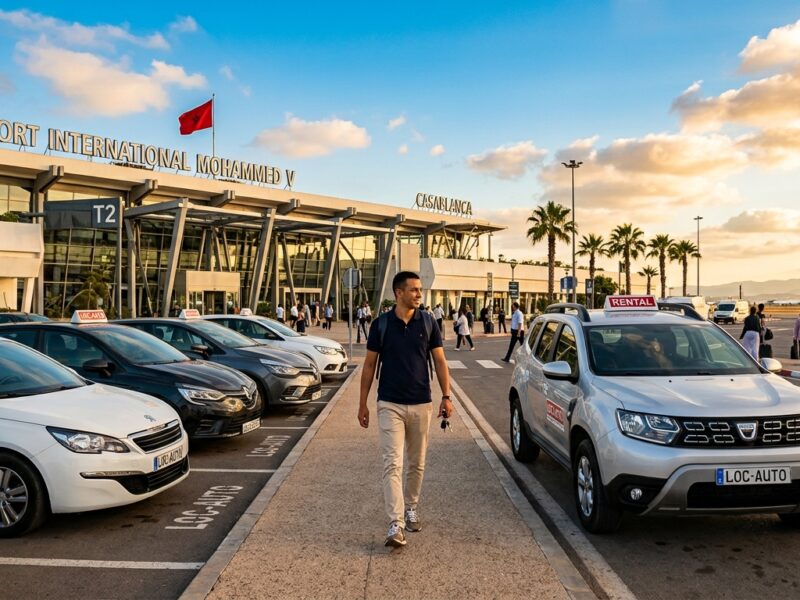
Marrakech Menara Airport (RAK) is the primary international gateway, located about 6km (4 miles) southwest of the city center. It receives direct flights from major European cities (London, Paris, Madrid, Barcelona, Amsterdam, Berlin, Rome) and connecting flights from elsewhere. The airport is modern and efficient, with currency exchange, ATMs, and SIM card vendors available.
Getting from the airport to your accommodation offers several options:
- Airport shuttle bus (Line 19) costing approximately 30 MAD, running every 30 minutes to Jemaa el-Fnaa
- Petit taxi (small red taxis) costing 70-100 MAD to the Medina
- Pre-booked private transfer (20-30 EUR) through your hotel or tour operator
- Careem (the Uber-like service in Morocco) for fixed-price rides
My advice: avoid accepting unsolicited taxi offers inside the terminal. Walk to the official taxi stand outside. For a detailed breakdown of fares and scam avoidance, see our Marrakech Airport Taxi 2026: Fares, Scams, and Best Transfer Options.
🚗 Pre-book a reliable airport transfer with Welcome Pickups:
Getting around Marrakech means understanding the taxi system. Petit Taxis are red, carry up to 3 passengers, operate within city limits, and should use a meter. Grand Taxis are older Mercedes vehicles for intercity or group travel—always negotiate the price beforehand. Walking is the best way to explore the Medina, but it’s a maze. Download offline maps (Google Maps or Maps.me) and use landmarks to navigate.
Money, Currency, and Safety Tips
The currency is the Moroccan Dirham (MAD, symbol Dh). It’s a closed currency, meaning you cannot obtain it outside Morocco. ATMs are widely available at the airport, in Gueliz, and at major banks in the Medina. Carry some cash for souks and small purchases, as many stalls don’t accept cards. Credit cards are accepted at hotels, upscale restaurants, and museums.
As for where is Marrakech in terms of cost, here are rough daily budgets:
- Budget traveler: 600-800 MAD (60-80 EUR)
- Mid-range: 1,000-1,500 MAD (100-150 EUR)
- Luxury: 2,000+ MAD (200+ EUR)
Common scams to watch out for in the Medina:
- “Fake guides” who offer to show you around then demand payment
- “Friendly locals” who invite you to their family’s carpet shop
- Taxi drivers who “don’t have a meter” and inflate prices
- Henna artists who agree on a price then demand more
- People who “help” you find a street then ask for money
Only use official guides licensed by the Ministry of Tourism, agree all prices in advance, and firmly say “la shukran” (no thank you) if needed.
Marrakech is generally safe for tourists, but petty crime (pickpocketing, bag snatching) occurs in crowded areas. Keep valuables in a money belt or hotel safe, avoid dark alleys at night, and dress modestly. Women especially should cover shoulders and knees—it’s respectful and helps avoid unwanted attention. Solo female travelers should be prepared for some attention, but it’s usually harmless. For comprehensive safety advice, read Morocco Safety 2026 Essential Travel Tips and Complete Guide.
Travel smart: Protect your trip with EKTA travel insurance — coverage for medical emergencies, trip cancellation, and baggage loss. Get a quote in 2 minutes.
📱 Stay connected instantly — Airalo eSIM for Morocco (no physical SIM needed):
What to Pack for Marrakech Based on Weather
Year-round essentials include: sunscreen (SPF 50+), sunglasses, a wide-brimmed hat, a reusable water bottle (tap water is not drinkable, but refill stations are available), comfortable walking shoes (the Medina has uneven surfaces), a scarf or shawl (for entering mosques and covering shoulders), and a light jacket or sweater (evenings can be cool year-round).
Seasonal packing list based on Marrakech weather:
- Spring (March-May): Light layers, a light rain jacket, comfortable walking sandals, and a jacket for cool evenings.
- Summer (June-August): Extremely lightweight clothing (linen, cotton), a swimsuit for hotel pools, a sun hat, and a small fan or misting bottle.
- Autumn (September-November): Similar to spring—light layers, a jacket for evenings, comfortable walking shoes.
- Winter (December-February): Warm layers, a coat or heavy fleece, gloves and hat for early mornings, a small umbrella, and waterproof shoes.
While Marrakech is tourist-friendly, revealing clothing (short shorts, crop tops, sheer fabrics) is frowned upon outside hotel pools. Women should cover their shoulders and knees when visiting mosques and conservative neighborhoods. Men should avoid wearing shorts in religious sites.
Reserve your spot
Book Your Marrakech Experience
Choose from the best options across Marrakech — from medina riads to desert camps. Instant confirmation, free cancellation on most tours.
⚡ Instant confirmation
↩ Free cancellation
Some links on this page earn ComeMorocco a commission at no extra cost to you. It never changes what we recommend. How this works.
Questions
01Where is Marrakech located exactly?
Marrakech is in western Morocco, at the foothills of the High Atlas Mountains, 240 km south of Rabat and 580 km southwest of Casablanca. It sits in the Marrakech-Safi region, semi-arid with palm groves to the north and the Sahara beginning to the south.
02What is the best month to visit Marrakech in 2026?
April, May, October, and November offer the best balance of warm days (22–28°C), cool nights, low rain, and manageable crowds. March is lovely but can be busy with Easter travelers; September is still warm (30–35°C).
03Does Marrakech observe daylight saving time in 2026?
Yes. Morocco switches to UTC+1 (DST) from the last Sunday in March to the last Sunday in October. In winter (November–March) it reverts to UTC+0 (GMT). Check exact 2026 changeover dates before you travel.
04What are the must-see attractions in Marrakech?
Top 5: Jemaa el-Fnaa Square (day & night), Koutoubia Mosque exterior, Bahia Palace, Saadian Tombs, and Majorelle Garden. Add Madrasa Ben Youssef, Le Jardin Secret, and the Yves Saint Laurent Museum if time allows.
05Which day trips from Marrakech are worth it?
Ourika Valley (waterfalls, Berber villages), Agafay Desert (camel ride, sunset dinner), Imlil Valley (Atlas trekking), and Ait Ben Haddou (UNESCO ksar, film sites). Ouarzazate is better as an overnight due to distance.
06Is it safe to walk in the Medina at night?
Generally yes—Jemaa el-Fnaa and main souk streets are busy and well-lit until late. Stick to main thoroughfares, avoid dark alleys, keep valuables hidden, and consider a petit taxi back to your riad after 10pm if you’re unsure.
07Do I need cash or are cards accepted everywhere?
Carry cash (dirhams) for souks, small cafes, taxis, tips, and entry fees. Cards work at hotels, upscale restaurants, museums, and larger shops. ATMs are plentiful in Gueliz and at the airport; withdraw 1,000–2,000 MAD at a time.
✦ Your Morocco trip
Experience the Magic of Marrakech in 2026
From the scent of spices in ancient souks to the silence of the Atlas foothills at sunset, Marrakech rewrites what travel feels like. You’ve got the dates, the details, and the inspiration—now all that’s left is to book.