Moroccan Architecture: A Timeless Blend of Tradition & Innovation
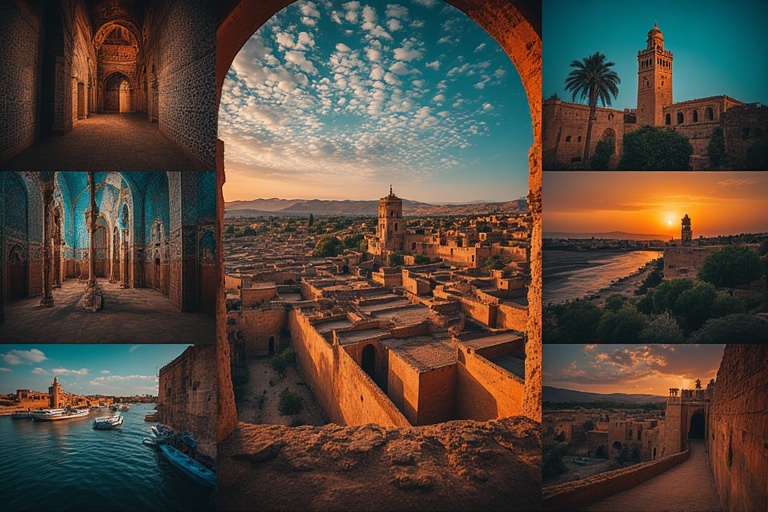
Explore the timeless beauty of Moroccan architecture — from centuries-old riads to bold modern landmarks — and discover how a single country synthesized Islamic geometry, Berber earthwork, Andalusian gardens, and French Art Deco into one of the world’s most distinctive built traditions.
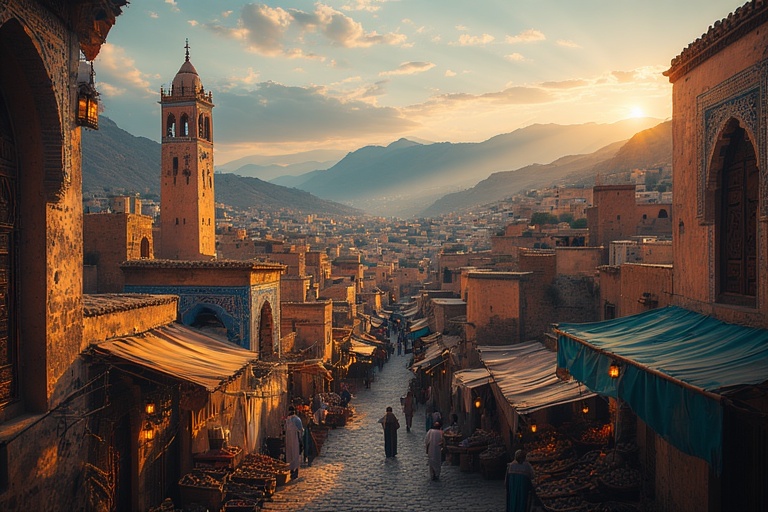
Step through a plain wooden door in Marrakech’s medina and the world transforms. Outside: noise, heat, terracotta walls with not a window in sight. Inside: cool air, the murmur of a fountain, walls dressed floor-to-ceiling in hand-cut zellige mosaics, carved cedar lattice filtering afternoon light into shifting geometry across the courtyard floor. This contrast — austere exterior, extravagant interior — is not an accident. It is the defining philosophy of Moroccan architecture, one that has guided builders from the 7th century to the present day.
What makes Moroccan architecture so compelling is that it is never merely decorative. Every element earns its place: thick pisé walls that double as natural insulation, horseshoe arches that distribute load while framing a view, tadelakt plaster that is simultaneously waterproof and luminous. Form and function are inseparable here, shaped by climate, faith, and a multi-century conversation between cultures that passed through, settled, and left their mark on this extraordinary country.
✦ Key Takeaways
Moroccan architecture uniquely fuses Islamic, Berber, Andalusian, and colonial influences into one coherent style.
Traditional elements — zellige, horseshoe arches, carved stucco, central courtyards — are deeply functional, not just decorative.
Regional styles vary dramatically from Fez’s Andalusian detail to the Sahara’s metre-thick earthen walls.
The riad — Morocco’s inward-facing courtyard home — is now a globally influential design archetype.
Contemporary Moroccan architects are reviving passive cooling and traditional craft for sustainable modern buildings.
Morocco’s medinas hold eight UNESCO World Heritage Sites, all actively under preservation pressure.
Historical Background of Architecture in Morocco
The story of architecture in Morocco does not begin with mosques or medinas. It begins with Berber settlements in the 2nd century BCE, with construction as practical as the land itself: rammed earth, local stone, forms that responded to sun and slope. When the Romans arrived, they layered in stone masonry and civic infrastructure, traces of which survive in the ancient cities and historical treasures scattered across the country’s interior. But the pivotal rupture came in the 7th century CE, when Islam transformed not only religion but the logic of building.
Islamic architecture introduced minarets, geometric decoration as spiritual language, and — crucially — the concept of the building as a world unto itself: protected from the street, oriented inward, calibrated for privacy and contemplation. Between the 8th and 15th centuries, waves of Andalusian influence from Islamic Spain refined that inward logic further, layering it with courtyard gardens, elaborate water systems, and the ornamental sophistication that would define Moroccan design at its most ambitious.
Three dynasties in particular stamped their character on Moroccan architecture permanently. The Almoravids (1062–1147) introduced the horseshoe arch and the decorative dome — forms that became structural signatures. The Almohads (1147–1269) developed the sebka, the diamond-mesh surface pattern that still appears on minarets across the country, and built at a monumental scale: the Koutoubia Mosque in Marrakech dates from this era. The Marinids (1269–1465) refined the decorative programme, particularly in madrasas, where carved stucco and cedarwood achieved a density and precision that has never quite been surpassed.
French rule from 1912 to 1956 brought a new layer: Art Deco geometry, modernist city planning, and the Neo-Mauresque hybrid that blended European civic architecture with Moroccan ornamental vocabularies. After independence, Morocco began crafting its own contemporary architectural identity — one that still draws consciously on everything that came before.
💡 Historical layering is Morocco’s architectural superpower. Unlike countries where successive styles erased what came before, Morocco’s medinas preserve Roman, Islamic, Andalusian, and colonial layers in proximity. Walking a single street in Fez can traverse 14 centuries of building culture.
Powered by GetYourGuide
Key Architectural Influences That Shaped Morocco
No country builds in a vacuum, but few have absorbed as many influences as productively as Morocco. Each tradition that arrived — by conquest, trade, or migration — left legible traces rather than simply being overwritten.
Islamic Influence: Structure, Pattern & Privacy
Islamic influence is foundational. It introduced the typology of the mosque with its minaret and ablution courtyard, the madrasa as a residential college surrounding a central court, and a decorative philosophy that banned figurative imagery in favour of geometry, calligraphy, and vegetal arabesque. The privacy concept — expressed architecturally through blank street facades, L-shaped entrances that prevent views into the home, and the strict separation of male and female social spaces — transformed domestic architecture permanently. You can trace this philosophy through everything from the Bahia Palace in Morocco’s most celebrated mosques to the humblest riad in a provincial medina.
Berber Influence: Climate Literacy & Earth
Berber influence is the architecture of the land itself. Pisé — rammed earth made from clay, lime, and pebbles — is not a primitive material but a sophisticated one, providing natural insulation that modern concrete cannot match in desert conditions. Kasbahs and ksars (fortified villages) of the Draa and Ziz Valleys are master classes in climate-responsive design: thick walls, narrow streets angled to maximise shade, and roof forms that allow hot air to escape. This tradition remains alive in rural Morocco’s authentic experiences, where communities still build in ways their ancestors would recognise.
Andalusian Influence: Ornament & the Garden
Andalusian influence arrived in waves, most significantly after the fall of Granada in 1492, when Muslim and Jewish refugees brought with them the refined courtyard culture of Al-Andalus. The riad as we know it — symmetrical courtyard, four garden beds, central fountain, elaborate stucco and tile — is substantially an Andalusian inheritance. So are the sophisticated garden traditions visible in Marrakech’s palaces, where water channels and citrus plantings create microenvironments of coolness and scent within the city’s heat.
French Colonial Influence: The Modern City
French colonial influence from 1912 onwards is complex. French planners like Henri Prost made the deliberate decision to build new European-style cities (villes nouvelles) adjacent to medinas rather than demolishing them — a decision that paradoxically preserved much of Morocco’s historic urban fabric. The resulting hybrid Neo-Mauresque style, visible in Casablanca’s administrative buildings and Rabat’s civic architecture, is now itself a layer of heritage worth studying.
When visiting any Moroccan medina, the contrast between the ville nouvelle and the historic core is an architecture lesson in itself. Rabat makes this especially legible: the Hassan Tower stands within sight of Art Deco civic buildings, both designated as part of the city’s UNESCO World Heritage inscription.
Traditional Moroccan Architecture: Key Features, Materials & Symbolism
Traditional Moroccan architecture is not a style so much as a system — a set of interdependent spatial, material, and symbolic decisions that reinforce each other. Understanding the system helps decode why Moroccan buildings look and feel the way they do.
Spatial Logic: Inward, Hierarchical, Sensory
Space in traditional Moroccan architecture is organized around a progression from public to private. The street is neutral, the facade anonymous. The entrance (often L-shaped to deny direct sightlines) marks a threshold. The courtyard is the heart: a private sky open to light and air but sealed from the street. Rooms are ranked by importance — reception rooms on the ground floor, family quarters above — and decorated accordingly. The rooftop terrace is the final layer, social in summer, practical year-round.
Materials: Local, Durable, Beautiful
- Pisé (rammed earth): Clay, lime and pebbles compacted in wooden formwork. The defining material of southern Morocco and the Atlas — warm in winter, cool in summer, and extraordinarily beautiful as it weathers.
- Brick: Sun-dried or kiln-fired clay, used for structural walls in areas where pisé is impractical.
- Cedar wood: Atlas cedar is the prestige timber of Moroccan architecture — fragrant, insect-resistant, and capable of holding extraordinary carved detail. Doors, ceiling panels, and mashrabiya screens are its primary applications.
- Tadelakt: A lime plaster polished with soap and river stones to a waterproof, almost glassy finish. Originally developed for hammam walls where steam demands water resistance; now found in bathrooms and fountains across the world.
- Zellige terracotta: Glazed ceramic tiles hand-cut into geometric shapes and assembled into mosaic patterns with mathematical precision. No two zellige panels are identical; the slight human variation in each tile is considered part of its beauty.
Symbolism: Every Element Carries Meaning
In traditional Moroccan architecture, form and meaning are inseparable. Water features represent both purity and the Quranic paradise — the courtyard itself is understood as a terrestrial garden of Eden. Geometric patterns, which could theoretically extend to infinity, represent divine order and the limitless nature of creation. The colour blue that saturates Chefchaouen’s hidden streets symbolises sky and heaven; the green of tilework and ceramic roofs signals Islam and paradise; the terracotta red of Marrakech is the iron oxide of the local soil made architecture.
Powered by GetYourGuide
Regional Variations of Moroccan Building Styles
Morocco’s geography is extreme — the High Atlas separates Mediterranean coastline from Saharan ergs; Atlantic humidity competes with continental dryness — and its architecture reflects every gradient of that diversity.
Northern Cities: Fez, Tetouan & Chefchaouen
Fez is where Moroccan architecture achieves its greatest decorative density. The Andalusian refugees who settled here in the 9th century brought the highest craft traditions of Islamic Spain, and their descendants refined them over the following millennium. Streets are narrow enough to provide natural shade; buildings lean toward each other overhead; cedar doors and carved stucco frames punctuate every facade. Tetouan shows stronger Spanish Moorish character, while Chefchaouen — built by Andalusian refugees in 1471 — famously applies blue-white pigment to virtually every surface, a tradition whose origins (protection against mosquitoes? spiritual symbolism? tourism appeal?) remain happily disputed.
Imperial Cities: Meknes & Rabat
The imperial cities express architectural ambition at civic scale. Meknes, built by Sultan Moulay Ismail in the 17th century, features monumental gateways like Bab Mansour — arguably the finest decorative gate in Morocco — and a scale of fortress construction that echoes Versailles in its appetite. Rabat balances medieval walls and the unfinished Hassan Tower (begun 1195, a column forest frozen mid-construction when the sultan died) with French neoclassical boulevards and the elegantly minimalist Mohammed V Mausoleum.
Marrakech: The Red City
Marrakech’s distinctive colour — that warm terracotta-pink applied to virtually every building in the medina — is not paint but pigment: iron oxide from the local clay, mandated by city ordinance and reinforced by centuries of habit. The Koutoubia Mosque’s 77-metre minaret, the tile-and-stucco extravagance of Bahia Palace, the labyrinthine souks of the medina — together these form one of the world’s great urban architectural experiences. The city’s position as gateway to the High Atlas and the desert routes that once connected sub-Saharan Africa to Europe is legible in its architecture: a city built for trade, built to impress, built to last.
Desert & Mountain: Kasbahs & Ksars
The earthen architecture of southern Morocco — the kasbahs and ksars of the Draa Valley, the Dades Gorge, and the plains around Ouarzazate — represents a parallel tradition of extraordinary sophistication. Walls up to a metre thick regulate temperature in environments where summer days exceed 45°C and winter nights drop below freezing. Ait Benhaddou, the UNESCO-listed ksar perched above the Ounila River, shows this architecture at its most photogenic: towers of rammed earth rising from the riverbank in organic tiers, every surface textured by the weather that has shaped it for centuries. To see these structures in their living context, trekking through the Atlas Mountains reveals kasbahs that appear as natural formations of the landscape rather than impositions upon it.
Coastal Cities: Essaouira & Tangier
Portugal left its mark on Morocco’s Atlantic coast in stone. Essaouira’s ramparts — called skala — are Portuguese military engineering repurposed as a sunset promenade, their cannon embrasures now framing views of the Atlantic. The medina behind is one of Morocco’s most liveable: its grid plan (unusual by Moroccan standards), white-washed walls with blue accents, and sea-cooled air make it a striking contrast to the labyrinthine inland medinas.
Powered by GetYourGuide
Distinctive Design Elements: Zellige, Stucco, Woodwork & Water
Moroccan architecture’s most recognisable elements are its decorative surfaces — but “decorative” undersells them. Zellige, carved stucco, cedarwood, and water features are structural in the fullest sense: they define how a space works, how it feels, and what it means.
Zellige: Geometry in Clay
Zellige is the most labour-intensive and most immediately recognisable surface treatment in Moroccan architecture. The process begins with clay slabs that are kiln-fired at high temperature, then hand-glazed and cut with a special hammer and chisel (qalam) into precise geometric shapes — triangles, diamonds, stars, hexagons — each one a fragment of a larger pattern. Assembling these fragments into a panel requires both mathematical knowledge and manual skill; the maalems (master craftsmen) who do this work serve apprenticeships of up to seven years. Fez remains the historic centre of zellige production, with workshops producing tiles in blues and greens that have barely changed since the Marinid dynasty; Marrakech favours a warmer, multi-coloured palette.
Carved Stucco (Gebs): The Plaster That Became Lace
Wet lime plaster is applied to a wall and then carved before it sets — a race against time that requires both speed and precision. The resulting gebs panels, visible in every mosque, madrasa, and palace, achieve a three-dimensionality that throws dramatic shadows as the light shifts through the day. In the Ben Youssef Madrasa in Marrakech or the Bou Inania Madrasa in Fez, entire walls dissolve into pattern: geometric lattices, calligraphic bands, and arabesque florals layered one above the other from floor to cornice.
Cedarwood: Structure That Smells of the Atlas
Atlas cedar is naturally aromatic and resistant to insects — properties that made it the prestige timber of Moroccan architecture for a millennium. Carved cedar ceilings (a single panel might contain 50,000 individually cut pieces) are the jewels of Moroccan interiors. Mashrabiya screens — lattice panels that allow air and filtered light to pass while preventing direct views — are cedarwood at its most functional and most beautiful simultaneously.
Water: Paradise Made Audible
The Islamic concept of paradise (janna) is defined partly by flowing water, and Moroccan architecture takes that theology seriously. Every riad has a fountain; every palace has a reflecting pool; every garden has channels that distribute water to plantings in the geometry of the four rivers of paradise. The sound of water is architectural: it masks street noise, lowers the perceived temperature, and creates the sensation of being in a private world sealed from the city outside. This sensory dimension is something you can experience firsthand during a traditional hammam experience, where water, steam, and the tadelakt-clad interior create one of Morocco’s most complete sensory environments.
Moroccan Architecture Homes: Traditional Riads & Modern Adaptations
The riad is Morocco’s greatest architectural gift to the world — a domestic typology so logical and so beautiful that it has been adapted, imitated, and reinterpreted on every continent. Understanding the original helps explain why the imitations always feel slightly incomplete.
The Anatomy of a Riad
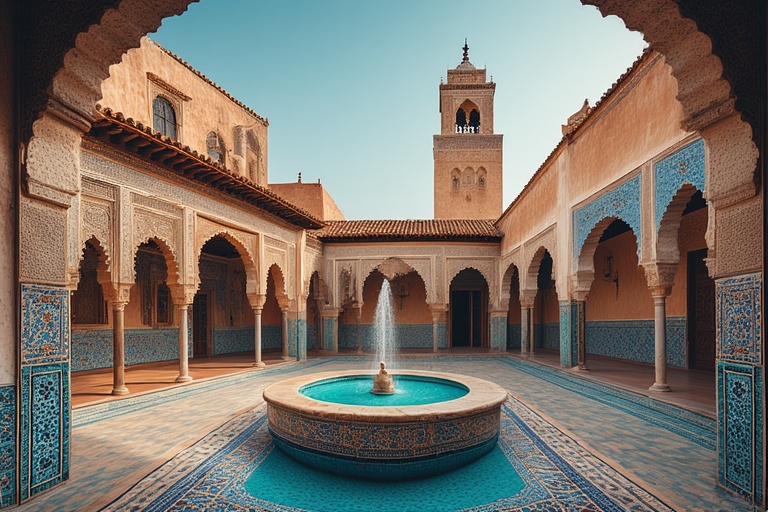
The word comes from the Arabic “ryad” — garden — and the garden is the point. A traditional riad is organised around a central open courtyard containing a fountain and four symmetrically planted beds, representing the four rivers of Quranic paradise: water, milk, honey, and wine. The courtyard is open to the sky but enclosed on all four sides, creating a private microclimate that is substantially cooler than the surrounding streets. Rooms on two levels face onto the courtyard through arcaded galleries; the upper gallery provides shade for the ground-floor rooms in summer and channels rainwater toward the central fountain in winter.
Privacy by design — the L-shaped threshold
Entry to a riad is never direct. A carved wooden door — often studded with brass in geometric patterns — opens not into the courtyard but into a vestibule or skifa, typically angled at 90° to the main axis. This L-shape is deliberate: standing on the street, you cannot see into the house even when the door is open. Privacy is architectural, not reliant on human vigilance.
The transition from the vestibule to the courtyard is one of architecture’s great reveals: darkness giving way to light, heat to cool, noise to the sound of water. Every traditional riad orchestrates this moment, and every visitor experiences it as a kind of arrival regardless of how many times they have come before.
Fountain, four gardens, and the microclimate machine
The central courtyard is simultaneously the riad’s living room, its cooling system, and its spiritual core. The fountain creates evaporative cooling; the open sky draws warm air upward; the surrounding galleries shade the ground level. On a 38°C Marrakech afternoon, a traditional riad courtyard can feel 8–10°C cooler — passive engineering that no air conditioning unit quite replicates.
The four garden beds — planted with orange trees, roses, jasmine, and herbs — add fragrance to the sensory environment. In winter, citrus fruit hangs over zellige paths; in spring, jasmine turns the courtyard into a perfumery. The zellige floor and lower wall panels frame everything in pattern; the upper walls show carved stucco; the ceiling over the gallery is cedarwood.
Family life, cool evenings, and the skyline of minarets
The upper floors of a riad are where family life happens: more private than the reception-level ground floor, they look down into the courtyard rather than out to the street. The decorated wooden railings of the upper gallery are an architectural element in their own right — turned balustrades and carved panels that frame views of the courtyard below.
The rooftop terrace (sطح, satih) is the riad’s final layer. Historically used for sleeping in summer and laundry year-round, it has become the social high point of the modern riad hotel: a 360° view across the medina’s roofscape, with minarets marking the horizon and the Atlas Mountains visible on clear days beyond the city walls.
The Modern Riad Hotel
From the 1990s onwards, foreign buyers began purchasing and restoring deteriorating riads in Marrakech, Fez, and Essaouira, converting them into boutique hotels. The movement has had mixed effects: it has channelled money into restoring buildings that might otherwise have collapsed, and it has brought the riad to global attention. At its best, the restored riad hotel is one of Morocco’s finest travel experiences — staying within the bones of a 19th-century house, surrounded by the same materials and proportions that Moroccan families lived with for generations. Finding these properties through platforms that specialise in traditional accommodations allows visitors to experience authentic Moroccan riads at their finest.
📌 Booking note: The best riad hotels book out months in advance for high season (March–May, October–November). If you’re travelling to Marrakech or Fez and want to stay in a traditional riad, book at least 8–12 weeks ahead. Many of the finest riads have fewer than ten rooms and rarely appear on mainstream booking platforms.
Modern Moroccan Architecture: Evolution & Contemporary Examples
Contemporary Moroccan architecture is navigating one of the most interesting tensions in world architecture: how to be genuinely modern without abandoning a tradition of extraordinary richness. The results range from pastiche to genuine synthesis.
The Colonial Transition: Neo-Mauresque
Henri Prost’s 1917 plan for Casablanca established the template for the French colonial approach: a European-plan ville nouvelle built alongside rather than through the historic medina. The buildings that filled the nouvelle ville combined Art Deco geometry with Moroccan ornamental vocabularies — arched arcades, zellige accents, decorative plasterwork on otherwise modernist facades. The Mahakma du Pacha in Casablanca (1952) represents this synthesis at its most accomplished.
Post-Independence Modernism
After independence in 1956, Morocco’s architects — trained largely in Paris — sought a language that was authentically Moroccan without being merely nostalgic. Jean-François Zevaco’s concrete structures of the 1960s and 70s are the most distinctive products of this era: buildings that use Islamic spatial principles (enclosed courtyards, filtered light, geometric abstraction) in poured concrete rather than clay and cedar. They remain underappreciated internationally and are increasingly at risk from demolition.
Contemporary Voices
Today’s Moroccan architects include some of the continent’s most interesting practitioners. Aziza Chaouni works at the intersection of heritage and sustainability, adapting traditional passive cooling systems for contemporary buildings in Fez. Driss Kettani creates structures that quote traditional forms without copying them — the Casablanca Finance City Tower, with its facade of perforated aluminium panels inspired by mashrabiya geometry, is his best-known work. Tarik Oualalou has brought Moroccan spatial sensibilities to projects from Lyon to Lagos.
The Grand Theatre of Rabat — designed by Zaha Hadid Architects and completed in phases through the early 2020s — represents the highest-profile international commission in recent Moroccan architectural history. Its rippling concrete forms reference both Islamic geometry and Atlantic wave formations; its public spaces dissolve the boundary between interior and exterior in ways that recall, however abstractly, the traditional Moroccan courtyard.
Powered by GetYourGuide
Notable Buildings & Structures Exemplifying Moroccan Architectural Excellence
Morocco’s architectural roll-call spans 14 centuries and every typology from mosque to mausoleum. These are the buildings that no serious student of Moroccan architecture should miss.
Religious Structures
The Hassan II Mosque in Casablanca (completed 1993) is the largest mosque in Africa and the 7th largest in the world, with the world’s tallest minaret at 210 metres. Partly built over the Atlantic Ocean — the prayer hall floor is glazed so worshippers kneel above the sea — it can accommodate 105,000 people across its interior and exterior courtyards. The Koutoubia Mosque in Marrakech, its 12th-century Almohad minaret still serving as the city’s primary landmark, established the proportional system (height-to-width ratio of roughly 5:1) that influenced minaret design across the Islamic world, including the Giralda in Seville. The Al-Qarawiyyin in Fez, founded in 859 CE, is recognised as the world’s oldest continuously operating university — its green-tiled pyramidal roofs a constant presence in the medina’s skyline.
Palaces & Royal Architecture
The Bahia Palace in Marrakech (19th century) is 150 rooms of competitive decorative excess: the chief architect designed it to be the greatest palace in the world at the time of its construction, and in terms of sheer density of zellige, stucco, and cedarwood, he may have succeeded. The Saadian Tombs, sealed by Sultan Moulay Ismail in the 17th century and rediscovered only in 1917, preserve Marinid and Saadian funerary decoration in near-perfect condition: carved cedar and Italian marble in combination with zellige of exceptional quality. Many of these and Morocco’s other architectural heritage sites are formally recognised among Morocco’s UNESCO World Heritage Sites.
Madrasas: The Art School as Architecture
The Ben Youssef Madrasa in Marrakech (14th century, extensively restored by the Saadians in the 16th) accommodated 900 students in cells arranged around a central courtyard of breathtaking elaboration: marble floor, zellige wainscot, carved stucco middle zone, cedarwood cornice and screen above — the three-zone interior wall treatment that is Moroccan architecture at its most codified and most beautiful. The Bou Inania Madrasa in Fez is uniquely permitted to include a minaret, giving it public mosque status — its water clock (clepsydra) mechanism, set into the exterior wall, remains one of medieval architecture’s most intriguing puzzles.
Moroccan Architectural Elements in Global Design
Few regional architectural traditions have achieved the global reach of Moroccan design. From boutique hotels in Brooklyn to private villas in Bali, elements first developed by Moroccan craftsmen over centuries now appear as aspirational shorthand for a certain kind of sophisticated, sensory-rich interior.
The reasons for this reach are not hard to identify. Zellige patterns translate effortlessly into tile manufacturing; tadelakt plaster has found a natural home in the contemporary spa and luxury bathroom market; the riad’s courtyard concept solves the urban problem of creating private outdoor space in dense residential contexts; mashrabiya screens are among architecture’s most elegant solutions to the combined problems of solar shading, privacy, and visual interest. Traditional Moroccan design principles of privacy, passive cooling, and natural materials align closely with contemporary cultural values of sustainability and authenticity.
The most successful incorporations of Moroccan elements in non-Moroccan interiors tend to be selective rather than comprehensive. One zellige-tiled wall, or a single carved cedarwood screen, or a tadelakt bathroom — rather than all three simultaneously — allows the element to read as a considered choice rather than a theme-park reproduction.
Fusion approaches are particularly widespread. “Modern Moroccan” style — clean contemporary lines punctuated by traditional craft objects, geometric textiles, and hand-hammered metalwork — has become a recognised interior design category. Mediterranean fusion combines Moroccan, Spanish, and Italian elements that share common Moorish roots. And the bohemian Moroccan aesthetic, built around layered textiles, pierced metal lanterns, and low seating around brass trays, has been a persistent force in global interiors since at least the 1970s.
Preservation Efforts & Challenges for Traditional Moroccan Architecture
Morocco’s eight UNESCO World Heritage Sites testify to the international recognition of its architectural heritage. But recognition and preservation are not the same thing, and the medinas that receive the most visitors are simultaneously the most celebrated and the most pressured.
The Preservation Landscape
The Medina of Fez, inscribed in 1981 as the largest car-free urban area in the world, contains over 9,000 traditional structures — the largest concentration of medieval urban architecture in North Africa. The Agence pour la Dédensification et la Réhabilitation de la Médina de Fès (ADER-Fès) has managed rehabilitation projects here since 1989, with mixed results: major monuments are in reasonable condition; the residential fabric continues to deteriorate as owners lack resources for maintenance and traditional skills become harder to find.
Casamemoire in Casablanca is the most active preservation organisation for colonial-era architecture, advocating for the 483 buildings on its heritage register — a particularly important mission given that Casablanca’s Art Deco and Neo-Mauresque buildings receive far less international attention than the medinas, despite representing a unique and irreplaceable chapter in architectural history.
The Core Challenges
Urban development pressure is the most persistent threat. As Moroccan cities grow and property values increase, historic buildings represent valuable development land, and the economics of maintenance versus demolition-and-replacement are often unfavourable to preservation. Tourism brings both resources and damage: visitor numbers to major medinas have increased dramatically in recent decades, and the wear on historic fabric — floors, walls, atmospheric conditions — accumulates faster than conservation budgets can address. Climate change poses a specific threat to earthen architecture in the south: increased rainfall intensity and flash flooding damage pisé structures that have survived in a drier climate for centuries.
Perhaps the most irreversible challenge is the loss of traditional craft skills. The maalems who make zellige, carve stucco, work tadelakt, and cut cedar are ageing, and their knowledge is not systematically transmitted. A zellige maalem requires seven years of apprenticeship; if that apprenticeship system is not supported and incentivised, the skill will simply disappear — and with it the possibility of authentic restoration rather than reproduction.
📌 How visitors can help: Staying in authentic riads rather than chain hotels, buying directly from craft workshops in medinas rather than souvenir shops, and supporting certified heritage tours all channel resources toward the people and organisations best placed to maintain Morocco’s architectural heritage.
Reserve Your Spot
Experience Moroccan Architecture Firsthand
From Marrakech’s storied palaces to Fez’s labyrinthine madrasas and the earthen kasbahs of the Draa Valley — book guided experiences that bring Morocco’s architectural heritage to life. Instant confirmation, free cancellation on most tours.
Frequently Asked Questions
Everything you need to know about Moroccan architecture
✦ Your Morocco Journey Starts Here
Step Inside the Architecture That Changed the World
From the zellige-tiled courtyards of Fez’s madrasas to the earthen towers of Ait Benhaddou at sunset, Moroccan architecture is not something you understand by reading about it — it is something you feel, from the inside, with your whole body. Plan your visit, book your experience, and arrive ready to be changed by what you find.