
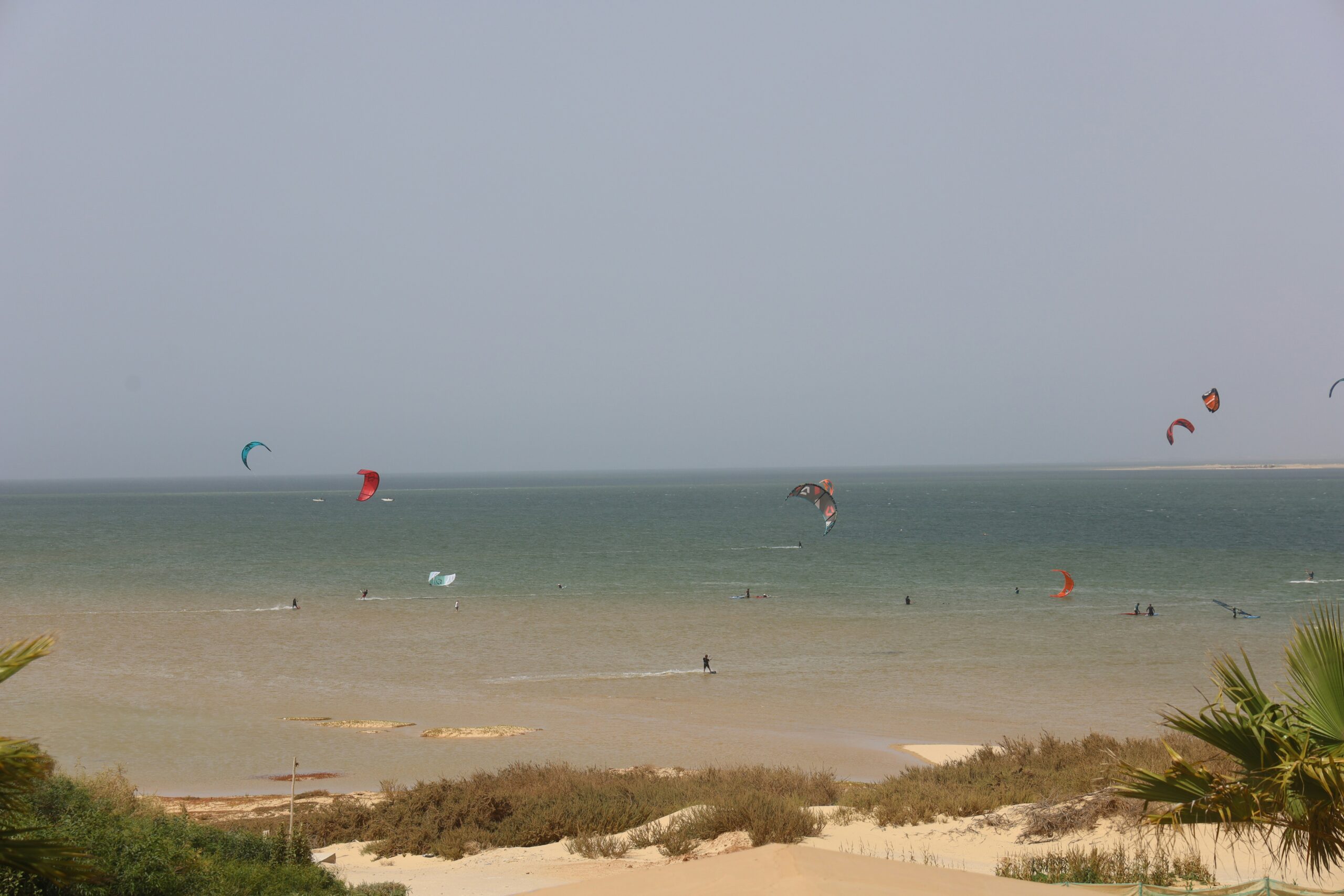
The wind starts up around eleven, the lagoon flattens into a blue mirror, and by mid-afternoon the sky above the peninsula is stitched with kites — this is what a normal Tuesday looks like in Dakhla.
Dakhla Morocco is a specialist destination first, a general holiday second. If you love wind, empty coastline and long drives across pale desert to a hot spring or a shipwreck beach, you will remember it for years. If you want souks, palaces and dinner in a rooftop riad, you are looking at the wrong Moroccan city — head to Marrakech or Fes and read on only if a kiter friend has already talked you into this trip.
- Region
- Dakhla-Oued Ed-Dahab
- Stay
- 5–8 nights
- Best months
- Apr–Sep for wind
- Airport
- VIL — 5 km
- Wind days
- 300+ per year
- From Casablanca
- 2h 15 flight
Why go to Dakhla
Dakhla sits on a forty-kilometre finger of sand pointing south into the Atlantic, with the open ocean on one side and a huge, shallow, sheltered lagoon on the other. That lagoon is the whole story. Between April and September, thermal winds funnel down the peninsula at a steady 18–28 knots, the tide fills and empties a mirror-flat body of turquoise water, and hundreds of kitesurfers and wingfoilers move across it from dawn to sunset.
The city itself, once the Spanish colonial outpost of Villa Cisneros, is small, low-rise and functional. There is no medina in the Marrakech sense. Restaurants close early, the seafront corniche is where locals stroll after Maghrib prayer, and the real “sights” — the White Dune, Dragon Island, the Asnaa hot springs, the Tropic of Cancer marker — are all thirty to ninety minutes out of town by 4×4.
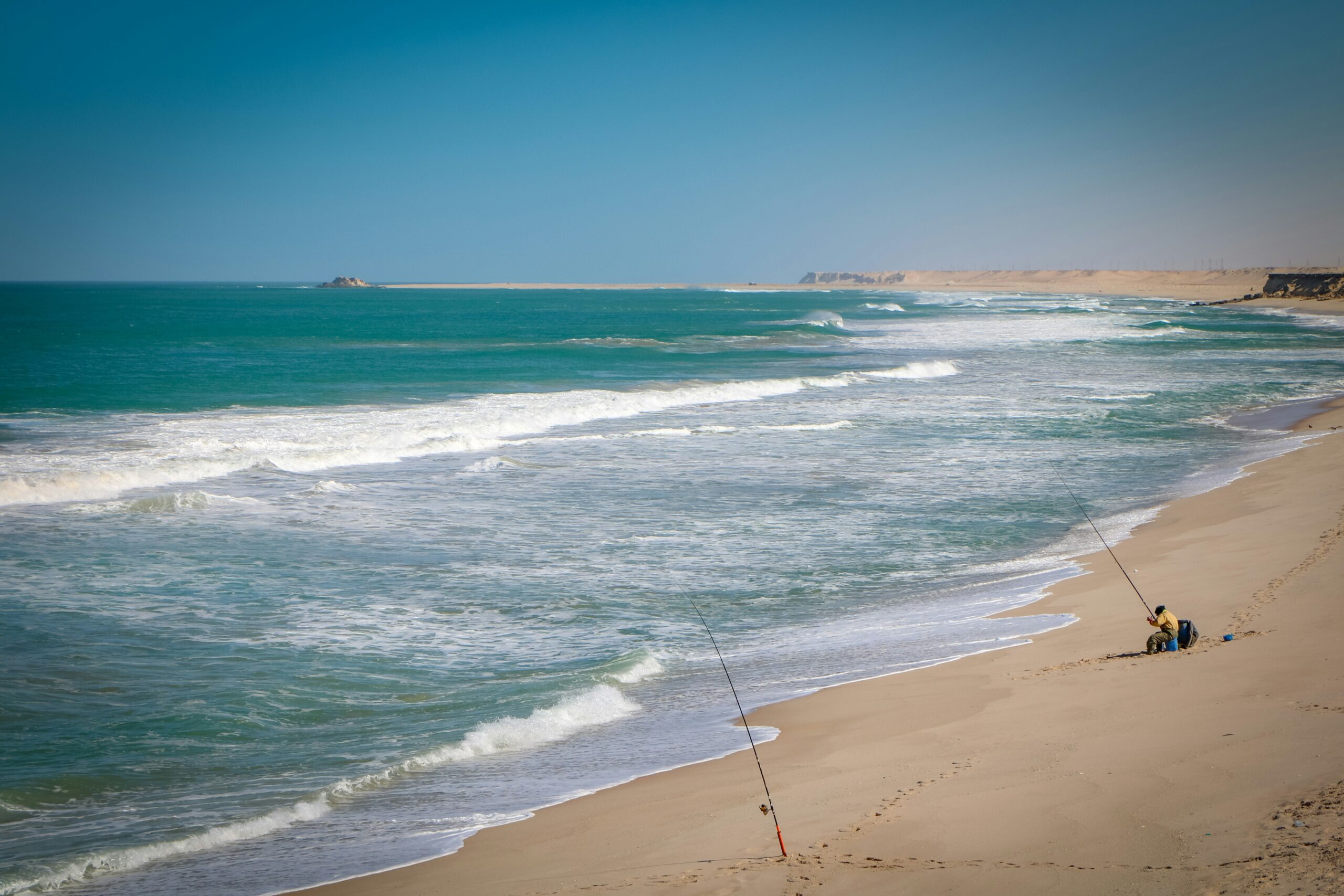
What Dakhla gives you that nowhere else in Morocco does is scale. You can drive an hour south of town and not see another car. You can walk a beach the size of a small country and find only ospreys, dolphins offshore and the odd fisherman. It is the emptiest, quietest, most weather-driven place in the country — and for the right traveller, that is the entire point.
If you are building a wider coastal itinerary, compare Dakhla with Agadir, Essaouira and Taghazout. For the wider southern region, start with the Dakhla-Oued Ed-Dahab destination hub.
Most people underestimate how remote this is. Dakhla is 1,500 km south of Casablanca. There is no train, the coach ride is punishing, and once you arrive there is very little in the way of walk-up city entertainment. Fly in, book a camp or hotel with transfers, and plan your excursions before you leave.
Things to do in Dakhla
Almost everything worth doing in Dakhla involves wind, water or a long drive across the desert. Kitesurfing dominates, but there is a full second layer of activity for non-kiters and rest-day riders — catamaran trips, hot springs, oyster farms, sandboarding, quad tours, camel rides and 4×4 excursions to the wildest corners of the coast.
Booking note: The embedded GetYourGuide widgets were removed here because they sometimes showed the same Dakhla tour repeatedly. These buttons link to separate Dakhla activity searches instead, so each card stays focused on a different experience.
Catamaran Sailing Adventure with Island Visit
A relaxed lagoon sailing trip with pickup, shallow-water views and an island stop — ideal for non-kiters or rest days.
White Dune 4×4 Desert Tour with Hot Spring Visit
The classic full-day Dakhla excursion: White Dune, desert tracks, lagoon viewpoints and a warm sulfur-spring stop.
Wingfoil and Hotel Experience
A short, water-sports-focused package for travellers who want to try Dakhla’s wind scene without committing to a full kite camp week.
Quad Tour and Camel Ride in the Desert
A compact desert activity that combines quad biking, sand tracks and a short camel ride — good if you only have one free afternoon.
Imlili Secret Oasis Tour with Picnic Lunch
A desert-oasis trip to Sebkha Imlili’s saltwater pools, usually with pickup and a picnic lunch included.
City Tour with Lighthouse and Artisan Workshop
A good orientation tour for non-kiters: Dakhla town, the lighthouse, craft stops and a look at everyday life beyond the lagoon.
The kitesurfing lagoon and its main spots
The lagoon runs south from town for roughly 40 km, and the kite scene is arranged along it by kilometre marker. PK25 is the main hub — beginner-friendly flat water, half a dozen camps, schools and rescue cover. Speed Spot, further south, is famous for glassy water and a knee-deep launch. Foum El Bouir on the ocean side is the wave spot for advanced riders.
Search Dakhla kitesurfing experiences
The White Dune (Dune Blanche)
A giant white sand dune that rises straight out of the lagoon about 40 minutes south of town. You climb it in bare feet for a 360° view of the peninsula, sandboard down the ocean-facing slope, then watch kiters launch from the shallow water at its base. Most camps run this as a half-day trip; independent 4×4 drivers charge around 500–700 MAD for a small group.
Dragon Island and the oyster farms
At low tide you can wade across from the mainland to Dragon Island, a low sandy islet in the middle of the lagoon. The lagoon bed here is rich in sulfur mud that locals dig up and smear on as a natural face mask before rinsing in the shallows. On the way back, stop at one of the lagoon-side oyster shacks for fresh oysters and grilled octopus tagine.
Book Dragon Island for a low-tide morning. On a high tide you can still paddle across, but the “walk on water” effect that everyone comes for only works when the flats are exposed — check the tide tables the day before.
Asnaa hot springs and Sebkha Imlili
About 25 km inland, warm sulfur jets bubble up into a series of tiled pools at Asnaa — 38°C water, a small entry fee, and almost always locals soaking there in the evenings. Combine it with a stop at Sebkha Imlili, a strange chain of desert salt lakes where tiny fish nibble dead skin off your feet. Both need a 4×4 and are usually sold as one full-day excursion.
Where to stay in Dakhla
The choice is simpler than in most Moroccan cities: you are either on the lagoon at a kite camp, or in Dakhla town itself. Kite camps are usually all-inclusive because there is nowhere to walk to. Town hotels are cheaper and better if you want restaurants and shops on your doorstep, but you will pay for a taxi every time you want to kite or sightsee.
Lagoon kite camps around PK25
The classic Dakhla stay. Rooms or bungalows a few steps from the water, buffet meals in a shared dining area, an on-site kite school and a rescue boat. Almost every guest is here to ride, so expect early nights, board talk at dinner and instant access to the wind.
Dakhla town and the corniche
Mid-range and business hotels along the seafront, with actual restaurants, cafés and a small souk within walking distance. You will join lagoon excursions as day trips, which works well if you are a mixed group of kiters and non-kiters.
Boutique eco-lodges south of town
A small but growing category — solar-powered lodges spread thin along the peninsula, with private terraces, better food than the big camps and no kite-school noise. Ideal if you want the desert-and-ocean atmosphere without a communal dining tent full of riders planning tomorrow’s session.
Some links on this page earn ComeMorocco a commission at no extra cost to you. It never changes what we recommend. How this works.
Best time to visit Dakhla
Spring (March–May)
The sweet spot. Wind builds through April, days sit around 22–26°C, and kite camps start filling up. Book ahead for Easter and May holidays.
Summer (June–August)
Peak wind season: reliable 20–28 knot afternoons, warm air and busier kite camps. Bring strong sun protection — the glare off the lagoon is intense.
Autumn (September–November)
Wind eases from October, but the water is at its warmest and the ocean side starts producing better waves. Best window for a mixed kite, surf and sightseeing trip.
Winter (December–February)
Lighter, less predictable wind and cooler mornings. Wingfoilers still get sessions, desert excursions are more comfortable, and prices often drop.
Getting to and around Dakhla
| From | How | Time | Notes |
|---|---|---|---|
| Casablanca | Direct flight | 2h 15 | Main route for most international travellers; usually several flights per day |
| Agadir | Direct or via Casablanca | 1h 45 direct | Direct flights are limited and seasonal; many routes connect through Casablanca |
| Paris or Madrid | Seasonal direct flight | About 4h 30 | Mostly seasonal schedules; check before building your itinerary around them |
| Marrakech | Flight via Casablanca | 4–6h total | Direct flights are rare; a connection is normal |
| Dakhla Airport | Hotel or camp transfer | 25–30 min to lagoon | Most kite camps and resorts arrange pickup |
| Casablanca overland | Coach | 22–24h | Only worth considering for very tight budgets |
Once you are here, distances rule everything. The road down the peninsula from town to PK25 is paved and easy, but anything beyond the lagoon — White Dune, Asnaa, Puerto Rico Beach, Sebkha Imlili — needs a 4×4 and a driver who knows the tracks. For broader planning, see our domestic flights in Morocco guide, Morocco transportation guide and Morocco beach holidays guide.
Day trips from Dakhla
60 km south · 1h 15 drive
A wide, wild beach at the foot of ochre cliffs, with a natural sea arch you can walk under at low tide. Bring your own lunch — there is nothing here but sand, birds and the occasional fisherman.
Around 90 km · full-day 4×4
Photo stop at the Tropic of Cancer monument, then on to the eerie salt lakes of Sebkha Imlili where tiny fish nibble your feet. Combined with Asnaa hot springs, this makes a full and worthwhile desert day.
30 km · 40 min drive
The Atlantic side of the peninsula, all pounding surf, black rocks and osprey nests. Advanced kiters ride waves here; everyone else comes for the raw scenery and a long walk along the ocean.
Full day · long drive east
For the truly curious: a long, straight desert road east of Dakhla into the deep Sahara. Go with a licensed local guide, plenty of water and a proper 4×4.
What to eat in Dakhla
Dakhla’s kitchen is Atlantic, not Marrakech. Forget the cinnamon-and-prune tagines of the north — down here it is about what came out of the lagoon or off the fishing boats that morning. The city is quietly one of the best seafood destinations in Morocco, and prices are often lower than in Essaouira or Casablanca.
Lagoon oysters
Dakhla is Morocco’s oyster capital. Farms along the lagoon supply the country and sell direct at simple waterside restaurants. Eat them raw with lemon or pair them with grilled fish and a pot of mint tea.
Grilled fish and octopus tagine
Any decent restaurant in town will serve a whole grilled fish of the day with chermoula, potatoes and salad. Octopus tagine, slow-cooked with olives and preserved lemon, is the local seafood order worth trying at least once.
Sahrawi mint tea and camel meat
Away from the seafood, Sahrawi food shows up: strong mint tea poured from height, and occasionally camel meat tagine on family menus. For more national context, see our guide to Morocco’s best dishes.
The fish market at the port opens early. If you are staying in town, go before 9 am, pick a fish, and hand it to one of the small grills nearby — it is one of the best-value seafood lunches in southern Morocco.
Dakhla questions
01How many days do I need in Dakhla?
Five to seven nights is the standard kite trip and lets you handle wind days that do not cooperate. If you are not kiting, three to four nights covers the lagoon, White Dune, Dragon Island and one desert excursion without feeling rushed.
02Is Dakhla safe for tourists?
Yes. Dakhla is one of the safest places in Morocco for visitors, with low street crime, a big international kite community and a visible police presence. The genuine risks are environmental: sun, remote roads, tides and wind.
03Do I need to kitesurf to enjoy Dakhla?
No, but you should like desert, wind and long empty landscapes. Non-kiters have catamaran trips, hot springs, oyster tasting, sandboarding, quad tours and camel rides, but Dakhla is not a classic city-break destination.
04How do I get to Dakhla from Casablanca or Marrakech?
Fly. Casablanca has the most reliable direct flights to Dakhla, taking about 2h 15. From Marrakech there are usually connections via Casablanca; overland by coach takes more than 22 hours.
05When is the windiest month in Dakhla?
June, July and August deliver the most consistent thermal wind, but April, May and September are almost as reliable and usually less crowded. Winter still has rideable days, but wind is lighter and less predictable.
06Can I visit Dakhla on a normal Morocco visa?
Yes. Morocco administers Dakhla and the same entry rules apply here as in the rest of the country. Most Western passport holders enter visa-free for up to 90 days, but you should check current visa rules before booking flights.
Keep planning
See how Dakhla fits your Morocco trip
Pair a week on the lagoon with Agadir, Marrakech, the Atlas or the Sahara. Our full itinerary guide explains the routes, timings and honest trade-offs.