Staring at a map of Morocco, dreaming of blue streets, Sahara dunes, and bustling souks — but wondering exactly how many days is enough for your dream trip?
Have you ever stared at a map of Morocco, dreaming of the blue streets of Chefchaouen, the vast Sahara dunes, and the bustling souks of Marrakech, only to wonder how many days in Morocco is enough? You’re not alone. Every traveler faces this puzzle. The truth is, there’s no single answer that fits everyone. Your perfect trip length depends on your travel style, budget, and the regions you most want to see. Below we compare the most popular trip lengths — 5, 7, and 10 days — with sample itineraries, driving times, and trade-offs so you can confidently decide how long to spend in Morocco for your dream adventure.
Most first-time visitors choose 7 days because it’s the shortest loop that covers Marrakech, the Sahara, and Fes. That route spans roughly 1,500 kilometres with three full driving days. But is that right for you? Let’s break it all down.
Key takeaways
7 days is the sweet spot for first-timers — covers Marrakech, Sahara, and Fes without rushing.
5 days works for a fast Marrakech + Sahara taste, but you’ll skip Fes, Chefchaouen, and the coast.
10 days lets you add the Atlantic coast, imperial cities, and mountains at a relaxed pace.
Fly into Marrakech and out of Fes (or vice versa) to avoid backtracking on the classic loop.
Book Sahara desert camps and riads 3–6 months ahead for peak season (spring/fall).
Contents
The quick answer
Here’s the short version: 7 days is the “sweet spot” for a balanced first visit. If you have limited time, 5 days works for a fast taste. If you want deeper immersion, 10 days lets you explore more regions at a relaxed pace.
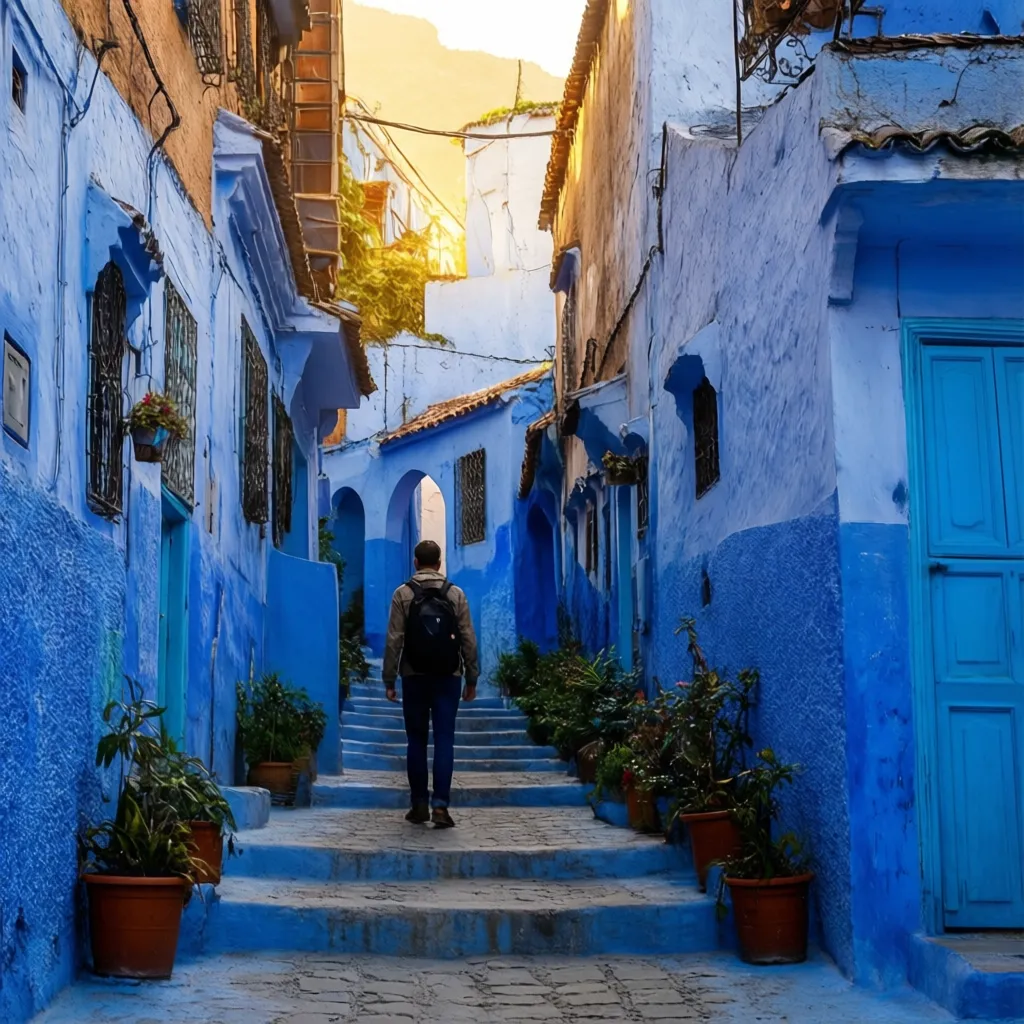
If you’re still weighing how long to spend in Morocco, here’s the breakdown of the three most common durations:
- 5 days: Best for stopover travellers or those with very limited time. Focuses on Marrakech plus a dash to the Sahara.
- 7 days: The classic loop. Perfect for first-timers who want cities, desert, and culture without rushing.
- 10 days: A grand tour. Ideal for those who want imperial cities, the Atlantic coast, and the mountains at a slower pace.
The classic 7-day route covers roughly 1,100–1,500 kilometres, depending on detours, with three full driving days. Manageable, yet comprehensive.
Open-jaw tip. Flying into Marrakech and out of Fes (or vice versa) saves roughly eight hours of backtracking. Most major European hubs and Gulf carriers offer this routing at little or no premium.
The 5-day itinerary — a fast, focused taste
Is 5 days enough?
Five days is tight but doable if you’re craving a quick hit of Morocco’s highlights. You’ll experience Marrakech’s Jemaa el-Fna and its labyrinthine souks, plus a Sahara desert excursion. The trade-off is real: you skip Fes, Chefchaouen, and the entire Atlantic coast.
The most popular short-trip route is Marrakech to the Sahara and back. Intense, but rewarding.
Sample 5-day route
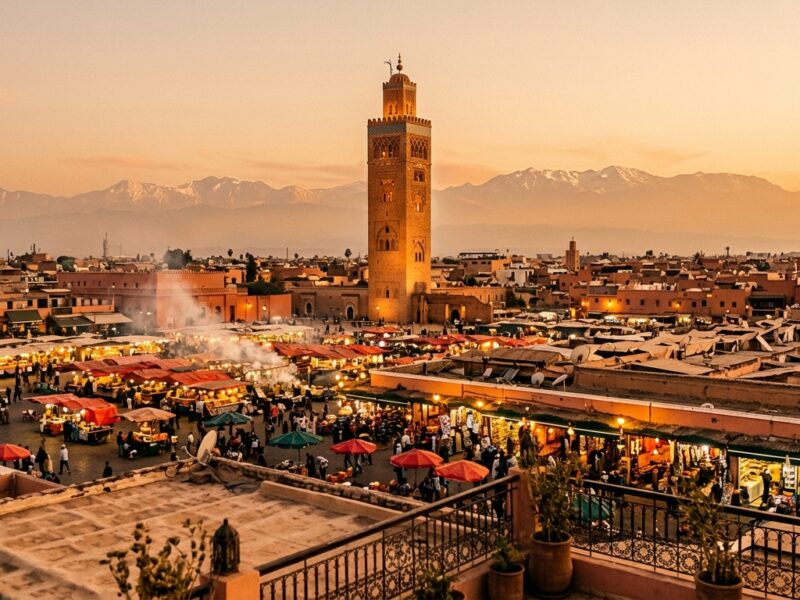
Jemaa el-Fna, Koutoubia Mosque and the souks
Arrive at Marrakech Menara (RAK). Settle into your riad, then dive into the souks around Jemaa el-Fna for an evening of bargaining and street food. The square transforms at sunset into an open-air theatre of storytellers, musicians, and food stalls.
Bahia Palace, Ben Youssef Madrasa, Jardin Majorelle
Start early at Bahia Palace before the tour groups arrive, then visit Ben Youssef Madrasa for its zellige tilework. Reserve timed-entry tickets for Jardin Majorelle and the Yves Saint Laurent Museum online. Lunch on a rooftop overlooking the medina, then lose yourself in the souk quarters — each dedicated to a craft: copper, leather, textiles, spices.
High Atlas crossing via Tizi n’Tichka (2,260 m)
Depart around 7am for the six-hour drive through the High Atlas via the dramatic Tizi n’Tichka Pass. Stop at Aït Benhaddou, a UNESCO-listed ksar familiar from Gladiator and Game of Thrones. Explore the mud-brick alleys with a local guide — essential for understanding the architecture and history.
Canyon walks, then a sunset camel trek into Erg Chebbi
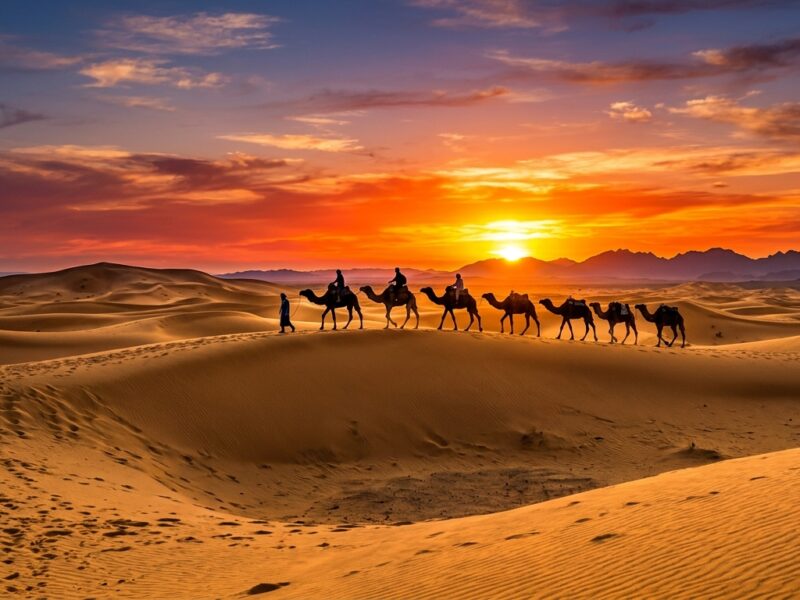
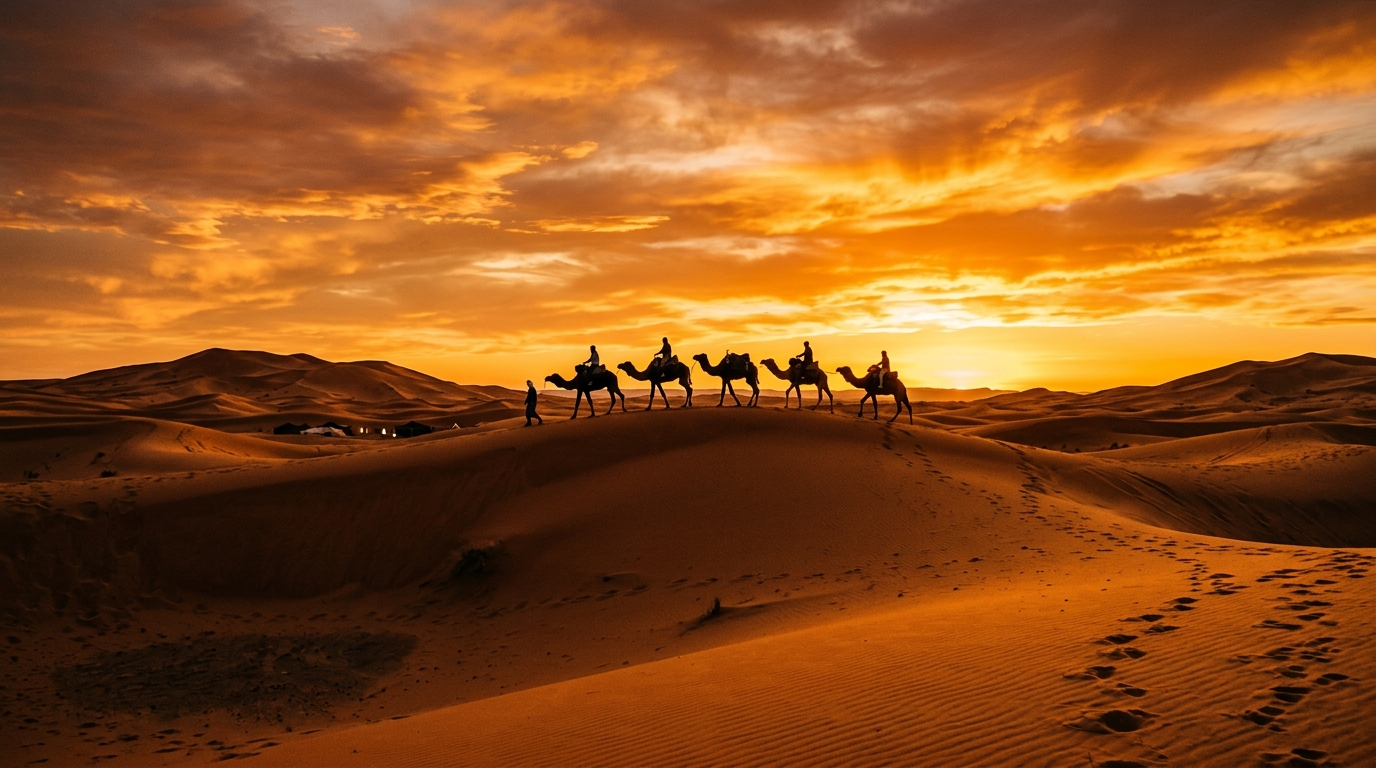
Short drive to Todra Gorge for a walk between 300-metre limestone cliffs. Continue to Merzouga, gateway to Erg Chebbi. Meet your camel caravan for the 90-minute sunset trek to your desert camp. Dinner under the stars, Berber drums, and — with no light pollution — the Milky Way.
Eight-hour drive back, or fly from Errachidia (ERH)
Wake before dawn for the iconic Erg Chebbi sunrise — dunes glowing gold and rose. Camel back to Merzouga, then drive to Marrakech (about eight hours with stops), or take a Royal Air Maroc flight from Errachidia to Casablanca or Marrakech (book two months ahead for reasonable fares). If driving, stop at Rissani market — traditional and refreshingly non-touristy — for last-minute souvenirs.
Marrakech to Merzouga is about 360 kilometres one way. Aït Benhaddou is a key stop on the Route of a Thousand Kasbahs. This route packs a lot into five days, but you’ll be on the move constantly.
The classic 7-day itinerary — the sweet spot
Why 7 days works
This is the most-searched Morocco itinerary for a reason. It strikes a balance between adventure and rest: two vibrant imperial cities, the Sahara, and stunning mountain scenery — without a forced march. It’s ideal for first-timers and works best as a loop: fly into Marrakech and out of Fes (or vice versa) to avoid backtracking.
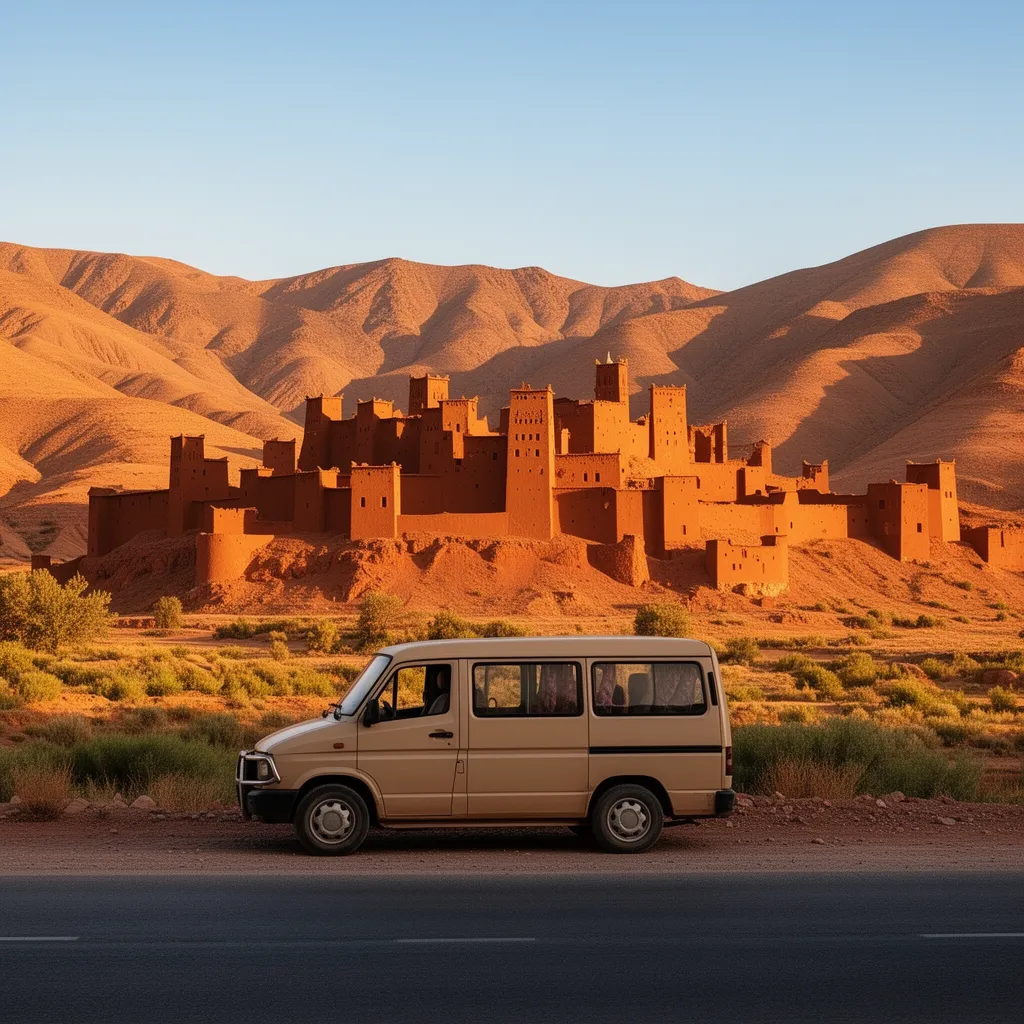
Day-by-day breakdown
Medina, palaces, gardens, and Jemaa el-Fna after dark
Day 1: arrive, settle into your riad, and explore the medina at golden hour. Day 2: a full day at Bahia Palace, Jardin Majorelle (book online), Ben Youssef Madrasa, and Jemaa el-Fna — described by UNESCO as “the most extraordinary public square in Africa.” Evening food tour through the square’s smoke and spice.
Six-hour scenic drive, UNESCO ksar, Valley of Roses
Depart around 7:30am. Cross the High Atlas via Tizi n’Tichka with photo stops at mountain villages. Explore Aït Benhaddou with a local guide (30–45 minutes). Continue through Ouarzazate — “Hollywood of Africa” — and the Valley of Roses to the Dadès Gorge. Overnight in a cliffside hotel with gorge views. Dinner of tagine and fresh bread.
Canyon walk, then sunset camel trek and desert camp
Morning walk in Todra Gorge — easy, flat, half an hour. Drive to Merzouga (2.5 hours). Switch to 4×4 or camel for the trek into Erg Chebbi. Sunset from the highest dune. Overnight in a luxury desert camp with private bathroom, heated blankets, and a Berber dinner around the fire.
Long driving day (460 km) through dramatic landscapes
Sunrise camel trek back. Depart 8am. Drive via Rissani (visit the market on Sunday, Tuesday or Thursday), Erfoud (fossil workshops), and the spectacular Ziz Valley with its endless palm groves and fortified ksour. Arrive in Fes by 6–7pm. Check into your medina riad. Light dinner nearby.
Medina, tanneries, madrasas, and the world’s oldest university
Hire an official guide — essential for Fes’s 9,000 alleyways. Visit Al Quaraouiyine University (founded 859 CE, the oldest continuously operating university in the world), Bou Inania Madrasa, the Chouara Tannery (best viewed from a rooftop terrace — bring mint leaves for the smell), and the souks by craft quarter: brass, copper, leather, textiles, ceramics. Get lost intentionally — it’s the only way to find the hidden gems.
Fly from FEZ, or connect by train to Casablanca or Tangier
Fly out of Fes-Saïs (FEZ) — convenient for European connections. Or take the four-hour train to Casablanca (connect to Mohammed V International) or 4.5 hours to Tangier (ferry to Spain). The Al Boraq high-speed train cuts Casablanca–Tangier to 2h 10. Book on the ONCF app two weeks ahead.
Total distance: roughly 1,100–1,500 kilometres with three full driving days. This route works best Marrakech-in / Fes-out to avoid retracing your steps.
Working the souks into the loop
If shopping and cultural immersion matter to you, dedicate specific time to the markets. In Marrakech, hit the souks on Day 1 evening and Day 2 morning — massive, colourful, and touristy. In Fes, explore on Day 6 — more authentic, more labyrinthine, and less aggressive.
That gives you two vastly different market cultures on one trip. Marrakech’s souks are the largest in Africa; Fes’s are older and more traditional. Both are unforgettable.
In Fes, ask your riad host to call a trusted guide the night before. Official guides wear badges and charge around 300–400 MAD for a half-day. Avoid “guides” approaching you in the street — they usually lead to commission shops.
The in-depth 10-day itinerary — a grand tour
Why choose 10 days
Ten days offers a slower pace and covers more ground. Instead of rushing between destinations, you can spend extra time in each place. Perfect for culture lovers, photographers, families, or anyone who dislikes spending half a vacation in a car. Imperial cities, the coast, mountains, and desert — with less driving per day.
Sample 10-day route (Casablanca start)
Hassan II Mosque, then capital-city highlights
Arrive Casablanca (CMN). Visit the Hassan II Mosque — one of the world’s largest, oceanfront, with a retractable roof. Guided tours run outside prayer times (book on site). Drive one hour to Rabat. Visit Hassan Tower, the Kasbah of the Udayas (blue-and-white alleys, Atlantic views), and Chellah (Roman ruins and a stork sanctuary). Overnight in Rabat.
Rif Mountains drive, blue medina exploration
Depart 9am for the four-hour drive through the Rif. Arrive in Chefchaouen — the “Blue Pearl” — by lunch. Afternoon in the azure alleys: Plaza Uta el-Hammam, the Kasbah Museum, Ras El Maa waterfall. Sunset from the Spanish Mosque hilltop (20-minute climb). Overnight in a blue-door riad.
Roman ruins, imperial city, then Fes medina arrival
Morning in Chefchaouen for photos without crowds. Drive 2.5 hours to Volubilis — Morocco’s best-preserved Roman ruins (UNESCO). Mosaics, basilica, triumphal arch. Continue 30 minutes to Meknes (“Versailles of Morocco”): Bab Mansour, the Heri es-Souani granaries, and the Moulay Ismail Mausoleum. Drive one hour to Fes. Evening at leisure.
Full medina day, plus an optional Middle Atlas day trip
Day 4: full guided medina tour — tanneries, madrasas, souks, the Nejjarine Museum. Day 5: optional day trip to Ifrane (“Little Switzerland” — alpine architecture, lion statue) and the Cedar Forest (Barbary macaques, Atlas cedars). Or stay in Fes for a cooking class, a hammam, or a pottery workshop in Ain Nokbi.
Long drive through Ziz Valley, sunset camel trek
Depart 7am. Seven-hour drive with stops: Midelt (lunch, apples), Ziz Gorge viewpoint, Erfoud (date festival in October). Arrive Merzouga 4pm. Camel trek to camp. On a 10-day trip, consider two nights in the desert — it opens up a full day of 4×4 exploration (the Khamlia Gnawa music village, nomad families, fossil mines).
Morning dunes, Todra Gorge, Dadès Valley overnight
Sunrise at Erg Chebbi. If two-night desert: morning 4×4 excursion. Otherwise, camel back, drive to Todra Gorge (walk), continue to Dadès. Stay in a hotel with a balcony over the “Monkey Fingers” rock formations. Evening walk through the valley’s rose gardens (in bloom April–May).
Ouarzazate film studios, then the High Atlas return
Drive via Ouarzazate: visit Atlas Film Studios (sets from Gladiator, Kingdom of Heaven) and Taourirt Kasbah. Continue to Aït Benhaddou for a second visit — different light, fewer crowds. Cross the High Atlas back to Marrakech. Arrive 6–7pm. Celebratory dinner at a top medina restaurant.
Sightseeing, souks, hammam, rooftop sunset
A relaxed pace. Morning: Saadian Tombs, El Badi Palace, Dar Si Said Museum (Berber crafts). Lunch: a cooking class in a riad (tagine and pastilla). Afternoon: a hammam ritual. Sunset drinks on a rooftop overlooking Koutoubia.
Fly from Marrakech Menara (RAK) or connect onward
Depart Marrakech. If time allows, a quick stop at Jardin Majorelle (if missed on Day 2), or last-minute shopping in Gueliz — the modern district with fixed prices and boutiques.
The full loop is about 1,800 kilometres. Highlights include Volubilis, Meknes, and Ifrane — a ski resort where you can see Barbary apes.
Alternative route (Marrakech to Chefchaouen)
Some travellers prefer Marrakech → Essaouira → Casablanca → Rabat → Fes → Chefchaouen → Tangier. This coastal route adds Essaouira’s relaxed vibe and fresh seafood, along with Tangier’s Mediterranean views. A fantastic alternative if you love beaches and port cities.
Whichever route you choose, ten days lets you experience the country’s diversity without burnout.
Book early for peak season. For 10-day trips in April–May or September–October, reserve riads, desert camps, and domestic flights four to six months ahead. The best guides and camps sell out early.
Maximising time in the souks and markets
Best cities for souk-hopping
If shopping and market culture are your priority, focus on these three:
- Marrakech — best for first-time visitors. The giant souks around Jemaa el-Fna sell everything from leather bags to brass lamps, spices, and carpets. Buy something unique here.
- Fes — more authentic and less pushy. The tannery quarter is a must-see for leather; the copper workshops and weaving cooperatives offer high-quality crafts.
- Essaouira — relaxed seaside souks specialising in thuya woodwork and argan oil. Far less hectic than the big cities.
Practical tips for souk lovers
- Visit early (8–10am) for fewer crowds and better bargaining.
- Bargain politely — start at 50% of the asking price and work up slowly. It’s part of the culture.
- Must-buys: Moroccan rugs (check for authenticity), hand-painted ceramics, mint tea glasses with gold trim, and saffron — often cheaper than in Europe.
- Carry small bills — shopkeepers rarely have change for large notes.
A souk-focused mini-itinerary
For travellers whose main interest is the markets: spend two days in Marrakech (souk immersion plus the famous sights), then two days in Fes (tanneries and medina treasures). Add a quick one-night desert trip between them for variety. Six days total, focused entirely on what you love.
Itinerary ideas by travel style
Your travel style shapes how long to spend. A few tailored recommendations:
Culture and history lovers
Focus on Fes, Marrakech, Meknes, and Volubilis — Morocco’s richest history. A seven- to ten-day route centred on the imperial cities will satisfy any curiosity. Don’t miss the Roman ruins at Volubilis and the grand gates of Meknes. Our historical tours map every major site.
Adventure seekers
Add Todra Gorge hiking, a Sahara camel trek, and a day into the Atlas. Seven days is enough for this active route. Consider staying two nights in the desert for a deeper experience — quad biking and hot-air ballooning add another gear.
Food and market enthusiasts
Emphasise the souks by spending extra days in Marrakech and Fes. Take a cooking class, visit a spice shop, eat your way through the food stalls. Five to seven days focused on these two cities works well.
Relaxed travellers
Include Essaouira or Chefchaouen for a slower pace. These towns are perfect for wandering without pressure. Ten days is ideal — time to linger over mint tea and watch the world go by.
Morocco doesn’t reveal itself to tourists. It reveals itself to travellers who slow down enough to listen.
A riad host in the Fes medina
The verdict, by traveller type
Still unsure? A final verdict based on the most common profiles:
| Days | Best for | What you’ll cover |
|---|---|---|
| 5 | Stopover travellers, tight schedules | Marrakech and a desert taste. Intense but memorable. |
| 7 | First-timers wanting balance | Cities, desert, mountains — the classic sweet spot. |
| 10 | Slower, comprehensive travellers | Coast, imperial cities, Sahara. Perfect for those who hate rushing. |
| 14+ | Repeat visitors, deep divers | Middle Atlas, more Sahara time, or further along the Atlantic coast. |
Ultimately, the right answer depends on your priorities. There is no wrong choice — just the one that fits you.
Reserve your spot
Book this experience
Choose from vetted tours across Morocco — from Marrakech medinas to Sahara desert camps and Fes riads. Instant confirmation, free cancellation on most options.
Instant confirmation
Free cancellation on most tours
Some links on this page earn ComeMorocco a commission at no extra cost to you. It never changes what we recommend. How this works.
Questions
01Is 5 days in Morocco enough for a first visit?
Five days gives you a taste — Marrakech and a Sahara overnight — but you’ll miss Fes, Chefchaouen, and the coast. It’s worth it if it’s your only window, but expect eight-plus hours of driving on Days 3 and 5. For a first visit with no time pressure, 7 days delivers a far more complete experience.
02What’s the best month to visit Morocco for a 7-day itinerary?
March–May and September–October offer pleasant temperatures (20–28°C) across all regions. Summer (June–August) brings extreme heat in the Sahara (45°C+) and Marrakech (38°C+). Winter (December–February) is mild in the cities but cold at night in the desert, near freezing. Spring brings wildflowers; autumn brings harvest festivals.
03Do I need a car for a 7-day Morocco itinerary?
Not necessarily. The classic 7-day loop can be done via private driver (roughly €80–120 per day including fuel and hotels), shared group tours, or a mix of trains (Marrakech–Fes via Casablanca) plus a desert tour from Fes. Self-drive gives freedom but requires confidence on mountain roads.
04How much does a 7-day Morocco trip cost per person?
Budget: €500–700 (hostels, shared tours, local transport). Mid-range: €1,000–1,500 (riads, private driver, desert camp). Luxury: €2,500+ (luxury camps, five-star riads, private guide). Flights not included. Spring and autumn peak season adds 20–30%.
05Can I add Chefchaouen to a 7-day itinerary?
Only by cutting something major. Chefchaouen adds four to five hours of driving each way from Fes. To fit it into seven days, you’d need to skip the Sahara or reduce Marrakech and Fes to one day each — not recommended. It fits naturally in the 10-day route above.
06Is Morocco safe for solo female travellers on these itineraries?
Yes — Morocco is generally safe for solo women, especially on well-trodden routes like these. Dress modestly (shoulders and knees covered), avoid walking alone in medinas after dark, and use reputable transport. Riad staff are usually happy to arrange trusted guides and drivers on your behalf.
07What’s the best way to stay connected on a Morocco road trip?
Buy an eSIM before arrival — several providers work instantly on landing. Physical SIMs (Maroc Telecom, Orange, Inwi) require passport registration at airport or city shops. Coverage is excellent on highways and in cities; spotty in the deep desert and High Atlas passes. Download offline maps (Maps.me, Organic Maps) as a backup.
08Should I book a Sahara desert camp in advance, or on arrival?
Book two to three months ahead for April–May and September–October. The best camps — luxury, en-suite, good food — sell out. Last-minute in Merzouga works in low season (winter, August) but you risk basic camps with shared bathrooms.
Your Morocco trip
Pick your itinerary and book
Five days, seven, or ten — Morocco delivers on all three. Choose the shape that fits your time, and let the country do the rest.