Discover the finest leather goods in the Fes medina with insider tips on tannery tours, shopping streets like Derb el-Miter, and how to spot authentic handcrafted pieces that last for decades.
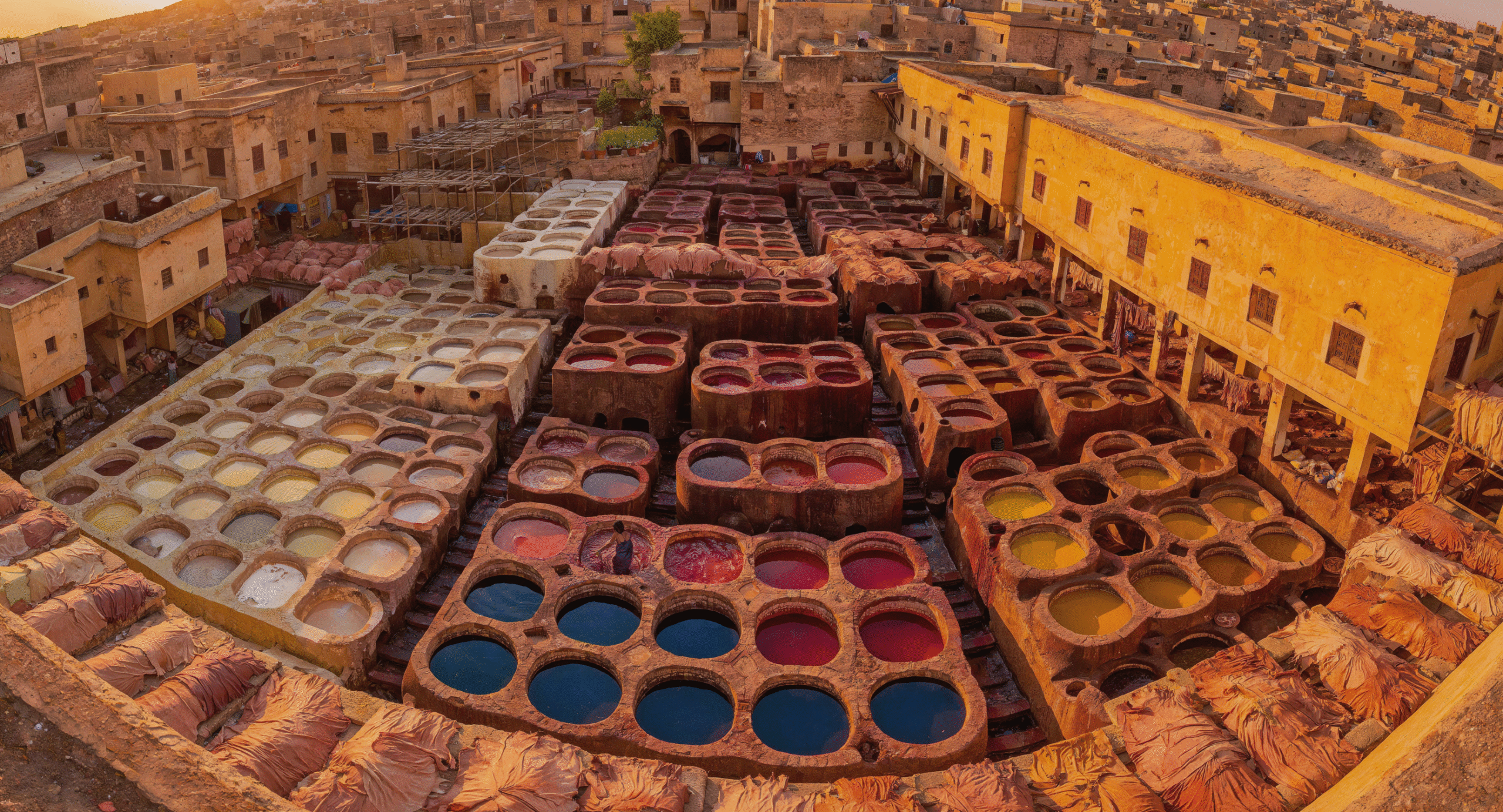
The Fes Medina hits you all at once. Your eyes catch the brilliant reds, yellows, and blues of leather drying in the sun. Your nose picks up the sharp, earthy smell of the tanneries. Your ears hear the steady rhythm of hammers shaping leather into bags, belts, and slippers. This is the heart of Moroccan leathercraft, a place where people have worked with leather for over a thousand years. This guide is your key to finding the finest leather goods in the Fes medina, from the legendary tanneries to the hidden workshop stalls. But here’s the truth: not every leather item you see is authentic. Many shops sell cheap, machine-made imports that look like the real thing but fall apart in weeks. This fes tannery shopping guide will help you find genuine, handcrafted pieces that last.
Key takeaways
Visit Chouara, Sidi Moussa, or Ain Azliten tanneries early morning (8–9 AM) for the best light and fewer crowds.
Shop Derb el-Miter for lower pressure and higher craftsmanship; avoid rooftop guides who steer you to commission-based shops.
Test authenticity with water (beads on real leather) and smell (earthy, not chemical); check for hand-stitched, slightly uneven seams.
Haggle starting at 40–50% of asking price, stay friendly, and be ready to walk away — it’s part of the culture.
Buy empty leather poufs to pack flat; seek wallets lined with sheepskin, belts cut from single hides, and custom-made bags.
Contents
- The Fes leather legacy — why the medina is the world’s leather capital
- Your Fes tannery shopping guide — step by step
- Where to shop in the Fes medina — the best streets for leather
- How to spot authentic vs. fake Moroccan leather
- The best Moroccan leather souvenirs to buy in the Fes medina
- Mastering the art of haggling in the Fes souks
- A cautionary note — the “factory” leather stores
- Book this experience
- Questions
The Fes leather legacy — why the medina is the world’s leather capital
A thousand-year-old craft
Leather making in Fes is not just a job. It is a tradition that goes back to the city’s very beginning. When Idris II founded Fes in the 9th century, the first tanneries were already being built. Historical texts confirm that the Sidi Moussa Tannery was definitely operating by the early 12th century. Today, three active tanneries still work in the old medina: Chouara, which is the largest and most famous; Sidi Moussa, also called Guerniz; and Ain Azliten, which fewer tourists know about.
What makes Fes special is the way leather is treated. The tanners use vegetable tanning, which means they use natural materials instead of harsh chemicals. This process is slow and careful, but it creates leather that lasts for decades. The hides come from goats, sheep, and cows, and every step happens by hand. This is a sustainable, artisanal process that has hardly changed in a thousand years. For travelers planning a deeper dive into Morocco’s imperial cities, our Morocco Imperial City Tours guide covers the full Marrakech-to-Fez journey with historical context.
Insider insight: The vegetable-tanned leather from Fes develops a rich patina over time — unlike chrome-tanned leather, which cracks. A well-cared-for Fes leather bag can last 20+ years.
The natural dye palette
The colors you see in the Fes tanneries are not from a factory. They come from plants and minerals found in Morocco. The dye makers use saffron to create a bright yellow, poppy flowers for deep red, indigo for rich blue, fresh mint for green, henna for orange, cedar bark for warm brown, and antimony for black. These natural pigments give Moroccan leather its famous, vibrant look.
Some cheaper workshops now use synthetic dyes because they cost less and are more consistent. But the best artisans in Fes stick to natural pigments. When you buy quality leather goods fes has to offer, you can be sure the colors came from the earth, not a chemical lab.
From tannery to shop floor — the short supply chain
Here is what makes Fes different from other leather cities. The raw hides go from the tanneries directly to the workshops in the medina. There is no long journey through factories or middlemen. This short supply chain means the leather is fresher and the quality is higher. When an artisan in Fes buys leather from Chouara Tannery, they know exactly where it came from and how it was treated. This is why quality leather goods fes produces are often better than anything you find in other Moroccan cities.
Powered by GetYourGuide
Your Fes tannery shopping guide — step by step
Preparing for the tannery visit
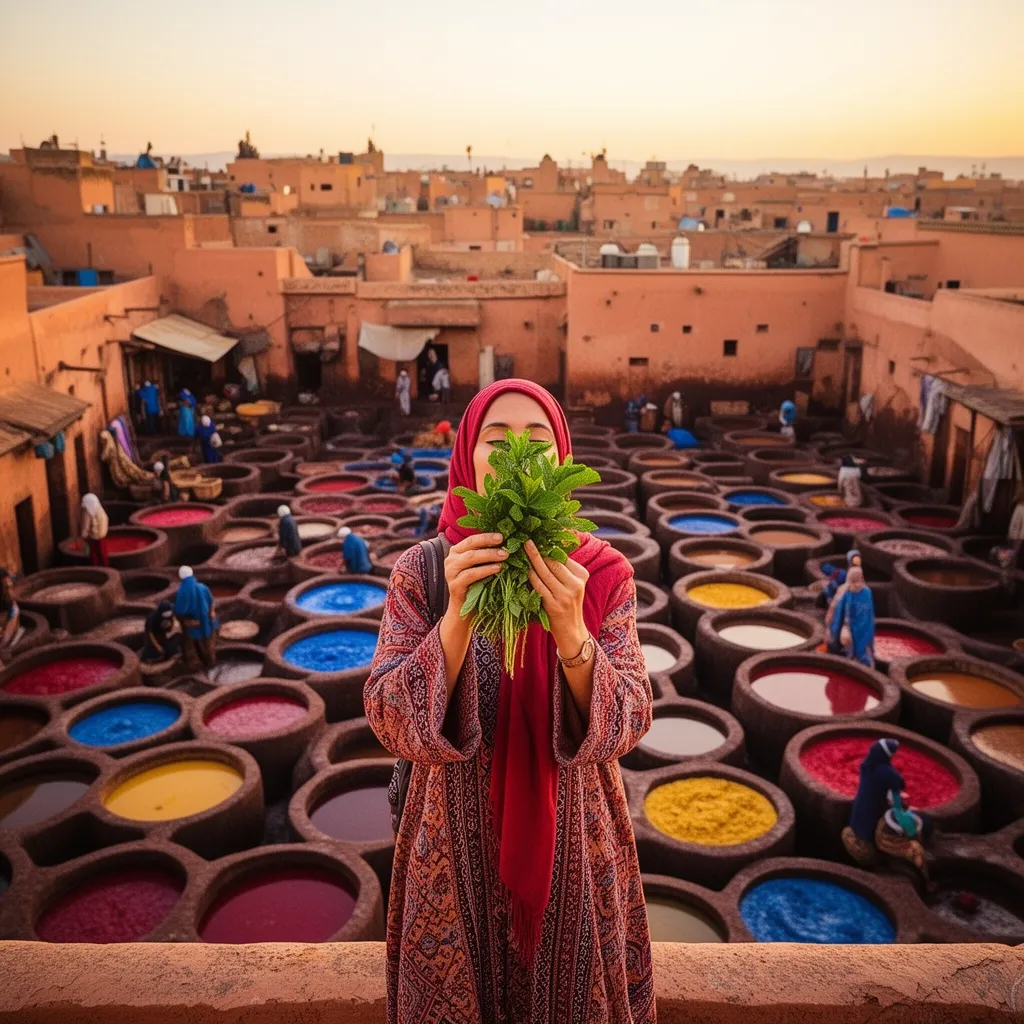
Before you head to the tanneries, you need to get ready. The smell is strong — ammonia from pigeon droppings and cow urine is part of the ancient process. Wear closed-toe shoes because the ground can be wet and slippery. Bring fresh mint leaves to hold under your nose — it really helps. Carry cash for tips, as the workers who guide you will expect a small payment. Go early in the morning, around 8 or 9 AM, for the best light and fewer crowds. This fes tannery shopping guide starts with preparation because being ready makes the whole experience better.
Viewing the tanneries — which one to choose?
You have three choices, and each one offers something different.
Chouara Tannery is the biggest and most famous. It has been open since the 11th century, and its stone pits are still the same ones used hundreds of years ago. The view from the rooftops is iconic — rows of colorful pits filled with dye. But it is also the most touristy. You will see many visitors, and the guides will try to take you to specific shops afterward.
Sidi Moussa Tannery is smaller and quieter. It is located near the Zawiya of Moulay Idris, in the Guerniz neighborhood. This tannery specializes in cow hides, so the leather here is thicker and heavier. Fewer tourists come here, so you get a more authentic experience.
Ain Azliten Tannery is the least known. If you want to see tanners working without crowds of tourists, this is the place to go. The workers are less used to visitors, so you can observe the real process without being rushed.
Which one should you choose? If you want the famous photo and don’t mind crowds, pick Chouara. If you want to see the craft up close without the hassle, choose Sidi Moussa or Ain Azliten.
Powered by GetYourGuide
The “bait and switch” trap
Here is something you need to know. Many guides in the medina will take you to the tanneries, then lead you straight to a specific shop where they get a commission. This shop might charge you double or triple the real price. The trick is simple: view the tannery from a rooftop shop — you can go up for free, though a small tip is expected — and then shop on your own afterward. Do not let a guide decide where you spend your money. This fes tannery shopping guide is here to help you avoid these scams and find real value.
Where to shop in the Fes medina — the best streets for leather
Talaa Kebira and Talaa Seghira
These two streets are the main arteries of the medina. They are busy, colorful, and full of leather workshops. You will find jackets, bags, belts, and slippers hanging outside every shop. The best area is near Chouara Tannery and Souk Cherratine, where tanners and leatherworkers cut items to order. If you want to see the widest selection, start here. But remember: the busiest shops often have the highest prices and the most pushy salesmen.
Derb el-Miter (the leather street)
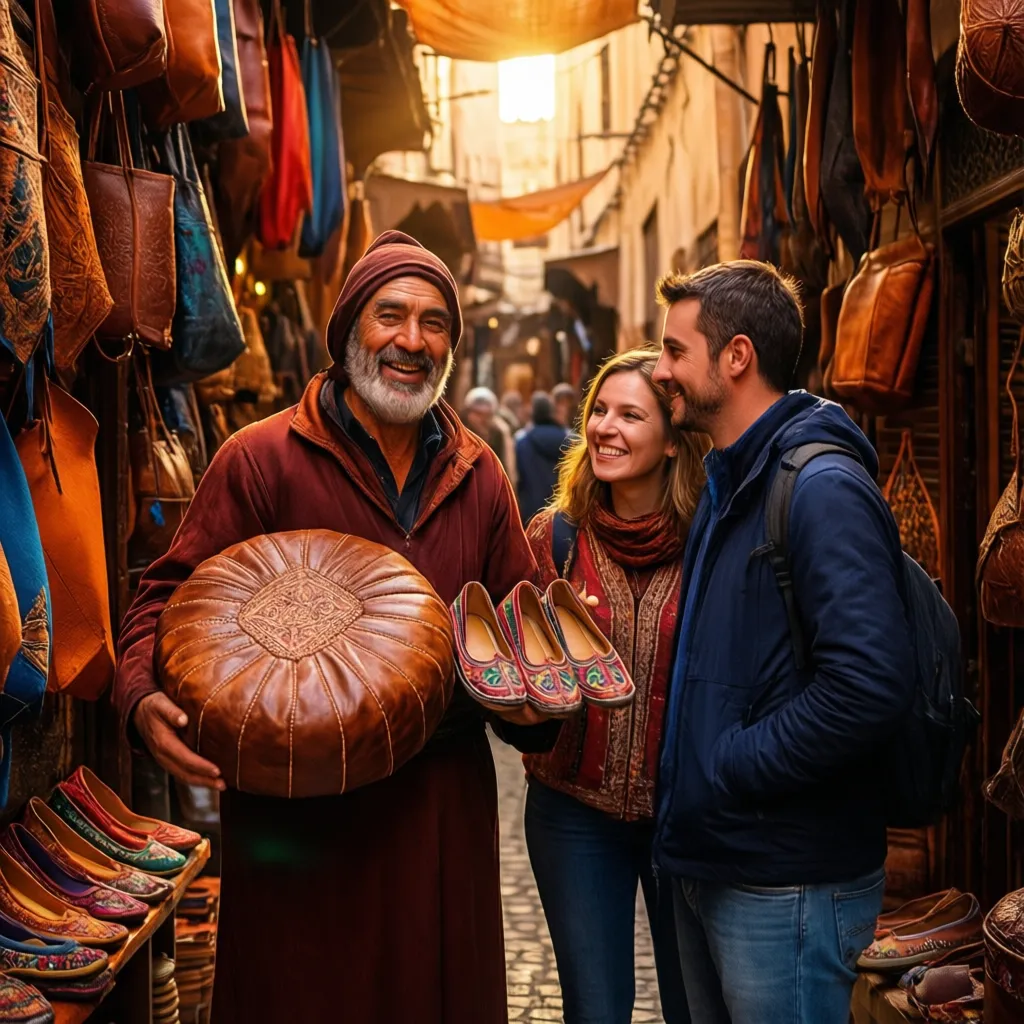
This is a quieter alley dedicated entirely to leather. The pressure is lower here, and the artisans are more focused on their craft than on selling. You can take your time, examine the stitching, and ask questions. Derb el-Miter is perfect for finding unique, high-quality items that you will not see in every shop. If you want to know where to shop in fes medina for the best leather, put this street at the top of your list.
The Ensemble Artisanal
This is a government-run complex where prices are fixed. There is no haggling, which means you will not get a bargain, but you also will not get cheated. Every item here is guaranteed to be authentic. The quality is consistently high, and the artisans are registered. If you are not confident in your haggling skills, or if you just want to buy something without the stress, the Ensemble Artisanal is a safe choice. This is another great answer to where to shop in fes medina for reliable, authentic goods.
Powered by GetYourGuide
Ask your riad host to recommend a specific artisan by name. A personal introduction changes the dynamic — you’re a guest, not a target.
How to spot authentic vs. fake Moroccan leather
The water test and the smell test
Real leather has two simple tests. First, drop a small amount of water on the surface. Authentic leather will bead up and stay on top. Fake leather or cheap synthetic material will absorb the water quickly. Second, smell the leather. Real leather has a natural, earthy smell — like the outdoors, not like chemicals. If it smells like plastic or glue, put it down and walk away. These two tests are the fastest way to find quality leather goods fes is known for.
Examining edges and stitching
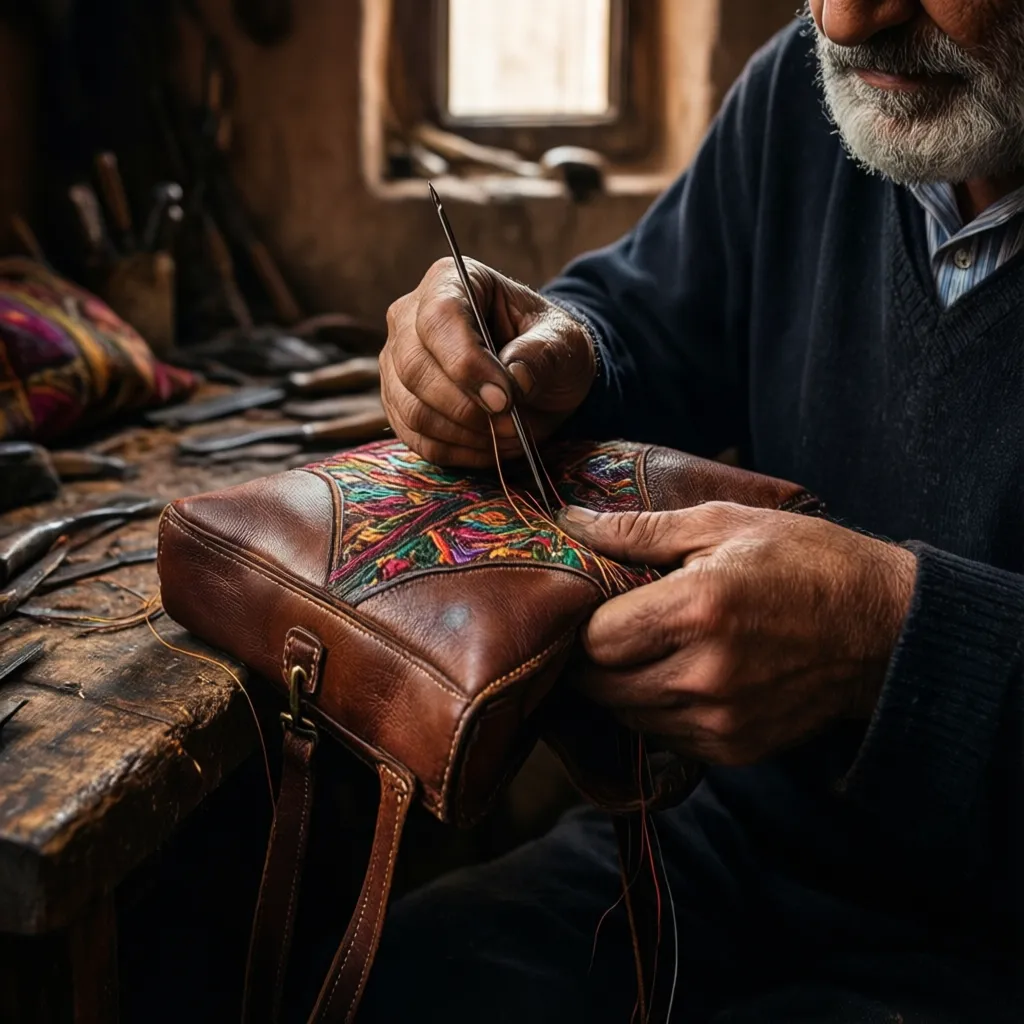
Look at the edges of the leather. High-quality pieces have raw, finished edges that are smooth and natural. Cheap items have edges that are glued or painted to hide poor materials. Now look at the stitching. Hand-stitching will be slightly uneven — that is a good sign. It means a real person made it. Machine stitching is perfectly even, which sounds good but often means the item was made in a factory. Premium leather is also lined with soft sheepskin, not rough synthetic fabric. Check the inside of bags and jackets to see what the lining is made of.
The price-speed rule
If a price seems too good to be true, it probably is. A genuine leather jacket takes days to make. The materials cost money, and the artisan’s skill is valuable. If someone offers you a “real” leather jacket for twenty dollars, it is not real. Good leather costs more because it is worth more. Remember this rule when you are shopping, and you will avoid wasting money on fakes.
Quick reference: Expect to pay 300–600 MAD for a quality leather belt, 600–1,200 MAD for a hand-stitched wallet, 1,500–3,500 MAD for a messenger bag, and 2,500–5,000+ MAD for a full-grain leather jacket.
| Item | Fair price (MAD) | What to check | Best bought at |
|---|---|---|---|
| Belt | 300–600 | Cut from a single hide, not glued strips | Derb el-Miter |
| Wallet | 600–1,200 | Sheepskin lining, hand-stitched edges | Souk Cherratine |
| Messenger bag | 1,500–3,500 | Solid hardware, even weight, no plastic smell | Workshop with cutter on-site |
| Leather jacket | 2,500–5,000+ | Full-grain, natural patina, cloth lining | Talaa Kebira specialist |
| Pouf (empty) | 400–800 | Thick top panel, hand-stitched seam | Ensemble Artisanal |
The best Moroccan leather souvenirs to buy in the Fes medina
Beyond the babouche slippers (belgha)
The classic yellow babouches are everywhere in Fes, and for good reason. They are comfortable, traditional, and easy to pack. But do not stop there. Look for embroidered women’s slippers with intricate patterns, or leather sandals that are hand-stitched and dyed with natural colors. These are the most common moroccan leather souvenirs, and they make great gifts for friends and family.
Leather poufs and ottomans
These are popular home decor items, but they are bulky to carry. The smart way to buy them is to ask for the empty skin. The pouf comes deflated, so you can fold it and pack it easily. When you get home, you just fill it with stuffing. Make sure the leather is thick and the stitching is hand-done. A good pouf will last for years. This is one of the best moroccan leather souvenirs because it is both beautiful and practical.
Wallets, belts, and bags
These are the items you will use every day. Look for wallets that are lined with soft sheepskin, not rough fabric. Belts should be cut from a single piece of leather, not glued together from scraps. Bags should have strong stitching and solid hardware. The best workshops in Fes will cut and sew items to your measurements. If you see a belt or bag you like, ask if they can make it in a different size or color. Many artisans are happy to do custom work.
Leather-covered books and desk accessories
These are unique gifts that most tourists overlook. Hand-tooled leather covers with traditional Moroccan patterns make beautiful journals, photo albums, and notebooks. Desk accessories like pen holders, mouse pads, and document folders are also available. These items are often made by older artisans who specialize in fine tooling. They are perfect for someone who appreciates craftsmanship. For a broader look at what to buy across the country, see our complete Morocco souvenirs guide covering carpets, ceramics, spices, and more.
The best leather in Fes isn’t in the shop windows — it’s in the workshops behind them. Walk past the display, find the cutter’s bench, and ask to see what they’re making today.
Local artisan, Souk Cherratine
Mastering the art of haggling in the Fes souks
The 50% rule as a starting point
When you see a price tag, ignore it. That number is just the starting point. Vendors usually open at two to four times the final price they will accept. Your first counter offer should be 40 to 50 percent of the asking price. For example, if a vendor says 200 dirhams, you offer 80 or 100. They will act shocked, but that is part of the game. Stay friendly and smile. Ask about the item, how it was made, where the leather came from. Show genuine interest without looking too eager. Never reveal your total budget. Just keep negotiating slowly.
When to walk away
Here is the most important trick: be ready to walk away. If the price is not coming down to where you want it, thank the vendor and start walking. This is not rude — it is how the game works. If they call you back, you are close to the real price. If they do not call you, you can always come back later. Walking away shows that you are a serious buyer who will not be pressured. This is the key to getting a fair deal.
Payment methods
Cash is king in the Fes medina. Most shops prefer dirhams, and many will give you a better price if you pay in cash. Larger shops with fixed prices might accept credit cards, but they will add a fee of 3 to 5 percent. Carry small bills — 20, 50, and 100 dirham notes — because vendors often do not have change for large bills. Keep your money in different pockets so you do not pull out your whole wallet when negotiating.
Withdraw dirhams from ATMs attached to major banks (Attijariwafa, BMCE, Banque Populaire) for the best rates. Avoid dynamic currency conversion — always choose to be charged in MAD.
Powered by GetYourGuide
A cautionary note — the “factory” leather stores
Some shops in the Fes medina sell items that look exactly like what you would find in Marrakech or Agadir. That is because they are the same items — imported from factories in Asia or made by machine in other Moroccan cities. These are not artisan-crafted pieces. They are mass-produced goods with a Moroccan label slapped on them.
How do you spot these shops? Look for the same items in every color. Real artisans do not make twenty identical bags in twenty colors. They make a few pieces with care. Look for shops where you can see the artisan working. If there is a sewing machine in the back and a person cutting leather, that is a good sign. If the shop is full of shiny, identical items with no workshop in sight, keep walking. Quality leather goods fes is famous for come from real workshops, not factory floors.
Planning note: If you’re arriving in Fes by train or plane, pre-book your airport transfer with Welcome Pickups for a stress-free start. For staying connected, grab an Airalo eSIM before you land — coverage activates instantly.
Reserve your spot
Book your Fes leather experience
Choose from guided tannery visits, private shopping tours, and cultural walks. Instant confirmation and free cancellation on most tours.
Instant confirmation
Free cancellation on most tours
Some links on this page earn ComeMorocco a commission at no extra cost to you. It never changes what we recommend. How this works.
Questions
01Which Fes tannery is best for authentic leather and fewer crowds?
Sidi Moussa Tannery (Guerniz) offers the best balance — it specializes in thick cowhide, sees far fewer tourists than Chouara, and the artisans are more open to showing their process. Ain Azliten is even quieter but harder to find. Chouara is iconic for photos but expect crowds and aggressive commission-based guides.
02How do I avoid the “bait and switch” scam at Fes tanneries?
View the tannery from a rooftop terrace (free entry, small tip expected) without accepting a guide’s offer to walk you to “their cousin’s shop.” Afterward, explore Derb el-Miter and the Ensemble Artisanal on your own. If a guide insists, politely decline — “No, thank you, I’ll look around myself” works every time.
03What’s the best way to test if leather is authentic in the medina?
Two quick tests: water drop — real vegetable-tanned leather beads water, while synthetics absorb it instantly; and smell — authentic leather smells earthy, like dried hay or saddle soap, while fakes smell like plastic or chemical glue. Also check edges (raw, not painted) and stitching (slightly uneven means hand-stitched).
04What are fair price ranges for quality leather goods in Fes?
Expect 300–600 MAD for a hand-stitched belt, 600–1,200 MAD for a sheepskin-lined wallet, 1,500–3,500 MAD for a messenger bag, and 2,500–5,000+ MAD for a full-grain leather jacket. Poufs (empty skins) run 400–800 MAD. Always start at 40–50% of the asking price and negotiate with humor.
05Can I ship leather purchases home from Fes, or should I pack them?
Most established workshops offer international shipping via DHL or local couriers — ask for a quote before buying. For poufs, request the empty skin to pack flat in checked luggage. Belts, wallets, and slippers pack easily in carry-on. Jackets and bags may exceed carry-on limits; shipping is often cheaper than excess baggage fees.
06When is the best time of year to visit Fes for leather shopping?
Spring (March–May) and autumn (September–November) offer pleasant temperatures for medina walking and tannery rooftop visits. Summer hits 38–42°C — the tannery smell intensifies in heat. Winter is cool but dry; artisans work year-round. Avoid Eid al-Adha (dates shift annually) when tanneries close for three to four days.
07Are there guided shopping tours that guarantee authentic workshops?
Yes — private shopping tours with licensed guides connect you directly to master artisans in Derb el-Miter and Souk Cherratine, bypassing commission traps. Look for tours that emphasize workshop visits over retail stops. Our Morocco Shopping Tours guide compares options across Fes, Marrakech, and Essaouira.
Your Morocco trip
Take home a piece of living history
Every hand-stitched bag and naturally dyed pouch carries a thousand years of Fes craftsmanship. Book a guided experience, walk the tannery rooftops at dawn, and find the piece that speaks to you.