Morocco Weather by Month for Activities 2027: Honest Guide
Morocco isn’t hot all year, and the right month depends on what you want to do.
Morocco weather by month for activities comes down to one question: what do you want to do? Desert camps and city walking suit March to May and September to November best. July and August work better on the coast and in selected mountain areas than inland.
Morocco isn’t a constant heatwave. Winter highs in Marrakech sit around 18°C, while inland summer days reach 36°C or more. Most travellers book the wrong month because they read one average and stop there.
This guide is updated November 2026 for your 2027 trip. It uses climate tables from Weather2Travel, WeatherSpark and Morocco Zaino, plus activity advice from City Tours Morocco. You’ll get a month-by-activity table, a heat rule for desert and city days, and a clear pick for each season.
✦ Key Takeaways
Pick your month by activity first: desert camps suit March to May and September to November, while city walks suit December to February.
Plan Marrakech sightseeing for early mornings in July and August, when the city averages about 36°C.
Avoid midday camel treks in Merzouga from June to August, when highs reach 40°C to 44°C.
Choose the coast or selected mountain areas for July and August, where Essaouira averages about 23°C.
Treat monthly averages as guidance only and check an official forecast before you book a desert or mountain trip.
What are the average monthly temperatures in Morocco?
Across Morocco, average daytime highs run about 18°C in January, 27°C in May and 36°C in July and August, according to Weather2Travel’s national figures. Coastal Essaouira stays cooler at about 23°C in July and August, while Marrakech sits near 36°C in those months.
Those national numbers hide big regional gaps. Morocco is not one climate, so the city you pick matters as much as the month. Use the city tables below before you lock in dates.

Celsius and Fahrenheit conversion
Most climate sites use Celsius, but many travellers think in Fahrenheit. To convert, multiply Celsius by 9, divide by 5, then add 32. So 18°C is about 64°F and 36°C is about 97°F.
- Marrakech: 18°C in January, 27°C in May, 36°C in July and August, 32°C in September
- Casablanca: 18°C in January, 22°C in May, 27°C in July and August, 24°C in October
- Essaouira: 18°C in January, 20°C in May, 23°C in July and August, 22°C in October
- Ouarzazate: 16°C in January, 29°C in May, 38°C in July, 37°C in August
WeatherSpark gives the same pattern in Fahrenheit, with Marrakesh rising from about 66°F in January to about 98°F in July and August. For the full month-by-month dataset, see the Weather2Travel Morocco climate tables.
Why averages are not guarantees
💡 Key insight – An average is a typical month, not a promise. Heat extremes can exceed the monthly mean, so a July day in Marrakech can run well above 36°C.
A second dataset shows Marrakech’s July high at about 37.7°C, and its January high at about 19.1°C. Small differences like this are normal, so use the numbers to compare months, not to predict a single day. If you’re still choosing a season, our guide on the best time to visit Morocco by season covers the broader trade-offs.
Get the full 2027 Morocco guide
Morocco Unlocked
Morocco Unlocked covers itineraries, real prices and scams to avoid, so you can lock your month before booking.
Get the guide · $12Instant PDF download
Morocco weather by month for activities: which month is best for each one?
For most activities, March to May and September to November are the comfortable window, according to Morocco Experience Tours. Those months suit sightseeing, outdoor walks and desert trips. July and August favour the coast and selected mountain areas over the desert and inland cities.
Here’s how each season plays out for the activities people book most.
Winter (December to February)
- Best for: city walks, medina visits, cultural trips
- Typical weather: about 18°C highs in Marrakech in January, nights near 6°C
- Rain: roughly six days with some rainfall in January, February and December
- Caution: cool evenings, so pack layers
Spring (March to May)
- Best for: desert camps, hiking, gardens and day trips
- Typical weather: Marrakech about 22°C in March, 24°C in April, 27°C in May
- Rain: March is the wettest month in one table, at about 35.2 mm
- Caution: midday heat builds quickly by May
Summer (June to August)
- Best for: the coast, selected mountain areas, early-morning city visits
- Typical weather: Marrakech about 36°C, Merzouga 40°C to 44°C
- Rain: about one day with rain from June to August
- Caution: inland heat is strong from late morning to late afternoon
Autumn (September to November)
- Best for: desert trips, coast in October and November, shoulder-season sightseeing
- Typical weather: Marrakech about 32°C in September, Casablanca 24°C and Essaouira 22°C in October
- Caution: September still runs hot inland
April, May, October and November are the most attractive shoulder months overall, so they’re the safest bet if you want fewer extremes. Use the table below to match each destination to its best window.
| Destination | Typical weather | Main caution | Best for |
|---|---|---|---|
| Marrakech in winter | About 18°C high in January; nights about 6-7°C | Cool nights; pack layers | City sightseeing and cultural trips |
| Marrakech in spring | About 22°C in March, 24°C in April, 27°C in May | Midday heat builds by May | Cities, gardens and day trips |
| Marrakech in summer | About 36°C in July and August | Strong midday heat | Early-morning city visits |
| Merzouga in spring | About 25°C in March, 29°C in April, 34°C in May | Sun exposure, especially May | Camel treks and desert camping |
| Merzouga in summer | About 40°C in June, 44°C in July, 42°C in August | Extreme daytime heat | Desert trips only with careful timing |
| Essaouira in summer | About 23°C in July and August | Wind affects comfort | Coastal activities and wind sports |
| Taghazout coast | Coastal surf season, with April, May, October and November the most attractive months | Swell changes; check a current forecast | Surfing |
| Atlas and Toubkal | Cooler at altitude; rain clusters from January to April and November to December | Altitude, snow and access need current checks | Mountain trekking |
Pros of the spring desert window: warm days, cooler nights than summer, and the most comfortable camping weather.
Cons: May warms quickly, so plan rides before midday.
Pros of summer on the coast: Essaouira stays near 23°C in July and August.
Cons: wind can affect comfort and water activities.
The ComeMorocco 3-Zone Rule
Here’s the method we use to pick a month. Work through these five steps for any trip.
- Sort your main activity into one zone: coast, city or mountains, or desert.
- Check the average high for that zone in your travel month, such as Marrakech 36°C in July or Essaouira 23°C.
- If the zone is above 35°C, move heat-heavy activities to early morning or late afternoon.
- Put desert camps in March to May or September to November, when Merzouga averages 25°C to 34°C in spring.
- Confirm the forecast with an official source before you book.
Rain is a winter and early spring story. Plan wet-weather backups for the city and mountains from January to April, not for July.
How hot is too hot for a Sahara camel trek?
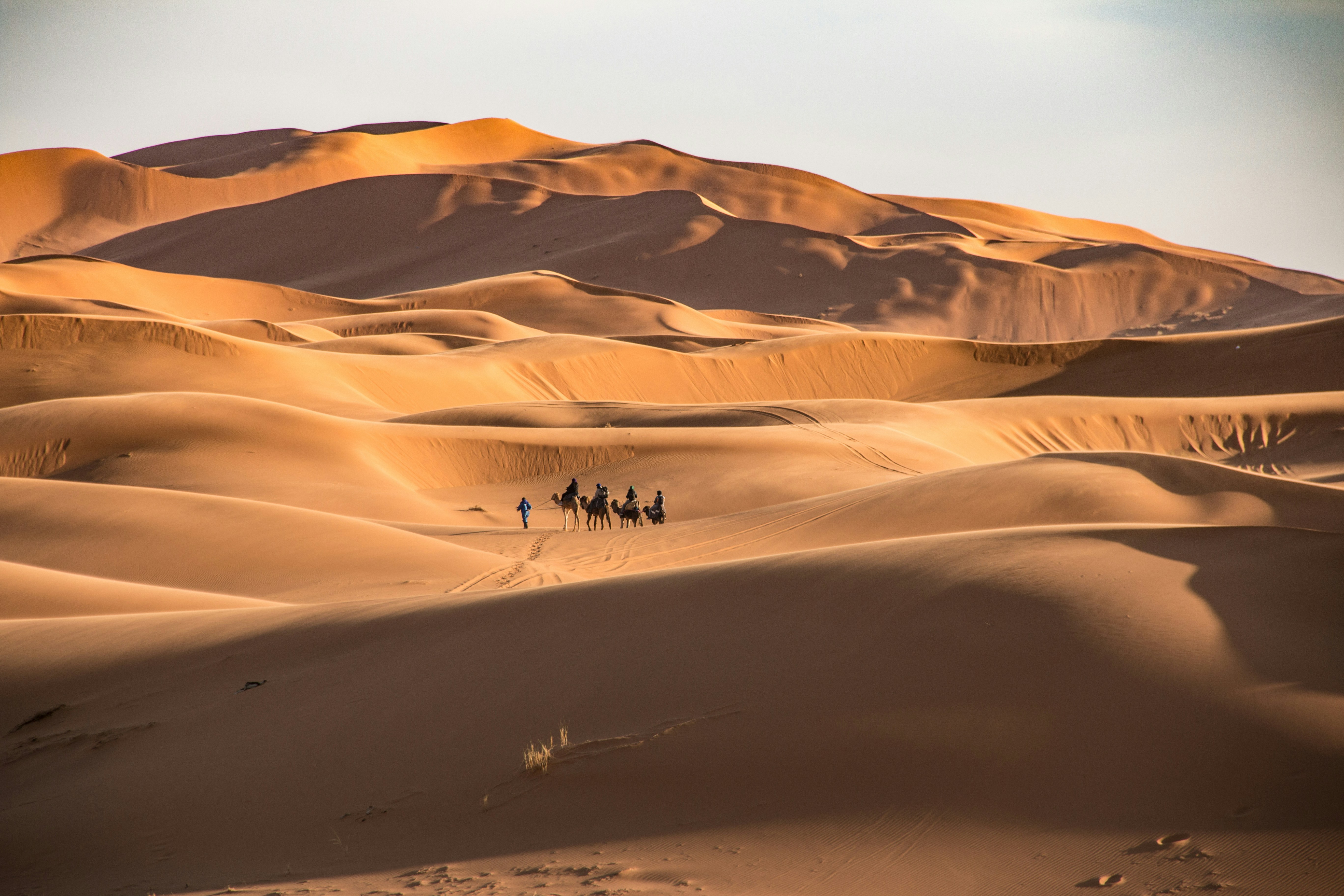
Merzouga reaches about 40°C in June, 44°C in July and 42°C in August, according to Morocco Zaino. Above roughly 35°C, a midday camel trek is hard going, so book early morning or late afternoon rides. Spring is the easier window, with Merzouga averaging about 25°C in March and 34°C in May.
When you plan Morocco weather by month for activities, the desert is where timing matters most. Heat builds fast on the dunes, and sand reflects it back at you.
Merzouga by month
- January: about 18°C high, 3°C low
- March: about 25°C high
- April: about 29°C high
- May: about 34°C high
- June: about 40°C high
- July: about 44°C high
- August: about 42°C high
The best Merzouga camel trek window runs from March to May and September to November. In those months, a morning ride stays pleasant and camps feel comfortable after dark.
Camel treks sell out in spring and autumn, so book ahead. You can Agafay desert quad and camel evening to test the desert feel near Marrakech first.
Timing a camel trek in heat
Think of the dunes like a frying pan at noon. Book the first ride of the morning or the sunset ride, and avoid the middle of the day entirely.
A morning trek in Merzouga is the safer call from June to August. Bring water, a hat and a scarf, and tell your guide if you feel dizzy or unwell.
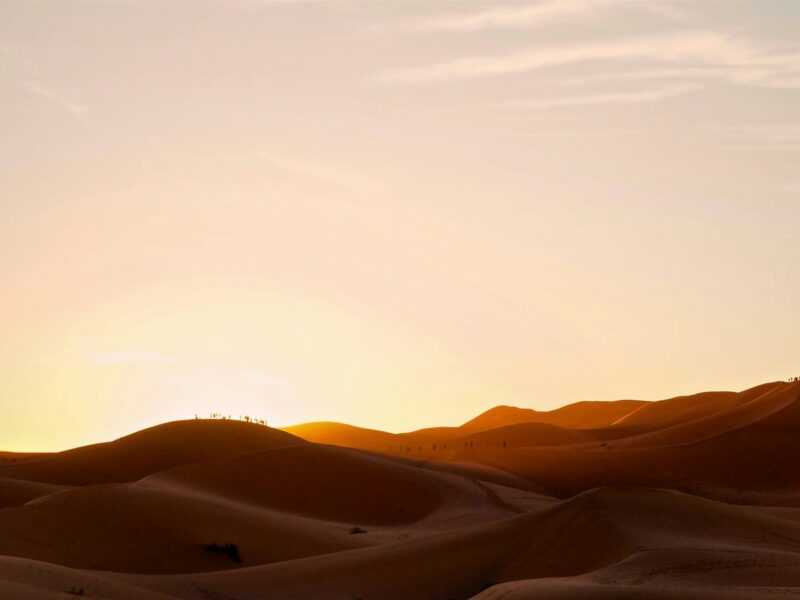
Spring and autumn give you the most room to breathe. Merzouga’s Erg Chebbi dunes are the best-known landscape in this part of Morocco, and they look their best in softer light.
🎟️ Book a Merzouga camel trek
Ask for an early start in summer. A 6am ride feels completely different from a 3pm one.
Cold desert nights in winter
Merzouga’s January low averages about 3°C, according to Morocco Zaino. Nights are cold but not freezing on average, though single nights can dip lower. Pack a warm layer, a hat and gloves for your Sahara nights in winter plan.
💡 Key insight – Desert days in winter feel mild, but the night air drops fast once the sun goes down.
Book a Merzouga desert trip
Once you’ve picked spring or autumn, a 3-day Merzouga desert safari from Marrakech lets you skip the 40°C summer heat.
Is Morocco too hot for sightseeing in July and August?
Inland, yes, it’s hard going. Marrakech averages about 36°C in July and August, and Ouarzazate reaches 38°C in July and 37°C in August. Coastal Essaouira stays near 23°C, so summer works best on the coast or in selected mountain areas, with city sights kept to early mornings.

Inland cities in summer
Marrakech’s medina is the hardest place to be at midday in summer. Narrow streets hold heat, and shade is patchy. Plan your big sightseeing for the early morning and rest through the afternoon.
If you want the full picture, read our guide on how hot Marrakech gets in summer before you pack.
💡 Contrarian take – Summer isn’t a no-go for Morocco; it’s a no-go only for inland desert and city days. Morocco Experience Tours says July and August are very hot inland but suitable for the coast or selected mountain areas, and Essaouira averages about 23°C in July and August per Weather2Travel.
Coast and mountain alternatives
Essaouira is the easiest summer alternative. It stays near 23°C in July and August, and City Tours Morocco lists Essaouira wind sports among its monthly activities. Wind can affect comfort on the beach, so check conditions before you go.
If you want desert scenery without the heat, try the Agafay desert quad and camel evening instead. The evening timing keeps you out of the hottest hours.
🎟️ Book the Agafay desert sunset dinner
Early-morning sightseeing
Early-morning city visits are the practical approach in July and August. Start by 8am, slow down after 11am, and book evening dinners after sunset when the streets cool.
Use the 3-Zone Rule as a simple check. Above 35°C, move the heavy walking to early morning or late afternoon.
When is the best time to hike the Atlas Mountains or surf in Morocco?
For surfing, April, May, October and November are the most attractive shoulder months, and Taghazout is the coastal spot City Tours Morocco names. Toubkal summit attempts are a month-specific activity, but altitude, snow and access need current checks before you go.

Atlas Mountains and Toubkal
City Tours Morocco lists a Toubkal summit attempt as a month-specific mountain activity. Shoulder months are the safer bet for trekking, since April, May, October and November are the most attractive months overall.
Rain clusters from January to April and from November to December, according to Weather2Travel’s rain-day figures. Plan trekking dates around those spells, and check official park or local guide information for access before you book.
Taghazout surf conditions
Taghazout is the surf town most visitors head for on Morocco’s Atlantic coast. Surf quality depends on swell, not the month alone, so check a current forecast before you commit to a session.
Beginners should book a lesson with an instructor who sets you up on the right beach for the day’s conditions.
🎟️ Book a Taghazout surf lesson
Book your surf lesson for an autumn or spring week, when the shoulder months give you the most consistent conditions.
Snow in the High Atlas
Snow is possible in the High Atlas in winter, but the sources here don’t confirm current snow, lift operation or road access. Check the official resort or park information on the day you plan to travel.
Which Moroccan city has the best weather in winter?
Marrakech, Casablanca and Essaouira all average about 18°C high in January, according to Weather2Travel, so temperature alone won’t pick your city. Rabat averages about 63°F (17°C) in January, per WeatherSpark, and Tangier about 61°F (16°C). Pick the city by the activity you want most.
Winter is the mildest season for city walking across most of the country. The cooler nights are the main thing to plan for.
For a deeper look at winter city temperatures, see our notes on city temperatures in Morocco winter. WeatherSpark’s Morocco climate pages compare Rabat, Marrakesh and Tangier side by side in Fahrenheit: WeatherSpark Morocco climate data.
Marrakech in winter
Marrakech’s January high sits near 18°C, and WeatherSpark puts it at about 66°F. Nights drop to about 6°C in January, so bring a jacket for evening walks through the medina and gardens.
Casablanca and Rabat in winter
Casablanca averages about 18°C in January and 24°C in October, according to Weather2Travel. Rabat sits near 63°F in January and climbs to about 80°F in August, per WeatherSpark. Both cities suit city-focused trips in winter and autumn.
Winter packing for cool nights
- Layers: a long-sleeve top and a fleece for evenings
- Outer layer: a light waterproof jacket for the rain days from January to April
- Footwear: closed shoes for wet medina stones
- Desert nights: a warm layer, hat and gloves if you sleep in camps
Which month should you choose for your Morocco trip?
Pick your month by your main activity first, then check the zone you’ll visit. For desert camps, March to May or September to November suit you best. For city walking and culture, December to February is mildest. For coast and surf, plan summer on the coast, with a current forecast.
Use Morocco weather by month for activities as your starting point, then match the month to your plans.
Choose by activity
- Best for desert camps: March to May and September to November
- Best for city walking: December to February, with cool evenings
- Best for coast and wind sports: July and August on the coast, such as Essaouira
- Best for shoulder-season hiking and surf: April, May, October and November
- Skip this if you’re heat-sensitive: inland sightseeing from late morning to late afternoon in July and August
- Skip this if you only have one or two days: a desert trip in peak summer
Book accommodation for your month
Once you’ve chosen a month, you can compare riads and hotels for your month in the zone you’re visiting. Book early for spring and autumn, when demand is highest.
Your next steps are simple:
- Pick your main activity and match it to the table above.
- Confirm the forecast with an official source for your travel dates.
- Book your activity and stay, starting with the month that suits your plans.
Reserve Your Spot
Book This Experience
Hand-picked, top-rated options with instant confirmation and free cancellation on most tours.
Frequently Asked Questions
Everything you need to know before you go
📚 Sources we checked (2)
Prices, hours and rules change. We re-check this guide regularly; last check November 28, 2026.
✦ Your Morocco Journey Starts Here
Plan your 2027 month with us
Send us your dates and activities, and we’ll tell you which zone and month fits your trip best.
Disclosure: some links in this guide are affiliate links. If you book through them, ComeMorocco may earn a small commission at no extra cost to you. We only recommend experiences we would suggest to friends.
Chat with us on WhatsApp →