AFCON 2025 Morocco: Dates, Host Cities, Stadiums & Complete Fan Guide
Discover AFCON 2025 Morocco dates, host cities, stadiums, and essential travel tips for Africa’s premier football tournament running from December 2025 to January 2026.
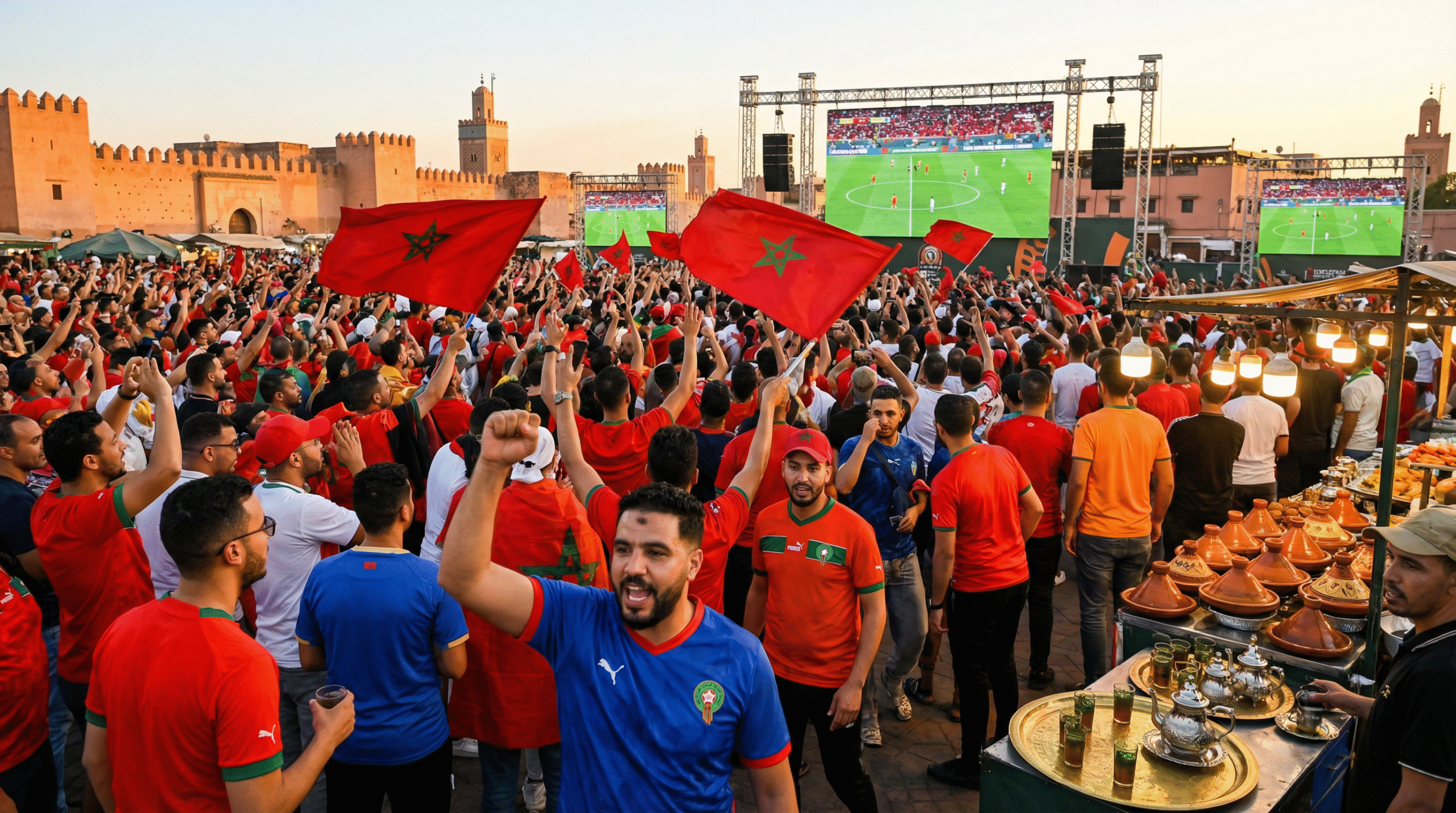
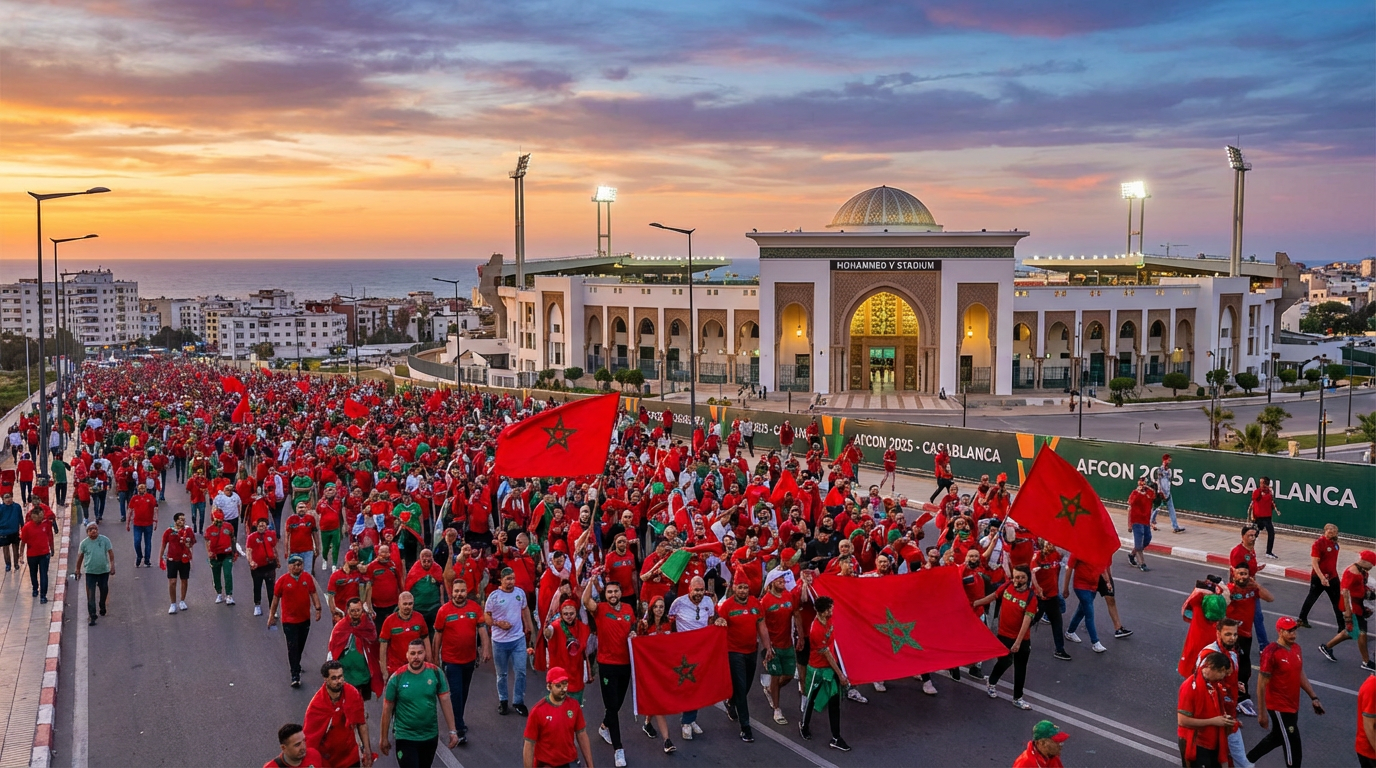
Imagine 65,000 voices rising in unison under the floodlights of Rabat’s national stadium, the winter air electric with drumbeats and vuvuzelas, as 24 of Africa’s finest football nations battle for continental glory. That scene isn’t a daydream—it’s happening right now. AFCON 2025 Morocco marks the first time the Kingdom hosts the Africa Cup of Nations, and the entire country has transformed into a stage for the continent’s biggest sporting event. Whether you’re planning to be in the stands or following from afar, this guide covers everything: official dates, all six host cities and nine stadiums, transport logistics, ticket information, and practical travel advice drawn from CAF announcements and on-the-ground knowledge.
✦ Key Takeaways
AFCON 2025 Morocco runs December 21, 2025 – January 18, 2026, with 24 teams competing across six cities and nine stadiums.
Host cities Rabat, Casablanca, Tangier, Marrakesh, Agadir, and Fès each offer unique cultural experiences beyond football.
Nine world-class stadiums with capacities from 30,000 to 65,000 seats host matches with modern VAR technology and fan zones.
Winter timing means mild 15–20°C temperatures—ideal for both players and spectators without extreme heat.
Morocco’s Al Boraq high-speed trains, domestic flights, and modern road network make traveling between host cities seamless.
AFCON 2025 Morocco – Tournament Overview
Morocco is the confirmed host for AFCON 2025, as officially announced by the Confederation of African Football (CAF) and the Morocco Local Organizing Committee (LOC). This is the 35th edition of the Africa Cup of Nations—the continent’s most-watched football competition, drawing hundreds of millions of viewers worldwide. For Morocco, it represents a historic milestone: the nation’s first time hosting since previously bidding for the tournament, and a proving ground for its ambitions to host the 2030 FIFA World Cup.
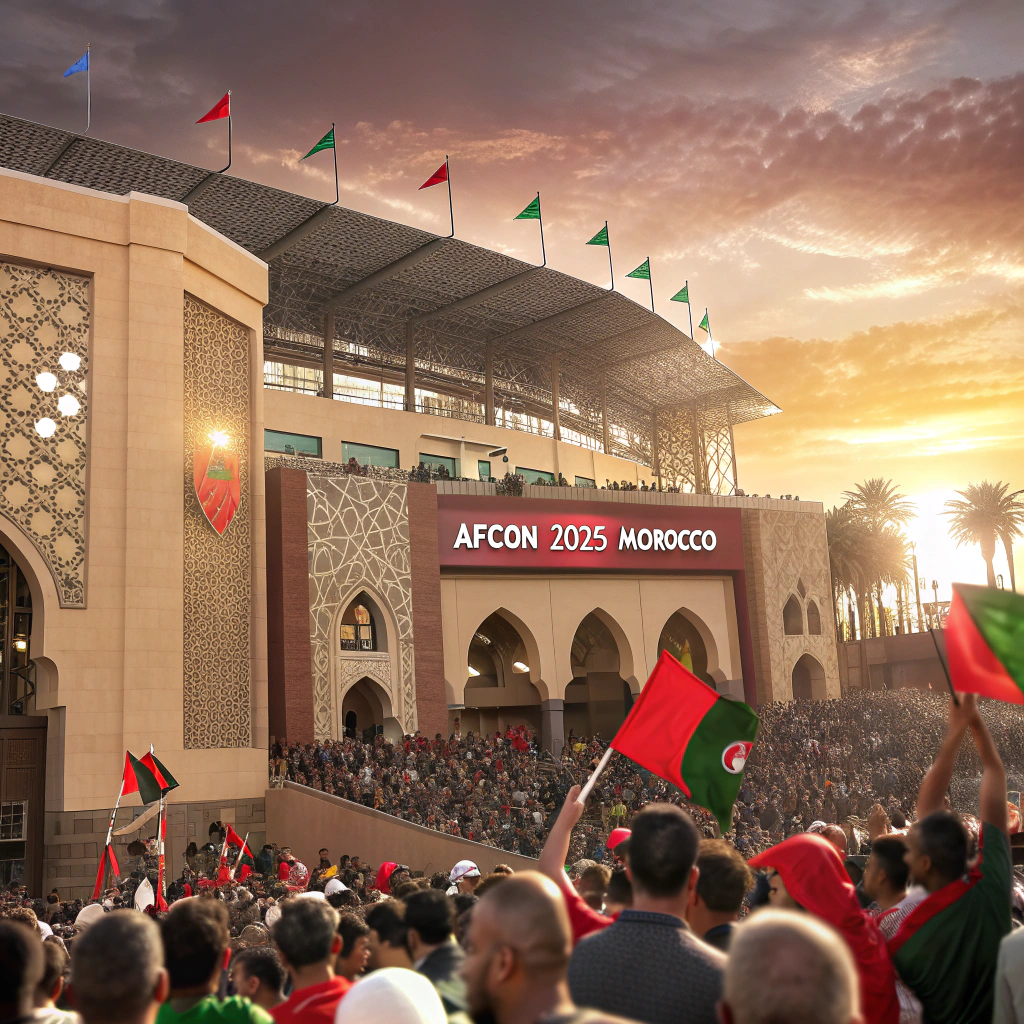
Why did Morocco win the bid? The answer lies in a combination of world-class venues, passionate fans, and a government that has invested heavily in sports infrastructure over the past decade. CAF praised Morocco’s readiness, noting that six cities and nine stadiums already met international standards—with further upgrades including VAR technology, modernized pitch surfaces, and expanded fan zones added specifically for the tournament.
💡 Economic impact: The Moroccan government estimates AFCON 2025 will generate over $1 billion in economic activity, creating thousands of temporary jobs in hospitality, transport, and tourism across all six host cities.
The tournament format follows the expanded 24-team structure introduced in 2019. Teams are divided into six groups of four, with the top two from each group advancing alongside the four best third-place finishers. From the round of 16, it’s single-elimination knockout football through the quarterfinals, semifinals, and the grand final. For visitors wanting to understand the depth of Moroccan cultural experiences surrounding the tournament, the host nation offers far more than just 90 minutes of football.
Morocco AFCON 2025 will unite the continent through sport. The tournament showcases African football talent on a global stage while inviting the world to experience Moroccan hospitality—a tradition of warmth and generosity that runs centuries deep.
AFCON Morocco Dates – Key Dates & Match Schedule
The official AFCON Morocco dates are confirmed by CAF. The tournament opens on December 21, 2025 and concludes with the final on January 18, 2026—nearly four weeks of non-stop football action, strategically timed to overlap with the holiday season when global viewership peaks and international fans find it easier to travel.
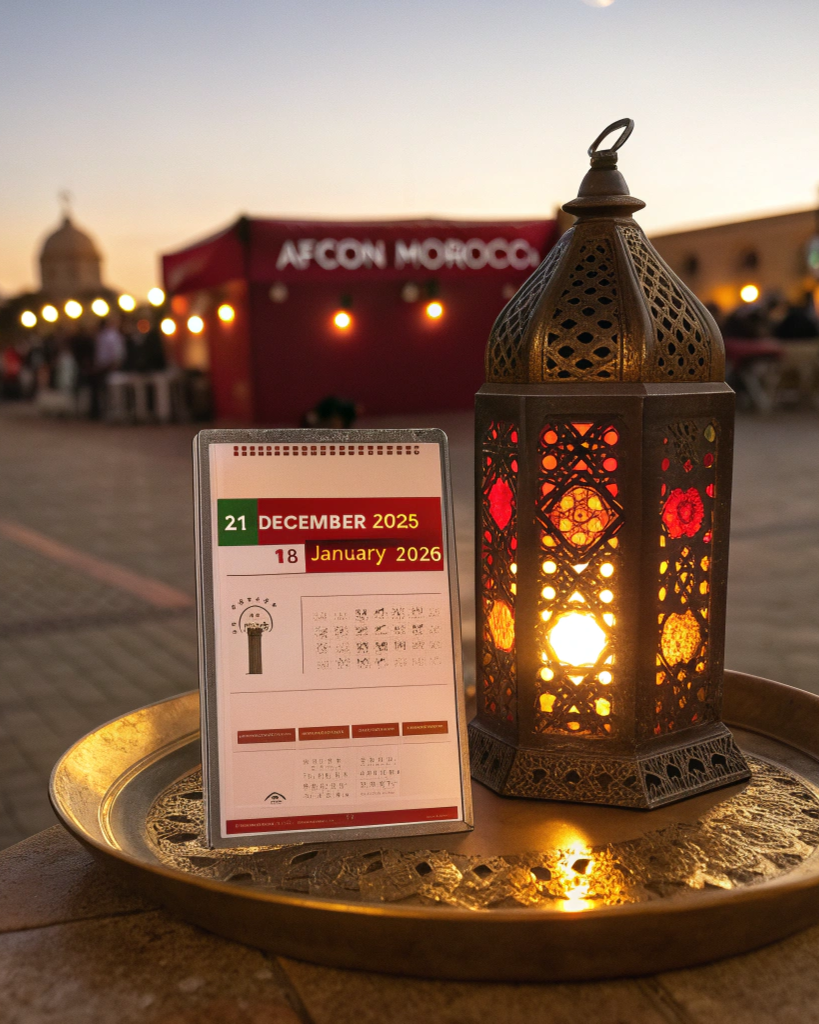
The schedule follows the established AFCON structure. Group stage matches run from December 21 into the first week of January, with multiple games played daily across different stadiums. Knockout rounds begin in mid-January, building tension through the round of 16, quarterfinals, and semifinals before the championship match on January 18. Exact kick-off times will be announced following the official group draw.
The holiday timing means flights and hotels fill up fast. If you’re planning to attend matches in multiple cities, book accommodations and transport at least 2–3 months in advance—especially for Marrakesh and Casablanca, which see heavy tourist traffic during the winter holiday period.
These AFCON Morocco dates align perfectly with Morocco’s mild winter climate. Temperatures across the host cities range from 15–20°C (59–68°F), providing comfortable conditions for both players and spectators. This is a deliberate shift from past tournaments held in scorching summer heat—ESPN reports that the winter scheduling improves match quality and fan comfort significantly.
Here’s your complete timeline for following the action:
The tournament kicks off with the host nation’s first match
Morocco’s Atlas Lions are expected to open the tournament at Prince Moulay Abdellah Stadium in Rabat before a capacity crowd of 65,000. Opening ceremonies will showcase Moroccan culture, music, and heritage before kickoff.
48 group matches across all six host cities
All 24 teams play three group matches each. With games spread across nine stadiums, fans can watch multiple matches per day in different cities. The Al Boraq high-speed train makes city-hopping between Tangier, Rabat, and Casablanca especially easy.
Round of 16, quarterfinals, and semifinals
Sixteen teams advance to single-elimination play. Matches concentrate in the larger stadiums in Rabat, Casablanca, and Tangier. Atmosphere intensifies as continental pride and bragging rights are on the line.
Africa crowns its champion in Rabat
The grand finale takes place at Morocco’s national stadium in Rabat. The match will be broadcast to an estimated global audience of over 300 million viewers, making it one of the most-watched sporting events on the African continent.
For travelers planning to explore beyond the stadiums during these weeks, our Moroccan Festivals 2026 guide highlights cultural events and celebrations happening across the country during the tournament period.
AFCON Host Cities – Complete Stadium & City Guide
The six AFCON host cities represent Morocco’s extraordinary geographic and cultural diversity—from the Atlantic coast to ancient imperial capitals, from cosmopolitan business hubs to sun-drenched resort towns. CAF and the LOC strategically selected these cities to distribute the tournament’s economic benefits nationwide while giving visiting fans a taste of Morocco’s many faces.
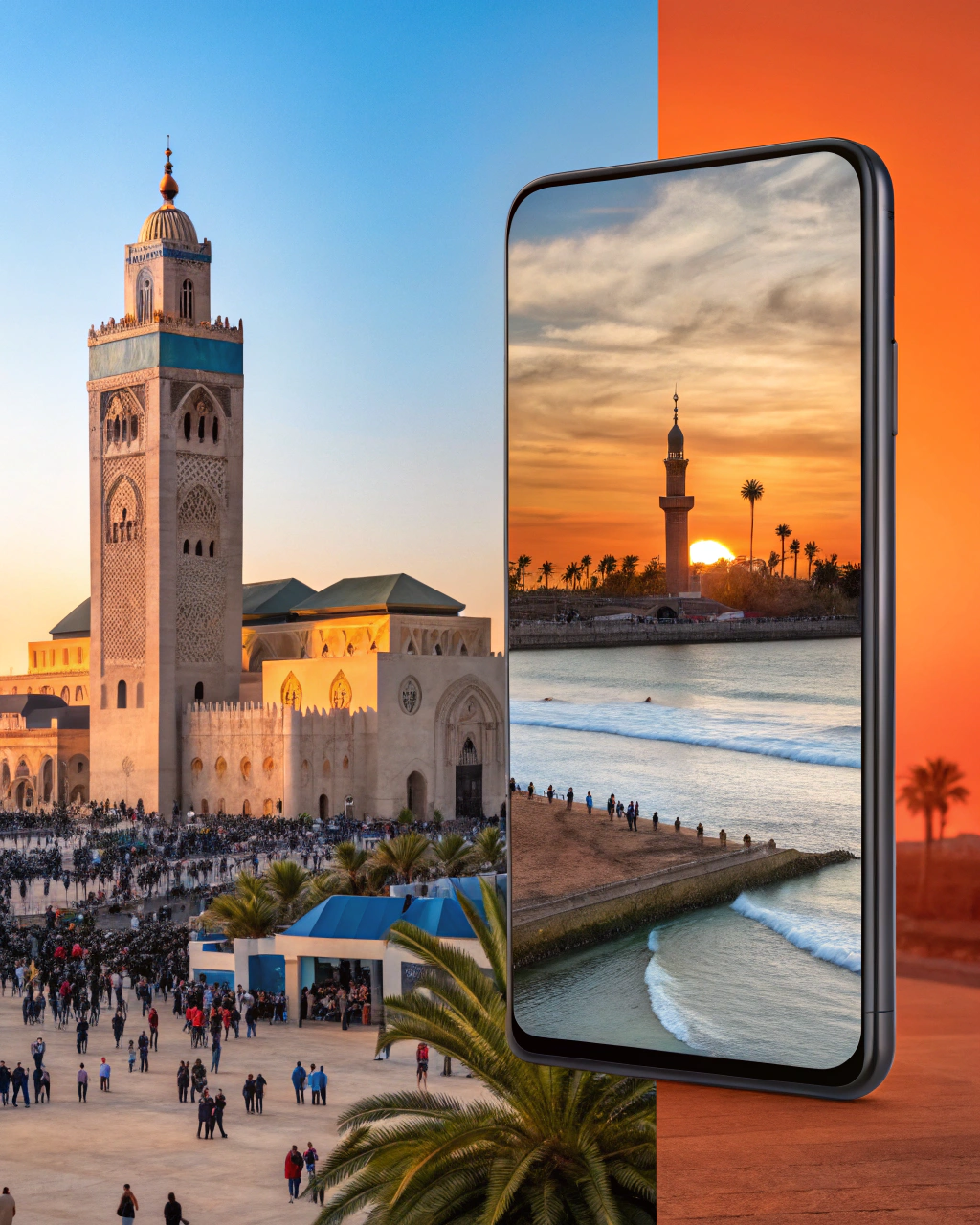
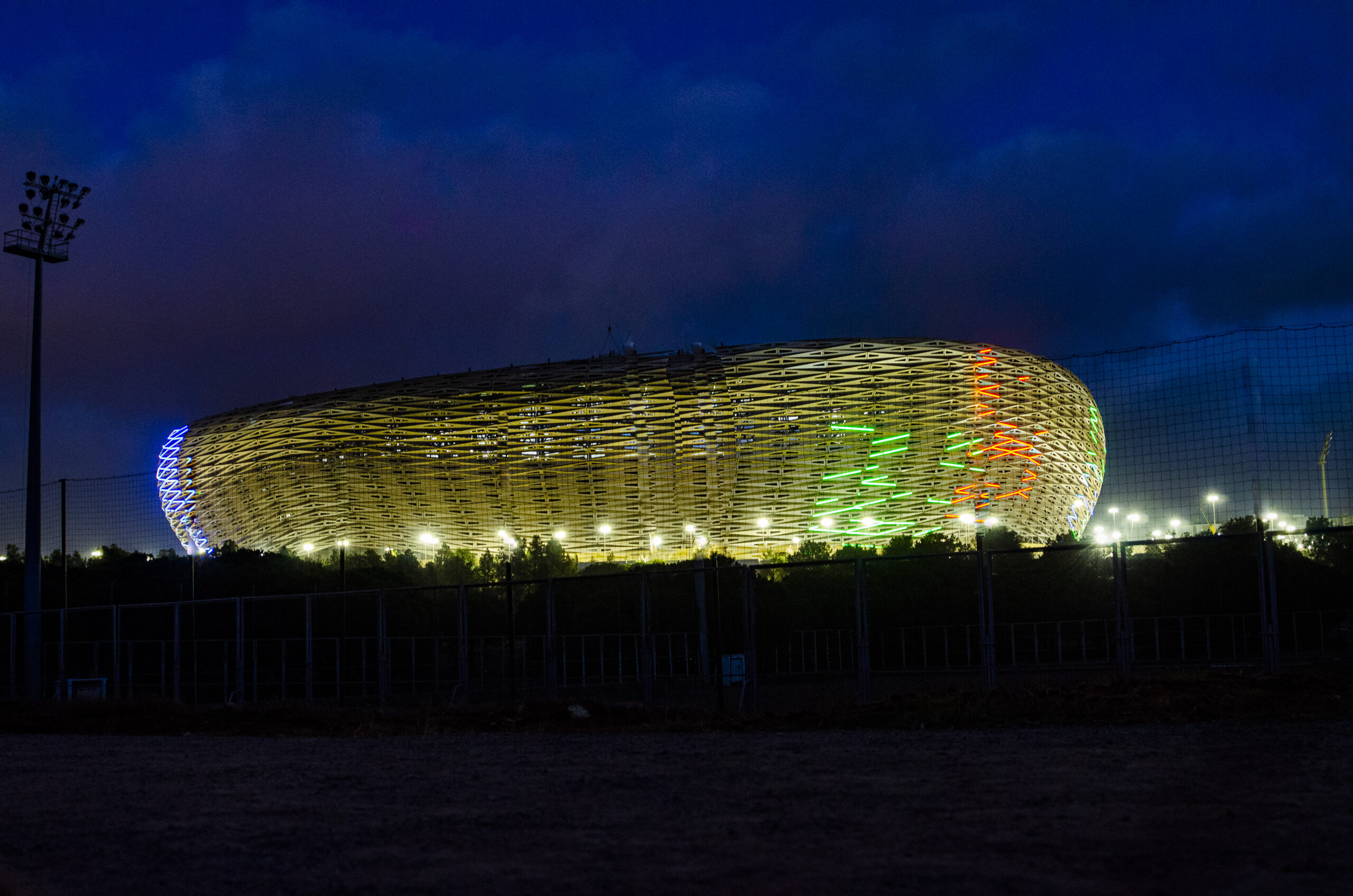
Nine stadiums across these cities will host matches, with capacities ranging from 30,000 to 65,000. Every venue has been upgraded with modern amenities including VAR technology, LED pitch-side advertising boards, enhanced spectator facilities, and dedicated fan zones with food vendors and giant screens for those without tickets.
Rabat – The Capital’s Pride
Rabat serves as the tournament’s nerve center and Morocco’s political capital. The city’s headline venue is the Prince Moulay Abdellah Stadium, the national stadium with a capacity of 65,000—making it the largest ground in the tournament. Home to AS FAR, it will host the opening match, several group-stage fixtures, a quarterfinal, and potentially the final itself.
Beyond football, Rabat rewards exploration. The Kasbah of the Udayas, a 12th-century fortress overlooking the Atlantic, offers blue-and-white streets reminiscent of a Mediterranean village. The Hassan Tower and Mausoleum of Mohammed V showcase Morocco’s architectural grandeur. Rabat connects to Casablanca in under one hour by train, making it an ideal base for fans attending matches in both cities. For a deeper understanding of how Moroccans welcome guests, explore our guide to Moroccan hospitality.
Casablanca – The Heart of Action
Casablanca, Morocco’s economic powerhouse and largest city, brings unmatched energy to the tournament. Stade Mohamed V, with a capacity of approximately 45,000, has hosted Africa’s biggest club matches for decades and serves as the home ground for both Raja and Wydad—clubs whose derby rivalry is among the fiercest on the continent.
Casablanca’s crown jewel is the Hassan II Mosque, the world’s third-largest mosque, whose minaret rises 210 meters above the Atlantic shoreline. The Habous Quarter offers a more curated souk experience, while the Corniche beachfront promenade buzzes with cafés and nightlife. Mohammed V International Airport, Morocco’s main international gateway, makes Casablanca the easiest city to reach from abroad.
Tangier – Gateway to Adventure
Tangier, perched at Africa’s northwestern tip where the Mediterranean meets the Atlantic, has undergone a dramatic transformation. The Ibn Batouta Stadium holds 65,000 following major renovations, making it one of the tournament’s flagship venues for group-stage matches.
Tangier’s location is uniquely strategic—ferries to Spain depart daily, and European fans can cross the Strait of Gibraltar in just 35 minutes. The city’s old Medina weaves narrow lanes past art galleries and spice shops, while the Caves of Hercules offer dramatic coastal scenery. The new Tangier-Med port and modernized airport make arrivals seamless. For those arriving from Spain, this is the perfect entry point into the tournament.
Marrakesh – The Red City’s Magic
Marrakesh needs no introduction. The red city is Morocco’s tourism capital and one of Africa’s most visited destinations. The Stade de Marrakech (also known locally as Stade Mimoun Al-Khair), with a capacity of around 45,000, sits in the Targa district and will host group matches and potentially a knockout fixture.
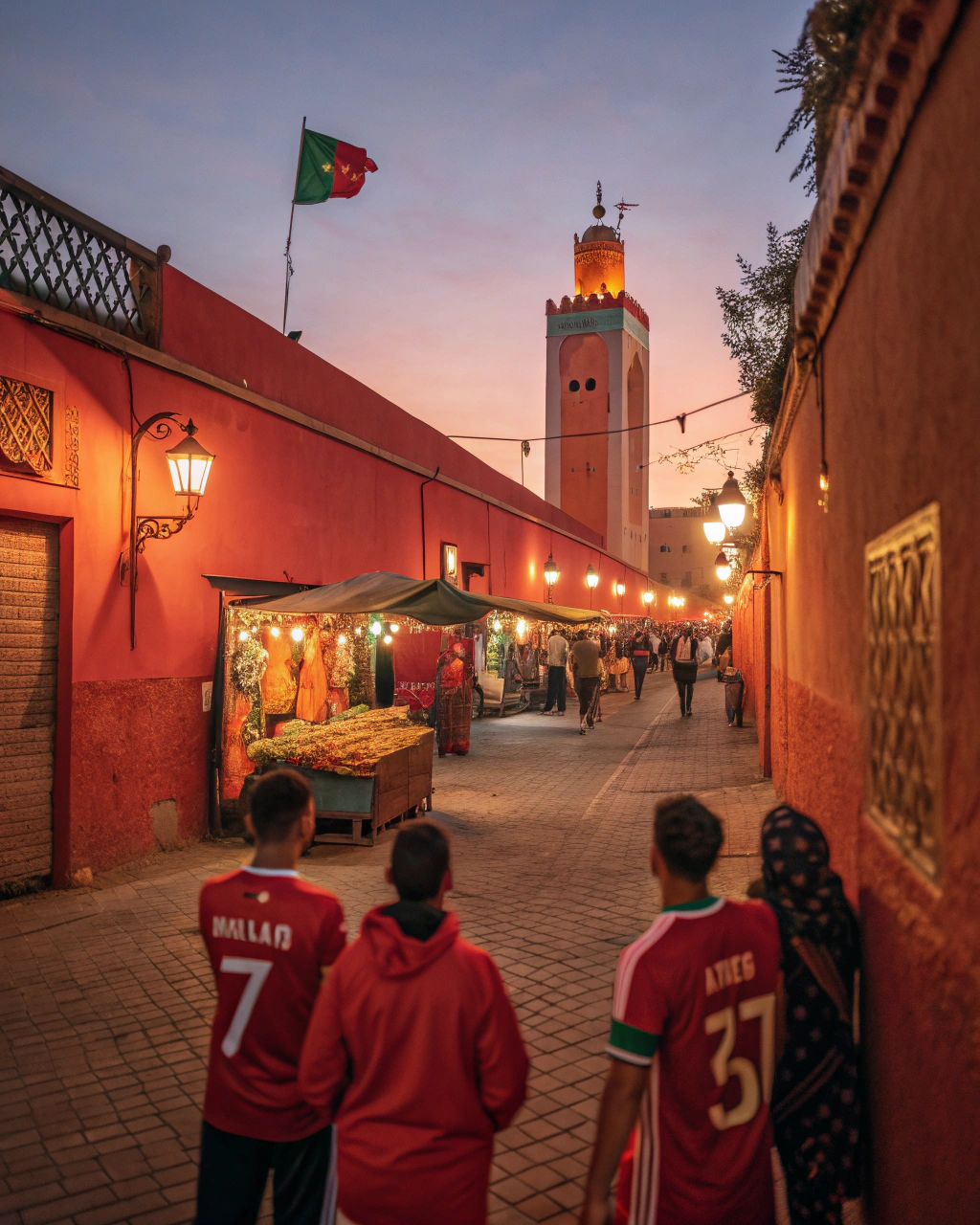
After the final whistle, Marrakesh delivers an experience no other host city can match. Jemaa el-Fna, the UNESCO-listed central square, erupts nightly with storytellers, musicians, snake charmers, and open-air food stalls. The Bahia Palace, Koutoubia Mosque, and labyrinthine Marrakech Medina souks are within walking distance. If you’re planning to stay in the red city, our comprehensive guide on where to stay in Marrakech covers the best neighborhoods and accommodations for every budget.
Agadir – Sunny Coastal Fun
Agadir, Morocco’s premier beach resort city on the southern Atlantic coast, brings a relaxed, sun-soaked energy to the tournament. Adrar Stadium holds 45,000 and benefits from Agadir’s famously mild winter climate—temperatures rarely drop below 18°C even in December.
Agadir’s 10-kilometer golden beach is the star attraction, perfect for pre-match swims or post-match wind-down sessions. The nearby surf town of Taghazout draws wave-riders from around the world, while the Souk El Had is one of North Africa’s largest markets. The city’s international airport receives direct flights from across Europe, making it an easy gateway for fans who want football and beach in equal measure.
Fès – Ancient Echoes
Fès, the spiritual and intellectual heart of Morocco, rounds out the host city roster. The Complexe Sportif de Fès, with a capacity of approximately 45,000, sits near the world’s oldest continuously operating university. Matches here carry a historic atmosphere that no other venue can replicate.
Fès’s UNESCO World Heritage Medina is the world’s largest car-free urban area—a labyrinth of 9,000 alleyways packed with tanneries, madrasas, and workshops where artisans craft the same way they have for centuries. The famous Chouara Tannery, with its vivid dyeing vats, and the Bou Inania Madrasa are essential stops between matches. Fès-Saïss Airport handles domestic and select international flights.
📌 Stadium capacity summary: Rabat (65,000), Tangier (65,000), Casablanca (45,000), Marrakesh (45,000), Agadir (45,000), Fès (45,000). Additional secondary stadiums in Rabat bring the total to nine venues across six cities.
Fan Experience & Travel Planning for AFCON 2025 Morocco
Attending AFCON 2025 Morocco in person? Morocco has invested heavily in making the fan experience smooth, safe, and memorable. Here’s everything you need to plan your trip—from visas and transport to accommodation and staying connected.
Visas & Entry Requirements
Many nationalities receive visa-on-arrival or can apply for e-visas valid for 90 days. Citizens of over 60 countries—including most of Europe, the US, Canada, and several African nations—enter visa-free. Check the Moroccan consulate website for your specific nationality’s requirements. CAF has indicated that special visa facilitation may be available for confirmed ticket holders, similar to arrangements at previous major tournaments.
Getting Around Between Host Cities
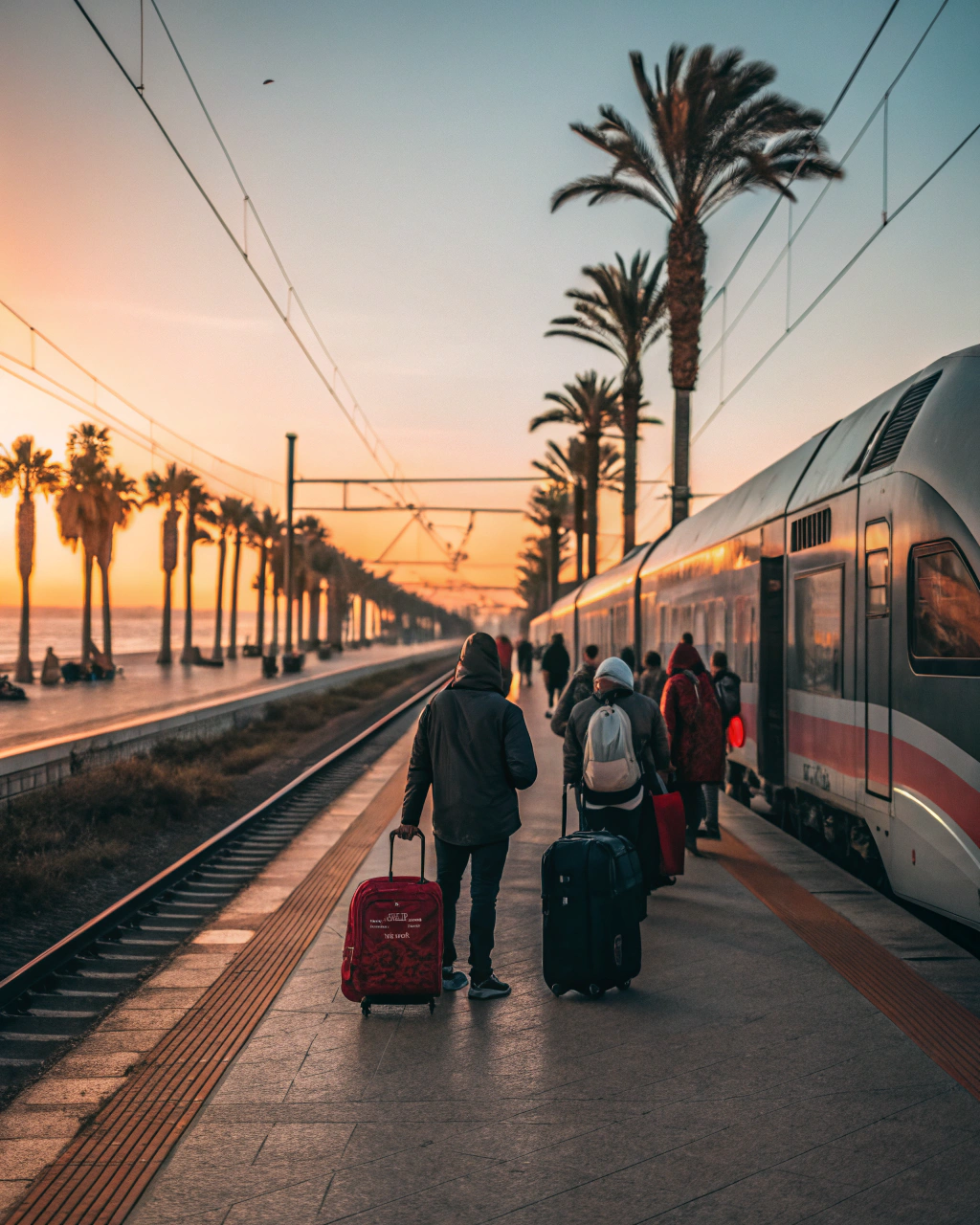
Morocco’s transport network is Africa’s most developed, and getting between AFCON host cities is remarkably straightforward. For detailed route planning, our Morocco Transportation 2026 Guide covers every option:
- Al Boraq high-speed train: Connects Tangier → Rabat → Casablanca in under 2 hours at 320 km/h. Trains run frequently and tickets start around 150 MAD (~$15).
- Royal Air Maroc domestic flights: Connect all six host cities, with flight times under 90 minutes. Book early for best fares.
- CTM & Supratours buses: Reliable, air-conditioned coaches cover every intercity route at budget-friendly prices.
- Ride-hailing: InDrive and Careem apps work nationwide for affordable local rides to stadiums.
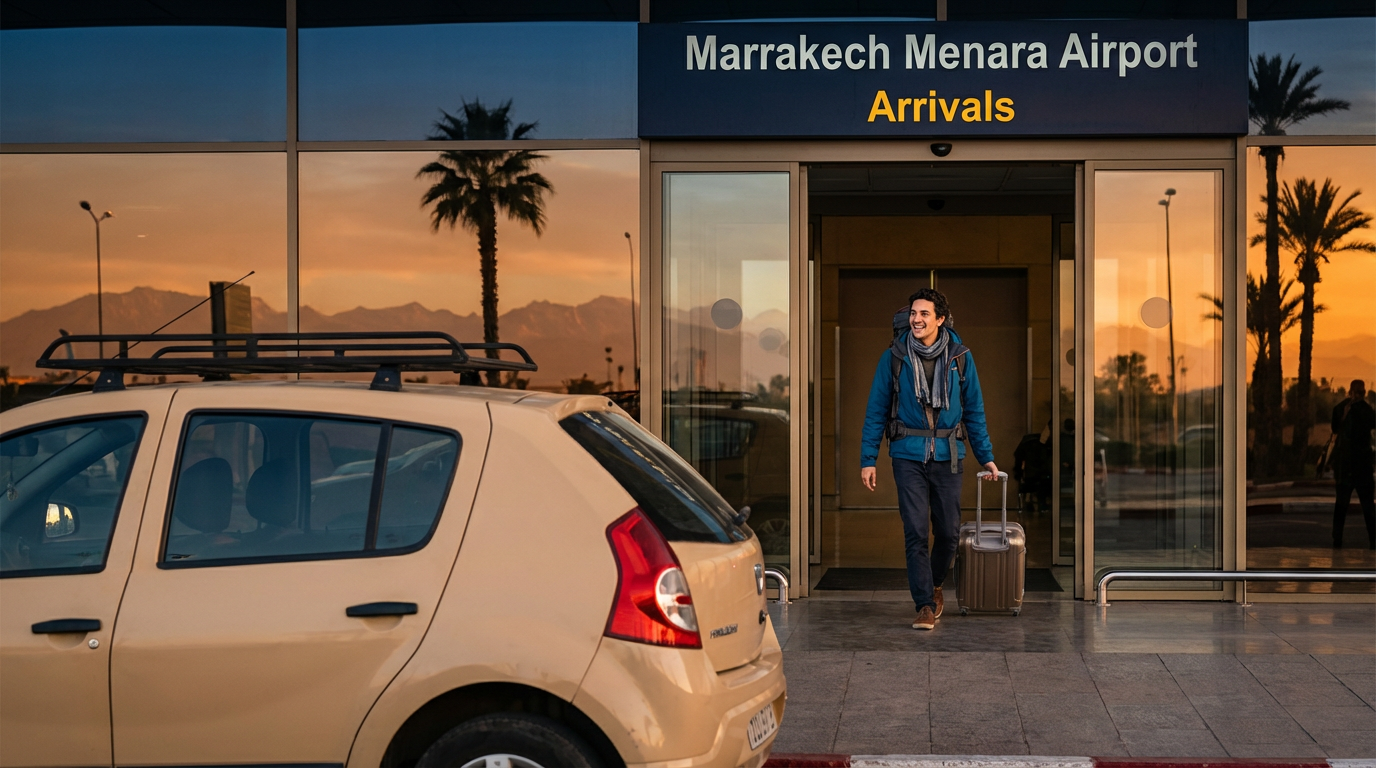
For reliable airport pickups and stadium shuttles, Welcome Pickups operates across Morocco’s major airports with pre-booked, English-speaking drivers—especially useful when arriving at night or with heavy luggage.
Don’t get caught without data between stadiums. Airalo’s Morocco eSIM plans offer affordable data packages starting at $5, with instant activation and coverage across all six host cities—no roaming fees, no SIM card swaps.
Where to Stay
Accommodations range from luxury resorts in Agadir and five-star hotels in Casablanca to atmospheric riads in Marrakesh and Fès and budget-friendly guesthouses everywhere. The key is booking early—demand during AFCON will be unprecedented. Search and compare options on Booking.com, where many properties offer free cancellation, letting you lock in rates while keeping flexibility.
For Marrakesh stays, consider a traditional riad in the Medina for an authentic experience—our guide to affordable riads in Marrakech highlights the best budget-friendly options. In Casablanca, choose hotels near Stade Mohamed V or along the Corniche for easy stadium access. Fès offers the most character, with centuries-old guesthouses converted into charming accommodations.
Tickets & Fan Zones
Official AFCON 2025 Morocco tickets are available through the CAF website and authorized ticketing platforms. Prices start at approximately $20 USD for group-stage matches, with knockout round and final tickets commanding higher prices. Given the historic nature of Morocco’s first hosting, early booking is strongly recommended. For a detailed breakdown of the ticketing process, see our popular guide on how to buy AFCON 2025 tickets.
Each host city will operate dedicated AFCON fan zones with giant screens, food vendors, live music, and cultural performances. These free-entry zones are the heart of the fan experience for those without match tickets and typically run from late afternoon through the evening matches.
Safety & Practical Tips
Morocco is one of Africa’s safest tourist destinations, and the government has deployed additional security measures specifically for the tournament. For comprehensive safety guidance, refer to our Morocco Safety Travel Guide. Key practical tips:
- Use official taxis or ride-hailing apps—agree on fares before departing if using traditional taxis.
- Drink bottled water and enjoy Morocco’s incredible street food from busy, popular stalls.
- Dress modestly in older medina areas as a sign of cultural respect.
- Halal food is available everywhere. Menus in tourist areas typically include English and French.
- Morocco’s currency is the Moroccan Dirham (MAD). ATMs are widely available; cards accepted at hotels and restaurants.
🧳 Late departure? If your flight leaves after checkout, Radical Storage offers secure luggage storage near train stations and airports across Moroccan cities, so you can explore match-day fan zones hands-free.
Morocco’s Footballing Heritage & Culture
Football isn’t just a sport in Morocco—it’s a way of life woven into the national identity. The Atlas Lions’ extraordinary run to the 2022 FIFA World Cup semifinals electrified the Arab world and Africa alike, making Morocco the first African and Arab nation to reach the last four. That achievement built on decades of passion: Morocco won the AFCON title in 1976, finished as runners-up in 2004, and has qualified for six World Cups.
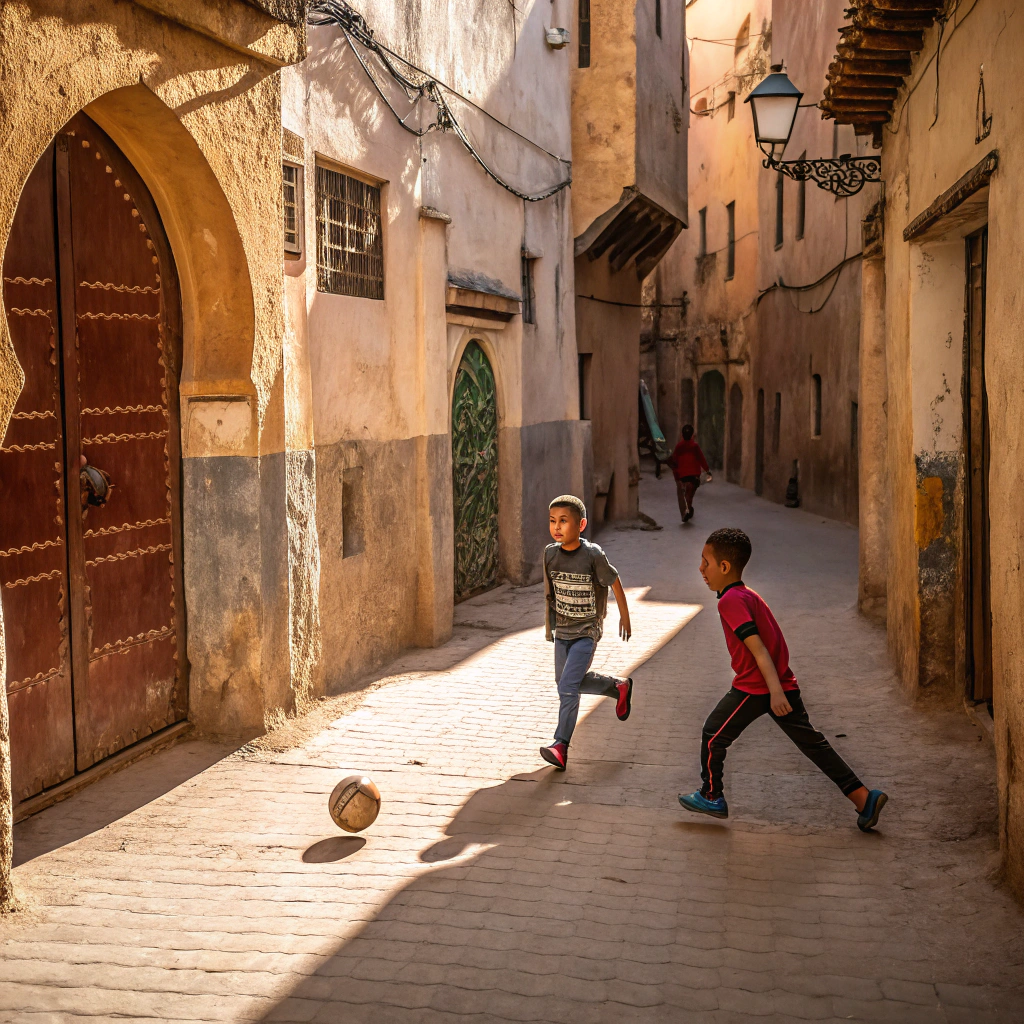
Today’s squad features global stars. Achraf Hakimi (Paris Saint-Germain) is one of the world’s best fullbacks. Hakim Ziyech brings creativity and flair. Yassine Bounou proved himself among the planet’s top goalkeepers during the 2022 World Cup. Legends like Mustapha Hadji and Noureddine Naybet inspired the current generation, and their legacy lives on every time a kid kicks a ball in a Fès alleyway or a Casablanca parking lot.
Domestic football carries its own fierce intensity. The Casablanca Derby between Raja Club Athletic and Wydad Athletic Club is regularly cited among the most passionate rivalries in world football. Both clubs have won the CAF Champions League, and their fans—known for elaborate choreographies and deafening chants—will add incredible atmosphere to AFCON matches in Casablanca.
AFCON 2025 Morocco amplifies this footballing culture on a continental scale. With home-crowd advantage across six cities and stadiums seating up to 65,000, the Atlas Lions will be backed by an ocean of red and green. For fans wanting to sample Morocco’s vibrant culture between matches, don’t miss the chance to try the country’s legendary cuisine—our guide to the best Moroccan dishes covers the tagines, couscous, and street food you’ll find around every stadium.
Reserve Your Spot
Book Your AFCON Morocco Experience
From stadium city tours to desert day trips between matches—explore the best experiences across Morocco’s six host cities. Instant confirmation, free cancellation on most activities.
Frequently Asked Questions
Everything you need to know about AFCON 2025 Morocco
✦ Your Morocco Journey Starts Here
Don’t Just Watch—Experience AFCON 2025 Morocco
AFCON 2025 Morocco is more than a football tournament—it’s your invitation to discover one of Africa’s most captivating nations. From the roar of 65,000 fans in Rabat to the ancient alleys of Fès, from Marrakesh’s midnight souks to Agadir’s sun-kissed coast, this is a once-in-a-generation chance to experience African football, Moroccan culture, and unforgettable adventure in one extraordinary trip.