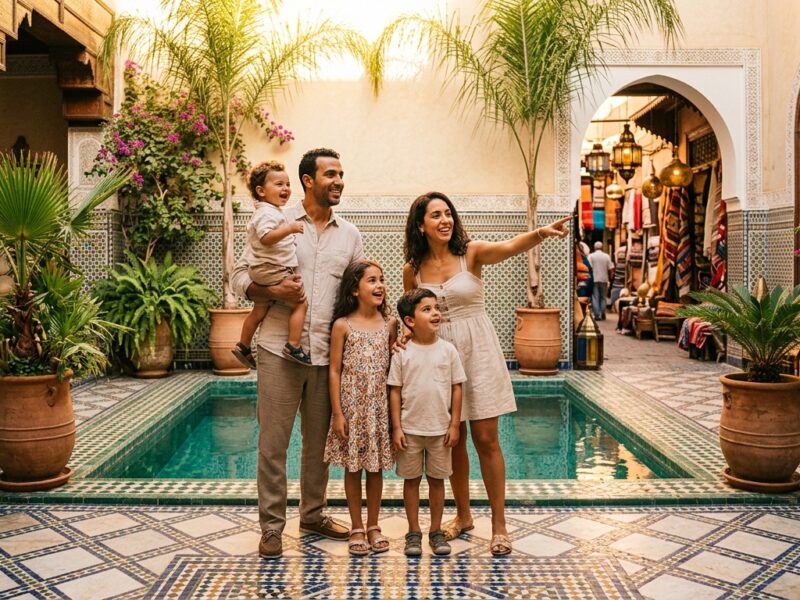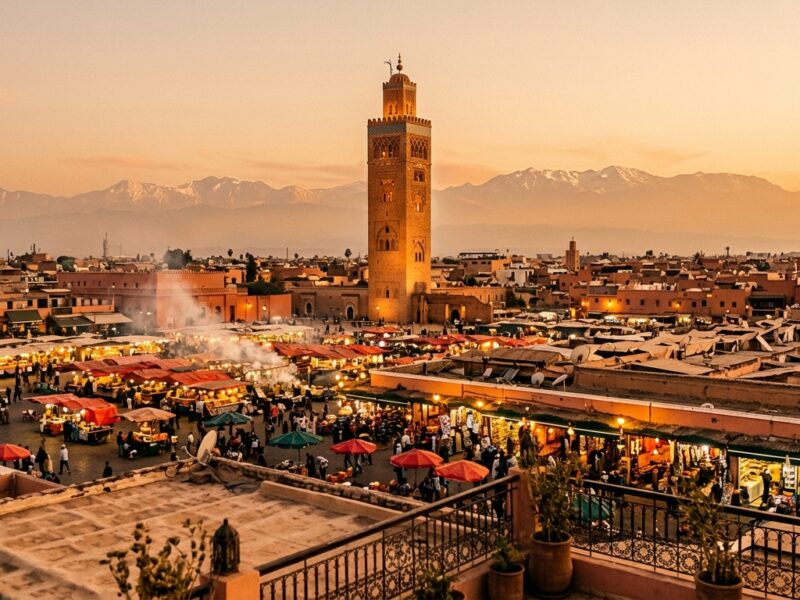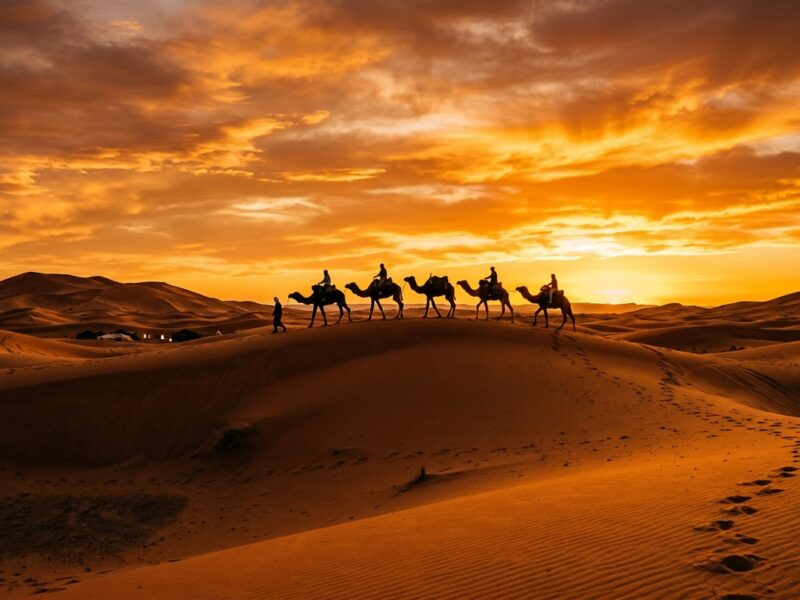
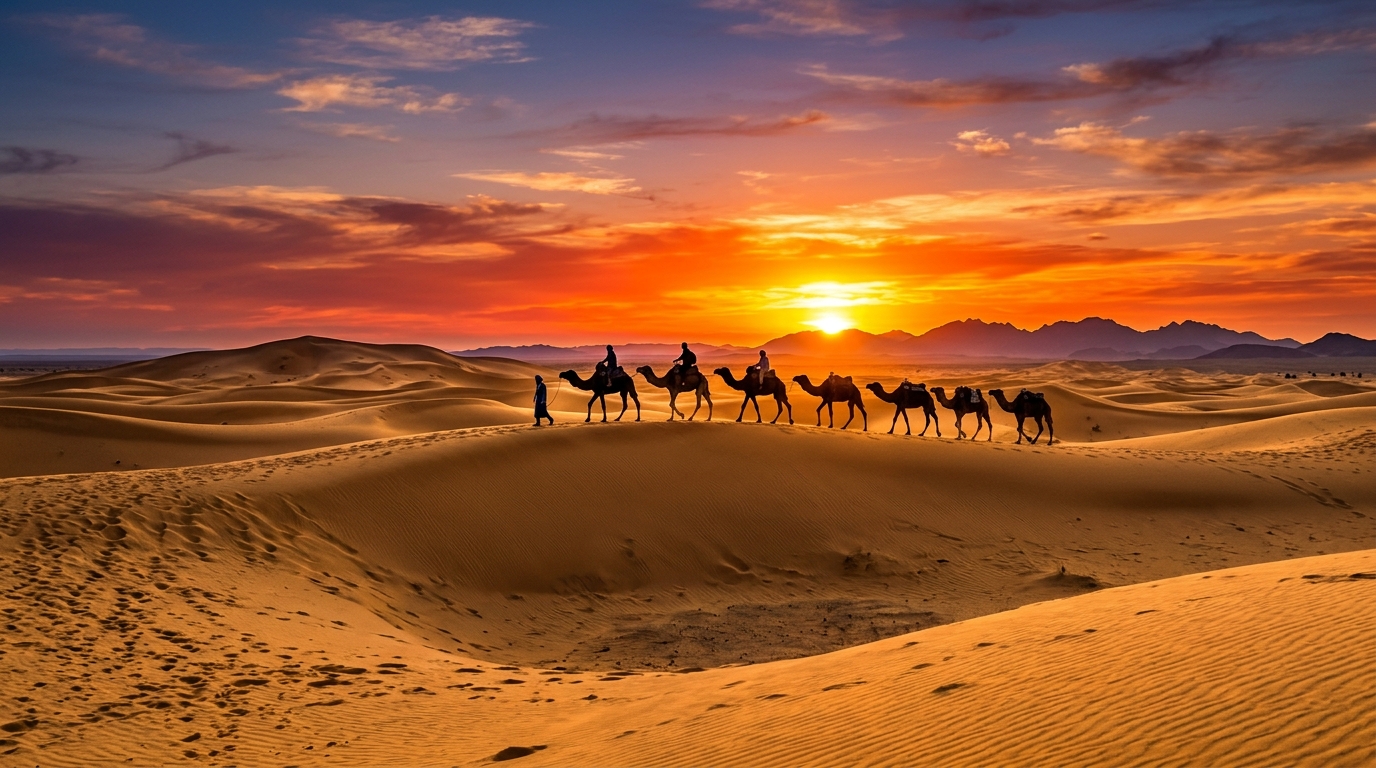
Imagine stepping into a world where the air smells like cinnamon and saffron, where entire cities are painted in shades of blue and ochre, and where golden dunes stretch farther than the eye can see.
This is Morocco — a country of stunning contrasts, and choosing between the best travel destinations in Morocco usually comes down to picking between the chaotic, spice-scented souks of Marrakech, the serene blue alleyways of Chefchaouen, and Sahara dunes that turn crimson at sunset while Atlantic waves crash against Essaouira’s ramparts. 2026 also happens to be the country’s biggest infrastructure push in years, so getting between these places has never been easier — here’s where to go, and why.
Key takeaways
2026 brings a $4B hotel investment — roughly 25,000 new rooms — plus upgraded roads and airports ahead of the 2030 World Cup.
Seven regions cover everything: imperial cities, the Sahara, the Atlas Mountains, the Atlantic coast, and the Blue Pearl, Chefchaouen.
Spring (Mar–May) and autumn (Sep–Nov) give the most comfortable weather nationwide.
The high-speed Al Boraq train links Tangier to Casablanca in just over two hours; private drivers are best for desert and mountain routes.
Budget 10–14 days for the highlights, or add a week for the coast, mountains, and the far south.
Contents
Why Morocco’s Travel Destinations Shine in 2026
Morocco has always captivated travelers, but 2026 brings a run of upgrades that make this a genuinely good year to go. The country sits where Arab, Berber, and French cultures blend, and its geography swings from snow-capped mountains to scorching desert to sandy Atlantic beaches — sometimes all in the same week.
Massive investment is reshaping the tourist experience. The 2023–2026 Tourism Strategic Roadmap put roughly $610 million into roads, airports, and public infrastructure, aiming for 17.5 million visitors by 2026.
Hotels are getting a real upgrade. A $4 billion plan is adding around 25,000 new hotel rooms — a 20% capacity increase ahead of the 2030 FIFA World Cup, which Morocco co-hosts with Spain and Portugal. More rooms generally mean better prices and more choice.
New destinations are opening up. The government recently signed tourism development contracts covering Dakhla, Boujdour, and Tarfaya in the southern provinces, expected to support around 1,700 tourism businesses.
Small operators are getting support. The GoSiyaha program, launched in 2024, backs small tourism businesses — which usually means more independent tours and family-run riads rather than big chain experiences.
Getting there is easier. Air routes have expanded, airports have been upgraded, and visa processing has been streamlined for a number of nationalities, opening up new flight connections into Morocco from major markets.
Before you book: reserve accommodation 3–6 months out for 2026 — especially in Marrakech, Fes, and Merzouga — since new inventory absorbs fast in peak season. Browsing where to stay early is the easiest way to lock in a better rate before it disappears.
Top Places to Visit — Region by Region
This section covers the top places to visit in Morocco organized by region, from the imperial cities to the desert, the mountains, and the coast. Every stop below is worth the detour — this is really about helping you prioritize. You can browse the full set on our destinations page.
Marrakech – The Red City
Marrakech sits at the foot of the Atlas Mountains in southern Morocco and delivers a full sensory overload from the moment you arrive.
What to see:
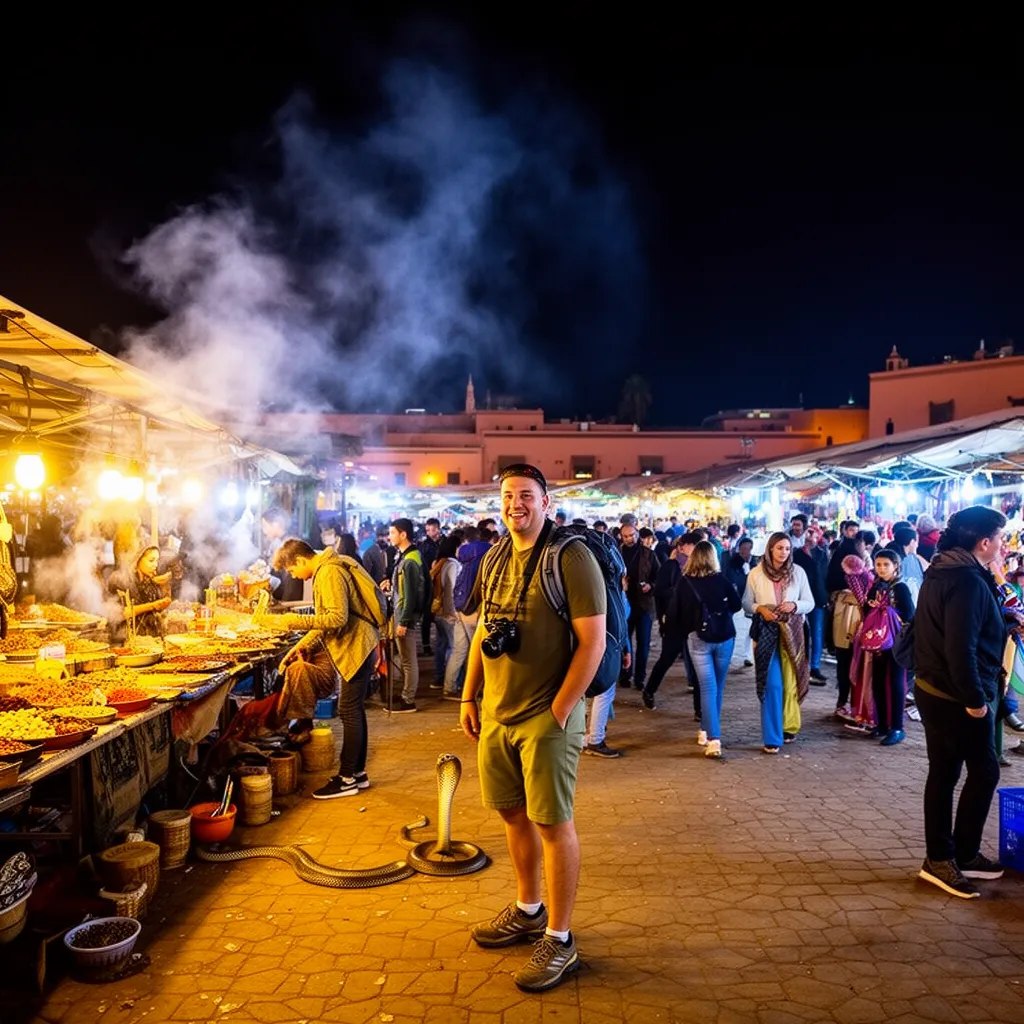
- Jemaa el-Fnaa square: the night market comes alive after dark with snake charmers, storytellers, and grills sizzling with meat.
- Bahia Palace: a 19th-century palace with intricate tilework, carved cedar ceilings, and quiet courtyards.
- Majorelle Garden: now part of the Yves Saint Laurent Museum — a vivid blue garden of cacti, palms, and fountains.
- Souks of the medina: a maze of alleys selling carpets, lanterns, spices, and leather; a guided shopping tour makes the haggling far less intimidating.
- Traditional hammam: a steam-and-scrub session is the classic way to recover after a day pounding the medina’s cobblestones.
Why visit: first-timers love Marrakech for its culture, nightlife, and constant energy. Plan 2–3 days. The red-ochre walls glow at sunset, and modern cafés and galleries now sit comfortably alongside centuries-old traditions.
Check availability for a private medina walk on GetYourGuide.
Fes – The Cultural Heart
Fes sits in northern Morocco and is widely considered the country’s cultural and spiritual heart. Where Marrakech feels modern, Fes feels ancient.
What to see:
- Fes el-Bali: a UNESCO-listed old medina and the world’s largest car-free urban area — donkeys still deliver goods here.
- Chouara Tannery: watch leather being dyed in stone vats from a rooftop terrace, mint sprig in hand.
- Al Quaraouiyine University: founded in 859 AD, one of the oldest universities in the world; you can’t enter, but the exterior alone is worth the stop.
Kids sell mint sprigs right at the tannery entrance for a few dirhams — grab one before climbing to the terraces, the smell is strong.
Why visit: history lovers and anyone wanting an authentic medina experience will love Fes. Plan 2 days minimum, and consider a historical tour to actually understand what you’re looking at.
Check availability for a tannery-terrace medina tour on GetYourGuide.
Chefchaouen – The Blue Pearl
Tucked into the Rif Mountains in the northwest, Chefchaouen looks like something from a dream — nearly every building painted in shades of blue, from pale sky to deep indigo.
What to see:
- The blue-washed medina: wander without a plan; every corner is a photo.
- Akchour Waterfalls: a hike through olive groves and forest to reach the falls, with a rope swing for the adventurous.
- Kasbah museum: a small museum with a tower giving panoramic views over the blue city.
Why visit: photographers and anyone after a slower pace will fall for Chefchaouen. Plan 1–2 days of pure chill against a mountain backdrop.
Check availability for a Chefchaouen day trip on GetYourGuide.
Sahara Desert – Merzouga & Erg Chebbi
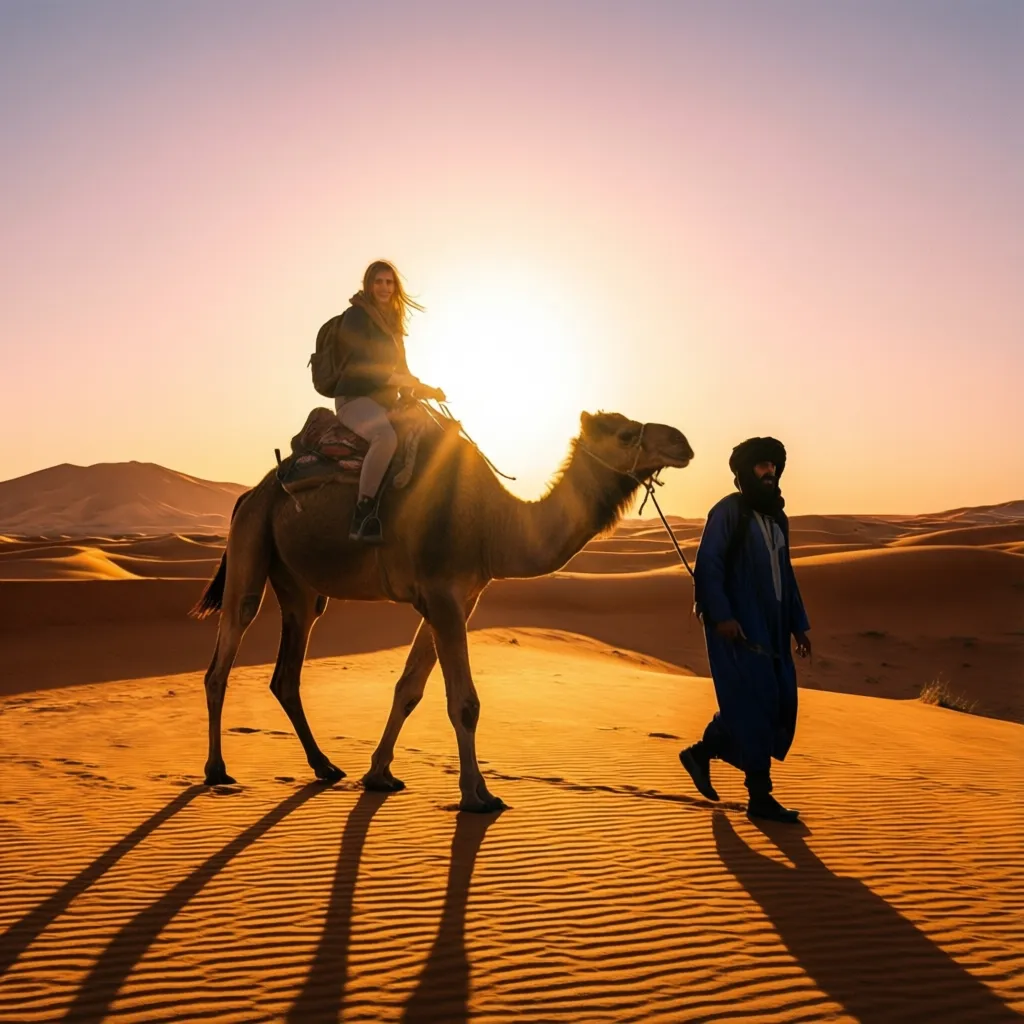
For a genuine once-in-a-lifetime experience, head southeast toward the Algerian border to Merzouga and the Erg Chebbi dunes — golden sand mountains reaching up to 150 meters high.
What to do:
- Camel treks into the dunes: ride as the sun sets and the sand turns orange and pink.
- Overnight desert camps: sleep in a Berber tent, eat around a campfire with drumming and singing, and wake up for sunrise over the dunes.
- Sandboarding: easier than snowboarding, twice as fun.
- Quad biking: a faster, dustier way to cover the dune fields.
Camps closer to the dune edge fill up first for sunrise views — ask your operator to confirm the exact camp location, not just “Merzouga,” before you book.
Why visit: unmatched desert scenery, incredible photography, and Berber hospitality. Plan 2–3 days to actually settle into it.
Check availability for an overnight camel trek and camp on GetYourGuide.
Atlas Mountains – For Adventure Lovers
Stretching south from Marrakech, the Atlas Mountains offer serious trekking, fresh air, and traditional Berber villages.
What to do:
- Toubkal National Park: home to Mount Toubkal, North Africa’s highest peak at 4,167 meters; the summit climb takes about 2 days. Guided Atlas Mountains hikes cover routes for most fitness levels.
- Ourika Valley: an hour from Marrakech — easy hikes, waterfalls, and argan oil cooperatives run by local women.
- Ouzoud Waterfalls: 110-meter cascades into a natural pool, with boat rides and Barbary macaques in the trees.
- Hot air ballooning: a sunrise flight over the Atlas foothills, usually paired with a Berber breakfast on landing.
Why visit: adventure seekers and nature lovers will find plenty here. Plan 2–4 days depending on how deep you want to go.
Check availability for an Ouzoud Waterfalls day trip on GetYourGuide.
Essaouira – Coastal Charm
On the Atlantic coast west of Marrakech, Essaouira offers a completely different Morocco. Strong, steady winds make it a world-class windsurfing spot.
What to do:
- Windy beaches: kitesurfers and windsurfers flock here for the consistent wind.
- UNESCO-listed medina: whitewashed buildings, blue shutters, art galleries, and woodworking shops.
- Fresh seafood at the port: pick your fish straight off the boats and have it grilled nearby.
Why visit: beach lovers, artists, and anyone wanting a slower pace. Plan 1–2 days.
Rabat – The Capital
Rabat combines history with modern boulevards and a fraction of the crowds you’ll find in Marrakech or Fes.
What to see:
- Hassan Tower: a 12th-century unfinished minaret, 44 meters tall — meant to be 86.
- Kasbah of the Udayas: enter through a blue-and-white gate into streets reminiscent of Chefchaouen, with gardens overlooking the ocean.
- Modern museums: the Mohammed VI Museum of Modern and Contemporary Art.
Why visit: history buffs and anyone wanting a less crowded, more modern Moroccan city. Plan 1 day.
Tangier – Gateway to Africa
Perched at Morocco’s northern tip facing Spain, Tangier has long been a crossroads of cultures, blending European and Moroccan influences.
What to see:
- Caves of Hercules: a sea-facing opening shaped like the African continent.
- Medina and Kasbah: streets that have drawn painters, writers, and musicians for decades.
- Café culture on the Strait of Gibraltar: mint tea while watching ships pass between Europe and Africa.
Why visit: a cosmopolitan entry point with real history behind it. Plan 1–2 days.
Must-See Places You Can’t Miss
Beyond the cities, a handful of landmarks define Morocco’s landscape.
Ait Benhaddou – A UNESCO World Heritage Site
Near Ouarzazate on the edge of the High Atlas, Ait Benhaddou is a classic ksar — a fortified mud-brick village dating to the 17th century. You’ve probably seen it on screen without realizing it: it’s served as a filming location for Game of Thrones, Gladiator, and Lawrence of Arabia, among others. Sunset from the hilltop granary is genuinely stunning — worth planning around if you’re passing between Marrakech and the desert. A guided kasbah tour is the easiest way to actually get the history, not just the photo.
Todra Gorge – Dramatic Rock Formations
Near Tinghir on the eastern High Atlas, Todra Gorge’s canyon walls rise up to 300 meters, carved by the Todra River over millions of years. It’s a 40-minute walk from Tinghir town, and hiking, rock climbing, and photography are the main draws. Many visitors stop here en route to Merzouga’s dunes; nearby Dadès Gorge adds even more dramatic switchback roads.
Ifrane – Little Switzerland
Deep in the Middle Atlas near Fes, Ifrane looks nothing like the rest of Morocco — Alpine-style architecture, cedar forests, and even a small ski resort. In winter, snow covers the streets; year-round, the cedar forests make for peaceful walks where you might spot Barbary macaques. It’s one of the more surprising must-see places in Morocco.
Where to Go Based on Your Travel Style
With so many options, matching a destination to how you actually like to travel makes planning much simpler.
For History Buffs
Start with Fes, home to the world’s oldest university and the most authentic medieval medina you’ll find anywhere. Marrakech adds Bahia Palace, the Saadian Tombs, and Ben Youssef Madrasa, while the Roman ruins at Volubilis near Meknes have some of the best-preserved mosaics in the country. Rabat contributes Hassan Tower and the Chellah necropolis. A dedicated imperial cities tour is the most efficient way to tie it all together — allow at least 7–10 days.
For Adventure Seekers
Start with the Sahara for camel trekking and sandboarding, then add the Atlas Mountains for serious trekking, including Mount Toubkal. Todra Gorge offers world-class rock climbing, and Ouzoud Waterfalls means hiking and swimming in one stop. Combining desert camping with mountain trekking needs at least 10 days — our Atlas Mountains hiking guide covers trail details.
For Beach Lovers
Essaouira offers the best mix of beach, wind sports, and a charming medina. Agadir has long sandy beaches with a resort feel and family-friendly activities, while quiet Asilah near Tangier stays crowd-free. For serious kitesurfers, Dakhla in the far south is legendary — strong wind, empty beaches, and a very different pace of travel. A week along the coast is easy to fill.
For Foodies
Start in Marrakech, where the stalls of Jemaa el-Fnaa serve everything from snail soup to grilled lamb, and a cooking class teaches you tagine and couscous properly. Fes specializes in pastilla — a savory-sweet pigeon or chicken pie with almonds and cinnamon — while Essaouira has the freshest seafood you’ll find anywhere, straight off the boats. Along the way: harira, msemen, and an endless supply of sweet mint tea.
Practical Tips for Visiting
Best Time to Visit
Spring (March–May) and autumn (September–November) give the best weather nationwide — pleasant temperatures, manageable crowds. Summer (June–August) brings intense heat to Marrakech and the Sahara, often past 40°C. Winter (December–February) turns cold and sometimes snowy in the mountains, while the coast stays mild.
Getting Around
Casablanca, Rabat, Fes, Marrakech, and Tangier are all connected by ONCF trains, with the high-speed Al Boraq covering Tangier–Casablanca in just over two hours. CTM and Supratours buses handle intercity routes reliably, and Royal Air Maroc connects cities like Casablanca to Dakhla or Ouarzazate quickly. For remote areas — the desert, the mountains — a private driver is usually the better option.
| Option | Cost | Time | Best for |
|---|---|---|---|
| Train (ONCF / Al Boraq) | Budget–mid | Tangier–Casablanca in ~2h10 | Fixed city-to-city routes |
| Bus (CTM / Supratours) | Budget | Slower than train | Smaller towns, tight budgets |
| Private driver | Mid–high | Flexible | Desert and mountain routes, multi-stop trips |
| Domestic flight (RAM) | Mid–high | 1–2h | Long distances (Casablanca–Dakhla, Casablanca–Ouarzazate) |
Cultural Etiquette
Dress modestly, especially in medinas and rural areas — cover shoulders and knees, and women may want a scarf for mosque visits. Haggling is expected in the souks; start at 30–50% of the asking price and negotiate respectfully. A few basic phrases go a long way: “salaam” (hello), “shukran” (thank you), “la shukran” (no thank you). French is widely spoken alongside Arabic. Always ask before photographing people, especially in rural areas.
Safety and Health
Morocco is generally safe for tourists, but stay alert for petty theft in crowded spots like Jemaa el-Fnaa. Travel insurance is worth having, tap water is best avoided in favor of a reusable bottle, and sunscreen plus a hat matter more than you’d think in the desert or on the coast. Whatever your budget, accommodation ranges from boutique riads and hotels to well-rated hostels in Marrakech, Fes, and along the coast.
Reserve your spot
Book Your Morocco Experience
Choose from tours across Morocco — from Sahara desert camps to Marrakech medina guides. Instant confirmation and free cancellation on most experiences.
Instant confirmation
Free cancellation on most tours
Some links on this page earn ComeMorocco a commission at no extra cost to you. It never changes what we recommend. How this works.
Questions
01Is Morocco safe for solo travelers in 2026?
Yes, with standard precautions. Many solo travelers, including women, report positive experiences. Avoid walking alone at night in isolated areas, keep valuables secure, and dress modestly.
02Do I need a visa for Morocco in 2026?
US, UK, Canadian, and EU passport holders can enter visa-free for up to 90 days. Rules can change, so verify current requirements for your specific nationality before booking.
03What currency should I use, and how do I pay?
The Moroccan Dirham (MAD) is the local currency. Cash is king — ATMs are widely available in cities, but smaller shops and rural areas may only accept cash. Credit cards work in hotels and larger restaurants; notify your bank before travel to avoid a card block.
04How many days do I need for a Morocco trip?
Minimum 10–14 days to cover Marrakech, Fes, the Sahara, and Chefchaouen. Add another week for the coast, the mountains, and southern destinations like Dakhla.
05What’s the best way to book a Sahara desert tour?
Book through a reputable local agency or your riad — avoid street touts who approach you in the medina. Read reviews, compare prices, and confirm exactly what’s included: meals, camp quality, and camel trek duration.
06When is the best time to visit Morocco in 2026?
Spring (March–May) and autumn (September–November) offer the most comfortable temperatures nationwide. Summer brings extreme heat inland (40°C+), and winter can be cold and snowy in the Atlas Mountains, while the coast stays pleasant year-round.
07How do I get from Marrakech to the Sahara desert?
The drive from Marrakech to Merzouga takes 9–10 hours via the Tizi n’Tichka pass through the Atlas Mountains. Most travelers split it into 2–3 days with stops at Ait Benhaddou, Ouarzazate, and Todra Gorge. There’s no direct train or flight, so a private driver or organized tour is the standard way to go.
Your Morocco trip
Ready to Explore Morocco in 2026?
From a fragrant Marrakech souk to a silent Sahara sunrise, Morocco changes how you see travel. With better flights, more hotel choice, and easier access than ever, 2026 is a good year to say yes.