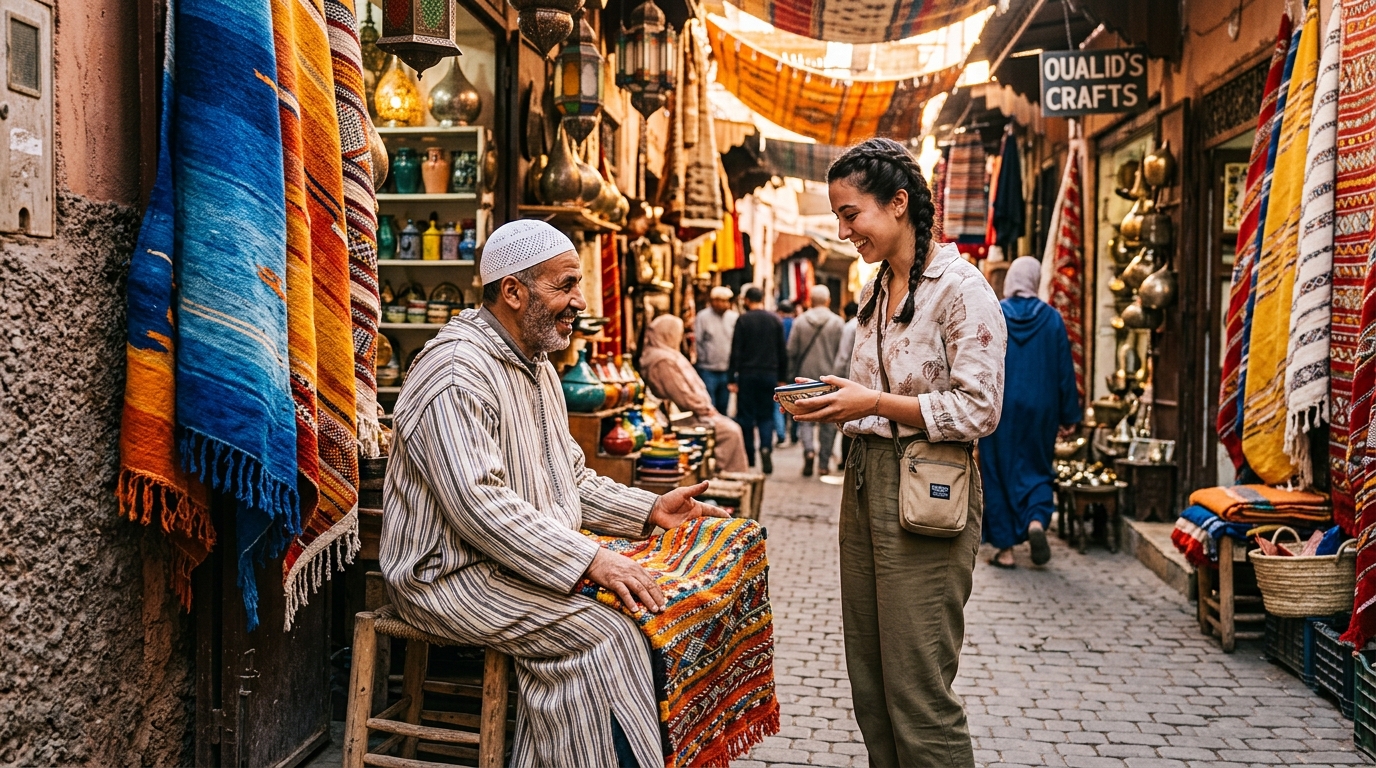
You’re offered a glass of mint tea before you’ve even sat down — and how you respond, more than any guidebook rule, tells your host who you are.
Visiting a new country with a different culture can feel like walking through a minefield of unspoken rules. For first-time visitors to Morocco, the worry about accidentally offending a local is real. You want to explore the bustling souks, admire the stunning architecture, and taste the incredible food — but you also don’t want to make a cultural misstep that could ruin your experience. Understanding Morocco travel etiquette is the single most important step you can take to ensure your trip is both respectful and rewarding.
Key takeaways
Cover shoulders and knees as your baseline dress code everywhere outside beach resorts.
Greet with “Salam alaykum” and use the hand-over-heart gesture when unsure about handshakes.
Always use your right hand for eating, greeting, passing money, and sharing food.
Ask permission before photographing people — offer 10–20 MAD as a polite thank you.
Respect Ramadan by avoiding public eating, drinking, or smoking during daylight hours.
Contents
Why Understanding Cultural Rules in Morocco Matters
Understanding the cultural rules in Morocco is not about restricting your freedom, but about showing respect. Think of it this way: when you visit someone’s home, you follow their house rules. Morocco is the same — you’re a guest in a beautiful country with deep traditions.
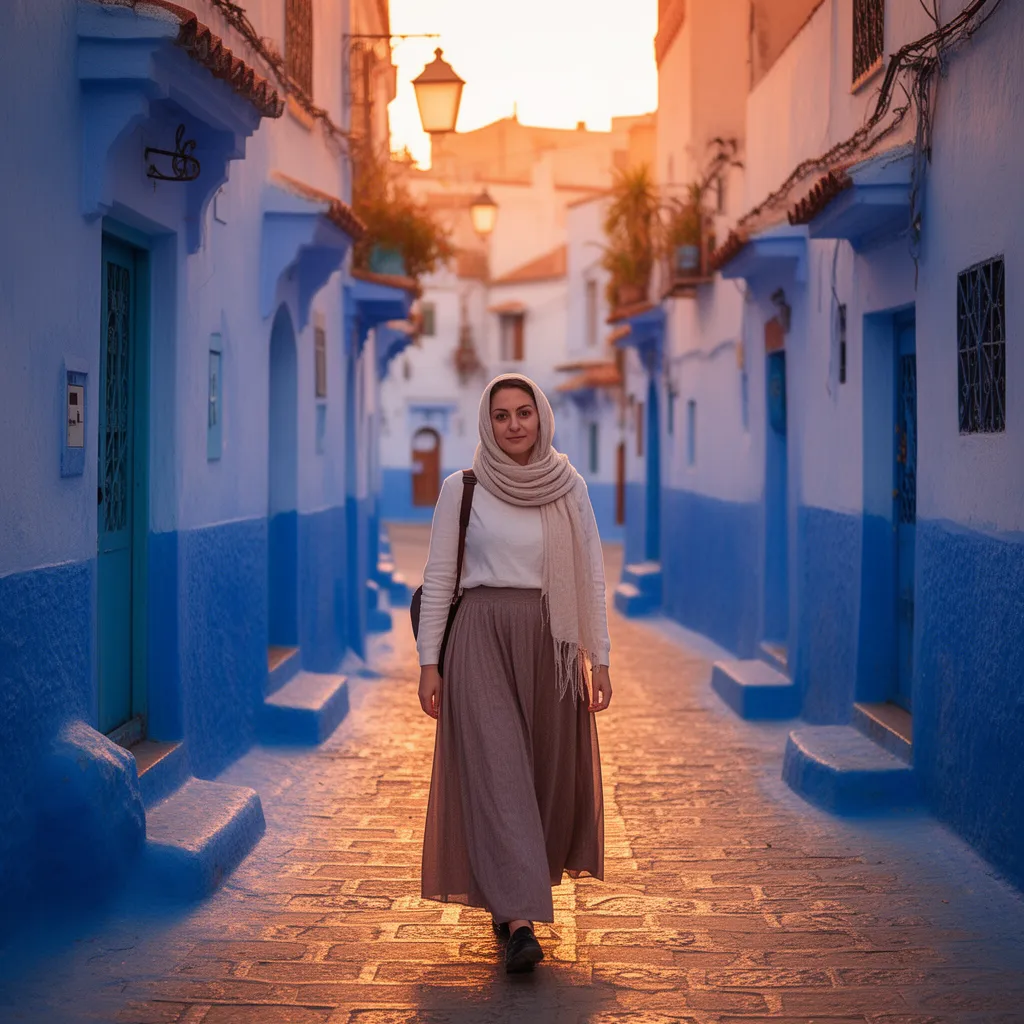
Morocco is a conservative but liberal Muslim country. This means there is no legal dress code for tourists, and you won’t be arrested for wearing shorts. However, social norms are strong, especially outside of beach resorts and modern city centers. What’s acceptable on the Atlantic coast might attract unwanted stares in a traditional medina.
Insight: Respecting these norms leads to better interactions with locals. You’ll receive less unwanted attention, experience more genuine hospitality, and gain a deeper, more authentic travel experience.
Moroccans are known for their incredible warmth and generosity — but that warmth flows most freely toward visitors who show they care about local customs. Being culturally aware is a sign of respect that will be reciprocated tenfold. For solo travelers, especially women, cultural awareness is your strongest safety tool — see our Solo Travel to Morocco: Complete Guide for Women for detailed safety strategies.
The Moroccan Dress Code for Tourists – What to Wear & What to Avoid
The Moroccan dress code for tourists is often a source of confusion, but the rule is simpler than you think. Multiple travel sources — including Rough Guides, Moroccan Journeys, and Morocco-Guide.com — all agree on the same baseline: keep your shoulders and knees covered.
This one simple rule works everywhere in Morocco: in medinas, souks, villages, on public transport, and even in most restaurants. There is no “dress code police” and you will not be arrested for wearing shorts. However, wearing revealing clothing in traditional neighborhoods will attract unwanted stares, comments, and attention that you’d probably rather avoid.
Can females wear shorts in Morocco?
This is one of the most common questions female travelers ask. The direct answer is: technically yes, there is no law against it. But culturally, it is generally considered inappropriate outside of private resorts, hotel pools, and certain beach areas.
Here’s the reality: you will see very few local women wearing shorts in cities and traditional areas. Wearing short shorts will immediately mark you as a tourist and may lead to unwanted attention, comments, or catcalls. This doesn’t mean you can’t be comfortable — it just means you need to choose your clothing wisely.
Better alternatives for women: maxi skirts or midi skirts, loose-fitting trousers or palazzo pants, long shorts that hit just above the knee (knee-length or longer is safer), linen pants and flowy dresses. As Journey Beyond Travel and MoroccoOutings confirm, female visitors wearing shorts is a grey area — when in doubt, go longer.
General dress guidelines for both men and women
For men: Cover your shoulders — no singlets or tank tops in cities. Avoid overly short shorts (running shorts are fine for sports or the beach, but not for sightseeing). The standard outfit for Moroccan men is a collared shirt or T-shirt covering the shoulders, with long pants or jeans.
For women (non-Muslim tourists): Here’s an important fact — headscarves are NOT mandatory. You do not need to cover your hair. Many Moroccan women choose to wear hijab, but it is a personal choice, not a requirement for visitors. However, carrying a lightweight scarf is essential for entering mosques (like the Hassan II Mosque in Casablanca), and it’s useful for sun and dust protection.
Experience the Hassan II Mosque with a guided tour:
Powered by GetYourGuide
Footwear matters too. Closed-toe shoes are highly recommended for walking in medinas, where streets are uneven and dusty. Open sandals are fine for beaches and hotels, but sturdy walking shoes or sneakers will serve you better in the souks.
Dress codes also vary by location. The table below shows this clearly:
| Location | Shoulders | Legs | Head cover |
|---|---|---|---|
| Medina / souk | Covered | Below knee | Optional |
| Luxury riad | Relaxed | Any length | Not needed |
| Sahara Desert | Covered | Maxi preferred | Scarf recommended |
| Atlantic beach | On beach OK | Shorts OK | Not needed |
Book your Sahara Desert adventure:
Powered by GetYourGuide
The golden rule is simple: when in doubt, cover up. You can always remove layers, but you can’t add them if you’re underdressed.
Navigating Unspoken Rules in Morocco: Daily Life & Social Interactions
Beyond clothing, there are several unspoken rules in Morocco that govern daily interactions. These might seem small, but they make a huge difference in how locals perceive you.
The art of greeting (saying hello & goodbye)
The standard greeting in Morocco is “Salam alaykum” (Peace be upon you). The reply is “Wa alaykum as-salam” (And upon you, peace). Always say this with a warm smile — it sets a positive tone for any interaction.
Handshake etiquette has an important rule: men should wait for a woman to extend her hand first. This is a sign of respect. If a woman does not offer her hand, simply place your hand over your heart and nod. This “hand over heart” gesture is a polite and widely accepted alternative to a handshake. Use it whenever you’re unsure.
The right hand rule
This is one of the most important unspoken rules in Morocco to remember. In Islamic culture, the left hand is considered unclean. It’s used for personal hygiene, not for eating, greeting, or passing items.
Always use your right hand for: shaking hands, eating from shared dishes, giving and receiving money or items, passing food or drinks at a table.
If you’re left-handed, verbally acknowledge it and make a conscious effort to use your right hand for these specific activities. Locals will appreciate the effort, even if you’re not perfect at it.
Learn the right-hand rule hands-on with a Moroccan cooking class:
Powered by GetYourGuide
How to politely say “no” to shopkeepers
Haggling in souks is expected — it’s part of the experience. But it’s a social dance, not a battle. If you’re not interested in an item, a polite “La, shukran” (No, thank you) with a smile is enough. Don’t ignore vendors; a friendly acknowledgment is respectful.
One key rule: don’t touch items you don’t intend to buy. Handling goods and then walking away is considered rude. If you’re genuinely interested, ask the price and negotiate. If not, just smile and move on. For deeper haggling strategies, see our 7 Essential Bargaining Tips Morocco Travelers Need to Know.
Explore the Marrakech medina & souks with a local guide:
Powered by GetYourGuide
Photography etiquette
Taking photos in Morocco requires thoughtfulness. Never photograph people without asking for explicit permission. This includes locals going about their day, craftsmen working, and especially police or military personnel.
If you want a photo of someone — say, a baker making bread or a carpet weaver at work — it’s common and polite to offer a small tip for their time. Usually 10–20 Moroccan Dirhams (MAD) is appropriate. Photographing mosques from the outside is generally fine, but never take photos of people praying or inside mosques without permission.
Key Cultural Rules in Morocco: Religion, Customs & Taboos
These cultural rules in Morocco touch on deeper aspects of religion and social behavior. Understanding them will help you avoid major faux pas.
Why can’t you name your daughter Sarah in Morocco?
Let’s address this popular myth directly. The idea that naming a daughter “Sarah” is banned in Morocco is not true.
Here’s the reality: Morocco has regulations about official documentation. A child’s first name must be distinctly “Moroccan” in origin — derived from Arabic, Amazigh (Berber), or Islamic tradition — for it to be accepted on government documents like birth certificates. The name “Sarah” is actually Arabic in origin and means “princess.” It’s a perfectly acceptable and common name in Morocco.
The confusion stems from the rule targeting names that are foreign, invented, or considered culturally inappropriate. The law says a name must reflect Moroccan or Islamic heritage, but “Sarah” certainly qualifies. The key takeaway: the “Sarah rule” is a misunderstanding. You can absolutely name a child Sarah in Morocco.
Public displays of affection (PDA)
Morocco is conservative when it comes to public intimacy. Holding hands between couples is generally acceptable. However, kissing, hugging tightly, and intimate touching in public is frowned upon and can attract negative attention, especially in more conservative areas or smaller towns.
Save the romantic gestures for private spaces like your hotel room or riad. In public, keep interactions warm but platonic.
Behavior during Ramadan
If you’re traveling during Ramadan, be aware of important customs. Muslims fast from dawn to sunset during this holy month. Out of respect:
- Avoid eating, drinking, smoking, or chewing gum in public during daylight hours
- Many restaurants are closed or open only in the evening
- Be patient — business hours may be shorter, and people may be more tired by afternoon
- Avoid scheduling tours during sunset — this is when families break their fast (Iftar), which is a special time
Alcohol and drug laws
Alcohol is available in licensed hotels, bars, and restaurants. However, public drunkenness is heavily frowned upon, and drinking on the street is illegal.
This next point is critical: possession and use of illegal drugs — including cannabis — is strictly forbidden and carries severe penalties, including long prison sentences. Do not accept offers to buy or try drugs, no matter how casual the offer seems. The penalties are not worth the risk.
Practical Etiquette for a Smoother Trip
These practical tips will make your travels through Morocco much smoother and more enjoyable.
Tipping (baksheesh)
Tipping is widespread and expected for many small services. This isn’t begging — it’s a cultural norm called “baksheesh.” Appropriate amounts include:
- 5–20 MAD for a guide showing you around a monument
- 10–20 MAD for a porter carrying your bags
- Small change for a bathroom attendant
Always carry small bills and coins for this purpose. Tipping shows appreciation and builds goodwill.
Hospitality & accepting mint tea
If you’re invited to a Moroccan home, consider it a great honor. Accept the invitation — you’ll experience genuine hospitality.
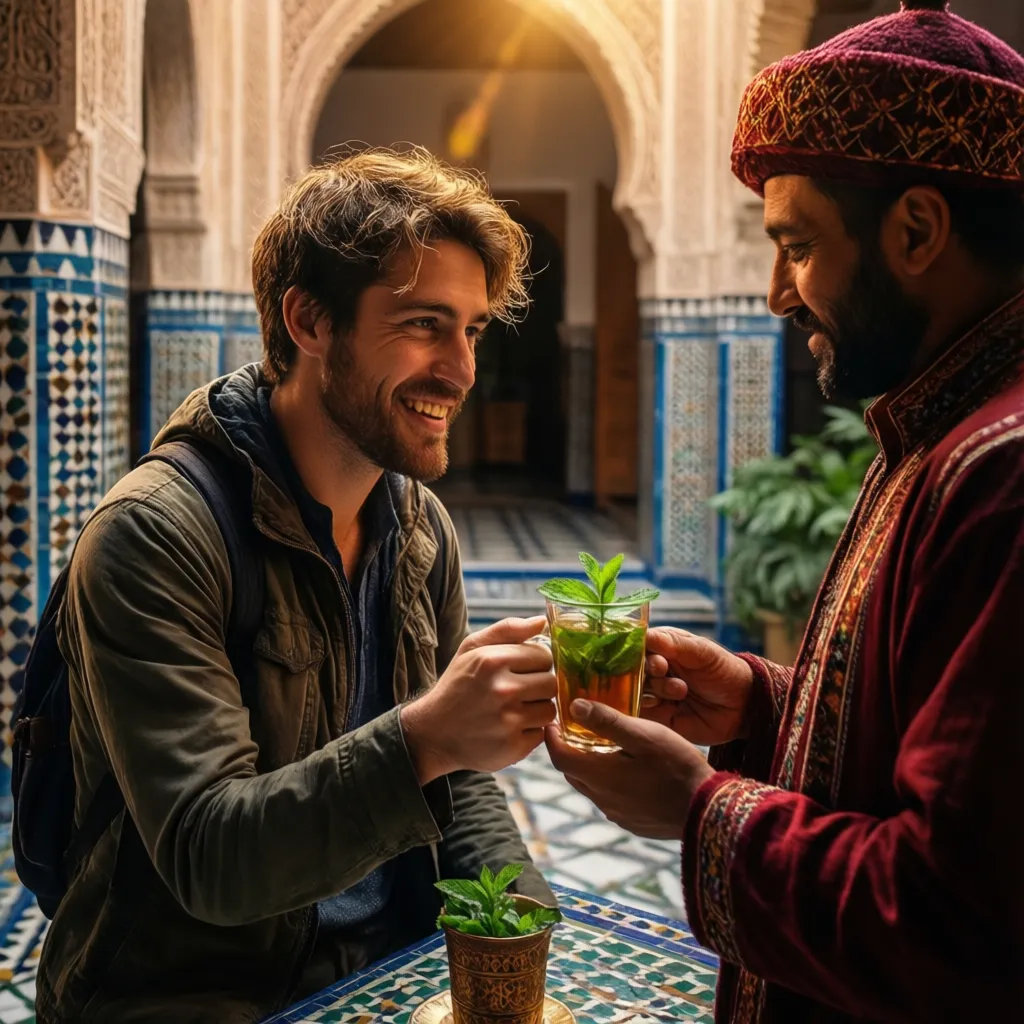
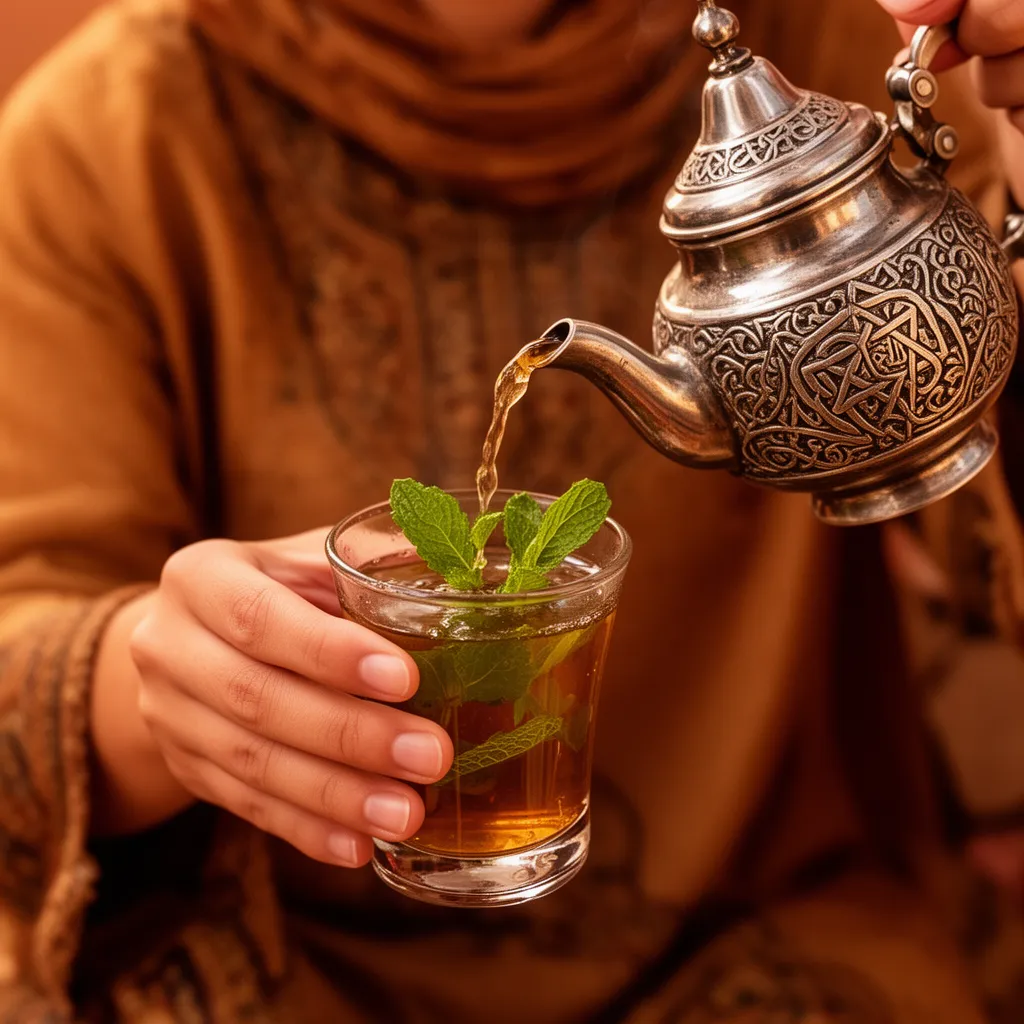
When offered mint tea (the national drink), it’s polite to accept at least one glass, even if you’re not thirsty. Refusing is seen as rejecting hospitality. The tea is sweet, refreshing, and served with ceremony.
If invited to a home, bring a small gift: pastries, sweets, fruits, or nuts are appropriate. Do not bring alcohol unless you are absolutely sure the host drinks. Many Moroccans don’t drink for religious reasons. To dive deeper into Moroccan food culture, explore our guide to the Best Moroccan Dishes You Must Try.
Experience a traditional mint tea ceremony:
Powered by GetYourGuide
Getting around the medina
The medina is a maze of narrow streets and alleys. Keep your belongings secure using a crossbody bag worn to the front. It’s acceptable to haggle with taxi drivers before getting in — agree on a price upfront. Be aware of pickpockets in crowded areas, just as you would in any busy tourist destination worldwide.
Discover the Fes medina with a cultural guide:
Powered by GetYourGuide
For more practical advice on navigating Morocco like a pro, check our 25 Essential Morocco Travel Tips for First-Timers and the Ultimate Guide to the Marrakech Medina.
Planning note: Book airport transfers in advance to avoid arrival stress. Welcome Pickups offers reliable, pre-booked rides from Marrakech Menara and Casablanca Mohammed V airports with English-speaking drivers and fixed pricing.
Staying connected is essential for maps, translation apps, and emergency contacts. Consider an eSIM from Airalo or Yesim for instant data upon landing — no physical SIM swap needed.
Travel insurance is non-negotiable. EKTA Travel Insurance covers medical emergencies, trip cancellations, and lost luggage with 24/7 multilingual support — policies delivered by email in minutes.
Reserve your spot
Book This Experience
Choose from the best cultural experiences across Morocco — from medina tours to desert camps. Instant confirmation, free cancellation on most tours.
Instant confirmation
Free cancellation on most tours
Some links on this page earn ComeMorocco a commission at no extra cost to you. It never changes what we recommend. How this works.
Questions
01Is Morocco safe for solo female travelers in 2026?
Yes, Morocco is generally safe for solo female travelers in 2026, especially when you follow local dress codes and cultural norms. Dress modestly (covered shoulders and knees), avoid walking alone in medinas after dark, and use registered taxis or pre-booked transfers. Unwanted attention can happen but is usually verbal — a firm “La, shukran” and continuing to walk works well. For comprehensive safety strategies, see our Is Morocco Safe for Solo Female Travelers? 2026 Guide.
02What should women wear in Morocco to respect local customs?
Women should cover shoulders and knees as a baseline. Maxi skirts, midi dresses, loose trousers, and long-sleeve tops are ideal. Headscarves are not required except when entering mosques (carry one in your bag). Swimwear is only appropriate at hotel pools and beaches. In the Sahara, long sleeves and maxi lengths protect from sun and sand. See our packing guide for a complete Morocco packing list for women.
03Do I need to cover my hair in Morocco as a tourist?
No, non-Muslim female tourists are not required to cover their hair in Morocco. The hijab is a personal choice for Moroccan women. However, you must carry a lightweight scarf to enter mosques (including the Hassan II Mosque in Casablanca), and it’s practical for sun, dust, and wind protection in the desert and medinas.
04Can I drink alcohol in Morocco?
Yes, alcohol is available in licensed hotels, bars, restaurants, and some supermarkets (like Carrefour and Marjane). However, public drinking and drunkenness are illegal and culturally offensive. During Ramadan, alcohol sales may be restricted. Never bring alcohol as a gift to a Moroccan home unless you’re certain the host drinks.
05What is the right-hand rule in Morocco?
In Moroccan and Islamic culture, the left hand is traditionally reserved for personal hygiene. Always use your right hand for eating (especially from shared tagines), shaking hands, giving/receiving money, passing items, and serving food. If you’re left-handed, locals understand — just make a visible effort to use your right hand for these specific actions.
06When is the best time to travel to Morocco for good weather?
Spring (March–May) and autumn (September–November) offer the most pleasant temperatures nationwide — warm days, cool nights, minimal rain. Summer (June–August) is extremely hot inland (38–45°C in Marrakech, Sahara) but pleasant on the coast. Winter (December–February) is mild on the coast but cold in the mountains and desert at night. Avoid the Sahara in midsummer and the Atlas in deep winter unless prepared.
07How do I haggle respectfully in Moroccan souks?
Haggling is expected and social — start at 40–50% of the asking price, smile, and negotiate playfully. Never touch items you won’t buy. If the price doesn’t meet your budget, say “La, shukran” (No, thank you) and walk away — the vendor may call you back with a better offer. Don’t haggle over trivial amounts (a few dirhams). For a full strategy, read our Essential Bargaining Tips for Morocco.
Your Morocco trip
Travel Morocco with confidence & respect
You now have the cultural keys to unlock Morocco’s legendary hospitality. From the blue alleys of Chefchaouen to the golden dunes of Merzouga, every interaction becomes richer when you travel with awareness. Book your experiences, pack your scarf, and prepare for the journey of a lifetime.