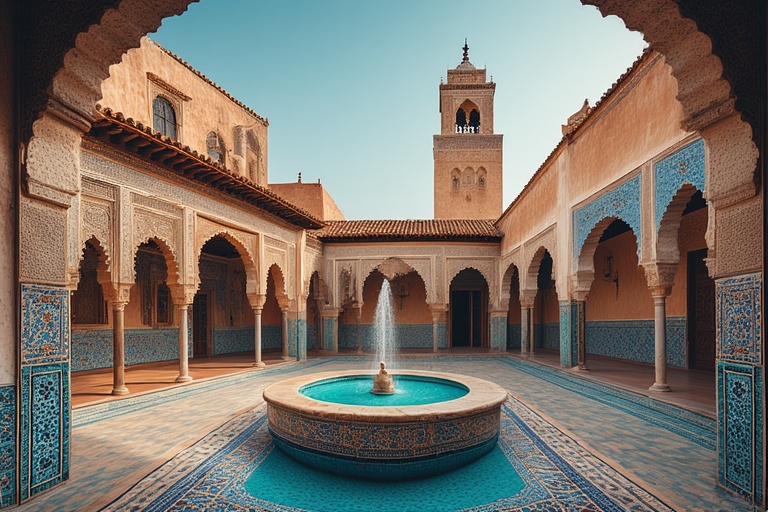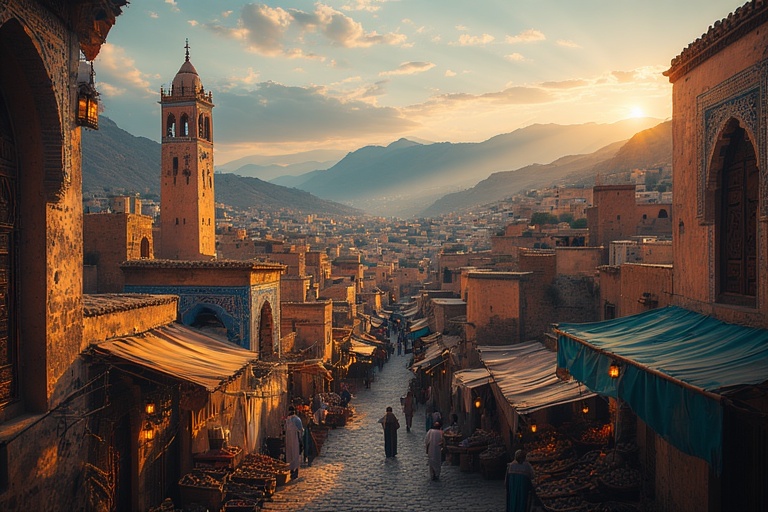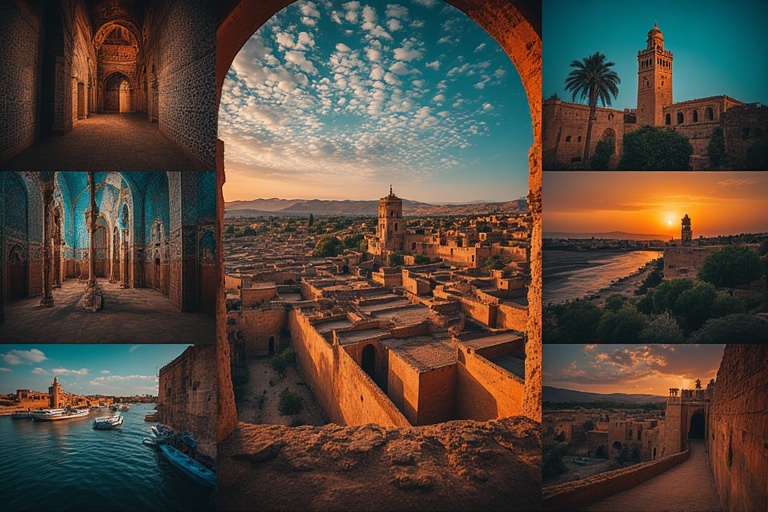

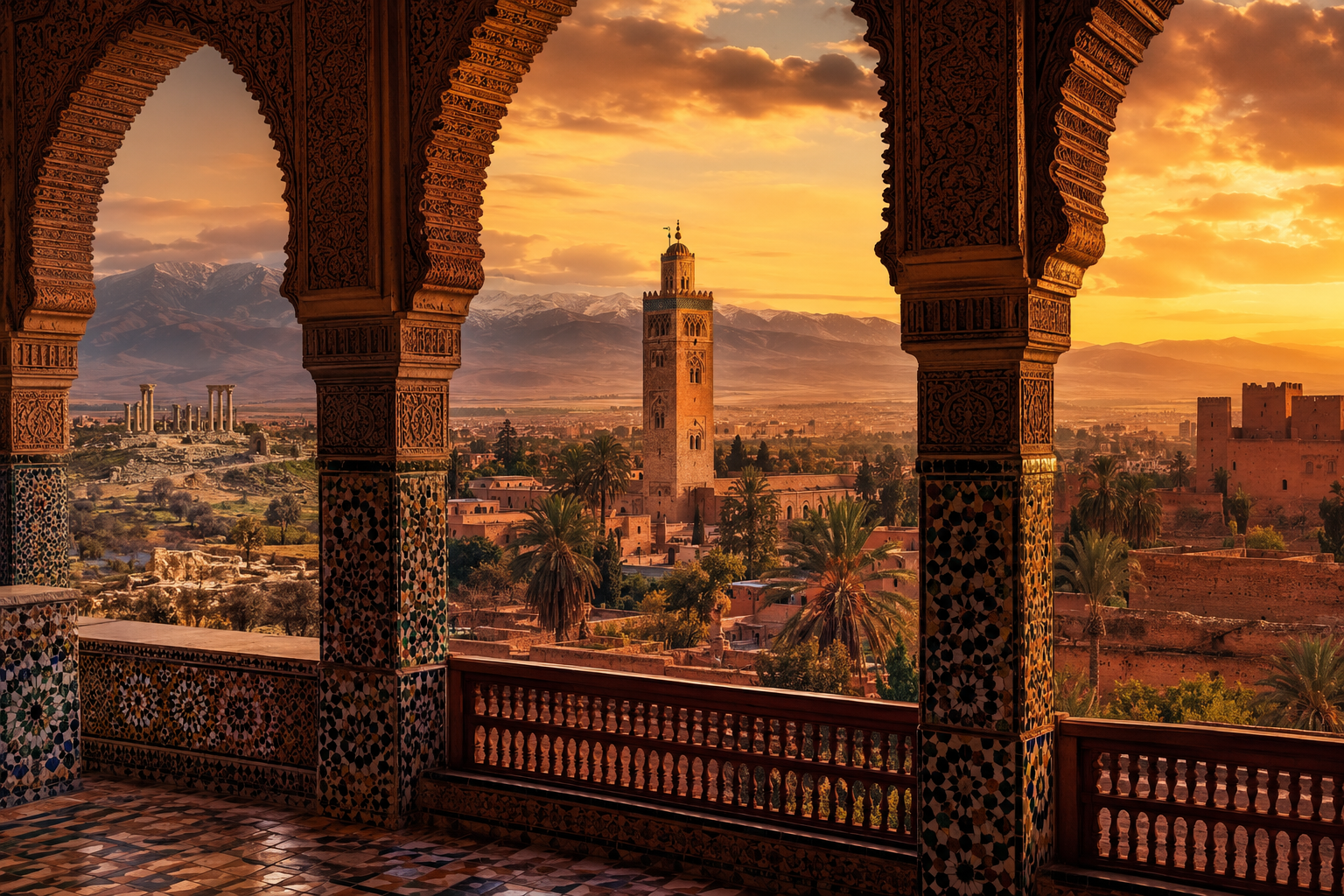
Morocco History: Exploring the Rich Heritage of North Africa’s Ancient Kingdom
Discover Morocco history from ancient times to modern-day in this rich guide exploring Moroccan heritage, dynasties, and iconic Morocco historical sites.
What if a single nation could hold over 300,000 years of human civilization, bridging three continents and weaving together African, Arab, Berber, and European threads into one extraordinary tapestry? Morocco history stands as exactly that—a captivating chronicle where ancient Berber foundations meet Islamic golden ages, colonial struggles, and modern renaissance. From the moment the indigenous Amazigh peoples settled these lands to today’s constitutional monarchy, Morocco has remained a crossroads of cultures, a gateway between worlds, and a living museum where every medina, mountain, and desert tells a story.
✦ Key Takeaways
Morocco’s history spans over 300,000 years, beginning with the indigenous Berber (Amazigh) people and evolving into a modern constitutional monarchy.
Its strategic location as a crossroads between Africa, Europe, and the Middle East has created a uniquely diverse and rich cultural heritage.
Great dynasties like the Almoravids, Almohads, and Saadians defined Morocco’s golden age with significant architectural and intellectual achievements.
The Alaouite dynasty, ruling since the 17th century, has provided remarkable stability and continuity through centuries of global change.
The nation’s incredible past is preserved in nine UNESCO World Heritage sites and vibrant ancient cities, offering tangible links to its history.
Ancient Morocco: Berber Foundations (Prehistory-5th century BCE)
The Morocco history story begins not with conquering empires or medieval dynasties, but with the indigenous Amazigh peoples—commonly known as Berbers—who have called this land home for over 300,000 years. Long before Phoenician traders arrived on the coast or Roman legions marched across North Africa, these ancient communities thrived across the varied terrain of what is now Morocco, from Mediterranean shores to Saharan sands.
Archaeological evidence from the Taforalt Cave in eastern Morocco has yielded some of North Africa’s oldest human remains, proving that this region supported sophisticated human societies since the Paleolithic era. These weren’t primitive nomads scratching out survival, but organized communities who understood their environment intimately and developed agricultural techniques perfectly suited to Morocco’s diverse landscapes.

Early Berber societies organized themselves into tribal confederations, each maintaining distinct languages, cultural practices, and social structures. These groups lived as nomadic and semi-nomadic communities, moving with the seasons and their livestock across coastal plains, mountain valleys, and desert oases. They created intricate social systems based on kinship and tribal loyalty that still influence Moroccan society today—structures so resilient they would survive millennia of foreign rule and cultural change.
💡 Living Heritage: Tamazight languages continue to be spoken by approximately 40% of modern Moroccans, making Morocco’s ancient history a living heritage rather than a distant memory confined to museums.
The Berber culture formed the fundamental layer of Moroccan identity. Their traditions of hospitality—offering tea and shelter to strangers without question—their artistic expressions in jewelry, textiles, and pottery, and their deep connection to the land established patterns that would persist through Roman occupation, Islamic conquest, and colonial rule. Even as foreign powers arrived and departed, the Berber foundation remained solid and enduring, adapting without disappearing.
To truly understand this foundation of Moroccan heritage, travelers today can explore authentic experiences of rural Morocco, where many ancient Berber traditions continue in daily life. In these communities, you’ll find living connections to Morocco’s oldest heritage, from traditional communal decision-making to agricultural festivals that have marked the seasons for thousands of years.
Foreign Influences in Ancient Morocco (5th century BCE-7th century CE)
The history of Morocco took a dramatic turn when Phoenician traders arrived on its shores around the 5th century BCE. These seafaring merchants from the eastern Mediterranean established coastal settlements at places like Lixus (near modern Larache) and Mogador (now Essaouira), introducing new technologies and connecting Morocco to Mediterranean trade networks that stretched from Spain to Lebanon.
The Phoenician and Carthaginian Era
Phoenician influence brought Morocco its first taste of international commerce. Their purple dye production—extracted from sea snails and valued more than gold—and advanced metalworking skills brought prosperity to coastal communities. Local Berber populations didn’t simply adopt foreign ways; instead, they engaged in cultural exchange, learning new techniques while maintaining their own traditions.
As Phoenician power waned, their settlements evolved into Carthaginian trading posts. These North African powerhouses, based in modern Tunisia, expanded commerce along Morocco’s coast and brought the region into contact with a wider Mediterranean world. The Carthaginians introduced new agricultural methods and urban planning concepts that would influence Moroccan development for centuries.
Roman Morocco: Mauretania Tingitana
Roman conquest in 42 CE marked another pivotal moment in Morocco ancient history. The Romans established the province of Mauretania Tingitana in northern Morocco, centered around the city of Tingis (modern Tangier). Unlike their total control in other provinces, Roman rule in Morocco remained largely confined to coastal cities and major inland settlements, with Berber kingdoms maintaining autonomy in mountain and desert regions.

Roman rule brought remarkable changes: sophisticated road systems connected remote regions, aqueducts supplied water to growing cities, and Roman law provided a new framework for governance. The Romans contributed impressive urban development, with cities like Volubilis showcasing classical architecture adapted to local conditions. These settlements featured forums, bathhouses, and villas decorated with intricate mosaics depicting both Roman and local themes—a visual representation of cultural blending.
Agricultural advancements during this period increased crop yields and introduced new farming techniques that boosted the economy. Morocco became a breadbasket for the Roman Empire, exporting olive oil, wheat, and wild animals for gladiatorial games. This economic integration brought prosperity but also tied Morocco’s fate to distant imperial politics.
Today’s travelers can walk the same streets Roman citizens did 2,000 years ago. The archaeological site of Volubilis, a UNESCO World Heritage Site, features well-preserved mosaics, triumphal arches, and the remains of grand villas that showcase the fusion of Roman and Berber cultures.
Christianity arrived in Morocco during the Roman period, establishing early Christian communities that flourished alongside traditional beliefs. This early chapter of religious pluralism is a key part of the religion in Morocco. Archaeological evidence reveals churches and Christian symbols throughout Roman Morocco, showing how new faiths took root in this ancient land long before Islam’s arrival.
Islamic Morocco: Conquest and Early Dynasties (7th-11th centuries)
Morocco history entered its most transformative phase when Arab armies arrived in the late 7th century, bringing Islam to the region. This wasn’t a sudden, violent conversion but a gradual process of cultural exchange and religious transformation that would fundamentally reshape Moroccan society and remains central to understanding Islam in Morocco today.
The Arab Conquest and Berber Resistance
The Umayyad conquest of North Africa reached Morocco around 681 CE, but the process of Islamization took decades. Many Berber tribes initially resisted Arab dominance, leading to conflicts and eventually to the formation of independent Berber Muslim states that balanced Islamic faith with local customs. This resistance wasn’t primarily religious—many Berbers embraced Islam quickly—but political, as they rejected Arab overlordship while accepting the Prophet’s message.
The Islamization of Morocco didn’t erase Berber cultural identity. Instead, it merged with existing traditions to create a unique Moroccan-Islamic culture. Berber languages incorporated Arabic religious vocabulary, Islamic architecture adopted local building techniques, and spiritual practices blended Quranic teachings with indigenous customs. This cultural fusion became Morocco’s defining characteristic.
🕌 Historic Milestone: A crucial moment came in 788 CE when Idris I, a descendant of the Prophet Muhammad fleeing persecution in the Middle East, established the first Muslim state in Morocco. The Idrisid dynasty founded Fez, which quickly became a major center of Islamic learning and culture.
The Idrisid Dynasty and the Foundation of Fez
The Idrisid dynasty (788-974 CE) marked Morocco’s emergence as an independent Islamic state. Idris I’s son, Idris II, founded the city of Fez in 809 CE, strategically positioning it between mountain passes and river valleys. Fez would grow to rival Baghdad and Cairo as a hub of Muslim scholarship and artistic achievement, becoming one of the great cities of medieval Islam.
The foundation of the University of Al Quaraouiyine in Fez in 859 CE marked Morocco as a center of intellectual excellence. Recognized by UNESCO and the Guinness Book of World Records as the world’s oldest continuously operating university, it attracted scholars from across the Islamic world and Europe. Students studied theology, Islamic law, mathematics, astronomy, and medicine, making Fez a beacon of knowledge during Europe’s Dark Ages.

The blending of Arab and Berber cultures during this period created distinctly Moroccan forms of architecture, music, and social organization. Islamic principles merged with Berber customs to produce unique practices in everything from wedding ceremonies to agricultural festivals. This cultural fusion continues to define Morocco, as seen in the immersive cultural experiences available to visitors today.
Powered by GetYourGuide
Golden Age: The Great Moroccan Dynasties (11th-17th centuries)
Morocco history reached new heights during the rule of its great medieval dynasties. This golden age transformed Morocco from a regional power into an empire that influenced Spain, West Africa, and the entire Mediterranean basin. The architectural and intellectual achievements of this period still define Morocco’s greatest cities and cultural identity.
The Almoravid Dynasty (1040-1147): Desert Warriors to Empire Builders
The Almoravid dynasty emerged from the Sahara as a Berber Muslim reform movement dedicated to purifying Islamic practice. Led by Yusuf ibn Tashfin, these desert warriors united Morocco’s fractious tribes and built an empire extending from Senegal to central Spain. They founded Marrakech in 1070 as their capital, strategically positioned between the Atlas Mountains and the desert.
The Almoravids spread Moroccan influence across the Strait of Gibraltar when Andalusian Muslims, threatened by Christian reconquest, invited them to defend Islamic Spain. Their military success preserved Islamic culture in Iberia for another century and established patterns of cultural exchange between Morocco and Spain that continue today.
The Almohad Dynasty (1121-1269): Intellectual and Architectural Flowering
The Almohads succeeded the Almoravids and left an even greater mark on Moroccan heritage. Beginning as another Berber reform movement from the Atlas Mountains, they promoted both military strength and intellectual achievement. The Almohad period saw Morocco’s greatest architectural monuments and philosophical innovations.

Their architectural contributions include the iconic Koutoubia Mosque in Marrakech, whose 77-meter minaret became the model for similar structures in Seville (the Giralda) and Rabat (Hassan Tower). This architectural style—characterized by geometric patterns, horseshoe arches, and soaring minarets—became Morocco’s signature aesthetic, influencing Islamic architecture worldwide.
The Almohads patronized philosophy and science, supporting thinkers like Ibn Rushd (Averroes) whose commentaries on Aristotle influenced both Islamic and Christian medieval thought. They maintained libraries, built madrasas, and created an intellectual environment where Muslim, Jewish, and Christian scholars exchanged ideas—a golden age of convivencia (coexistence) that would later inspire Renaissance Europe.
The Marinid Dynasty (1244-1465): Artisans and Merchants
Under the Marinid dynasty, Morocco became a commercial powerhouse. These rulers focused on developing trade routes across the Sahara and diplomatic relations with European kingdoms while patronizing arts and education. They built magnificent madrasas (religious schools) that combined stunning architecture with centers of learning, many of which still stand among Morocco’s historical sites today.
The Bou Inania Madrasa in Fez and the Attarine Madrasa showcase Marinid craftsmanship at its finest—intricate zellige tilework, carved cedar screens, and calligraphic inscriptions creating spaces where beauty served education. These weren’t just schools but architectural statements of Morocco’s cultural sophistication.
The ancient medina of Fez preserves the finest examples of Marinid architecture. Walking tours through the Fes el-Bali quarter reveal madrasas, mosques, and fondouks (merchant inns) that showcase this dynasty’s contribution to Moroccan urban design.
The Saadian Dynasty (1549-1659): Sugar, Gold, and Splendor
The Saadian dynasty represented a shift as the first Arab Sharifian dynasty claiming descent from the Prophet Muhammad—a religious legitimacy that strengthened their rule. They successfully defended Morocco against both Portuguese coastal invasions and Ottoman expansion from the east, maintaining independence when most of North Africa fell under Ottoman control.
Under Sultan Ahmad al-Mansur, Morocco reached perhaps its greatest wealth and power. His conquest of the Songhai Empire in 1591 gave Morocco control of trans-Saharan gold trade routes, flooding the treasury with precious metals. This wealth funded magnificent construction projects, including the Saadian Tombs in Marrakech and the expansion of El Badi Palace—once considered among the world’s most beautiful buildings.
The Saadians established sugar production as a major industry, building plantations and refineries that exported across Europe. They maintained diplomatic relations with England’s Elizabeth I and other European powers, positioning Morocco as a player in global politics and commerce.
Powered by GetYourGuide
These dynasties developed Morocco’s distinctive architectural style, blending Berber simplicity with Arab elegance and Andalusian refinement. They established educational institutions that preserved and transmitted knowledge across generations. Cities like Fez, Marrakech, and Meknes grew into centers of culture and commerce that attracted traders, scholars, and artists from around the world. For those seeking to experience these magnificent historical periods, Morocco’s ancient cities offer firsthand encounters with the architectural legacy of the golden age.
The Alaouite Dynasty: Continuity and Change (17th century-present)
A new chapter in Morocco history began under the Alaouite dynasty in 1631, which continues to rule today, making it one of the world’s oldest ruling families. This remarkable continuity—spanning nearly four centuries—has provided Morocco with stability through periods of global upheaval, colonial pressure, and regional transformation.
Moulay Ismail: The Warrior Sultan
Sultan Moulay Ismail (1672-1727) stands out as one of Morocco’s most powerful and controversial rulers. He unified the country after a period of division, established Meknes as his imperial capital, and built a professional army that secured Morocco’s borders against both European encroachment and Ottoman expansion.
Moulay Ismail’s reign saw the construction of massive walls, monumental gates, and palaces that still impress visitors to Morocco’s historical sites. The Bab Mansour gate in Meknes, completed by his son, remains one of North Africa’s most beautiful architectural achievements. He corresponded with European monarchs as an equal, proposing marriage to Louis XIV’s daughter and exchanging ambassadors with England and France.

Navigating European Pressure (18th-19th centuries)
During the 18th and 19th centuries, Morocco navigated increasingly complex diplomatic relations with European powers. While neighboring countries fell under colonial control, Morocco maintained its independence through skilled diplomacy and strategic alliances. Moroccan sultans played European powers against each other, granting economic concessions to prevent military occupation.
Sultan Hassan I (1873-1894) recognized the need for modernization while preserving Moroccan traditions. He introduced military reforms, improved administration, and attempted to build modern infrastructure. His efforts to balance progress with tradition set patterns that continue in modern Moroccan governance—embracing change without abandoning identity.
👑 Continuous Legitimacy: The Alaouite dynasty’s claim of descent from the Prophet Muhammad (making them “Sharifian” rulers) has provided religious legitimacy that strengthened their political authority across four centuries of dramatic change.
Architectural Evolution and Cultural Continuity
The Alaouite period represents an important chapter in the development of Moroccan architecture. From the grand imperial palaces of Meknes to the refined riads of Fez, this dynasty continued the architectural evolution that had begun with earlier rulers, perfecting techniques in zellige tilework, carved stucco, and painted cedar that define Moroccan design today.
Contemporary Moroccan architecture blends these traditional elements with modern design principles, creating buildings that honor heritage while meeting current needs. This architectural continuity mirrors the political stability provided by the Alaouite dynasty—adapting to new circumstances while maintaining core identity.
Jewish Life in Morocco Through the Centuries
The history of Jews in Morocco spans over 2,000 years, making it one of the oldest Jewish communities in the diaspora. Jewish presence in Morocco predates the arrival of Islam by centuries and has contributed immeasurably to Moroccan culture, commerce, and intellectual life—a heritage that remains proudly acknowledged today.
Ancient Roots and Islamic Coexistence
Jewish communities likely arrived in Morocco during the Roman period, with some traditions claiming settlement dates back to the destruction of the First Temple in Jerusalem (586 BCE). Under Islamic rule from the 7th century onward, Jews held dhimmi status—protected non-Muslims who paid special taxes in exchange for religious autonomy and physical security.
While this meant certain legal restrictions, Morocco’s Jewish communities generally experienced more tolerance than their counterparts in medieval Europe. They developed thriving communities in cities and rural areas alike, particularly in southern Morocco and the Atlas Mountains, where some Berber tribes converted to Judaism before Islam’s arrival.
The Mellah: Jewish Quarters in Moroccan Cities
Beginning in the 15th century, Moroccan cities established mellahs (Jewish quarters). These neighborhoods weren’t just residential areas but vibrant centers of Jewish life featuring synagogues, schools, markets, and communal institutions. The mellahs of Fez, Marrakech, Essaouira, and other cities became renowned for their skilled craftsmen and merchants.

Moroccan Jews made remarkable contributions to the country’s culture. They excelled in metalworking, creating intricate jewelry that blended Jewish symbols with Moroccan designs—pieces still treasured today. Jewish musicians helped develop Andalusian classical music traditions, and in cuisine, Jewish recipes enriched Moroccan cooking with dishes that remain popular across all communities.
A Golden Age of Sephardic Culture
The expulsion of Jews from Spain in 1492 brought thousands of Sephardic refugees to Morocco, where they were welcomed by local Jewish communities and Muslim rulers alike. These Spanish Jews brought new skills, capital, and cultural traditions that enriched both Jewish and broader Moroccan society. Cities like Fez, Tangier, and Tétouan became centers of Sephardic culture, preserving Ladino language and Spanish-Jewish traditions.
Morocco’s Jewish population once numbered between 250,000 and 300,000 in the 1940s, making it the largest Jewish community in the Muslim world. Jewish Moroccans served as translators, diplomats, merchants, and craftsmen, building bridges between Morocco and Europe while maintaining their religious and cultural distinctiveness.
⭐ Righteous Protection: King Mohammed V earned lasting gratitude by refusing to implement anti-Jewish laws during World War II when Morocco was under Vichy French control. He famously declared, “There are no Jewish citizens, there are no Muslim citizens, they are all Moroccans.” This protection saved countless lives during the Holocaust.
Emigration and Preservation
The situation changed dramatically after Israel’s establishment in 1948. Most Moroccan Jews emigrated—primarily to Israel, but also to France, Canada, and elsewhere—driven by a combination of Zionist idealism, economic opportunity, and concerns about stability in a changing Arab world. Today, fewer than 3,000 Jews remain in Morocco, mostly in Casablanca and Rabat.
However, their legacy remains deeply embedded in Moroccan society. Contemporary Morocco actively preserves Jewish heritage sites and promotes interfaith dialogue. Synagogues are restored with government support, Jewish cemeteries are maintained, and the government recognizes the Jewish contribution to Moroccan identity. The Museum of Moroccan Judaism in Casablanca—the only Jewish museum in the Arab world—documents this shared history.
Travelers interested in this aspect of Moroccan heritage can explore hidden gems including preserved mellahs and synagogues throughout the country. Specialized Jewish Heritage Tours in Marrakech offer deeper insights into this remarkable chapter of Morocco history.
Colonial Era: French and Spanish Protectorates (1912-1956)
Morocco history took a dramatic turn with the Treaty of Fez in 1912, which divided the country between French and Spanish protectorates. This colonial period brought profound changes that still influence modern Morocco—from urban planning and infrastructure to education systems and language use.
The Treaty of Fez and Division of Morocco
By the early 20th century, Morocco faced increasing European pressure. France and Spain, supported by Britain’s acquiescence in exchange for control of Egypt, forced Sultan Abdelhafid to sign the Treaty of Fez on March 30, 1912. This agreement established French control over most of Morocco while granting Spain protectorate zones in the north (around the Rif Mountains) and south (Western Sahara region). Tangier became an international zone governed by multiple European powers.
Unlike direct colonial annexation practiced elsewhere, the protectorate system theoretically maintained the sultan’s symbolic sovereignty while French and Spanish officials controlled actual governance. This distinction proved important later—Morocco could claim its independence was restoration rather than revolution.
Casablanca: Symbol of Colonial Transformation
The transformation of Casablanca during this era exemplifies colonial impact. What had been a modest port town of perhaps 20,000 people exploded into Morocco’s largest city and economic powerhouse. French urban planners redesigned Casablanca with wide boulevards, European-style buildings, and modern infrastructure that made it a showcase of colonial development.

The port expanded dramatically, railways connected the city to the interior, and industries sprouted in new quarters. While this brought economic growth and employment, it also created a dual city—European neighborhoods (the ville nouvelle) with wide streets, parks, and modern amenities separated from traditional Moroccan areas where most indigenous inhabitants lived in more crowded conditions.
Today’s visitors can experience this legacy at landmarks like the Hassan II Mosque, one of the world’s largest and most beautiful mosques, built in the 1990s partly to reclaim Casablanca’s waterfront for Moroccan rather than colonial purposes. Guided tours of Casablanca reveal both the colonial architecture and modern Moroccan response to that heritage.
French and Spanish Colonial Approaches
French and Spanish colonial approaches differed significantly. The French pursued a policy of association, attempting to modernize Morocco while preserving traditional structures that could support colonial rule. They maintained the sultan as a figurehead while controlling real power through a French Resident-General and advisors embedded in every level of government.
The French built schools teaching in French, developed mining and agriculture for export, and constructed railroads and ports to facilitate resource extraction. They introduced modern medical care and sanitation in cities while often neglecting rural areas. This created deep inequalities between French-educated urban elites and traditional rural populations—divisions still visible in Moroccan society.
The Spanish, controlling northern Morocco and the Western Sahara, had fewer resources and less impact but still left their mark on cities like Tétouan and Tangier. Spanish Morocco saw less infrastructure development but also less disruption of traditional society. The international zone of Tangier became a unique cosmopolitan enclave—a haven for spies, artists, and exiles that inspired countless literary works.
The Moroccan train system, initially built to serve colonial interests, now provides excellent connections between major cities. Today’s efficient rail network connecting Casablanca, Rabat, Fez, and Marrakech remains one of Africa’s best, a rare positive infrastructure legacy of colonialism.
Resistance and the Path to Independence
Colonial rule sparked Moroccan nationalism as educated Moroccans recognized the contradictions between French claims of civilizing mission and the reality of economic exploitation and political subordination. Resistance movements emerged in both urban and rural areas, demanding independence and the restoration of genuine Moroccan sovereignty.
The Rif War (1921-1926) saw Berber tribes under Abd el-Krim inflict devastating defeats on Spanish forces, briefly establishing the Republic of the Rif before combined French-Spanish operations crushed the rebellion. This resistance became a symbol of anti-colonial struggle across the colonized world.
Sultan Mohammed V emerged as the symbol of Moroccan independence during the 1940s-50s. His refusal to cooperate fully with French authorities and his support for nationalist movements led to his exile in 1953—first to Corsica, then to Madagascar. This backfired spectacularly for the French, as his exile turned him into a martyr for independence and intensified resistance across Morocco.
Faced with mounting unrest, the cost of maintaining control, and changing international attitudes toward colonialism, France agreed to negotiate. Morocco achieved independence on March 2, 1956, ending over four decades of colonial rule. The restoration of Mohammed V as king marked not just political freedom but a reaffirmation of Morocco’s historical continuity.
Independence and Modern Morocco (1956-present)
Morocco’s achievement of independence in 1956 marked not an end but a new beginning—the challenge of building a modern nation while honoring centuries of tradition. The restoration of Mohammed V as king symbolized continuity with the pre-colonial past, while the reality of governing required navigating Cold War politics, economic development, and social change.
Mohammed V: Father of Independence (1956-1961)
Sultan Mohammed V, who took the title of King in 1957, became the father of modern Morocco. His five-year reign after independence focused on unifying the country, building governmental institutions, and establishing Morocco’s place in the post-colonial world. He balanced Arab identity with African connections, Islamic heritage with political modernization, and traditional monarchy with democratic aspirations.
The transition from sultanate to kingdom under Hassan II in 1961 modernized the monarchy’s image while maintaining its traditional legitimacy. This balance between old and new would characterize Morocco’s development over the following decades.
Hassan II: Consolidation and Controversy (1961-1999)
King Hassan II’s reign of 38 years proved both transformative and controversial. The period known as the “Years of Lead” (roughly 1960s-1980s) saw political repression and human rights violations as the king consolidated power against leftist opposition and military coup attempts. Political dissidents were imprisoned, tortured, or disappeared—a dark chapter acknowledged today through truth and reconciliation efforts.
Yet Hassan II also maintained stability during turbulent regional decades, developed the economy, and skillfully navigated Cold War politics to keep Morocco aligned with the West while maintaining Arab and African ties. He built schools, hospitals, and infrastructure, expanding literacy and healthcare access. His Green March of 1975—when 350,000 unarmed Moroccans peacefully entered Western Sahara—demonstrated national unity but began a conflict that remains unresolved.
🏛️ Constitutional Monarchy: Hassan II introduced Morocco’s first constitution in 1962, establishing a constitutional monarchy with an elected parliament—though royal power remained predominant. This framework has evolved through subsequent constitutional reforms, most recently in 2011.
Mohammed VI: Reform and Modernization (1999-present)
King Mohammed VI’s accession in 1999 opened a new chapter in Morocco history. His reign has emphasized human rights improvements, economic development, and gradual political reform. Early initiatives included creating the Equity and Reconciliation Commission to address past abuses and reforming the Mudawana (family law) to improve women’s legal status—making Morocco a leader in women’s rights among Arab countries.

The 2011 constitutional reforms, responding to Arab Spring protests that swept the region, granted more powers to the elected government and prime minister while maintaining the monarchy’s central role. These reforms positioned Morocco as pursuing gradual democratization while avoiding the violent upheavals that devastated neighboring countries.
Contemporary Challenges and Opportunities
Today’s Morocco balances its historical identity with modern aspirations. It remains a constitutional monarchy with close ties to Western nations while maintaining its Arab and African connections. Economic development focuses on renewable energy, tourism, and manufacturing, positioning Morocco as a gateway between Europe and Africa.
The nation has embraced tourism as a key economic sector, with visitors drawn to its historic sites and natural wonders. From Sahara Desert tours to excursions exploring Berber villages in the Atlas Mountains, today’s travelers can experience the diverse landscapes that shaped Morocco’s history while contributing to its economic future.
Morocco’s strategic importance continues through initiatives like the Tangier-Med port (Africa’s largest) and high-speed rail connecting Tangier to Casablanca. Investment in education, infrastructure, and social development aims to address persistent challenges of unemployment, regional inequality, and rural poverty while building on centuries of cultural heritage.
Powered by GetYourGuide
National Symbols and Cultural Identity
Understanding Morocco flag history reveals how national symbols embody the country’s historical journey and contemporary identity. These symbols aren’t mere decorative elements but carriers of meaning connecting past, present, and future.
The Moroccan Flag: Red Star on Red Field
The current flag design, adopted in 1915 during the French protectorate, carries deep meaning rooted in centuries of tradition. The history of the Moroccan flag shows how the red background represents the Alaouite dynasty, connecting modern Morocco to over 350 years of continuous rule. This bold red also symbolizes strength, bravery, and the blood of those who fought for Moroccan independence.
The green pentagram (five-pointed star) at the center represents the five pillars of Islam—faith, prayer, charity, fasting, and pilgrimage—affirming Morocco’s identity as a Muslim nation. The five-pointed star also connects to the Seal of Solomon, used by various Moroccan dynasties throughout history as a symbol of divine protection and wisdom.
Moroccans treat their flag with profound respect. It flies over government buildings, schools, and during national celebrations. Displaying the flag upside down or allowing it to touch the ground is considered deeply disrespectful—protocols that reflect the flag’s symbolic importance.
The Royal Coat of Arms: Symbols of Sovereignty
Beyond the flag, Morocco’s coat of arms features the Atlas Mountains, representing the country’s geographic heart and the strength of its people. The rising sun symbolizes a new era, while the crown affirms the monarchy’s role in Moroccan identity. Two lions—symbols of strength and courage—flank the shield, and a Quranic verse appears below, grounding the nation’s identity in Islamic faith.
These symbols appear on official documents, buildings, currency, and passports, constantly reminding Moroccans of their shared heritage and national unity across diverse regions and communities.
The National Anthem and Cultural Pride
Morocco’s national anthem, “Hymne Chérifien” (Anthem of the Sharifs), was adopted at independence. Its lyrics praise the country’s beauty, honor its defenders, and pledge loyalty to the king. Sung at schools, sporting events, and official ceremonies, it reinforces national unity across Morocco’s diverse population of Arabs, Berbers, and other communities.
The monarchy itself serves as perhaps the most important symbol of Moroccan continuity. The king’s role as Amir al-Mu’minin (Commander of the Faithful) links political authority to religious legitimacy, a connection dating back to Morocco’s earliest Islamic dynasties. Royal ceremonies blend ancient protocols with modern practices, showing how Moroccan heritage adapts while maintaining core traditions.
Living Traditions: Tea, Hospitality, and Identity
Morocco’s cultural identity is also expressed through everyday practices that have characterized the nation throughout its history. The ritual of Moroccan tea preparation represents a deep-rooted tradition of hospitality that welcomes strangers as honored guests—a value that predates Islam and continues as a defining Moroccan characteristic.
This culture of hospitality isn’t just for tourists but a genuine social practice. In rural areas and traditional neighborhoods, offering tea remains an essential gesture of respect and friendship, connecting contemporary Moroccans to centuries of cultural practice.
Morocco’s Historical Sites: Preserving the Past
Morocco historical sites offer tangible connections to every era of the country’s past. These locations don’t just preserve buildings and artifacts; they keep Moroccan heritage alive for future generations, allowing visitors to walk through history and understand how past chapters shape present identity.
Volubilis: Window into Roman Morocco
The Roman ruins of Volubilis showcase Morocco ancient history at its finest. This UNESCO World Heritage Site, located near Meknes, features remarkably well-preserved mosaics, triumphal arches, and the remains of grand villas. Walking through Volubilis, visitors can imagine life in Roman Mauretania Tingitana and see how Roman and Berber cultures blended two millennia ago.

The site’s mosaics are particularly impressive—depicting scenes from Roman mythology, daily life, and nature with stunning artistry and preservation. The House of Orpheus, House of Dionysus, and other residential ruins show how wealthy Romans lived in this distant province, adapting Mediterranean architecture to local climate and materials.
Powered by GetYourGuide
Fez and Marrakech: Living Medieval Cities
The medinas of Fez and Marrakech transport visitors to medieval Morocco. These walled city centers preserve the urban design of Morocco’s golden age, with narrow alleys leading to hidden palaces, ancient mosques, and traditional workshops. Unlike museum exhibits, these are living communities where craftsmen still practice techniques passed down through generations.
Fes el-Bali (Old Fez), the world’s largest car-free urban area, remains virtually unchanged since the 14th century. Walking through its maze of over 9,000 streets and alleys, visitors encounter leather tanners using medieval methods, copper workers hammering intricate designs, and silk weavers creating traditional fabrics—skills that connect directly to the Marinid and earlier periods.
Marrakech’s medina offers similar immersion with its own character—centered on the famous Djemaa el-Fna square where storytellers, musicians, and food vendors create a spectacle that has unfolded for centuries. The surrounding souks organize by craft, just as they have since the Almoravid foundation of the city in 1070.
Exploring these ancient medinas provides authentic cultural experiences. Guided tours through Marrakech’s souks and palaces reveal architectural details and historical context that independent exploration might miss, bringing Morocco’s golden age dynasties to life.
Portuguese Fortifications: Coastal Defense Heritage
Portuguese fortifications at Mazagan (modern El Jadida) recall the era of European coastal enclaves when Portuguese and Spanish powers controlled trading posts along Morocco’s Atlantic coast. These massive walls and bastions, built in the early 16th century, show how Morocco defended itself against foreign invasion while adapting new military technologies.
The Portuguese cistern at Mazagan creates one of Morocco’s most photographed spaces—its vaulted ceiling supported by columns reflected in still water creates an almost surreal atmosphere. This UNESCO World Heritage Site demonstrates the architectural exchange between European and Moroccan builders during a period of conflict and cultural contact.
Ait Benhaddou: Desert Fortress Architecture
The ksar of Ait Benhaddou, another UNESCO site, represents traditional pre-Saharan architecture. This fortified village showcases earthen construction techniques perfected over centuries—buildings made from rammed earth, straw, and local materials that blend seamlessly with the desert landscape.

While some residents remain, much of Ait Benhaddou now serves as a living museum and frequent film location (featured in Gladiator, Game of Thrones, and countless other productions). Day trips from Marrakech allow visitors to explore this architectural marvel and understand how communities adapted to harsh desert environments.
Powered by GetYourGuide
Morocco’s UNESCO World Heritage Sites
Morocco’s extraordinary historical and cultural heritage has earned international recognition through nine UNESCO World Heritage designations. These sites represent the finest examples of Morocco’s architectural achievements, urban planning, and natural landscapes spanning different periods of history.
From the ancient medina of Fez to the Portuguese fortifications of Mazagan, from the Roman ruins of Volubilis to the modern capital of Rabat, these sites span Morocco’s entire history. Each location tells a unique story about a different period in Morocco’s development—collectively they demonstrate the continuity and diversity of Moroccan heritage.
UNESCO recognition helps ensure these irreplaceable treasures receive the protection and conservation they deserve while promoting sustainable tourism that balances visitor access with preservation needs. Conservation efforts combine government funding, UNESCO technical support, and international partnerships to restore crumbling buildings, prevent unauthorized changes, and train local communities in heritage preservation.
Entry fees to historical sites directly fund conservation and maintenance. By visiting these Morocco historical sites and respecting site rules, travelers contribute to preserving these treasures for future generations while gaining irreplaceable insights into Moroccan history.
Modern technology helps preserve Moroccan heritage through digital documentation, virtual tours, and educational programs. Young Moroccans learn about their history through school visits to these sites, ensuring that knowledge passes to new generations. This combination of physical preservation and cultural education keeps Morocco’s past relevant to its present.
Beyond the well-known UNESCO sites, Morocco offers secret spots and hidden places where history can be experienced away from crowds. These lesser-known locations often provide more intimate connections to the past—small museums, neighborhood shrines, and off-the-beaten-path ruins that reveal Morocco’s historical depth.
Literary and Scholarly Resources on Moroccan History
For those seeking deeper knowledge, numerous books about Morocco history provide scholarly insights and engaging narratives. These resources help readers understand the complexities and nuances of Morocco’s historical development, offering perspectives that go beyond tourist guidebooks into academic analysis and cultural interpretation.
Essential Academic Works
“The History of the Maghrib” by Abdallah Laroui stands as an essential history of Morocco book for serious students. Laroui, one of Morocco’s most respected historians, provides an insider’s perspective on how Moroccans understand their own past. His analysis challenges Western-centered interpretations while maintaining scholarly rigor, examining how geography, tribal structures, and Islamic civilization shaped North African development.
For comprehensive coverage spanning all periods, “Morocco: From Empire to Independence” by C.R. Pennell offers accessible yet thorough analysis from pre-Islamic times through the 20th century. Pennell excels at connecting political events to social and economic changes, helping readers understand how ordinary Moroccans experienced historical transformations.
Specialized Studies: Jewish Morocco
Readers interested in the history of Jews in Morocco can turn to “Jews of Arab Lands” by Norman Stillman, which offers comprehensive coverage of Jewish life across the Muslim world with substantial Moroccan content. This scholarly work traces Jewish-Moroccan relations from ancient times through the modern era, providing invaluable insights into this important community’s contributions.
“Between Mecca and Jerusalem: The Jews of the Maghreb in the Early Modern Period” by Michel Abitbol focuses specifically on Moroccan Jewish history from the 15th to 19th centuries—the period of greatest flowering and complexity. Abitbol examines how Jewish communities navigated between Islamic and European influences while maintaining distinctive identities.
📚 Digital Access: Many academic works on Moroccan history are now available through digital libraries and Google Books, making scholarly resources accessible to readers worldwide who want to explore specific periods or themes in depth.
Popular Histories and Narrative Accounts
Popular histories make Morocco’s past accessible to general readers through vivid storytelling. “Lords of the Atlas” by Gavin Maxwell brings the drama of Moroccan history to life through the story of the Glaoui family, Berber chieftains who became powerful allies of the French and then fell with independence. Maxwell’s narrative reads like a novel while maintaining historical accuracy.
“In Morocco” by Edith Wharton offers a fascinating glimpse of Morocco during the protectorate period through the eyes of the famous American novelist. While dated in some perspectives, Wharton’s 1920 travelogue captures Morocco at a moment of transition and provides insights into how Westerners perceived Moroccan culture.
Contemporary Scholarship and New Perspectives
Contemporary scholars continue producing new research that challenges old assumptions and reveals hidden aspects of Moroccan heritage. Works examining women’s roles in Moroccan history, the experiences of enslaved peoples, and the development of Moroccan nationalism add depth to our understanding. Each new history of Morocco book contributes fresh perspectives to an ever-evolving field.
“Morocco in the Age of Imperialism: The Protectorate of Morocco, 1912-1956” by Edmund Burke III provides groundbreaking analysis of the colonial period, examining both French policies and Moroccan responses. Burke’s research draws on Moroccan sources often neglected in earlier Western scholarship.
Museums and Archives: Primary Sources
Beyond books, museums across Morocco and internationally preserve artifacts and documents essential for historical research. The Museum of Moroccan Judaism in Casablanca uniquely documents Jewish heritage through photographs, ritual objects, and personal testimonies. The Dar Batha Museum in Fez showcases traditional arts and crafts that embody centuries of Moroccan creativity—pieces that also make excellent souvenirs from Morocco.
Archives in Rabat, Paris, and Madrid hold documents crucial for understanding Morocco history—diplomatic correspondence, trade records, and personal accounts that bring historical figures to life. Digital initiatives increasingly make these resources available to researchers worldwide, democratizing access to primary sources that were once accessible only to scholars in specific locations.
Cultural centers promote ongoing engagement with Moroccan heritage through lectures, exhibitions, and educational programs. The King Abdul-Aziz Al Saoud Foundation in Casablanca hosts conferences on Moroccan history and culture. International institutions like the American Institute for Maghrib Studies support research that deepens our knowledge of Morocco’s past and present.
Explore Morocco’s Rich Heritage
Book Your Historical Experience
Discover Morocco’s incredible history firsthand through curated tours of ancient medinas, imperial cities, and UNESCO World Heritage sites. Expert guides bring centuries of heritage to life.
Frequently Asked Questions
Everything you need to know about Morocco’s rich history
✦ Your Morocco Journey Starts Here
Walk Through 300,000 Years of History
Morocco’s past isn’t locked away in museums—it lives in ancient medinas, desert fortresses, and mountain villages where traditions endure. From Roman mosaics to medieval palaces, from Berber kasbahs to imperial cities, every corner tells a story. Step beyond guidebook descriptions and experience the rich tapestry of Morocco history firsthand, where every stone, archway, and marketplace connects you to civilizations that shaped North Africa and the Mediterranean world.