Somewhere between the cobalt maze of Chefchaouen’s alleyways and the sun-bleached silence of the Giza plateau sits this year’s biggest North Africa dilemma: Morocco or Egypt?
When weighing Morocco vs Egypt for your next adventure, the decision often comes down to safety, cost, and the type of experience you’re seeking. Both North African powerhouses beckon travelers with ancient history, stunning landscapes, and rich culture — yet choosing between them can feel overwhelming. Are you dreaming of wandering through blue-washed alleyways in Chefchaouen, or standing awestruck before the Pyramids of Giza? Do you crave the sensory explosion of Marrakech’s souks, or the tranquil majesty of a Nile cruise at sunset?
This guide breaks down the critical factors — safety, cost, cultural accessibility, and overall tourist experience — to help you make an informed choice. The “better” destination depends entirely on your traveler profile: first-timer, solo female, history buff, or budget-conscious explorer. By the end, you’ll have a clear picture of Morocco vs Egypt for tourists and which destination aligns with your travel dreams.
Key takeaways
Morocco edges ahead for solo female travelers and first-timers, with stronger tourist police presence and easier navigation.
Egypt wins on budget — daily costs run $60–90 vs Morocco’s $80–120, though Egypt requires visas and internal flights.
Choose Morocco for cultural immersion (food, hammams, Berber hospitality); choose Egypt for monument tourism (Pyramids, Valley of the Kings, Abu Simbel).
Morocco’s compact geography allows train-based 7–10 day itineraries; Egypt’s distances require flights between Cairo, Luxor, and Aswan.
Both countries are safe for informed travelers — petty theft and scams exist in both, but violent crime against tourists is extremely rare.
Contents
Safety Showdown – What Is Safer, Morocco or Egypt?
Safety tops every traveler’s checklist, and for good reason. Let’s separate perception from reality when comparing these two incredible destinations.
Violent crime and petty theft – the real risks
To answer what is safer Morocco or Egypt, we need to look beyond sensational headlines and examine the facts. Morocco is broadly safe — tens of thousands of women visit alone annually without incident. Crime rates in tourist-heavy cities like Marrakech and Tangier are statistically lower than in many Western cities. Most issues tourists encounter are petty crimes: pickpocketing and minor scams.
Egypt tells a similar story. The country is safe from serious violent crime, and attacks on tourists are extremely rare. The Egyptian government maintains a significant security presence at all major tourist sites, from the Pyramids to the Valley of the Kings.
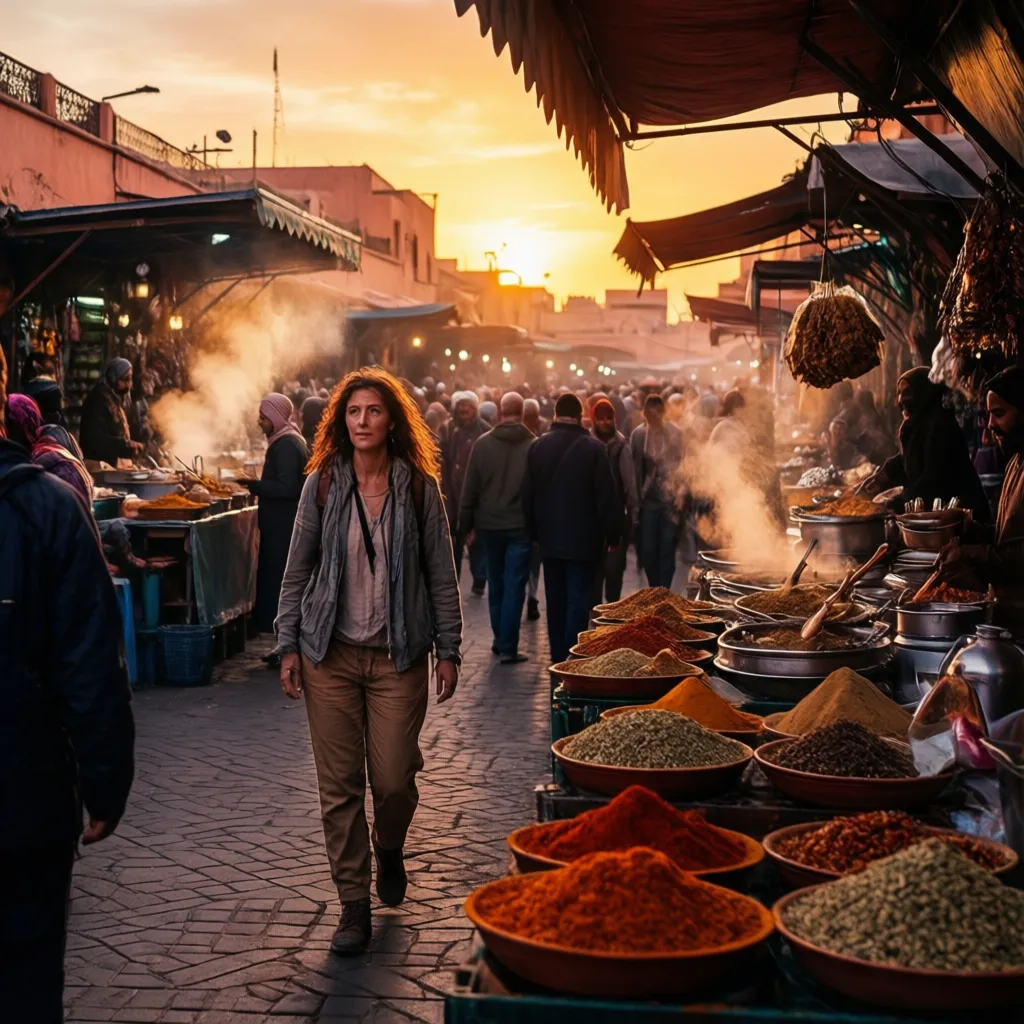
However, the nature of petty crime differs between the two. In Morocco, pickpocketing is common in Marrakech’s Jemaa el-Fnaa square and Fes’s medinas. In Egypt, similar risks exist in Cairo’s Khan el-Khalili bazaar and around Giza. Both destinations require standard urban caution, but neither should deter an informed traveler. For deeper safety insights, see our complete Morocco safety guide for 2026 with scam prevention tips.
Morocco’s tourist police (Brigade Touristique) are highly visible in medinas and popular areas — a reassuring presence that many travelers cite as a key factor in feeling secure.
Navigating scams and touts in the souks
Street harassment in Marrakech and Fes medinas is real — persistent vendors, catcalling, and unwanted attention exist. Experienced travelers describe it as annoying but rarely dangerous. Women report that avoiding eye contact, ignoring vendors, wearing sunglasses, and walking with purpose reduces attention significantly.
In Egypt, harassment ranges from staring and whistling to persistent following, though physical violence against foreign women remains rare. Egypt’s tourist-friendly areas like Hurghada, El Gouna, and Sharm El Sheikh are considered safer than Cairo’s more intense urban environment.
Explore Marrakech’s medina with a guided tour for confident navigation:
Powered by GetYourGuide
Comparing the two, Morocco’s touts are often described as more aggressive within the medinas, while Egypt’s hassles concentrate around major monuments. Both require a thick skin, but Morocco’s tourist police presence is notably high and visible, offering an additional layer of security. Our own guided souk shopping tours take the guesswork out of haggling if you’d rather browse with a local.
Solo female travel – which country feels safer?
For solo female travelers, the Morocco vs Egypt safety comparison reveals nuanced differences. Morocco is safe for solo female travelers, though experienced travelers describe it as “harder than Portugal, harder than Japan.” The harassment is real but rarely dangerous. Key survival tips include: dress modestly, book reliable transport (ONCF train, shared taxis), stay in well-populated Kasbah or Medina neighborhoods, and avoid navigating medinas alone — they’re designed like mazes.
Egypt is equally safe for solo female travelers with cultural awareness and preparation. Key advice includes: dress modestly, book with reputable operators, use safe transportation (Uber is recommended in Cairo), and ideally have a guide for monument visits.
Morocco generally receives slightly higher marks from solo female travelers for “feel” safety due to stronger tourist police presence and easier navigation. Egypt’s resort areas (Hurghada, Sharm El Sheikh) are extremely safe, but for urban exploration, Morocco may feel more comfortable for first-time solo female travelers. If you’re asking Morocco or Egypt for first trip as a solo woman, Morocco edges ahead. Our solo female travel Morocco guide has detailed strategies for a confident journey.
Morocco vs Egypt for Tourists – The Experience Comparison
Both countries deliver unforgettable experiences, but the flavor of each adventure differs dramatically.
Unique attractions – the “wow” factor
When considering Morocco vs Egypt for tourists, the attractions each country offers shape the entire travel experience.
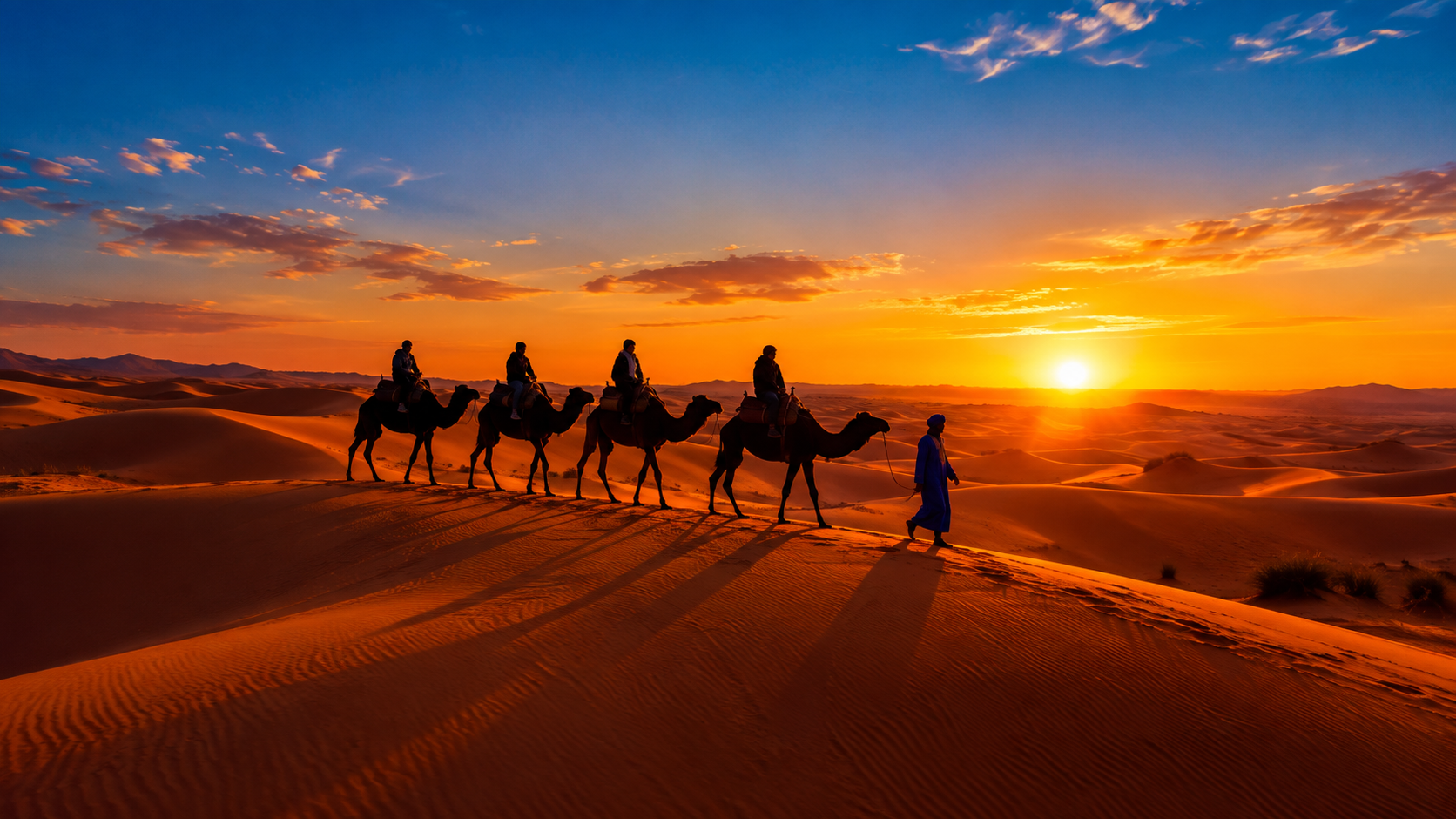
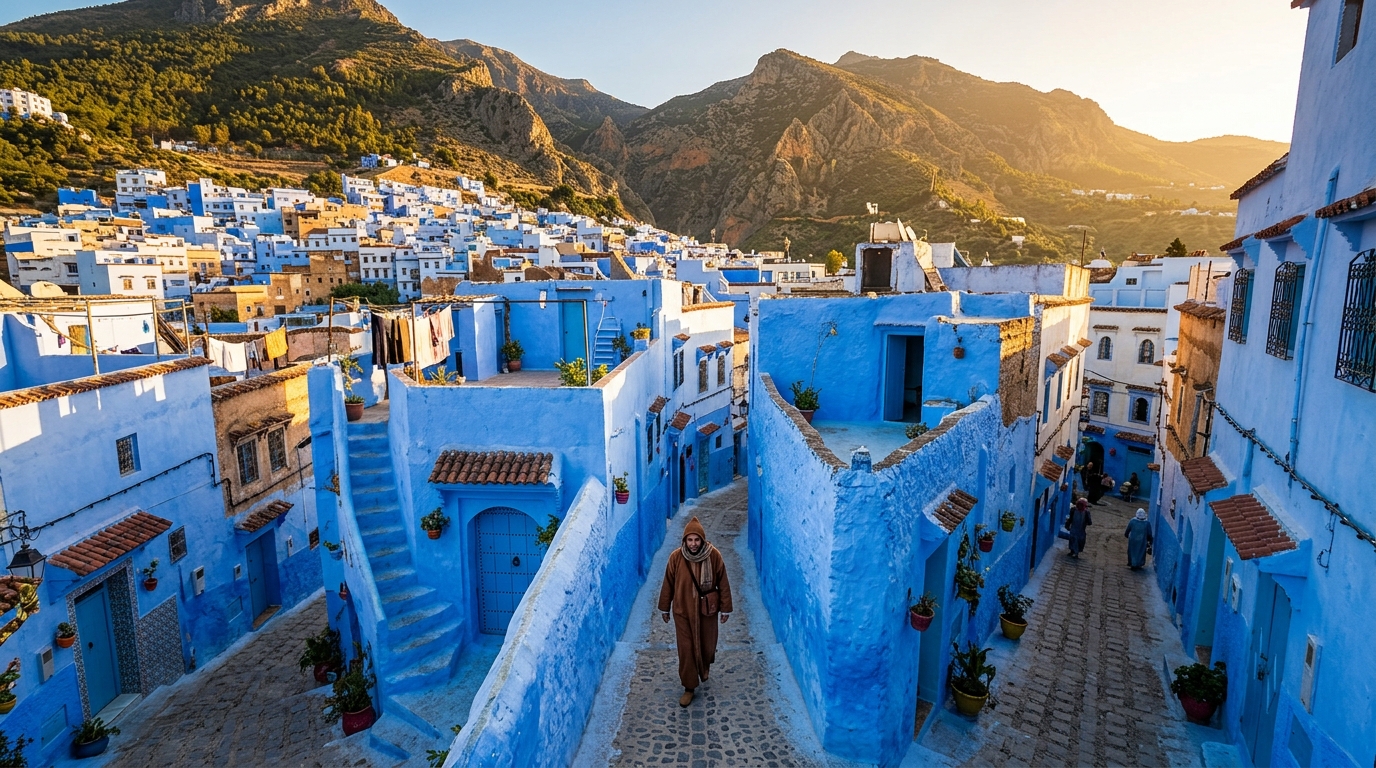
Morocco’s highlights showcase remarkable diversity in a compact area: the Atlas Mountains offer hiking and Berber village visits, the Sahara Desert near Merzouga presents stunning dune landscapes, Chefchaouen’s blue-washed streets create a photographer’s paradise, Marrakech’s medina buzzes with life, Fes’s ancient tanneries reveal centuries-old craftsmanship, and coastal towns like Essaouira and Tangier offer relaxed seaside charm.
Experience the Sahara Desert on a multi-day tour from Marrakech:
Powered by GetYourGuide
Egypt’s attractions are equally compelling but more monument-focused: the Pyramids of Giza — the only surviving Wonder of the Ancient World — stand as humanity’s most iconic structures. The Valley of the Kings in Luxor harbors ancient royal tombs, Abu Simbel’s colossal temples amaze visitors, Nile cruises offer serene river journeys, Red Sea diving in Hurghada and Sharm El Sheikh reveals underwater wonders, and the Egyptian Museum in Cairo houses priceless artifacts.
Discover Chefchaouen’s blue alleys on a guided day trip:
Powered by GetYourGuide
Egypt wins for “life-changing ancient sites” that carry global recognition. Morocco wins for variety and sensory immersion — the blend of African, Arab, and European influences creates a uniquely accessible exotic experience. Our destination guides cover each of these towns in depth if you want to start planning a route.
Explore Fes’s ancient tanneries and medina with a cultural guide:
Powered by GetYourGuide
Hike the Atlas Mountains and visit authentic Berber villages:
Powered by GetYourGuide
Best for first-time travelers to Africa or the Arab world
If you’re researching Morocco or Egypt for first trip, Morocco offers distinct advantages. English proficiency is higher in tourist areas, making communication easier. The tourist infrastructure — riads, guided tours, train network — is well-established and straightforward to book. Morocco’s smaller geography means you can see highlights in a 7–10 day trip without internal flights.
Egypt presents more challenges for first-timers. Larger distances require internal flights (Cairo to Luxor to Aswan). The intensity of monument tourism can be overwhelming, and English is less widely spoken outside tourist zones.
For a first Morocco trip, the classic Marrakech → Sahara Desert → Fes → Chefchaouen route covers maximum diversity in 10 days using trains and one desert tour. See our 10-day Morocco itinerary for the complete day-by-day plan.
The verdict: Morocco is generally easier for first-time travelers due to its manageable size, better English accessibility, and less intense cultural shock. Egypt rewards those willing to invest more planning effort.
Cultural immersion vs. monument tourism – what kind of traveler are you?
Morocco’s cultural strengths lie in living experiences: food (tagine, couscous, pastilla), hammams (traditional baths), Berber culture and hospitality, Gnawa music, and handicrafts (leather, ceramics, carpets). The experience is more about “living the culture” than checking off sites.
Learn to cook authentic tagine and pastilla in a Marrakech riad:
Powered by GetYourGuide
Egypt’s cultural strengths center on 5,000+ years of documented history — hieroglyphics, temples, tombs, and mummies. The experience is monument-focused: you come to see the world’s greatest archaeological treasures.
Morocco appeals to foodies, photographers, and those wanting a romantic European-African blend. Egypt appeals to history buffs, archaeology enthusiasts, and divers. Your choice in the Morocco vs Egypt debate depends entirely on which traveler profile matches your interests.
Morocco vs Egypt Cost – Which Destination Is Cheaper?
Budget considerations often tip the scales in the Morocco vs Egypt cost comparison.
Accommodation, food, and daily expenses
Morocco vs Egypt cost reveals Egypt as the more budget-friendly option. Accommodation costs show a clear difference: Egypt is generally cheaper for mid-range lodging. A good hotel in Cairo or Luxor costs $40–60 per night. A comparable riad in Marrakech runs $60–100 per night. Luxury options are more expensive in Morocco — browse Morocco hotels across every price bracket to compare.
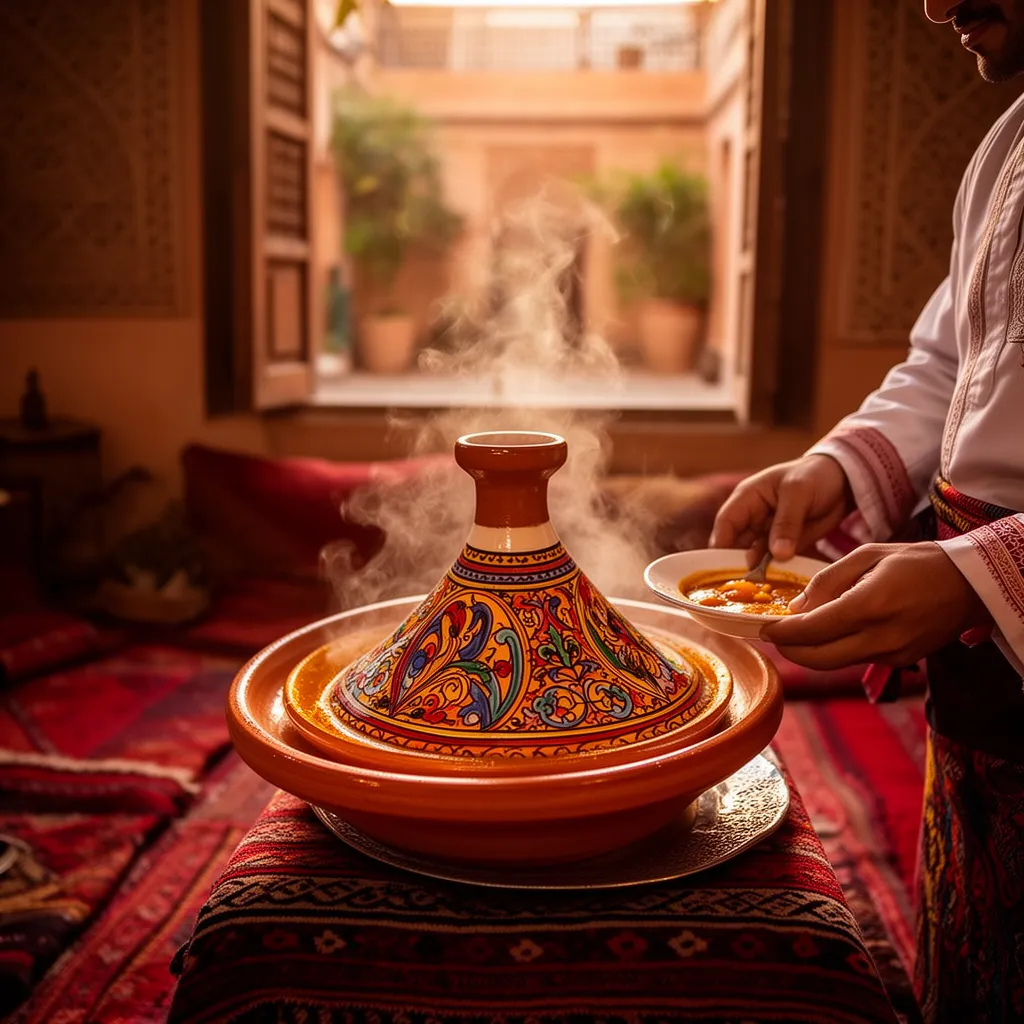
Food costs follow a similar pattern. Morocco’s food scene is pricier due to tourism demand — a nice restaurant dinner in Marrakech costs $15–25 per person. Egypt offers similar quality for $8–15 per person. Street food in both is cheap ($2–5), but Egypt’s options (koshari, ful medames) are even more budget-friendly. For accommodation booking, compare options on Booking.com, where you can filter by price, location, and reviews across both countries.
| Cost item | Morocco | Egypt |
|---|---|---|
| Mid-range hotel/riad, per night | $60–100 | $40–60 |
| Restaurant dinner, per person | $15–25 | $8–15 |
| Daily budget, mid-range | $80–120 | $60–90 |
| Daily budget, backpacker | $40–60 | $30–50 |
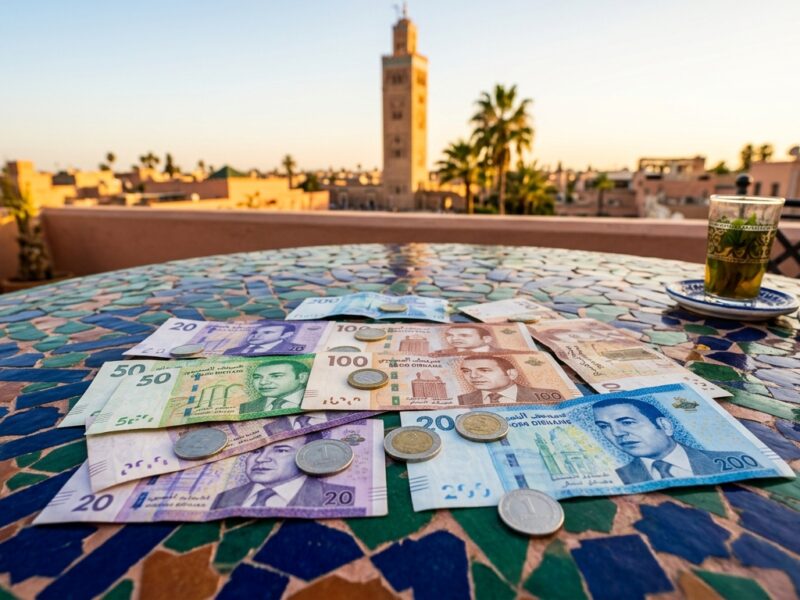
| Entry visa | Visa-free for many nationalities | $25 on arrival |
| Getting between cities | ONCF trains, affordable | Internal flights, $80–150 each |
Entry visas, transportation, and hidden costs
Morocco’s advantages include visa-free entry for many nationalities (US, UK, Canada, EU, Australia) for up to 90 days. The excellent train network (ONCF) connects Casablanca, Rabat, Fes, Marrakech, and Tangier affordably. Petit taxis and grand taxis provide flexible local transport. Need an airport transfer? Welcome Pickups offers reliable pre-booked rides from Marrakech Menara Airport.
Egypt requires a visa on arrival for most nationalities ($25 USD). Internal flights between Cairo, Luxor, and Aswan are required for efficient travel ($80–150 per flight). Uber is widely available and affordable in Cairo. Nile ferries and feluccas add to the experience but also to costs.
Planning note: Egypt has more upfront costs (visa, internal flights) but lower daily expenses. Morocco has no visa costs but higher daily spending. Morocco’s compact size allows for train-based itineraries, while Egypt requires flights or long drives between major sites.
Value for money – where does your currency go further?
Tour quality reveals interesting value differences. Egypt offers incredible value for monument-focused trips — $1,500–2,000 can cover a 10-day guided tour with a Nile cruise. Morocco’s similar tour costs $2,000–2,500.
In the luxury segment, both offer world-class accommodations (Morocco’s Amanjena, Egypt’s Old Cataract), but Morocco’s luxury infrastructure is more developed and thus more expensive.
Hidden costs deserve attention. Morocco’s medina scams and aggressive touts can inflate expenses if unprepared. Egypt’s “official” guides and monument entry fees ($10–15 per site) add up. When calculating Morocco vs Egypt cost, factor these extras into your budget. For flight disruption protection, Compensair helps claim up to €600 for delays or cancellations.
Practical Considerations for Your Morocco vs Egypt Decision
Logistics affect the travel experience significantly, especially for first-timers.
Geography, getting around, and itinerary planning
Morocco’s smaller size makes it easier to navigate in a single trip. A 10-day itinerary can comfortably cover Marrakech, the Sahara Desert, Fes, and Chefchaouen using trains and organized tours. Distances are manageable without internal flights.
Egypt’s larger geography requires flights or long drives. A 10-day itinerary typically needs Cairo (3 days), Luxor (2–3 days), and possibly Aswan/Abu Simbel (2 days) or a Red Sea beach extension. Internal flights add cost and time.
For first-timer ease, Morocco wins for “see the highlights without rushing.” Egypt requires more strategic planning to avoid burnout. This practical consideration heavily influences the Morocco vs Egypt for tourists decision. Compare Morocco tour packages for 7, 10, and 14-day options.
Best time to visit – weather and peak seasons
Morocco shines in spring (March–May) and fall (September–November) with temperatures between 65–85°F. Summer (June–August) can be hot in Marrakech and the desert (100°F+). Winter (December–February) is mild but cold in the mountains.
Egypt’s best season runs October–April (70–85°F). Summer (May–September) is extremely hot (95–110°F), especially in Luxor and Aswan. Winter months are peak tourist season with higher prices.
Morocco has a longer “comfortable” travel season. If you can only travel in summer, consider Morocco’s Atlantic coast (Essaouira, Taghazout) where ocean breezes moderate temperatures — see our Morocco beach weather guide for month-by-month details.
Health, safety logistics, and what to pack
Morocco requires no mandatory vaccinations for most travelers. Tap water is not safe to drink. Medical facilities in major cities are adequate. Travel insurance is strongly recommended — EKTA Travel Insurance covers ages 3–85 with 24/7 multilingual support.
Egypt similarly has no mandatory vaccinations (though Hepatitis A is recommended). Tap water is not safe. Medical infrastructure is good in Cairo but limited elsewhere. Travel insurance is essential.
Packing differences matter. Morocco requires modest clothing (cover shoulders, knees) but is less strict than Egypt. Egypt demands more conservative dress, especially for women visiting mosques and conservative areas. Your packing list shifts significantly in the Morocco vs Egypt comparison. Stay connected effortlessly with an Airalo eSIM or Saily eSIM — both work across North Africa with instant activation.
The Verdict – Morocco vs Egypt for Your Next Trip
After weighing all factors, the decision becomes clear based on your traveler profile.
Choose Morocco if…
- You’re a first-time traveler to the region seeking an easier introduction
- You want a compact itinerary without internal flights
- You value food, culture, and sensory immersion over ancient monuments
- You want a more comfortable, less intense introduction to North Africa
- Safety, especially for solo female travelers, is your top priority — Morocco’s lower violent crime stats and stronger tourist police presence provide more peace of mind
- You’re asking Morocco or Egypt for first trip and want the gentler learning curve
Choose Egypt if…
- You’re a history buff who dreams of the Pyramids, Valley of the Kings, and Abu Simbel
- You’re on a tighter budget and want your money to stretch further
- You don’t mind more intense haggling and monument-focused travel
- You want to add Red Sea diving or beach time to your itinerary
- You’re willing to plan more complex logistics including internal flights
- Understanding what is safer Morocco or Egypt matters, and Egypt’s monument security and resort safety reassure you
The Morocco vs Egypt debate isn’t about which country is better — it’s about which fits your travel style. Both are safe, both are incredible, and both deserve a place on your bucket list.
Reserve your spot
Book Your Morocco Experience
Choose from the best tours across Morocco — from Sahara desert adventures to Marrakech medina walks. Instant confirmation, free cancellation on most experiences.
Instant confirmation
Free cancellation on most tours
Some links on this page earn ComeMorocco a commission at no extra cost to you. It never changes what we recommend. How this works.
Questions
01Is Morocco or Egypt safer for solo female travelers in 2026?
Morocco generally feels safer for solo female travelers due to highly visible tourist police in medinas, better tourist infrastructure, and a more established solo travel community. Egypt’s resort areas (Hurghada, Sharm El Sheikh) are very safe, but Cairo and Luxor can feel more intense. Both require modest dress and cultural awareness. Morocco edges ahead for first-time solo female travelers.
02Which is cheaper: Morocco or Egypt for a 10-day trip?
Egypt is cheaper overall. Mid-range daily budget: Egypt $60–90 vs Morocco $80–120. However, Egypt requires a $25 visa on arrival and $80–150 per internal flight (Cairo–Luxor–Aswan). Morocco is visa-free for many nationalities and uses affordable trains. For a 10-day trip, Egypt saves roughly $200–400 total despite flight costs.
03Can I visit both Morocco and Egypt in one trip?
Yes, but allow three or more weeks. Direct flights connect Casablanca/Rabat to Cairo (5–6 hours). A combined itinerary works best as Morocco (10 days) → flight to Cairo → Egypt (10–12 days). Most travelers choose one for a two-week vacation to avoid rushing. See our Morocco and Spain guide if you prefer a Europe-Africa combo instead.
04What’s the best time to visit Morocco vs Egypt?
Morocco: March–May and September–November (65–85°F). Egypt: October–April (70–85°F). Both have shoulder seasons with fewer crowds. Avoid Egypt in summer (95–110°F in Luxor/Aswan). Morocco’s coast stays pleasant in summer. For 2026 planning, spring in Morocco and winter in Egypt offer ideal conditions.
05Do I need a visa for Morocco or Egypt in 2026?
Morocco: visa-free for US, UK, Canada, EU, and Australian citizens (up to 90 days). Egypt: visa on arrival ($25 USD) for most nationalities, or e-visa in advance. Always verify current requirements before travel as policies change. Check our Morocco visa requirements 2026 guide for country-specific details.
06Is the Sahara Desert in Morocco worth it vs Egypt’s White Desert?
Morocco’s Erg Chebbi (Merzouga) and Erg Chigaga dunes are more accessible from Marrakech/Fes, offer luxury desert camps, and combine easily with the Atlas Mountains and imperial cities. Egypt’s White Desert (Farafra) requires a longer expedition from Cairo but delivers surreal chalk formations. For most travelers, Morocco’s Sahara is more practical and offers better infrastructure.
07How do I get around Morocco without a car?
Morocco’s ONCF train network connects major cities (Casablanca, Rabat, Fes, Marrakech, Tangier) affordably and reliably. For desert and mountain destinations, book guided tours with transport included. Within cities, petit taxis (metered) and apps like inDrive work well. See our Morocco car rental guide if you prefer driving yourself.
Your Morocco trip
Ready to choose your adventure?
Whether Morocco’s blue alleys and golden dunes or Egypt’s timeless monuments call to you, the journey begins with a single step. Book your experience now and let North Africa’s magic unfold.