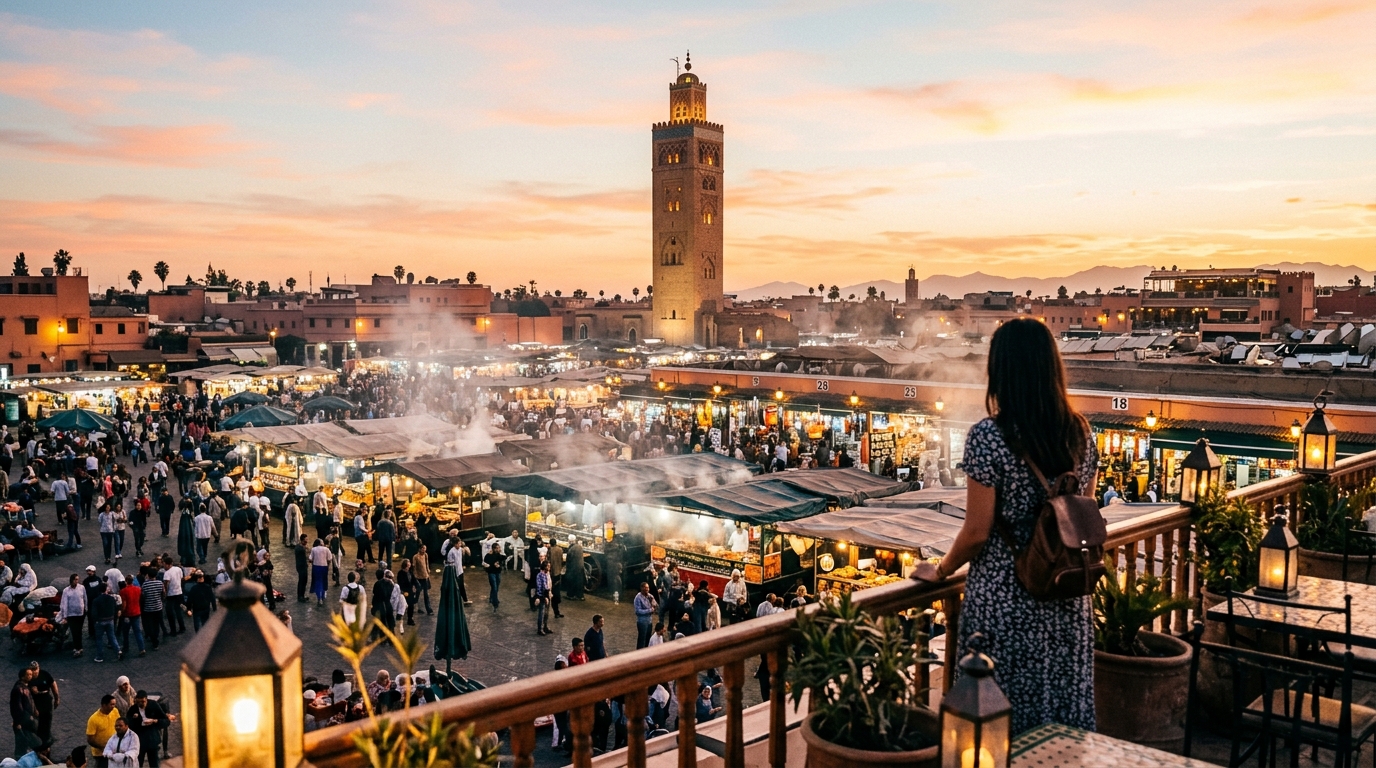
From the intoxicating spices of Marrakech’s medina to star-strewn skies over the Sahara, this comprehensive Morocco travel guide covers safety, visas, itineraries, cultural etiquette, and insider tips for an unforgettable 2026 adventure.
Imagine walking through a narrow alley in Marrakech, where the air is thick with the smell of cinnamon, saffron, and roasting meat. You hear the exotic sounds of snake charmers in the distance and the melodic call to prayer echoing from a nearby mosque. Later, you find yourself gazing at stars over the Sahara Desert, a billion lights in a sky so clear it feels like a dream. If you are planning your first travel to Morocco, you have come to the right place.
Key takeaways
Morocco is generally safe for tourists — petty theft is the main concern, so keep valuables hidden and stay alert in crowds.
Solo female travelers thrive here with modest dress, well-reviewed riads, and assertive boundaries — thousands visit safely each year.
Drink only bottled water, pack a medical kit, and check CDC-recommended vaccines (Hepatitis A, Typhoid) before departure.
Spring (March–May) and autumn (September–November) offer ideal weather; summer brings extreme desert heat.
Book airport transfers, Sahara camps, and popular tours in advance — especially for 2026 peak seasons.
Contents
Is Morocco Safe to Visit? – Essential Morocco Travel Advice
One of the first questions travelers ask is about safety. Let us give you some honest Morocco travel advice: Morocco is a wonderful country, and millions of tourists visit safely every year. However, like any popular destination, it pays to be prepared.
General Safety Overview
Morocco is generally safe for tourists, with low rates of violent crime against visitors. The biggest concern is petty theft, especially in crowded areas. To stay safe:
- Keep valuables out of sight. Leave expensive jewelry at home. Use a money belt or a zippered bag that crosses your body.
- Avoid poorly lit streets at night, especially alone.
- Be aware of your surroundings in busy places like Jemaa el-Fna square in Marrakech.
- Make photocopies of everything. This is key Morocco travel advice: photocopy your passport, driver’s license, visa, and vaccination status. Keep these copies separate from the originals.
- Write down your accommodation address. Always keep a copy of your riad or hotel address with you. This is the easiest way to get back if you get lost in the medina.
Pro tip: Save your riad’s location in Google Maps offline and carry a business card from reception — most medina alleys don’t appear on GPS.
For deeper insights on navigating Morocco safely, our Morocco Safety 2026 Essential Travel Tips guide covers common scams, emergency contacts, and region-specific advice.
Solo Female Travel in Morocco
Can women travel alone to Morocco? Absolutely! However, solo female travel requires extra caution. The good news: thousands of women explore Morocco independently each year and return with extraordinary stories.
Essential Tips for Women Traveling Solo
- Dress modestly. Cover your shoulders and knees. This helps you avoid unwanted attention and shows respect for local culture.
- Stay in well-reviewed riads inside the medinas. These are safe, beautiful guesthouses run by friendly staff who often become your best local resource.
- Use official taxis only. Never get into unmarked cars — especially at night.
- Be assertive. If someone is too pushy, a firm “La, shukran” (no, thank you) usually works. Moroccans respect clear boundaries.
Join a cooking class or guided medina tour your first day — you’ll meet other travelers, learn the layout, and gain a trusted local contact for questions.
Our dedicated guide on Is Morocco Safe for Solo Female Travelers? 2026 Guide dives deeper into neighborhood-specific advice, harassment strategies, and recommended women-only tours.
Health & Vaccination Advice
Before you go, check the CDC or WHO website for recommended vaccines. Hepatitis A and Typhoid are commonly suggested for travel to Morocco.
- Bring a medical kit. Pack pain relievers, antiseptic wipes, band-aids, and your prescription medications in original packaging.
- Do not drink tap water. Always drink bottled or filtered water. Use it for brushing your teeth too.
- Eat healthy and rest. Try to eat peeled fruits, cooked vegetables, and piping-hot meals. Street food is delicious — choose busy stalls with high turnover.
Planning note: Travel insurance with medical evacuation coverage is strongly recommended. EKTA Travel Insurance offers policies for ages 3–85 with 24/7 multilingual support.
For a complete breakdown of required and recommended immunizations, altitude sickness prevention in the Atlas Mountains, and pharmacy vocab in Darija, see our Essential Vaccinations for Morocco: Complete 2026 Travel Health Guide.
📱 Stay Connected: Avoid “landing anxiety” with an eSIM activated before you depart. Airalo’s Morocco eSIM gives you instant data for maps, translation apps, and ride-hailing — no physical SIM swap needed.
Visa Requirements & Entry Rules for 2026
Citizens of the US, UK, Canada, Australia, and EU Schengen countries can enter Morocco visa-free for up to 90 days. Your passport must be valid for at least six months beyond your entry date. Always verify current requirements on the Moroccan Ministry of Foreign Affairs website before booking.
If you’re attending a specific event or traveling from a country that requires a visa, apply at least 4–6 weeks in advance through the nearest Moroccan consulate. For AFCON 2025 attendees (tournament runs Dec 2025 – Jan 2026), a special free fan e-visa is available.
On arrival, you’ll receive a 12A entry stamp — keep the white embarkation card stapled in your passport. Losing it means a police station visit on departure.
Best Time to Travel to Morocco
The best time to travel to Morocco depends on your priorities. Spring (March–May) and autumn (September–November) offer the sweet spot: pleasant temperatures nationwide, blooming landscapes, and fewer crowds than summer.
Seasonal Breakdown
- Spring (Mar–May): Ideal for imperial cities, Atlas hiking, and desert trips. Wildflowers carpet the Middle Atlas. Book riads early — this is peak season.
- Summer (Jun–Aug): Coastal cities (Essaouira, Agadir, Tangier) stay breezy. Inland hits 40°C+ — avoid desert camping unless you’re heat-acclimated.
- Autumn (Sep–Nov): Warm days, cool nights. Harvest season means incredible food. October is arguably the single best month for a first trip.
- Winter (Dec–Feb): Mild on the coast, cold in mountains (snow on High Atlas peaks). Sahara nights drop near freezing — pack layers. Christmas/New Year books out months ahead.
“October in Morocco is perfection — warm enough for the desert, cool enough for medina wandering, and the tourist rush has faded.”
Our month-by-month breakdown in the Morocco Beach Weather Guide covers coastal microclimates if your trip focuses on the Atlantic or Mediterranean.
Sample 7-Day Morocco Itinerary for First-Timers
One week lets you hit the highlights without rushing. This route balances imperial cities, desert magic, and coastal charm — adjustable for your pace.
Settle in & explore Djemaa el-Fna
Land at Marrakech Menara Airport (RAK). Pre-book a Welcome Pickups transfer to your riad — fixed price, English-speaking driver, flight tracking included. Afternoon: wander the medina, visit Bahia Palace, and watch sunset from a rooftop café overlooking Jemaa el-Fna as food stalls ignite.
Dinner: Try tagine at a family-run spot like Dar Yacout or Al Fassia (book ahead).
Gardens, museums & a cooking class
Morning: Jardin Majorelle and Yves Saint Laurent Museum (book tickets online). Lunch: join a Moroccan cooking class in a riad — learn chermoula, preserved lemons, and perfect couscous. Afternoon: Saadian Tombs, Ben Youssef Madrasa, and souk shopping with bargaining practice.
High Atlas crossing via Tizi n’Tichka
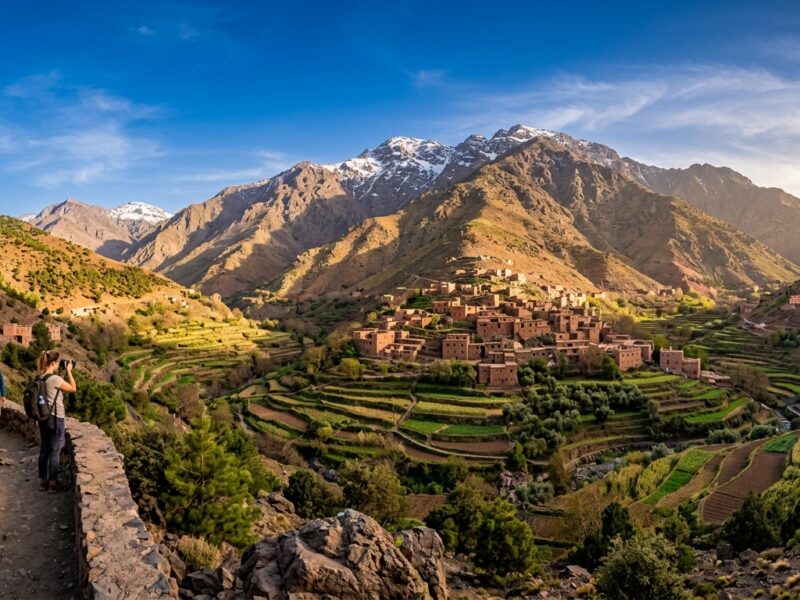
Early departure (7 AM) for the 4–5 hour drive over the Tizi n’Tichka pass (2,260m). Stop at Ait Benhaddou (UNESCO ksar, Gladiator/Game of Thrones filming site). Continue to Dades Valley — “Valley of a Thousand Kasbahs.” Stay in a cliffside guesthouse with valley views.
Alternative: Book a guided Ait Benhaddou day trip if you prefer not to drive.
Desert arrival & sunset camel trek
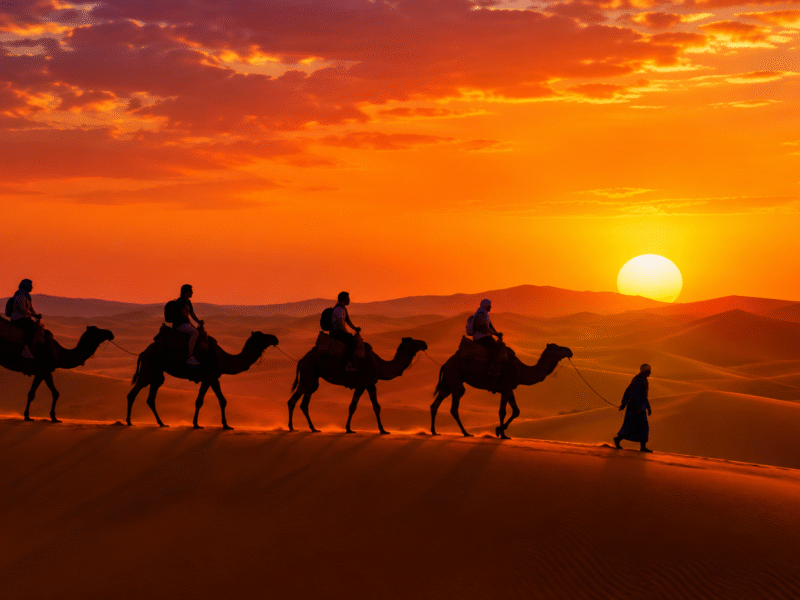
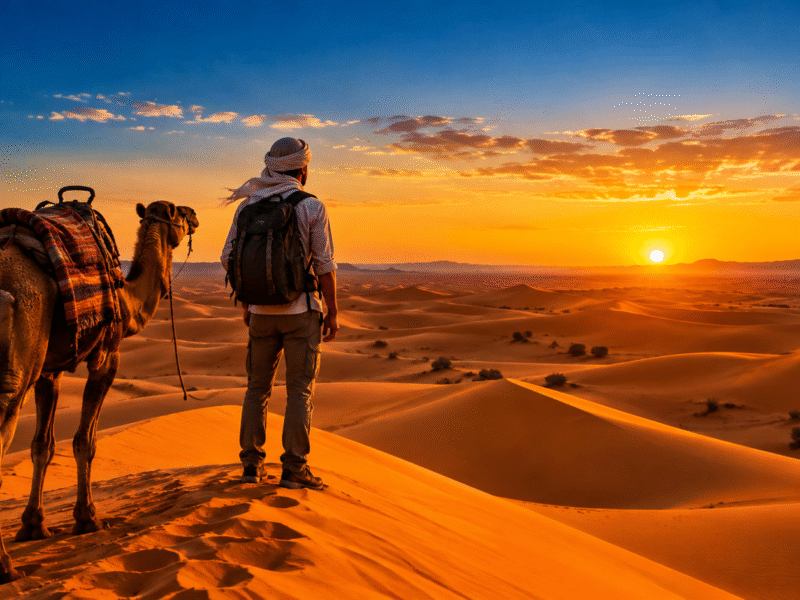
Morning walk in Todra Gorge (300m limestone cliffs). Drive to Merzouga, gateway to Erg Chebbi. Late afternoon: camel trek into dunes for sunset. Night at a luxury desert camp — private tent, Berber dinner, drumming under stars. This is the “billion stars” moment from your dreams.
Sunrise dunes & long drive north
Wake at 5:30 AM for Erg Chebbi sunrise — worth every second. Return by camel, breakfast, then 7–8 hour drive to Fes via Ziz Valley, Midelt, and Cedar Forests (watch for Barbary macaques). Arrive Fes by evening. Check into a Fes medina riad — the world’s largest car-free urban zone awaits.
World’s oldest university & leather tanneries
Hire a licensed Fes guide (essential — medina has 9,000+ alleys). Visit Al Quaraouiyine University (859 AD), Chouara Tannery (rooftop view essential), Attarine Madrasa, and Nejjarine Wood Museum. Lunch at Dar Hatim. Afternoon: pottery cooperative in Ain Nokbi, then sunset drinks at a rooftop overlooking the medina.
Fly home or add the Blue City
Fly from Fes-Saïss Airport (FEZ) — many European connections. Or add 2 nights in Chefchaouen (3.5 hr drive): blue-washed alleys, Akchour Waterfalls hike, and the most Instagrammable sunsets in Morocco.
Where to Stay: Riad vs. Hotel in Morocco
Choosing between a riad (traditional courtyard house) and a modern hotel shapes your entire experience. Riads offer immersive charm — carved plaster, zellige tilework, rooftop terraces, and host families who treat you like kin. Hotels provide elevators, AC reliability, pools, and room service.
For first-timers, we recommend 3–4 nights in riads (Marrakech, Fes) for the authentic experience, then a hotel for your final night if you have an early flight. Browse our handpicked riads and hotels across Morocco.
Book riads with air conditioning and ensuite bathrooms — many historic properties lack both. Read recent reviews for noise levels (medina walls are thin).
Getting Around: Transportation in Morocco
Airport Transfers
Pre-booked private transfers eliminate arrival stress. Welcome Pickups covers Marrakech (RAK), Casablanca (CMN), Fes (FEZ), and Tangier (TNG) with flight monitoring and meet-and-greet service. For a budget option, the Airport Shuttle Bus (Line 19) runs Marrakech airport to Jemaa el-Fna every 20 minutes (30 MAD).
Trains & Long-Distance Travel
Morocco’s ONCF train network connects major cities efficiently. The Al Boraq high-speed line links Tangier–Kenitra–Rabat–Casablanca in 2h 10m. Book 1st class for AC and reserved seats. For routes beyond rails (Merzouga, Chefchaouen, Dades), book CTM or Supratours buses — reliable, affordable, and air-conditioned.
Car Rental
Renting gives freedom for Atlas routes and desert access. Localrent and Qeeq compare local and international agencies. Key tips: avoid night driving, get full insurance, and download offline maps.
Cultural Etiquette: What Every Visitor Should Know
- Greetings: “Salam alaykum” (peace be upon you) — reply “Wa alaykum salam.” Handshakes same gender; opposite gender waits for woman to extend hand.
- Right hand rule: Eat, pass items, and handle money with your right hand. Left is considered unclean.
- Photos: Always ask before photographing people. Many expect a tip (10–20 MAD). Never photograph military/police sites.
- Ramadan (2026: ~Feb 18 – Mar 19): No eating, drinking, smoking in public during daylight. Restaurants in tourist areas stay open; be discreet.
- Friday midday: Shops close 11:30 AM – 2:30 PM for prayers. Plan museum visits or long lunches.
Pro tip: Learn “Bismillah” (before eating), “Alhamdulillah” (after eating/thanking), and “Inshallah” (God willing — the universal “maybe”). Locals light up when you try.
Money Matters: Currency, Cards & Tipping
The Moroccan Dirham (MAD) is a closed currency — bring EUR/USD/GBP to exchange on arrival. ATMs widely accept foreign cards (notify your bank). Credit cards work at hotels, upscale restaurants, and larger shops; cash rules souks, taxis, and small eateries.
Tipping guide: Restaurants 10% (if service not included), guides 100–200 MAD/day, drivers 50–100 MAD/day, porters 20 MAD/bag, hammam attendants 50 MAD. Round up taxi fares.
🛡️ Protect Your Trip Investment: Flight delayed or canceled? Compensair helps claim up to €600 from airlines — no win, no fee.
Packing Essentials for Morocco
- Clothing: Lightweight layers, long sleeves/pants for modesty and sun, warm jacket for desert nights, comfortable walking shoes, sandals.
- Tech: Universal adapter (Type C/E), power bank, eSIM/physical SIM, headlamp (desert camps), camera.
- Health: Prescription meds, electrolytes, motion sickness pills (mountain roads), hand sanitizer, SPF 50+.
- Documents: Passport (6+ months), printed accommodation confirmations, travel insurance, driver’s license (IDP if renting).
- Extras: Scarf (mosque visits, dust, modesty), reusable water bottle, daypack, zip-lock bags (electronics in sand).
For a printable checklist tailored to your travel style, see our 25 Essential Morocco Travel Tips for First-Timers — includes packing hacks from locals.
🧳 Early Arrival / Late Departure? Explore hands-free with Radical Storage — secure luggage storage near transport hubs and medinas across Morocco.
Reserve your spot
Book Your Morocco Experience
Choose from the best options across Morocco — from Marrakech medinas to Sahara luxury camps. Instant confirmation, free cancellation on most tours.
⚡ Instant confirmation
↩ Free cancellation
Some links on this page earn ComeMorocco a commission at no extra cost to you. It never changes what we recommend. How this works.
Questions
01Is it safe to travel to Morocco right now in 2026?
Yes — Morocco maintains a Level 2 travel advisory (exercise increased caution), same as France, Spain, and the UK. Millions visit safely yearly. Primary risks are petty theft in crowds and aggressive touts. Follow standard precautions: secure valuables, use official taxis, avoid isolated areas at night, and trust your instincts. Solo female travelers report positive experiences with modest dress and assertive boundaries.
02Do I need a visa for Morocco in 2026?
Citizens of the US, UK, Canada, Australia, New Zealand, and EU Schengen countries enter visa-free for up to 90 days. Your passport must be valid for at least six months beyond entry. Always verify on the Moroccan Ministry of Foreign Affairs site before travel, as rules can change. For longer stays or other nationalities, apply at a Moroccan consulate 4–6 weeks ahead.
03What is the best time of year to travel to Morocco?
Spring (March–May) and autumn (September–November) offer the best overall conditions: 20–28°C days, minimal rain, comfortable desert nights. October is widely considered the single best month. Summer suits coastal escapes only (Essaouira, Agadir). Winter brings snow to the High Atlas and near-freezing Sahara nights — pack accordingly. Ramadan 2026 (~Feb 18–Mar 19) affects daytime hours but offers unique cultural access.
04Can I drink tap water in Morocco?
No. Tap water is not potable for visitors — stick to bottled or filtered water for drinking, brushing teeth, and making ice. Most hotels and riads provide complimentary bottled water. Carry a reusable bottle and refill from large 5L jugs (widely available) to reduce plastic waste. In desert camps, water is trucked in and strictly for washing; drink only provided bottled water.
05How many days do I need for a first trip to Morocco?
Seven days covers the classic Marrakech–Atlas–Sahara–Fes loop at a comfortable pace. Ten days adds Chefchaouen or a coastal stop (Essaouira/Agadir). Two weeks allows deep exploration: Imperial cities, High Atlas trekking, Atlantic coast, and southern oases.
06Is Morocco safe for solo female travelers?
Yes — thousands of women travel solo annually. Keys: dress modestly (shoulders/knees covered), stay in well-reviewed medina riads, use official transport, and project confidence. Catcalling occurs but is usually verbal; a firm “La, shukran” works. Join group tours or cooking classes to meet travelers. Our Solo Female Travel Morocco guide covers neighborhood-specific advice and women-only tour operators.
07What vaccinations do I need for Morocco?
No vaccines are mandatory for entry. CDC recommends Hepatitis A and Typhoid for most travelers. Consider Hepatitis B, Rabies (if handling animals/remote areas), and routine boosters (MMR, Tdap, flu, COVID). Consult a travel clinic 4–6 weeks before departure. Our Essential Vaccinations for Morocco guide includes a printable checklist and Darija pharmacy phrases.
✦ Your Morocco Journey Starts Here
Turn This Guide Into Your Adventure
You’ve read the tips, mapped the route, and pictured the moments — spice-scented medinas, camel silhouettes at sunset, mint tea on ancient rooftops. Morocco doesn’t just reward the prepared traveler; it transforms them.