Moroccan Cultural Experiences: Your Complete Immersion Guide
Explore unforgettable Moroccan cultural experiences — from ancient traditions to vibrant Morocco cultural activities. Your essential guide to Moroccan traditions.
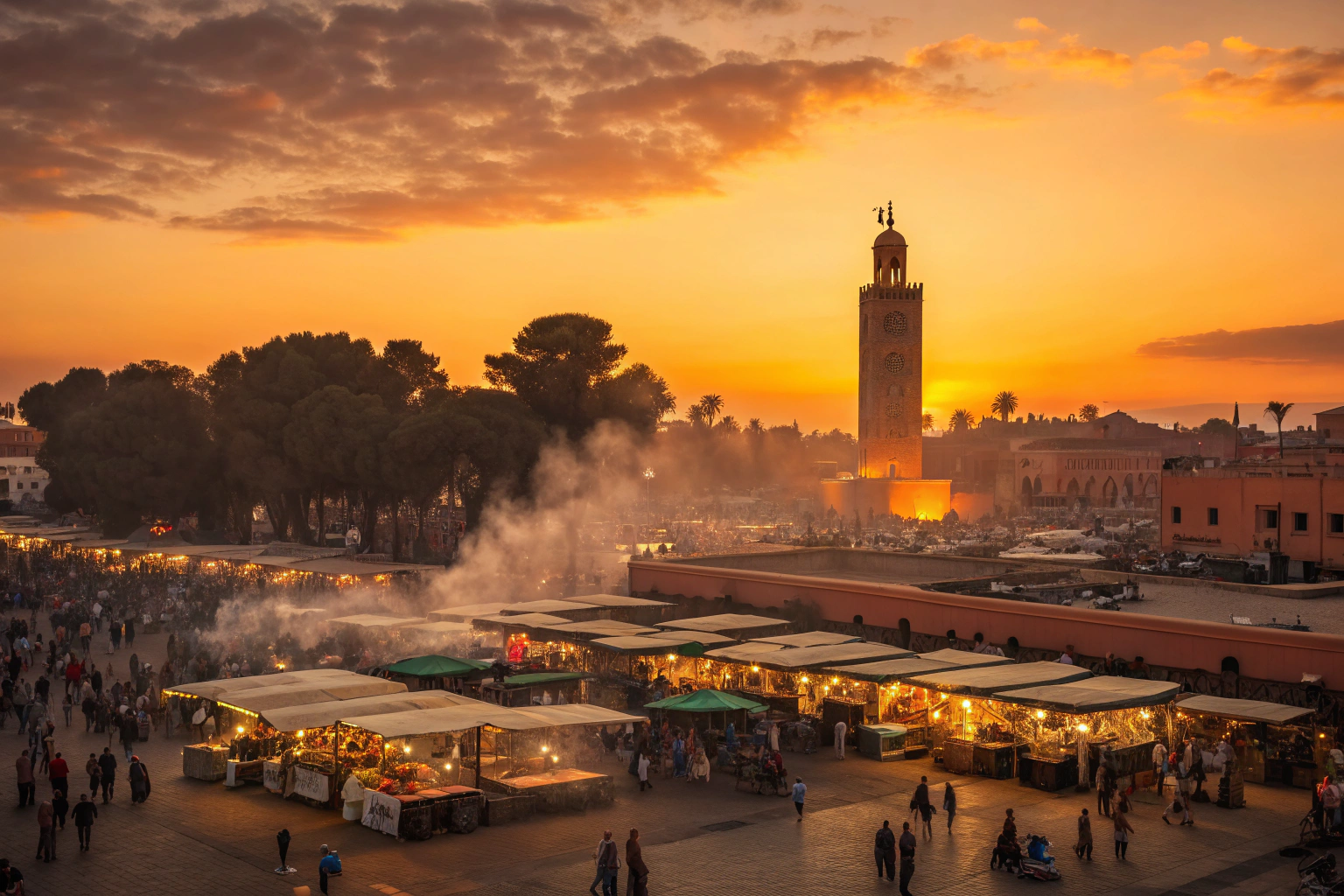
Picture yourself sipping sweet mint tea in a sun-drenched riad courtyard, the air thick with the scent of orange blossom and cumin. Somewhere in the medina, a craftsman taps intricate patterns into copper. A storyteller holds a crowd spellbound in Jemaa el-Fnaa square as the call to prayer drifts across a thousand terracotta rooftops. Moroccan cultural experiences don’t just happen around you — they pull you in entirely.
Morocco sits at the crossroads of Africa, Europe, and the Arab world, and you feel it in every corner. The result is one of the richest, most layered cultures on earth — Berber at its roots, refined by Arab civilization, flavored by Andalusian sophistication, and shot through with the rhythms of sub-Saharan Africa. This guide is your roadmap to experiencing it authentically, respectfully, and unforgettably.
✦ Key Takeaways
Morocco’s culture is a unique blend of Berber, Arab, African, and European influences found nowhere else on earth.
Authentic experiences — mint tea ceremonies, hammam rituals, and cooking classes — create the deepest cultural connections.
Ancient medinas, bustling souks, and Berber villages each reveal a distinct layer of Moroccan tradition.
Hands-on Morocco cultural activities — artisan workshops, desert camps, and music nights — make memories that last a lifetime.
Modest dress, basic Arabic phrases, and respectful curiosity open doors that no tour bus ever reaches.
Overview of Moroccan Culture
Moroccan culture represents a fascinating fusion of influences shaped over centuries. The indigenous Berber (Amazigh) people laid the foundation; Arab conquest enriched it; sub-Saharan Africa wove in rhythm and spirit; French and Spanish colonial presence added a European layer. This unique blend creates the vibrant Moroccan cultural experiences visitors encounter today.
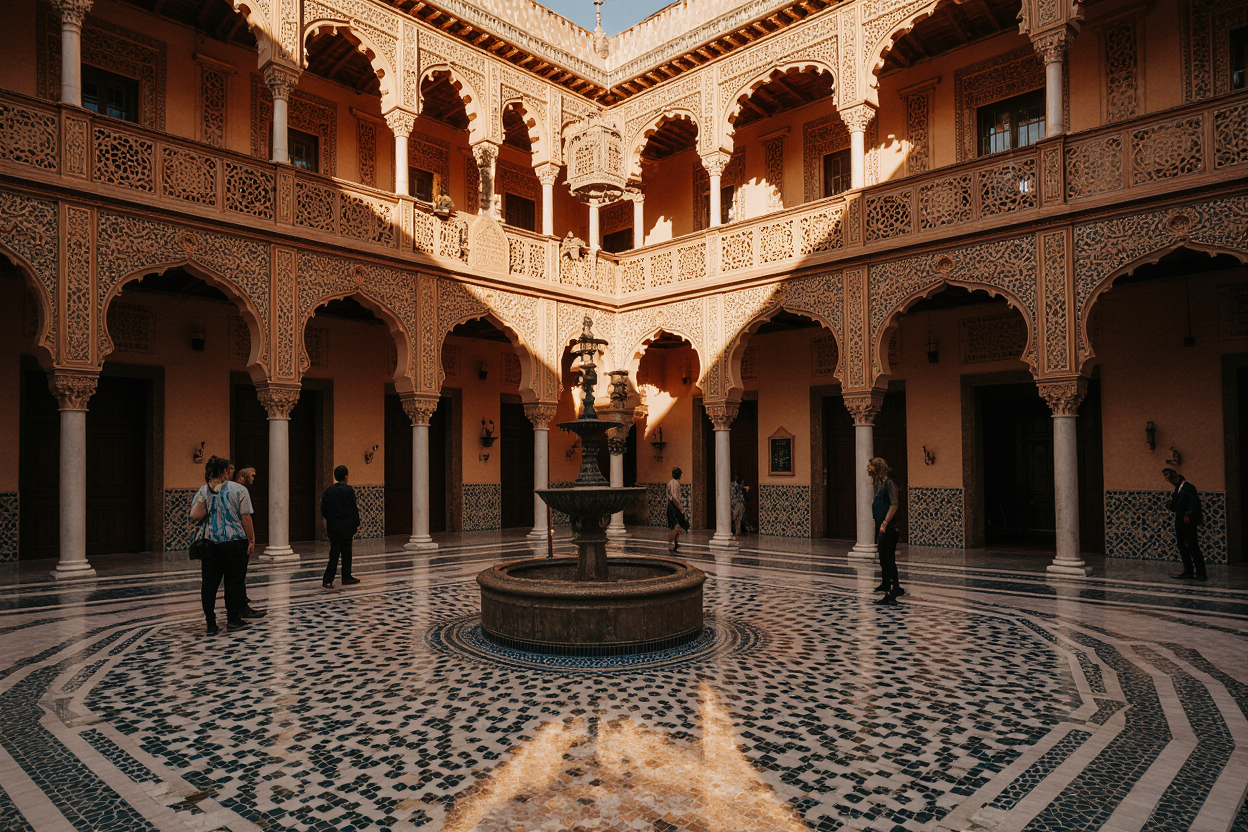
Architecture tells Morocco’s story through every carved door and painted tile. Intricate geometric zellige patterns adorn mosques, palaces, and private homes. Traditional riads hide peaceful courtyards behind plain exterior walls — a metaphor for Moroccan culture itself: restrained on the surface, breathtaking within. The ancient kasbahs of the south stand guard over desert valleys, while medieval medinas preserve centuries-old ways of life.
💡 Cultural insight: Morocco’s linguistic diversity mirrors its cultural richness. In a single day, you might hear Darija (Moroccan Arabic), Tamazight (Berber), French, and Spanish — each language carrying a different layer of the nation’s complex identity.
Islam profoundly shapes daily life and Moroccan traditions. Five daily prayers structure the rhythm of each day. Friday congregational prayers bring entire neighborhoods together. Mosques function as architectural landmarks and spiritual anchors in every quarter. Morocco’s UNESCO-recognized intangible cultural heritage includes precious traditions like Jemaa el-Fnaa’s storytelling circles and artisanal skills passed from master to apprentice across generations.
Urban centers like Marrakesh, Fes, and Casablanca showcase Moroccan culture in its most vibrant form. But rural Morocco and the unique villages of the Atlas Mountains and Sahara preserve older ways of life — and they are often the most rewarding destinations for culturally curious travelers.
🗺️ Explore Moroccan Culture with a Local Guide
Powered by GetYourGuide
Key Moroccan Traditions
Moroccan traditions form the warm, textured fabric of daily life — the gestures, rituals, and ceremonies that make this country feel like nowhere else. Understanding these customs allows travelers to engage respectfully and enjoy genuine cultural depth.
The Mint Tea Ceremony
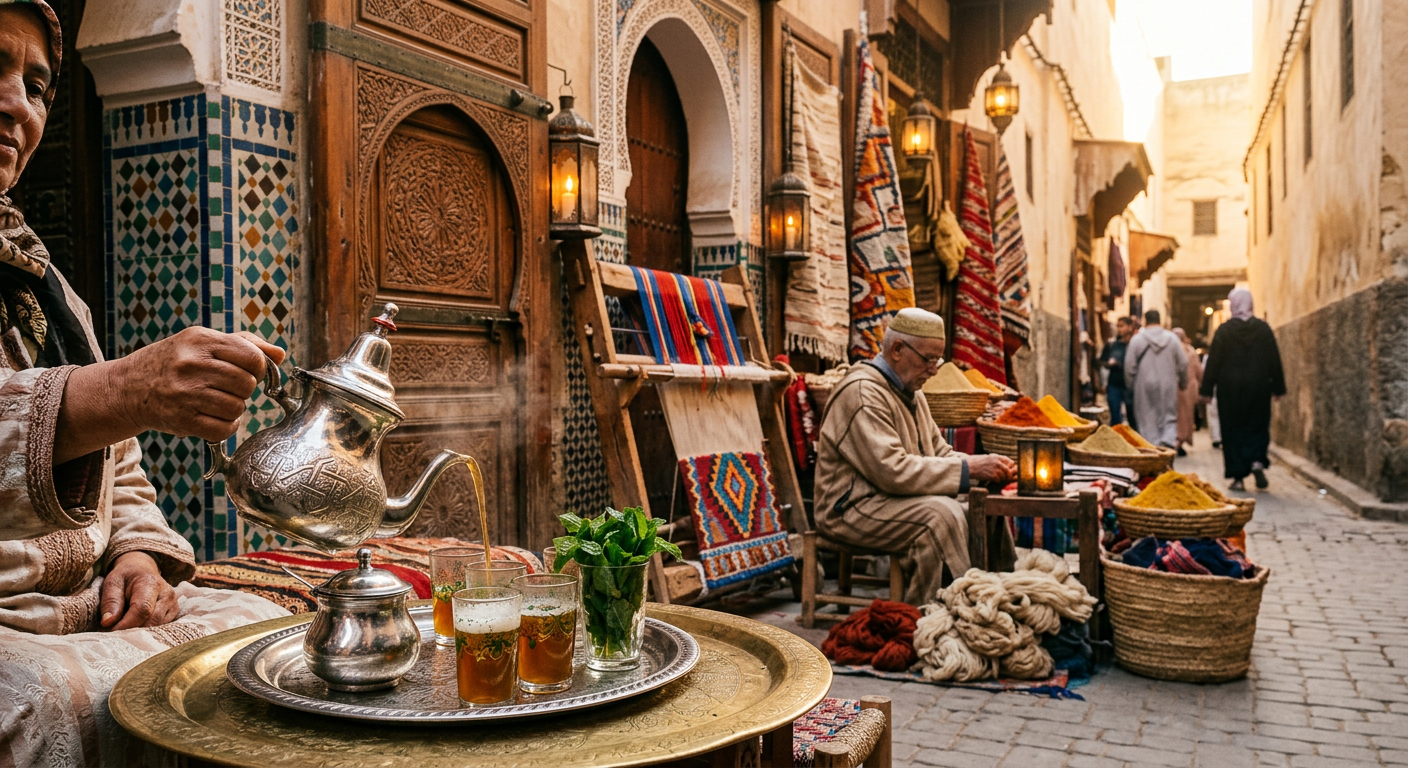
The mint tea ceremony holds a place of honor in Moroccan traditions. Preparing and serving atay (mint tea) follows specific rituals rooted in deep Moroccan tea culture. The host pours from a considerable height, creating foam that signals proper preparation. Three glasses traditionally follow, each with its own character: “The first glass is as gentle as life, the second as strong as love, the third as bitter as death.” Refusing tea can seem impolite — accept at least one glass as a gesture of respect.
Accepting tea in Morocco means accepting a pause. Don’t rush it. The ritual is as important as the drink — it’s an invitation to sit, slow down, and truly connect. This unhurried generosity is at the heart of Moroccan hospitality.
Moroccan Hospitality
Moroccan hospitality, known as l’hospitalité marocaine, stands as the cornerstone of social life. Hosts welcome guests with genuine warmth — the best seats, finest food, endless cups of tea. This tradition extends beyond homes to shops, teahouses, and chance street encounters. The warmth of Moroccan hospitality isn’t a performance for tourists; it’s a deeply held cultural value you’ll encounter in the most unexpected places.
Religious Festivals and Celebrations
Religious festivals bring communities together in celebration and worship throughout the year:
- Ramadan transforms daily routines as Muslims fast from dawn to sunset. Streets quiet during daylight hours then burst into life after sunset for iftar — the fast-breaking meal — shared by families and neighbors.
- Eid al-Fitr marks Ramadan’s end with new clothes, special sweets, and gifts for children. Charity plays a central role, with food and money shared widely.
- Eid al-Adha commemorates Abraham’s sacrifice. Families who are able sacrifice a sheep and share the meat with relatives and those in need — a powerful expression of community and devotion.
Henna, Weddings, and Dress
Henna ceremonies add beauty and meaning to Moroccan celebrations. Before weddings, women gather for elaborate henna parties where intricate designs decorate hands and feet. The natural dye creates temporary tattoos believed to bring good luck. Traditional clothing reflects Moroccan cultural experiences and regional identity — the djellaba for everyday modesty, the kaftan for celebration, distinctive Berber jewelry and weaving for tribal belonging.
🍽️ Experience Moroccan Traditions Hands-On
Powered by GetYourGuide
Traditional Moroccan Music Heritage
The rich tapestry of traditional Moroccan music is one of the country’s most profound cultural gifts. This ancient art form tells stories of history, spirituality, and cultural fusion through distinctive rhythms, melodies, and instruments that have evolved over centuries.
Morocco’s geographic position as a crossroads between Africa, Europe, and the Middle East has created a remarkable musical landscape. From the hypnotic trance-music of Gnawa — rooted in sub-Saharan Africa — to the sophisticated compositions of Andalusian orchestras, Moroccan music reflects the country’s full multicultural heritage. These are Moroccan traditions in their most alive and accessible form.
Music in Morocco serves as more than entertainment — it connects to spiritual practices, healing traditions, and communal celebrations. Sufi brotherhoods use music to achieve trance states during religious ceremonies. During weddings and festivals, it brings entire communities together. Today, travelers can experience this heritage from impromptu square performances to formal concerts at the Fes Festival of World Sacred Music. For deeper engagement, explore our guide to traditional Moroccan music.
Top Cultural Experiences in Morocco
Morocco offers countless opportunities to immerse yourself in its rich cultural tapestry. These Moroccan cultural experiences connect you with centuries of history while creating unforgettable personal memories.
Exploring Ancient Medinas
The old city quarters — medinas — transport you back in time through narrow alleyways and hidden squares. Each one has its own distinct character:
- Fes el-Bali contains over 9,000 winding streets where donkeys still deliver goods. The medieval atmosphere remains genuinely untouched by modern development.
- Marrakesh’s medina pulses with energy around Jemaa el-Fnaa square — storytellers, musicians, and food vendors creating a nightly spectacle unlike anywhere on earth.
- Chefchaouen’s blue-washed medina offers a peaceful mountain retreat where every building wears shades of blue, creating a dreamlike, photogenic setting.
Hire a local guide for your first medina walk — not to follow a route, but to understand what you’re seeing. The difference between a wandering tourist and an informed explorer is the stories. After one guided morning, you’ll navigate confidently on your own.
🕌 Discover the Secrets of Marrakesh’s Medina
Powered by GetYourGuide
Shopping in Traditional Souks
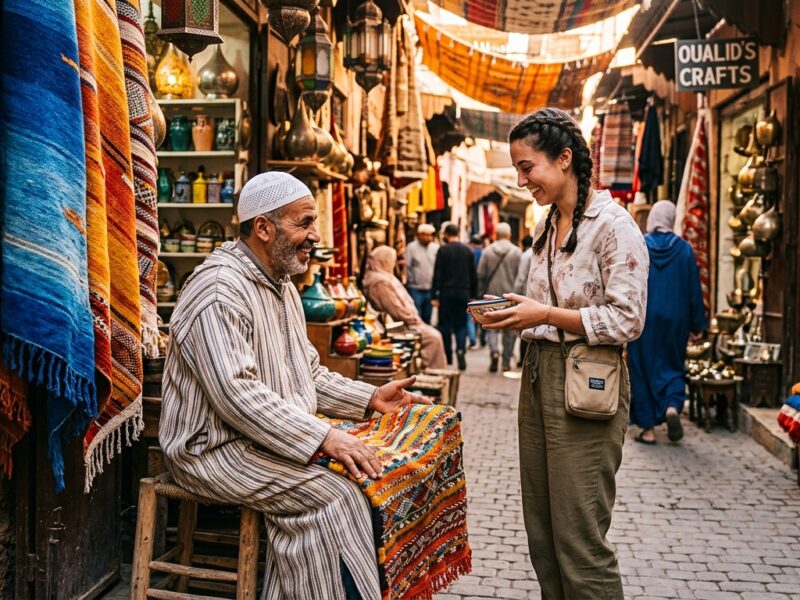
Souks (markets) are sensory adventures and essential cultural experiences Morocco is famous for. Spice pyramids release exotic aromas. Craftsmen work in tiny stalls using centuries-old techniques — leather punching, carpet knotting, silver-beating. Bargaining here is expected and relished; vendors see it as social interaction, not just commerce. Visit the secret spots where artisans sell directly from workshops, and polish your technique with our souk bargaining guide.
Discovering Berber Village Life
The Atlas Mountains and Sahara Desert preserve traditional Berber culture in its most authentic form. Village visits reveal traditional mud-brick architecture adapted to harsh climates, women’s cooperatives producing argan oil, and genuinely warm hospitality from families who rarely receive visitors. Consider booking a cooking class in a Berber village or a multi-day trek through Atlas Mountain villages for immersive Morocco cultural activities.
Desert Cultural Experiences
Morocco’s desert regions offer some of the most memorable cultural encounters. Spend nights under star-filled skies in traditional desert camps, where Berber guides share ancient stories around campfires. Camel treks across golden dunes teach something about the nomadic lifestyles that have persisted for centuries in these extreme environments. Book a three-day tour from Marrakesh to Merzouga, riding camels over Erg Chebbi dunes and sleeping in traditional Berber tents. These desert adventures are an unforgettable part of Moroccan traditions.
Marrakesh — souks, Jemaa el-Fnaa, mint tea
Arrive in Marrakesh and check into a riad within the medina walls. Spend the afternoon getting deliberately lost in the souks — the leather quarter, the spice stalls, the dyers. As dusk falls, position yourself in Jemaa el-Fnaa square for the transformation from market to festival. Accept the first cup of tea offered; it’s the beginning of something.
Evening: book a food tour of Marrakesh to navigate the night market stalls properly — your guide will know which harira is the best in the square.
Traditional purification + hands-on cuisine
Begin at a traditional hammam — the kessa scrub will leave your skin feeling like it’s never been washed before. Allow two hours minimum. Afternoon: cooking class in a local riad, starting with a market visit to choose ingredients, finishing with a shared tagine meal. These are the two most intimate Moroccan cultural experiences available in a single day.
Mountain landscapes, argan cooperatives, village hospitality
A day trip from Marrakesh into the High Atlas reveals the Berber world at its most authentic. Visit a women’s argan cooperative, walk through a Berber village, and lunch with a local family. The contrast with urban Marrakesh is striking — and equally unforgettable. Return via the Ourika Valley for a sunset drive through terraced hillside fields.
⛰️ Explore Berber Villages in the Atlas Mountains
Powered by GetYourGuide
Moroccan Festivals: Celebrations of Culture
Moroccan festivals showcase the country’s vibrant cultural heritage through music, dance, and communal celebration. For travelers, they offer rare windows into authentic expressions of Moroccan culture — moments of collective joy that you witness, and sometimes join.
The renowned Fes Festival of World Sacred Music brings international artists and traditional musicians together in the spiritual heart of Morocco. Set against ancient palace gardens, it creates evenings where diverse musical traditions explore spirituality and human connection. In coastal Essaouira, the Gnawa World Music Festival celebrates the hypnotic rhythms of Gnawa music — a tradition with roots in sub-Saharan Africa — across the medina and windswept Atlantic beaches.
For nature lovers, the Rose Festival in Kelaat M’Gouna each May is a sensory revelation when the Valley of Roses bursts into bloom. The Moussem of Tan-Tan, recognized by UNESCO, brings nomadic tribes from across the Sahara for camel races, traditional singing, and poetry competitions. For detailed festival dates and how to plan around these events, explore our Moroccan Festivals 2026 Guide.
📌 Planning note: Spring (March–May) and autumn (September–November) offer the most comfortable weather for cultural exploration and coincide with several major festivals. Book accommodation well in advance during the Fes Sacred Music Festival — riads fill up months ahead.
The Moroccan Hammam Experience
The hammam stands as one of Morocco’s most distinctive cultural traditions — and one of its most transformative. These traditional bathhouses have served Moroccan communities for centuries, combining deep physical cleansing with important social functions. For travelers, it’s among the most intimate cultural experiences Morocco offers.
Historically, hammams developed as extensions of mosques, providing facilities for ritual purification. Today they remain vital community gathering places — Moroccans of all ages visit weekly to cleanse, socialize, and decompress. The ritual follows a specific sequence: a warm room for acclimatization, a hot steam room for most of the experience, then a cooler recovery room. The kessa scrub — vigorous exfoliation with a special mitt — removes layers of dead skin with surprising thoroughness. Black soap made from crushed olives completes the cleansing.
In Marrakesh, consider booking a traditional hammam experience with massage for a guided introduction that combines authenticity with comfort for first-timers. For everything you need to know before you go, our Ultimate Hammam Experience Guide covers etiquette, what to bring, and the best hammams across Morocco.
🧖 Book an Authentic Moroccan Hammam
Powered by GetYourGuide
Moroccan Cooking Classes & Culinary Traditions
Moroccan cuisine tells cultural stories through aromatic spices, time-honored techniques, and communal dining. Participating in cooking classes offers one of the most engaging ways to connect with Moroccan culture while acquiring skills — and recipes — to carry home.
The culinary landscape reflects Morocco’s crossroads position. Berber foundations combine with Arab influences, Andalusian refinements, and sub-Saharan ingredients to create dishes of remarkable complexity. At the heart of Moroccan cooking lies the art of spice blending — ras el hanout alone can contain over 30 different spices. The iconic tagine exemplifies the national cooking philosophy: patient, slow transformation of simple ingredients into extraordinary meals.
Cooking classes typically begin with market visits where instructors decode ingredients and explain seasonal rhythms. Participants learn couscous (traditionally hand-rolled and served for Friday family gatherings), pastilla (sweet-savory pigeon pie with fascinating Andalusian origins), and the full spectrum of Moroccan salads. For an authentic rural experience, book a cooking class in a Berber village. For city-based options, traditional cooking classes in Agadir offer excellent introductions. Don’t miss street food in Morocco as a parallel culinary adventure. Our full Moroccan Cooking Classes Guide helps you find the right class for your interests.
More Cultural Activities for Travelers
Beyond the signature experiences above, Morocco offers a wealth of additional Morocco cultural activities that create meaningful connections to local traditions and daily life.
Artisan Workshops
Morocco’s craft traditions provide windows into centuries of cultural knowledge:
- Pottery workshops in Fes introduce the distinctive blue-and-white ceramics this city is famous for — try the wheel while learning traditional glazing techniques.
- Carpet weaving experiences in the Middle Atlas reveal how Berber women transform wool into intricate patterns carrying specific cultural meanings and tribal identities.
- Leatherwork demonstrations in Marrakesh’s tannery district show the ancient process of treating hides using natural materials — pigeon droppings, mimosa bark, and saffron — unchanged for centuries.
- Zellige (mosaic tilework) classes teach the mathematical precision behind Morocco’s iconic geometric patterns.
Immersive Accommodation
Where you stay shapes your Moroccan cultural experiences. Traditional riads within ancient medina walls offer authentic architectural experiences centered on courtyard gardens — many include cultural programs like tea ceremonies and craft demonstrations. Desert camps in the Sahara provide unforgettable nights under stars, with cultural programs including traditional music, storytelling, and Berber astronomy. Rural homestays in unique villages across the Atlas let you participate in daily activities like bread baking, farming, or carpet weaving while building genuine connections with host families.
Calligraphy, Henna, and Agricultural Experiences
Arabic calligraphy workshops introduce the artistic dimensions of written language — learn basic letter forms and create personalized pieces with cultural significance. Henna art sessions with local artists reveal the significance behind traditional patterns that connect to centuries of North African celebration. Morocco’s relationship with the land also offers unique insights: argan oil cooperatives in the southwest showcase women’s traditional knowledge; rose harvest participation in the Valley of Roses during May invites visitors to join the annual gathering; saffron harvesting in Taliouine connects travelers to one of the world’s most precious spices and the communities who tend it. For nature lovers, combining cultural experiences with explorations of Morocco’s natural wonders creates unforgettable connections between landscape and cultural practice.
Morocco Tradition Travel Tips
Successful cultural exploration in Morocco requires understanding local customs and a few practical realities. These Morocco tradition travel tips help you navigate respectfully while maximizing authentic experiences. Consulting a full Moroccan etiquette guide before your trip is time well spent.
Dress Code Guidelines
- Women should cover shoulders and knees — loose-fitting pants or long skirts work well. Carry a scarf for religious sites or conservative areas.
- Men should avoid shorts in cities and rural areas. Long pants and shirts with sleeves show cultural awareness.
- Beach resorts have relaxed standards, but cover up when leaving those zones.
- Traditional djellabas are practical and culturally appropriate for all genders.
Essential Language Basics
- “As-salamu alaykum” — Peace be upon you (universal greeting)
- “Shukran” — Thank you
- “Afak” — Please
- “La shukran” — No thank you (invaluable in souks)
- “Bislama” — Goodbye
- “Inshallah” — God willing (used constantly; embrace it)
Respectful Behavior
- Remove shoes when entering homes or mosques. Watch for shoes at the doorway as your cue.
- Use your right hand for eating, greeting, and giving or receiving items.
- Always ask permission before photographing people, especially women and in rural areas.
- Respect prayer times by lowering your voice near mosques during the call to prayer.
Transportation
For intercity travel, Morocco’s train system offers comfortable, affordable connections between major cities. Within cities, learn to navigate taxi services — petit taxis for inner-city travel, grand taxis for intercity routes. For flexibility in rural areas, consider renting a car through Localrent. For remote cultural destinations, domestic flights save significant time. Full Morocco transportation information for 2026 helps you plan efficient routes.
Connectivity and Budget
Avoid expensive roaming charges by purchasing an eSIM through Airalo before arrival. Use a VPN for secure connections on public WiFi. Many authentic cultural experiences cost little — wandering medinas, observing street performers, visiting local markets. Budget wisely with our Morocco Travel Cost Guide and money-saving tips — save on logistics to splurge on memorable workshops. For health and safety, drink bottled water only and review our Morocco safety guide 2026 before departure.
Reserve Your Spot
Book This Experience
Choose from the best cultural tours and experiences across Morocco — from Marrakesh medina walks to Sahara desert camps. Instant confirmation, free cancellation on most bookings.
Frequently Asked Questions
Everything you need to know before you go
✦ Your Morocco Journey Starts Here
Ready to Immerse Yourself in Moroccan Culture?
The mint tea, the medina labyrinths, the hammam steam, the desert stars — none of it is fully captured in photos or words. It has to be lived. Morocco is waiting, and it’s extraordinarily generous with visitors who come with open curiosity and genuine respect.